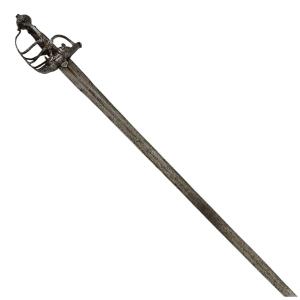
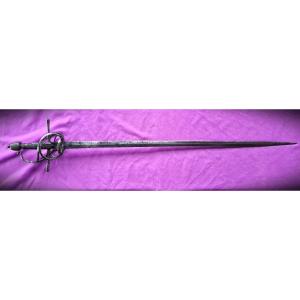
This rapier with amulti branches hilt is from Germanic origin, dating from the first quarter of the 17th century. The blade bears a crescent moon hallmark on the ricasso, which Lenkiewicz lists (in "1[...]
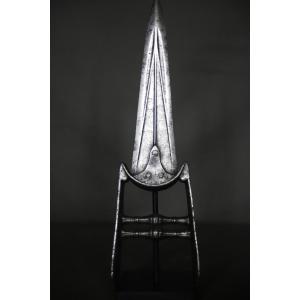
A magnificent kabutowari, helmet breaker, or skull-crusher, this iron weapon is adorned with beautiful globular nodules along its entire blade. Small but heavy, this blunt iron weapon was used to smas[...]
Indian dagger (katar) - India, 17th-18th century. Double-edged blade with a reinforced point (commonly called a "mail-piercing" or "armor-piercing" dagger). Forged steel handle. Solid, no play. Length[...]
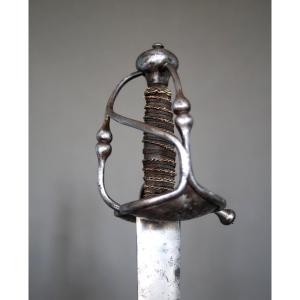
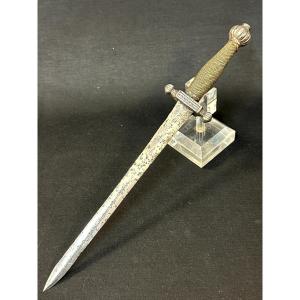
Child's sword - France, late 17th/early 18th century. The hilt has a single branch and quillon, a bivalve shell guard, and a ball pommel. The entire piece is damascened in silver (the damascened decor[...]
A Walloon-type cavalry saber - Probably Germanic, 17th century. Curved blade with a single edge and a false edge on the last third. The wolf of Passau is engraved on one side. Walloon-style hilt. Miss[...]
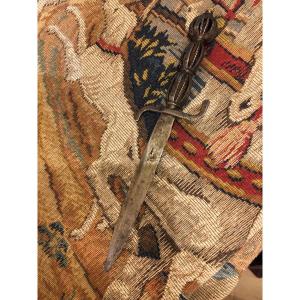
Renaissance dagger - Western Europe, late 16th/early 17th century. Blade with a strong, flat ricasso, later becoming four-sided and double-edged. Maker's marks (very faded but discernible) are present[...]
A semi-cylindrical, triangular iron powder flask, decorated with a symmetrical pattern of oblique ribs extending onto the spout. The integrated dispenser has a hinged spring mechanism ensuring precise[...]
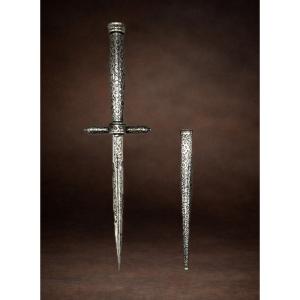
Civil ceremonial stylus (stiletto da cintura) in fully engraved and chiseled steel, Northern Italy (Lombardy - Veneto), around 1620–1650.Remarkable example of the Italian art of steel decoration in th[...]
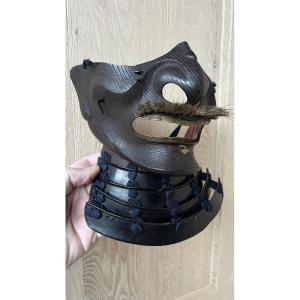
Very beautiful hand forged iron mask with a typical expression; yasurime parallel lines across the entire mask, typical work of the Iwai school, 17th century, black lacquered plates and navy blue suga[...]
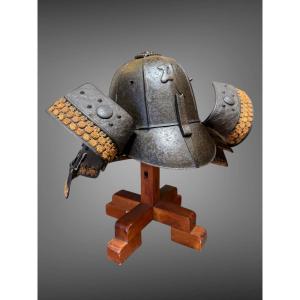
JAPAN - Edo period (1603-1868). KABUTO composed of eight wrought iron plates, the front plate decorated with a Chinese character. THEHEN NO ANA (opening at the top) in copper and copper with three de[...]
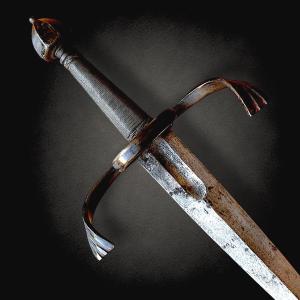
A superb English Civil War period “Mortuary” sword. Broad double-edged blade that shows the maker’s mark ‘Andrea Ferrara’ running along the central fuller, as well as armory stamp to either side of th[...]
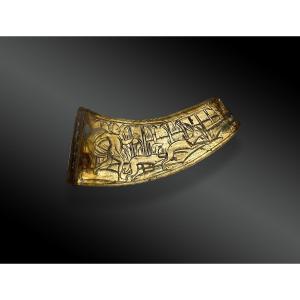
ENGRAVED 17TH CENTURY POWDER FLASK17th century EuropeHorn, ironH: 22.5cmHorn body engraved with a hunting scene featuring a man on foot with a spear and a dog chasing a hare on a background of straw a[...]
Forged iron cup sword with wooden handle. Very wide guard fixed to the cup by boiling, very massive blade forged in an exemplary manner by the Spanish master gunsmiths.Spain 17th centurymeasures 124 c[...]
Signal cannon/bombardment, 17th century. These were used to guide ships and facilitate drafting and anchoring, as well as for festivals and celebrations as a kind of firework. The fuse hole is visible[...]
A powder flask made of stag antler, likely of German origin, 17th century. Engraved with a bear and stag hunt scene against a background of vegetation. Dimensions: 18 cm x 12.5 cm. Condition: The engr[...]
Spanish rapier (sword) with a tang - Spain, late 17th-first half of the 18th century. The hilt has a tang, two large quillons, and a guard branch. The grip is made of beautiful fluted horn. This type [...]
A very fine wakizashi by Hisamichi with a Tokubetsu certificate. Muromachi period. It has a 56 cm nagasa (stem). It retains its 19th-century polish and is extremely well preserved. It features a very [...]
Flintlock pistol. Round barrel, octagonal at the breech. Flat lockplate, signed "Dreuet Abbeville" surmounted by a winged angel's head. Round-bodied hammer. Round-bodied pan, without a frizzen. Iron f[...]
Germany produced large quantities of antler powder pouches during the Renaissance. The finest pieces were made in the south of the country, in Nuremberg and Augsburg. The quality of these pouches vari[...]
A famous Pisan tradition is the Battle of the Bridge, called Gioco del Ponte, which dates back to the late 16th century and continued into the early 19th century. Even after decades of interruption, i[...]
A rapier with a very refined cut, dating from the first half of the 17th century, around 1630-1640. The openwork hilt is richly decorated with floral and vegetal motifs, punctuated by cartouches depic[...]
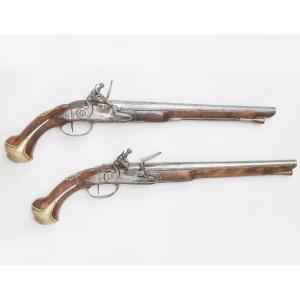
Pair of flintlock pistols by P.E. Borde, Paris (1680-1725), from a museum. P.E. Borde, Paris (1680-1725), signed, carved, decorated with engravings and brass fittings, grotesque-patterned piston. P.E.[...]
This stiletto is a fairly large model designed for fighting. The style of the handle might initially suggest Italian craftsmanship, but the blade, with its cross-shaped globus, its shape, and its deco[...]
This stiletto likely originated in Northern Italy, although a Southern German origin is also possible. Its large size makes it a model designed for combat. It dates from the 17th century. Stilettos fi[...]
JAPAN - Momoyama Period (1573-1603). KABUTO composed of 62 strips of matte brown lacquered wrought iron, assembled with small raised rivets. THEHEN NO ANA (opening at the top) in patinated and gilded [...]
A 17th-century wheellock arquebus converted to flintlock, chambered for 14 balls per pound, fitted with a smoothbore octagonal barrel, then a round one. The weapon is mounted in brass, including the l[...]
Small flintlock pistol with a round barrel, octagonal at the breech. Flat-bodied lockplate with a trace of a signature, a tail decorated with foliage, and a swan-neck cock. Round pan without a frizzen[...]
Very beautiful, high-quality samurai saddle, constructed of lacquered wood with various reliefs, Kamon from the Asano Yukinaga family, signed underneath, Early Edo period
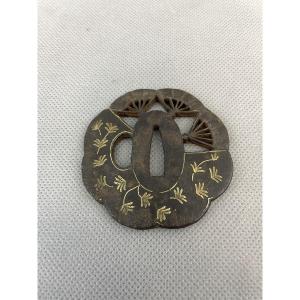
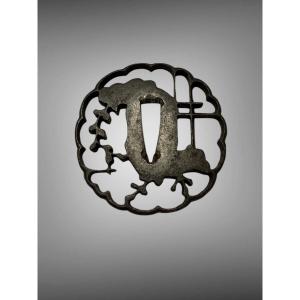
Kikka-gata shaped iron tsuba. Openwork in the Maru Bori style with three fans.The rest of the tsuba is inlaid with Hira Boran foliage and branches. One side is slightly more oxidized. Dimensions: 72 m[...]
Brown lacquered Yokohagido-type armor, Geuroku period, late 17th century, circa 1680-1700. Kabuto (helmet) of the suji-bashi type with 59 plates; the fukigaeshi (guards) are missing, no lining. Weight[...]
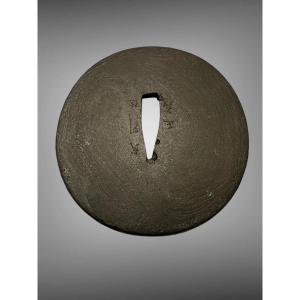
Magnificent antique tsuba from the mid-Edo period, made of shakudo (brass), 17th century. Shipping not included. Weight: 107 grams. Dimensions: Diameter 81 mm. Thickness: 3.1 mm. Type: Maru Gata (Roun[...]
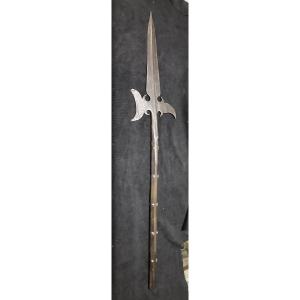
17th-century halberd. Asymmetrical iron head with an axe and hook, 44 cm long, including an 8 cm long socket; 9.5 cm long brace with two nails. Rebuilt wooden shaft. Overall length 98.5 cm. Good condi[...]
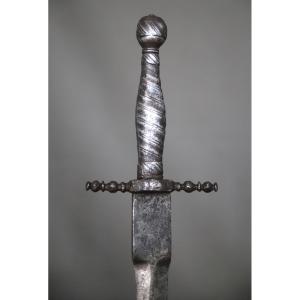
This dagger is somewhat difficult to classify; it could be defined either as a variant of a "mercy dagger" or as a rather atypical stiletto. The blade, with its robust ricasso, would suggest a mercy d[...]
A heavy german or flemish cabasset.Heavy, one-piece, heavily ridged skullcap with a small, backward-sloping point. The lower edge is encircled by brass lining rivets with decorative rosettes (some inc[...]
A swordsman's rapier with a thick blade, Hispano-Portuguese, 17th century. The thick blade has a lenticular cross-section and a small faceted iron pommel with a rivet button, securing the guard branch[...]
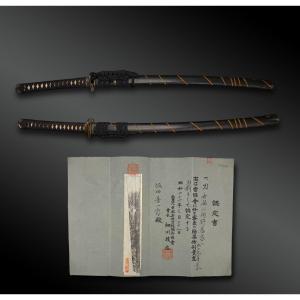
A very fine wakizashi with its original Shinto blade, "Heianjo Ju Masakuni" (平安城政国), featuring a magnificent koshirae and shirasaya, along with a Sayagaki.
Price includes shipping within the EU, [...]
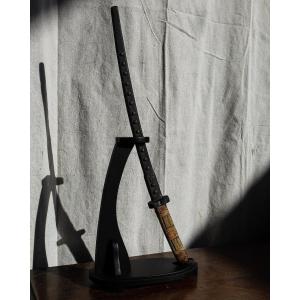
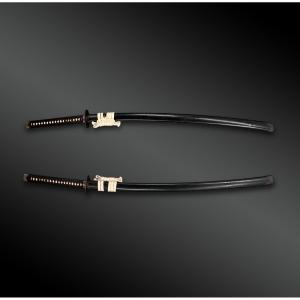
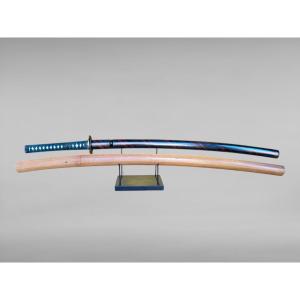
JAPAN, 17th-18th century. Katana with a shinogi-zukuri blade, gunome hamon, nakago with a mekugi-ana, signed Mikawa (no) kamiDaidô. Koshirae with black lacquer scabbard, iron maru-gata tsuba decorated[...]
A kabuto that belonged to the military commander Todo Takamitsu of the Todo clan of Ō-mi. A third-generation descendant of the elder sister of Todo Taka-tora (1556-1630), daimyo, general under Nobunag[...]
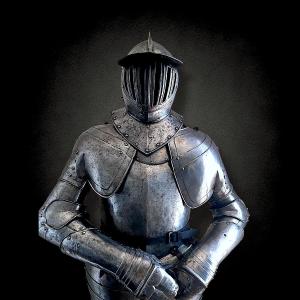
17th Century Italian Lombard Cuirassier ArmourA beautiful set of Italian Armour from the 17th century, made in the Lombard region. The Armour was made in one of the master workshops in Lombard Region.[...]
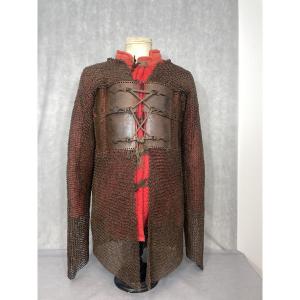
Indo-Persian armor. Composed of a barleycorn-type chainmail reinforced with metal plates. There are 102 plates, with two missing. Three rows of 32 plates on the back, four on each side along the ribs,[...]
A straight, rigid thrusting dagger with a chain-piercing point and longitudinal fullers pierced with trefoil and cruciform motifs on the first half. The cylindrical guard terminates in small spherical[...]
Kanbun era (1661-1673). Musashi ProvinceOf the honzukuri, iorimune, chugissaki, torizori type, and a koi-tame hada forge. A suguha and nie temper ending with a komaru böshi.The nakago suriage is pierc[...]
Two-piece wrought iron helmet, typical of the 30 Years' War period, similar to the English pikeman helmets of the Civil War, helmet in its original state; with original plume holder equipped the infan[...]
17th Century German Saxony DaggerA fine rare museum quality Saxon left hand daggerThe blued iron hilt comprised of strongly arched flat quillions in the classic Saxon manner with spatulate “fish-tail”[...]
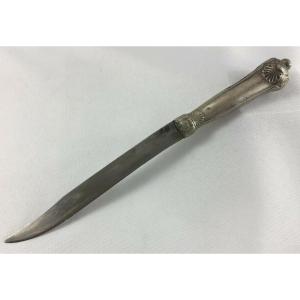
Beautiful object from the 17th century. Silver dagger, I think given the quality, decorated with shells. It is large, its weight is 235 grams. For the condition, we note a deformation, scratches, wear[...]
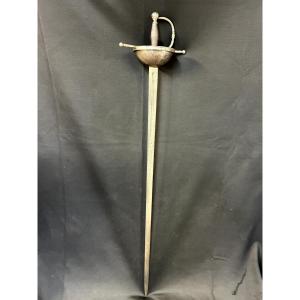
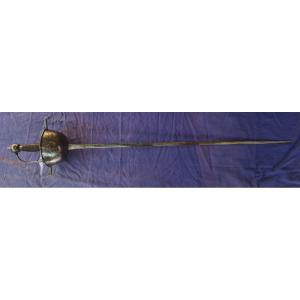
This is a beautiful and long rapier called "a la taza" in Italian style that can be dated to the mid-17th century. The very deep bowl of the Taza corresponds to Italian taste. The very large arms "fin[...]
This rapier called "taza rapier" (rapier with bowl guard) dates from the first half of the 17th century. It comes from the region of South Germany with an Italian influence. If the very deep bowl corr[...]
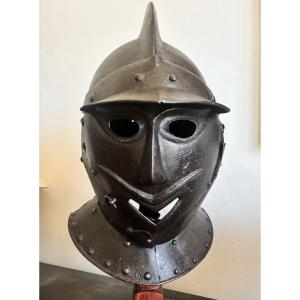
Blackened Grotesque Close Helmet 17th CenturySavonayard type, Italian.Made from the finest master armourers iin Europe, these armourers would have produced the finest sets for the nobility and upper e[...]
JAPAN - 9th year of the Kanbun era (1669). Samurai katana in shirasaya. FUSHI - KASHIRA in patinated, silvered and gilded copper suite decorated with cherry blossoms (associated with spring) on a nana[...]
Proantic uses a cookie to analyze traffic and improve its service by using Google Analytics. Data sent to Google Analytics (frequency of visits to the site and pages visited) are anonymous. No other cookie tracks your activity, your personal data is not collected. Thank you for helping us to have better understanding how Proantic is used.






















 Le Magazine de PROANTIC
 TRÉSORS Magazine
 Rivista Artiquariato