


Sword Called A Katana, Attributed To Kono Tameie, With Nbthk Certificate - Japan - 17th Century
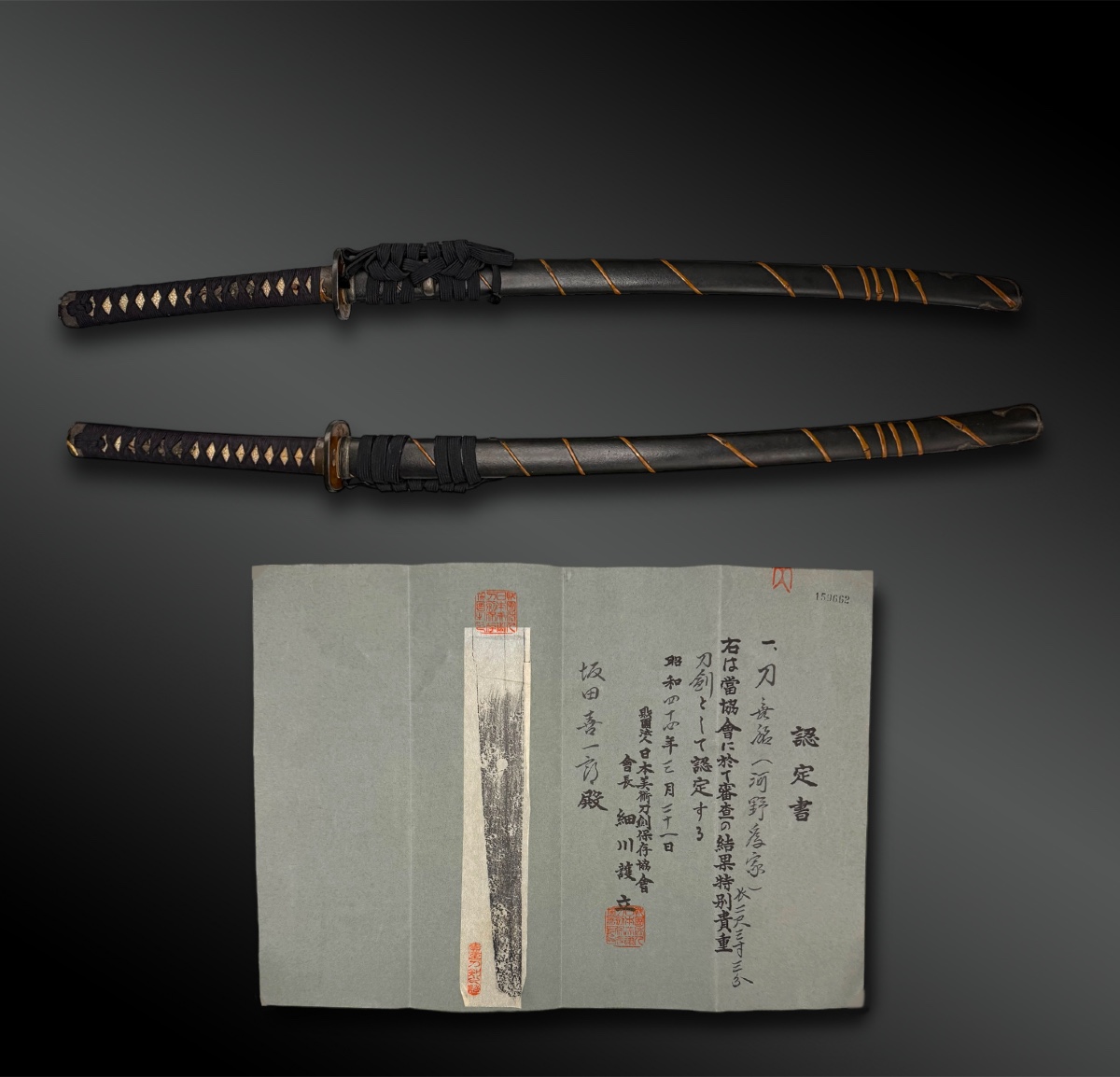
SABER known as Katana, attributed to Kono Tameie, with NBTHK certificate
Japan
Edo period (1603-1868) / 17th century
Steel, wood, lacquer, shibuichi, gold, shakudo
Nagasa: 70.5; Nakago: 19.4 cm
Sori: 0.8 cm
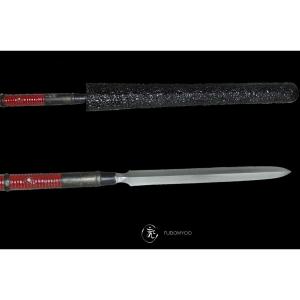
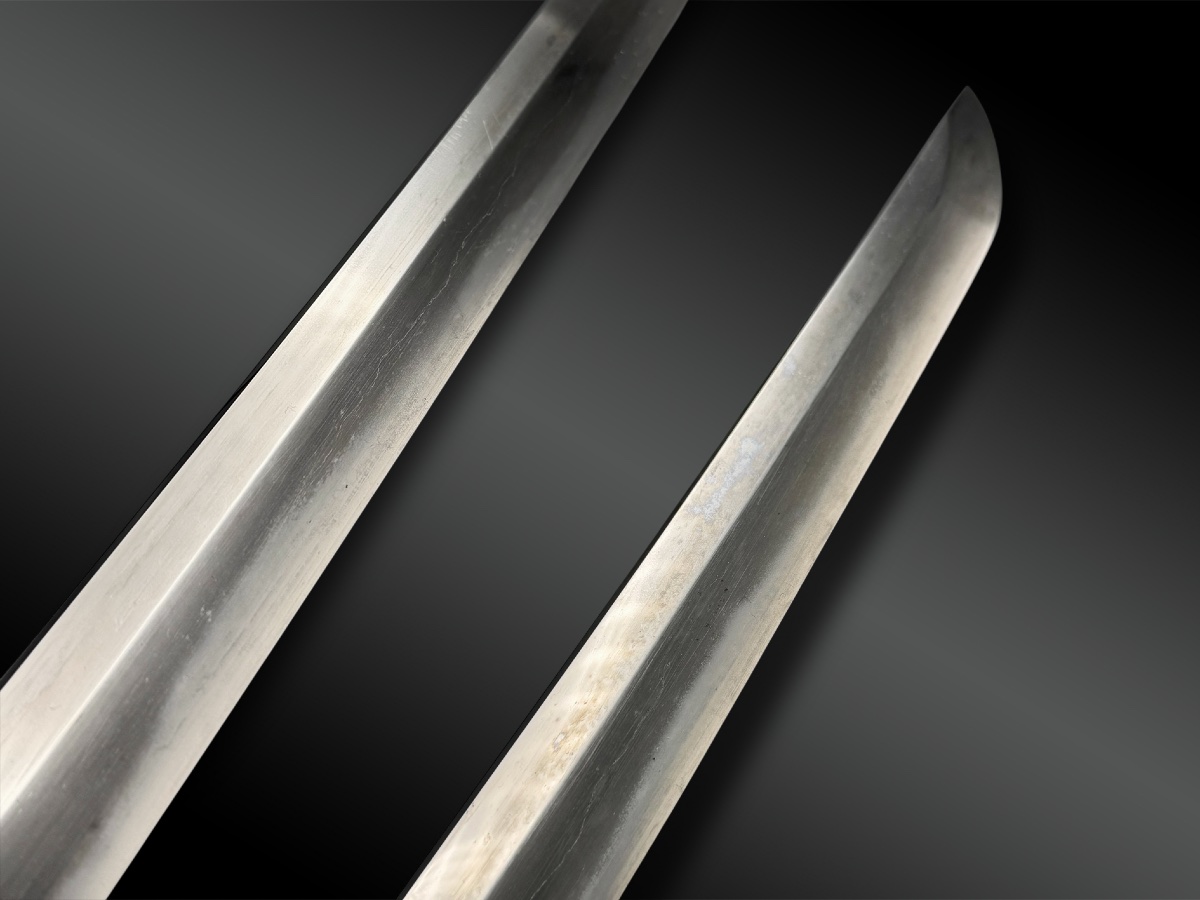
Shinogi tsukuri blade, mune hikushi, notare-style hamon; attributed to Kono Tameie, also known as Kono Ribeijo Tameie, who was active in the early Edo period (mid- to late 17th century). He belonged to Mizuta in Bitchu Province.
The Mizuta school was founded by the descendants of Ko AOE Tametsugu at the end of the Muromachi period.
Yaku zume-style boshi.
Nakago funa gata and ha hagari kuri jiri.
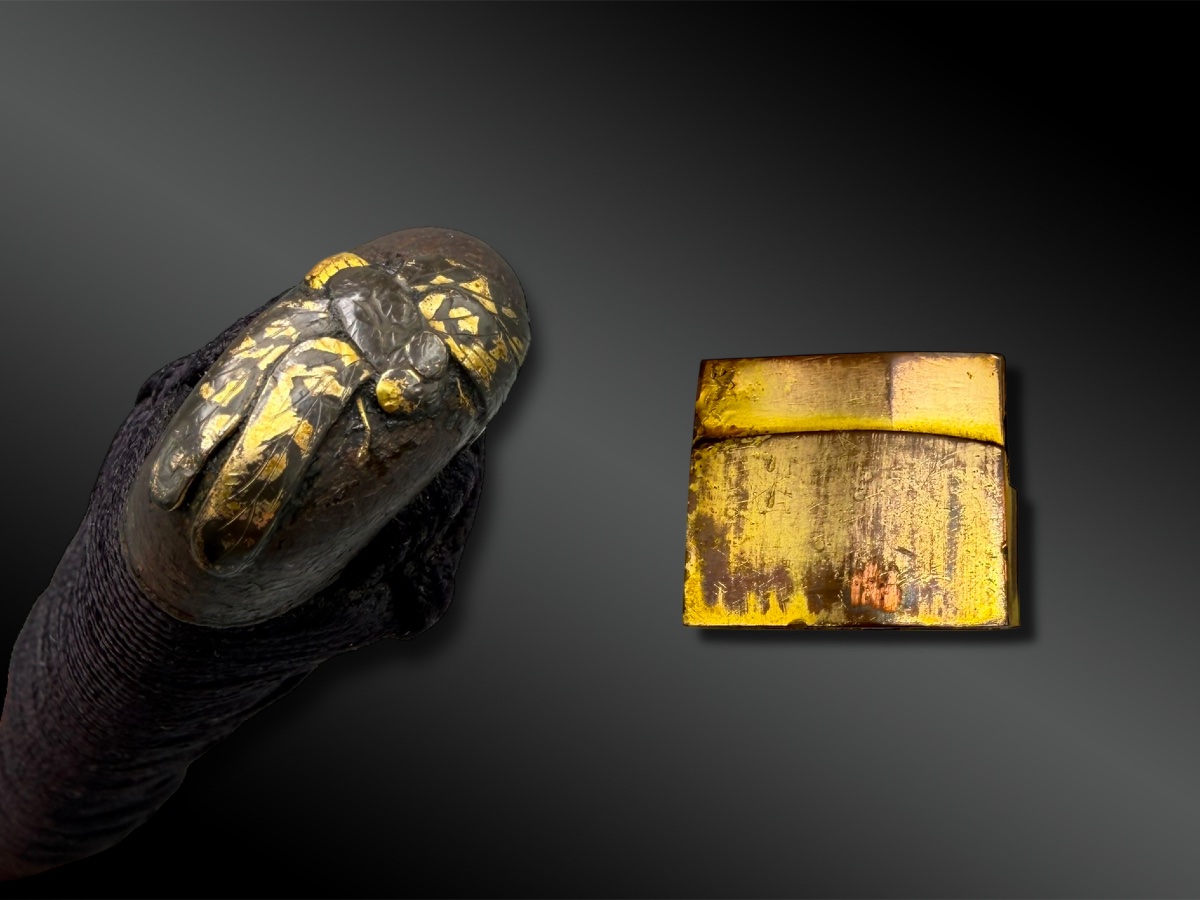
Etchu-kise-habaki in gilded copper.
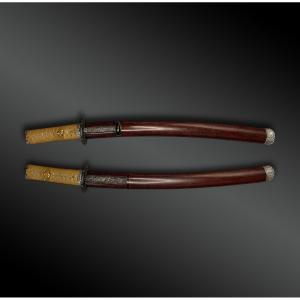
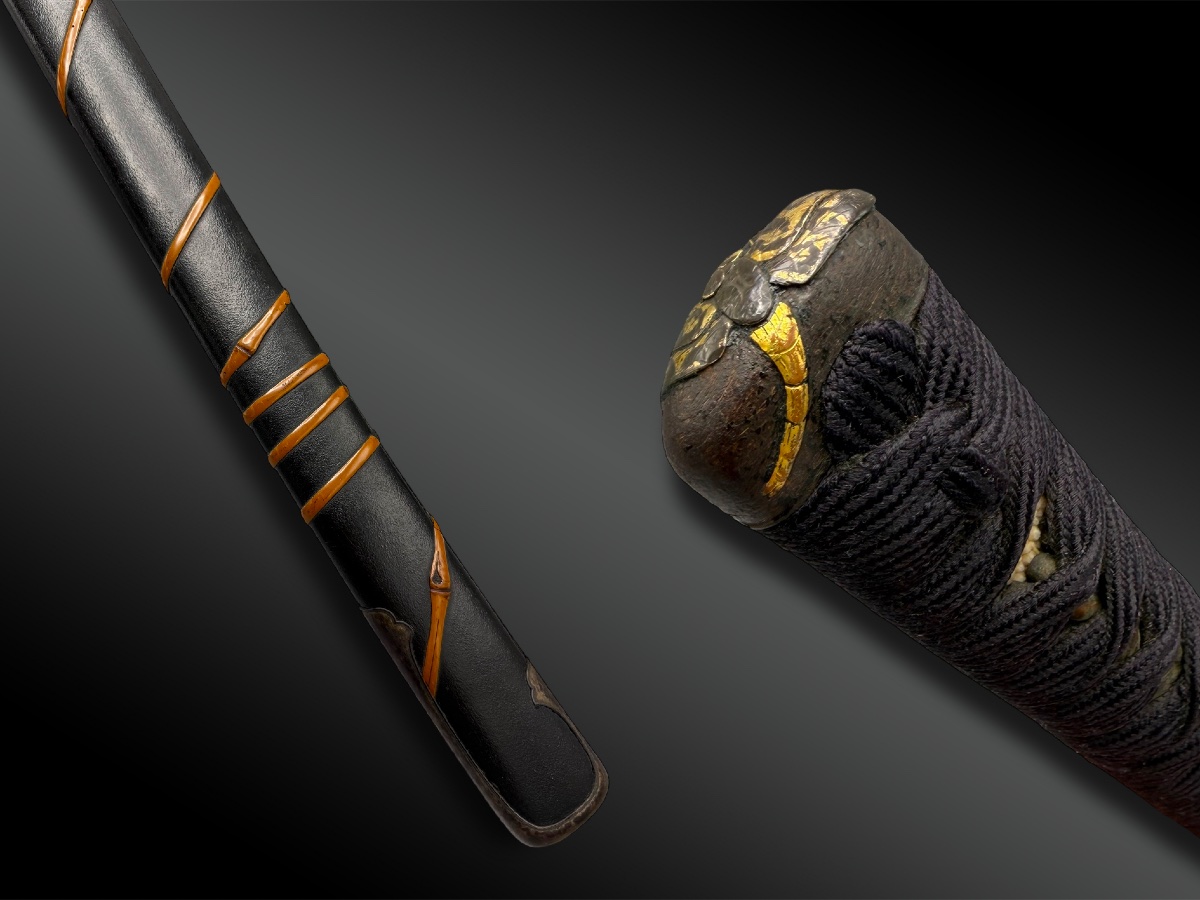
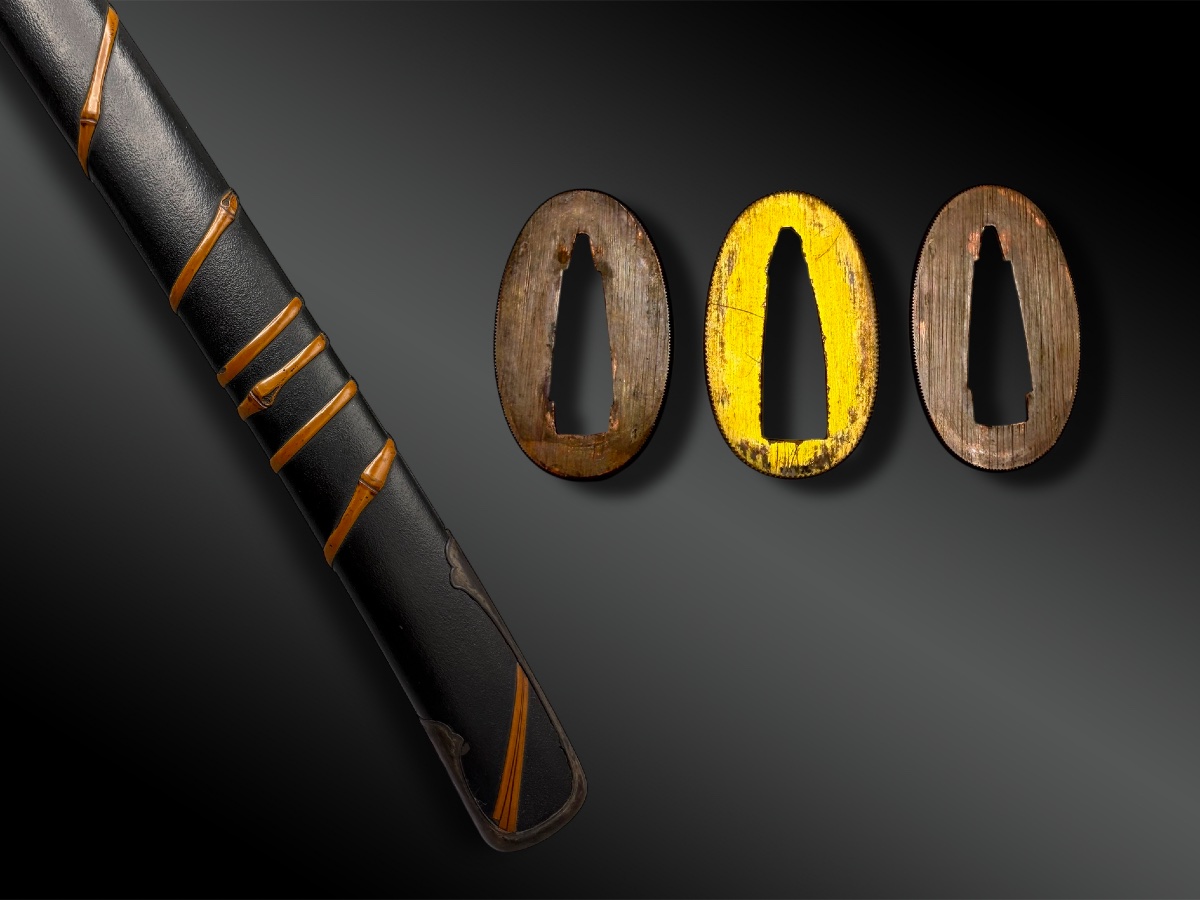
Saya made of wood covered with textured black lacquer, decorated with a twisted bamboo branch in shibuichi.
Kojiri, kuri gata, and koi guchi made of steel.
Shitodome made of chiseled shakudo.
Sageo made of black silk.
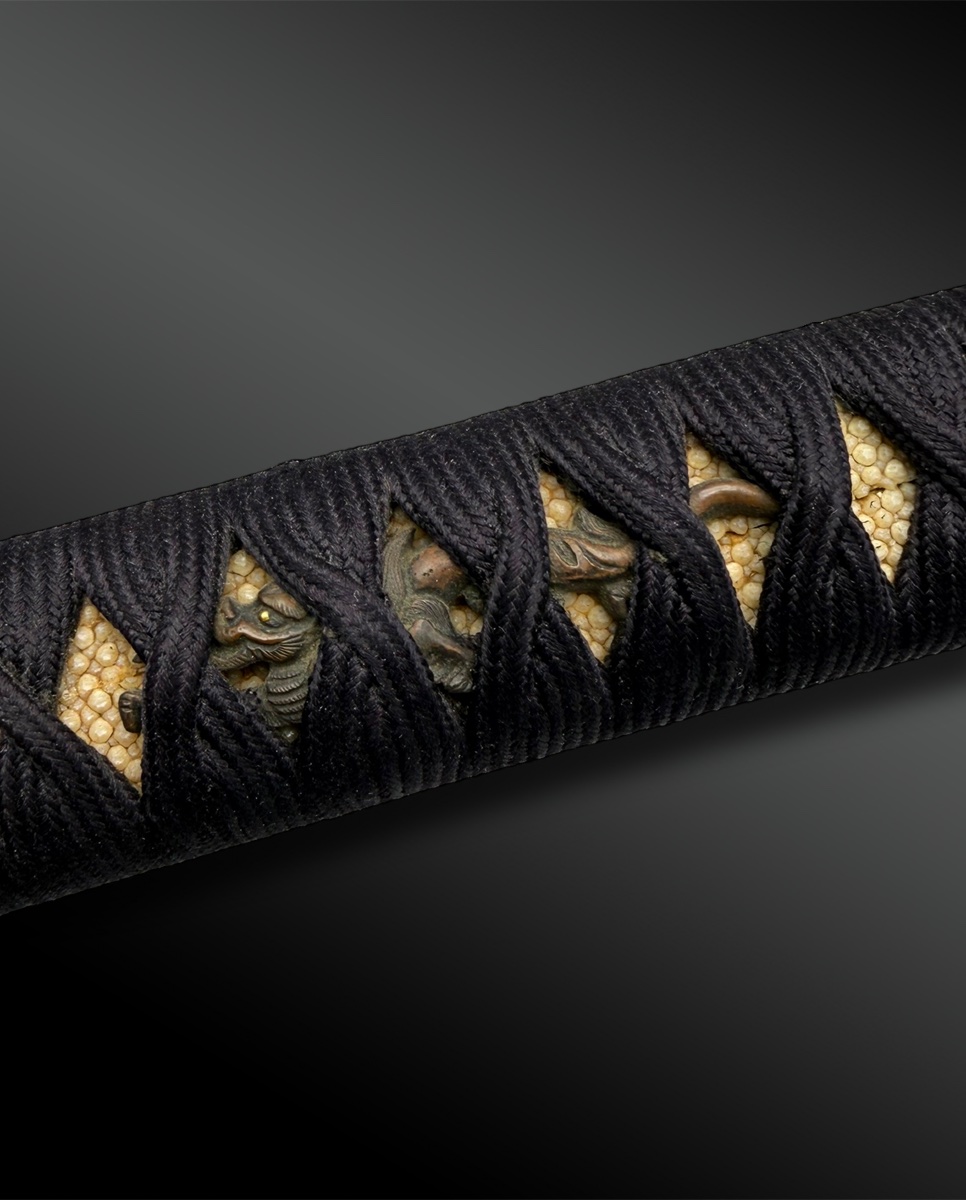
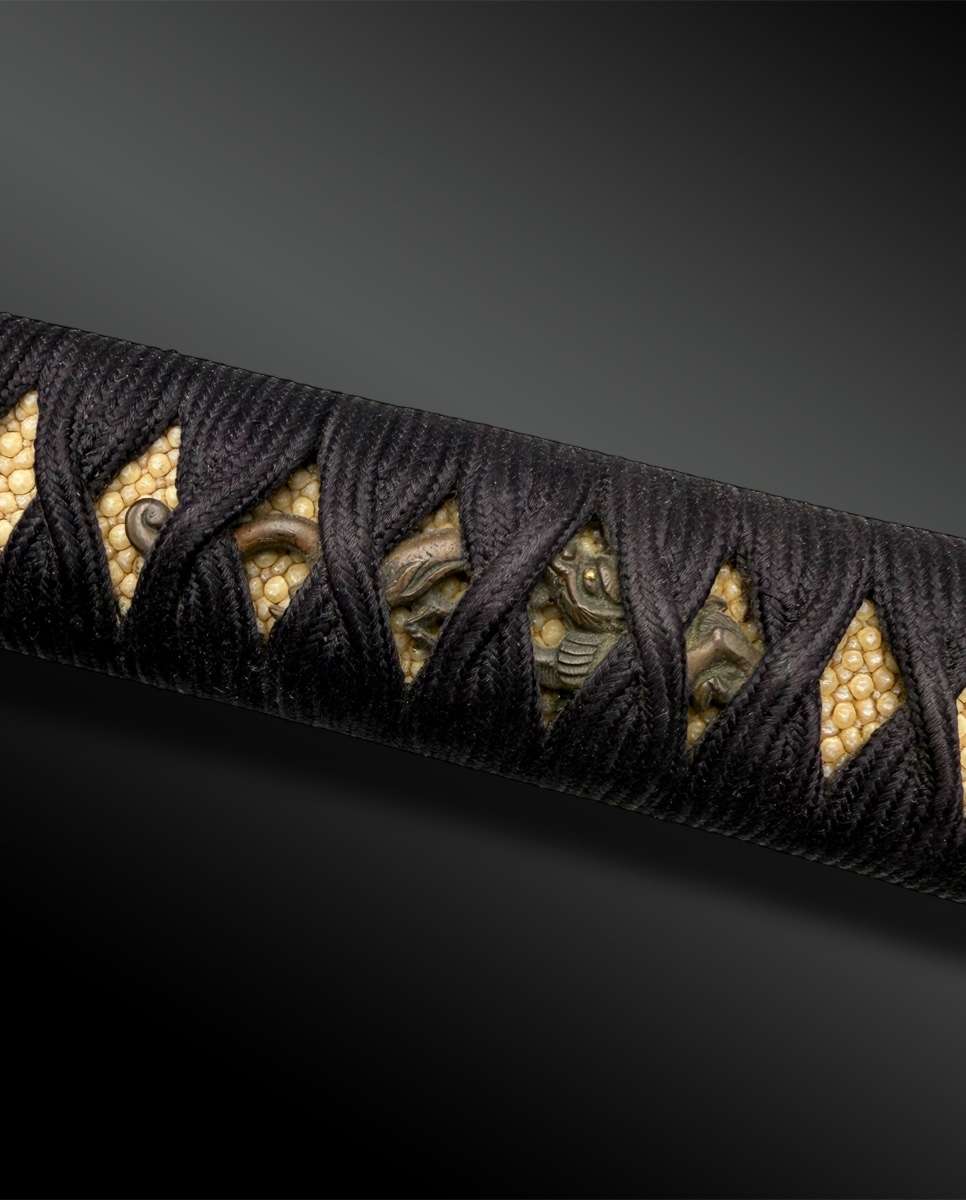
Tsuka ito made of wood, covered with shagreen, braided with black silk.
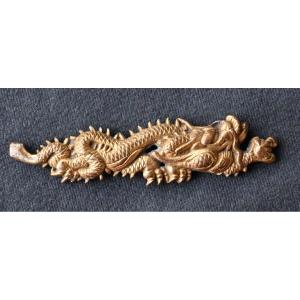
Menuki made of copper representing two dragons, the Ryū legend, with golden eyes.
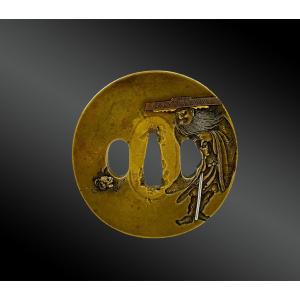
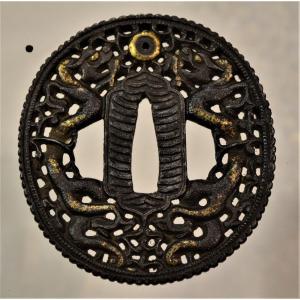
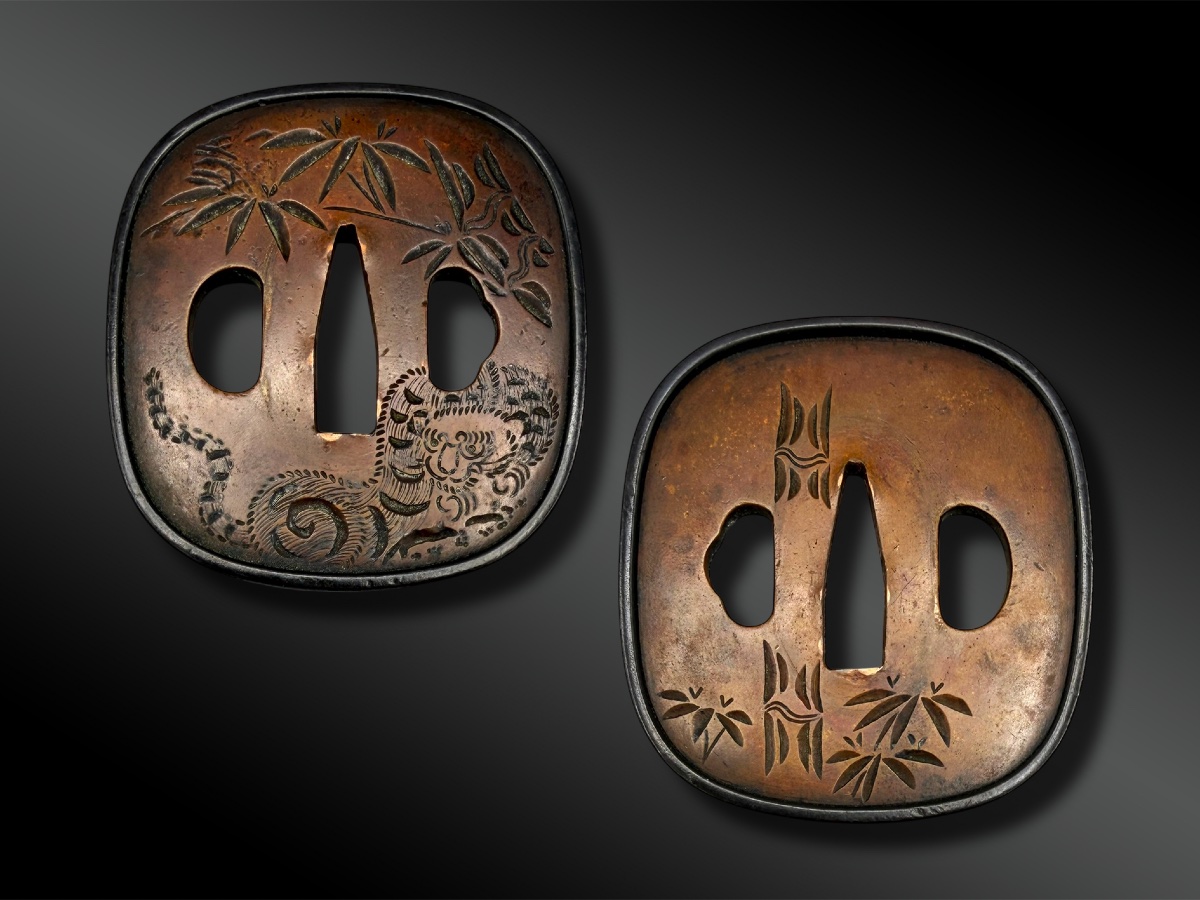
Tsuba nade gaku Ho-kei in shibuichi, chiseled with a tiger in a bamboo forest, the edges are in shakudo.
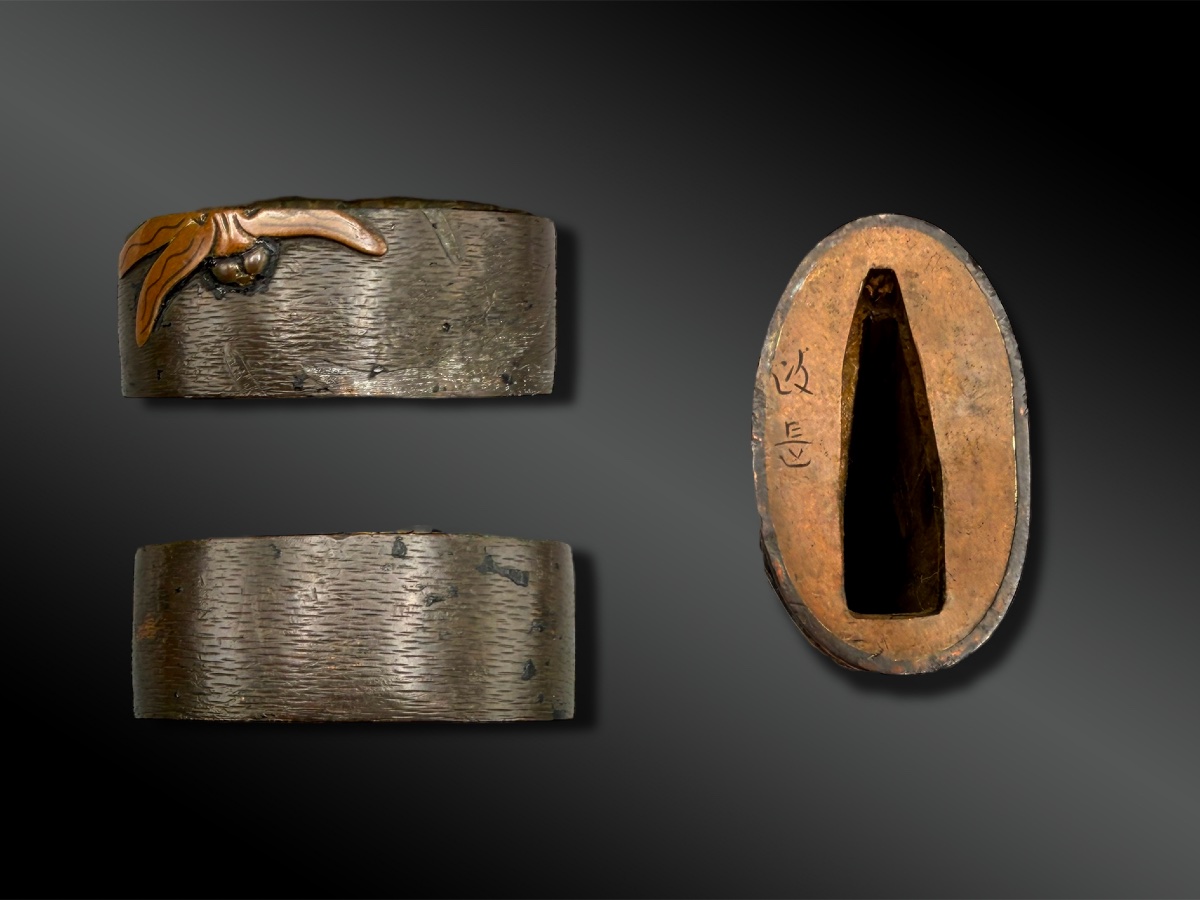
Fuchi made of copper covered with shakudo, chiseled with a dragonfly in shibuichi, representing strength, courage and victory; signed.
Kashira in iron engraved with a dragonfly enhanced with gold.
Seppa in gilded copper and chiseled shibuichi.
NBTHK certificate.
Ref.: 5212
Text and photos © FCP CORIDON
Japan
Edo period (1603-1868) / 17th century
Steel, wood, lacquer, shibuichi, gold, shakudo
Nagasa: 70.5; Nakago: 19.4 cm
Sori: 0.8 cm
Shinogi tsukuri blade, mune hikushi, notare-style hamon; attributed to Kono Tameie, also known as Kono Ribeijo Tameie, who was active in the early Edo period (mid- to late 17th century). He belonged to Mizuta in Bitchu Province.
The Mizuta school was founded by the descendants of Ko AOE Tametsugu at the end of the Muromachi period.
Yaku zume-style boshi.
Nakago funa gata and ha hagari kuri jiri.
Etchu-kise-habaki in gilded copper.
Saya made of wood covered with textured black lacquer, decorated with a twisted bamboo branch in shibuichi.
Kojiri, kuri gata, and koi guchi made of steel.
Shitodome made of chiseled shakudo.
Sageo made of black silk.
Tsuka ito made of wood, covered with shagreen, braided with black silk.
Menuki made of copper representing two dragons, the Ryū legend, with golden eyes.
Tsuba nade gaku Ho-kei in shibuichi, chiseled with a tiger in a bamboo forest, the edges are in shakudo.
Fuchi made of copper covered with shakudo, chiseled with a dragonfly in shibuichi, representing strength, courage and victory; signed.
Kashira in iron engraved with a dragonfly enhanced with gold.
Seppa in gilded copper and chiseled shibuichi.
NBTHK certificate.
Ref.: 5212
Text and photos © FCP CORIDON
6 900 €
Period: 17th century
Style: Asian art
Condition: Excellent condition
Reference (ID): 1704118
Availability: In stock
Print