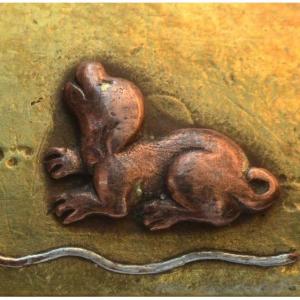
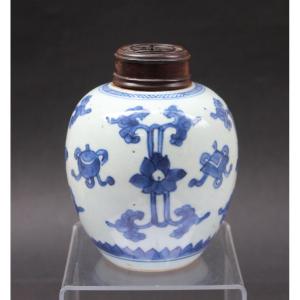
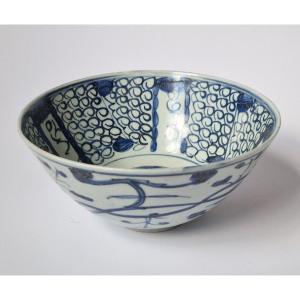
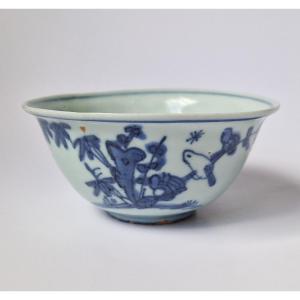
A Blanc de Chine porcelain group depicting a crane beside a rock.China 17thKangxi period (1661-1722)Height: 15.6 cmFor a similar group, see:– Blanc de Chine, P. J. Donnelly, p.123, 112.BA comparable e[...]
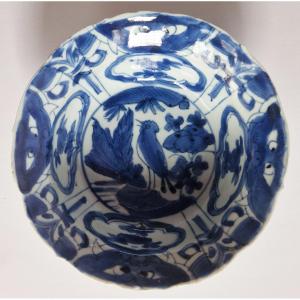
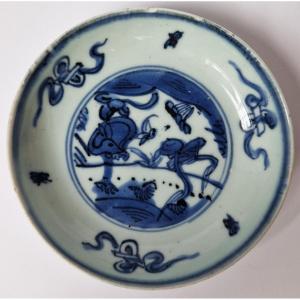
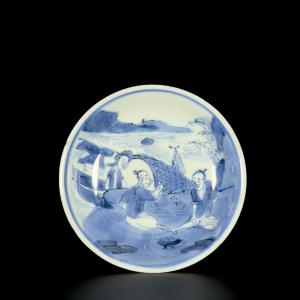
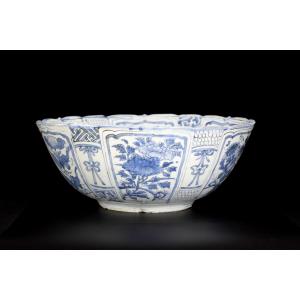
Rare “Kraak” Small Dish from the Wanli Era (1573–1620) in blue and white porcelain Diameter 14.5 cmHeight: 2.7 cmBeautiful small dish of circa 1600-1620, made during the reign of the Wanli Emperor dur[...]
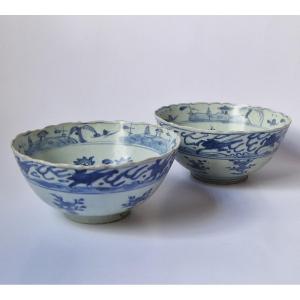
A pair of blue and white porcelain saucers decorated with a plum, a pine, and bamboo.On the reverse, a six-character Chenghua mark.China, 17thWanli period (1573-1620) Diameter: 19.2 cm. The allegory o[...]
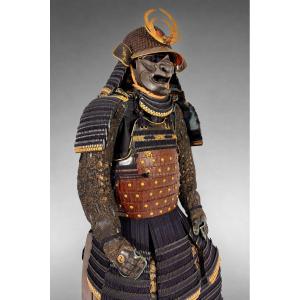
Very beautiful hand forged iron mask with a typical expression; yasurime parallel lines across the entire mask, typical work of the Iwai school, 17th century, black lacquered plates and navy blue suga[...]
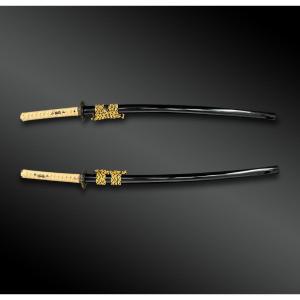
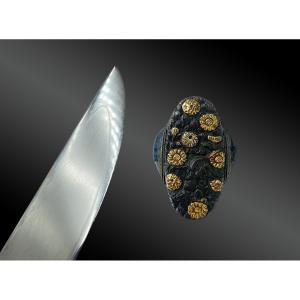
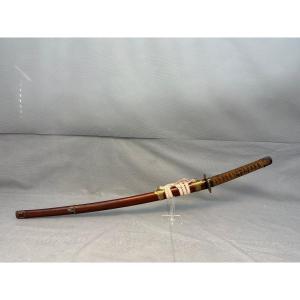
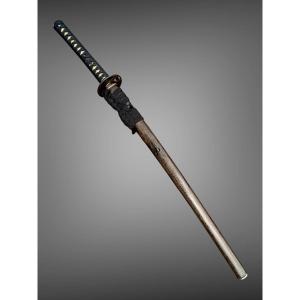
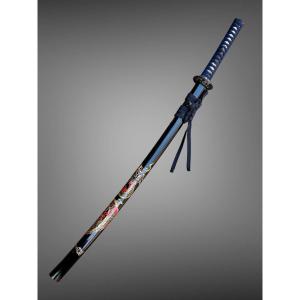
JAPAN - Keisho Era (1596-1615). Samurai katana mounted in shirasaya style. KASHIRA in chased, patinated, and gilded copper depicting stylized plant motifs. FUSHI in finely chased copper with a shakudo[...]
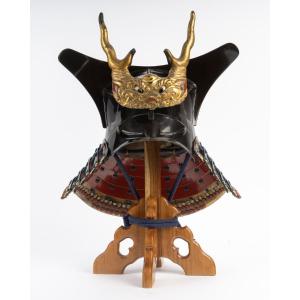
JAPAN - Edo period (1603-1868). KABUTO composed of eight wrought iron plates, the front plate decorated with a Chinese character. THEHEN NO ANA (opening at the top) in copper and copper with three de[...]
JAPAN - Sengoku Period (11450-1600). Bear Armor. KABUTO (helmet) of wrought iron entirely covered in bear hair, centered with the gilded metal mon of the Shuhama clan and adorned with WAKIDATE depicti[...]
A curiosity as well as a virtuoso example of Qing dynasty bronze work, this dragon claw highlights the rich detail that characterized the finest 17th-century Chinese sculptures. With its sharp claws, [...]
A very fine wakizashi by Hisamichi with a Tokubetsu certificate. Muromachi period. It has a 56 cm nagasa (stem). It retains its 19th-century polish and is extremely well preserved. It features a very [...]
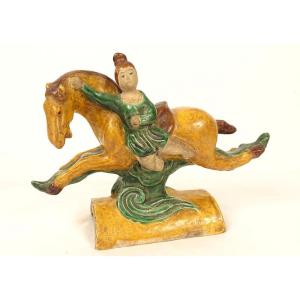
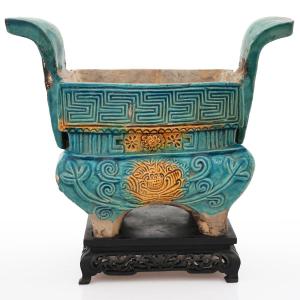
Description A Chinese Sancai porcelain glazed censer, Ming dinasty, 17th centuryDimensions HxLxD 11,81in x 9,06in x 4,33inProvenancePrivate collectionConditionsShortages and defects. Restorations.
A Chinese porcelain powder-blue-ground blue and white 'Budai' dish.Qing dynasty, Kangxi period.Dimensions:Diameter 23.5 cm, 9¼ in. Height 4.5 cm, 1.77 in.Provenance:Private collection, UKCondition:The[...]
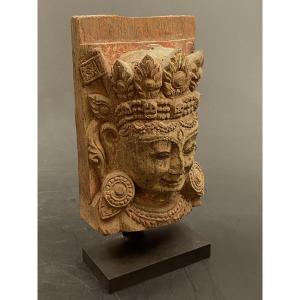
High relief carved wood representing "Bhairava", epithet of the god Shiva in his wrathful form, from India - very beautiful original patina - made in the 17th or 18th century - in very good overall co[...]
Bronze representation of Vedanta Desika - South India, 17th-18th century. Vedanta Desika is depicted seated. The fingers of the right hand are missing. The bronze is of very high quality. Height 13.3 [...]
Gilt bronze Guanyin. China, Ming dynasty, 17th century.The deity is depicted seated in the lotus position. It is cast in bronze using the lost-wax method and gilded with gold leaf over lacquer. Chines[...]
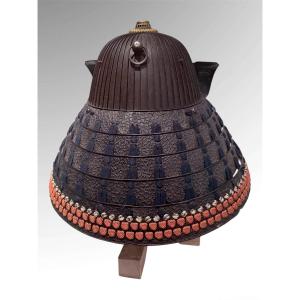
JAPAN - Momoyama Period (1573-1603). KABUTO composed of 62 strips of matte brown lacquered wrought iron, assembled with small raised rivets. THEHEN NO ANA (opening at the top) in patinated and gilded [...]
A biscuit‑enamelled ‘Brinjal’ porcelain bowl, of conical form with aubergine glaze. The exterior is decorated with incised sprays of flowers in enamelled white, yellow and green. The interior is adorn[...]
Very beautiful, high-quality samurai saddle, constructed of lacquered wood with various reliefs, Kamon from the Asano Yukinaga family, signed underneath, Early Edo period
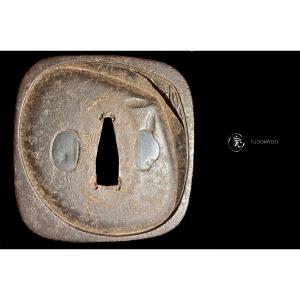
Kikka-gata shaped iron tsuba. Openwork in the Maru Bori style with three fans.The rest of the tsuba is inlaid with Hira Boran foliage and branches. One side is slightly more oxidized. Dimensions: 72 m[...]
Brown lacquered Yokohagido-type armor, Geuroku period, late 17th century, circa 1680-1700. Kabuto (helmet) of the suji-bashi type with 59 plates; the fukigaeshi (guards) are missing, no lining. Weight[...]
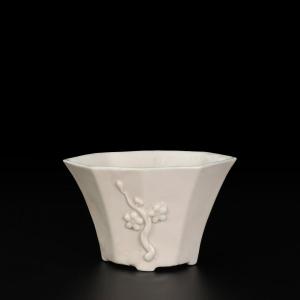
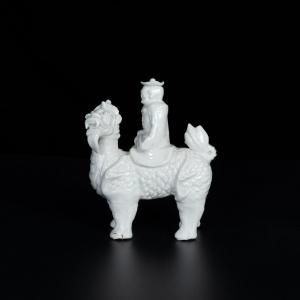
Chinese porcelain incense holder sculpture, known as "white China," from the Dehua kilns, Kangxi period, 17th century. Depicts a male guardian lion or Foo dog seated on a large rectangular base. The g[...]
I am pleased to present a superb example of the famous celadon ware produced in the Longquan kilns in southwest Zhejiang province. The Longquan kilns have been renowned worldwide since the 10th centur[...]
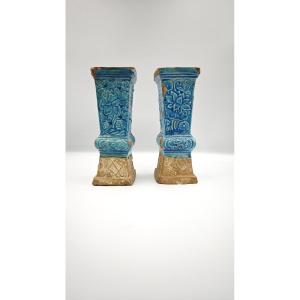
Pair of symmetrical decorative vases. The body features geometric relief decoration, typical of archaic art. The long neck is encircled by a nearly three-dimensional image of a dragon. The vases are o[...]
The vases come from the ship Hon Can, which sank in 1690 off the coast of Vietnam. They were recovered in 1990-1991 and then sold a year later at Christie's. [source: Nyuen Dinh Chien, Ceramics of fiv[...]
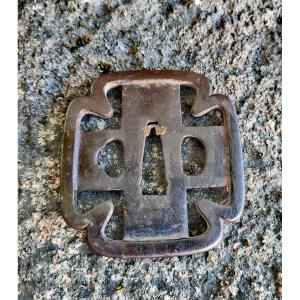
Magnificent antique tsuba from the mid-Edo period, made of shakudo (brass), 17th century. Shipping not included. Weight: 107 grams. Dimensions: Diameter 81 mm. Thickness: 3.1 mm. Type: Maru Gata (Roun[...]
Tokkuri porcelain, partially lacquered. Late 17th century. Lacquered porcelain from this period is very rare; moreover, I know of no other example of lacquered Tokkuri. Usually, the lacquered areas of[...]
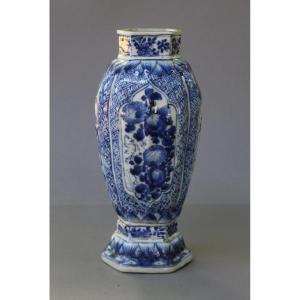
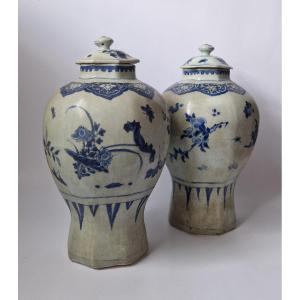
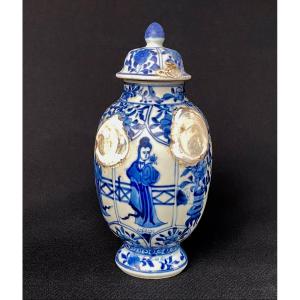
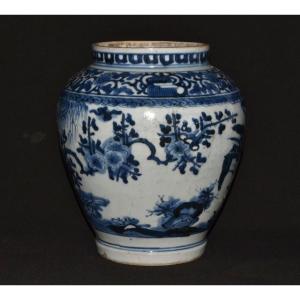
Dimensions: H 28.5 cm x D 9.5 cm. Pair of baluster-shaped Chinese porcelain vases, decorated with peonies, a symbol of nobility and prosperity in China, in various shades of blue within arched, drawn [...]
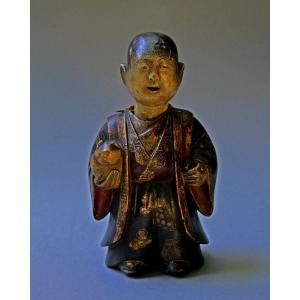
The dignitary is depicted seated on his throne, which is partially covered by a tiger skin. The sculpture is carved from a single piece of wood, lacquered and gilded with 24-karat gold leaf. The gildi[...]
A ceramic plate painted under a cobalt glaze. Its decoration depicts a genre scene showing two male figures conversing while strolling through a green space. They are walking towards the mountain rang[...]
SABER known as Katana signed Tango no Kami Fujiwara Shigetsune and Echizen Oite Toyohara with Tokubetsu Hozon certificateEchizen Province, JapanEdo period (1660-1680)Steel, wood, lacquer, copper, horn[...]
A very fine wakizashi with its original Shinto blade, "Heianjo Ju Masakuni" (平安城政国), featuring a magnificent koshirae and shirasaya, along with a Sayagaki.
Price includes shipping within the EU, [...]
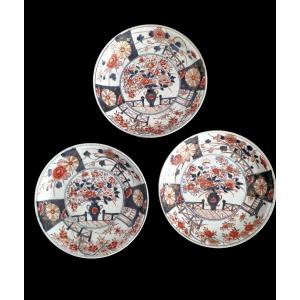
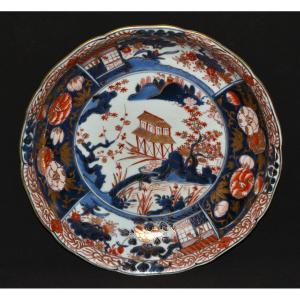
Large baluster vase with a long flared neck in Arita porcelain, decorated in the Imari palette with lakeside landscapes in fan-shaped reserves and red and gold chrysanthemums and peonies on a blue gr[...]
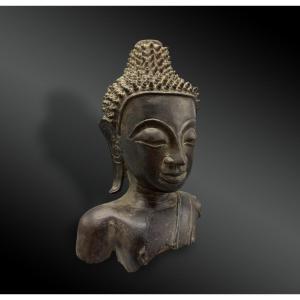
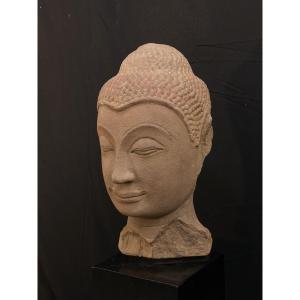
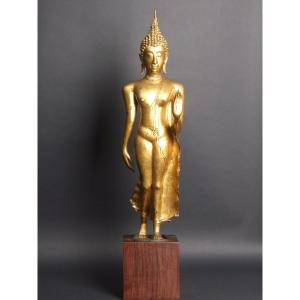
A fine Buddha head characteristic of the classical Thai period: an oval and serene face, arched eyebrows meeting the bridge of the nose, almond-shaped, half-closed eyes, slightly smiling lips, long ea[...]
JAPAN, 17th-18th century. Katana with a shinogi-zukuri blade, gunome hamon, nakago with a mekugi-ana, signed Mikawa (no) kamiDaidô. Koshirae with black lacquer scabbard, iron maru-gata tsuba decorated[...]
A kabuto that belonged to the military commander Todo Takamitsu of the Todo clan of Ō-mi. A third-generation descendant of the elder sister of Todo Taka-tora (1556-1630), daimyo, general under Nobunag[...]
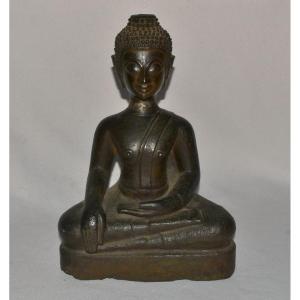
Shakyamuni Buddha or historical Buddha, Siddhartha Gautama, in gilt bronze, at the moment of enlightenment under the Bodhi tree, in the Bhumisparsha mudra posture (position in which the Buddha touches[...]
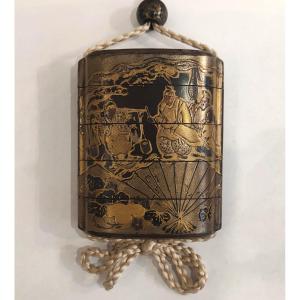
An inro opening by four cases, decorated with urushi lacquer of the Nashiji nuri type, and featuring raised black and gold lacquer depicting sheaves of rice. Original inlays now lost. The original O[...]
The statue is carved and painted wood, depicting a Bijin (beautiful woman) dressed in a richly decorated winter kimono. Her face and hands are painted white, as was the fashion during the Edo period; [...]
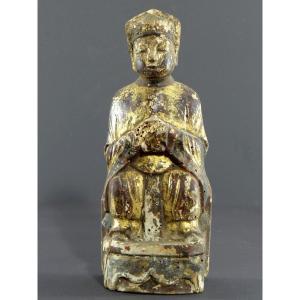
A rare and visually commanding Chinese temple sculpture dating from the mid-17th century, carved in the round and retaining its original polychrome surface. The figure, wearing a civil cap and long gi[...]
A figure of a musician in embossed and gilded copper plate representing one of the 1,000 musicians in the retinue of the Chinese Emperor Huangdi (known as the Yellow Emperor). Ming period.
A refined Japanese porcelain dish from the first great Arita enamel phase. Painted in the aka-e palette of iron-red, green and yellow over a luminous thin white body, its composition is perfectly bala[...]
Delft tin-glazed earthenware pitcher (late 17th/early 18th century). Decorated in shades of blue with Chinese motifs, inspired by Wanli period Chinese porcelain. Features an oblique gadrooned body and[...]
Kanbun era (1661-1673). Musashi ProvinceOf the honzukuri, iorimune, chugissaki, torizori type, and a koi-tame hada forge. A suguha and nie temper ending with a komaru böshi.The nakago suriage is pierc[...]
Japan Edo, circa 1700Modelled after a Dutch metal prototype, of pear shape with spirally lobed sides, showing a bulbous swelling with classical fluting below the neck, surmounted by a frieze of leiwen[...]
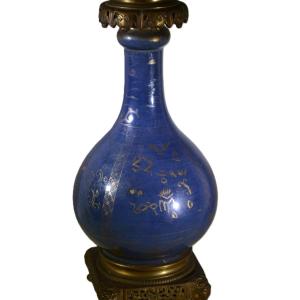
An elegant composite lamp composed of a 17th-century Chinese blue and white porcelain vase, later mounted in the 19th century as an oil lamp with a finely cast gilt bronze (ormolu) base and brass burn[...]
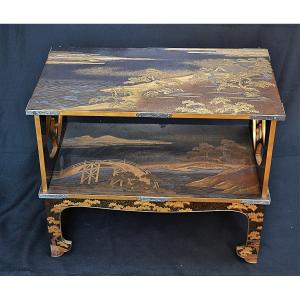
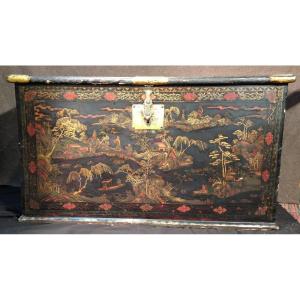
The two panels are in black lacquer, the first is decorated with gold powder with scholars gathered in a pavilion, in the middle of a lake landscape, on the reverse are written Chinese characters prob[...]
Thailand, circa 16th-17th century ADMaterialSandstoneDimensionsHeight 45 cmWidth 34 cmProvenance– French private collection, 1980s– Belgian private collection
Nephrite hookah stem tube, gold inlay. The jade is deeply grooved and filled with pure hammered gold. Simple decoration of stylized flowers and leaves, probably tulips. Ottoman Empire, ca. 1650–1750. [...]
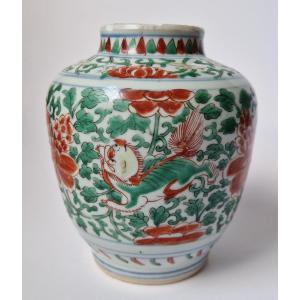
Beautiful porcelain vase with polychrome Wucai enamel decoration of children playing among leafy branches bearing peonies. Six-character Tiangi mark (1621-1627) on the neck. In good condition, pierced[...]
Blanc de Chine figure of Guanyin holding a child in her arms. She is standing on a pierced rock. Its face is a particularly serene expression. The porcelain is covered with a creamy white glaze. Chin[...]
Bronze Buddha head resting on a wooden base. The surface has a beautiful dark and nuanced patina, a testament to its antiquity. The peaceful face, half-closed eyes and a slight inner smile, express th[...]
Lovely small bronze Buddha head resting on a wooden base. Its brown-green patina testifies to its antiquity and gives the work an authentic and refined character. Made in Thailand, in the kingdom of A[...]
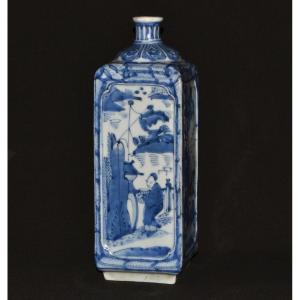
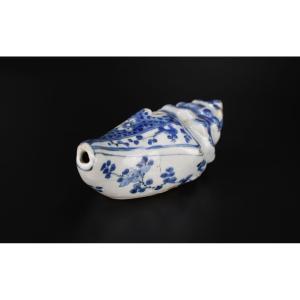
Rectangular body with blue and white decoration, flowers and bamboo branches. Production of the Arita kilns, Edo period, towards the end of the 17th century. 21 cm HighGood general condition with some[...]
Proantic uses a cookie to analyze traffic and improve its service by using Google Analytics. Data sent to Google Analytics (frequency of visits to the site and pages visited) are anonymous. No other cookie tracks your activity, your personal data is not collected. Thank you for helping us to have better understanding how Proantic is used.