




17th-century Nepalese Carved Architectural Element
17th-century Nepalese carved architectural element
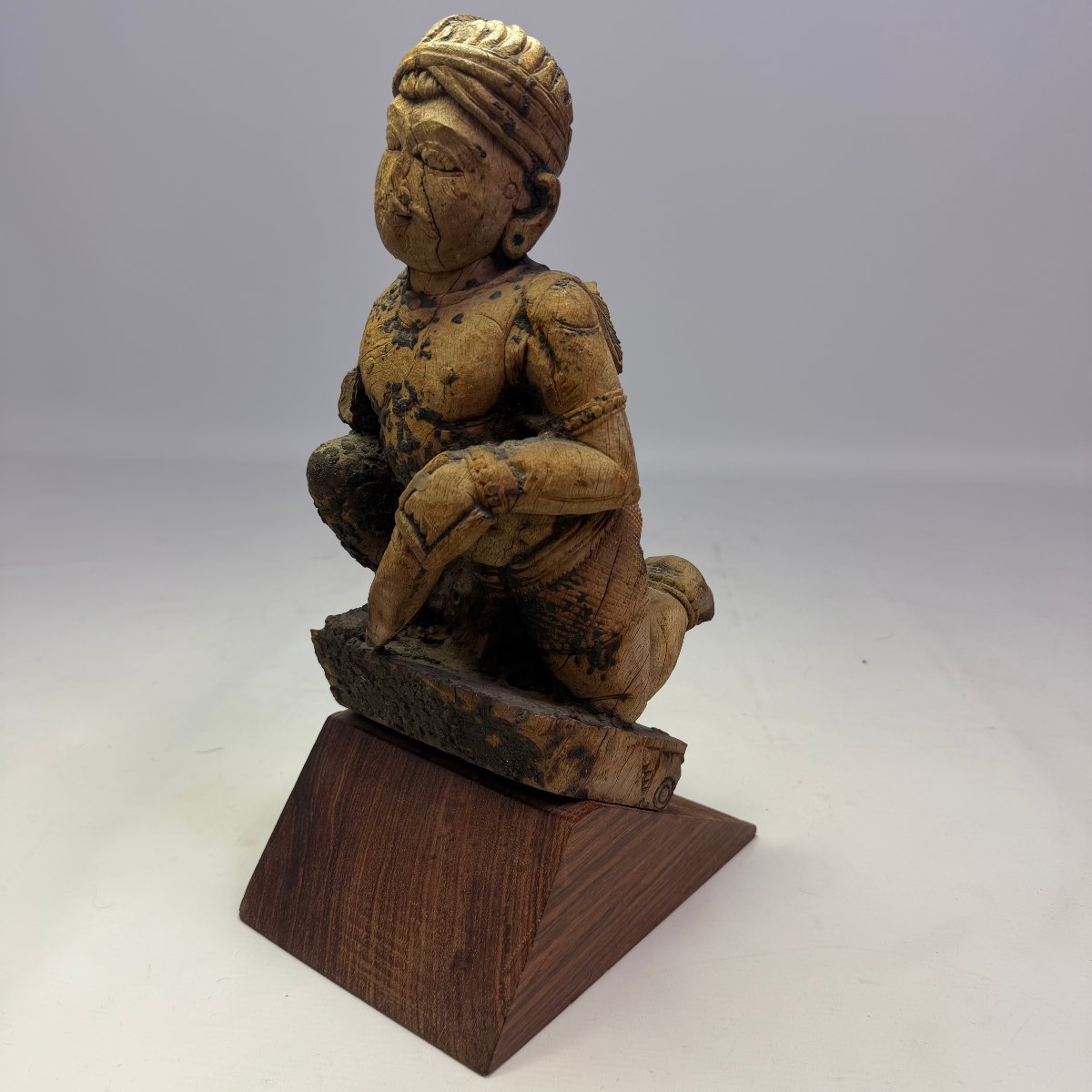
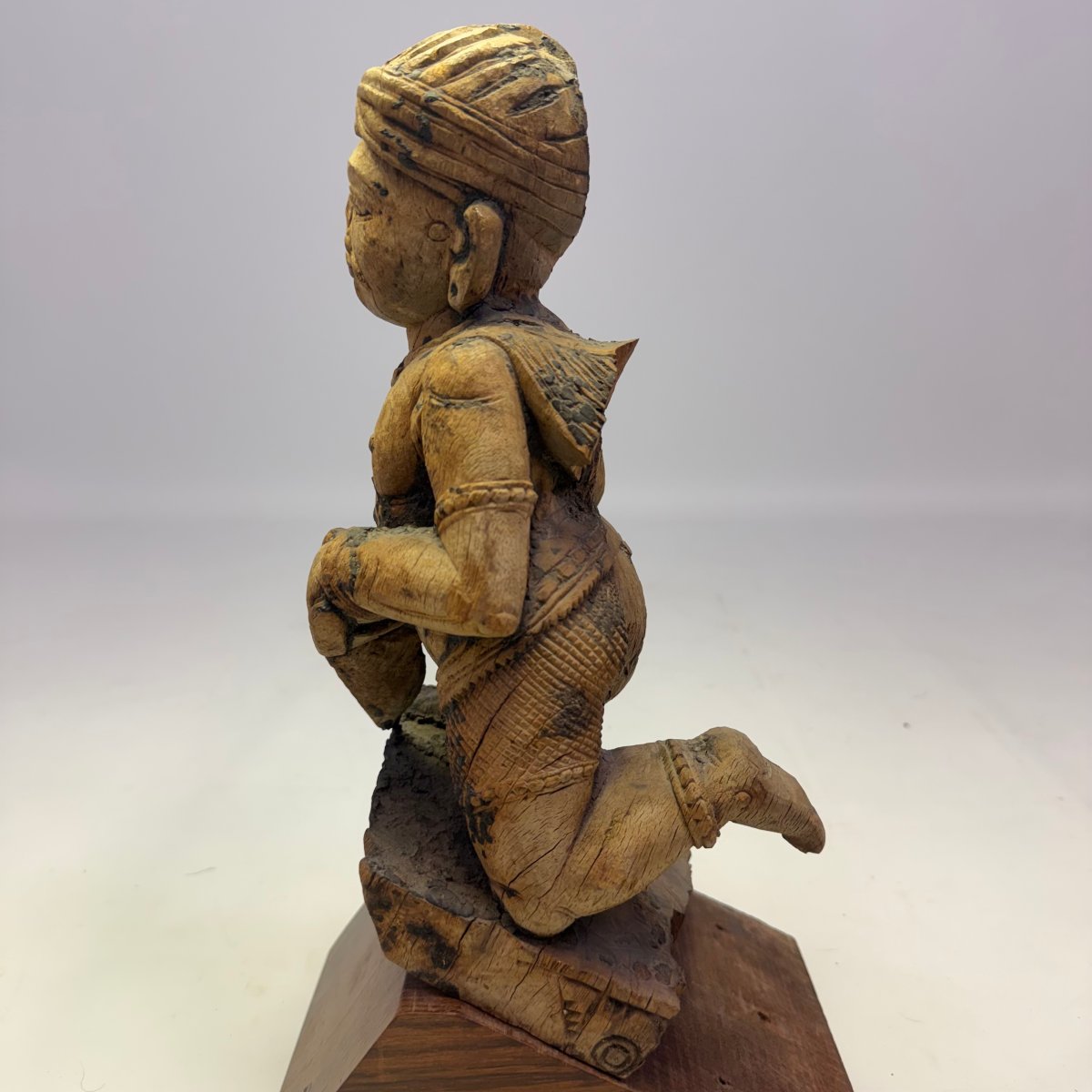
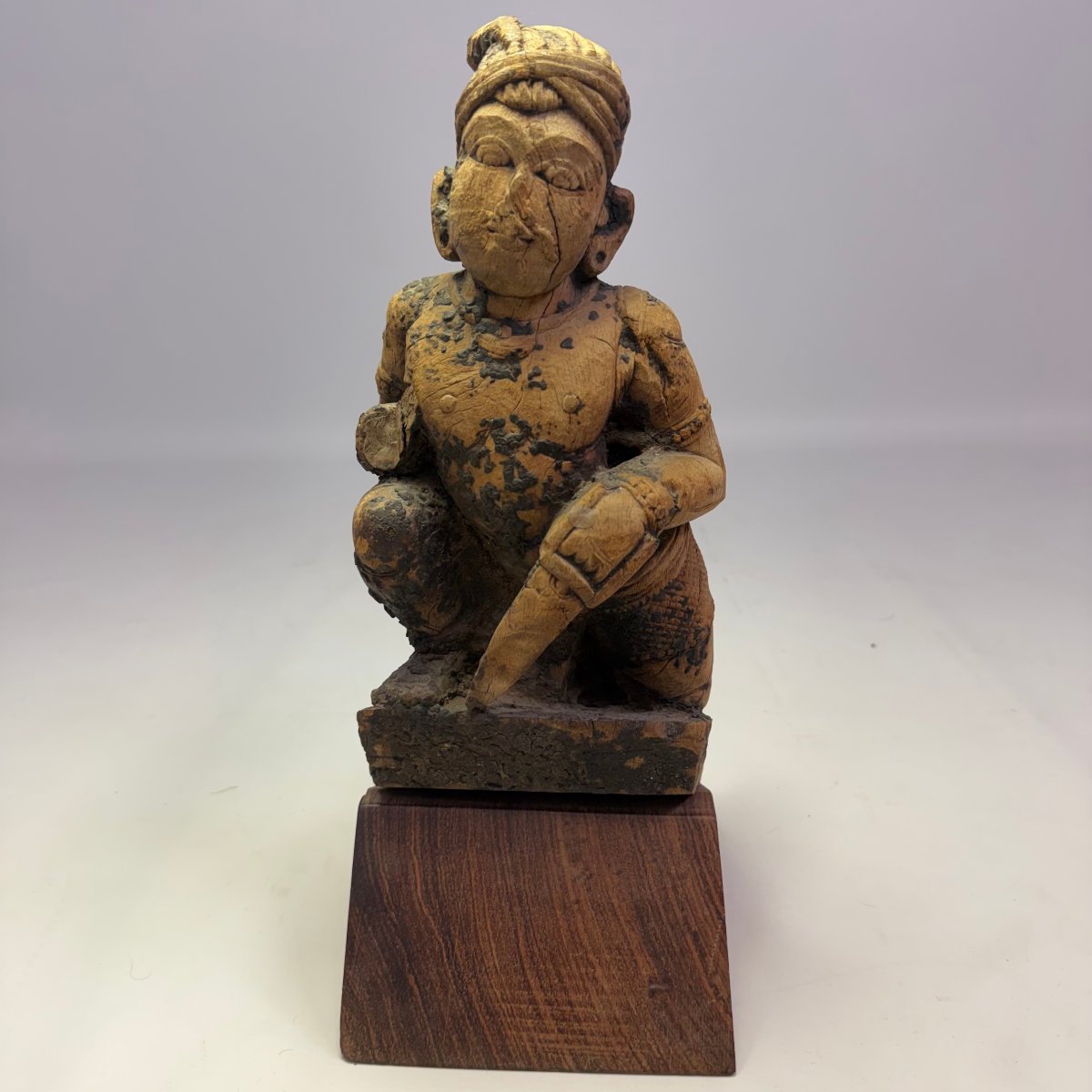
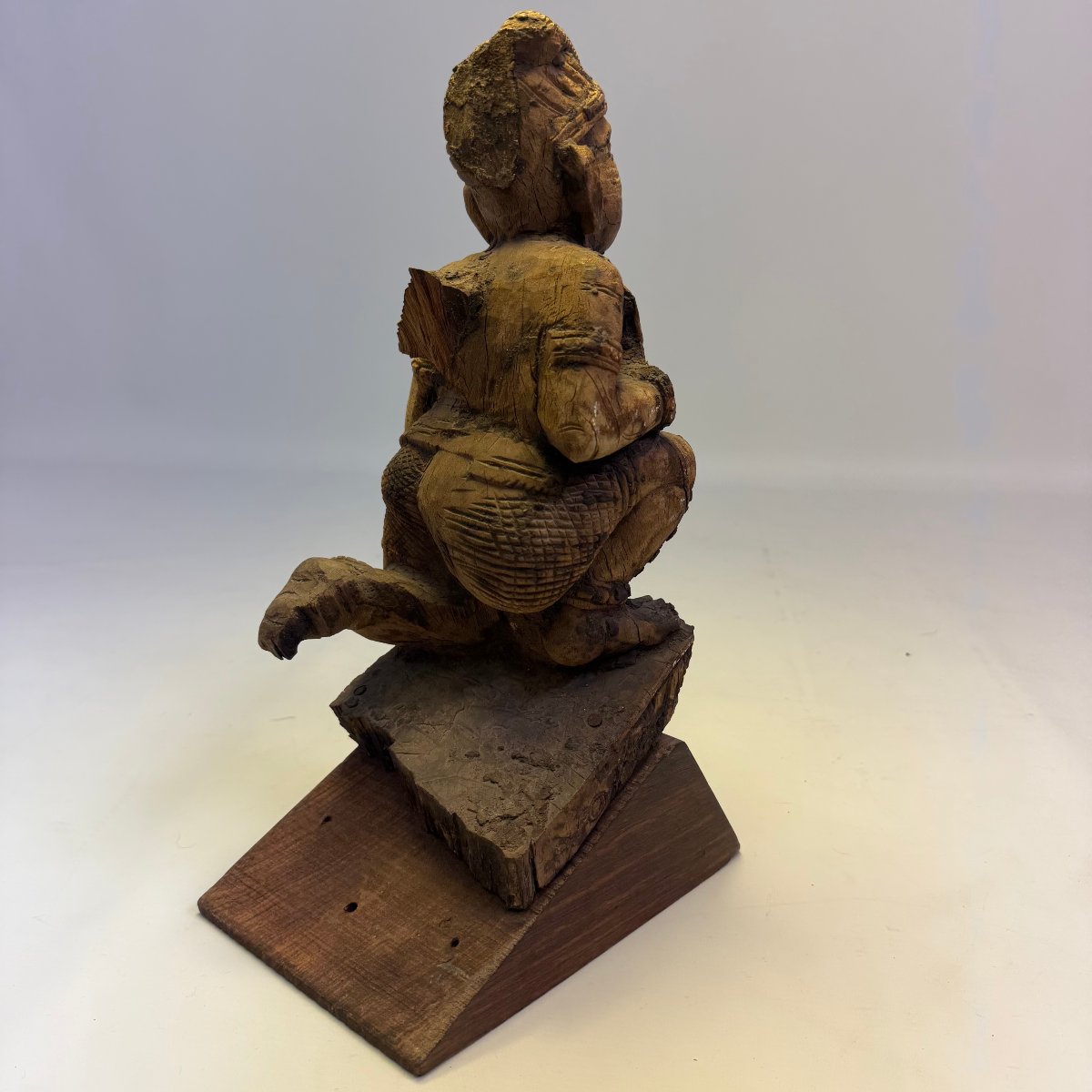
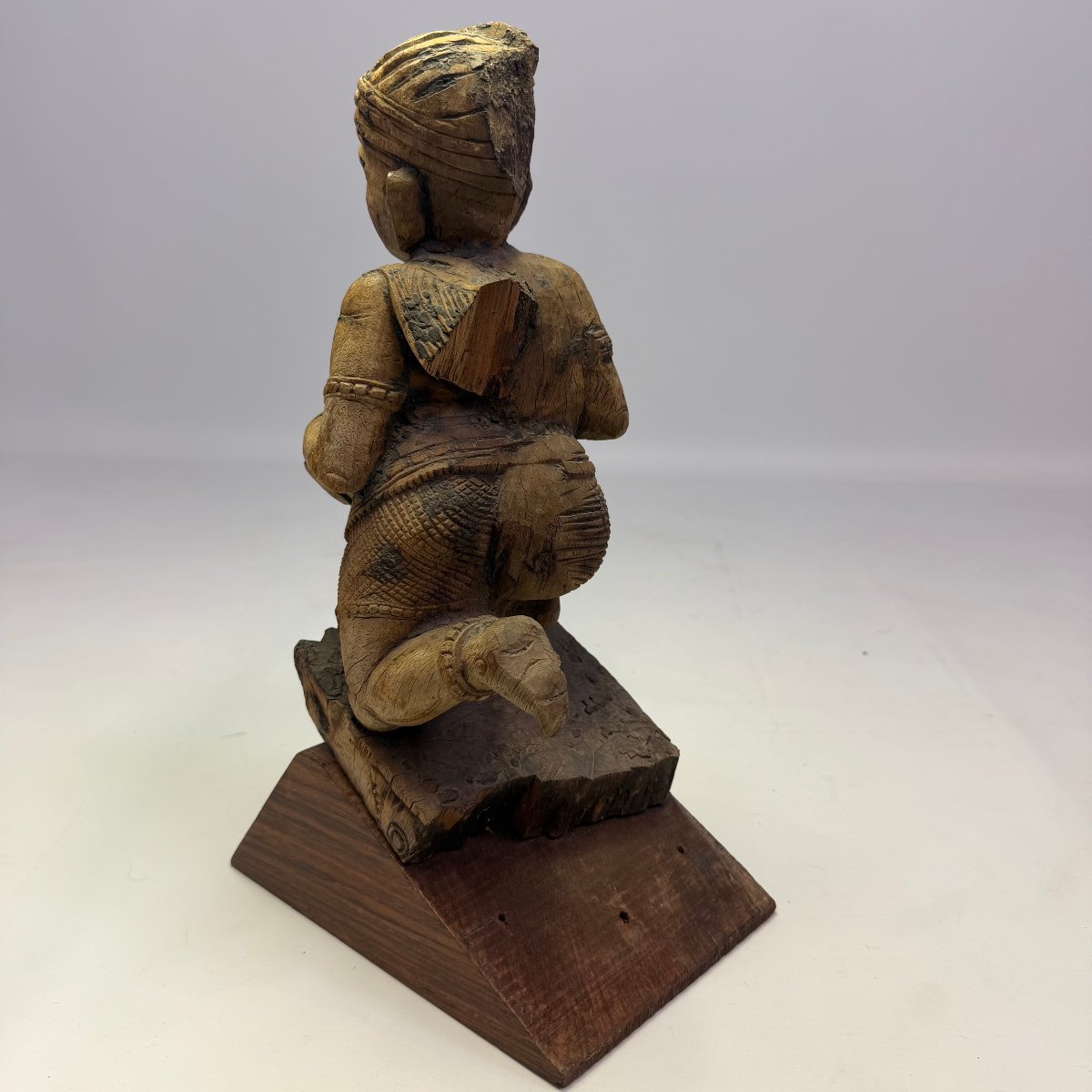
Depiction of a kneeling figure, most likely a nobleman or a court servant, carved from wood
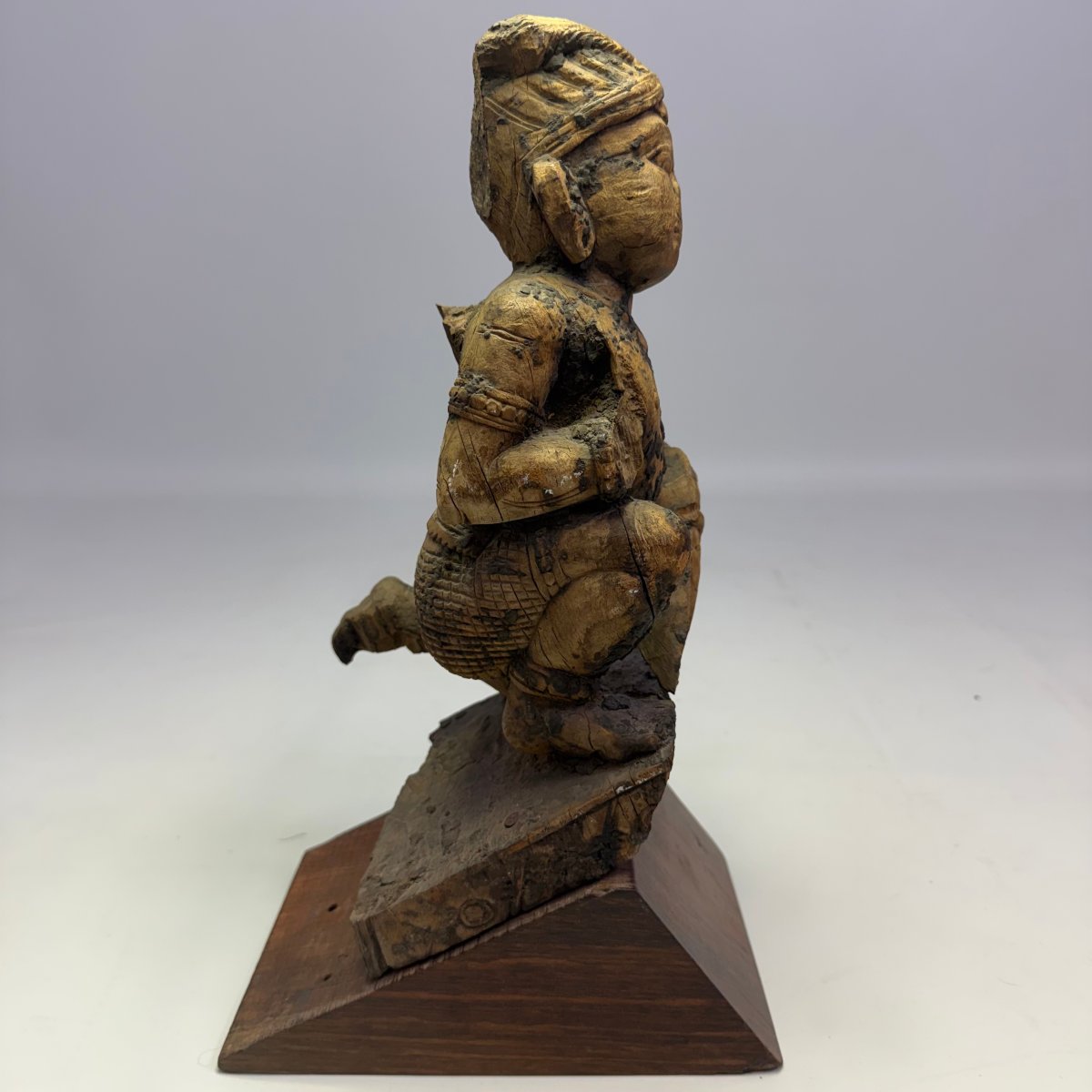
The figure is carved in a dynamic, asymmetrical kneeling posture, with the right knee raised and the left knee resting on a weathered wooden ledge. The face, with its almond-shaped eyes with thick eyelids and full cheeks, conveys a calm and contemplative expression, typical of Newar craftsmanship from the Kathmandu Valley
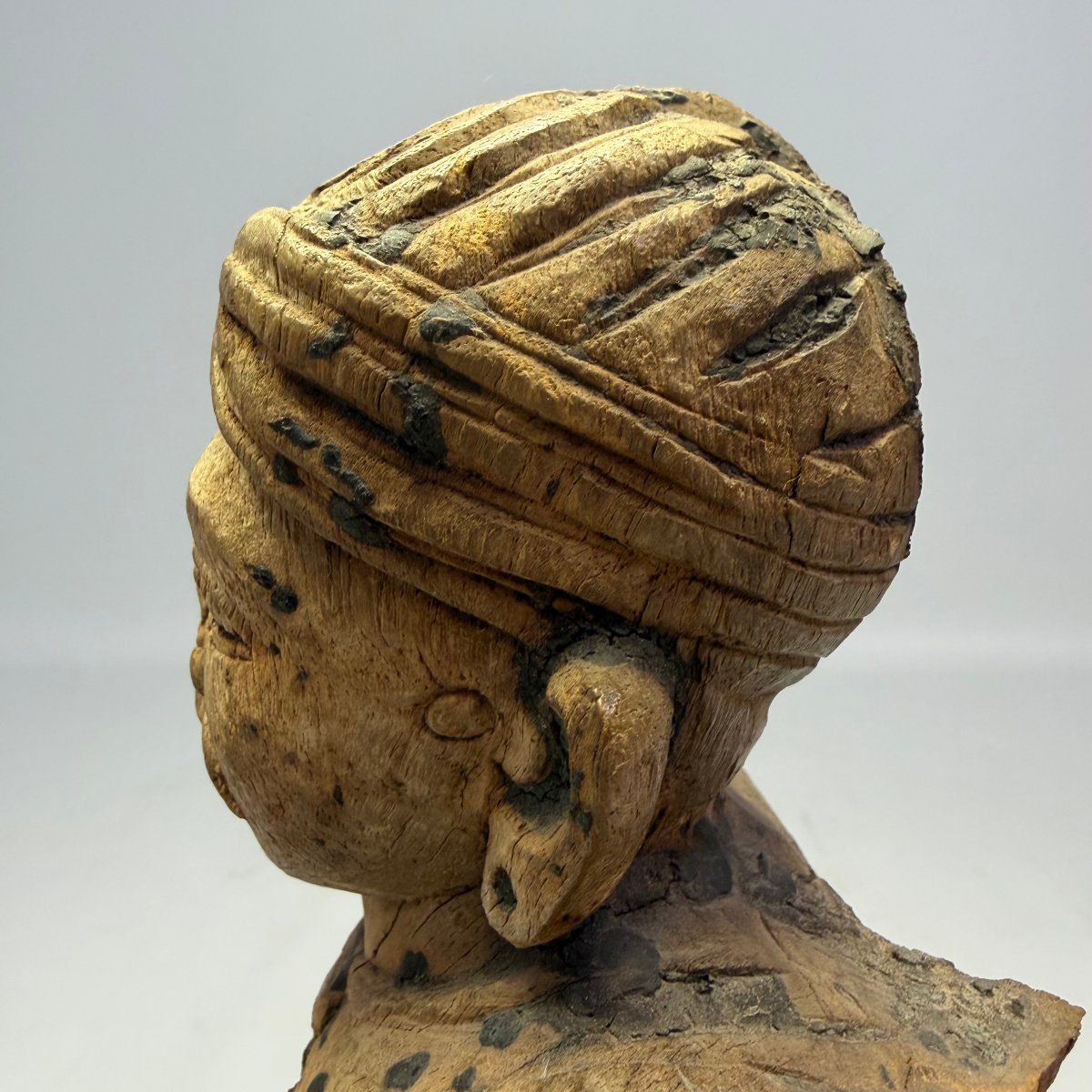
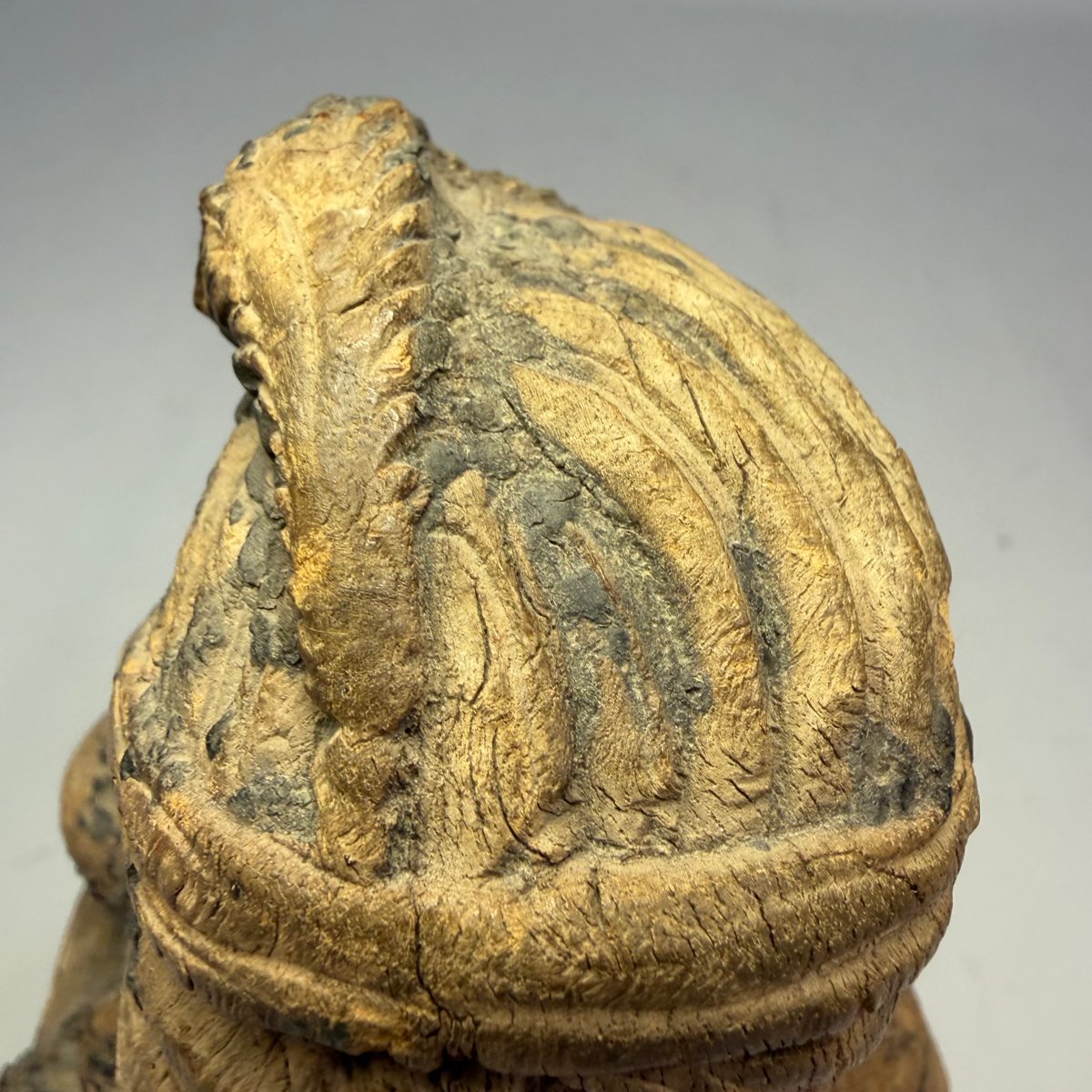
He wears a tightly wrapped, ribbed turban and large circular ear ornaments (kundala) set in stretched earlobes. A lower garment (dhoti) with a hatched pattern wraps around the hips and thighs, held in place by a carved belt at the waist and complemented by beaded bracelets and anklets.
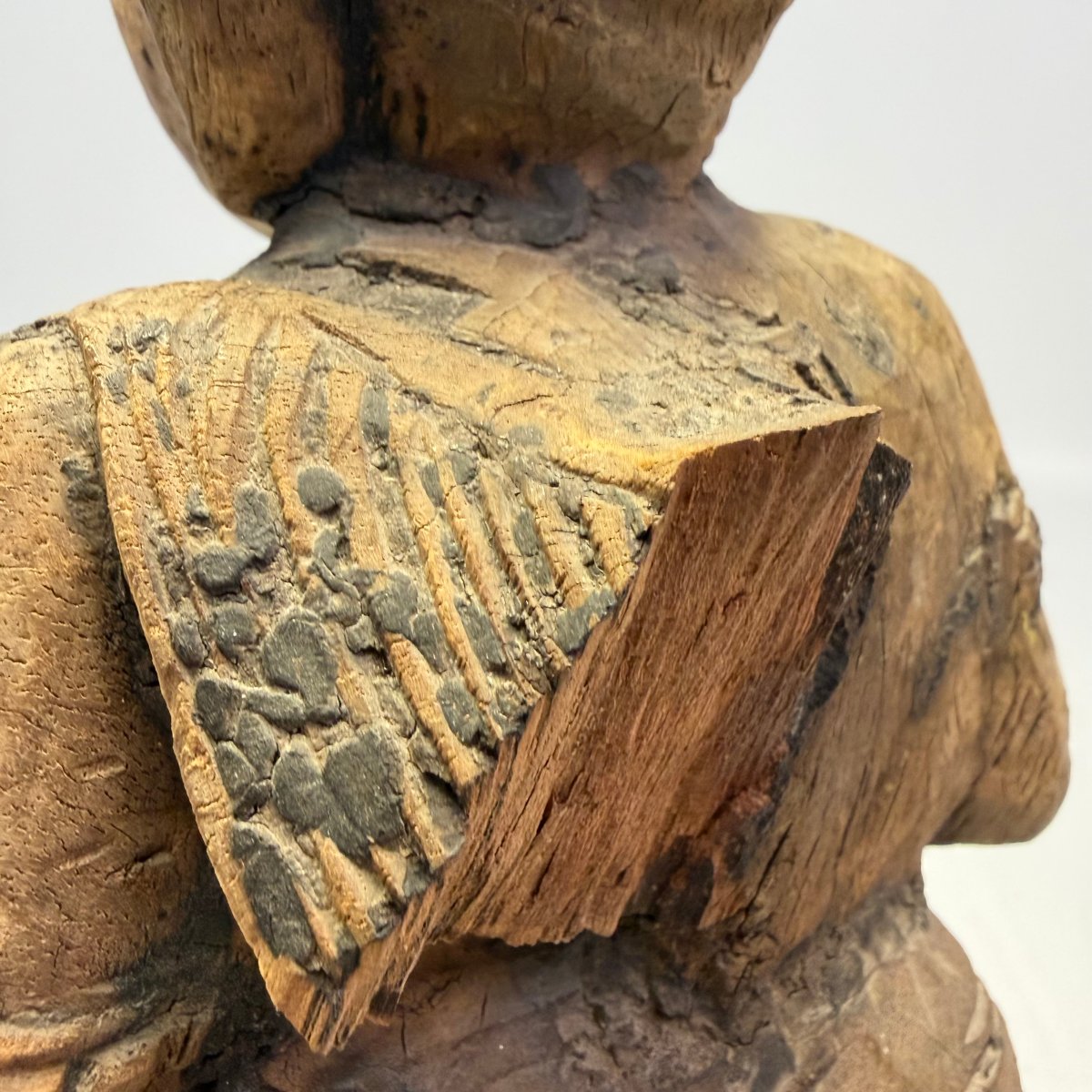
His left hand rests on his raised knee, holding a dagger, while his right hand is raised toward his chest; the object it once held is now missing. A distinct, angular structural break, running across the upper back and shoulders, indicates where this figure was originally attached to a larger beam in the roof of a temple or palace.
The hard, dense wood exhibits deep cracks due to age, a weathered grain, and scattered traces of dark pigment or polychrome, particularly on the chest, neck, and headdress. It is securely mounted on a modern, dark-wood display base that is angled to reflect the oblique orientation it would have had on the facade of a building.
The statue measures 14.5 cm in width and depth, and 30 cm in height.
The base measures 15 cm wide, 21 cm deep, and 8 cm high.
Total weight: 2.6 kg.
A 17th-century Nepalese craftwork.
Period: 17th century
Style: Asian art
Condition: En l'etat
Material: Solid wood
Width: 14,5 cm
Height: 30 cm
Depth: 14,5 cm
Reference (ID): 1854958
Availability: In stock