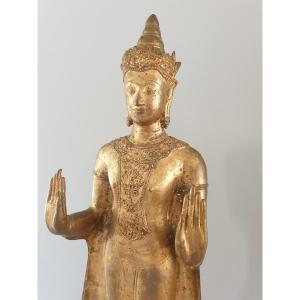



Former Kingdom Of Siam, Ayutthaya, 16th–17th Centuries, Buddha Head In Lacquered And Gilded Bronze
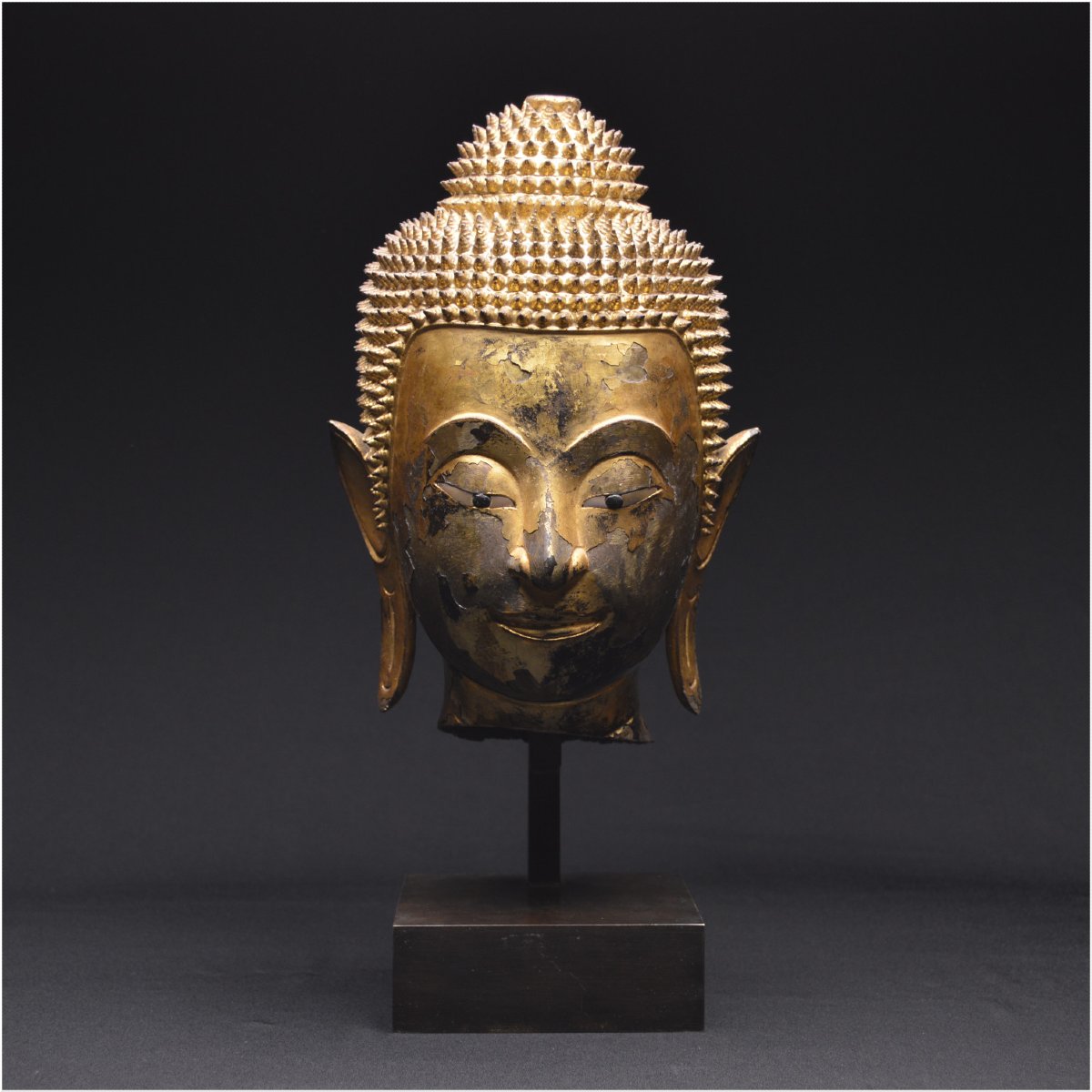
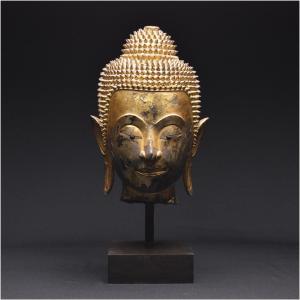
Head of the Buddha Sakyamuni, made of bronze, formerly lacquered and gilded
Former Kingdom of Siam
Ayutthaya School
16th–17th century
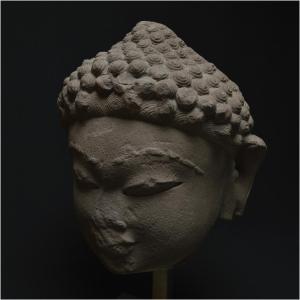
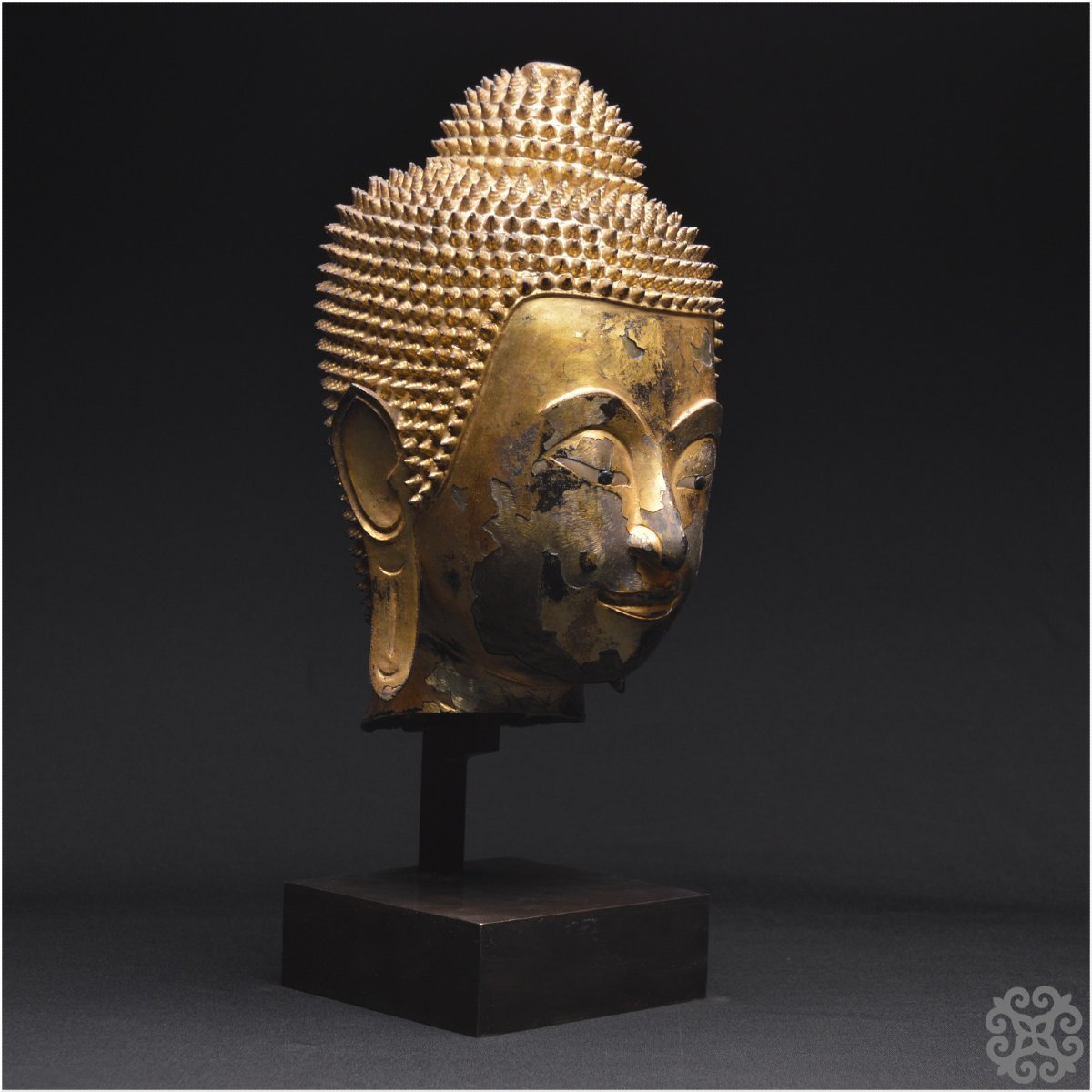
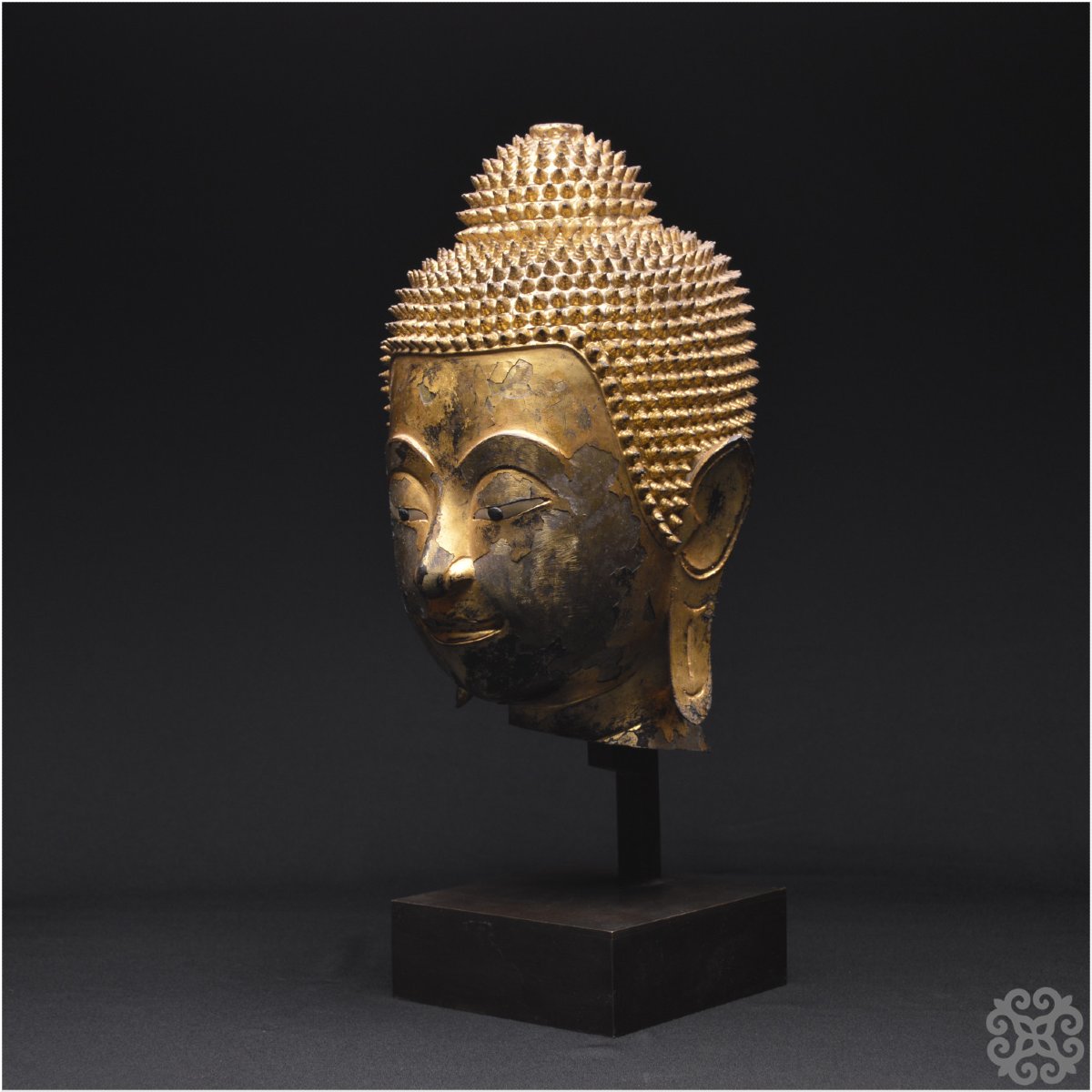
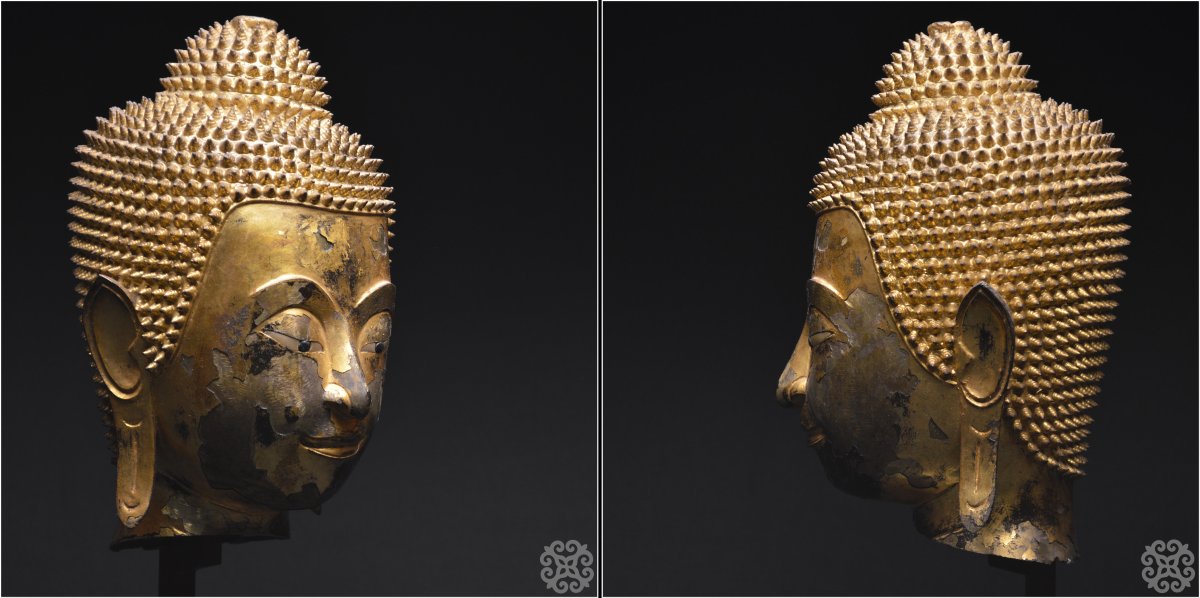
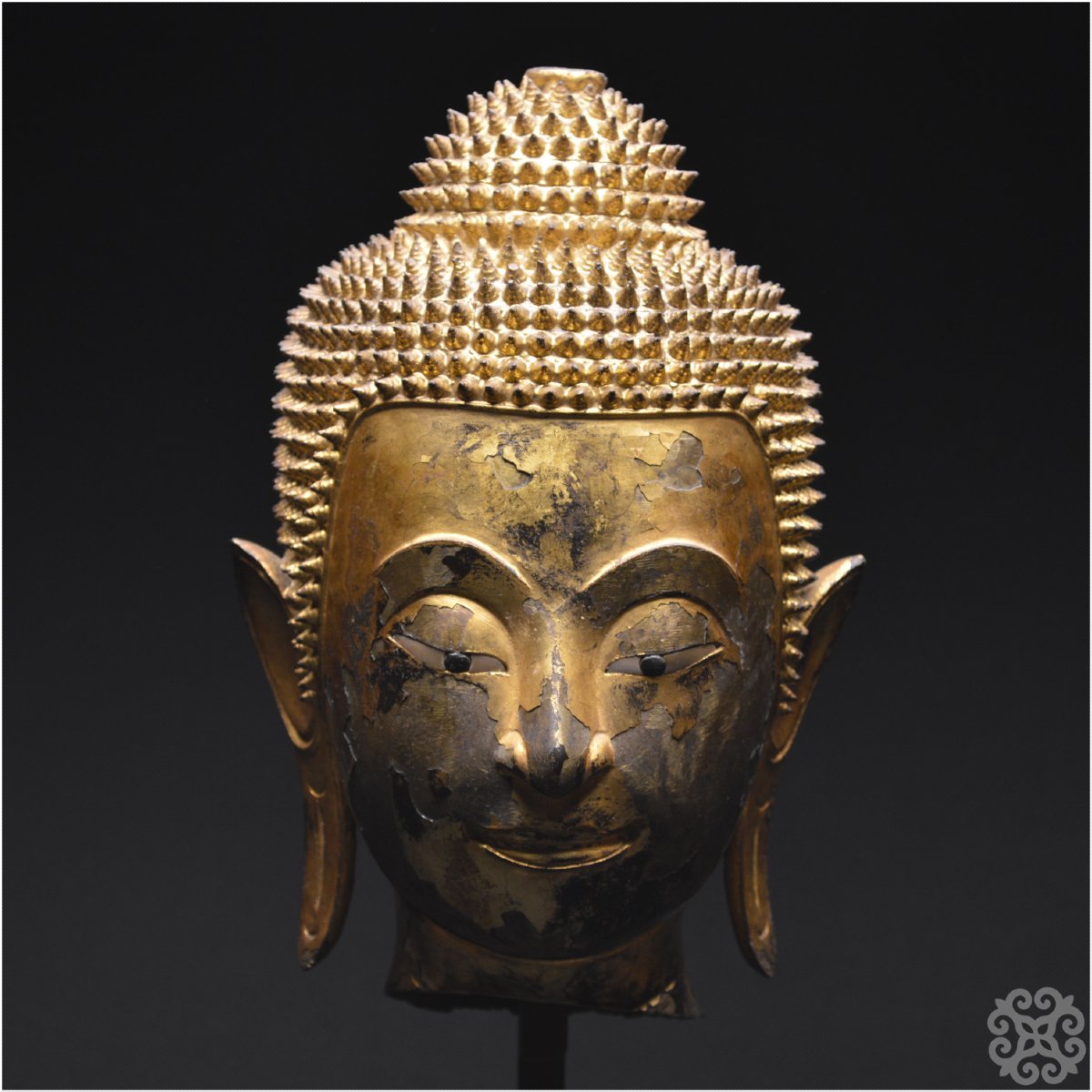
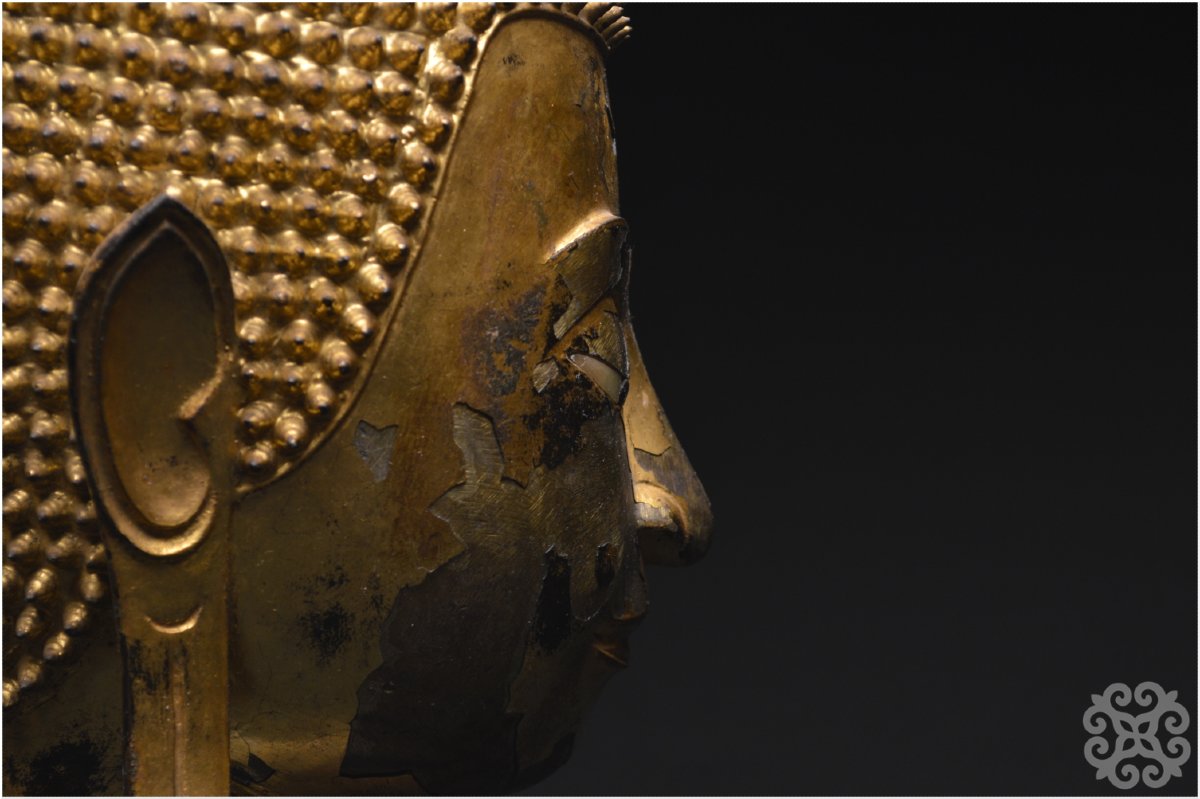
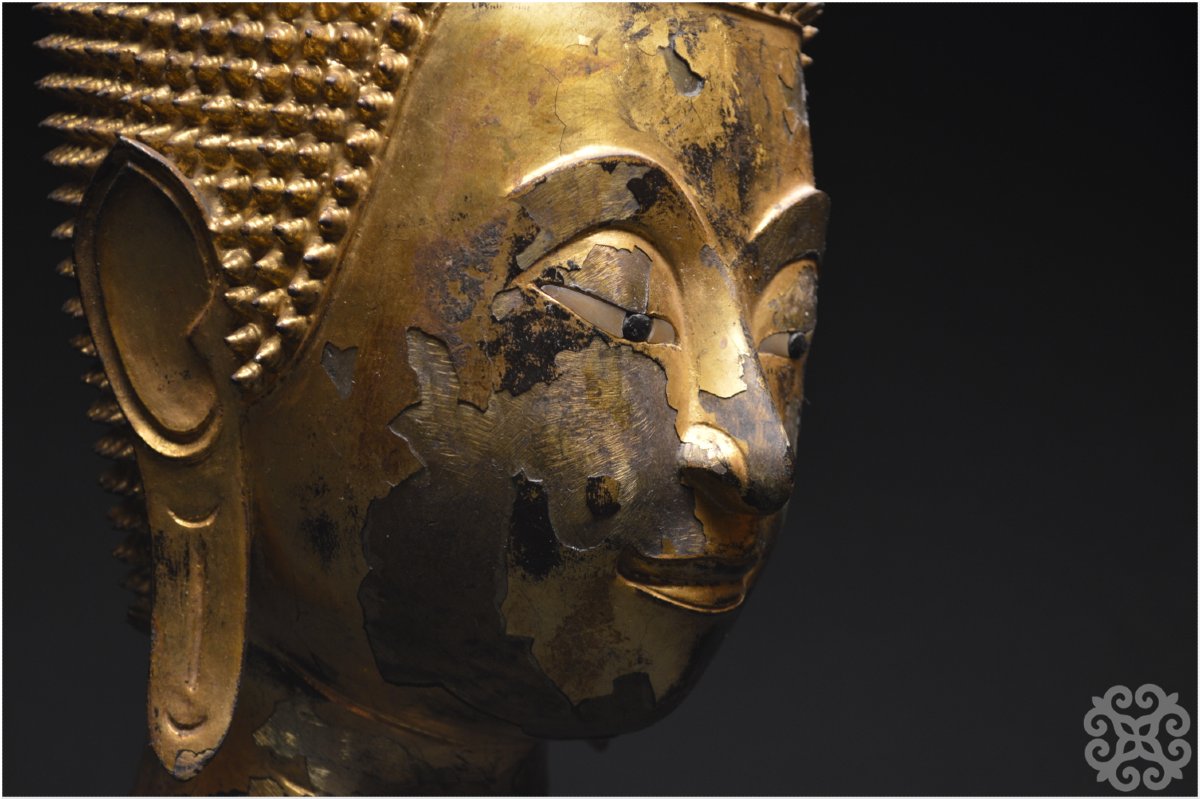
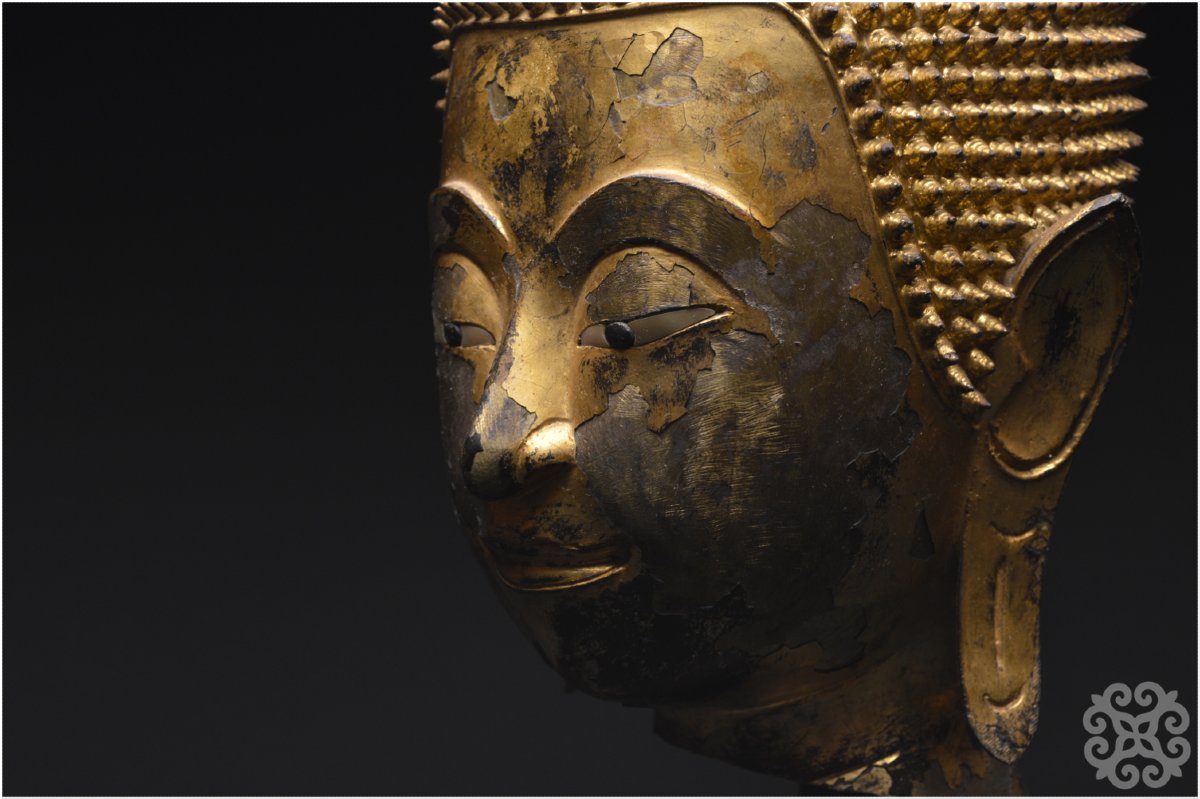
The face, with a youthful appearance and imbued with great gentleness, is set within a harmonious oval. It is distinguished by broad, curved brow ridges that meet at the base of the nose. The lenticular eyes, inlaid with mother-of-pearl and with a meditative gaze, feature thick eyelids. The pupils, outlined in black, accentuate the expression of inner peace and compassion, thereby reinforcing the serenity of the Enlightened One.
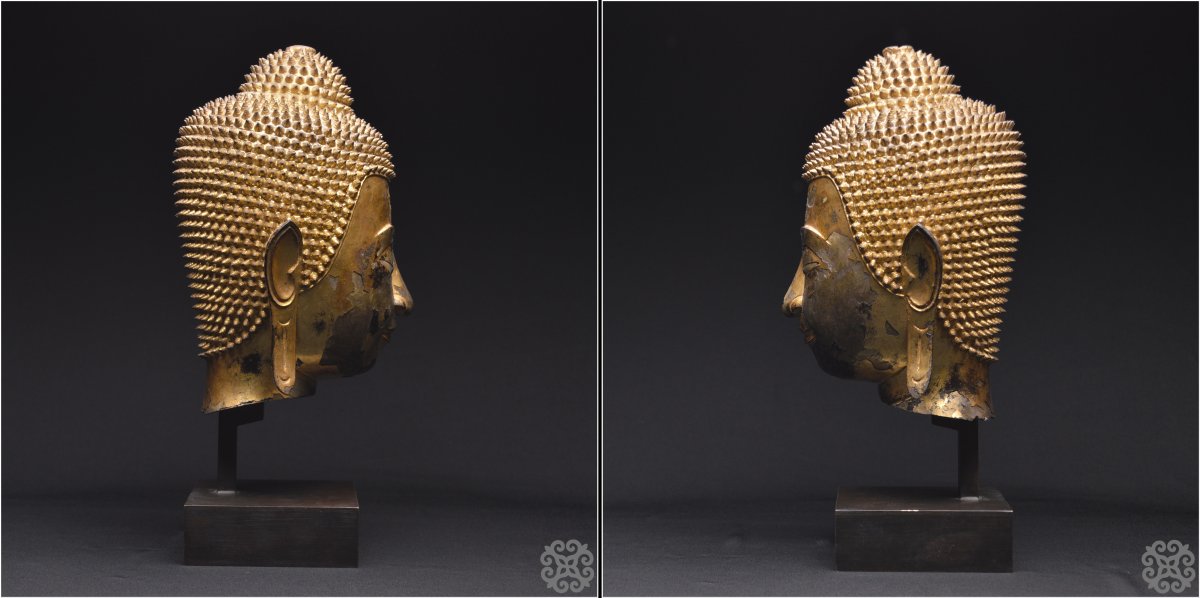
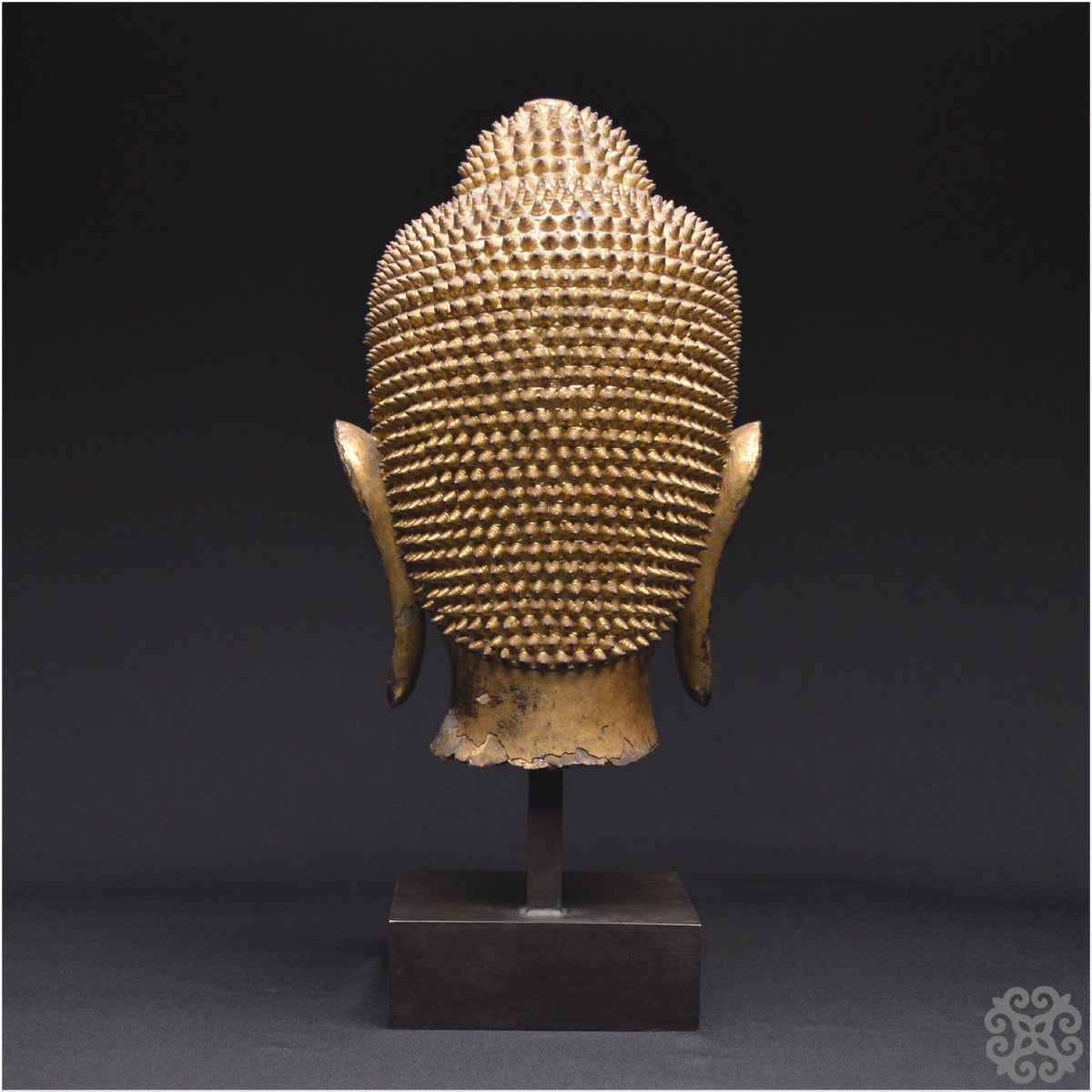
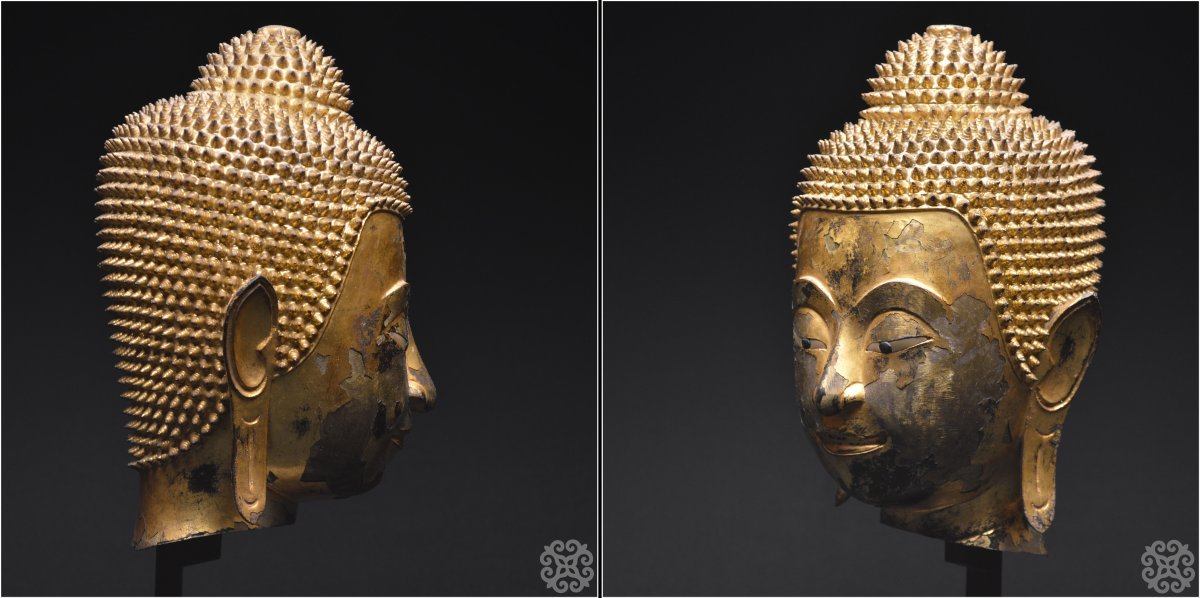
The nose, shaped like an eagle’s beak with slightly flared nostrils, sits above a mouth with delicate lips, the corners of which form a genuine smile. The forehead is adorned with a fine border, while the hair is depicted by a multitude of small, tapered, and evenly spaced spikes. The top of the skull is crowned with a broad and tall ushnisha, once flanked by a rasmi with a flamed pattern. The long curved ears, stylized to a point and characteristic of the Ayutthaya school, feature lobes stretched by the weight of the ornaments that the Blessed One used to wear, thus symbolizing his royal origin.
From the 14th to the 17th century, theKingdom of Ayutthaya was one of Siam’s great artistic centers. Building on earlier traditions, notably those of Sukhothai and U Thong, Buddhist statuary developed an original stylistic language, marked by a diversity of forms and the evolution of aesthetic canons. Depictions of the Buddha are distinguished by faces with soft contours, expressions imbued with serenity, hair rendered in small, regular reliefs, and an ushnisha sometimes surmounted by a flame.
The eyes, which stretch harmoniously across the entire width of the face, are three-quarters closed, lending the figure a serenity that is both turned inward and open to the world. The diversity of poses and attributes attests to the close ties between religious traditions, regional artistic influences, and royal power.
Lacquered and gilded bronze is a traditional technique in Siamese statuary, combining metal casting with refined finishing work. After the bronze is cast and polished, a layer of lacquer is applied to the surface to serve as a base for gilding. Thin sheets of gold are then applied to this prepared surface, giving the sculpture its characteristic luster.
Lacquered and gilded bronze, mother-of-pearl
Visible surface wear, missing rasmi
27.2 x 18 cm without stand
Private collection, Paris
Contact us: culturesetcivilisations@orange.fr
Former Kingdom of Siam
Ayutthaya School
16th–17th century
The face, with a youthful appearance and imbued with great gentleness, is set within a harmonious oval. It is distinguished by broad, curved brow ridges that meet at the base of the nose. The lenticular eyes, inlaid with mother-of-pearl and with a meditative gaze, feature thick eyelids. The pupils, outlined in black, accentuate the expression of inner peace and compassion, thereby reinforcing the serenity of the Enlightened One.
The nose, shaped like an eagle’s beak with slightly flared nostrils, sits above a mouth with delicate lips, the corners of which form a genuine smile. The forehead is adorned with a fine border, while the hair is depicted by a multitude of small, tapered, and evenly spaced spikes. The top of the skull is crowned with a broad and tall ushnisha, once flanked by a rasmi with a flamed pattern. The long curved ears, stylized to a point and characteristic of the Ayutthaya school, feature lobes stretched by the weight of the ornaments that the Blessed One used to wear, thus symbolizing his royal origin.
From the 14th to the 17th century, theKingdom of Ayutthaya was one of Siam’s great artistic centers. Building on earlier traditions, notably those of Sukhothai and U Thong, Buddhist statuary developed an original stylistic language, marked by a diversity of forms and the evolution of aesthetic canons. Depictions of the Buddha are distinguished by faces with soft contours, expressions imbued with serenity, hair rendered in small, regular reliefs, and an ushnisha sometimes surmounted by a flame.
The eyes, which stretch harmoniously across the entire width of the face, are three-quarters closed, lending the figure a serenity that is both turned inward and open to the world. The diversity of poses and attributes attests to the close ties between religious traditions, regional artistic influences, and royal power.
Lacquered and gilded bronze is a traditional technique in Siamese statuary, combining metal casting with refined finishing work. After the bronze is cast and polished, a layer of lacquer is applied to the surface to serve as a base for gilding. Thin sheets of gold are then applied to this prepared surface, giving the sculpture its characteristic luster.
Lacquered and gilded bronze, mother-of-pearl
Visible surface wear, missing rasmi
27.2 x 18 cm without stand
Private collection, Paris
Contact us: culturesetcivilisations@orange.fr
3 950 €
Period: 17th century
Style: Asian art
Condition: Good condition
Material: Bronze
Width: 18 cm hors socle
Height: 27.2 cm hors socle
Reference (ID): 1838339
Availability: In stock
Print