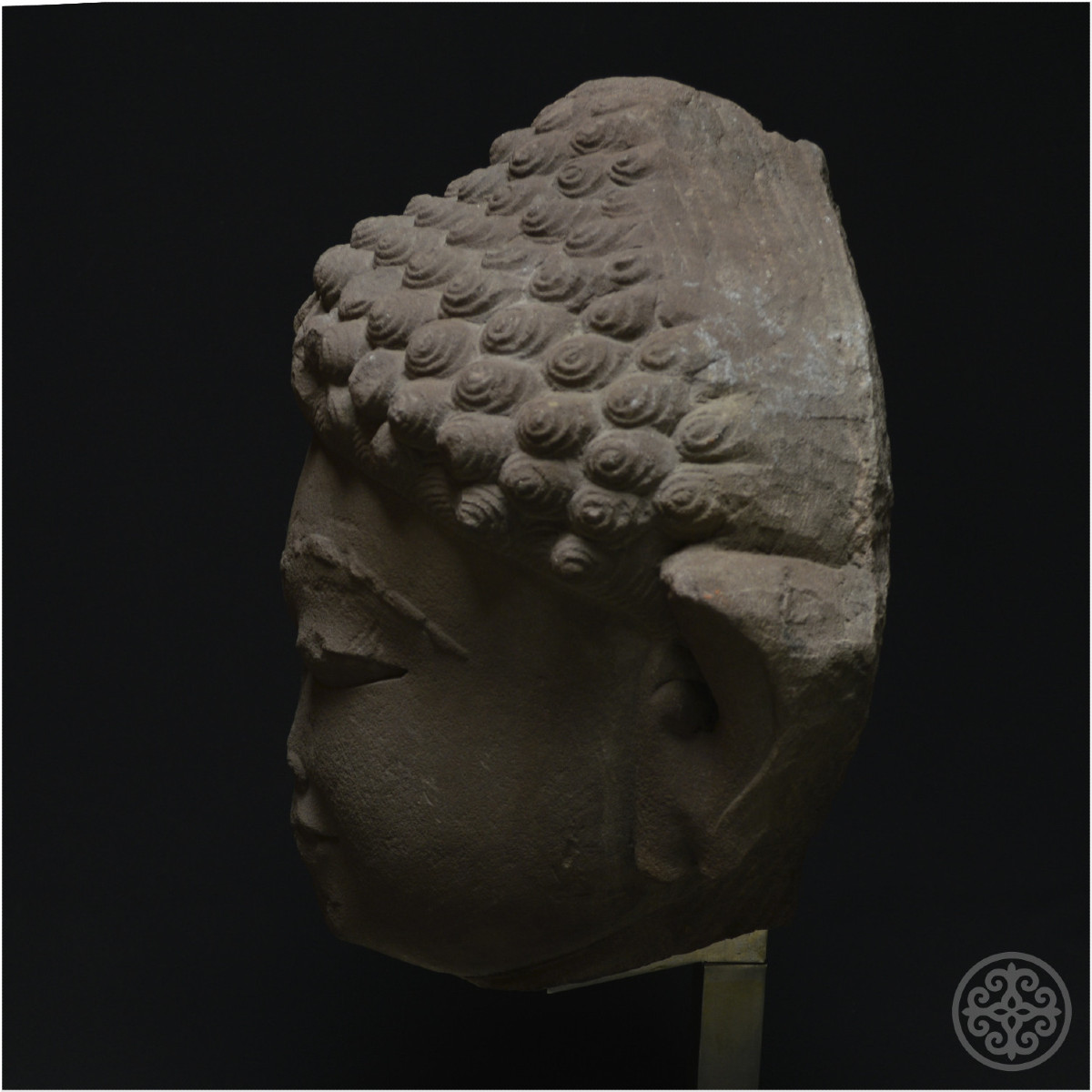
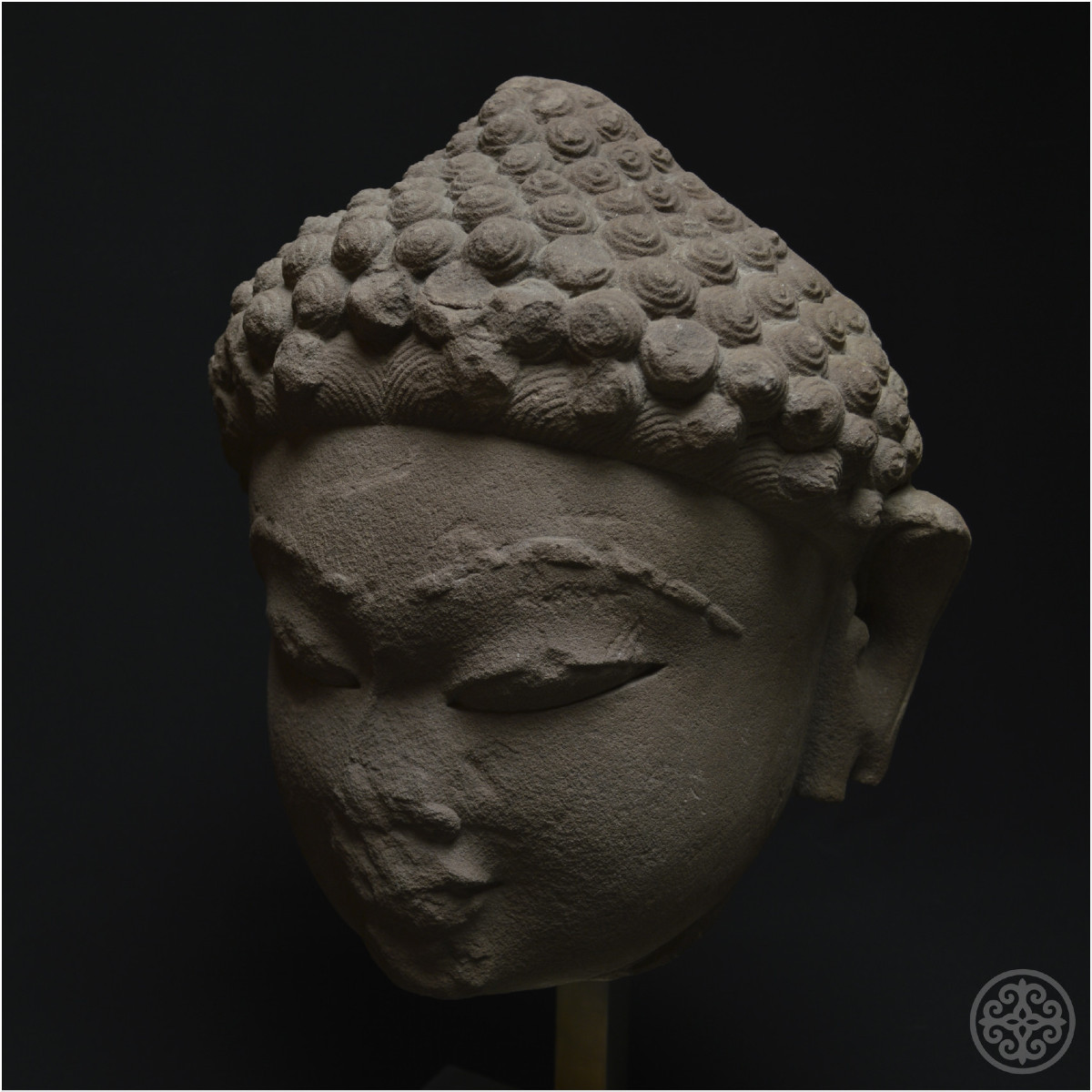


India, 5th Century Ad, Jain Culture, Important Sandstone Head Representing A Tirthankara
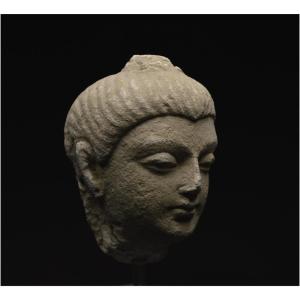
Important head representing a Jain saint
India
5th century AD, Gupta period
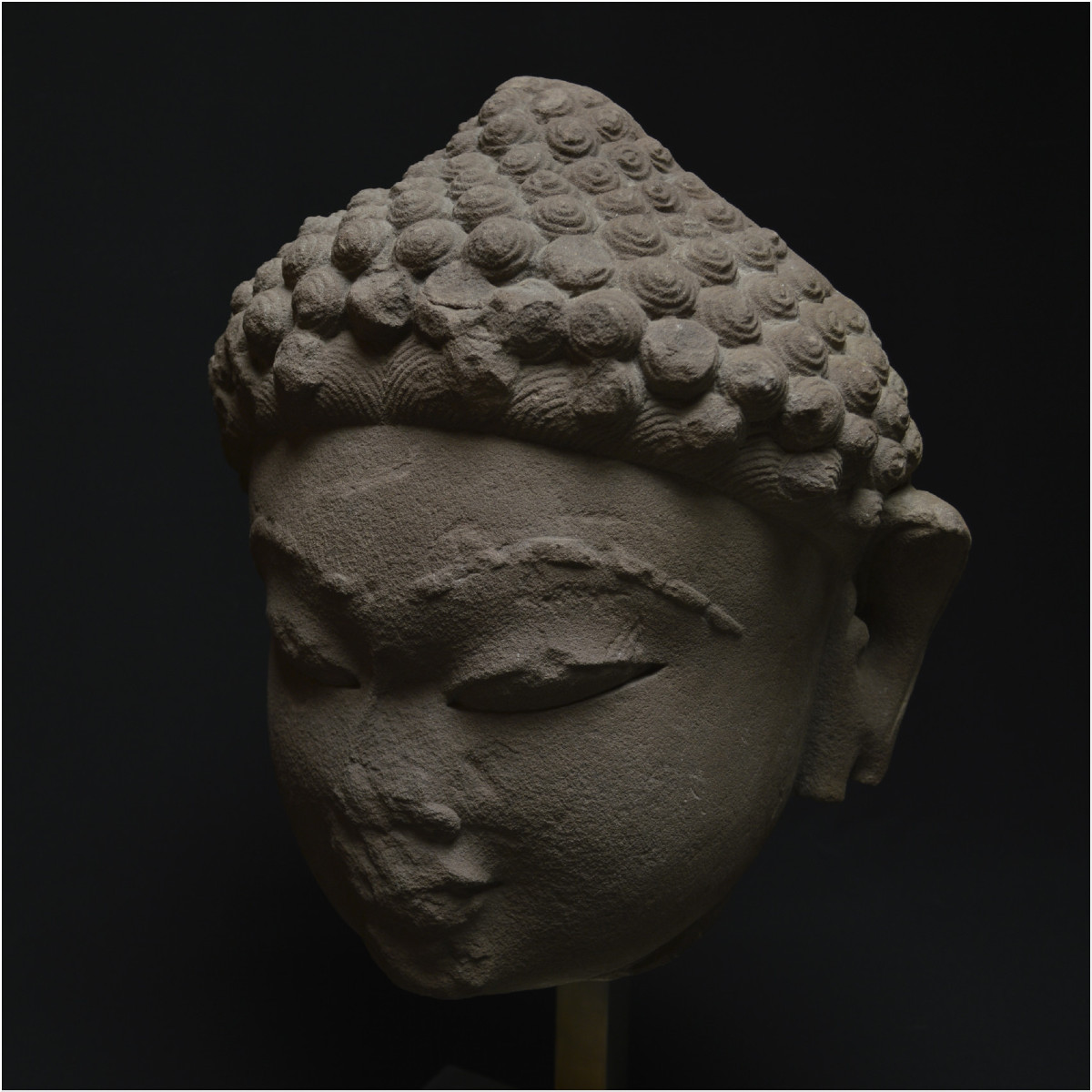
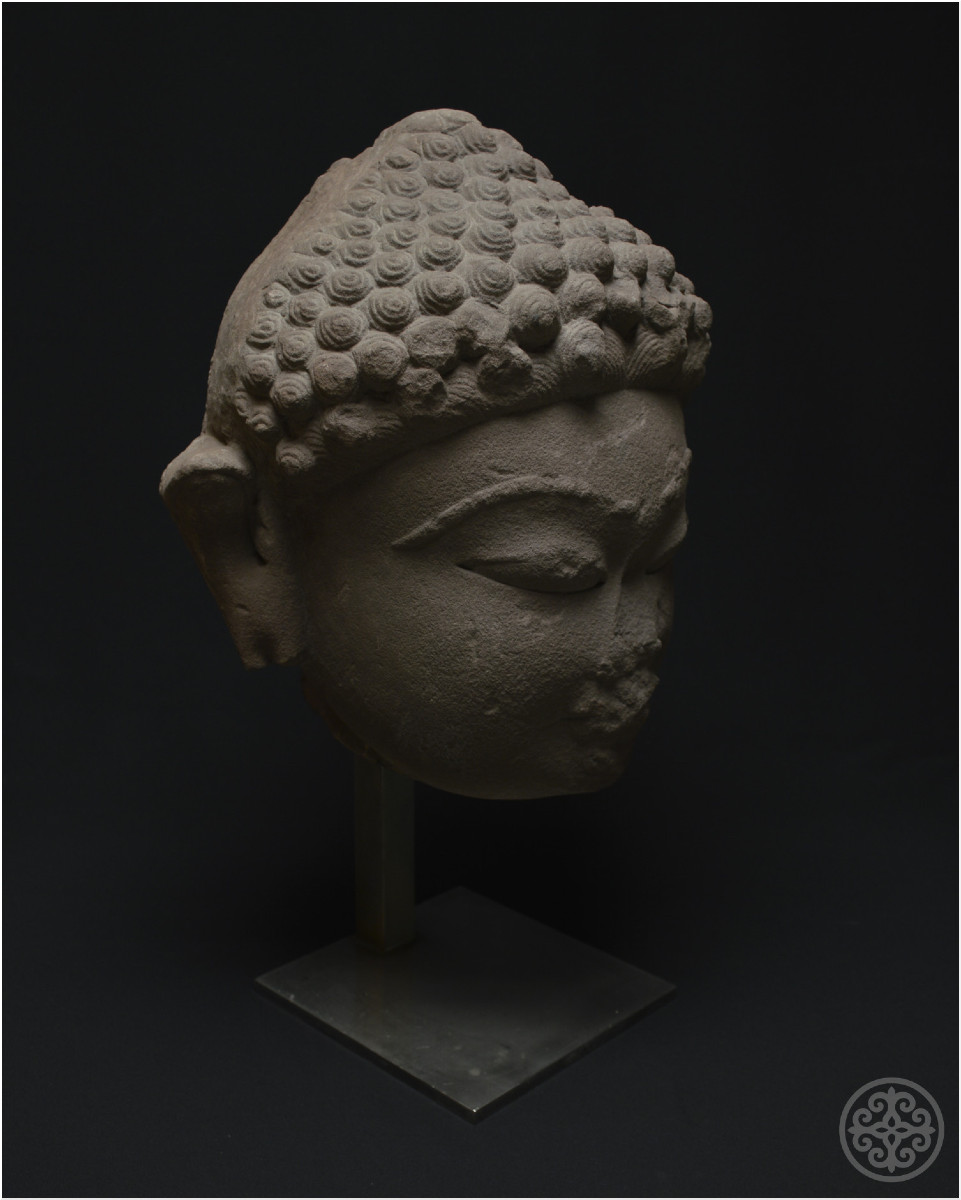
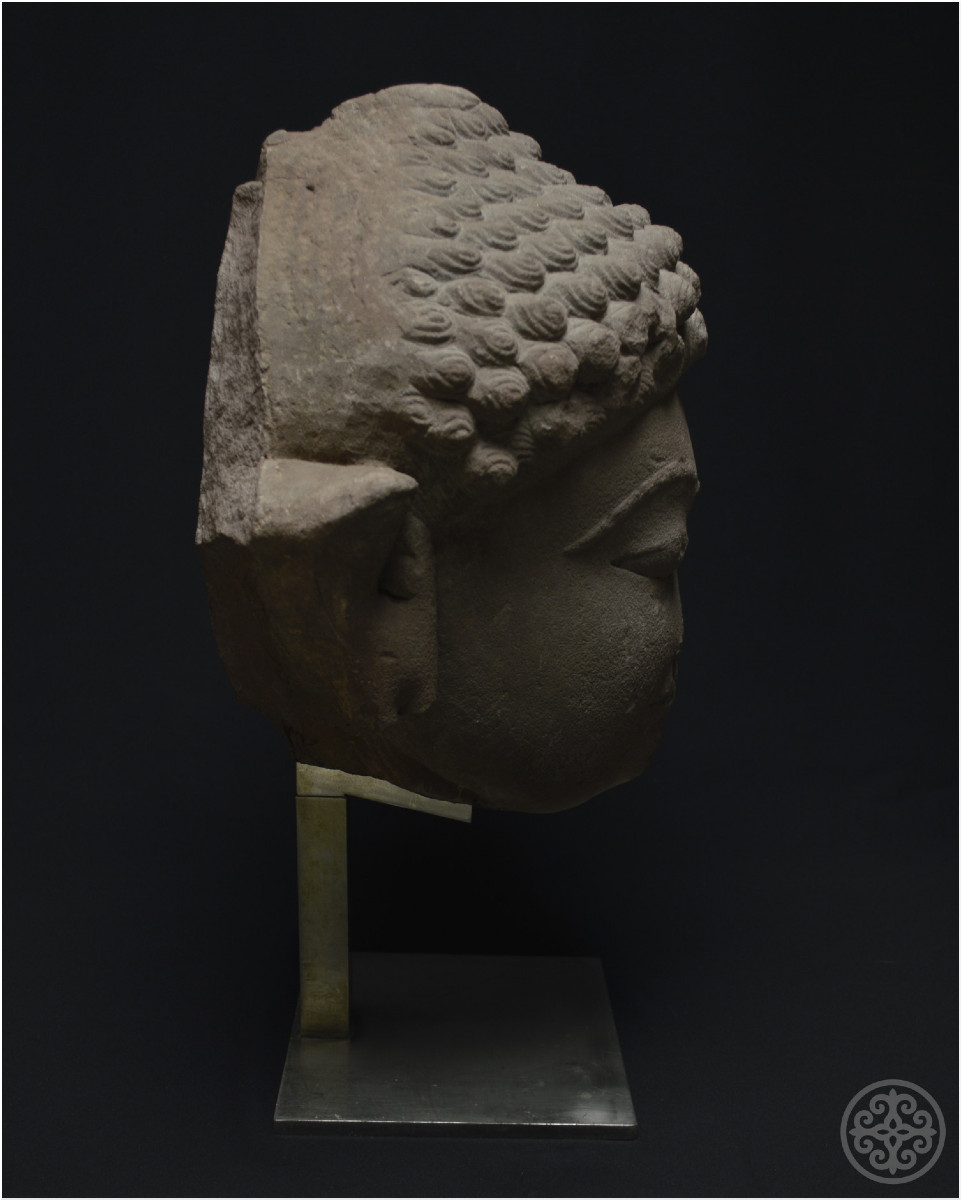
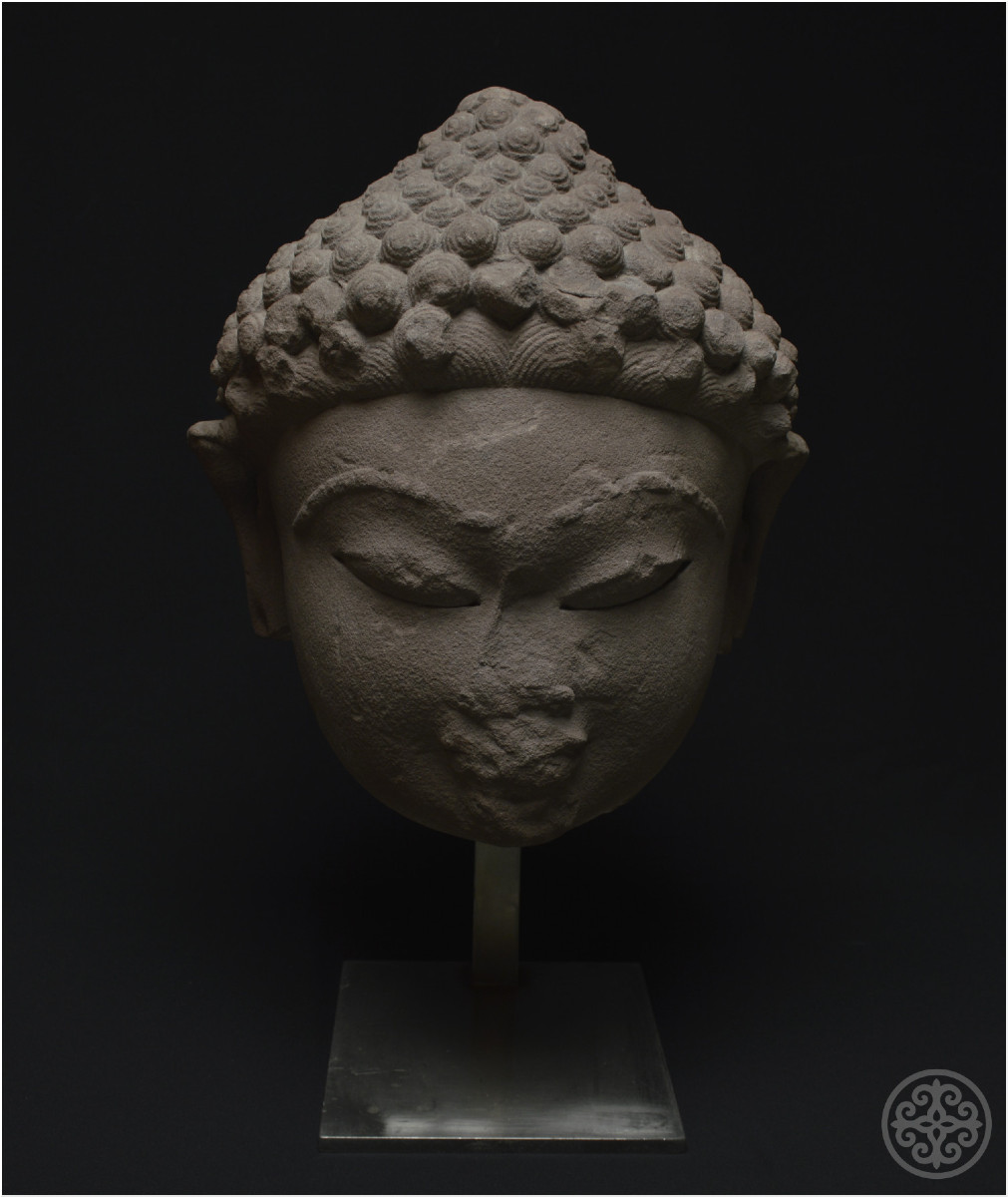
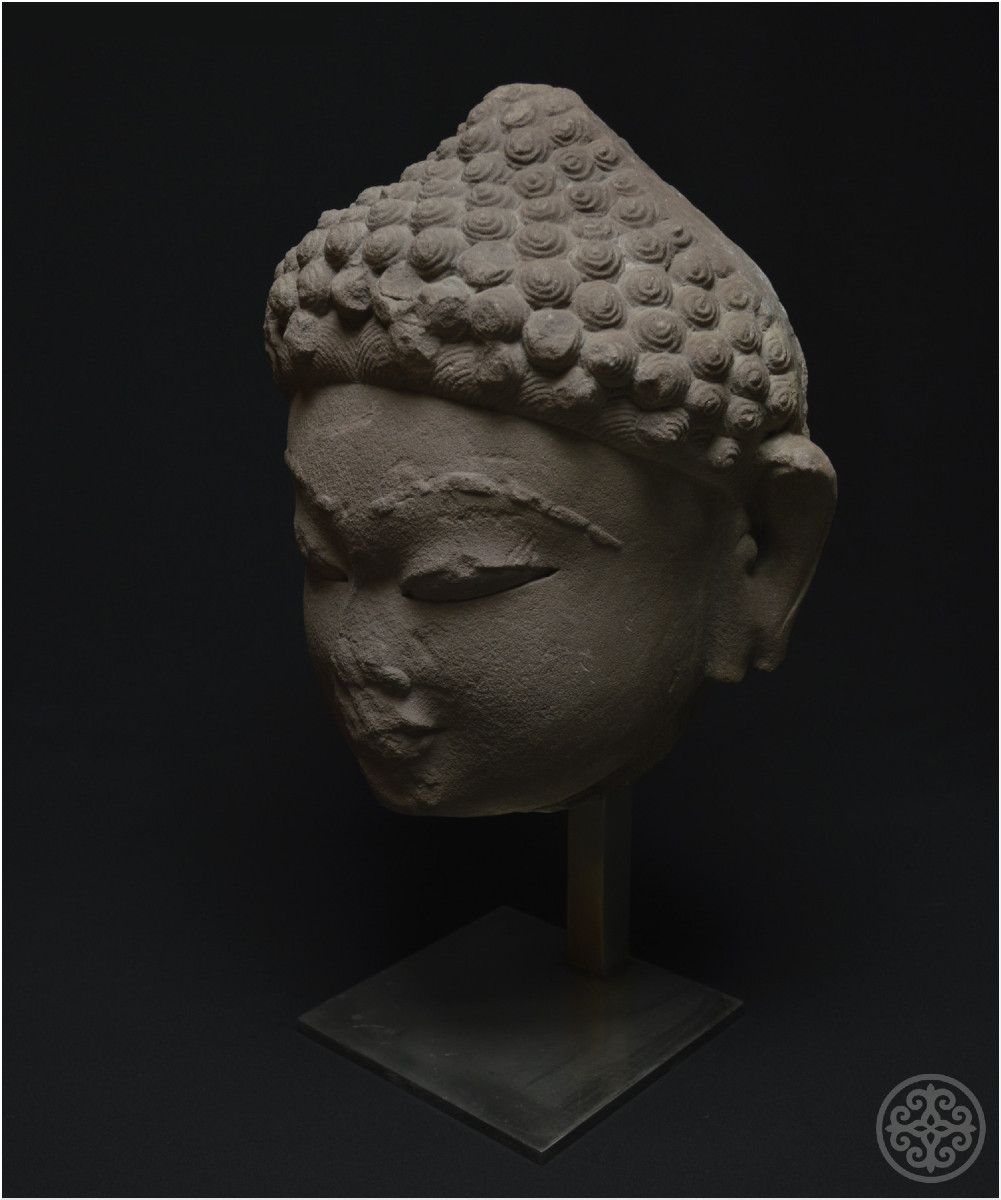
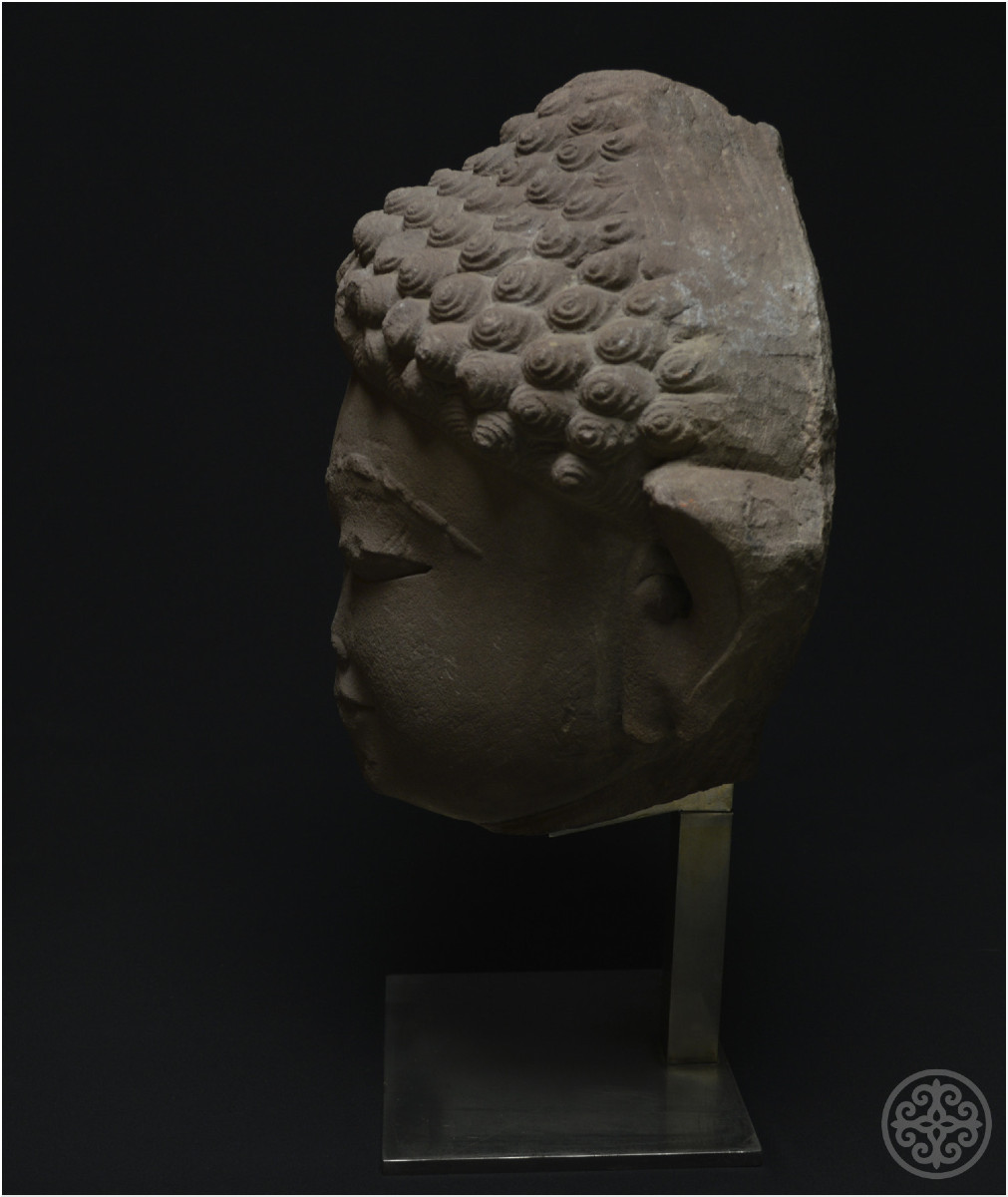
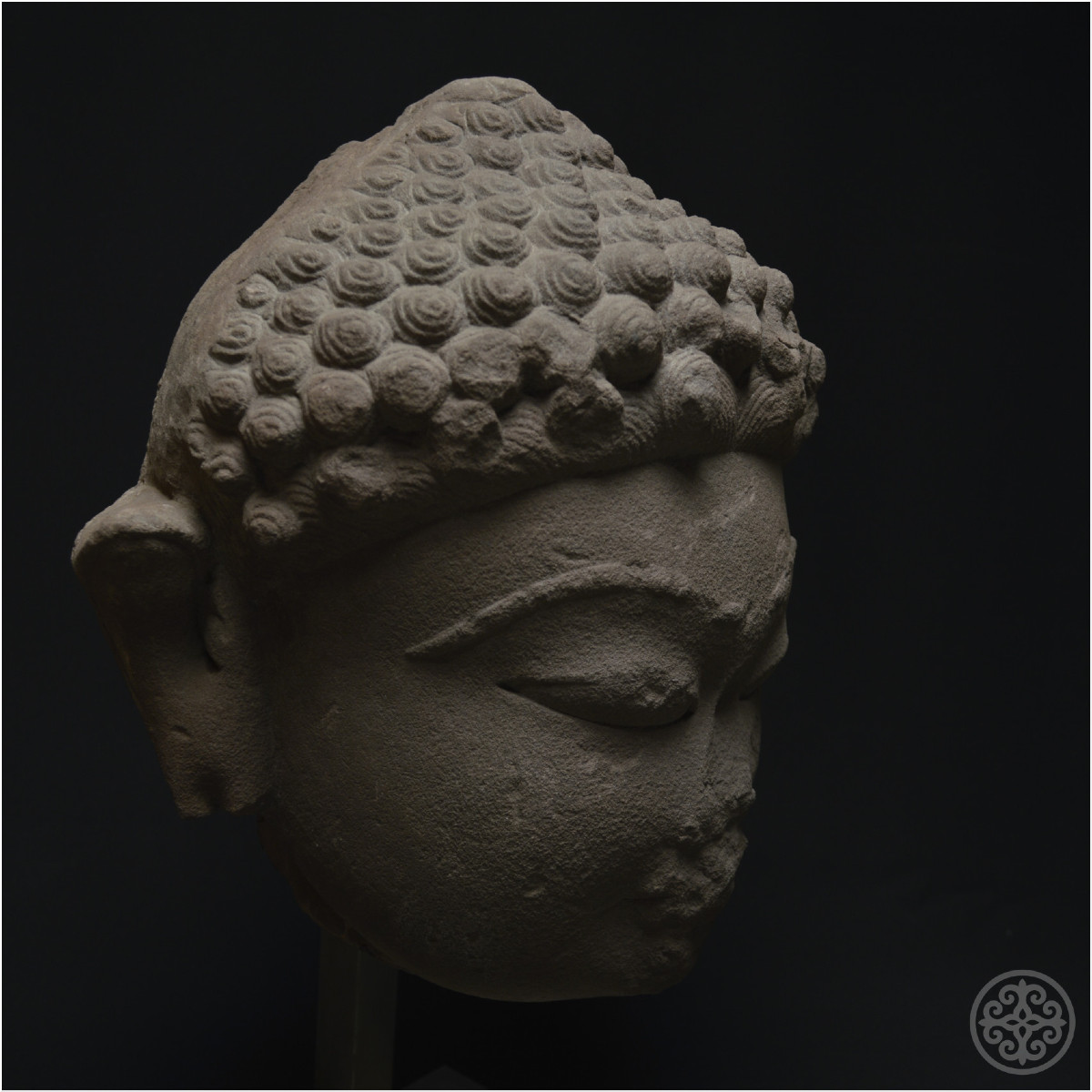
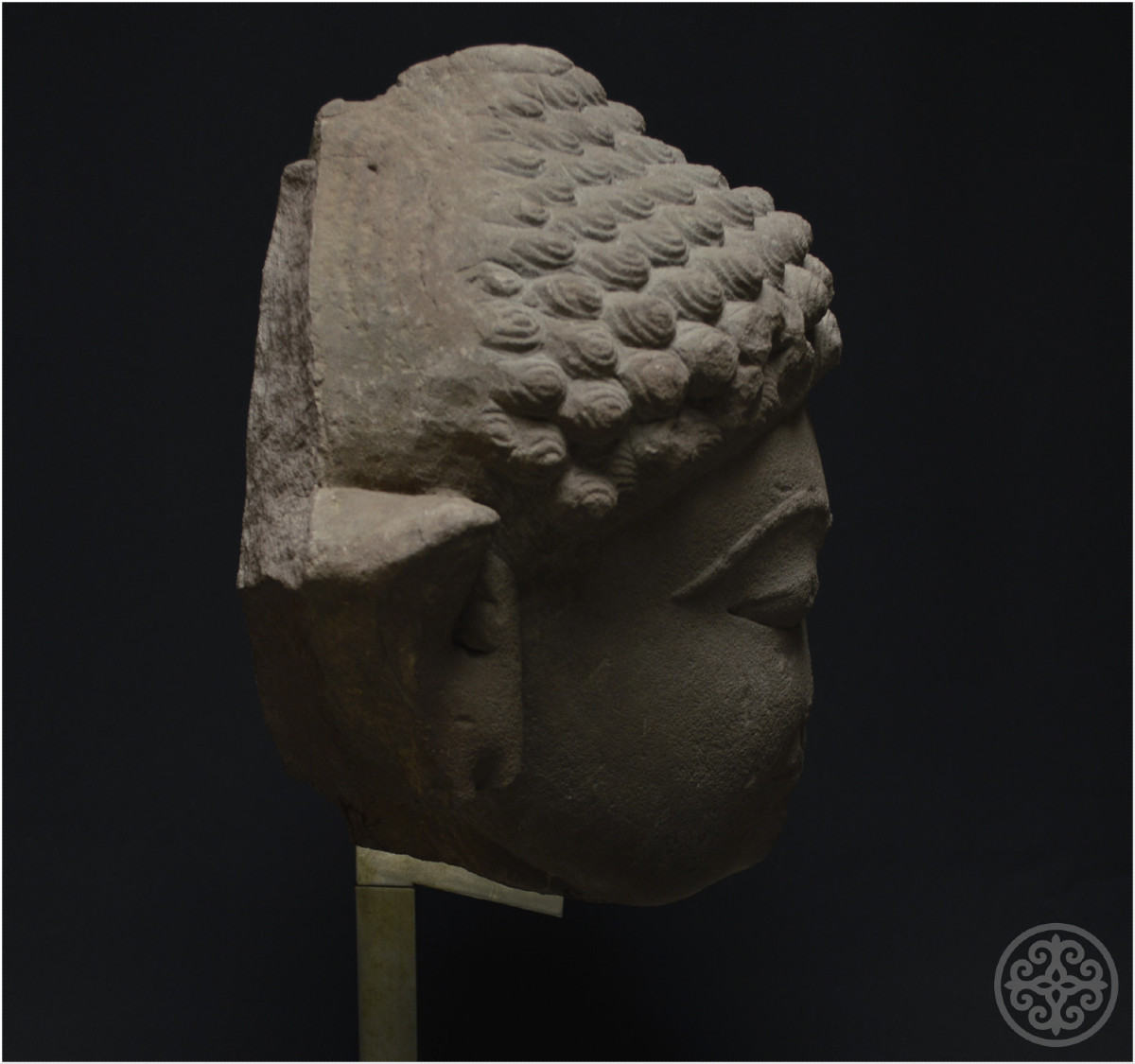
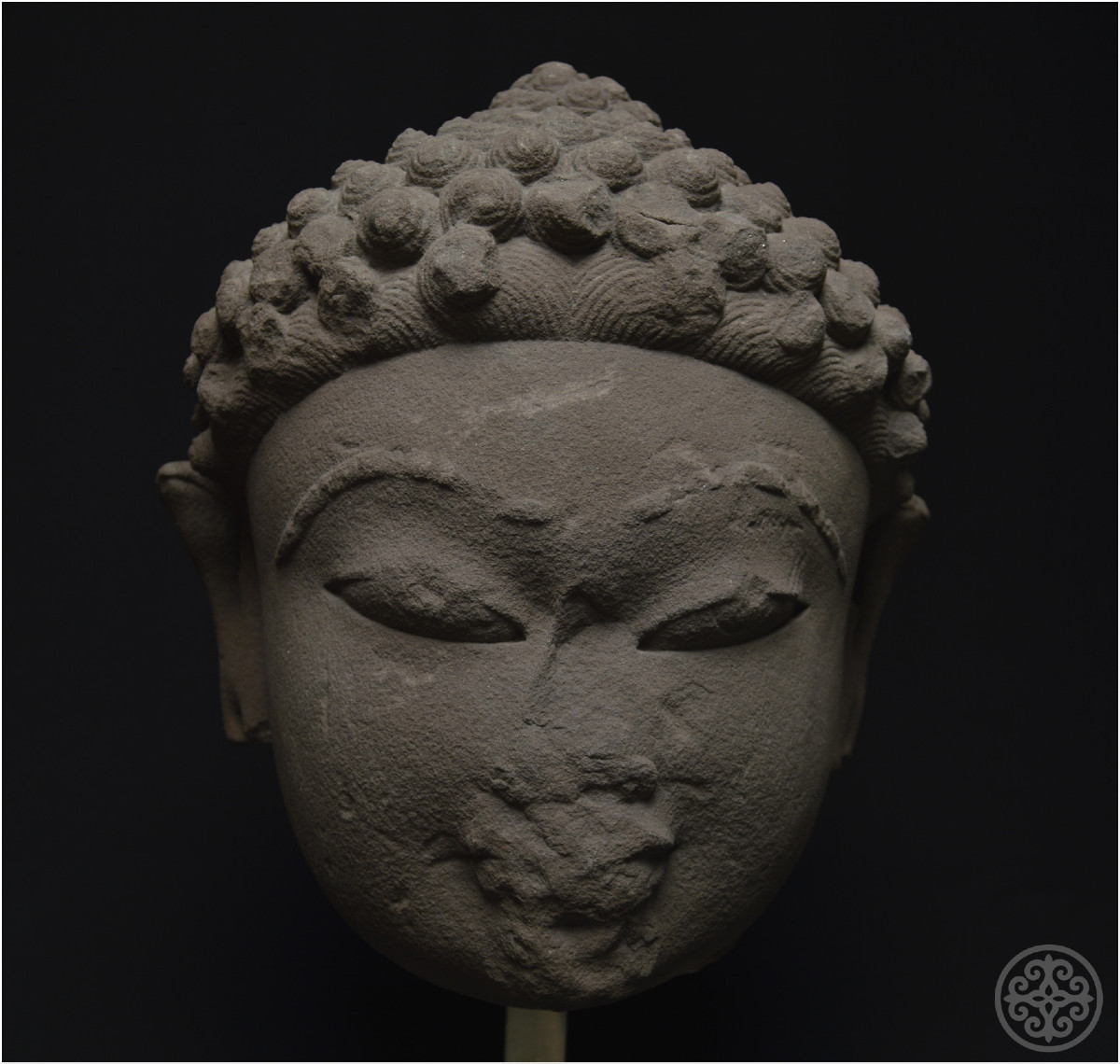
The face, remarkably simple and gentle, is distinguished by arched, undulating brow ridges above two large, lenticular eyes. The half-closed eyelids reveal the pupils, conveying a profound inner life, detached from earthly concerns. Full cheeks frame a mouth with pronounced corners, suggesting a slight smile, above a slightly protruding chin. The ears are large, while the finely styled hair, in delicate spiral curls, ends in a subtle crown. This protrusion, characteristic of the stylistic treatment of hair in Jain iconography, clearly distinguishes it from the unsnisa bouddhic.
Imbued with inner calm, our piece highlights a serene presence that transcends mere physical representation. The meticulous detail of the features, combined with a spiritual idealization, renders our face not only realistic but also profoundly symbolic of Gupta idealism.
Jainism is one of the three great ancient religions of India. Mahavira, its historical founder, lived between 540 and 468 BCE and was a contemporary of the Buddha. According to the doctrine, Mahavira was preceded by 23 other Tirthankaras named Jinas. Like the other classical religions of India, Jainism shares the same belief in the cycle of existence and the periodic decline of the world. In order to break free from this cycle, Jain doctrine advocates an ascetic lifestyle promoting renunciation of earthly desires and non-violence (ahimsa, 'the desire to do no harm') towards all forms of life, ahimsa being the cardinal doctrine of Jainism.
The Gupta period (5th-6th century CE) marks a pinnacle of classical Indian art, characterized by a serene elegance and a perfect balance between naturalism and idealism. The harmony of its proportions, the serenity of its expressions, and the richness of its ornamental details make it a model of elegance and refinement.
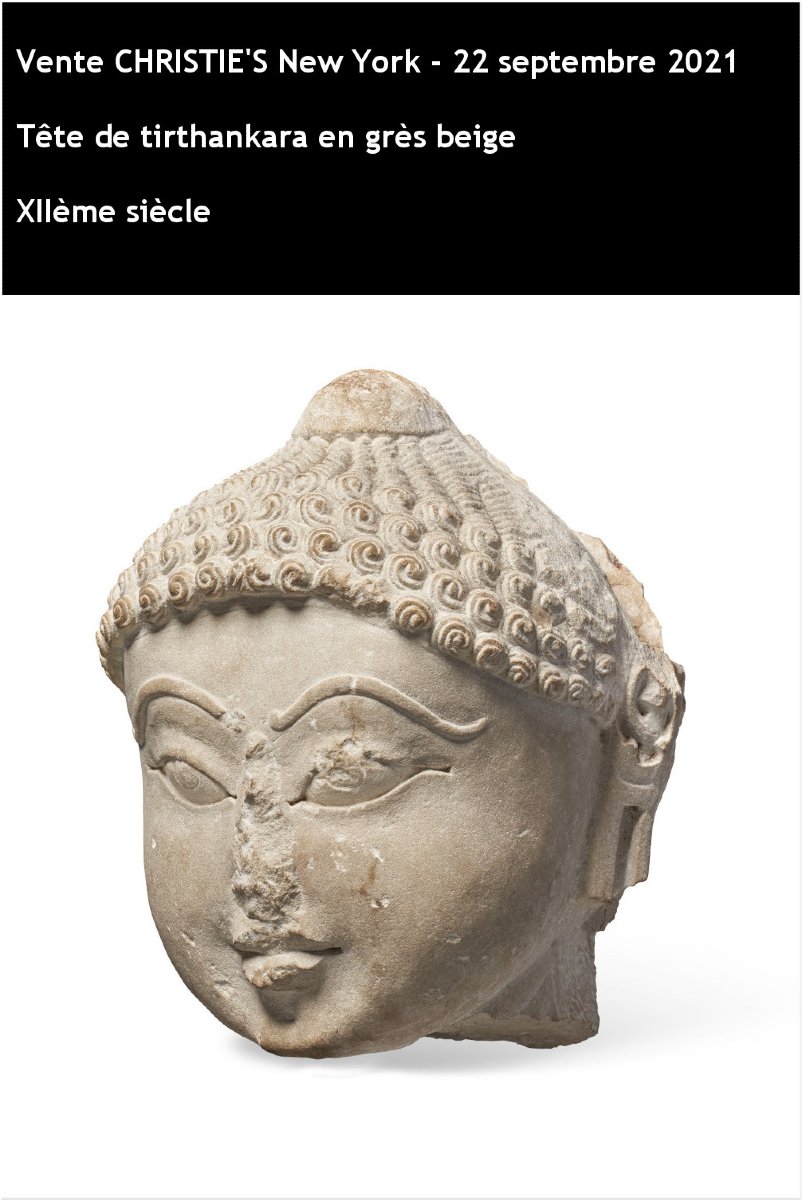
For a head similar to ours but smaller and dated later, see the illustration from the Christie's sale held in New York on September 22, 2021.
Red sandstone
Surface wear and visible damage
31 x 34.5 cm excluding base
Private collection
Contact us: culturesetcivilisations@orange.fr
2 800 €
Period: Before 16th century
Style: Asian art
Condition: Condition of use
Material: Sandstone
Length:
Width: 31 cm hors socle
Height: 34.5 cm hors socle
Reference (ID): 1710902
Availability: In stock
Print