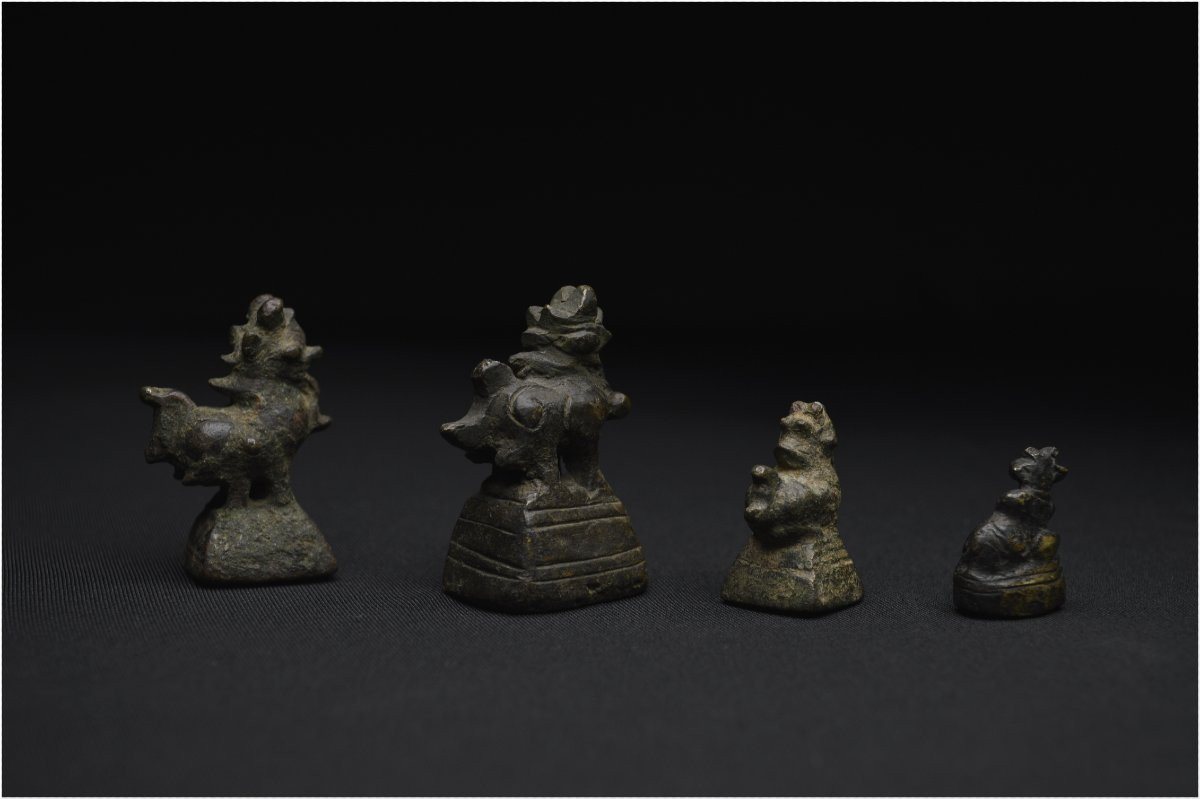
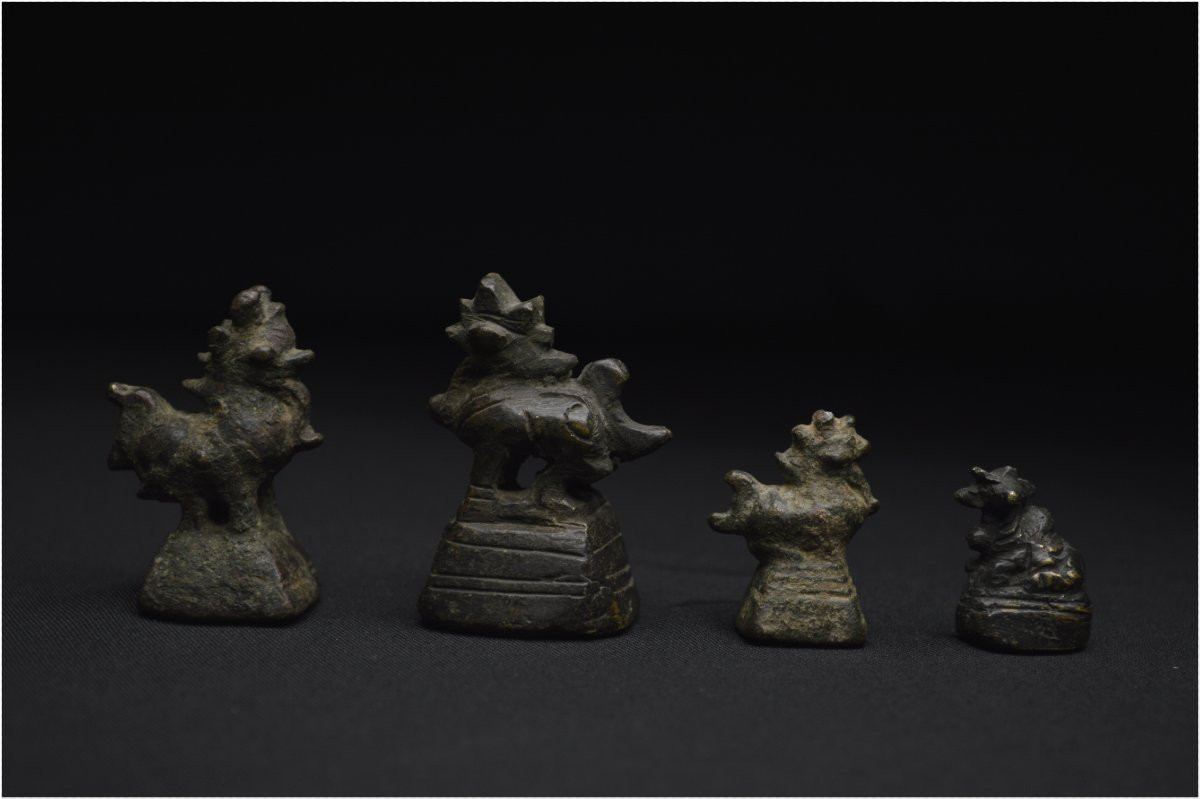
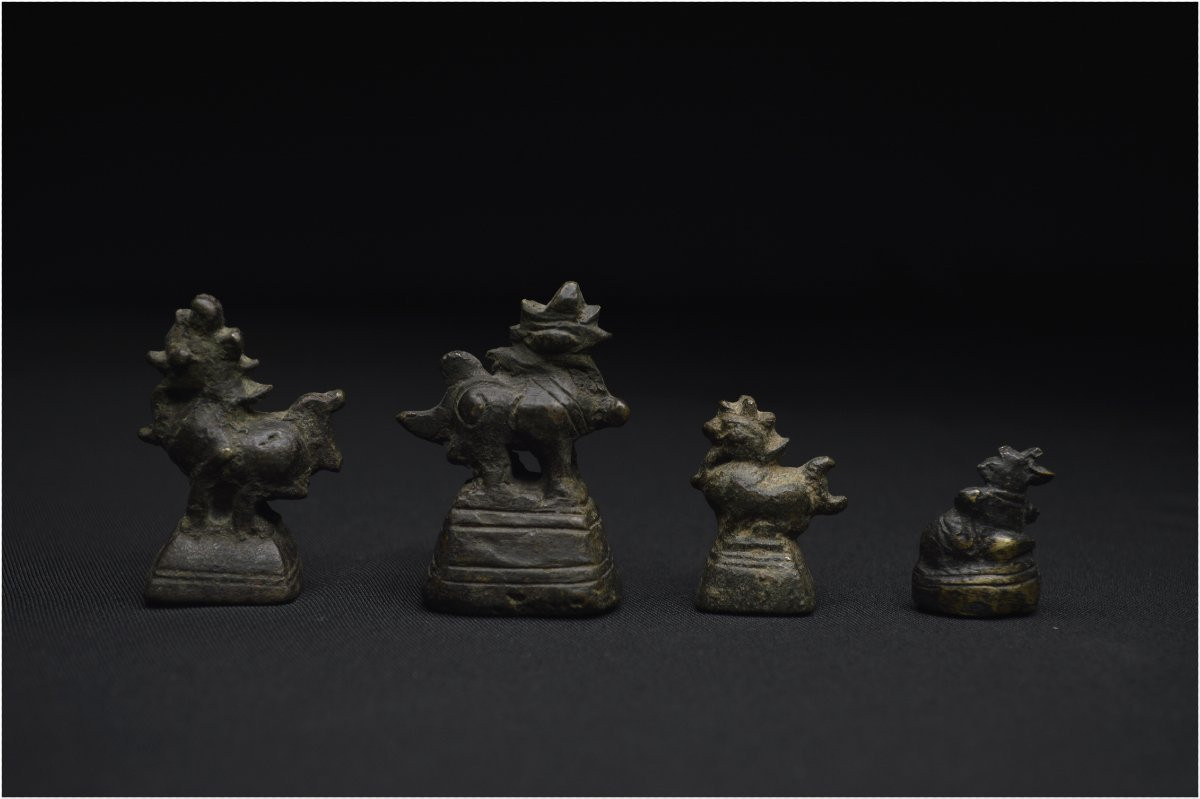


Burma, 18th-19th Century, Set Of Four Bronze Lion-shaped Opium Weights
Set of four lion-shaped opium weights
Burma
18th-19th century
These small bronze objects, commonly called "opium weights," actually belong to a weighing system used in Burma from the 16th to the 19th centuries. Before the introduction of industrial weights by the British colonial administration, much of local trade relied on weighing rather than currency. These weights were used to measure high-value goods: silver, gold, precious stones, frankincense, spices, rare medicines and sometimes also opium, hence the modern name.
Burmese artisans fashioned these weights in the form of animals or mythical creatures. Among the most common representations is the Toe, a composite creature resembling a lion, traditionally described as a beast of strength and protective powers. The choice of this form was not merely decorative: in Burmese culture, mythical animal figures symbolize protection, integrity, and legitimacy. Their presence on these weights helped guarantee the reliability of measurements and establish trust in transactions. Each weight was cast according to precise standards to correspond to local units of metal measurement—reinforcing the continuity between tradition, commerce, and authority.
Produced for over three centuries, these weights gradually disappeared in the 19th century when British authorities imposed standardized iron models, ending a tradition where economic functionality, religious beliefs, and symbolic aesthetics intertwined.
Bronze
2.4 to 4.7 cm
Signs of wear
Private collection
Contact us: culturesetcivilisations@orange.fr
109 €
Period: 19th century
Style: Asian art
Condition: Good condition
Material: Bronze
Height: voir descriptif
Reference (ID): 1664267
Availability: In stock
Print