

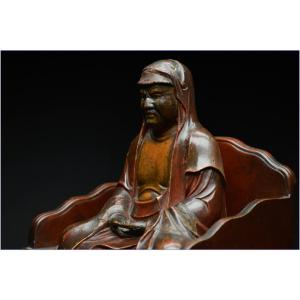


Japan, Medieval Period, 15th Century, Polychrome Lacquered Wooden Group Depicting Bodhidharma
Polychrome Japanese cypress wood group depicting Bodhidharma
Japan
15th century, Muromachi period (1336-1573)
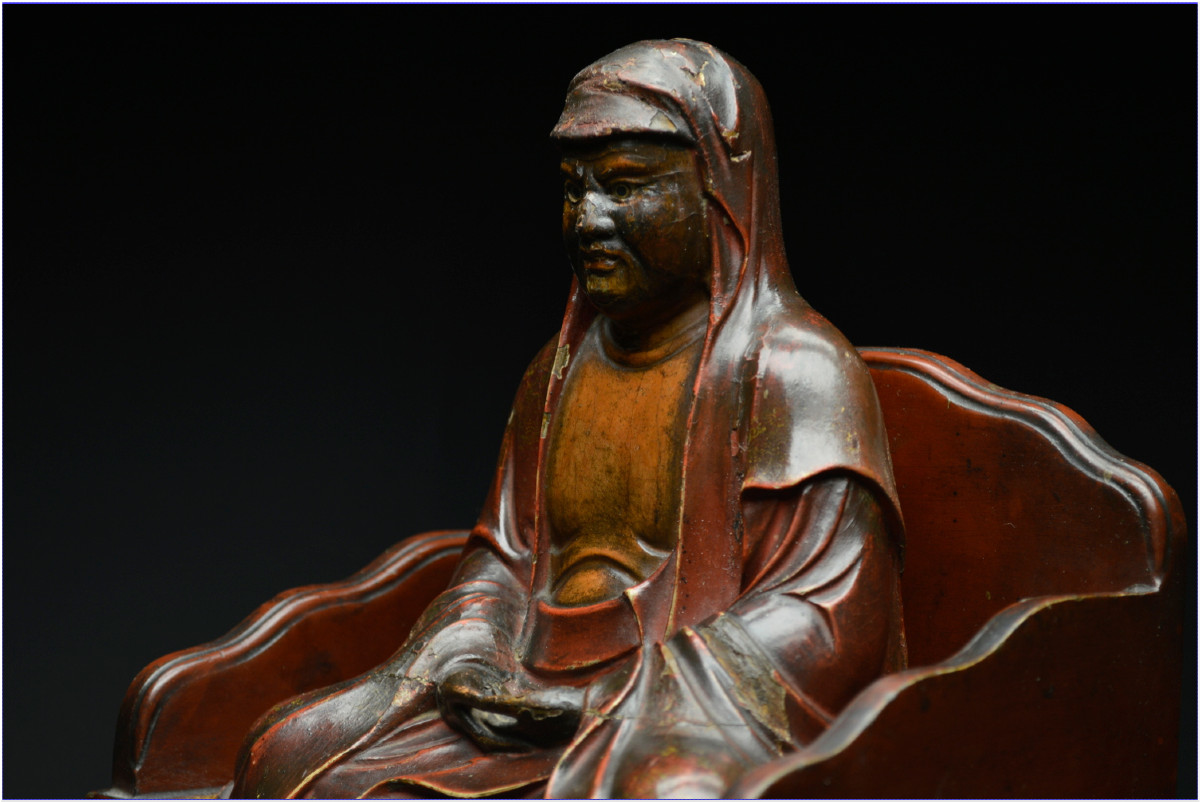
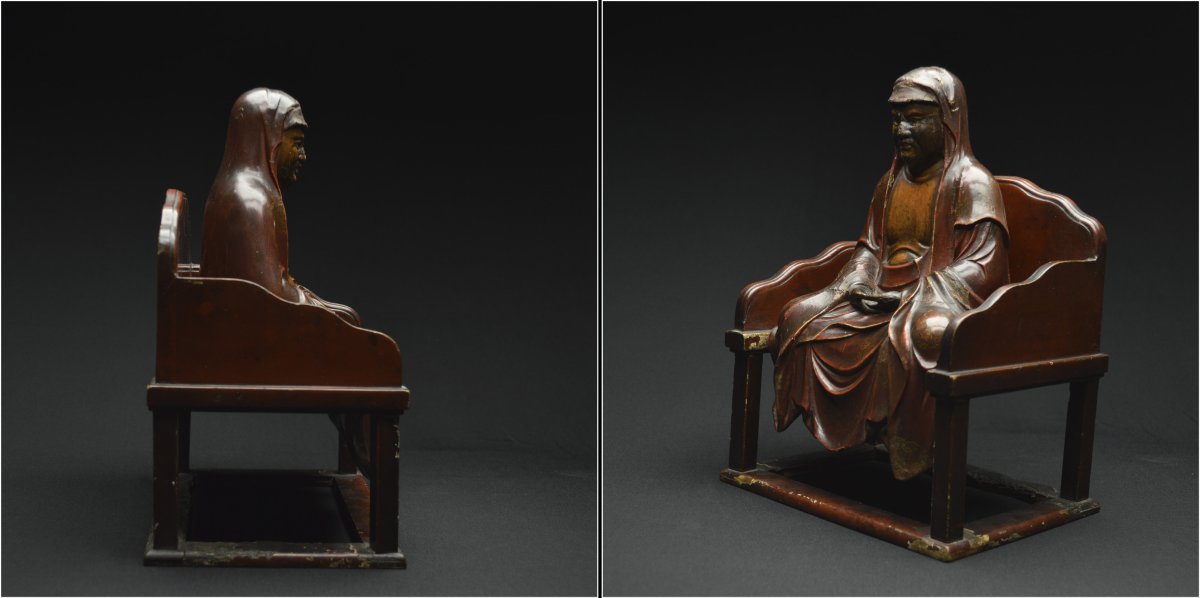
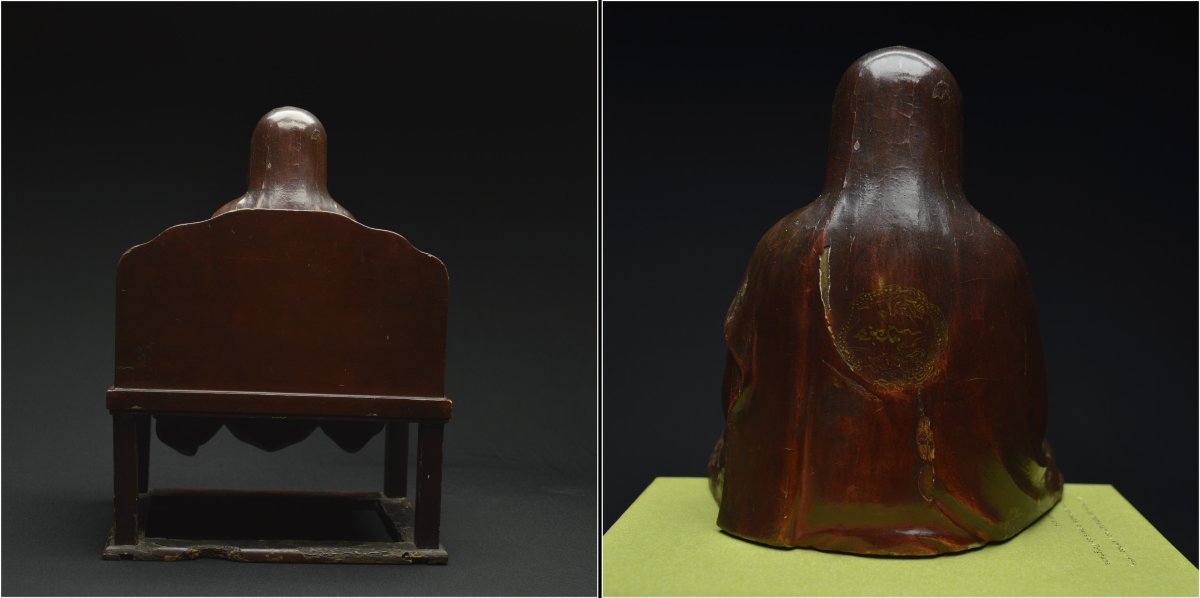
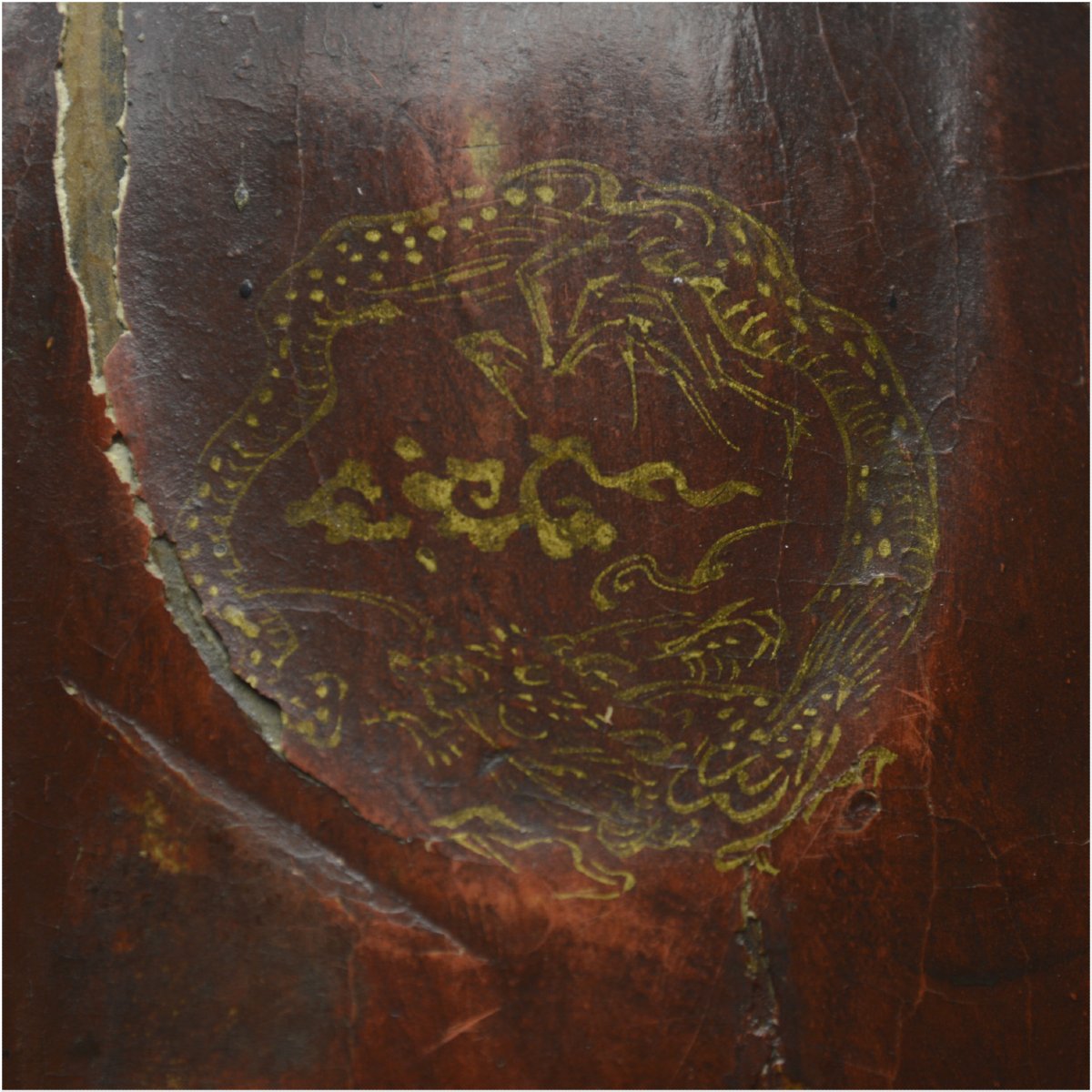
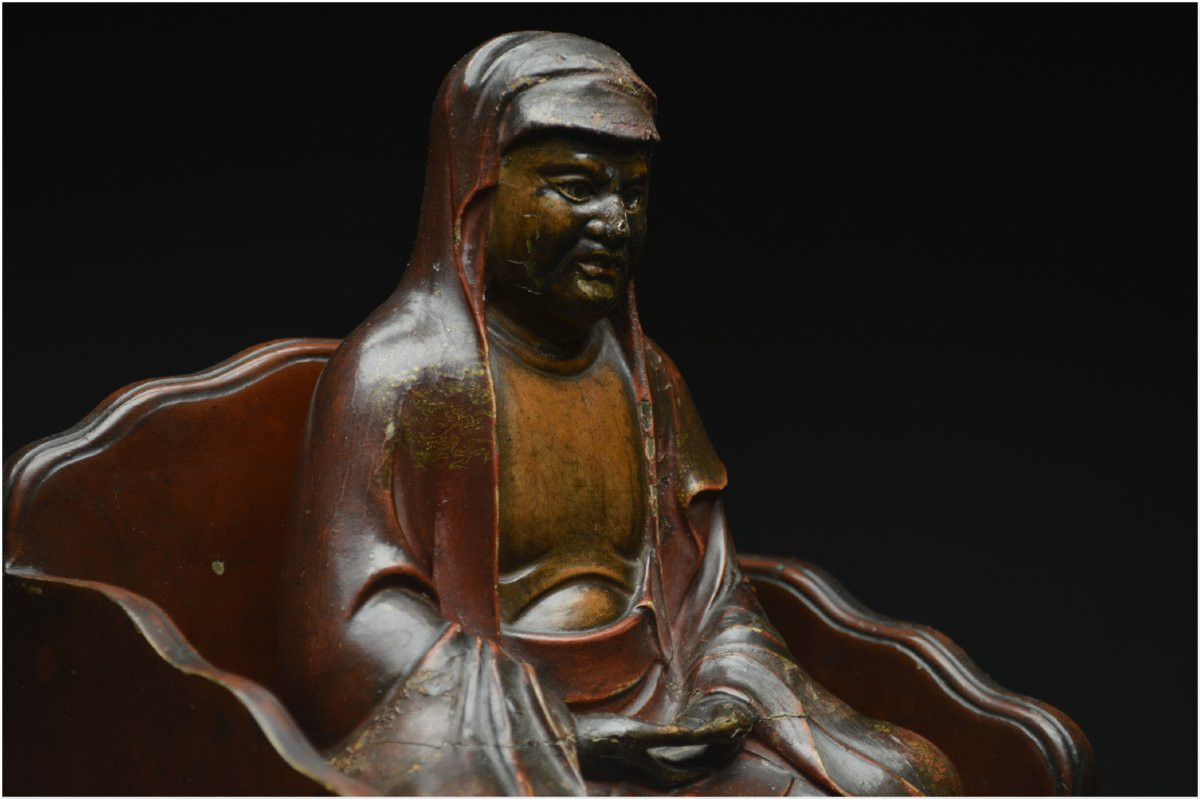
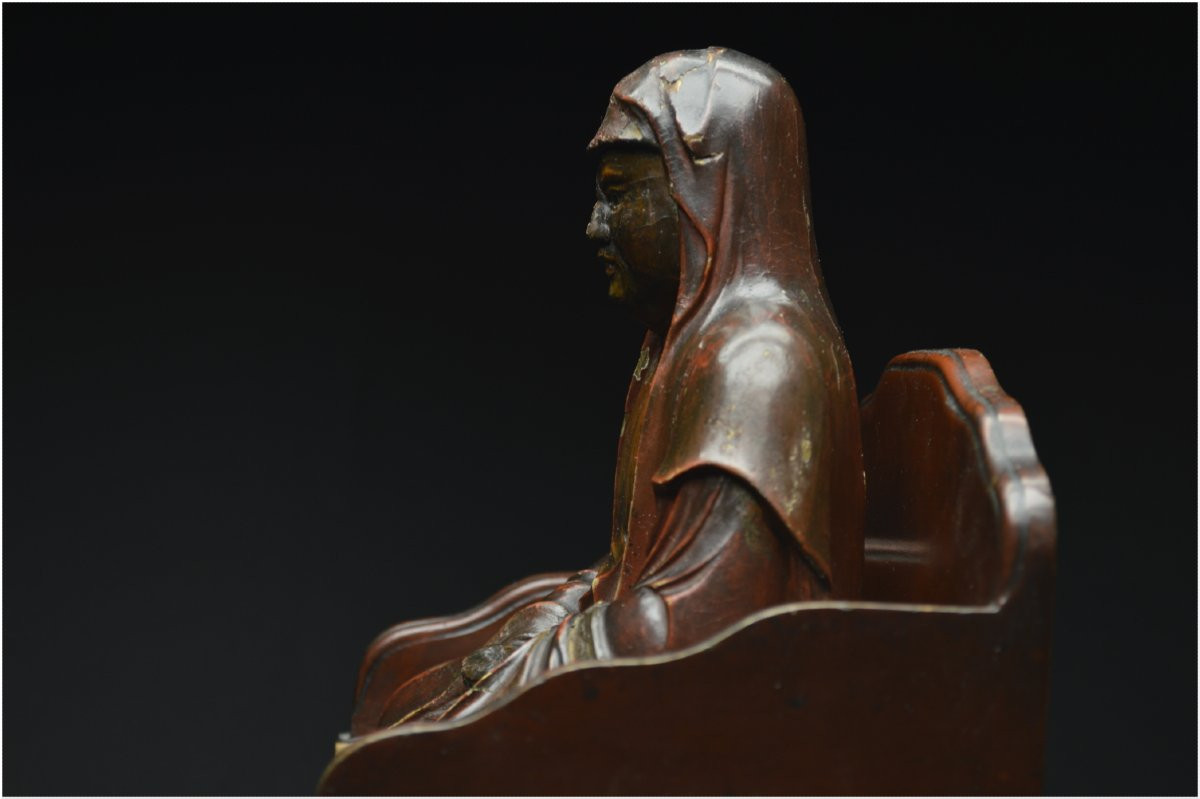
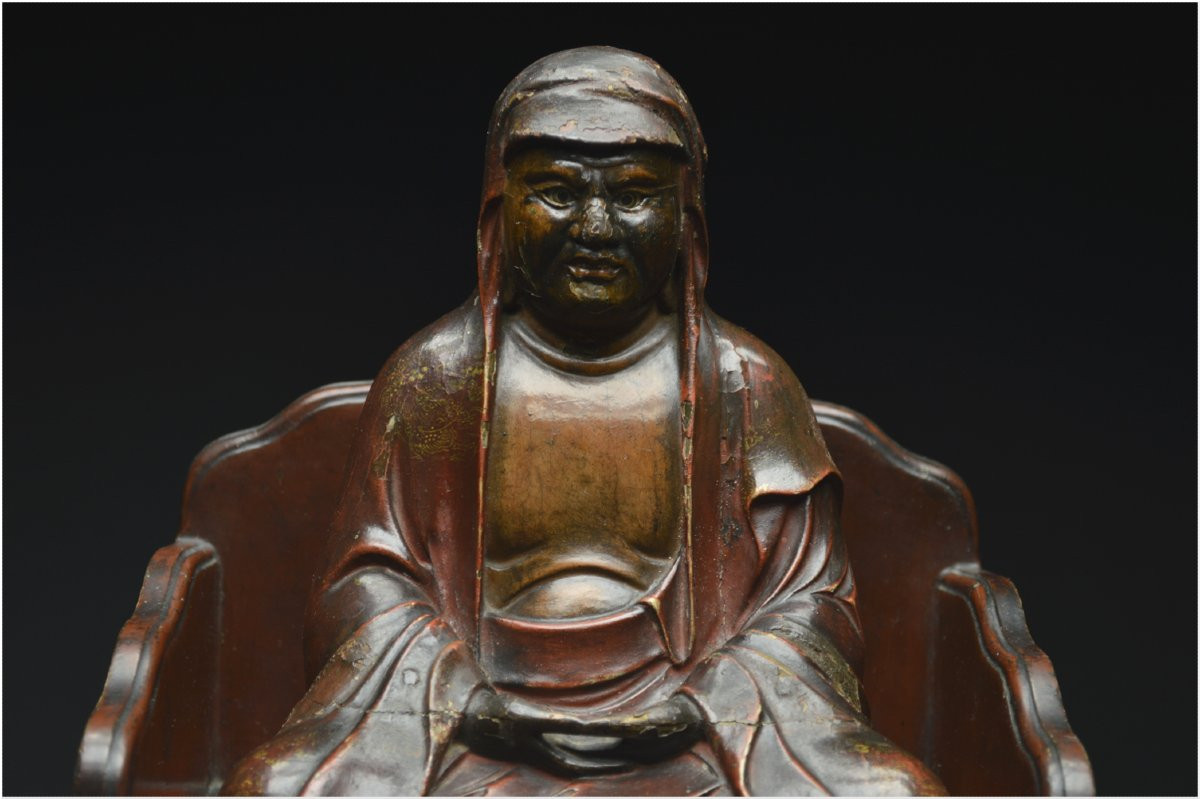
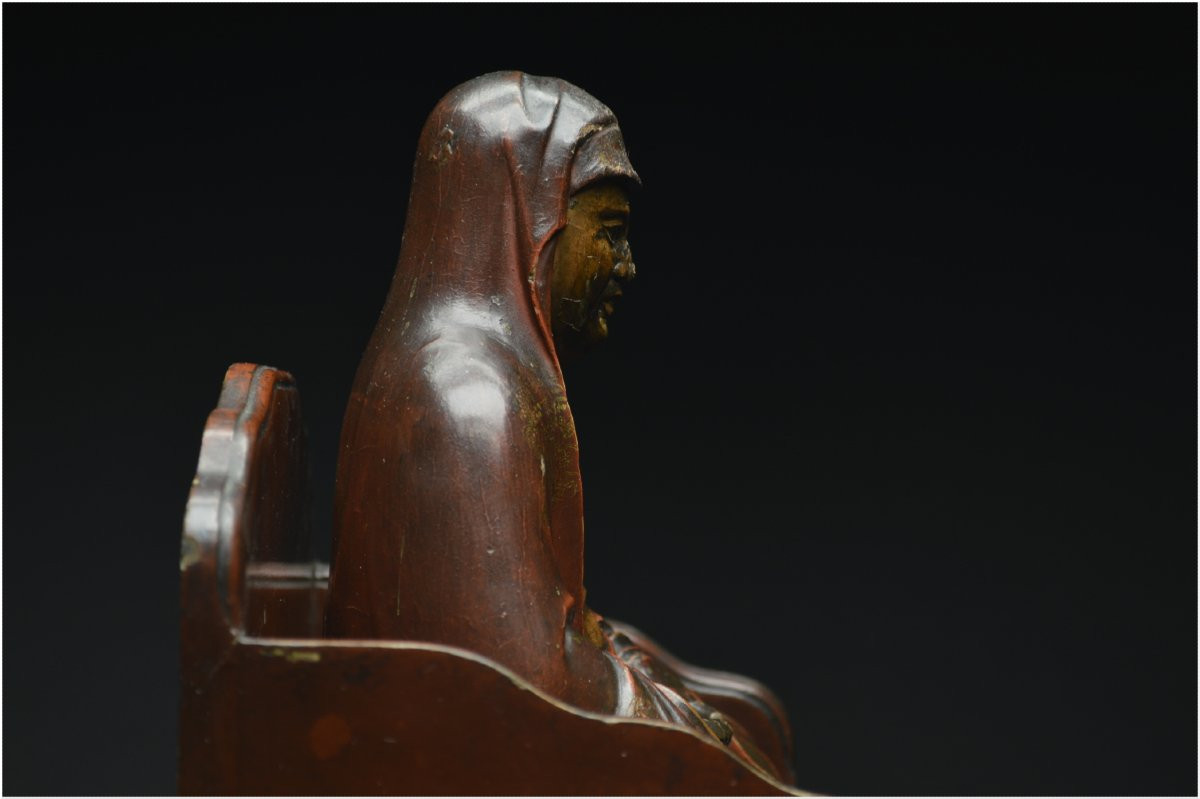
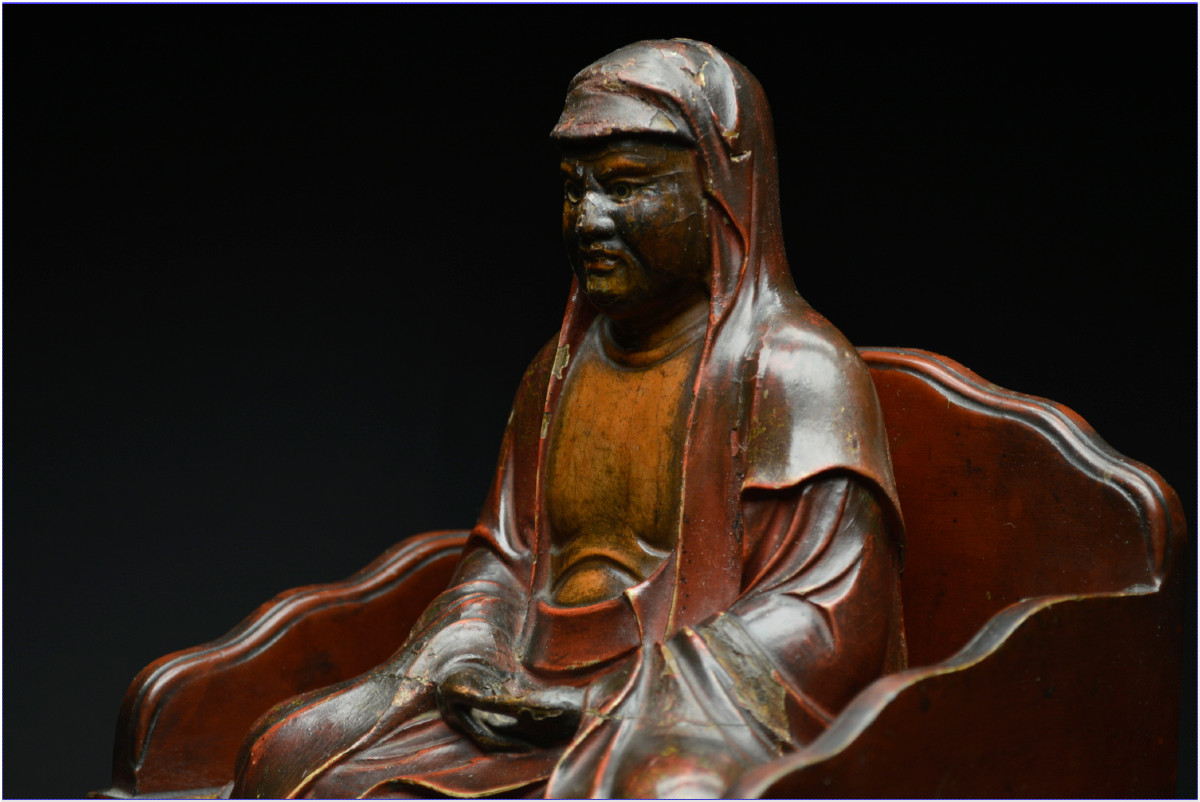
Bodhidharma, founder of Zen Buddhism and known as Daruma in Japan, is depicted seated on a meditation stool, legs crossed in the vajraparyanka position, hands resting in his lap in dhyana mudra. He wears a thick monastic robe, or kesa, which leaves his chest bare and is enlivened by multiple folds created using the specific technique called Honpa Shiki Emon, whose movement evokes the rolling of waves. The monastic robe is adorned with several gold-embellished medallions decorated with motifs of dragons moving through clouds.
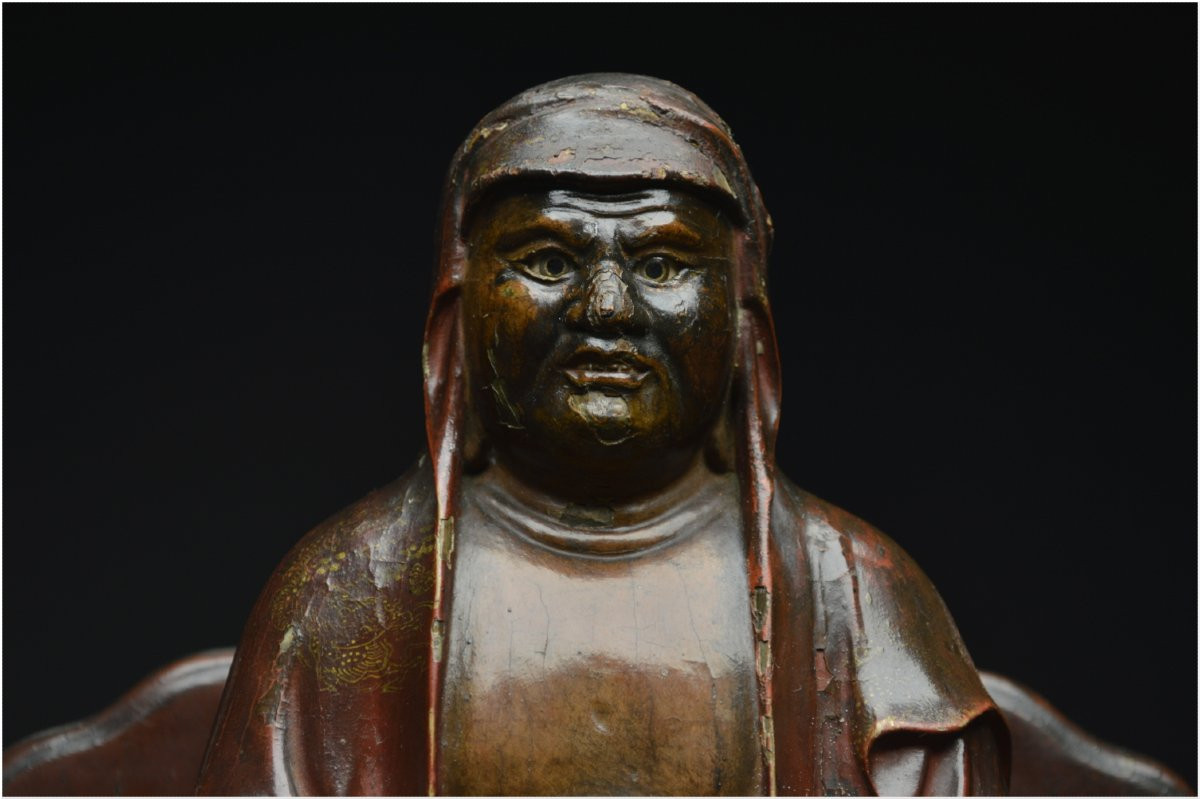
The patriarch has a highly expressive face conveying intense concentration: deep furrows mark his forehead, his eyebrows are thick, his painted crystal eyes offer a fixed gaze, and his slightly open mouth reveals his teeth, lending the whole a particularly realistic appearance.
The traditional technique used here for shaping the figure, called Yosegi-Zukuri, involves assembling different pieces of wood carved separately before joining them to form the statue (here, the upper and lower parts of the body as well as the face). Another technique also used for our sculpture, called Gyokugan, involves hollowing out the face to insert the crystal or glass eyes, thus giving the gaze a striking realism.
The Muromachi period (1336-1573), under the Ashikaga shogunate, was characterized by a fragmented society and the increasing autonomy of regional lords. Kyoto, and more specifically the Muromachi district, became the political and cultural center of the country. Despite significant military tensions, notably the Ōnin War, the period saw the flourishing of a refined culture, largely fostered by Zen monasteries, particularly those of the Rinzai school, which strongly influenced sculpture, painting, and architecture.
Muromachi art is thus distinguished by an aesthetic of sobriety and stylization, breaking with the expressive naturalism of the Kamakura period. Exchanges with China and Korea facilitated the introduction of new techniques and motifs, while the rise of international trade foreshadowed certain transformations that would fully manifest themselves during the Edo period.
Polychrome lacquered Japanese cypress (hinoki) wood, crystal eyepieces.
Overall dimensions: 27 x 20.2 cm
Surface wear, visible losses, and alterations consistent with the piece's age
Private collection, New York
Contact us: culturesetcivilisations@orange.fr
1 350 €
Period: Before 16th century
Style: Asian art
Condition: Good condition
Material: Painted wood
Width: voir descriptif
Height: voir descriptif
Reference (ID): 1708815
Availability: In stock
Print