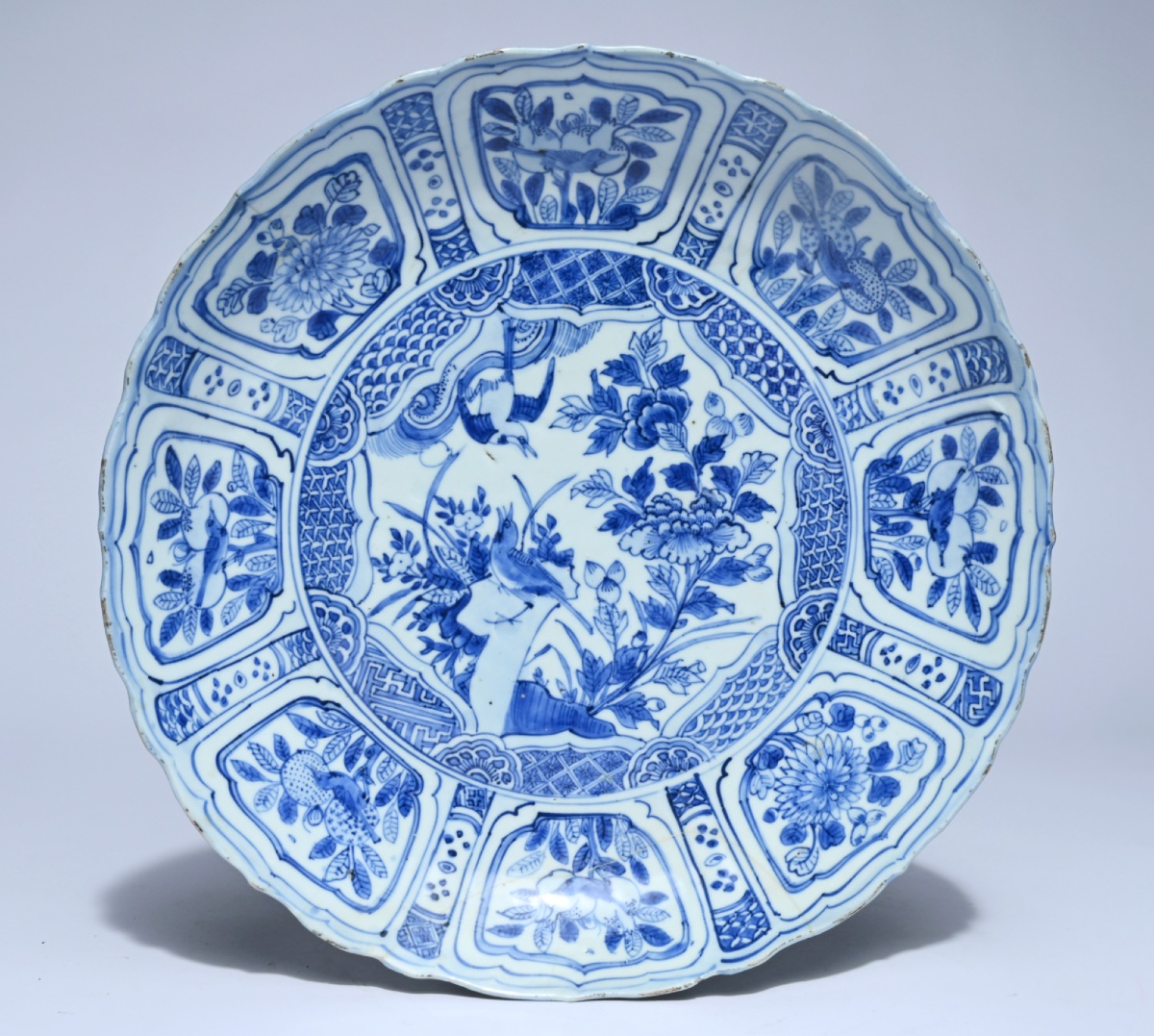


Chinese Plate, Ming Dynasty, Wanli Period (1573–1620)
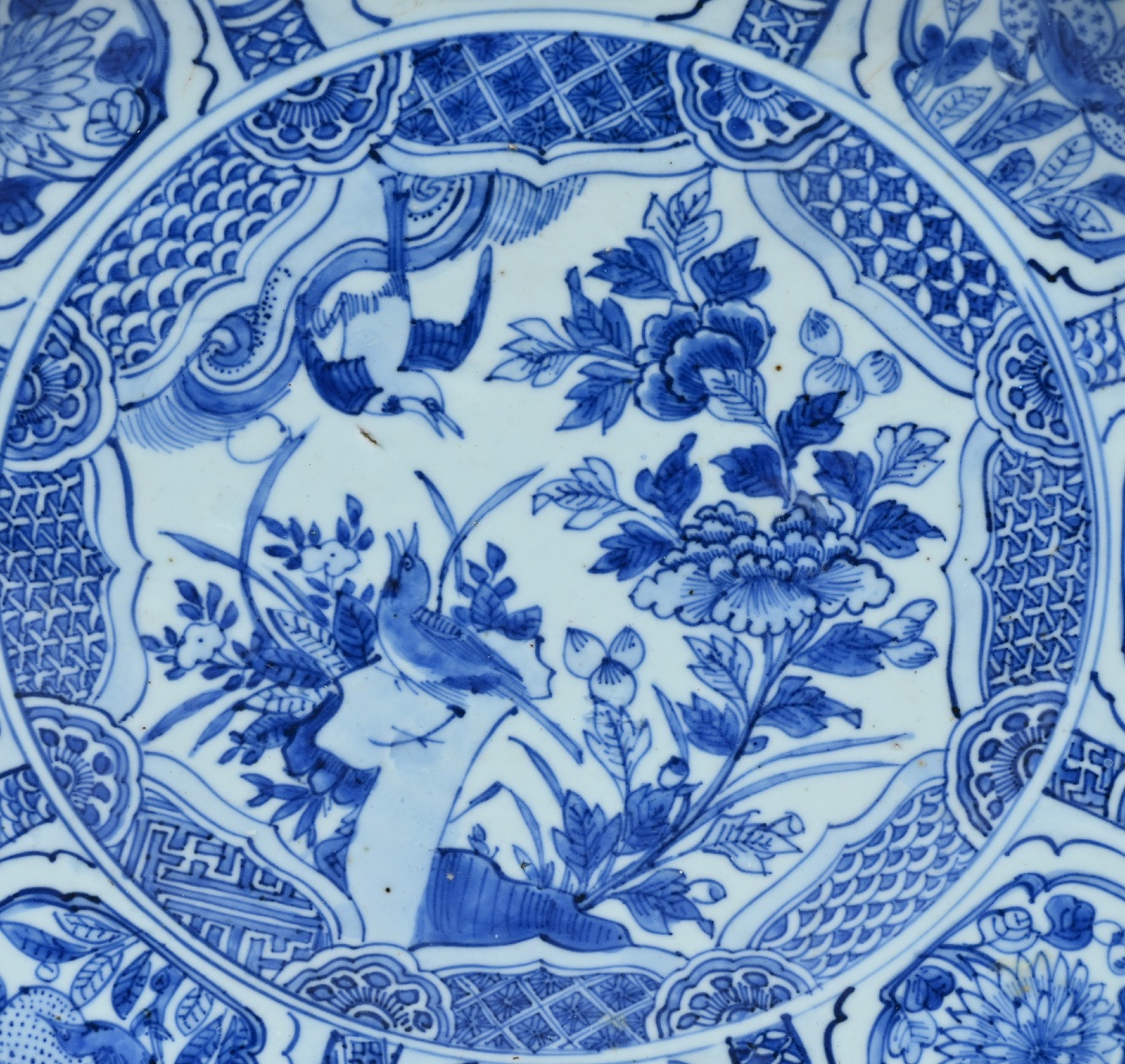
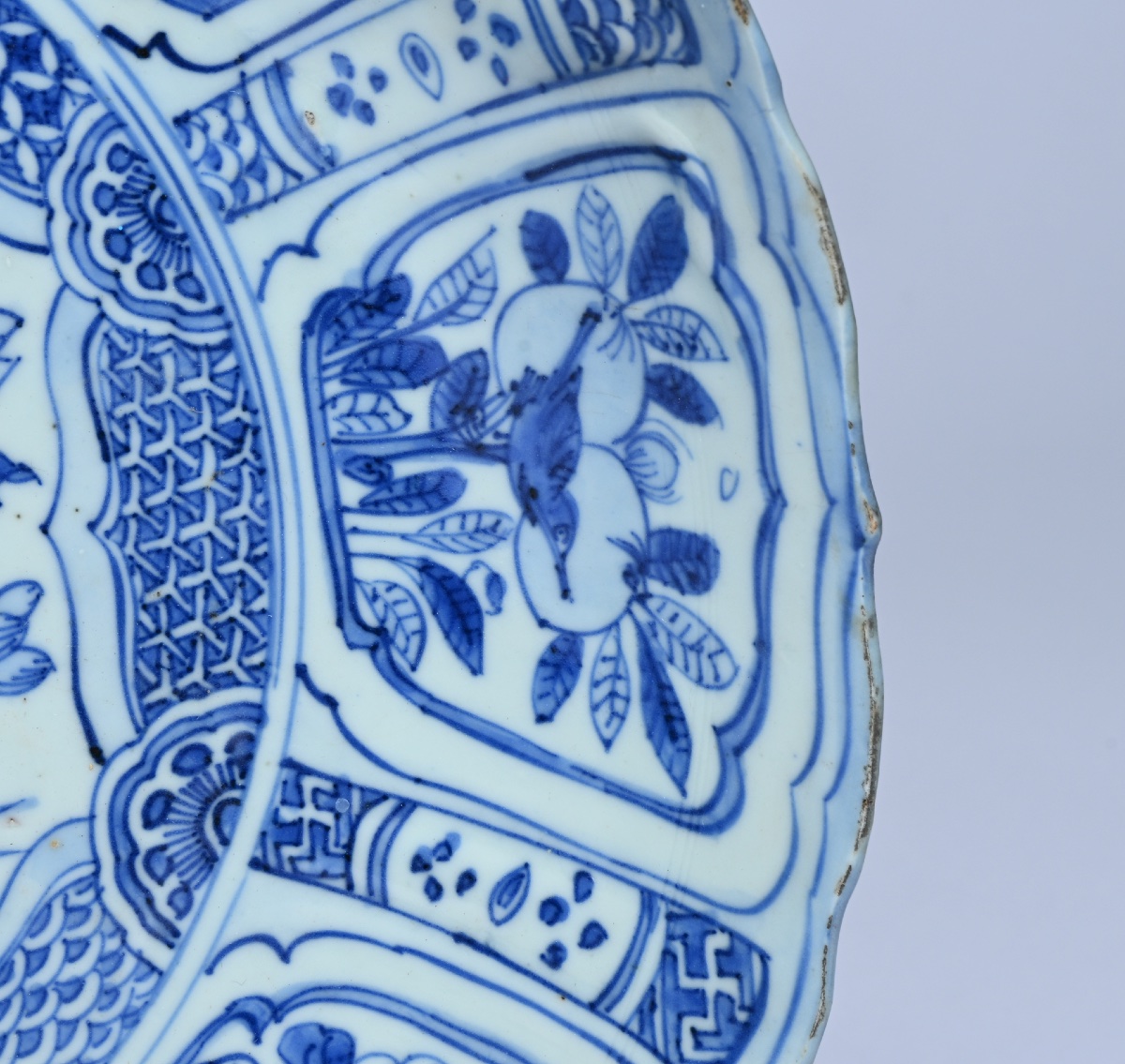
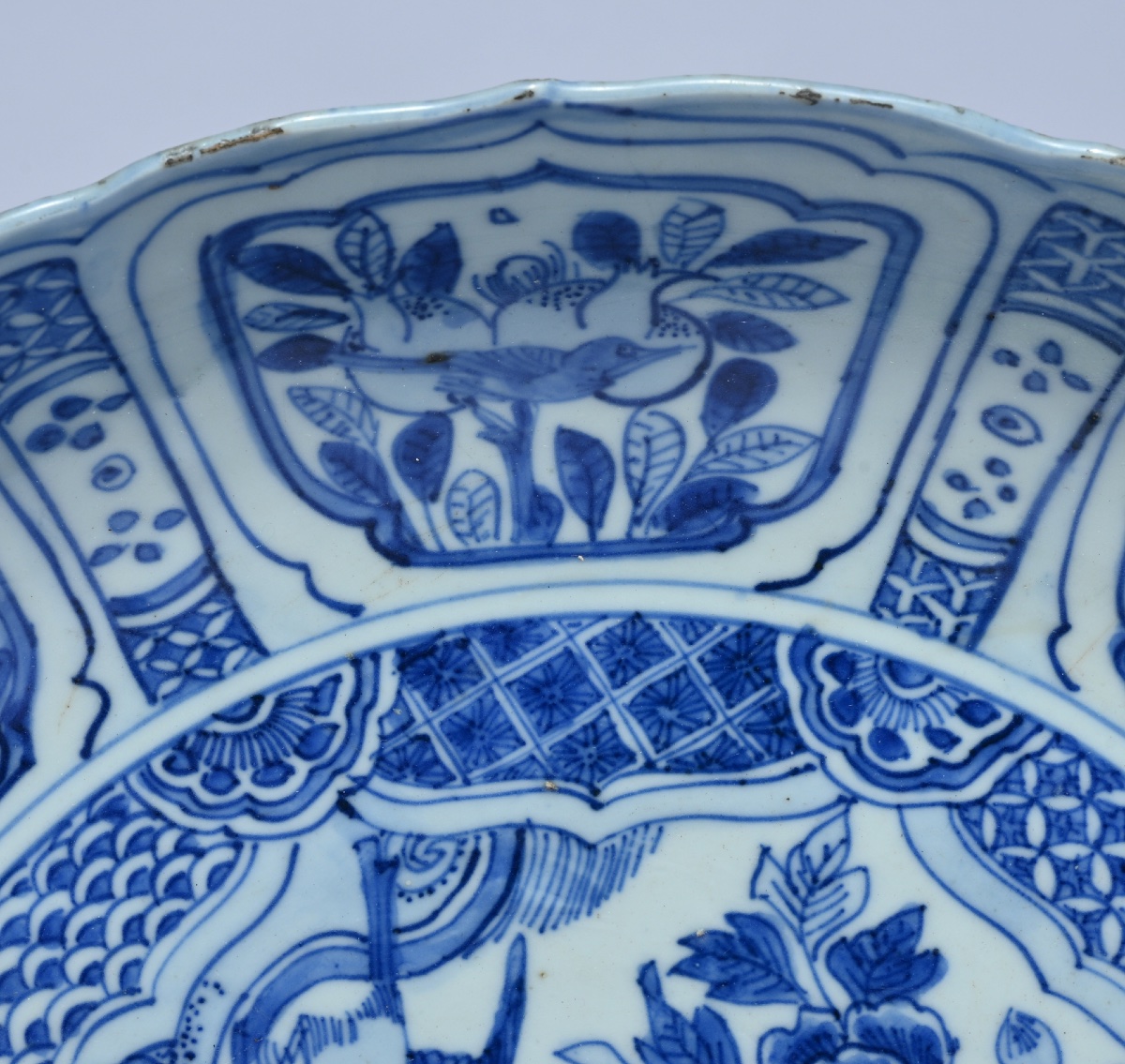
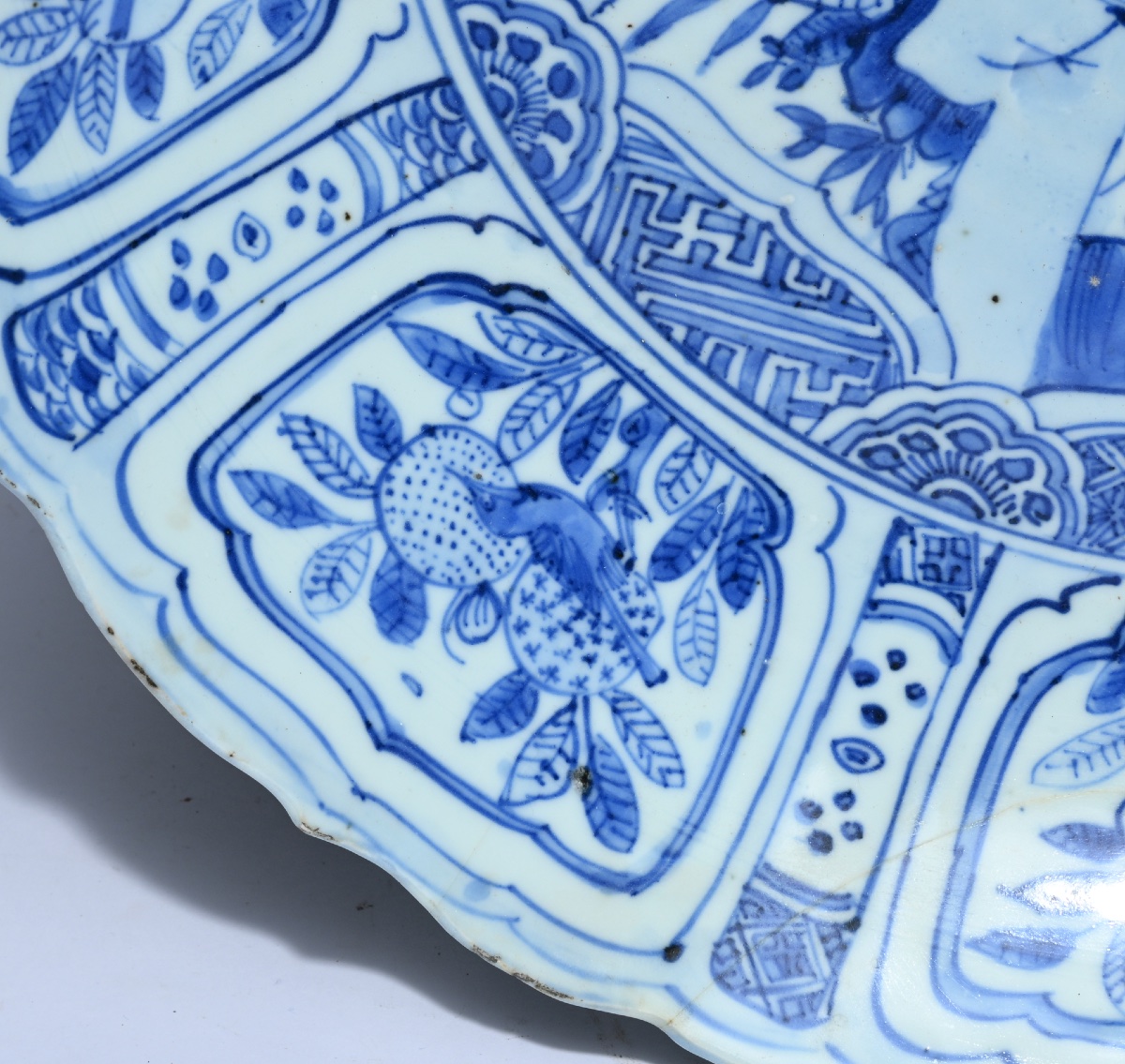
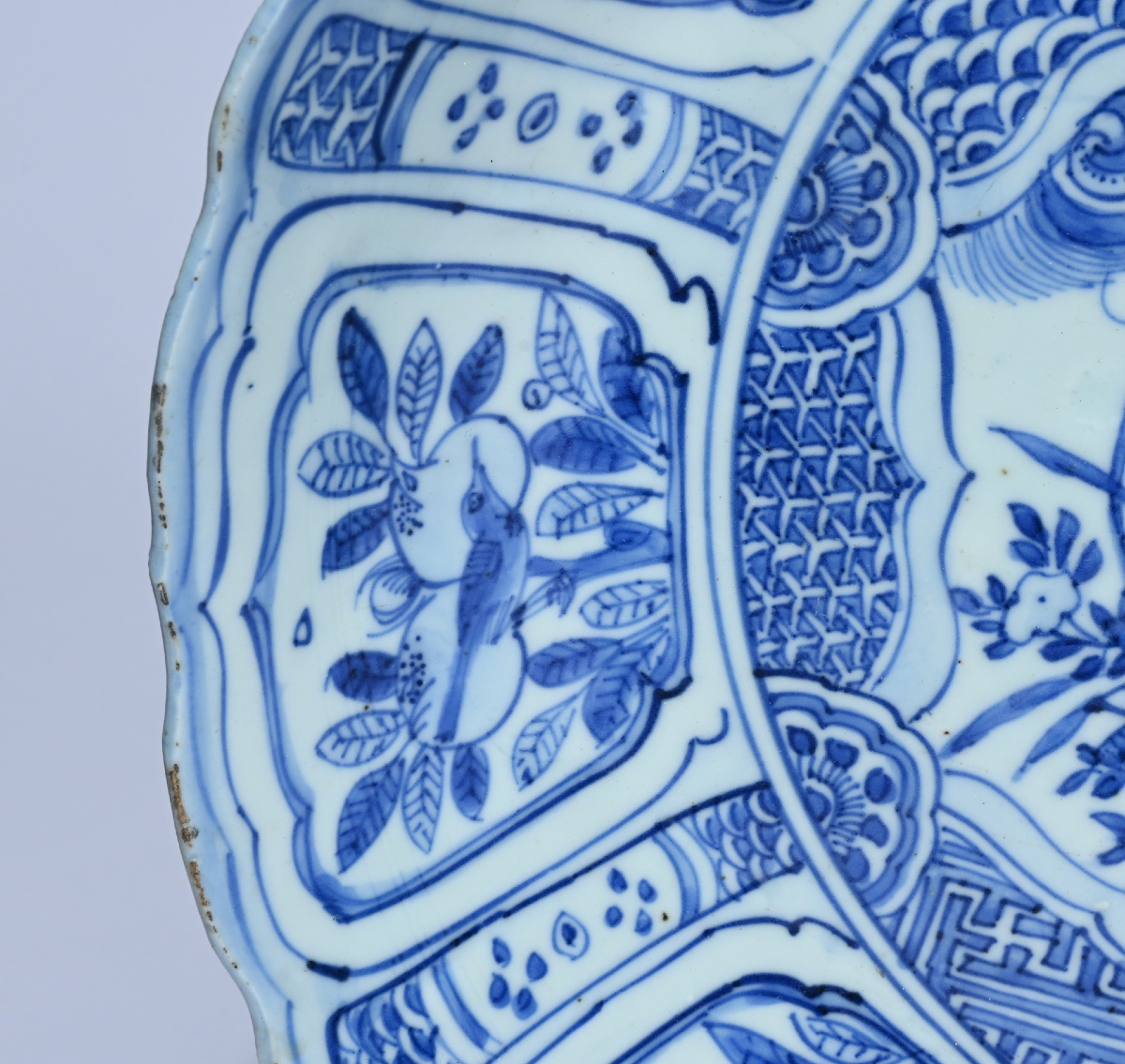
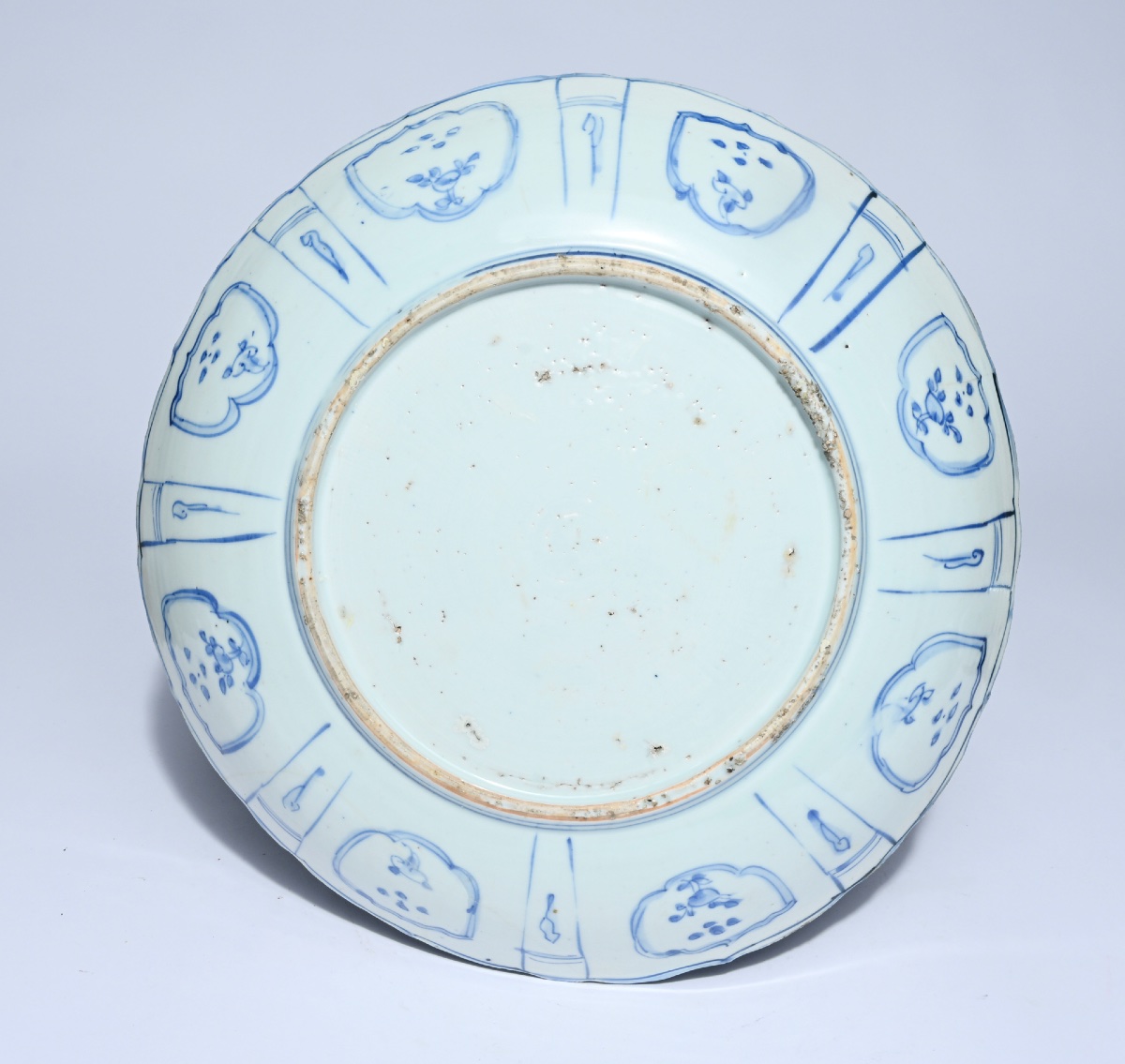
The central medallion depicts an extremely vivid and exquisitely painted natural scene, featuring a bird perched on a rock amid blooming peonies and bamboo stalks, with a second bird in flight above it. This typical naturalistic iconography was particularly prized by the Western elite in the early 17th century and exudes pure royalty. The wide, domed panel and the rim are divided, in keeping with classical tradition, into eight fan-shaped cartouches. These compartments are alternately adorned with refined floral motifs and Buddhist symbols of happiness, such as fans and scrolls, elegantly suspended from stylized ribbons. These panels are separated from one another by narrower vertical bands featuring geometric symbols.
This type of “kraak” porcelain owes its name to the Dutch. Around 1602, ships of the Dutch East India Company (VOC), then newly established, captured several Portuguese merchant ships. The Portuguese called this type of ship a “caraca,” a term that was corrupted to “kraak” in Dutch. The fabulous haul—thousands of pieces of porcelain, dazzlingly white and of the finest quality—was auctioned off in Middelburg and Amsterdam, from where it spread throughout the European continent. The popularity of this porcelain was such that Dutch potters began to imitate it, which led directly to the birth of the famous Delft blue.
This type of “kraak” porcelain owes its name to the Dutch. Around 1602, ships of the Dutch East India Company (VOC), then newly established, captured several Portuguese merchant ships. The Portuguese called this type of ship a “caraca,” a term that was corrupted to “kraak” in Dutch. The fabulous haul—thousands of pieces of porcelain, dazzlingly white and of the finest quality—was auctioned off in Middelburg and Amsterdam, from where it spread throughout the European continent. The popularity of this porcelain was such that Dutch potters began to imitate it, which led directly to the birth of the famous Delft blue.
Condition Report: This object is in a restored condition, in accordance with market standards, reflecting the rich history and fragile nature of export porcelain dating back more than four centuries.
Hairline cracks: On the front, there are two fine hairline cracks measuring 4 and 2.5 cm, respectively. A continuous crack measuring 8 cm is visible on both the front and back.
Damage to the edges: Around the rim, there are small chips in the glaze, characteristic of the fragile edges of crackled porcelain.
Dimensions: Diameter: 36.00 cm
580 €
Period: 17th century
Style: Asian art
Condition: Condition of use
Material: Porcelain
Diameter: 36,00cm
Reference (ID): 1832892
Availability: In stock
Print