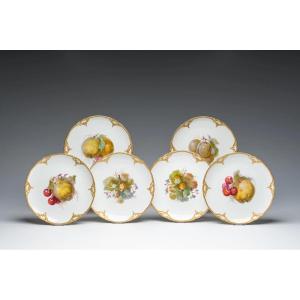


Set Of Six Hand-painted And Gilded Dessert Plates, Kpm, 1900–1910
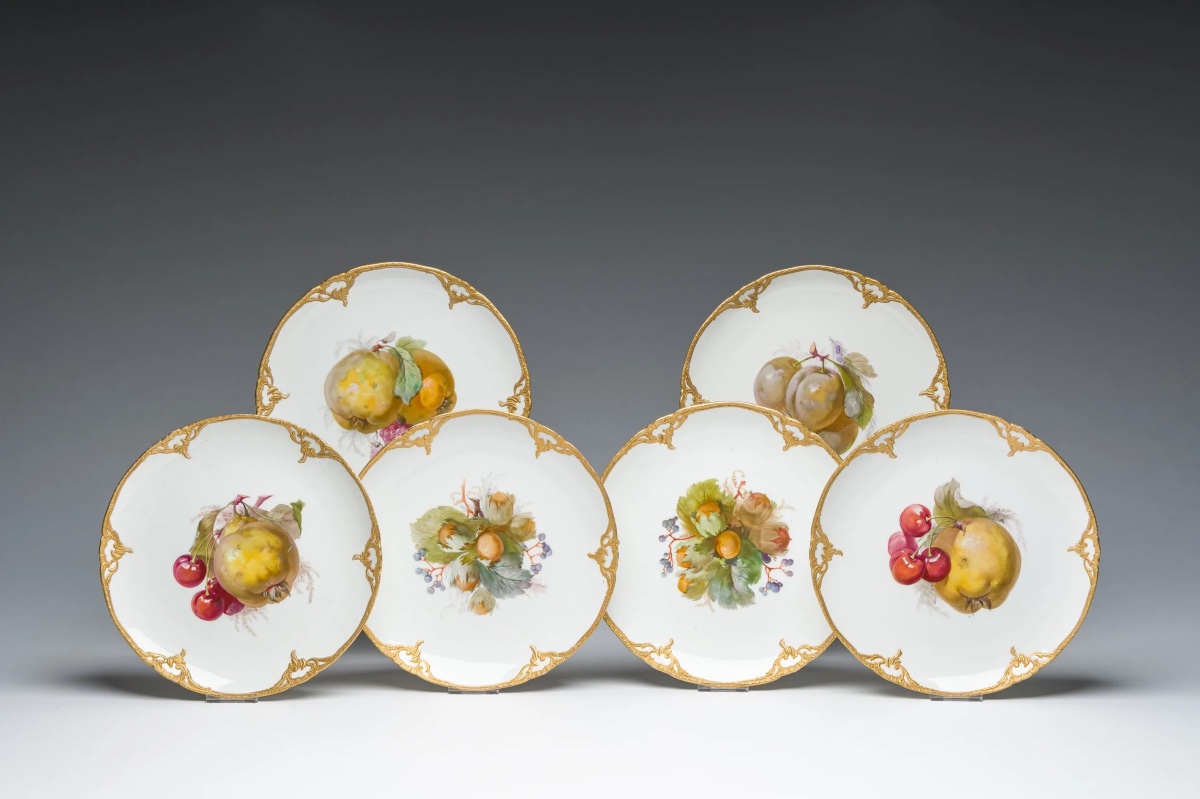
This magnificent set of six antique porcelain dessert plates was manufactured by the renowned Königliche Porzellan-Manufaktur (KPM) in Berlin. This set dates from the period between 1900 and 1910, a crucial transitional period during which the manufactory successfully blended its classic royal traditions with the emerging organic influences of Art Nouveau.
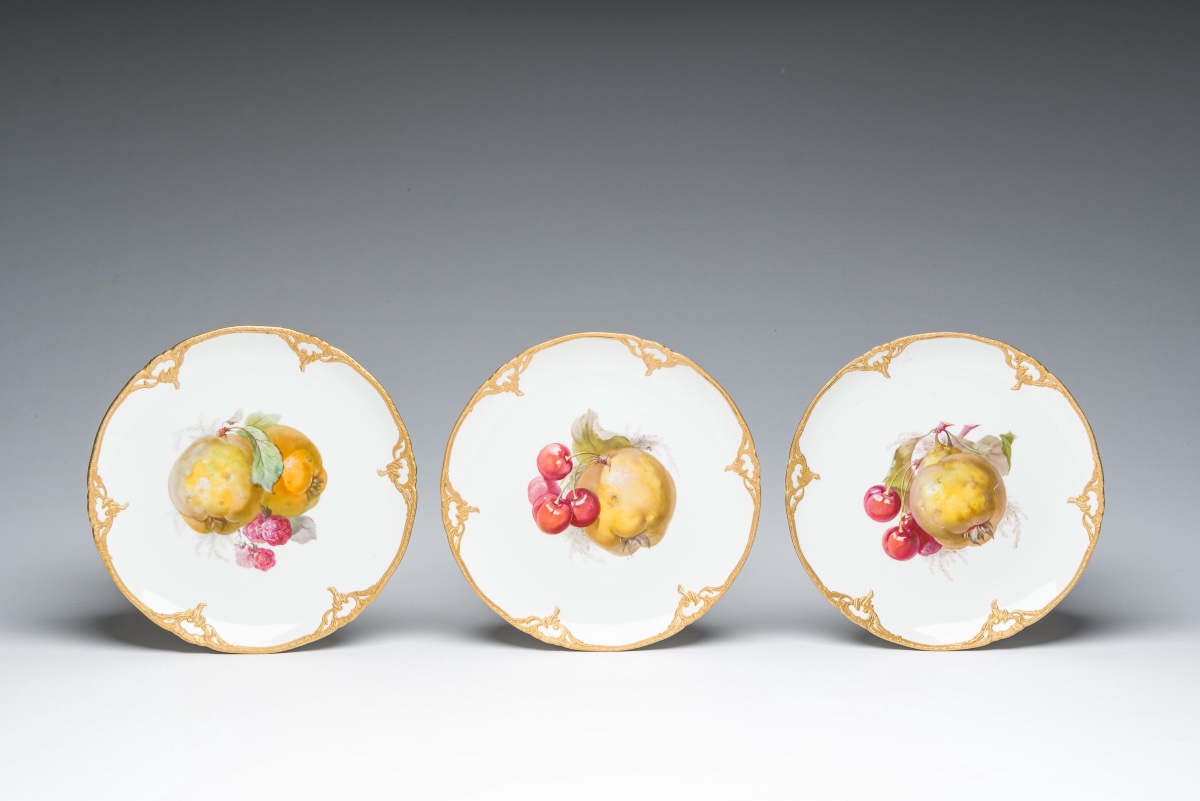
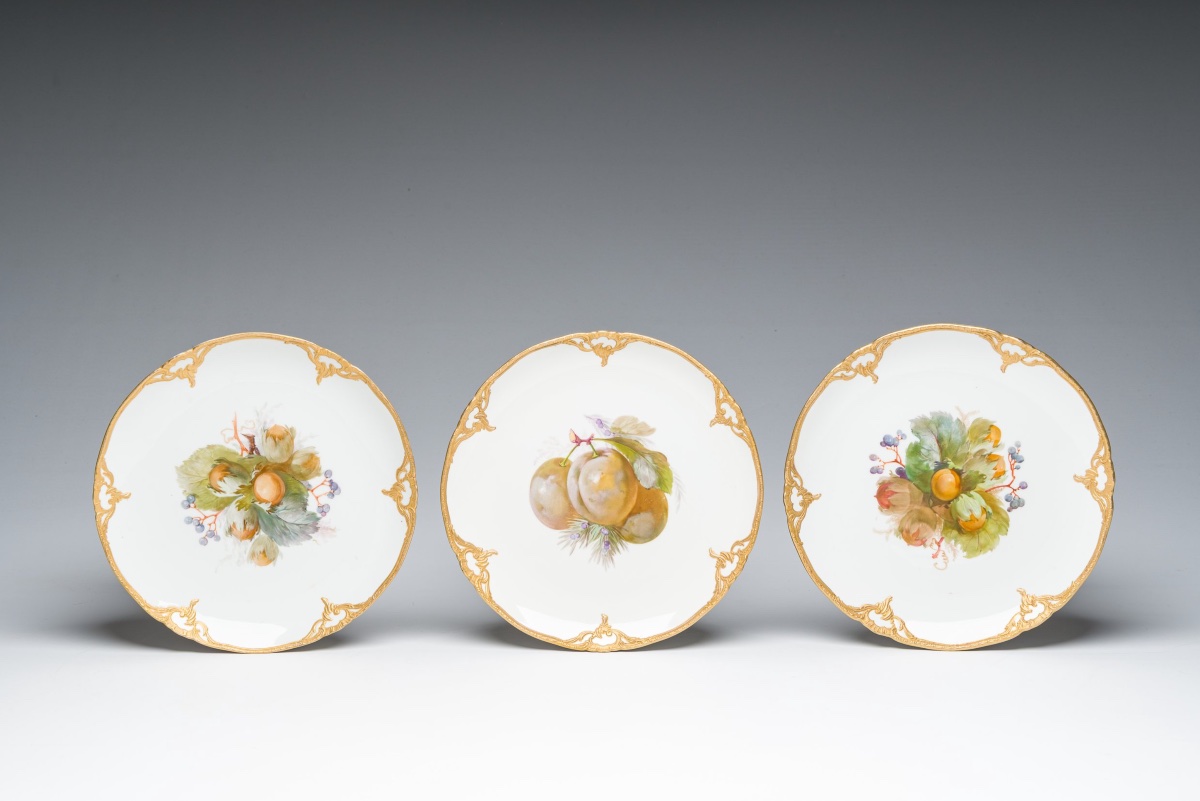
Each plate in this series serves as an individual canvas for a masterfully hand-painted still life. The vibrant compositions are distinguished by their naturalism and feature a rich variety of European fall and summer fruits. Subtle shades of light and shadow bring to life juicy pears, plump plums, glossy cherries, and clusters of hazelnuts. The central design is beautifully framed by a Rococo-style relief border with dynamic undulations, inspired by the famous Neuosier relief designed in 1776 by master modeler Friedrich Elias Meyer. To paint the relief borders, KPM used a technique involving 24-karat pure gold paste, a method reserved for such exceptional pieces. After firing, the borders were polished using a semi-precious stone, creating a striking contrast between the deep, brilliant polished gold and the matte, velvety gold of the recessed areas.Manufacturer’s Marks
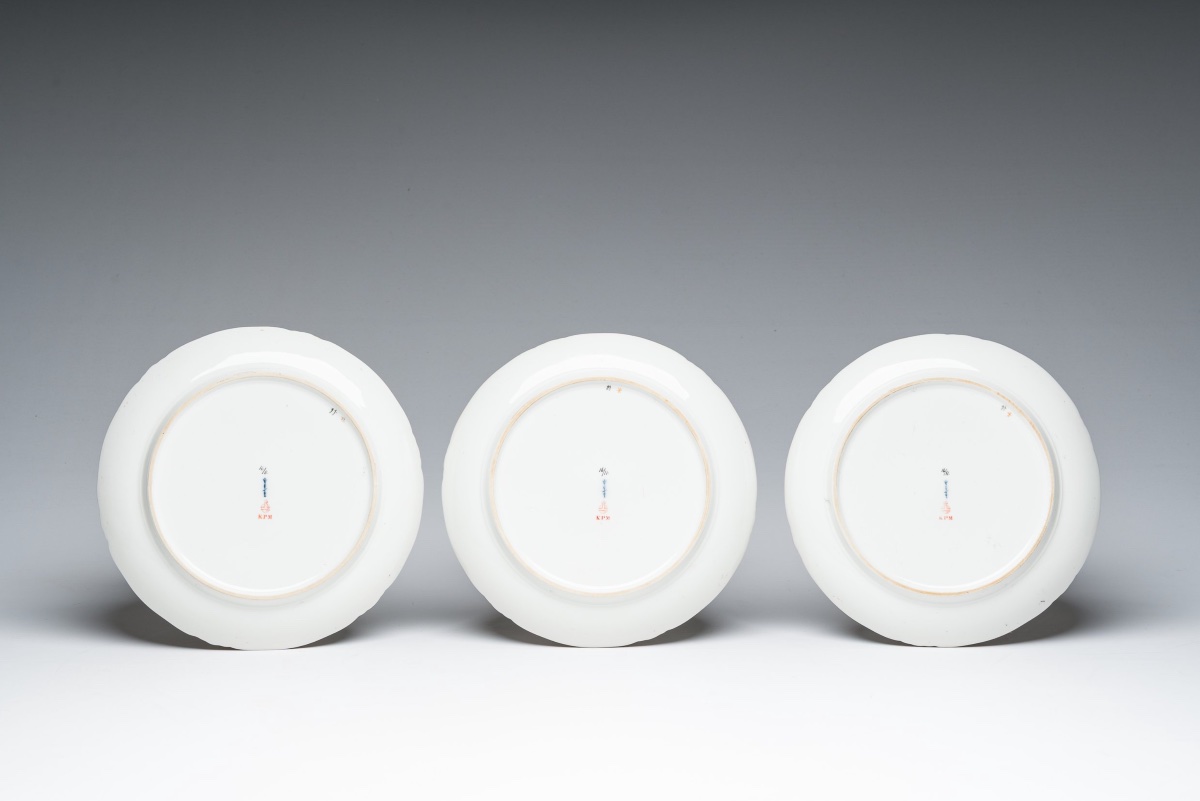
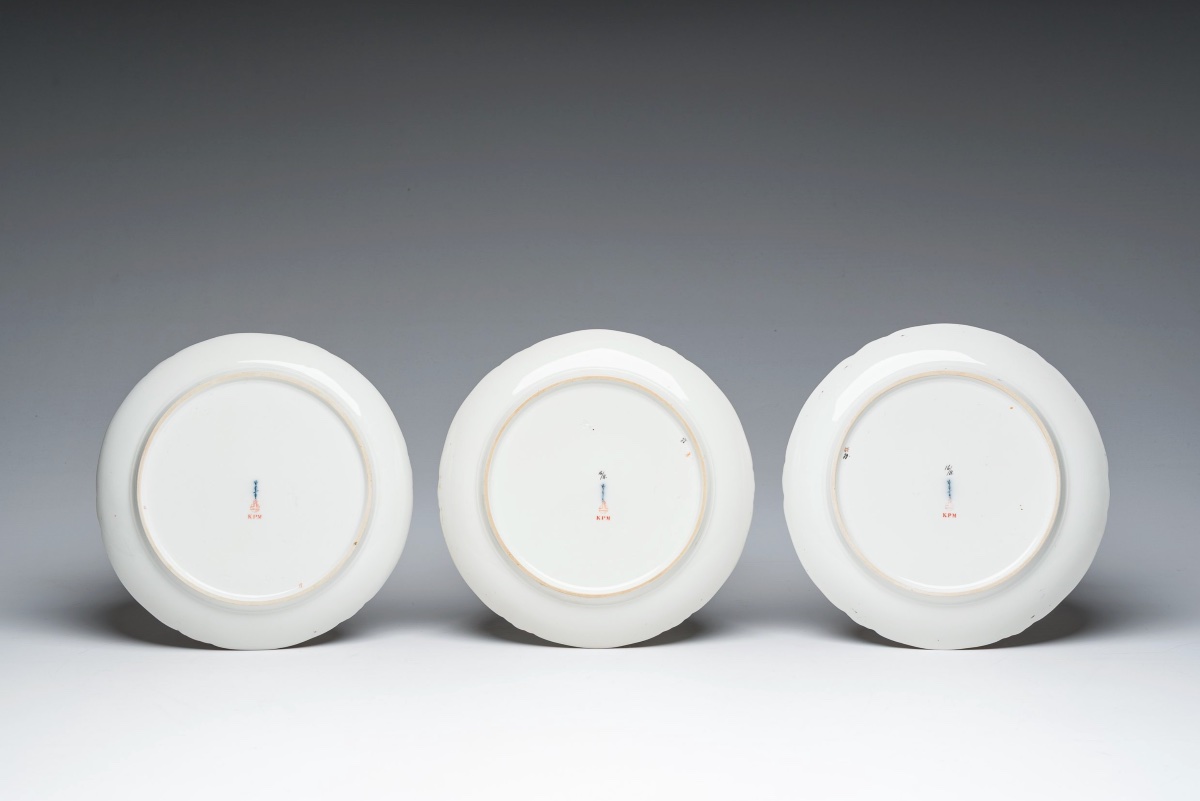
On the back of the plates is the distinctive cobalt-blue scepter, which has been the official mark of the KPM manufactory since 1763 and was introduced by King Frederick the Great of Prussia. This mark was applied by hand under the glaze using cobalt blue paint. It is important to note that the scepter on these plates was not scratched before the second firing, which was traditionally done when firing defects were discovered in the plates. A scratch on the manufacturer’s mark would indeed indicate that the item is a second-grade product. Since these plates are richly hand-painted, they bear, in addition to the scepter, a second important mark: the imperial apple, applied to the glaze to indicate that the decoration was created in the KPM workshops themselves. The green color of the apple was applied only to designs depicting fruit. On the foot of each plate, there is a small hand-painted number or letter. This is the porcelain painter’s personal signature.About the manufactory:
Although the Berlin manufactory was founded as early as 1761 by Johann Ernst Gotzkowsky, its true success did not begin until two years later, when Frederick the Great, King of Prussia, took over the struggling factory. He not only gave the company his name but also adopted his personal coat of arms as its official mark. Frederick was so passionate about porcelain that he commissioned countless sets for his various palaces and castles. Even today, KPM remains committed to craftsmanship. While many other porcelain manufacturers have switched to industrial mass production, in the historic workshops in Berlin, almost everything is still made by hand. The production of a single KPM piece often takes several weeks and requires the expertise of dozens of different artisans, from the modeler to the master painter.
Each plate in this series serves as an individual canvas for a masterfully hand-painted still life. The vibrant compositions are distinguished by their naturalism and feature a rich variety of European fall and summer fruits. Subtle shades of light and shadow bring to life juicy pears, plump plums, glossy cherries, and clusters of hazelnuts. The central design is beautifully framed by a Rococo-style relief border with dynamic undulations, inspired by the famous Neuosier relief designed in 1776 by master modeler Friedrich Elias Meyer. To paint the relief borders, KPM used a technique involving 24-karat pure gold paste, a method reserved for such exceptional pieces. After firing, the borders were polished using a semi-precious stone, creating a striking contrast between the deep, brilliant polished gold and the matte, velvety gold of the recessed areas.Manufacturer’s Marks
On the back of the plates is the distinctive cobalt-blue scepter, which has been the official mark of the KPM manufactory since 1763 and was introduced by King Frederick the Great of Prussia. This mark was applied by hand under the glaze using cobalt blue paint. It is important to note that the scepter on these plates was not scratched before the second firing, which was traditionally done when firing defects were discovered in the plates. A scratch on the manufacturer’s mark would indeed indicate that the item is a second-grade product. Since these plates are richly hand-painted, they bear, in addition to the scepter, a second important mark: the imperial apple, applied to the glaze to indicate that the decoration was created in the KPM workshops themselves. The green color of the apple was applied only to designs depicting fruit. On the foot of each plate, there is a small hand-painted number or letter. This is the porcelain painter’s personal signature.About the manufactory:
Although the Berlin manufactory was founded as early as 1761 by Johann Ernst Gotzkowsky, its true success did not begin until two years later, when Frederick the Great, King of Prussia, took over the struggling factory. He not only gave the company his name but also adopted his personal coat of arms as its official mark. Frederick was so passionate about porcelain that he commissioned countless sets for his various palaces and castles. Even today, KPM remains committed to craftsmanship. While many other porcelain manufacturers have switched to industrial mass production, in the historic workshops in Berlin, almost everything is still made by hand. The production of a single KPM piece often takes several weeks and requires the expertise of dozens of different artisans, from the modeler to the master painter.
600 €
Period: 20th century
Style: Other Style
Condition: Good condition
Material: Porcelain
Diameter: 21,50cm
Reference (ID): 1791129
Availability: In stock
Print