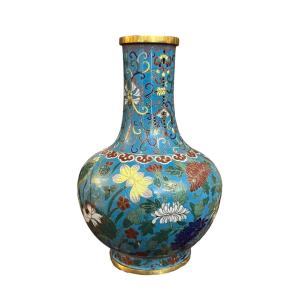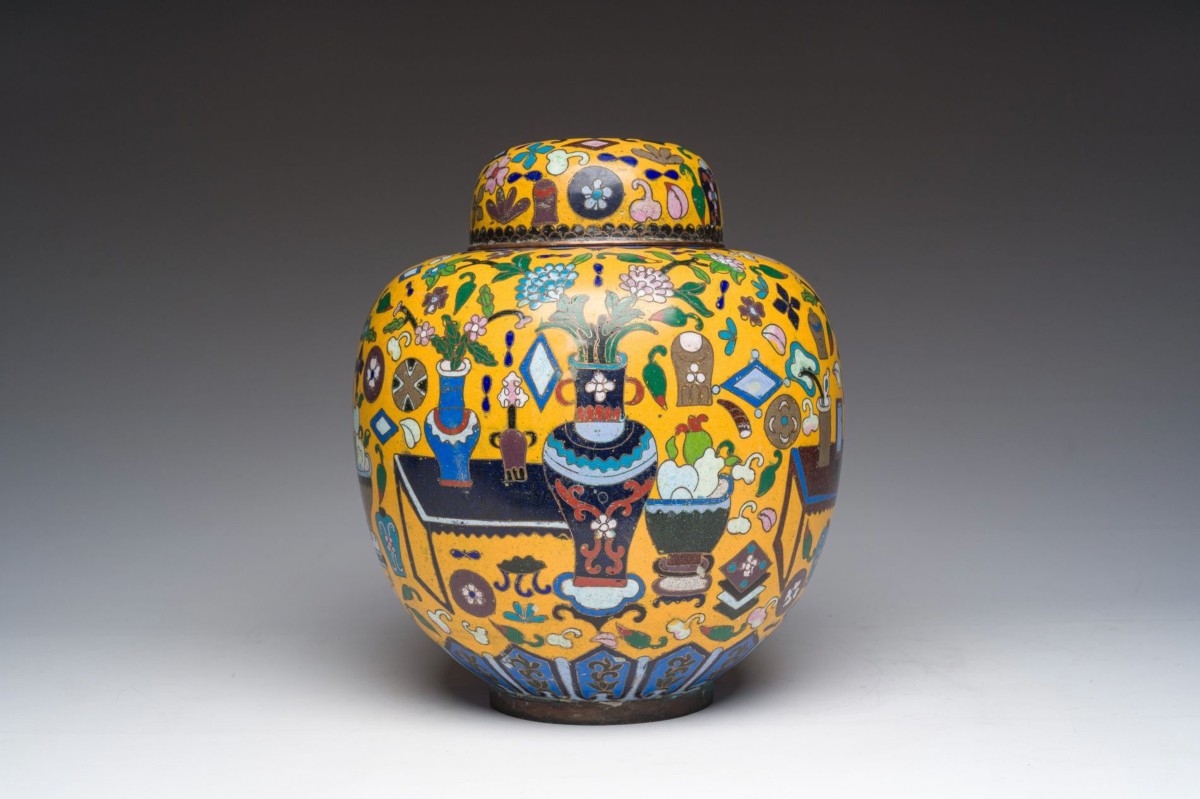
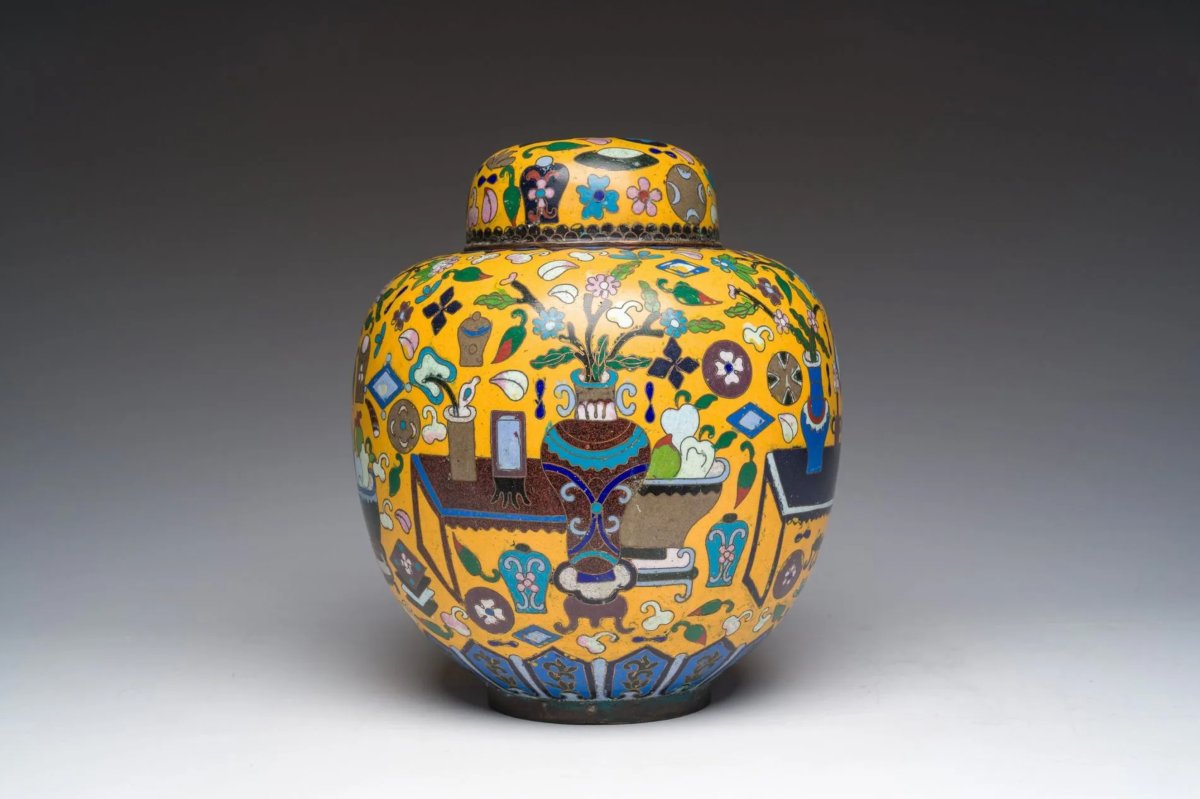
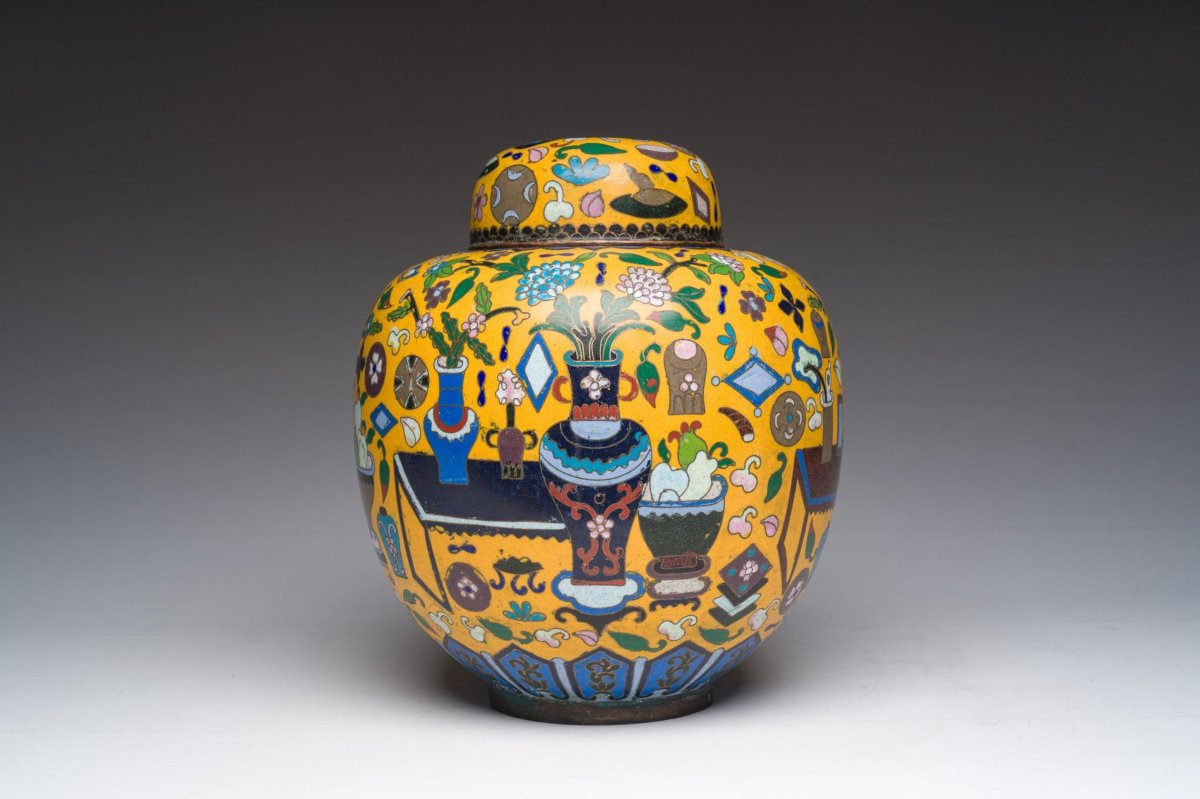
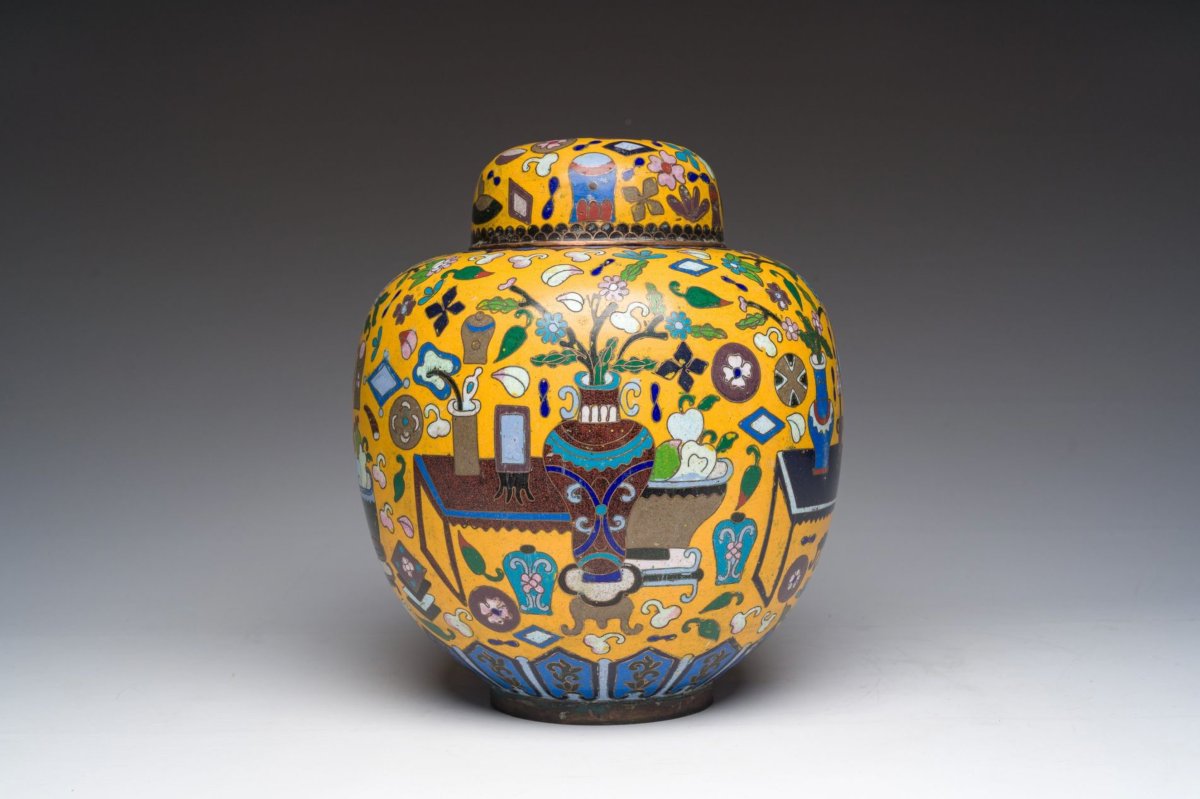


Chinese Cloisonné Ginger Pot, Decorated With Antique Motifs, Qing Dynasty (1860-1880)
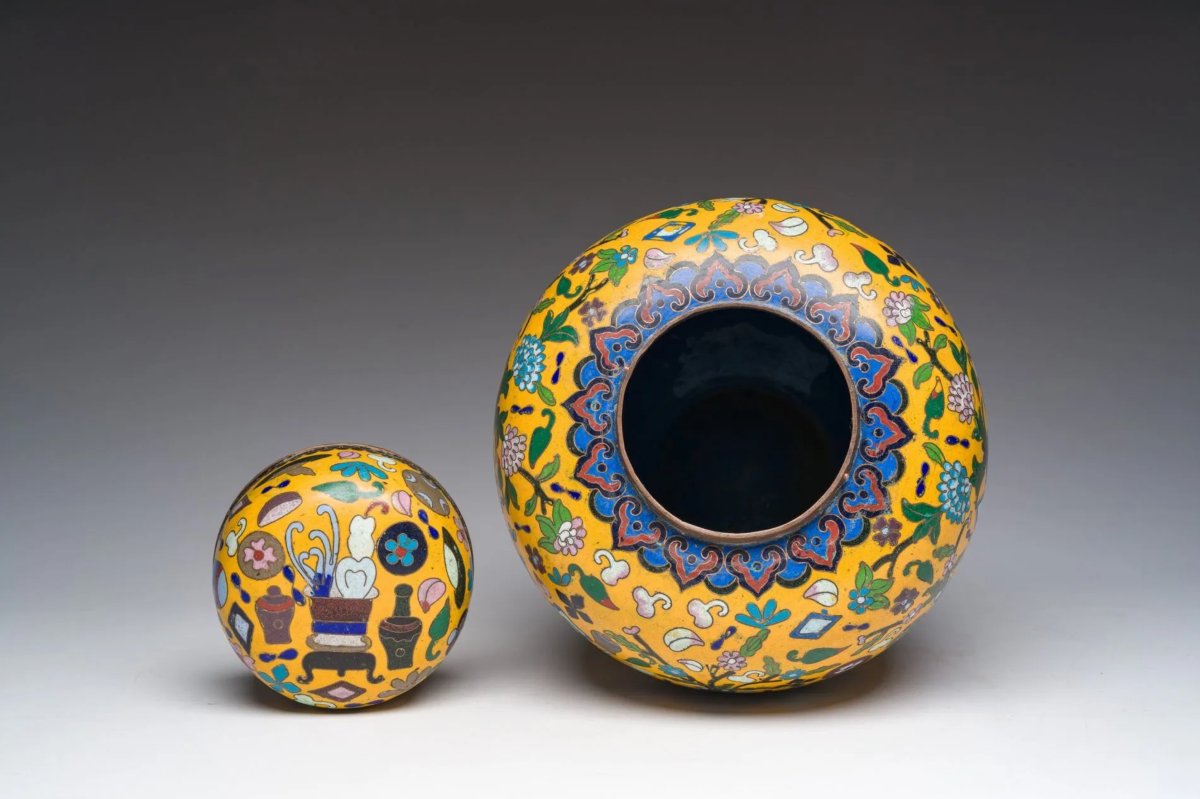
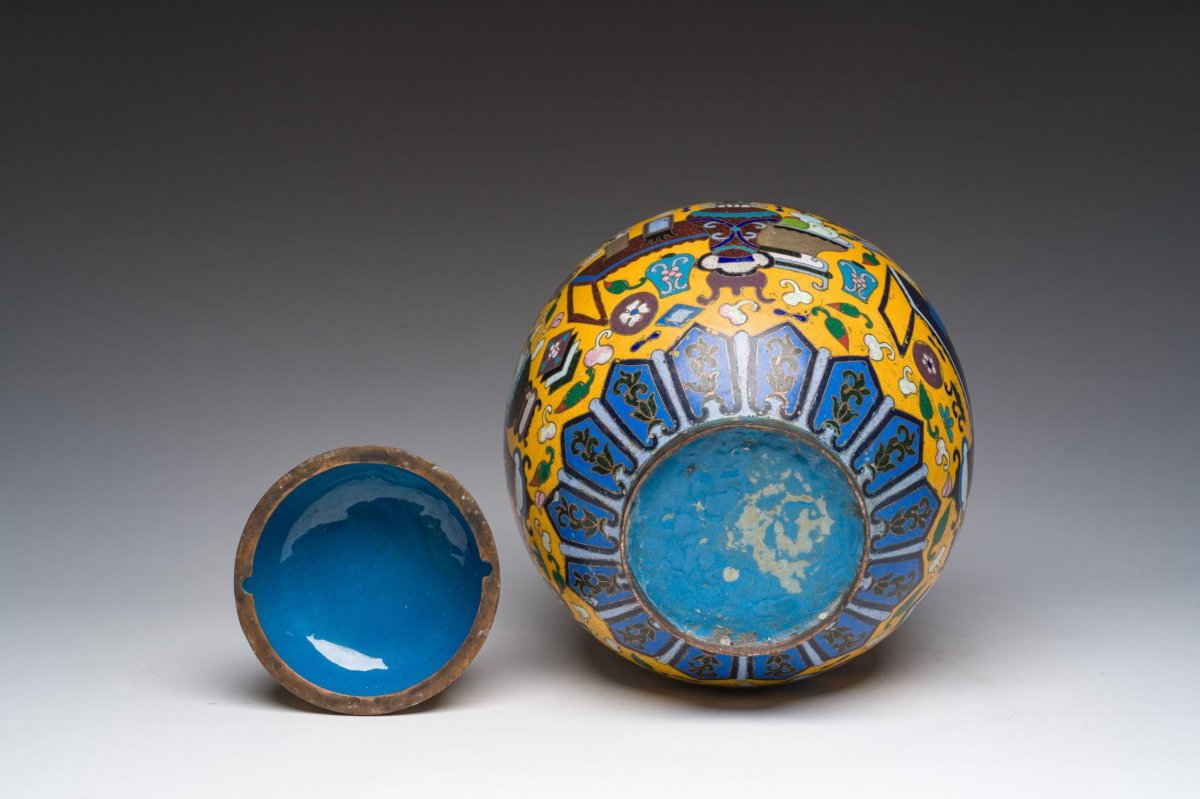
This finely decorated ginger jar, complete with lid, is an outstanding example of the refined cloisonné technique of the late 19th century. The object comes in a palette of vivid colors against a rare imperial yellow background - a color traditionally associated with prosperity and prestige.
The body of the pot is richly decorated with the classic "Hundred Antiques" (Po-ku) motif. This decoration includes a carefully arranged composition of ceremonial vases containing peonies and chrysanthemums, incense burners on wooden supports and various Buddhist symbols. These images symbolize intellectual wealth, longevity and cultural refinement.
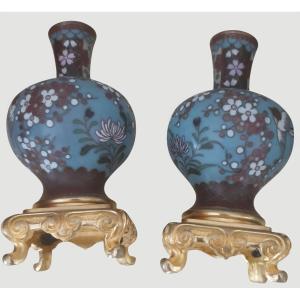
Cloisonné is an age-old technique of decorating metal objects with glass-like colored enamel. Although the technique originated in the Byzantine Empire, its craftsmanship reached an unparalleled level of perfection in China during the Ming and Qing dynasties. Producing a cloisonné object such as this ginger jar is an extremely laborious, multi-stage process. The work begins with a copper base on which fine metal wires outline the motif. The compartments thus formed are repeatedly filled with colored glass paste, then fired at high temperature to form a solid layer. After firing, the surface is polished to a smooth finish, and the visible metal wires are often gilded for a luxurious, glossy finish.
The body of the pot is richly decorated with the classic "Hundred Antiques" (Po-ku) motif. This decoration includes a carefully arranged composition of ceremonial vases containing peonies and chrysanthemums, incense burners on wooden supports and various Buddhist symbols. These images symbolize intellectual wealth, longevity and cultural refinement.
Cloisonné is an age-old technique of decorating metal objects with glass-like colored enamel. Although the technique originated in the Byzantine Empire, its craftsmanship reached an unparalleled level of perfection in China during the Ming and Qing dynasties. Producing a cloisonné object such as this ginger jar is an extremely laborious, multi-stage process. The work begins with a copper base on which fine metal wires outline the motif. The compartments thus formed are repeatedly filled with colored glass paste, then fired at high temperature to form a solid layer. After firing, the surface is polished to a smooth finish, and the visible metal wires are often gilded for a luxurious, glossy finish.
590 €
Period: 19th century
Style: Asian art
Condition: Good condition
Height: 24,50cm
Reference (ID): 1754178
Availability: In stock
Print