



Finely Carved Chinese Ivory Box, Signed And Marked (1920–1930)
This exceptionally delicate ivory jar with a lid was crafted from the solid core of a natural tusk. This type of elephant tusk box was a specialty of the workshops in Guangzhou (Canton) from the late 19th to the early 20th century, where local artisans were renowned for altering the tusk’s natural shape as little as possible and for decorating the entire exterior surface with relief carvings. The characteristic leopard motifs allow this object to be dated to between 1920 and 1930.
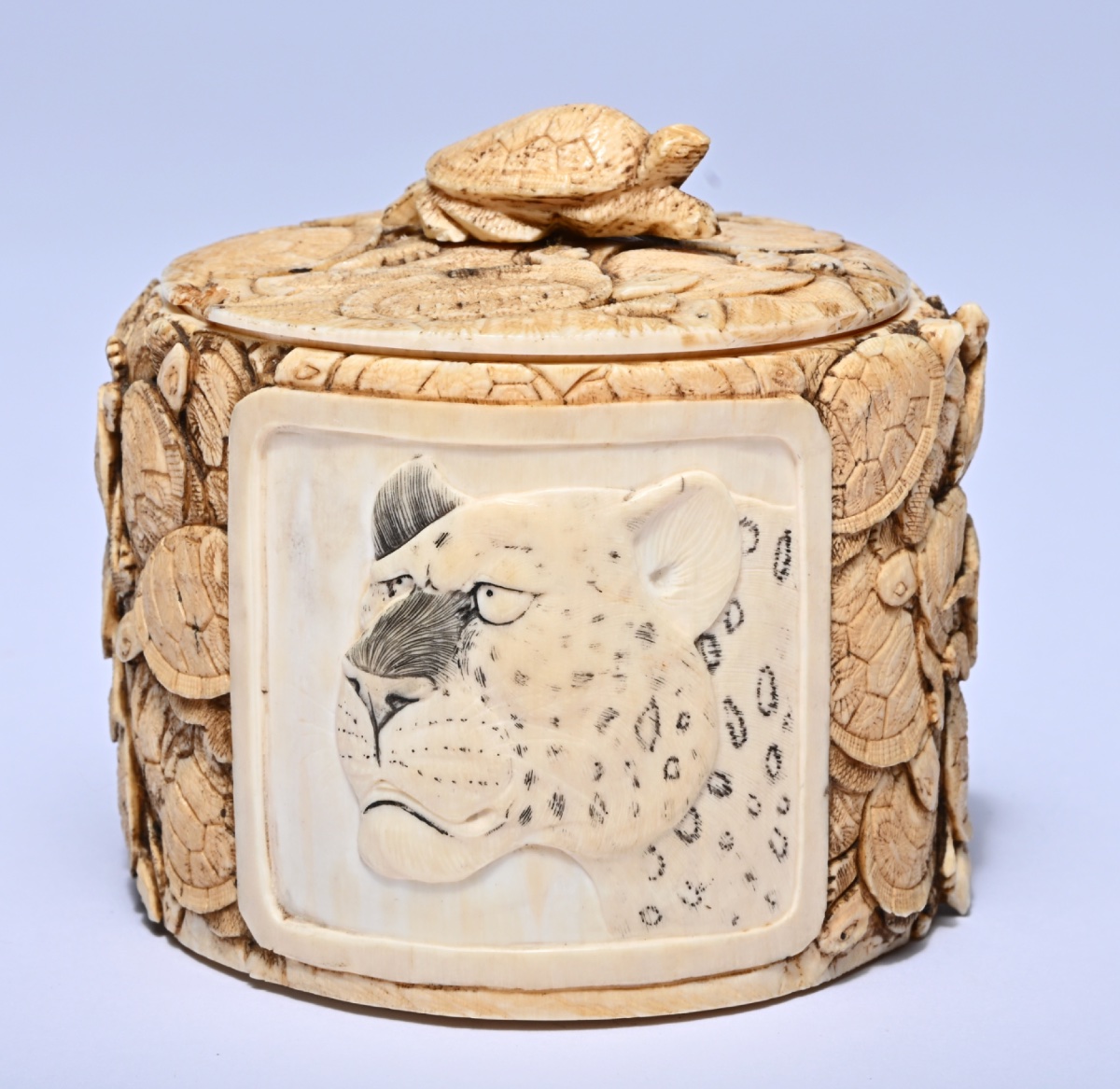
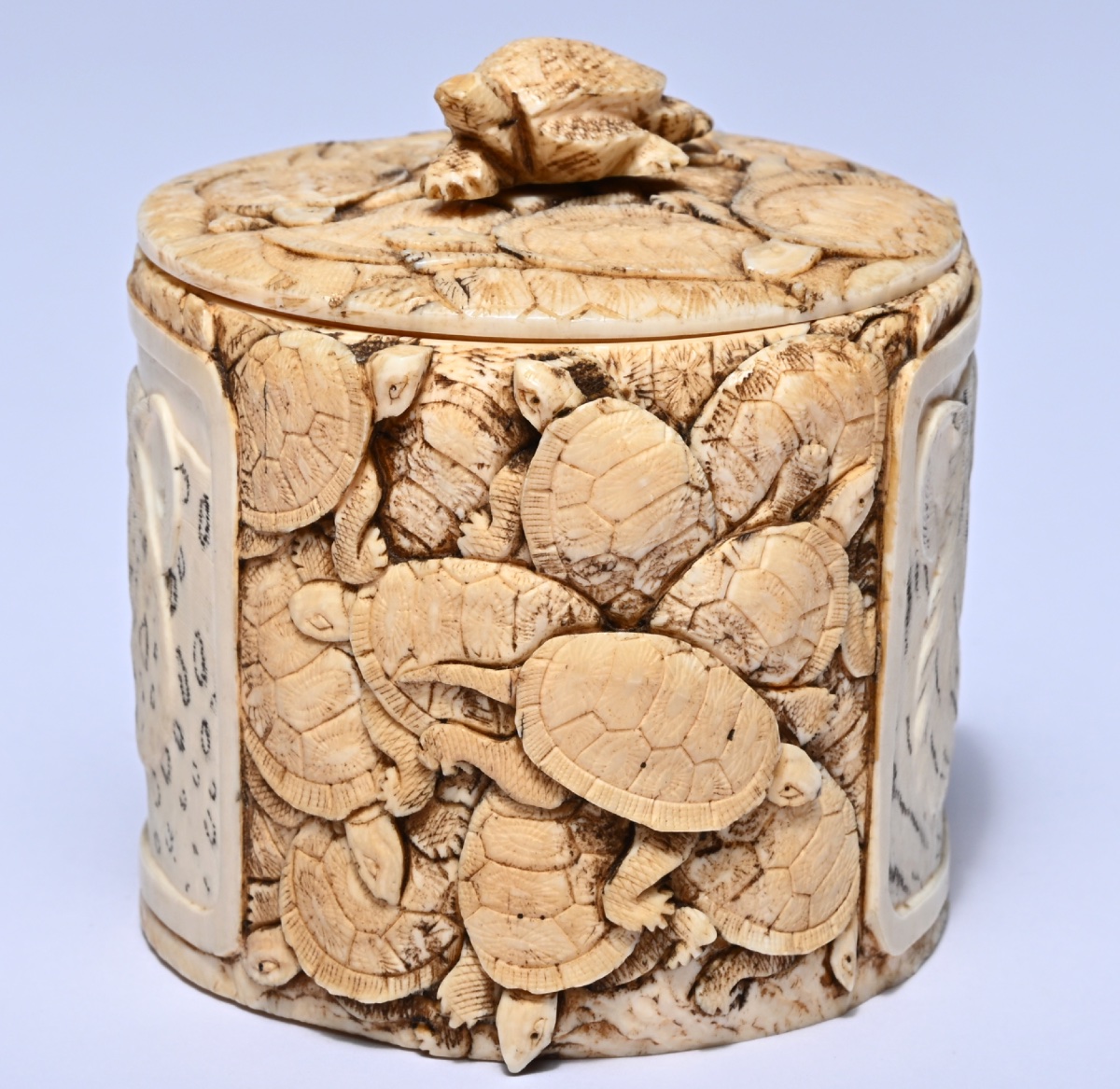
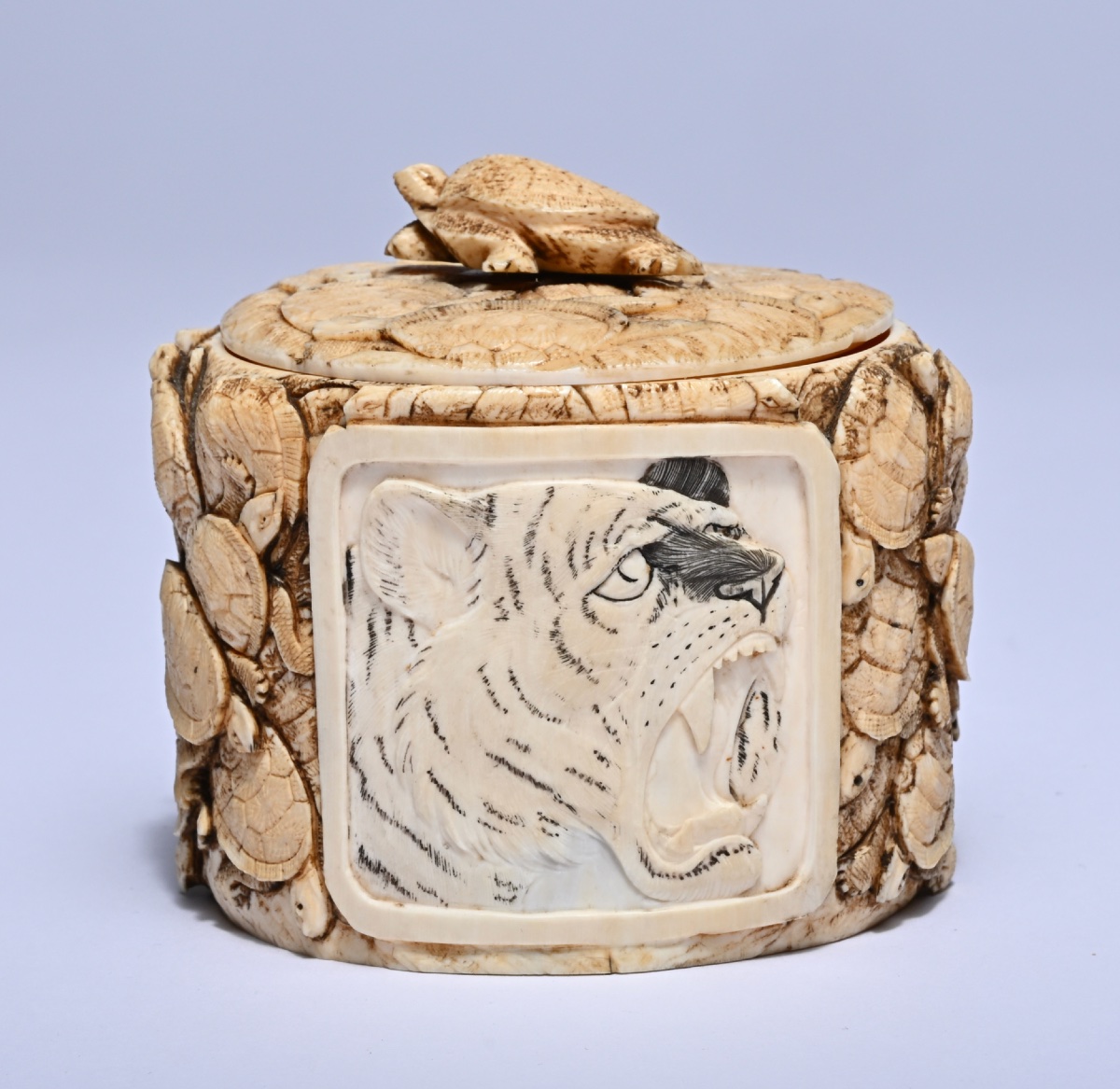
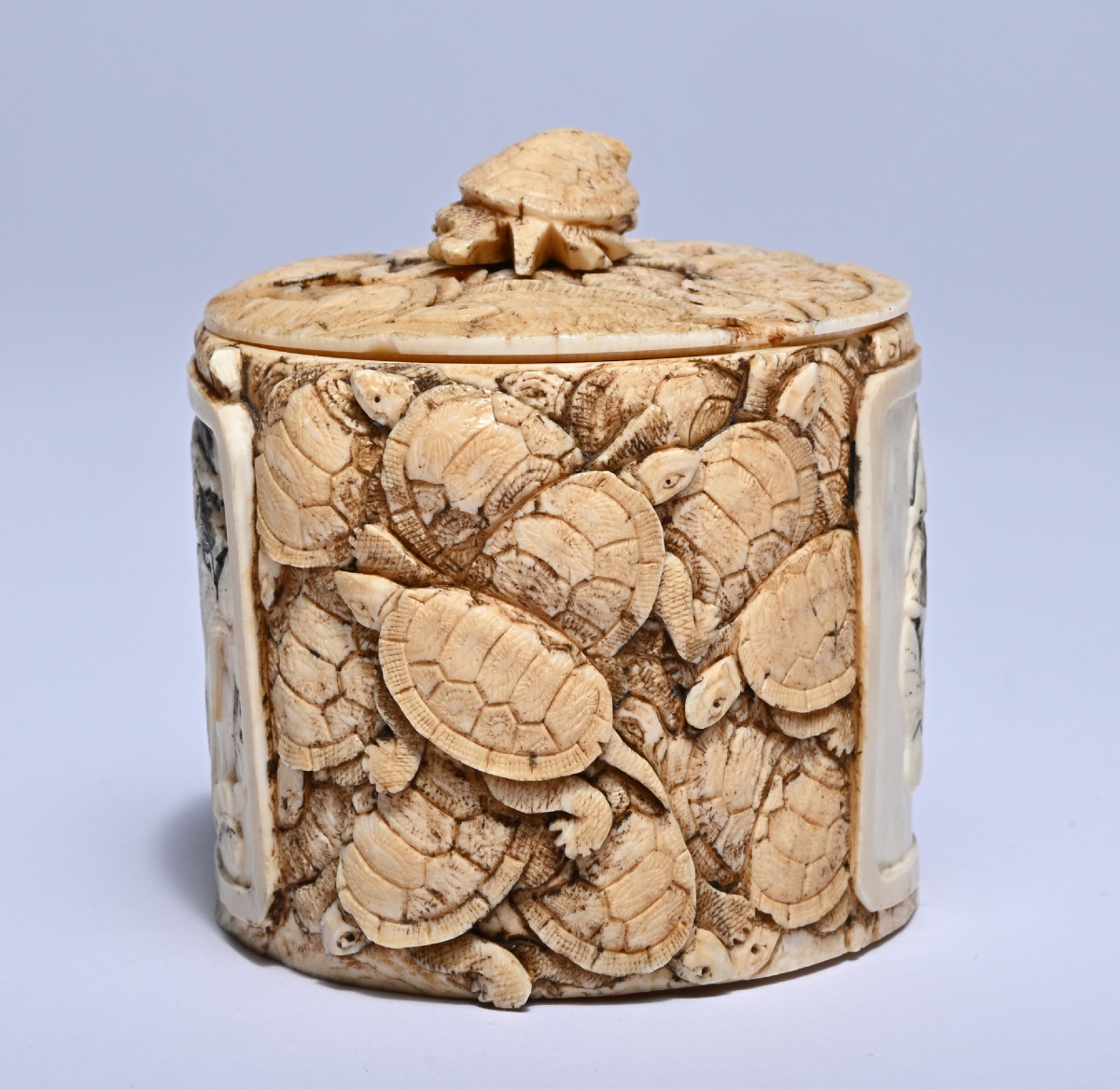
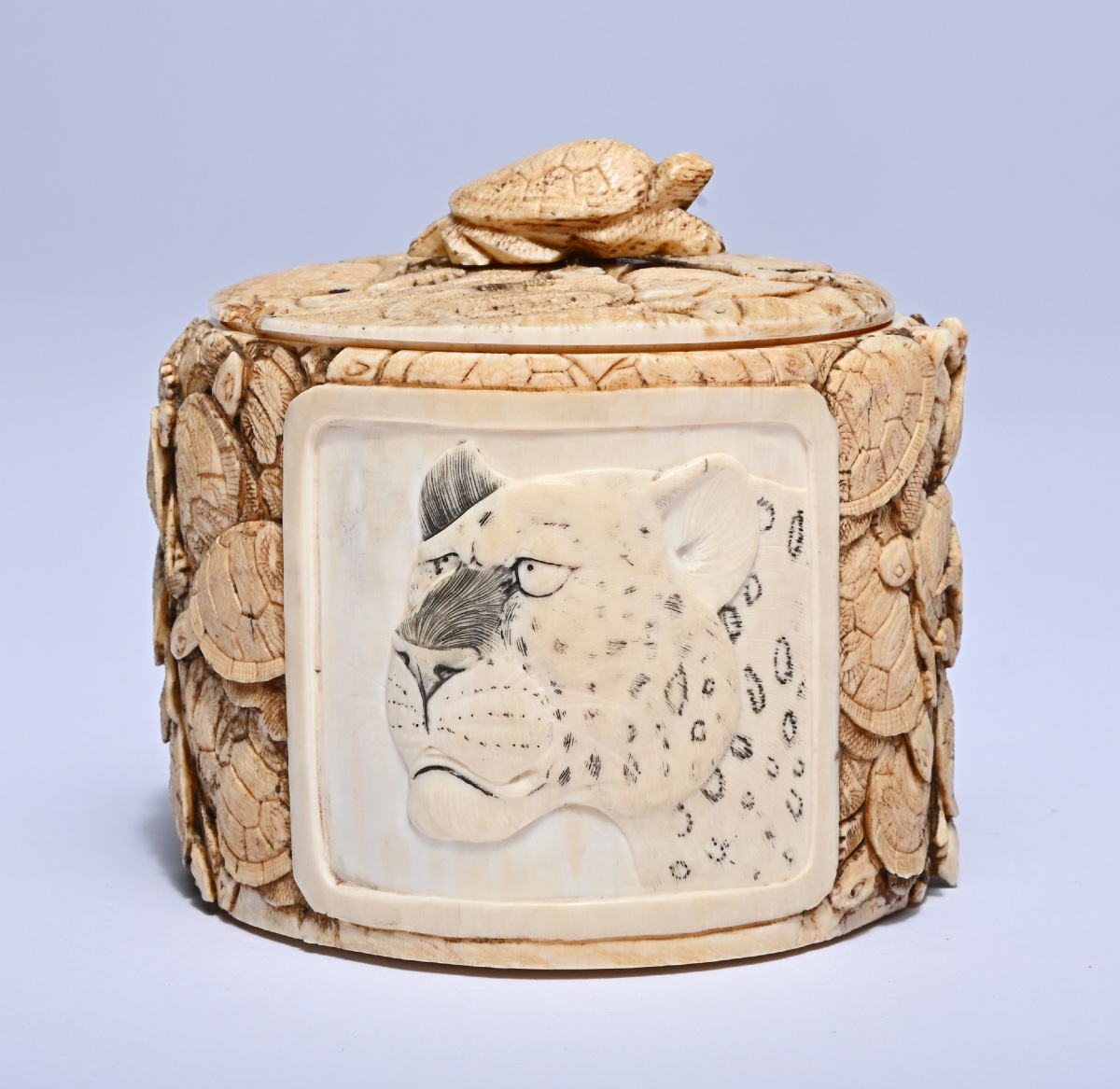
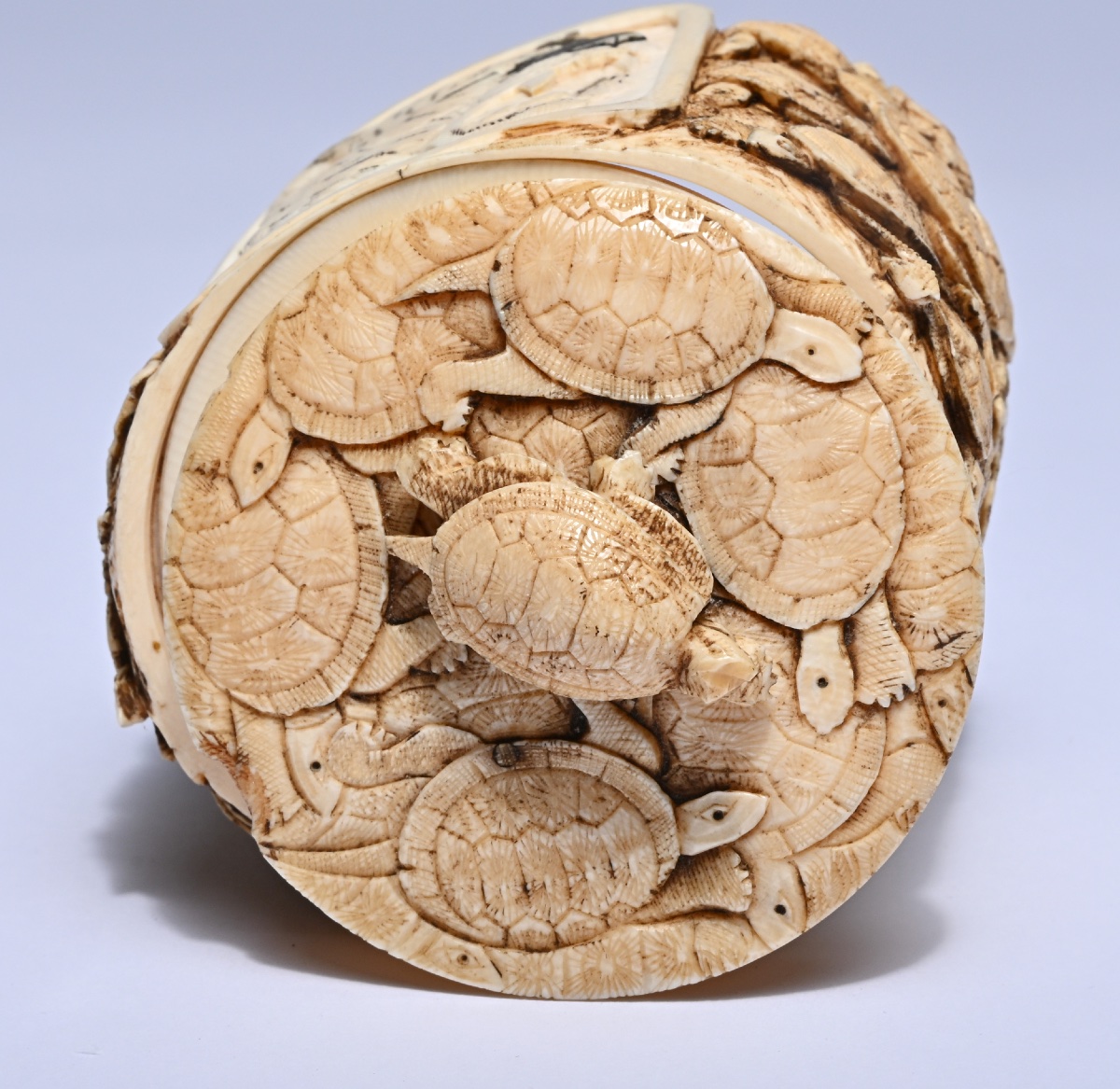
The exterior surface features a fascinating interplay of relief carvings, creating a striking contrast between the motifs and textures. The central part of the pot consists of two sharply defined cartouches, each carved with the head of a stylized leopard—a symbol of military power and social status in Asian art. Surrounding these central panels is a rich composition featuring dozens of turtles crawling side by side. Each small turtle has been individually crafted with meticulous engravings on its shell and legs, creating a very lifelike three-dimensional effect. In Taoist symbolism, the turtle is one of the four celestial animals, a symbol of long life and protection against misfortune.
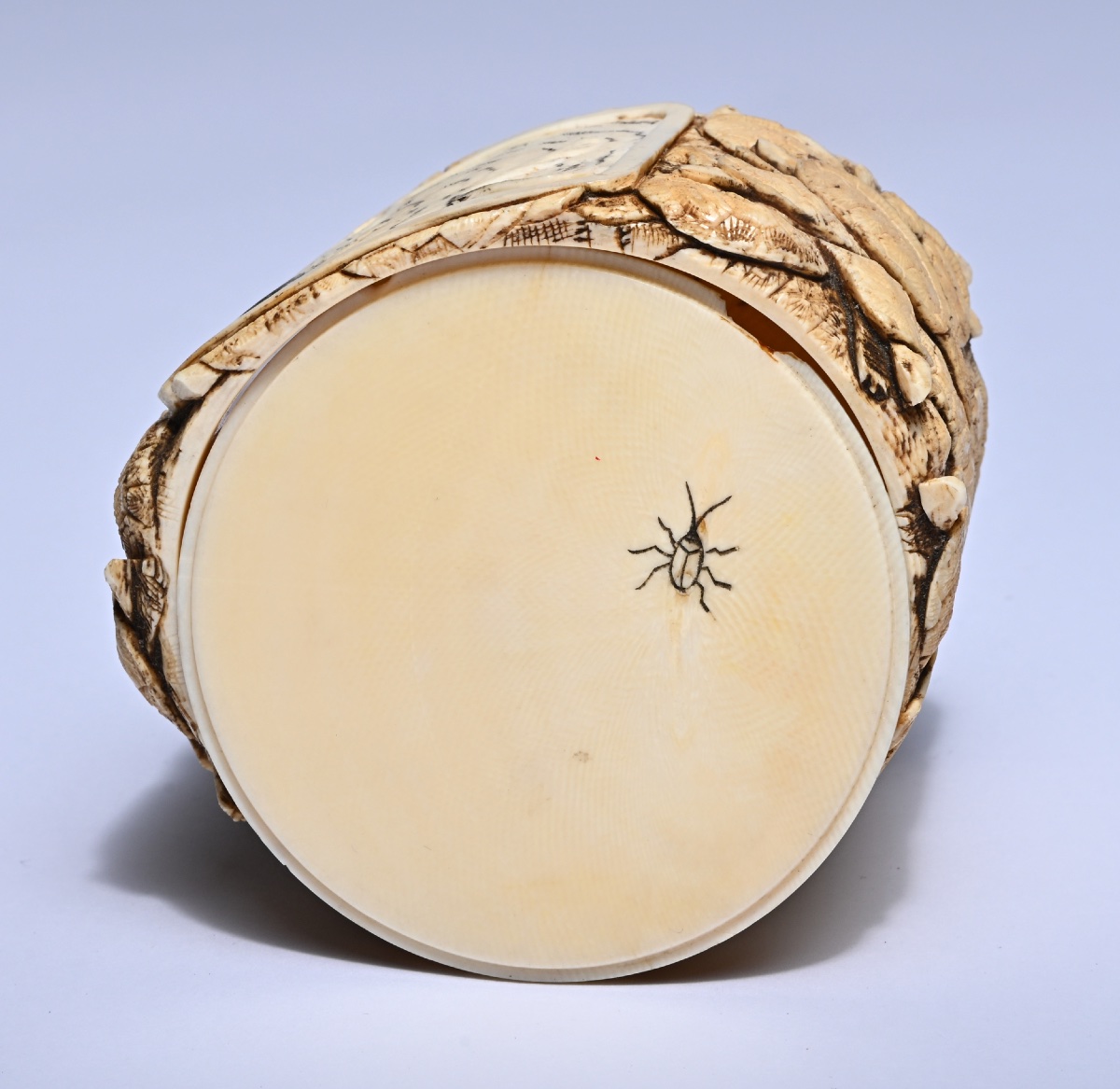
Inside the box, a small beetle motif had been affixed. Since these objects were intended for Western experts, Chinese merchant guilds often prohibited the use of Chinese characters on them, as such items generally had less commercial value in Europe. A concealed mark, such as a small beetle on the inside, was the ideal way for the workshop to leave a mark without diminishing the object’s commercial value.
IMPORTANT: Due to strict legislation regarding trade in endangered species, this item is sold with an official and valid EU certificate for commercial activities (CITES). The sale of this item is strictly reserved for residents of the European Union. Transporting or exporting this item outside the EU is not permitted.
The exterior surface features a fascinating interplay of relief carvings, creating a striking contrast between the motifs and textures. The central part of the pot consists of two sharply defined cartouches, each carved with the head of a stylized leopard—a symbol of military power and social status in Asian art. Surrounding these central panels is a rich composition featuring dozens of turtles crawling side by side. Each small turtle has been individually crafted with meticulous engravings on its shell and legs, creating a very lifelike three-dimensional effect. In Taoist symbolism, the turtle is one of the four celestial animals, a symbol of long life and protection against misfortune.
Inside the box, a small beetle motif had been affixed. Since these objects were intended for Western experts, Chinese merchant guilds often prohibited the use of Chinese characters on them, as such items generally had less commercial value in Europe. A concealed mark, such as a small beetle on the inside, was the ideal way for the workshop to leave a mark without diminishing the object’s commercial value.
IMPORTANT: Due to strict legislation regarding trade in endangered species, this item is sold with an official and valid EU certificate for commercial activities (CITES). The sale of this item is strictly reserved for residents of the European Union. Transporting or exporting this item outside the EU is not permitted.
450 €
Period: 20th century
Style: Asian art
Condition: Good condition
Material: Ivory
Height: 8,00cm
Reference (ID): 1832900
Availability: In stock
Print