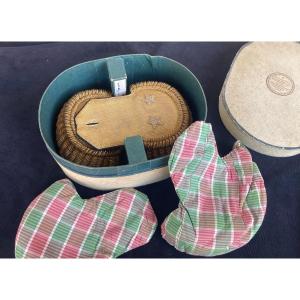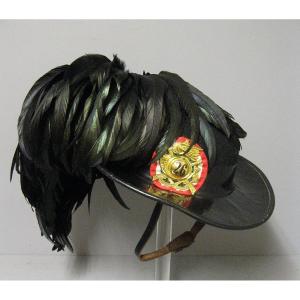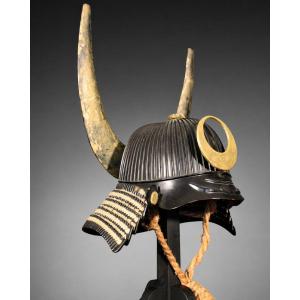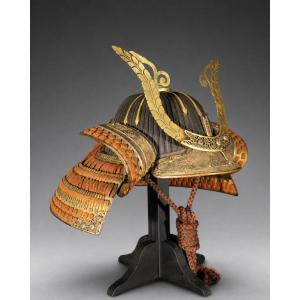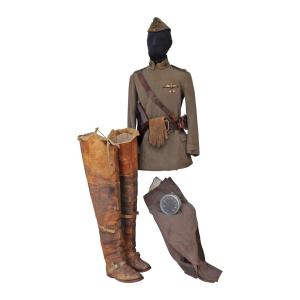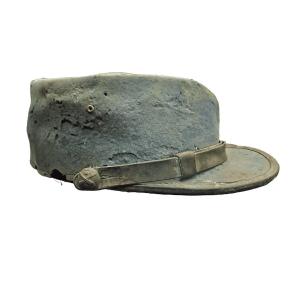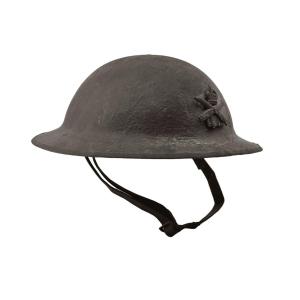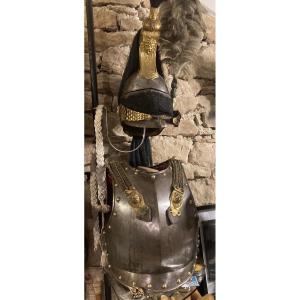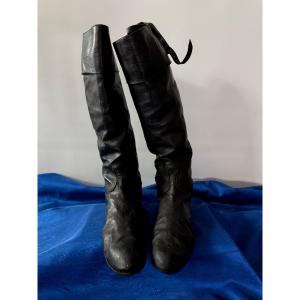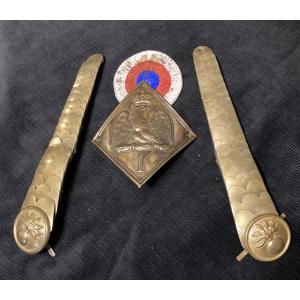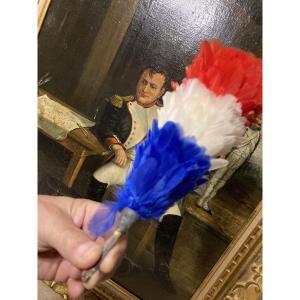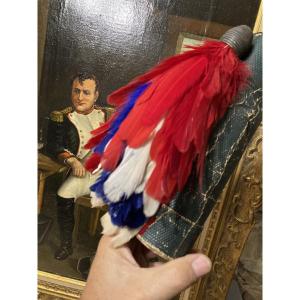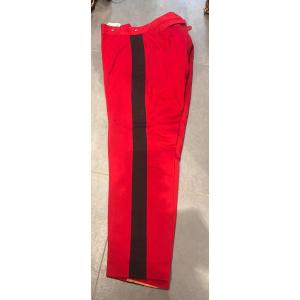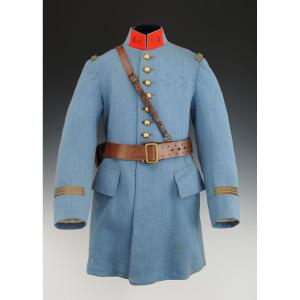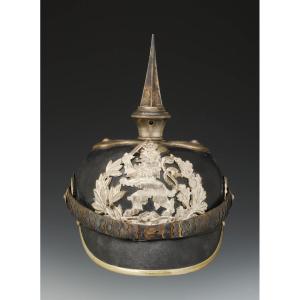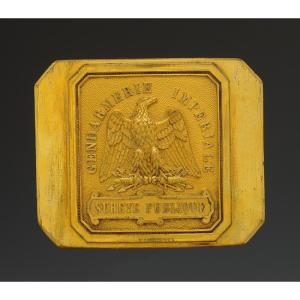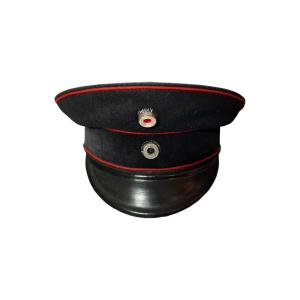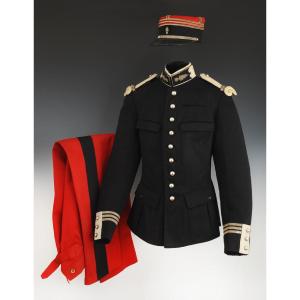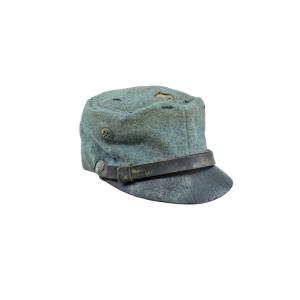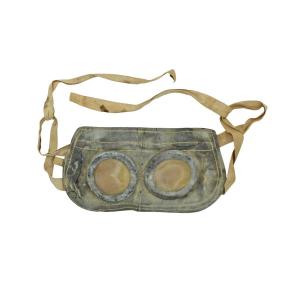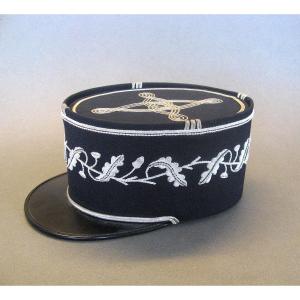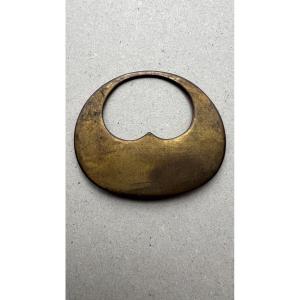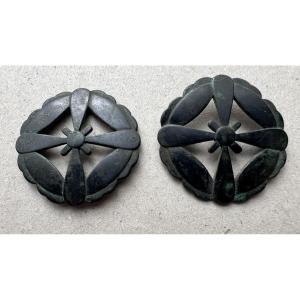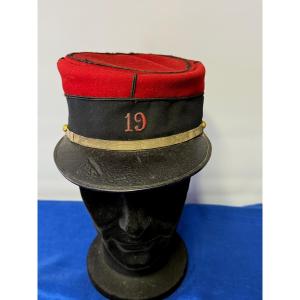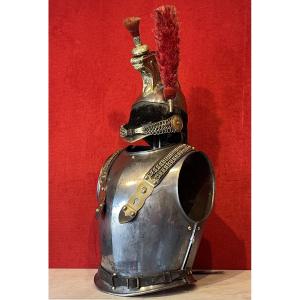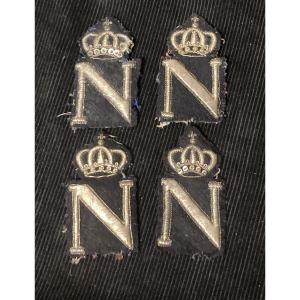
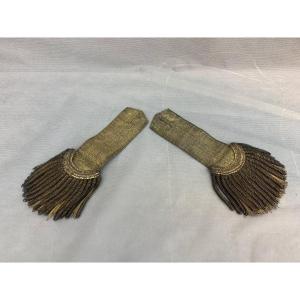
The lot includes: the transport trunk, the full dress tunic, the trousers, a white wool jacket, a bicorn hat, a kepi, a pair of epaulettes, a set of buttons, and a pair of summer dress embroidery, all[...]
JAPAN - Edo Period (1603-1868). Carved and lacquered wooden maetate depicting the character for "Snake." Dimensions: 21.5 x 55.5 x 1.2 cm. The kabuto (guard) is not included. Notes: Our maetate is bas[...]
JAPAN - Edo Period (1603-1868). Carved and finely lacquered wooden maetate depicting a large pair of blacksmith's tongs. When attached to the kabuto, they also resemble a long pair of horns. Dimension[...]
JAPAN - Edo Period (1603-1868). Carved and lacquered wooden maetate depicting a leaping shishi. Restorations and minor losses to the mouth and paws. Dimensions: 28.5 x 6.5 x 12 cm. Sold with its base.[...]
TANK CREWMAN'S HELMETFrance20th centuryLeatherKhaki leather tank crewman's helmet from the French army.Two holes at ear level, eyelets on the left and right, numbered ‘7’ on the back.Ref.: 6665Text an[...]
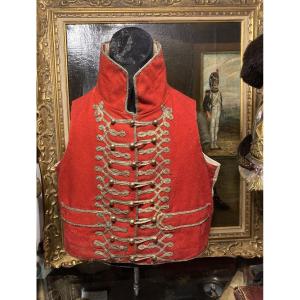
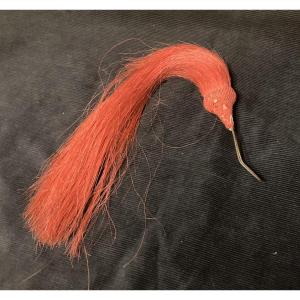
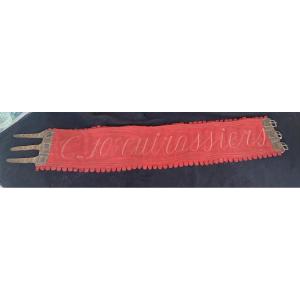
Body woven in scarlet wool, lined with canvas (later replaced). Simple scarlet wool toggle, soft scarlet wool fringe of the so-called "Well Ropes" pattern. Good condition. France. Revolution - Consula[...]
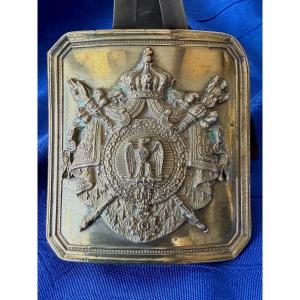
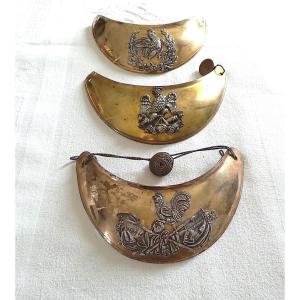
Brass tray, central silver motif cut in the shape of a crowned Imperial eagle holding Jupiter's thunderbolt in its talons, framed by a wreath of oak and laurel branches. Silver passementerie buttons. [...]
The hunting uniform of Emperor Napoleon I's hunting party. A straight-cut, French-style coat in dragon green, with a high collar, cuffs, and pockets adorned with engraved white metal buttons bearing t[...]
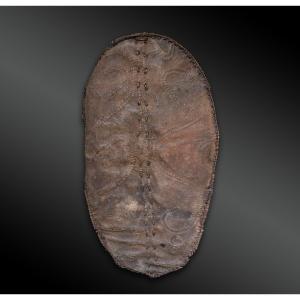
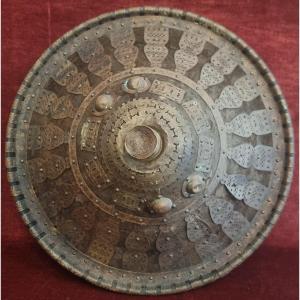
Ethiopian Shield - Abyssinia, 19th/early 20th century. Shield made of thick animal hide with geometric decoration on the display face. Diameter approximately 55 cm. Weight 1900 g.
Infantry Grenadier's Bearskin Cap. French Revolution. Late 18th Century. The body is made of natural leather covered with bearskin, featuring a revolutionary tricolor cockade on the left side, trimmed[...]
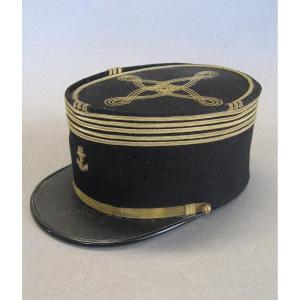
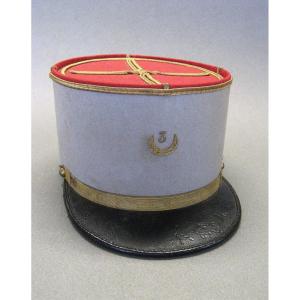
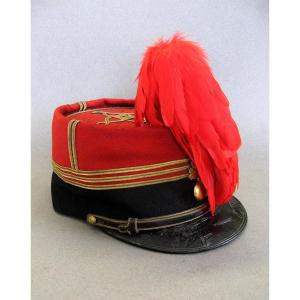
Lieutenant-Colonel's kepi from a Chasseurs Regiment. Black velvet band in good condition – small dent at the back. Black crown in good condition – silver braid and Hungarian knot. Black leather visor [...]
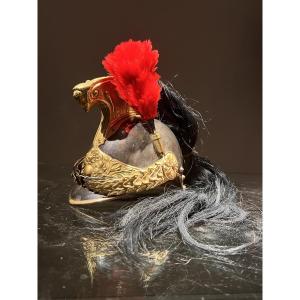
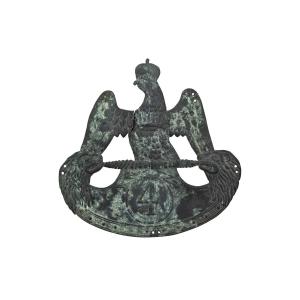
Helmet of an officer of the National Guard Cavalry of Paris. Model 1814 / Hundred Days. Silvered copper shell, with all fittings in gilt brass. Front plate depicting a large oval shield, this shield i[...]
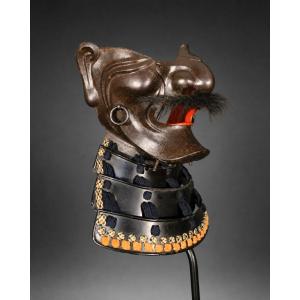
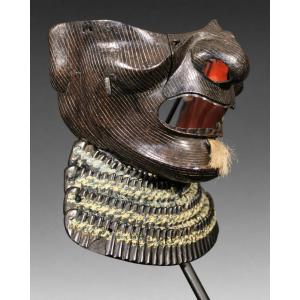
Very beautiful hand forged iron mask with a typical expression; yasurime parallel lines across the entire mask, typical work of the Iwai school, 17th century, black lacquered plates and navy blue suga[...]
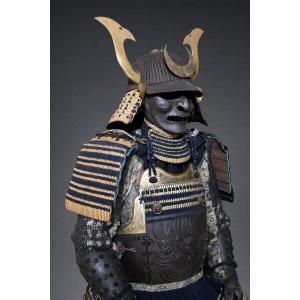
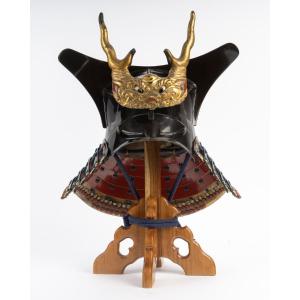
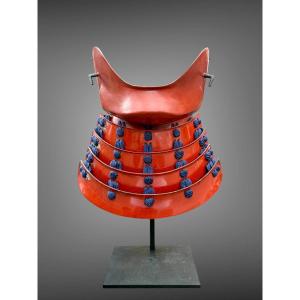
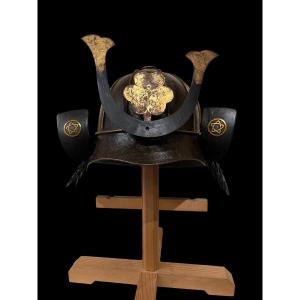
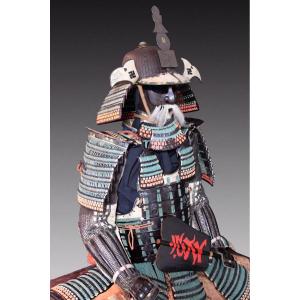
JAPAN - Edo period (1603 - 1868). Complete samurai armor. KABUTO (helmet) in black lacquered wrought iron with ten slats. THEHEN NO ANA (opening at the top) in gilded copper with four tiers of chased,[...]
Shako of Colonel Louis Gay, Grenadier of the 79th Infantry Regiment, First Empire (1809-1814). 30550. Body made of black felt, 21 cm high. Crown made of very strong waxed cowhide leather, 26 cm in dia[...]
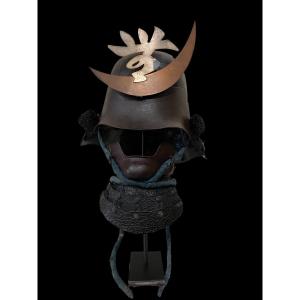
JAPAN - Edo period (1603-1868). KABUTO composed of eight wrought iron plates, the front plate decorated with a Chinese character. THEHEN NO ANA (opening at the top) in copper and copper with three de[...]
JAPAN - Edo Period (1603-1868). Shashimono, a white silk battle standard stamped on both sides with a bright red Torii gate design, is sewn with gussets onto a bamboo pole punctuated with black lacque[...]
An Imperial Russian, Crimean War period pickelhaube helmet (Kiver) of the 26th Smolensk Infantry Regiment. Retains the brass flaming grenade spike and base, along with the helmet plate depicting a Rus[...]
Artillery Officer's Shako, Model 1874, early Third Republic period. Condition: Good overall condition. A few small moth holes. Label with owner's name inside. Head circumference: 58 cm. Shipping costs[...]
Gallery of the Children of March, an offering to Her Majesty the Empress and Queen, 46 color plates depicting the uniforms of the First Empire. Hardcover binding in an orange cloth slipcase with gilt [...]
Undress sabretache of a senior officer of the Imperial Guard (Carriage Breaker of the Imperial Guard). Late Empire. In black patent leather, 34.5 cm high, 22 cm wide at the top, 29.5 cm wide at the bo[...]
Early 19th-century uniform of a French half-pay officer (Demi-Solde) during the Second Empire. Primarily a National Guard officer's uniform, modified from the end of the Empire onward to commemorate t[...]
TUĞ "TUĞ" OTTOMAN, 17th - 18th century. 32313Hollow wooden staff with a brass ring at its base, decorated with openwork design, Ø 5.4 cm, entirely covered with a weave of horsehair in a repetitive geo[...]
OFFICER'S HELMET OF THE 8th REGIMENT OF DRAGOONS (KNOWN AS THE CONDÉ), worn during the Hundred Days, from March 1, 1815 to May 1, 1815. 27478Gilt copper skullcap approximately 11 cm deep, leaning back[...]
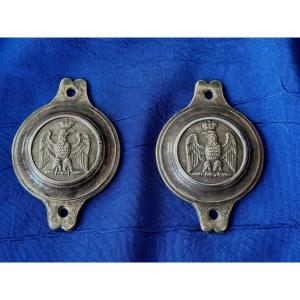
BOSSETTE FOR THE HEADBOARD OF THE EMPEROR'S MILITARY HOUSE, France, 19th century, Second Empire.Gilded bronze.H: 6.8 x W: 5.2 cmGilded brass bossette with a protruding border, stamped with a striated [...]
BELT PLATE FOR INFANTRY OR LEGION OFFICERS OF THE NATIONAL GUARDFrance, 19th century, Restoration periodGilded brass, silver, leather.H: 8.5cm – W: 10.5cm Gilded brass plate with cut corners, stamped [...]
BRIDLE BIT BOSS OF THE CUIRASSERS OF THE IMPERIAL GUARD.France, 19th century, Second Empire period.Gilded bronze.H 7.4 cm - width 4 cm.Oval stamped brass plate depicting an eagle on a sandblasted back[...]
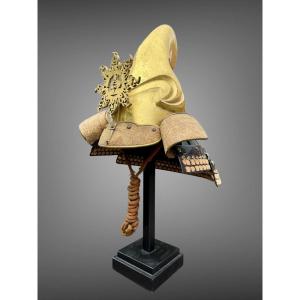
JAPAN - Early Edo Period (early 17th century). TOPPAI KABUTO (cone-shaped helmet) composed of six wrought iron plates joined by riveted iron bands, the whole very finely inlaid with damascened (nunome[...]
JAPAN - Edo Period (1603-1868). Samurai sahai. Command staff made of lacquered wood, leather, and paper, with gilded copper finials decorated with hearts (shaped like a boar's pupil, a symbol of coura[...]
JAPAN - Edo Period (1603-1868). Half-mask of a samurai known as a "Mempo," made of brown lacquered wrought iron. Features a pronounced chin, a movable nose, light white horsehair mustache, pierced nos[...]
JAPAN - Edo Period (1603-1868). Samurai sahai. Command staff made of lacquered wood (minor losses) and paper, with silver tips decorated with hearts (shaped like a boar's pupil, a symbol of courage). [...]
"Paris City Firefighter's Helmet Model 33." Slightly trapezoidal-shaped shell made of nickel-chromium stainless steel. A folded brass rim straddles the outer edge of the visor and neck guard, marked w[...]
Black lacquered leather sabretache, suitable for undress or field dress. Three 32mm diameter silver-plated brass suspension rings. The guard is adorned with a large silver-plated cast brass eagle and [...]
Slightly trapezoidal-shaped helmet made of nickel and chrome stainless steel. A folded brass band straddles the outer edge of the visor and neck guard. Algerian firefighter's badge on the front. Brown[...]
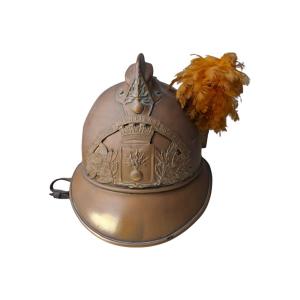
Firefighter's helmet from the town of Wacquemoulin (Oise), Model 1855, modified in 1872 (removal of the Second Empire eagle). The helmet is entirely made of brass, with a crest, chin straps, and roset[...]
Ussel Mle 1895 firefighter's helmet. Entirely made of brass, the crest is adorned with a flaming bomb on the mask, the front plate depicts a bonfire, surmounted by a four-towered crown and a ribbon be[...]
Himalayan saddle - Himalayas, Tibet or Nepal, early 20th century or earlier. Small saddle, typical of Himalayan saddles, particularly suited to small native horses. Composed of 6 assembled wooden elem[...]
Polychrome battle shield, red and gold, engraved with floral and warrior motifs, Mughal Empire, 1526-1857 (Southern Deccan Afghanistan). The grip is made of silky cotton and secured with four cabochon[...]
A black and white morion, two-piece, riveted iron skull with stylised embossed decorations; smooth medium comb; distinctive boat-shaped brim with rounded border; original iron comb and a row of simple[...]
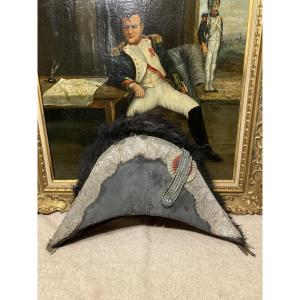
General Officer's Bicorn Hat. First Empire. Made of taupe felt, 16 cm high at the front; 24 cm high at the back; 42.5 cm wide between the points; 12.5 cm deep at the front and back. Tricolored passeme[...]
Germany produced large quantities of antler powder pouches during the Renaissance. The finest pieces were made in the south of the country, in Nuremberg and Augsburg. The quality of these pouches vari[...]
A famous Pisan tradition is the Battle of the Bridge, called Gioco del Ponte, which dates back to the late 16th century and continued into the early 19th century. Even after decades of interruption, i[...]
General's Police Cap. First Empire. The cap body is made of dark blue cloth with silver thread piping, remnants of the gilding remaining. The body forms a flame shape ending in a point with a passemen[...]
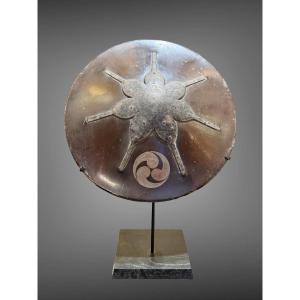
Hindu defensive shield, late 19th century, probably from the Rajasthan region. It is mounted on a wrought iron frame, reinforced with deer hide and cloth. It is decorated with copper and brass.
Pair of Moroccan riding stirrups - Morocco, 19th century. Stirrups in wrought iron with silver damascening. Weight approximately 685g each. Dimensions of each approximately 18cm x 17cm x 12cm.
Moroccan riding saddle - Morocco, 19th century. Wooden frame covered in animal hide with a quilted and embroidered leather saddle cover. Minor damage and missing pieces, but solid and still presentabl[...]
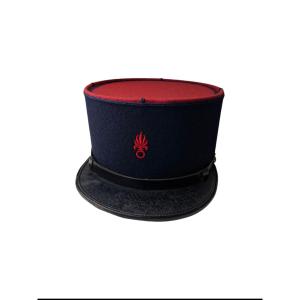
A dark blue cloth enlisted man's kepi with scarlet wool braid trim, 4 mm wide. It has a small, 3.5 cm square visor at the front, made of coated cardboard on top and sheepskin underneath (some missing [...]
Arm and shoulder defence, Northern Italy (Milan or Brescia), mid-16th century (circa 1550–1580)
A substantial steel armour element comprising a pauldron, upper arm (rerebrace), articulated elbow (cou[...]
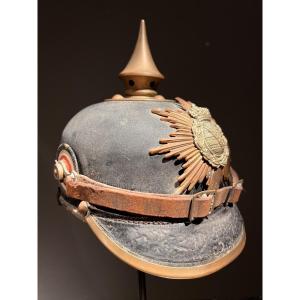
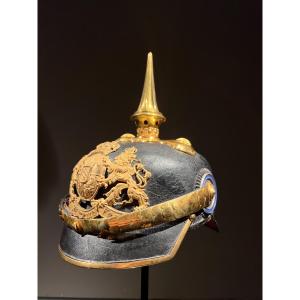
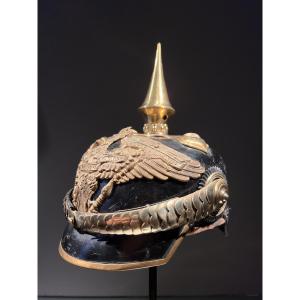
Attractive restored German Pickelhaube helmet, dated to Germany around 1900, presented with the aesthetic of an officer helmet and with a very strong visual presence. This is a piece made from an anti[...]
Late 19th-century bicorn hat in taupe-black felt, trimmed on the right side with two wide black silk ribbons, a tricolor passementerie cockade covered with a black velvet braid embroidered in cream, s[...]
Complete uniform of the 3rd Cuirassier Regiment, circa 1810. - Period steel helmet, tilted backward, with a gutter at the bottom; restored and reinforced turban, covered with a genuine period bearskin[...]
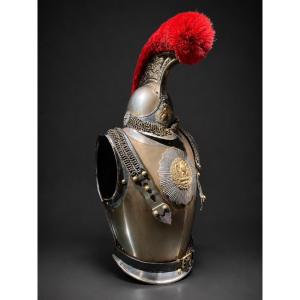
Splendid set for a French cuirassier officer, Model 1874, entirely original and of exceptional quality. Undoubtedly a luxury item made for a wealthy officer. This type of set was worn from 1874[...]
Kepi in blue, almost black, cloth with scarlet cord trim. Black patent leather visor, brown satin lining. As you can see in the photos, the kepi hung on a coat rack for a very long time, which has sli[...]
Large and impressive pair of Rioplatense gaucho spurs from Argentina or Uruguay, dating to the late 19th century (circa 1880–1900).
Forged entirely in iron, decorated with damascened inlay of alpaca [...]
SAXON VETERINARY OFFICER'S SPIKED HELMET, Sachsen Pickelhaube für Offiziere der Veterinärtruppen, model 1871/1899, Second Reich. 32305 Patent leather helmet, visor rim and all metal fittings in silver[...]
JAPAN - Momoyama Period (1573-1603). KABUTO composed of 62 strips of matte brown lacquered wrought iron, assembled with small raised rivets. THEHEN NO ANA (opening at the top) in patinated and gilded [...]
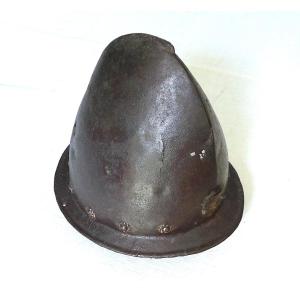
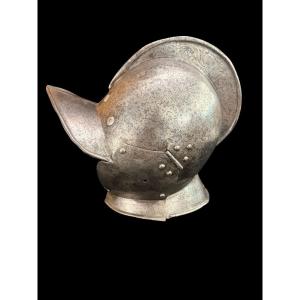
Wrought iron siege helmet from the early 16th century.
Some of the rivets (the brass ones) are replacements.
Otherwise in excellent condition.
Dimensions: 24 x 21 x 26 cm (H) - weight: 5 kg
Proantic uses a cookie to analyze traffic and improve its service by using Google Analytics. Data sent to Google Analytics (frequency of visits to the site and pages visited) are anonymous. No other cookie tracks your activity, your personal data is not collected. Thank you for helping us to have better understanding how Proantic is used.