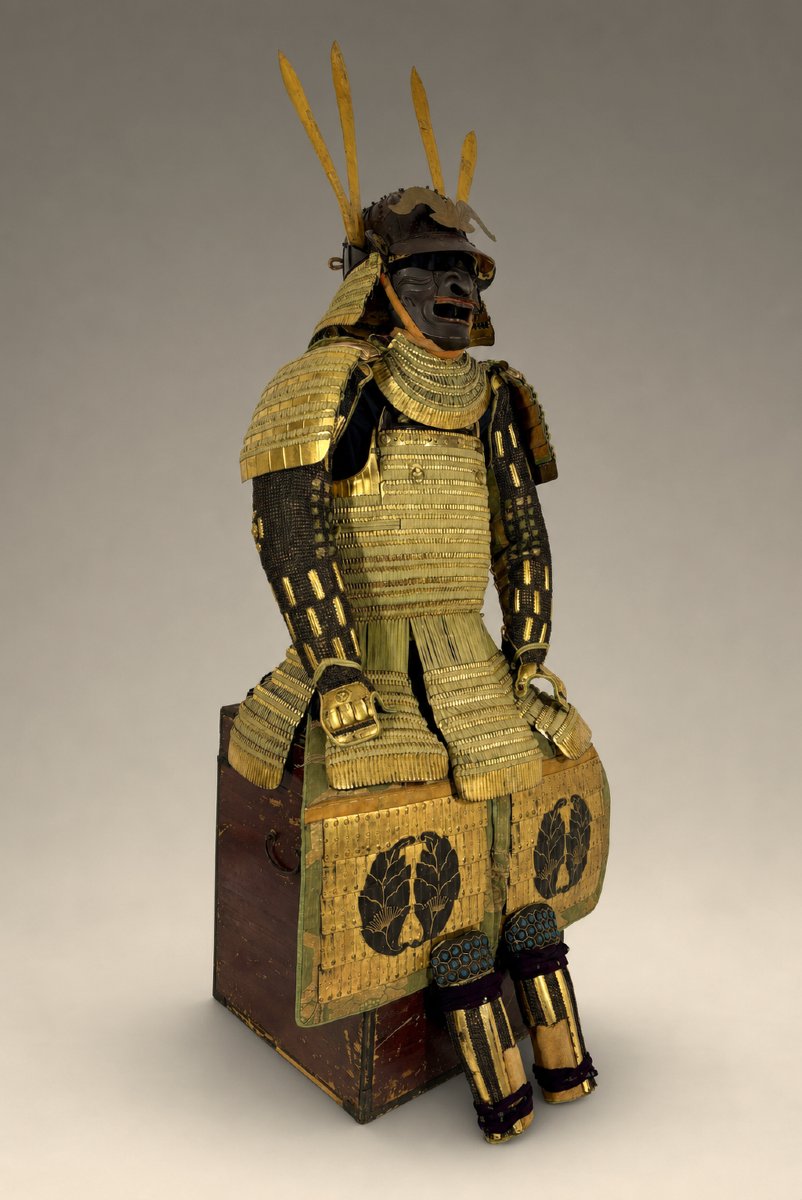
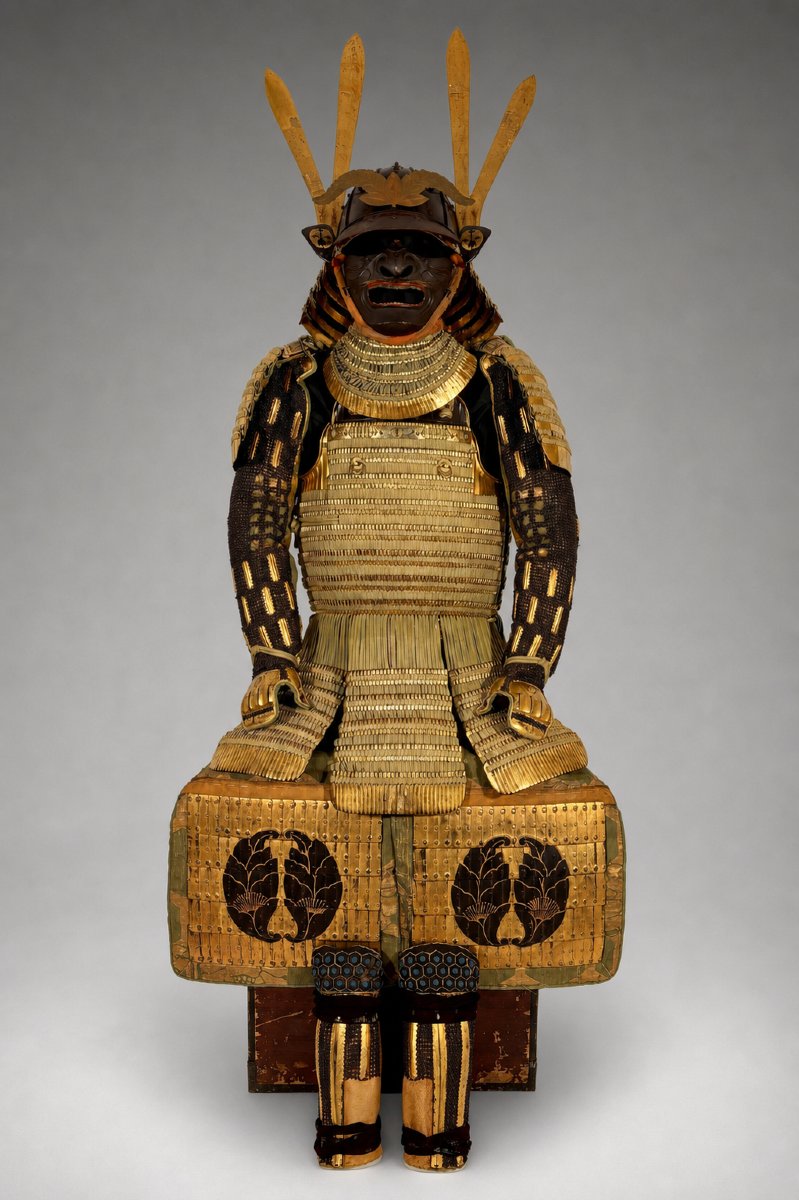
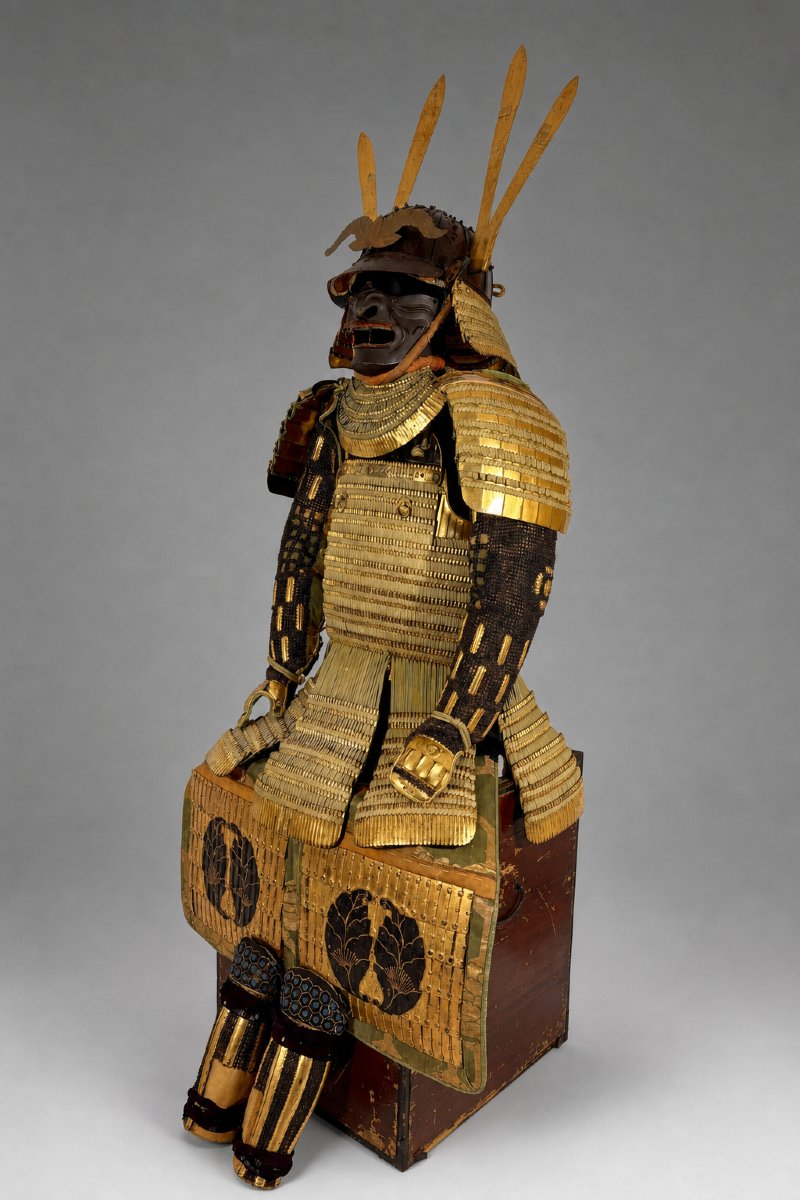
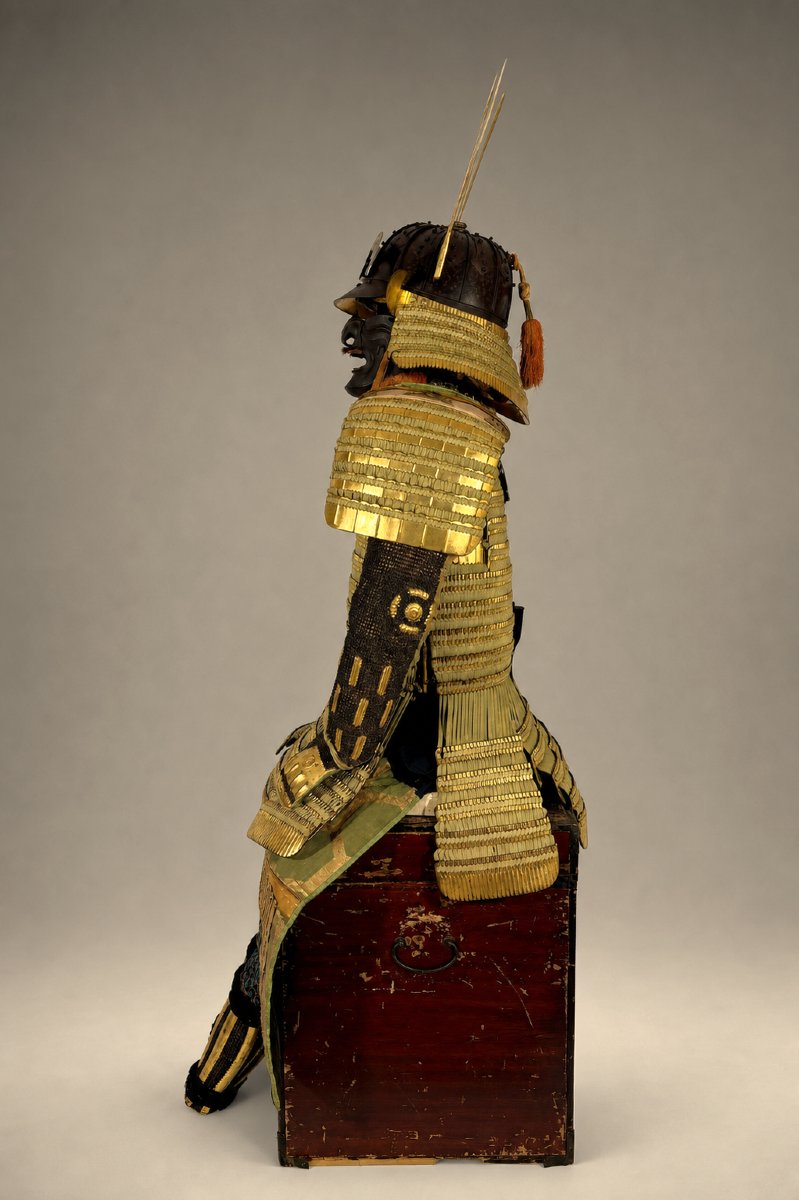


Yoroi Samurai Armor - Kin Kozane Midori-ito Odoshi Nimai-do Gusoku
Early Edo period (1603–1868), circa mid-17th century.
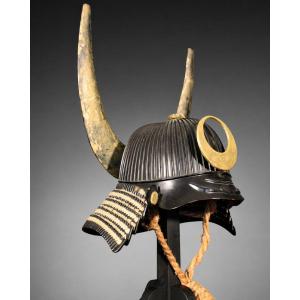
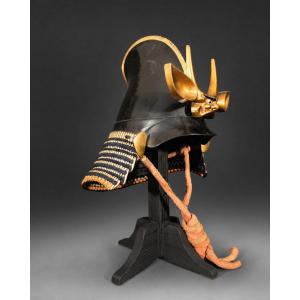
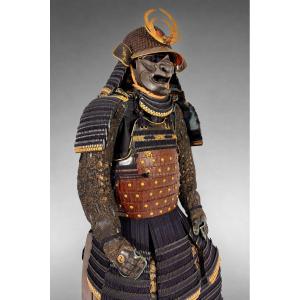
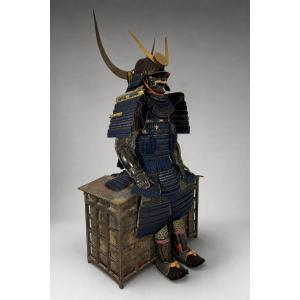
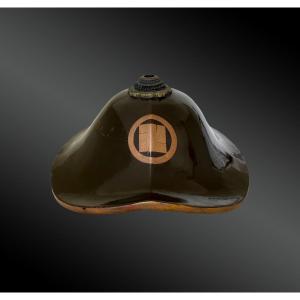
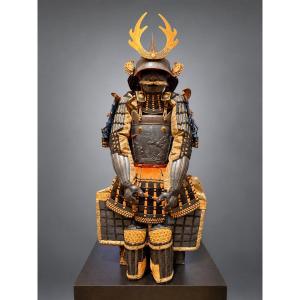
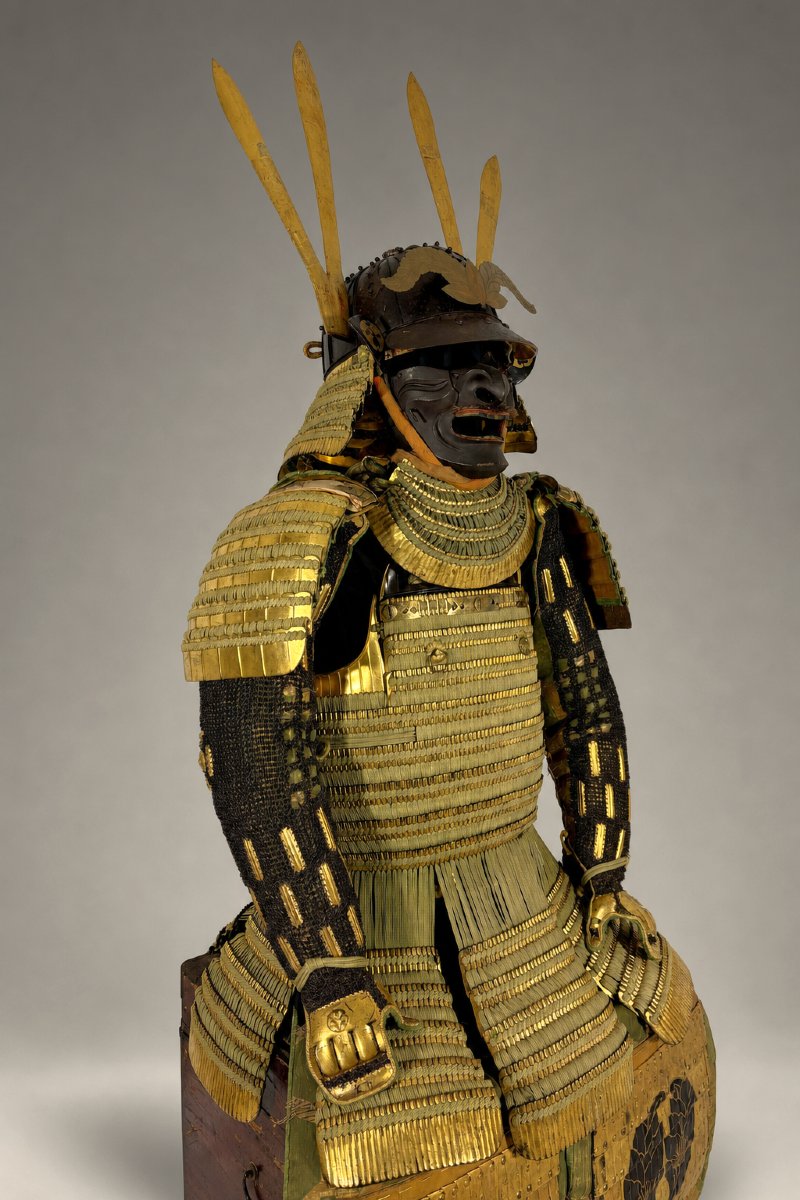
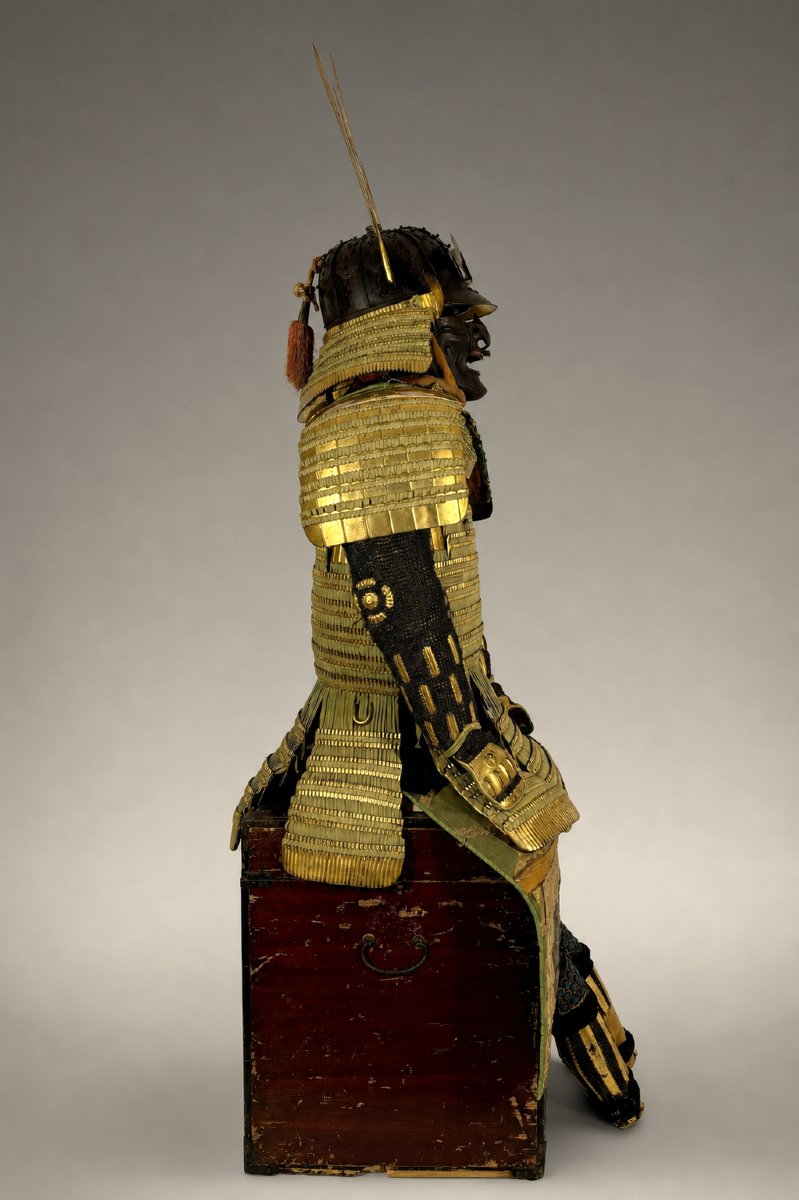
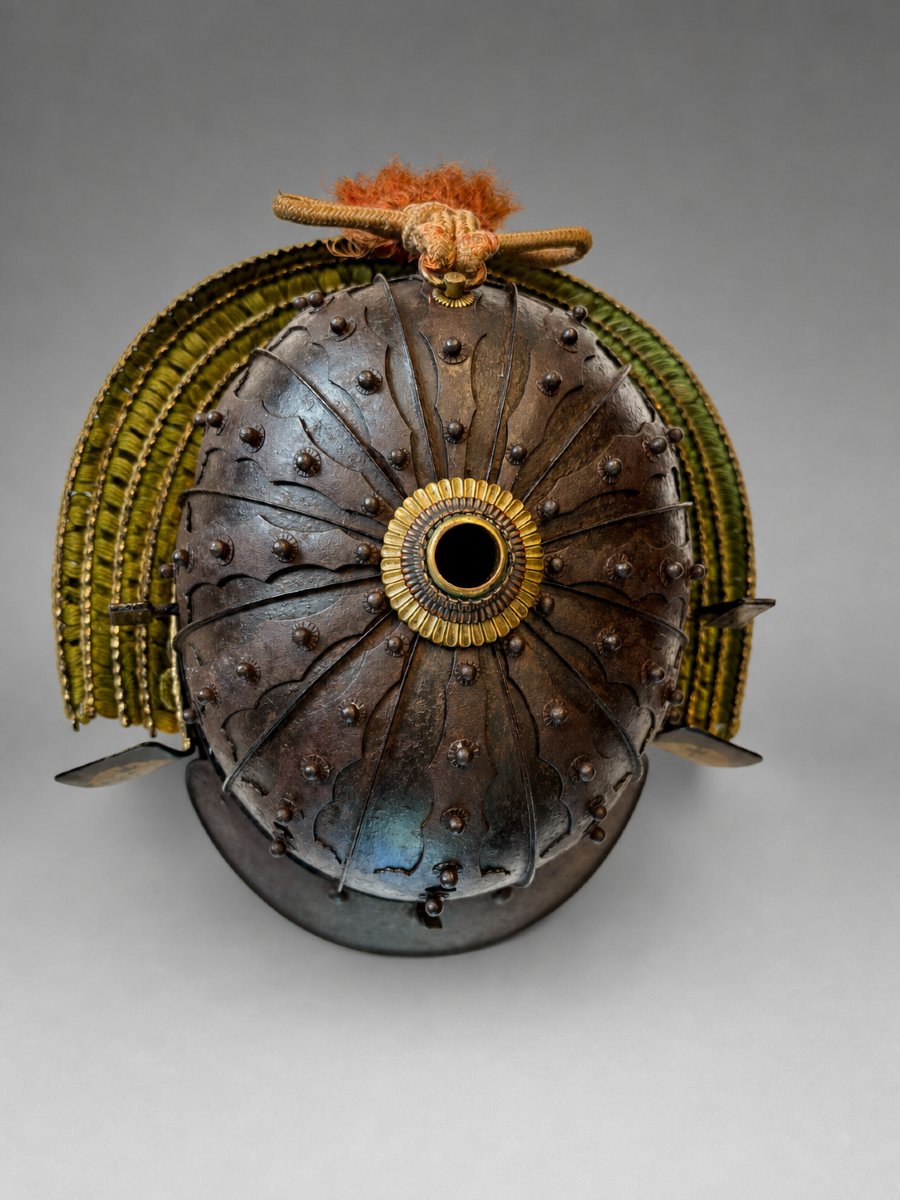
The twelve-plate hoshi-bachi kabuto, signed Gōshū-jū Hiroshige 江州住広重 of the Haruta school, is fitted with iron reinforcing shinodare on each plate. It is distinguished by rivets with almost spherical heads, creating a particularly attractive appearance. The helmet bowl and mabizashi are finished in sabiji with a fine patina, while the fukigaeshi have been relacquered in black kuro-nuri and decorated in gold maki-e with the family crests (kamon) of the Nabeshima clan.
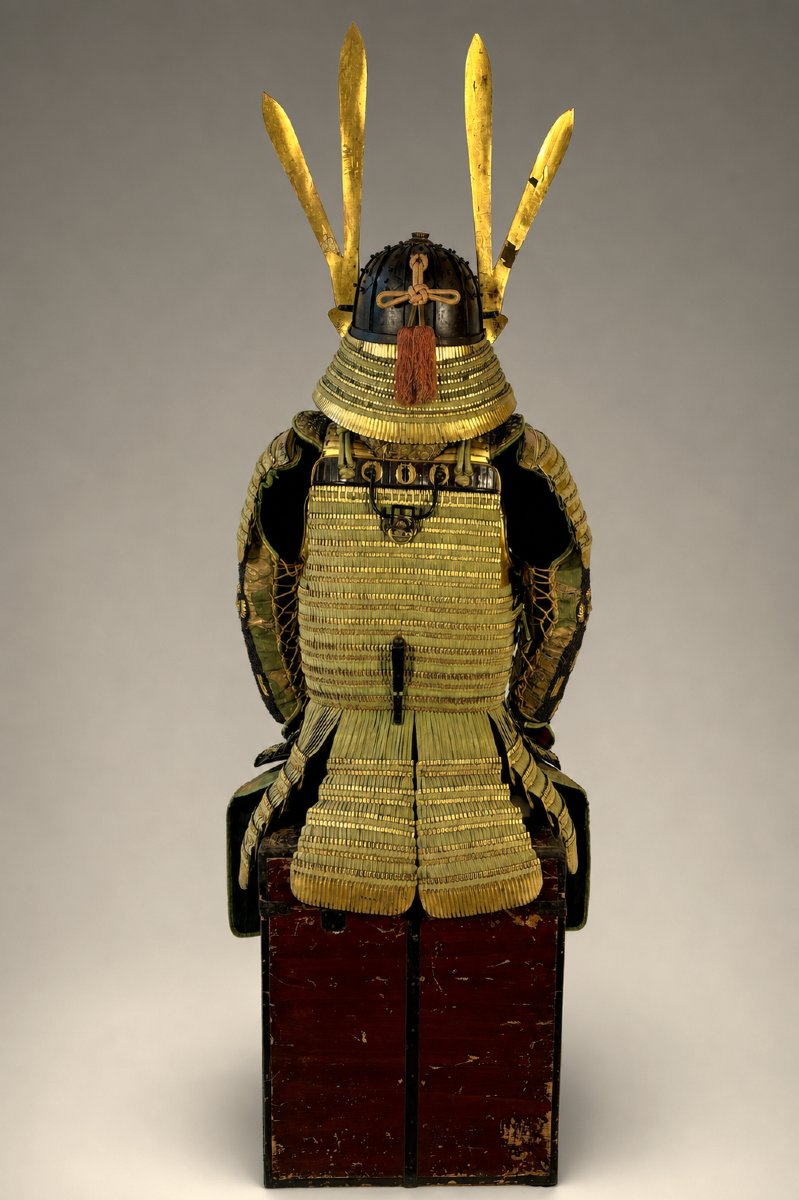
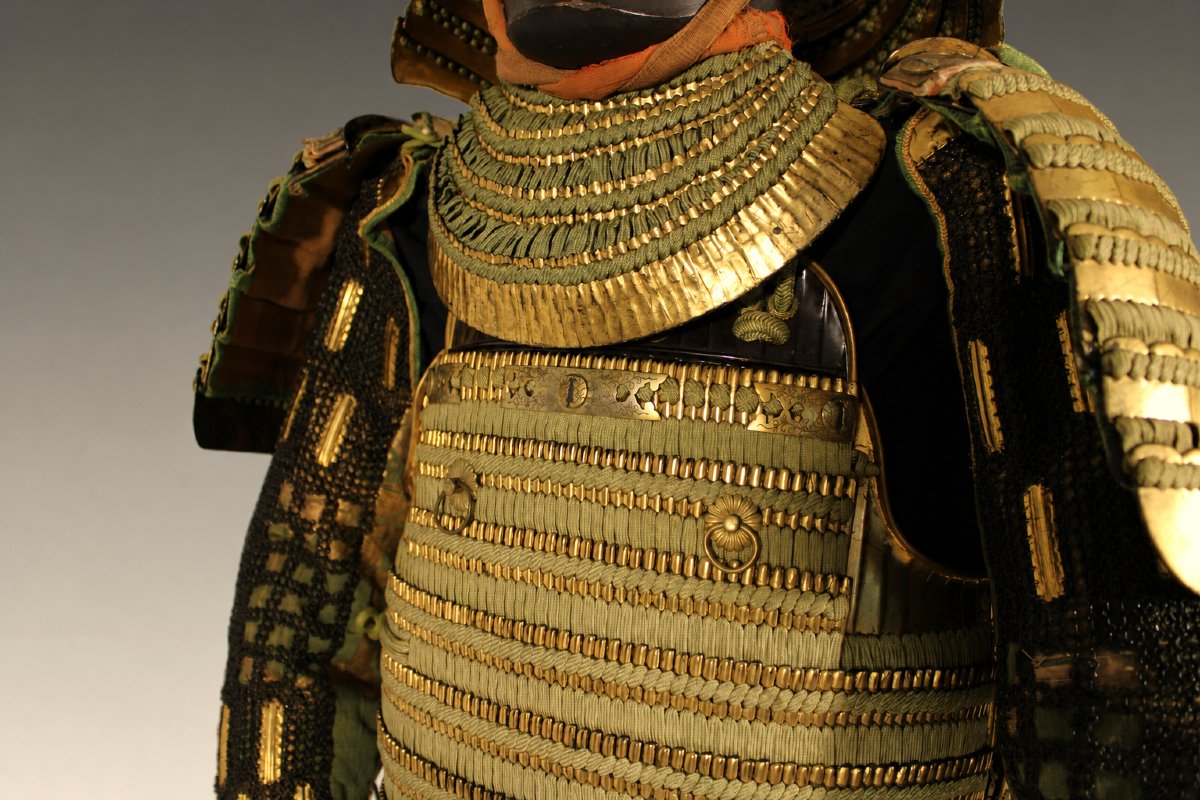
The tehen-kanamono fitting is precisely constructed from segments of different metals and rises prominently above the helmet bowl. The four-lame neck guard (shikoro) consists of gilded, fluted plates laced together with pale-green braid.
The maedate takes the form of wisteria (fuji), while the helmet’s decoration is completed by gilded lateral ornaments (wakidate).
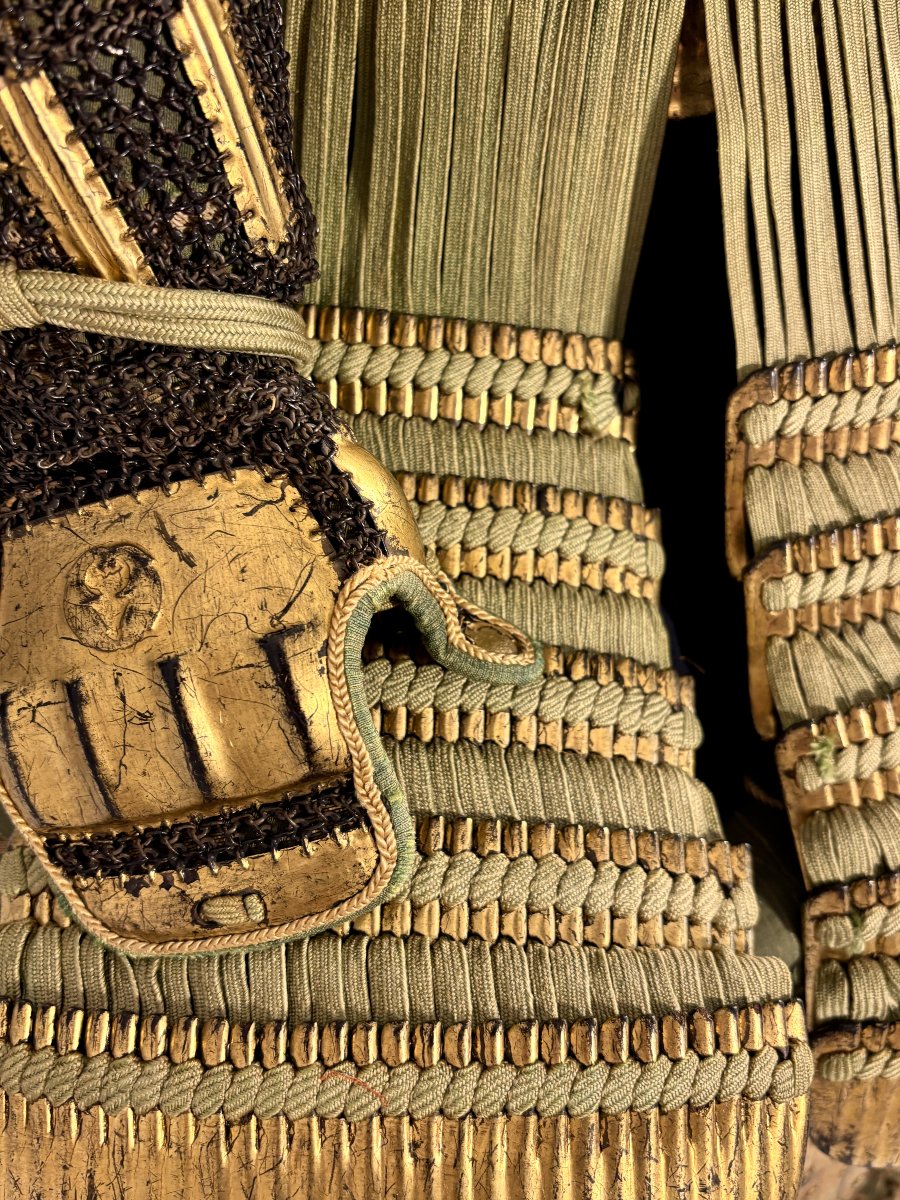
The throat guard (tare) and the tōsei-sode shoulder guards are likewise constructed from gilded, fluted scales laced with pea-green odoshi-ito. Their surfaces are finished in brown lacquer imitating noble rust in the sabimono style.
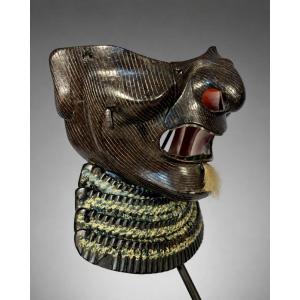
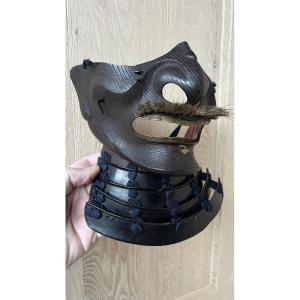
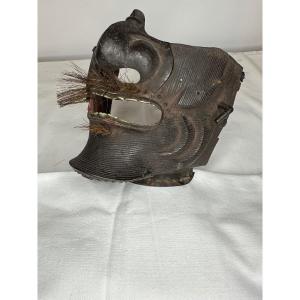
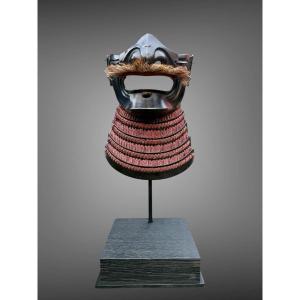
The facial armour (menpō) is of ressei-bō type, with pronounced wrinkles (shiwa), a moustache of animal hair, bared silver teeth, and an interior conventionally lacquered in vermilion red.
According to the Tōkō Meikan, the armourer Hiroshige most probably belonged to the Haruta school, which originated in Nara, and was active in Ōmi Province. This is the second of only two known helmets by Hiroshige bearing this particular signature and is therefore exceptionally important as valuable reference material.
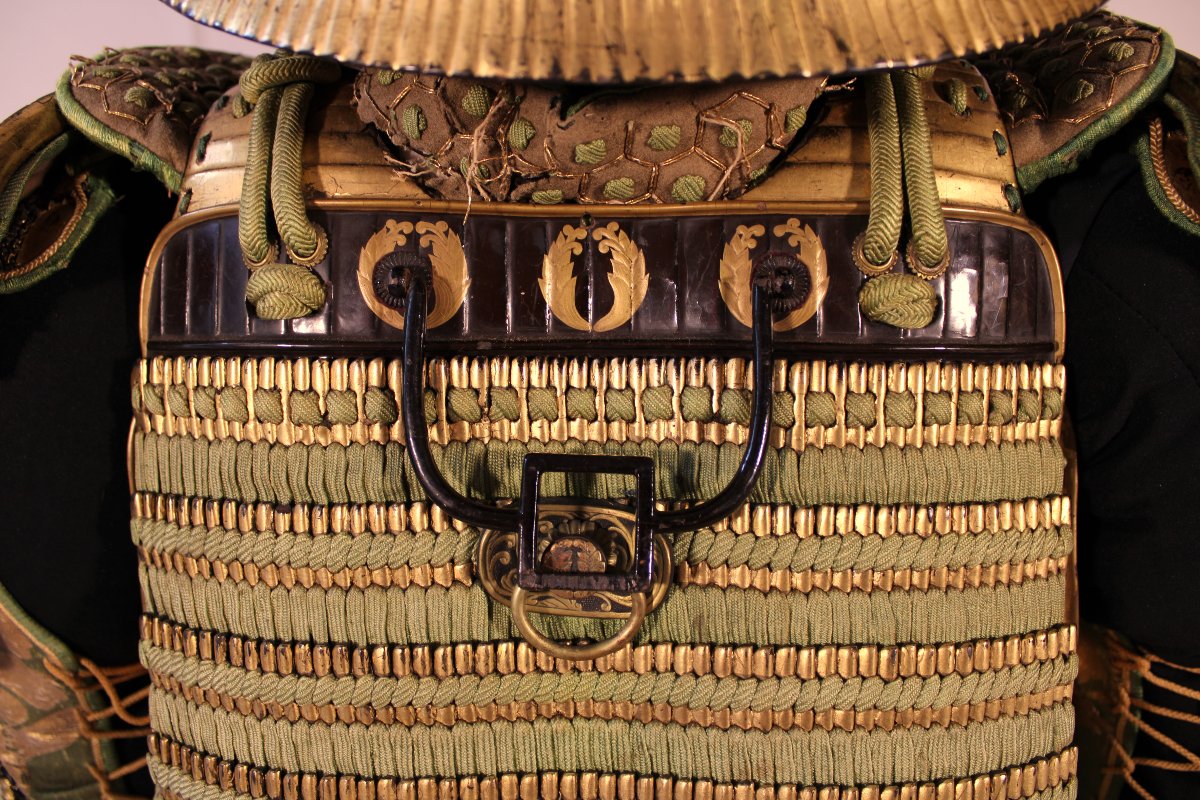
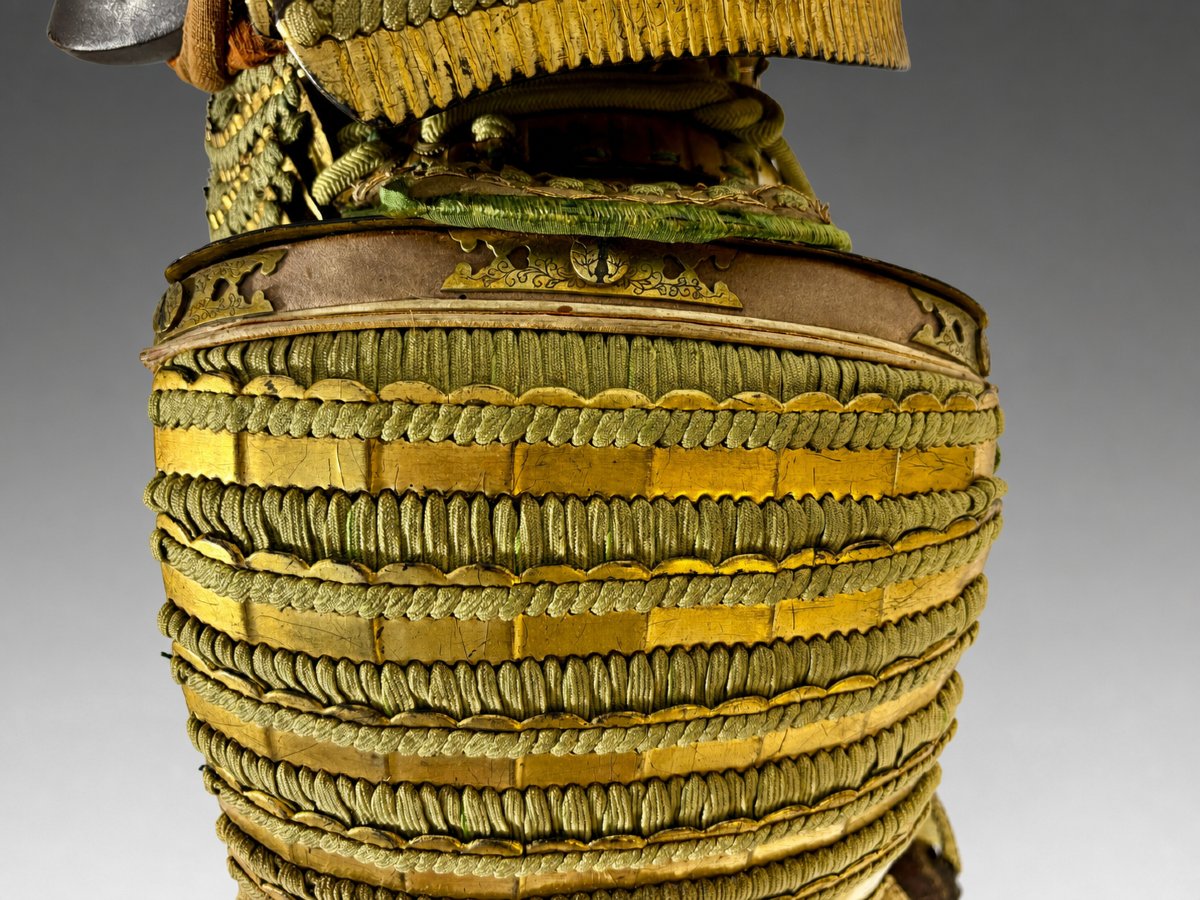
The two-piece cuirass (nimai-dō) is constructed from small hon-kozane—“true kozane”—representing an older and considerably more labour-intensive type of individual scale construction. The opulence of the armour is further enhanced by gilding executed with kinpun gold powder mixed into urushi lacquer. This technique was extraordinarily expensive at the time, and armour of this type could realistically have been worn only by a daimyō or an individual of equivalent social standing.
The ornamental fukurin edging is fire-gilded and finely chased. On the rear of the cuirass is a sashimono-gattari, together with an uke-zutsu tube for securing the wearer’s personal standard.
The sangu comprise armoured sleeves of the shino-gote type, haidate decorated with the family crest of the Nabeshima clan, and shino-suneate. All elements are gilded and fully matching, in keeping with the harmonious character of the entire armour. Their lining is made of green brocade featuring a tortoiseshell pattern (kikkō), beautifully complementing the pea-green lacing.
NoteThe armour was exhibited in the tenshukaku, the main keep of Matsue Castle, as part of a specialised armour exhibition (katchū-ten). Thanks to the finely calligraphed description preserved on a wooden plaque, together with its original labels, the armour possesses well-documented provenance relating to the previous antique shops and dealers through whose hands it passed or where it was displayed.
It is an exceptional and complete armour, preserved in excellent condition and decorated in several places with the family crests of the Nabeshima clan.
Based on its dating, the armour may have been presented as a gift by Nabeshima Motoshige 鍋島元茂 (1602–1654), lord of the Hizen domain. From 1638, Matsue was governed by the Matsudaira clan, beginning with Prince Matsudaira Naomasa 松平直政 (1601–1666), a grandson of Tokugawa Ieyasu. In 1648, the Nabeshima clan was granted permission to use the honorific surname Matsudaira—the original family name of the first Tokugawa shōgun, Tokugawa Ieyasu 徳川家康 (1543–1616).
The Matsudaira lineage remained extremely influential throughout the Edo period through its close relationship with the Tokugawa ruling house. Such ties between the Nabeshima and Matsudaira families would naturally have created a plausible context for a prestigious and extraordinarily costly diplomatic gift such as the armour described here.
Period: 18th century
Style: Asian art
Condition: En l'etat
Material: Wrought iron
Reference (ID): 1807421
Availability: In stock