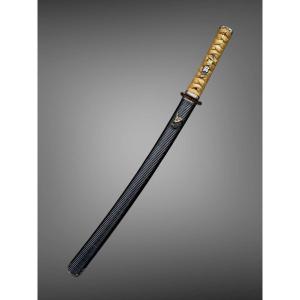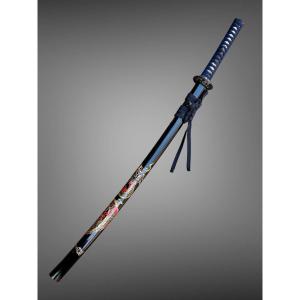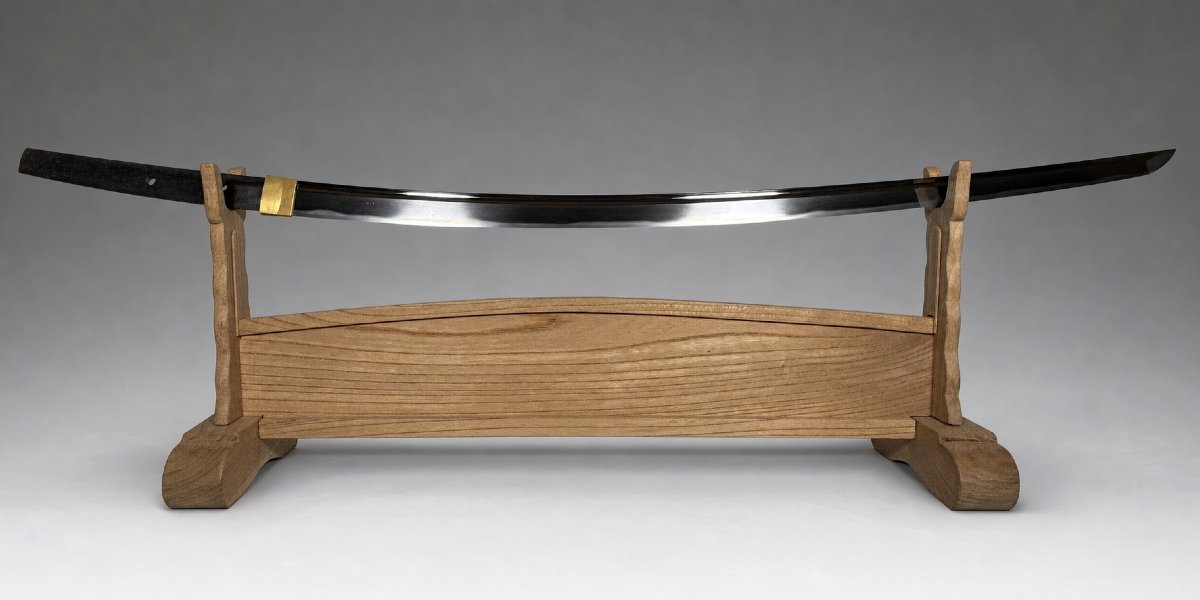
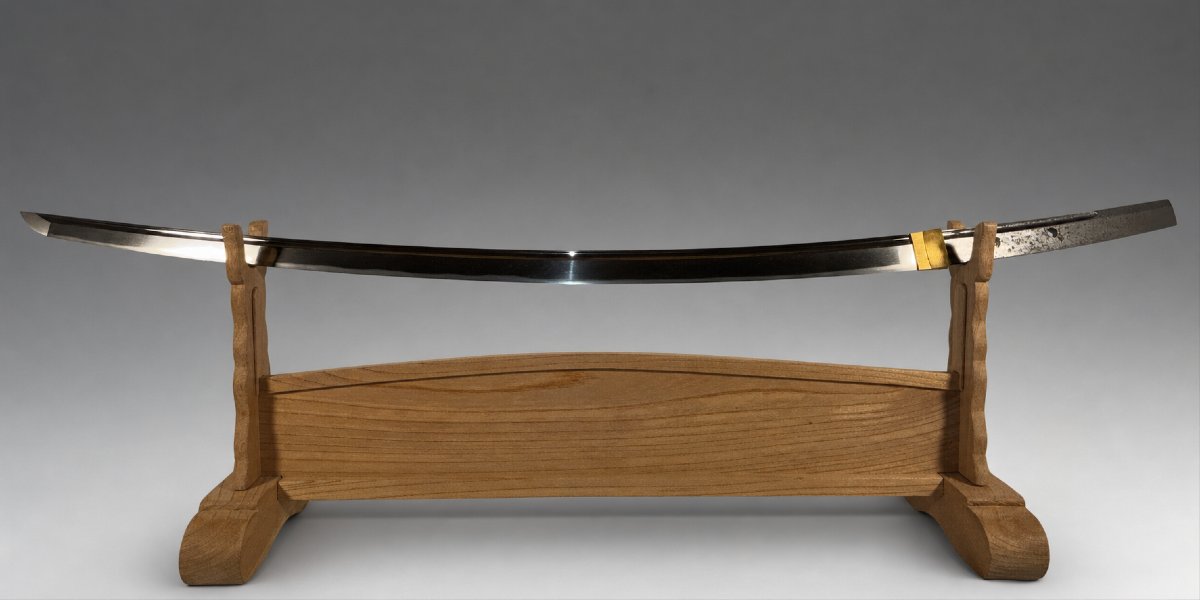
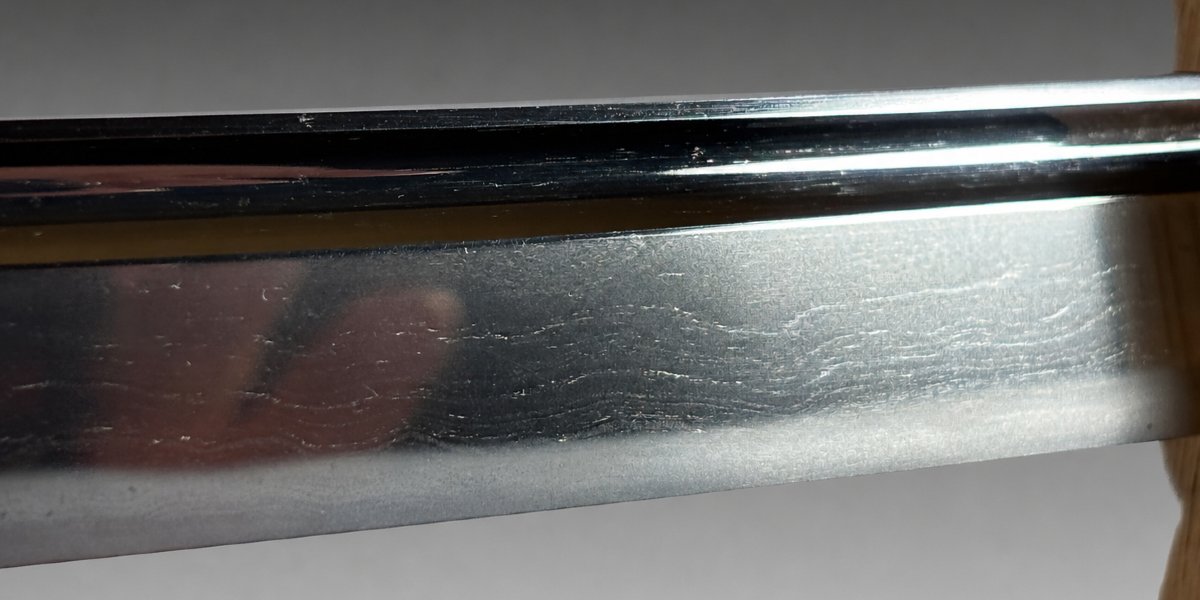
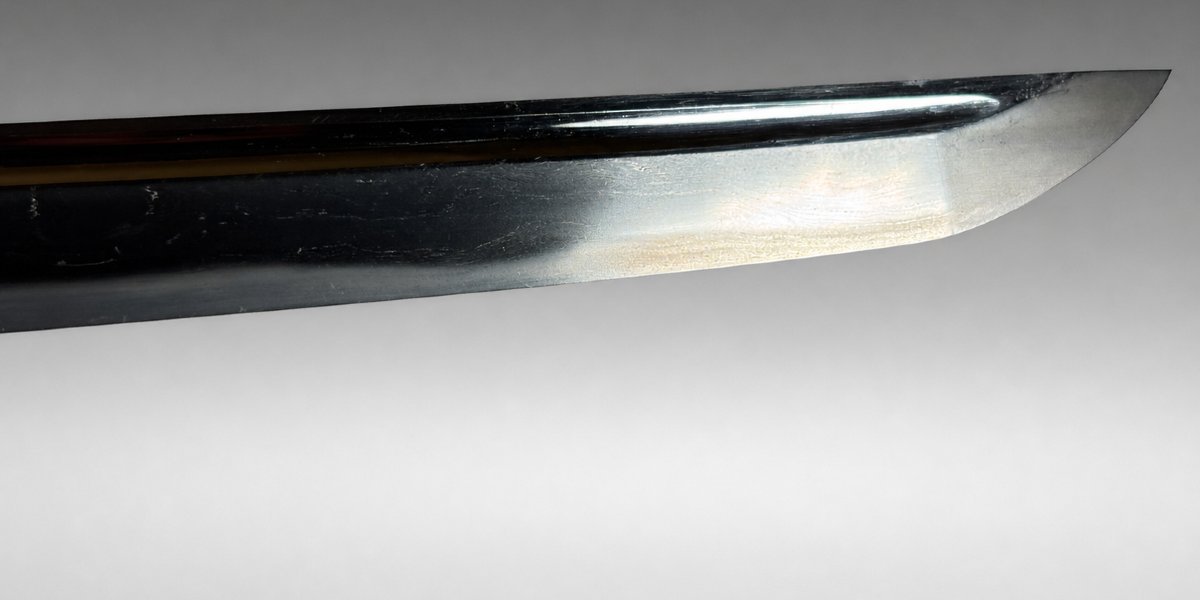
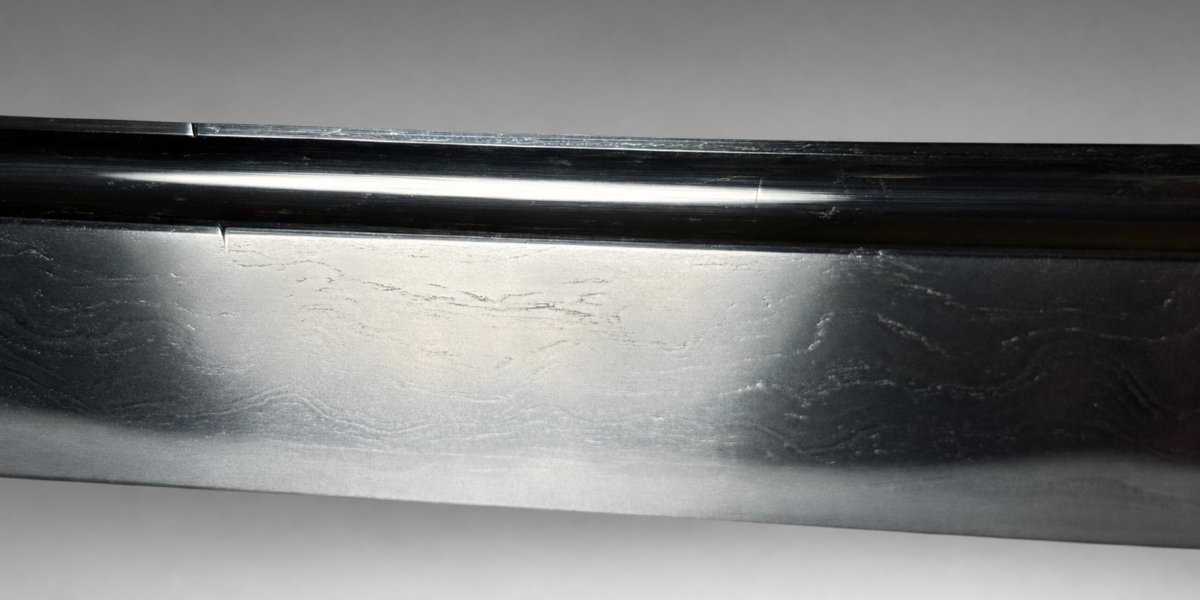
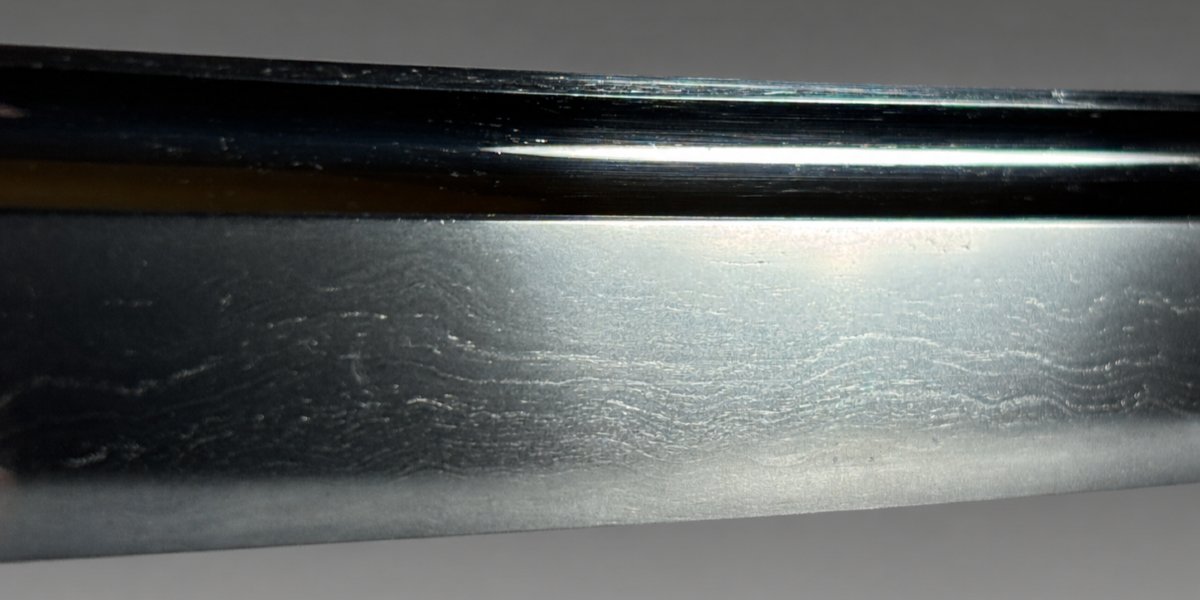



Ko-hoki (sadatsuna) Tachi Samurai Sword Period: Late Heian Period
Artist: Ko-hoki (sadatsuna)
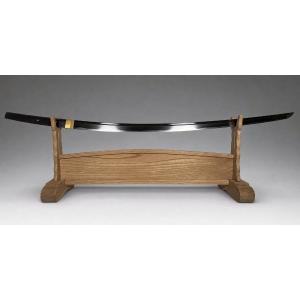
Samurai sword Tachi Ko-Hoki ( Sadatsuna )
Period: Late HEIAN ( Genryaku period 元暦, 1184–1185 )
The Ko-Hoki school of Japanese swordsmithing is an ancient school from which many others sprang. It is located in the Hōki Province (伯耆国, Hōki no kuni ), known for its high-quality iron deposits.
Its legendary founder was Yasutada, but since no works about him exist, Yasutsuna is generally considered to be the true founder of the school.
The smith of this sword, Sadatsuna, was Yasutsuna's grandson.
Yasutsuna forged the legendary Dojigiri, or "Demon Slasher", one of the Tenka-Goken (天下五剣) or "Five [Greatest] Swords Under Heaven" and probably the most famous of all. It was so named because legend has it that Minamoto no Yorimitsu used it to slay the demon Shuten-dōji.
The Dojigiri sword by Yasutsuna is in the possession of the National Museum in Tokyo, and is designated a National Treasure
Yasutsuna's Dojigiri sword and Sanjo Munechika's Mikazuki ("crescent") sword are the two oldest extant curved Japanese swords and prototypes of what the world knows today as the "samurai sword".
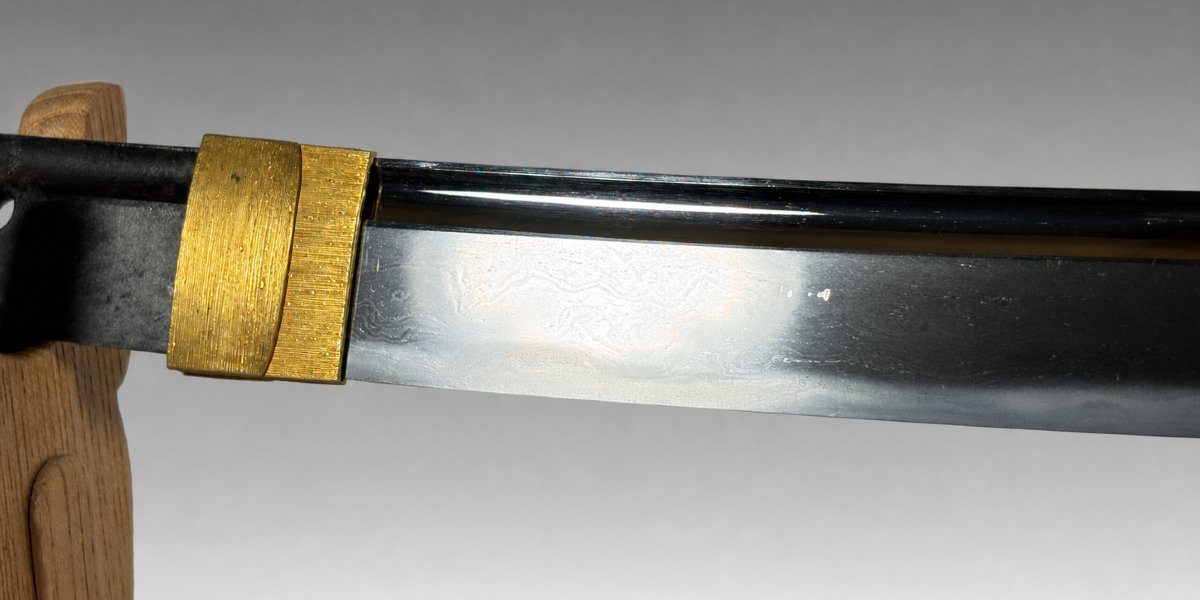
According to tradition, Sadatsuna belonged to the Hóki-Yasutsuna (安綱) school, so very few signed works by him have survived. However, this blade very clearly shows the characteristics of the Ko Hóki school, mainly for the smiths of Sadatsuna.
The Ko-Hóki school predates the dominance of the samurai class. They probably made their swords mainly for the then powerful Buddhist warrior monks, the Sóhei, who were the militarily dominant group at the time.
Hóki was located near the Daisenji Temple (大山寺) of the Tendai sect, which was located high on Mount Hoki Daisen.
Throughout history, Ko-Hōki swords have inspired great smiths. It was the old Ko-Hōki swords, already antique at the time, that are said to have inspired some of the greatest Japanese smiths, including Masamune, Norishige, and Go Yoshihiro of the early Soshu school.
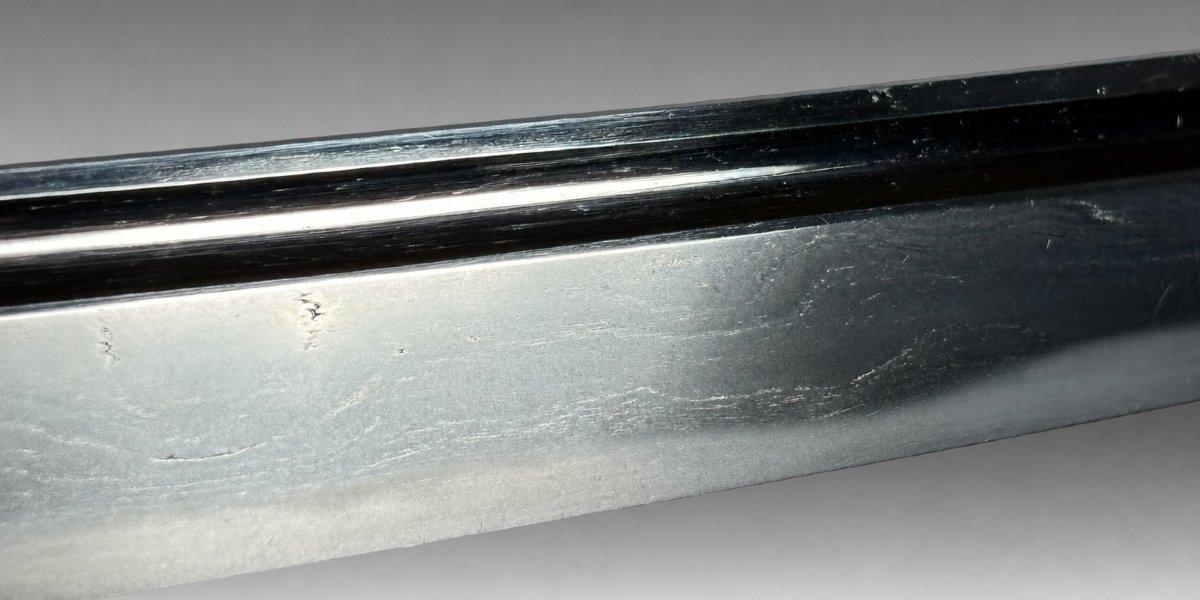
Ko-Hōki swords rarely appear on the market, and when they do, they are often in serious condition due to their age.
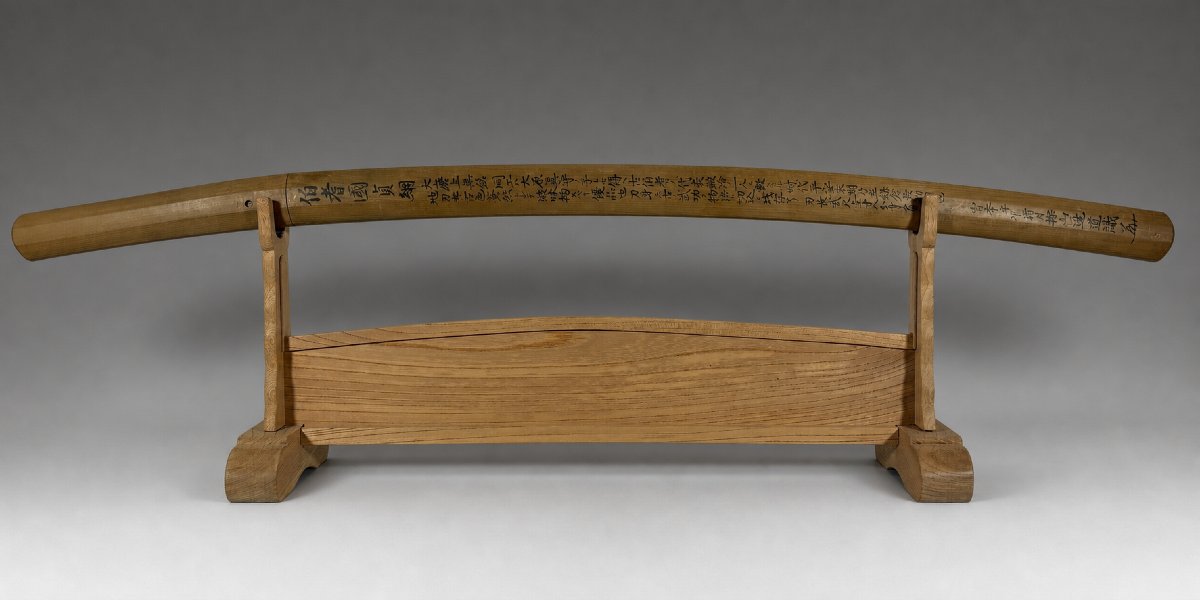
Tanobe Sayagaki (this is what sayagaki sounds like)
Hōki-no-Kuni Sadatsuna
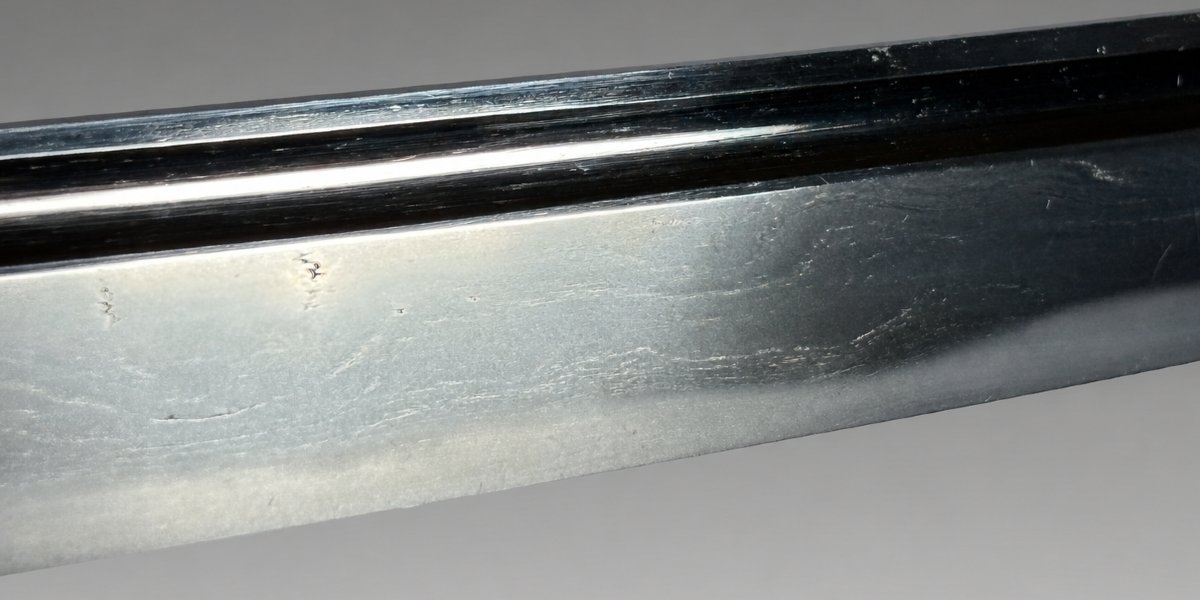
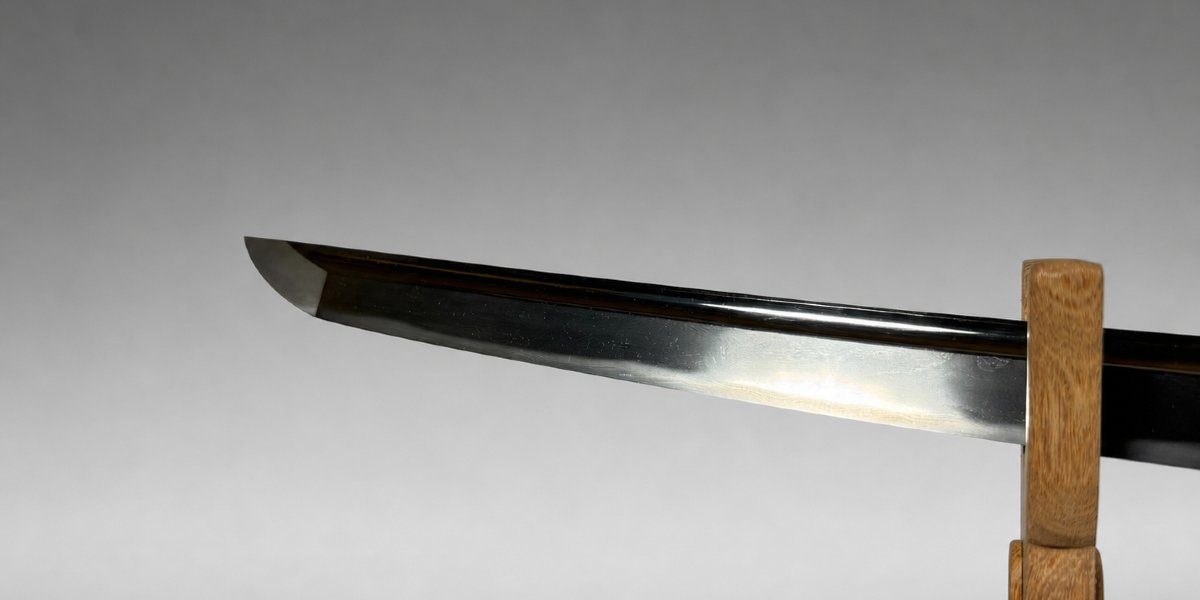
Significantly shortened, unsigned. This smith was the son of Ōhara Sanemori and is one of the representative Ko-Hōki smiths. The period extends from the end of the Heian era to the beginning of the Kamakura era. Both the Ji and Ha have a classic, antique appearance and are worthy of admiration. A fine sword with preserved kirikomi (cutting marks) that speak of its use in battle.
Blade length: 2 shaku, 1 sun, 8 bu (66.06 cm)
November, Year of the Rabbit (2011)
Inspected and signed by Tanzan Hendo (KAO)
"Tanzan" is the pen name of TANOBE Michihira, who is a former president of the Society for the Preservation of Japanese Art Swords (also known as "NBTHK"), has authored several books on Japanese swords, and is arguably the world's leading appraiser of Japanese swords.
His sayagaki (scabbard inscriptions) add great value, especially for unsigned blades that rely on expert attribution. Tanobe's sayagaki are found on some of the finest Japanese swords in the world and are highly regarded for their depth of knowledge.
This sword is certified by the NBTHK as a Tokubetsu Hozon.
Larger photos are available upon request.
Period: Late HEIAN ( Genryaku period 元暦, 1184–1185 )
The Ko-Hoki school of Japanese swordsmithing is an ancient school from which many others sprang. It is located in the Hōki Province (伯耆国, Hōki no kuni ), known for its high-quality iron deposits.
Its legendary founder was Yasutada, but since no works about him exist, Yasutsuna is generally considered to be the true founder of the school.
The smith of this sword, Sadatsuna, was Yasutsuna's grandson.
Yasutsuna forged the legendary Dojigiri, or "Demon Slasher", one of the Tenka-Goken (天下五剣) or "Five [Greatest] Swords Under Heaven" and probably the most famous of all. It was so named because legend has it that Minamoto no Yorimitsu used it to slay the demon Shuten-dōji.
The Dojigiri sword by Yasutsuna is in the possession of the National Museum in Tokyo, and is designated a National Treasure
Yasutsuna's Dojigiri sword and Sanjo Munechika's Mikazuki ("crescent") sword are the two oldest extant curved Japanese swords and prototypes of what the world knows today as the "samurai sword".
According to tradition, Sadatsuna belonged to the Hóki-Yasutsuna (安綱) school, so very few signed works by him have survived. However, this blade very clearly shows the characteristics of the Ko Hóki school, mainly for the smiths of Sadatsuna.
The Ko-Hóki school predates the dominance of the samurai class. They probably made their swords mainly for the then powerful Buddhist warrior monks, the Sóhei, who were the militarily dominant group at the time.
Hóki was located near the Daisenji Temple (大山寺) of the Tendai sect, which was located high on Mount Hoki Daisen.
Throughout history, Ko-Hōki swords have inspired great smiths. It was the old Ko-Hōki swords, already antique at the time, that are said to have inspired some of the greatest Japanese smiths, including Masamune, Norishige, and Go Yoshihiro of the early Soshu school.
Ko-Hōki swords rarely appear on the market, and when they do, they are often in serious condition due to their age.
Tanobe Sayagaki (this is what sayagaki sounds like)
Hōki-no-Kuni Sadatsuna
Significantly shortened, unsigned. This smith was the son of Ōhara Sanemori and is one of the representative Ko-Hōki smiths. The period extends from the end of the Heian era to the beginning of the Kamakura era. Both the Ji and Ha have a classic, antique appearance and are worthy of admiration. A fine sword with preserved kirikomi (cutting marks) that speak of its use in battle.
Blade length: 2 shaku, 1 sun, 8 bu (66.06 cm)
November, Year of the Rabbit (2011)
Inspected and signed by Tanzan Hendo (KAO)
"Tanzan" is the pen name of TANOBE Michihira, who is a former president of the Society for the Preservation of Japanese Art Swords (also known as "NBTHK"), has authored several books on Japanese swords, and is arguably the world's leading appraiser of Japanese swords.
His sayagaki (scabbard inscriptions) add great value, especially for unsigned blades that rely on expert attribution. Tanobe's sayagaki are found on some of the finest Japanese swords in the world and are highly regarded for their depth of knowledge.
This sword is certified by the NBTHK as a Tokubetsu Hozon.
Larger photos are available upon request.
22 000 €
Period: Before 16th century
Style: Asian art
Condition: En l'etat
Material: Wrought iron
Reference (ID): 1834267
Availability: In stock
Print