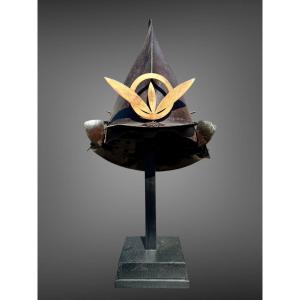
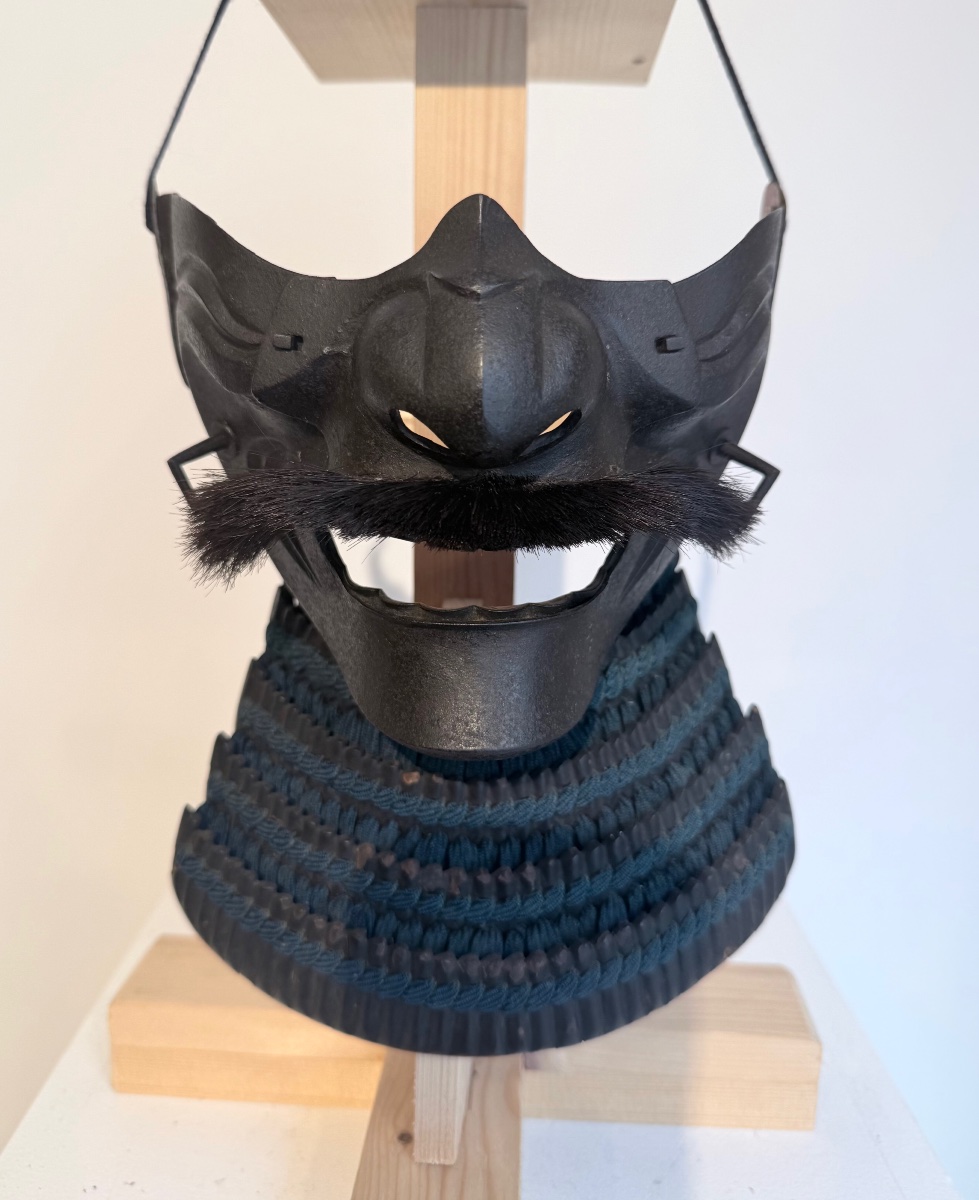
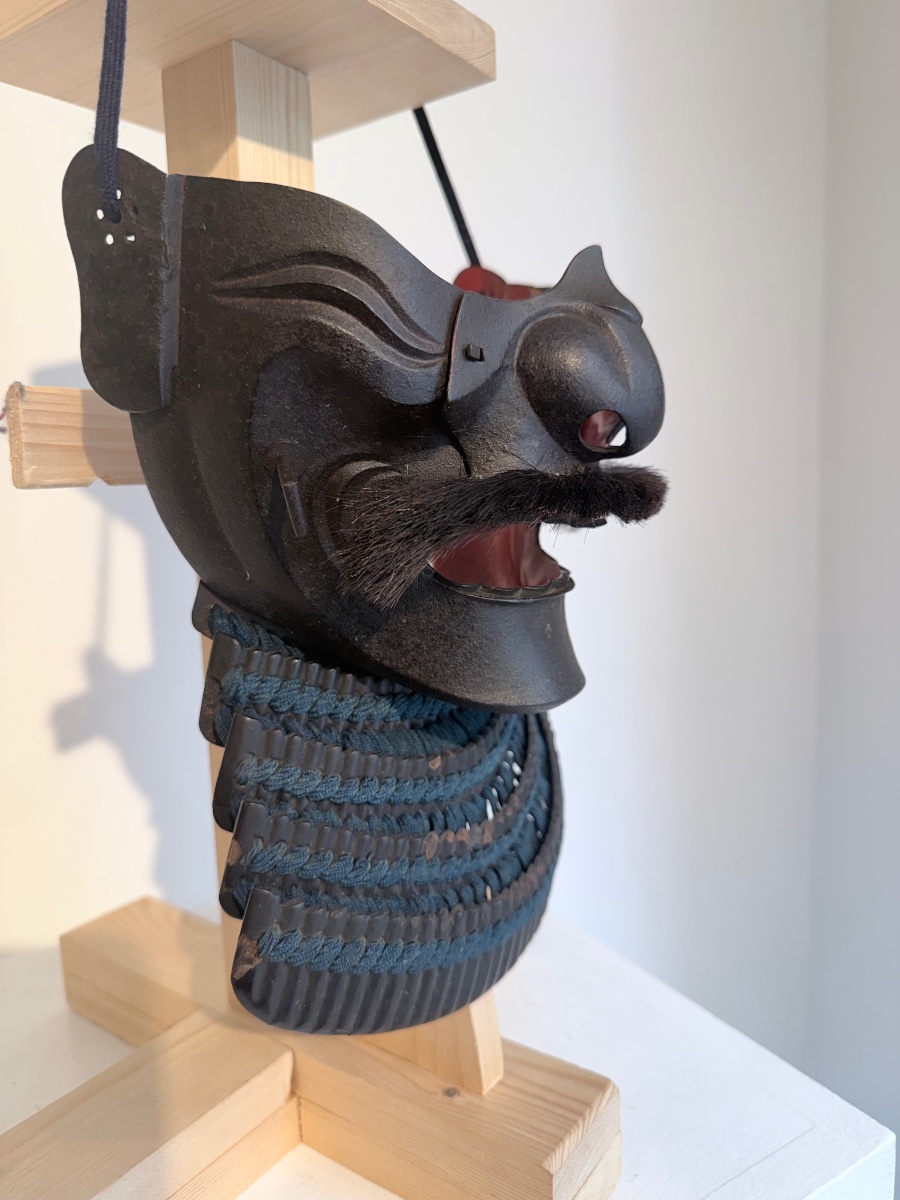
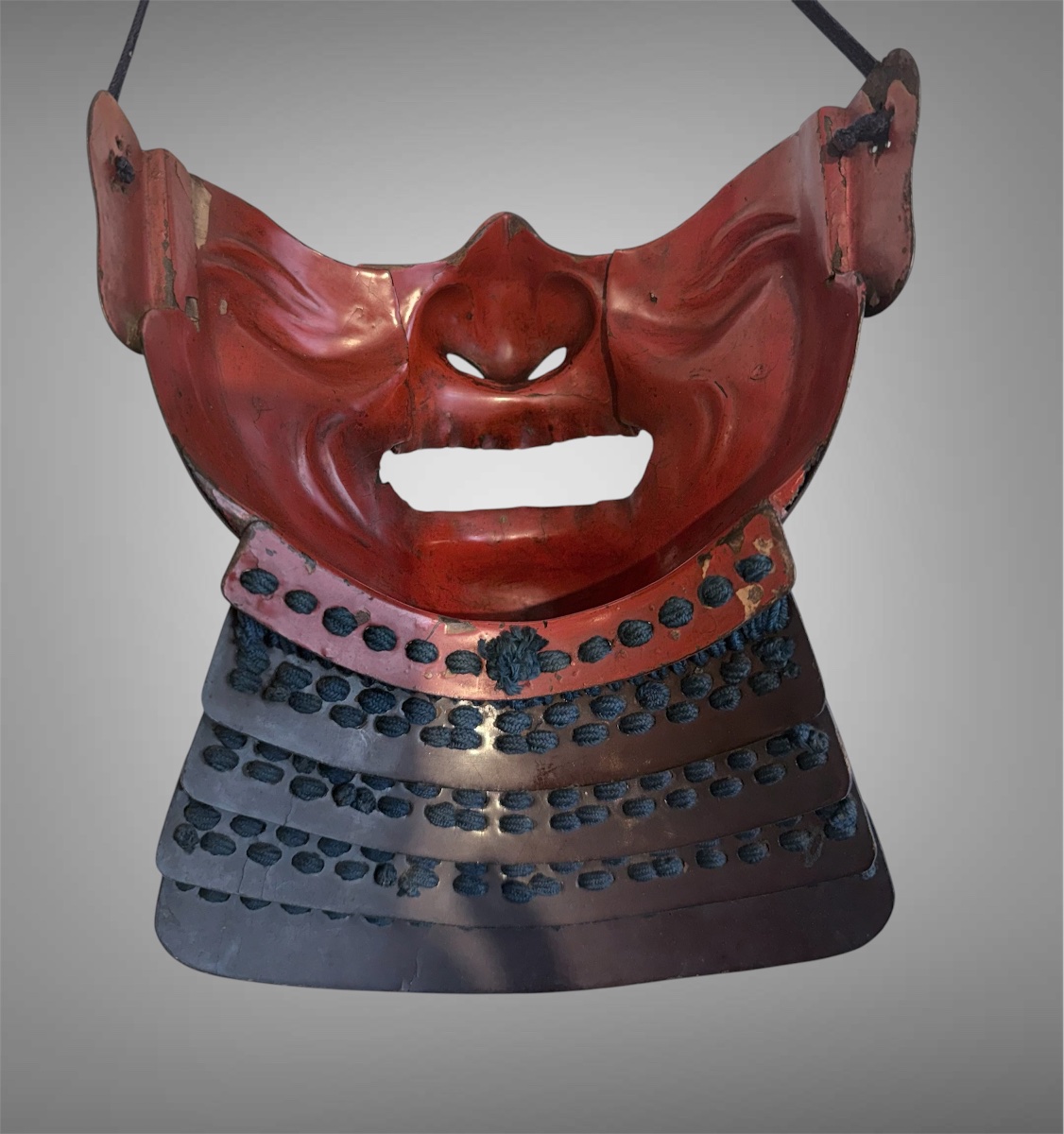
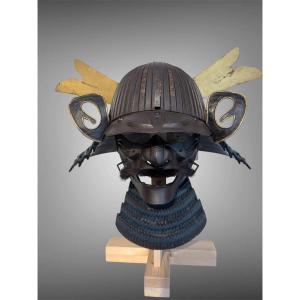


Suji Bachi Kabuto Signed Myochin Munekane And Its Menpo
Artist: Myochin Munenaga
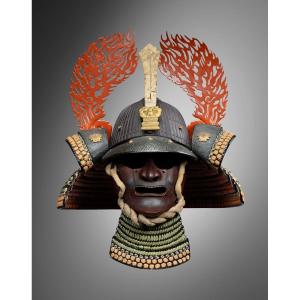
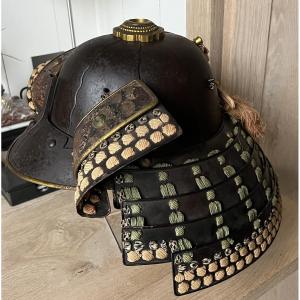
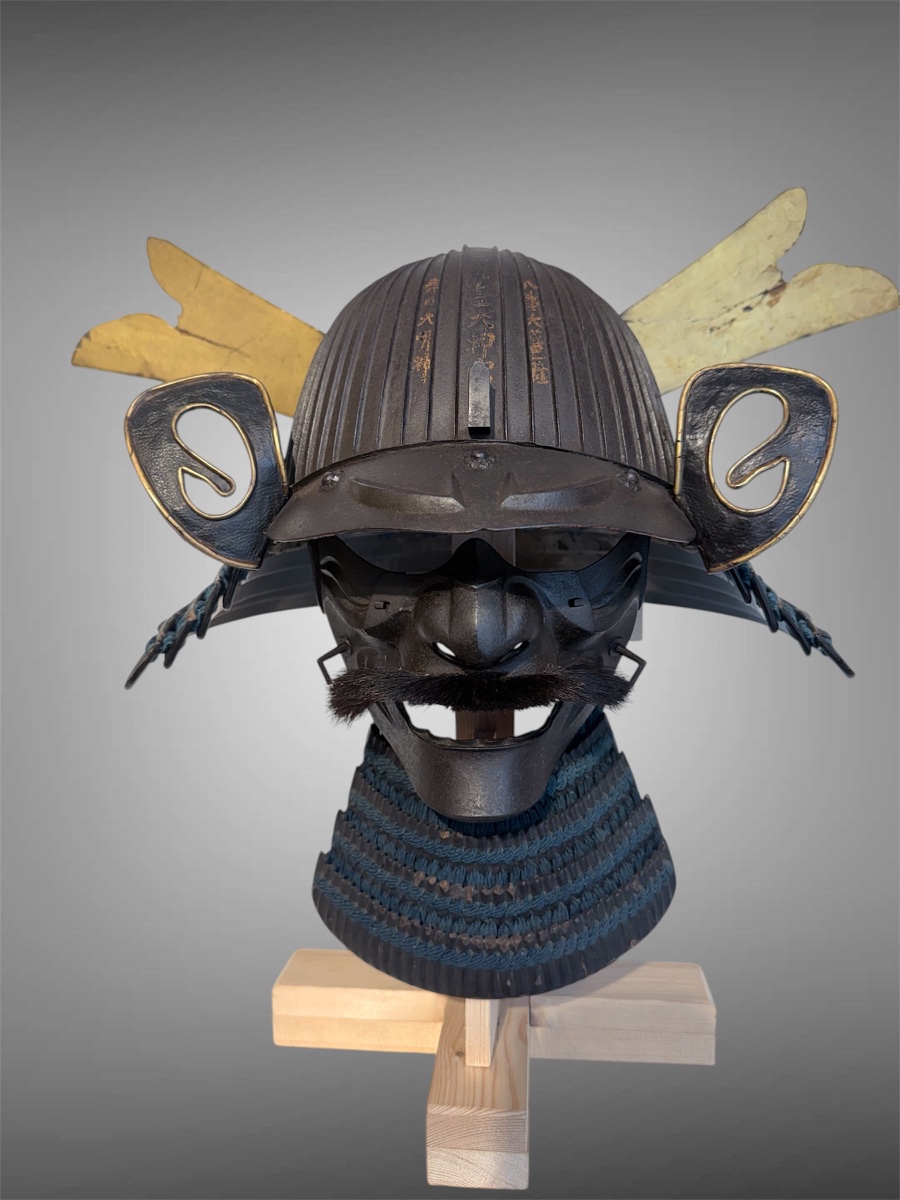
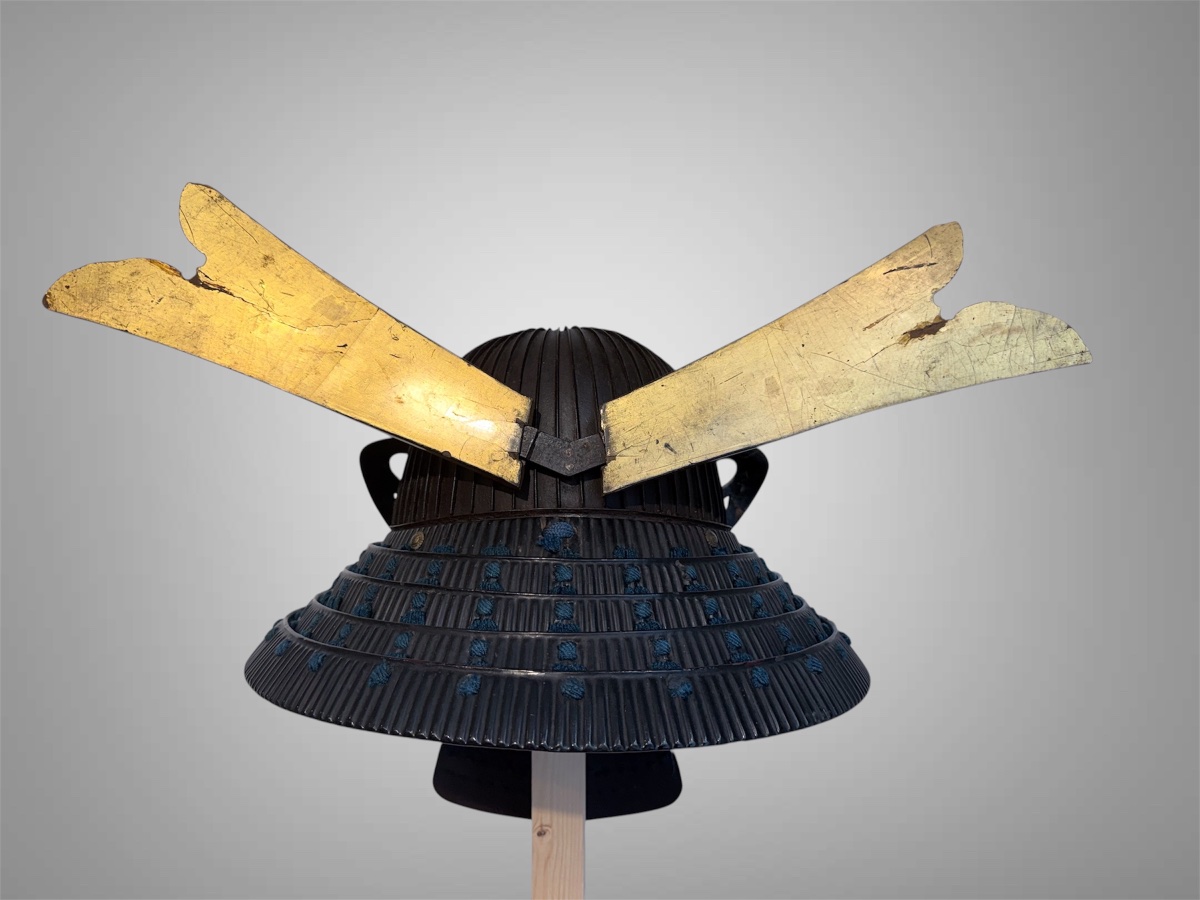
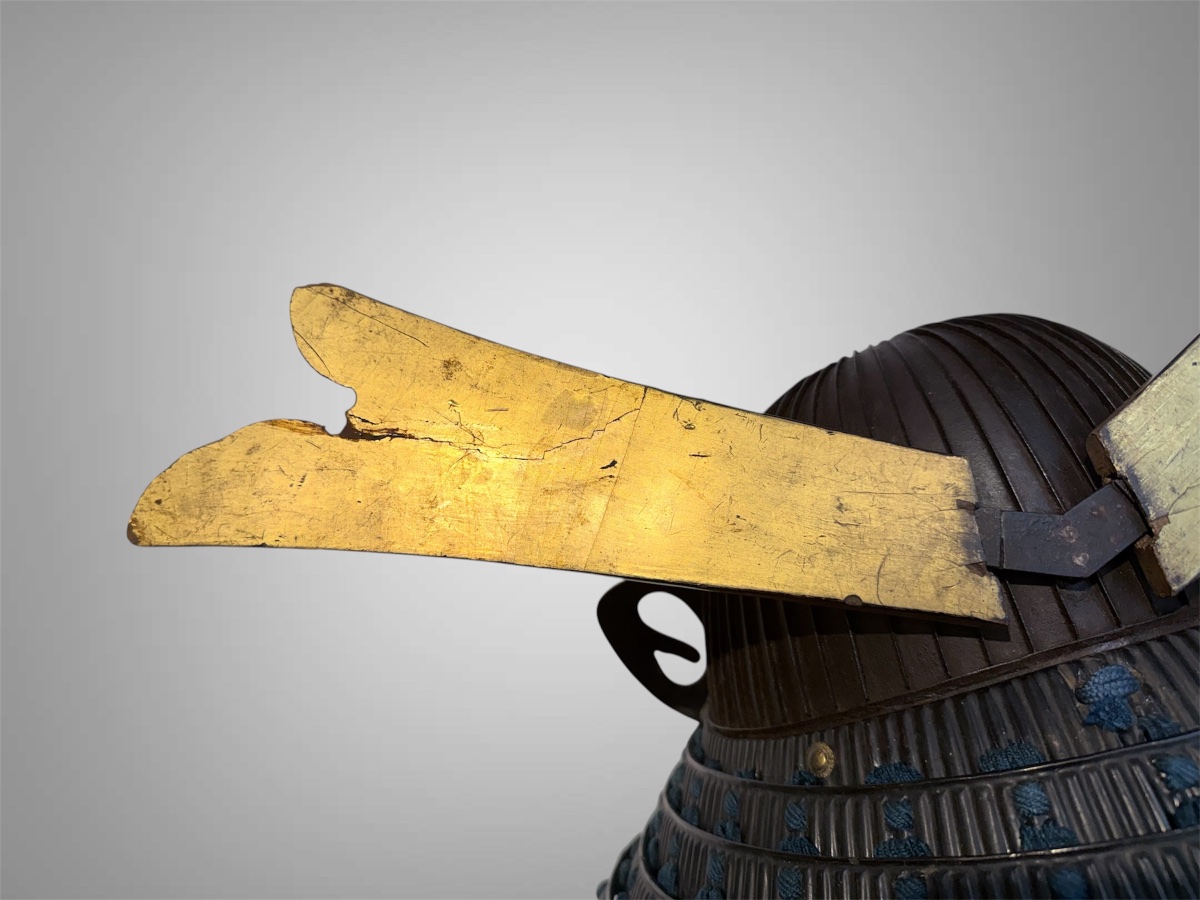
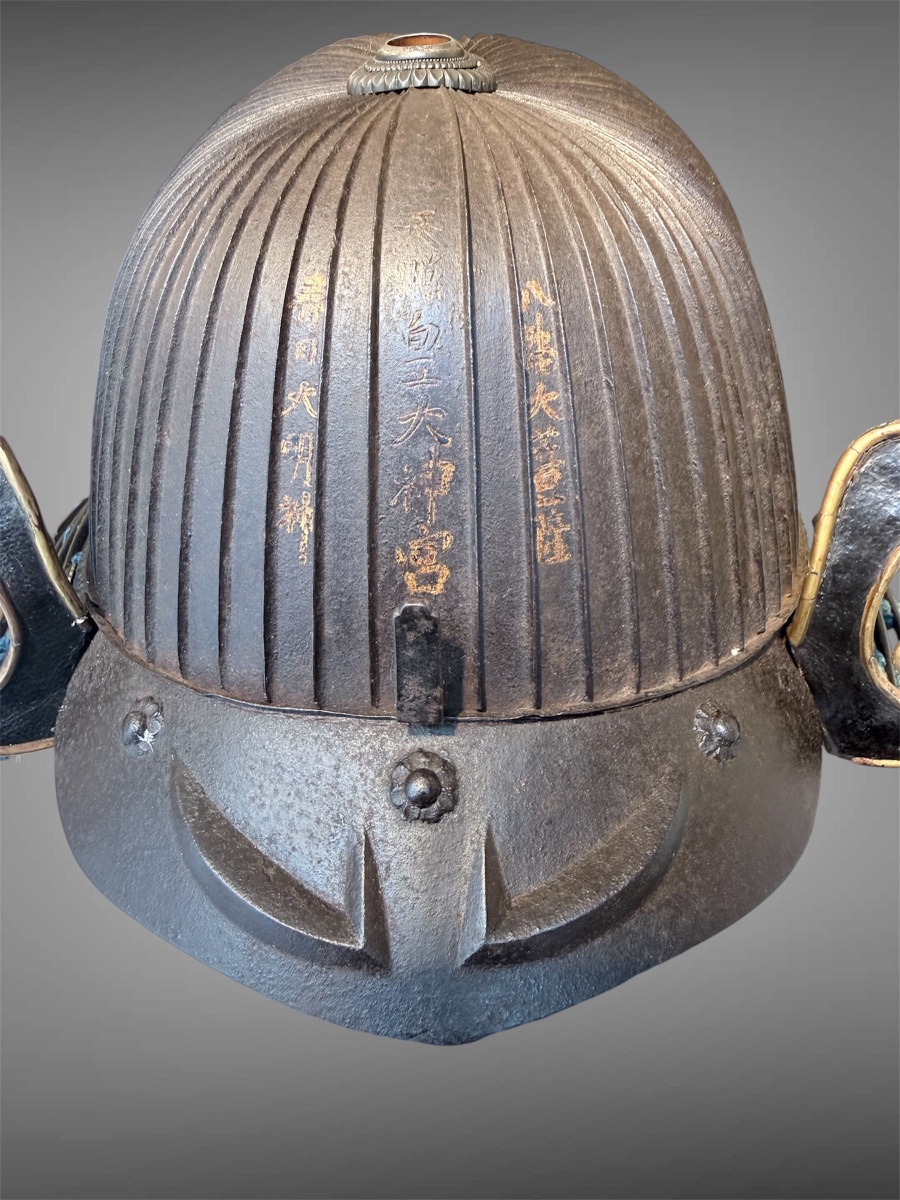
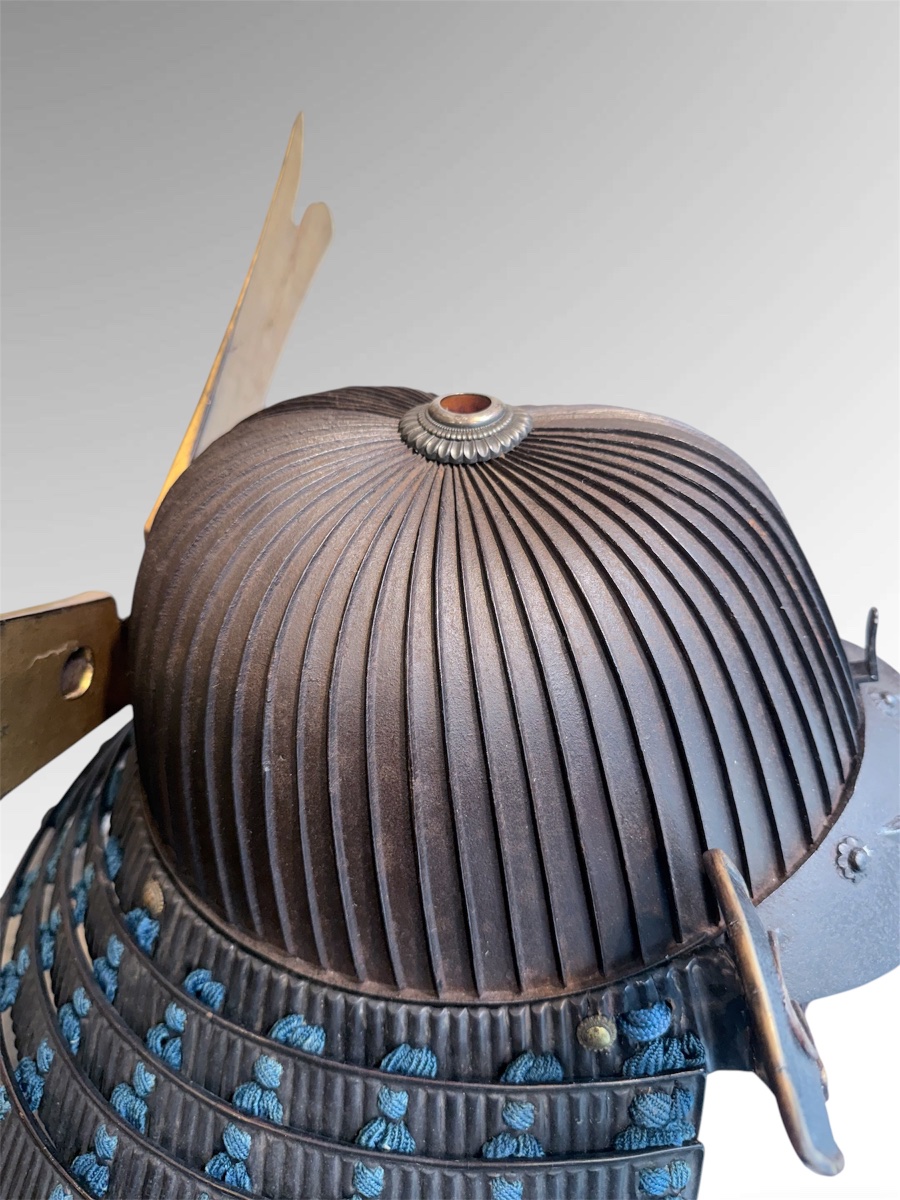
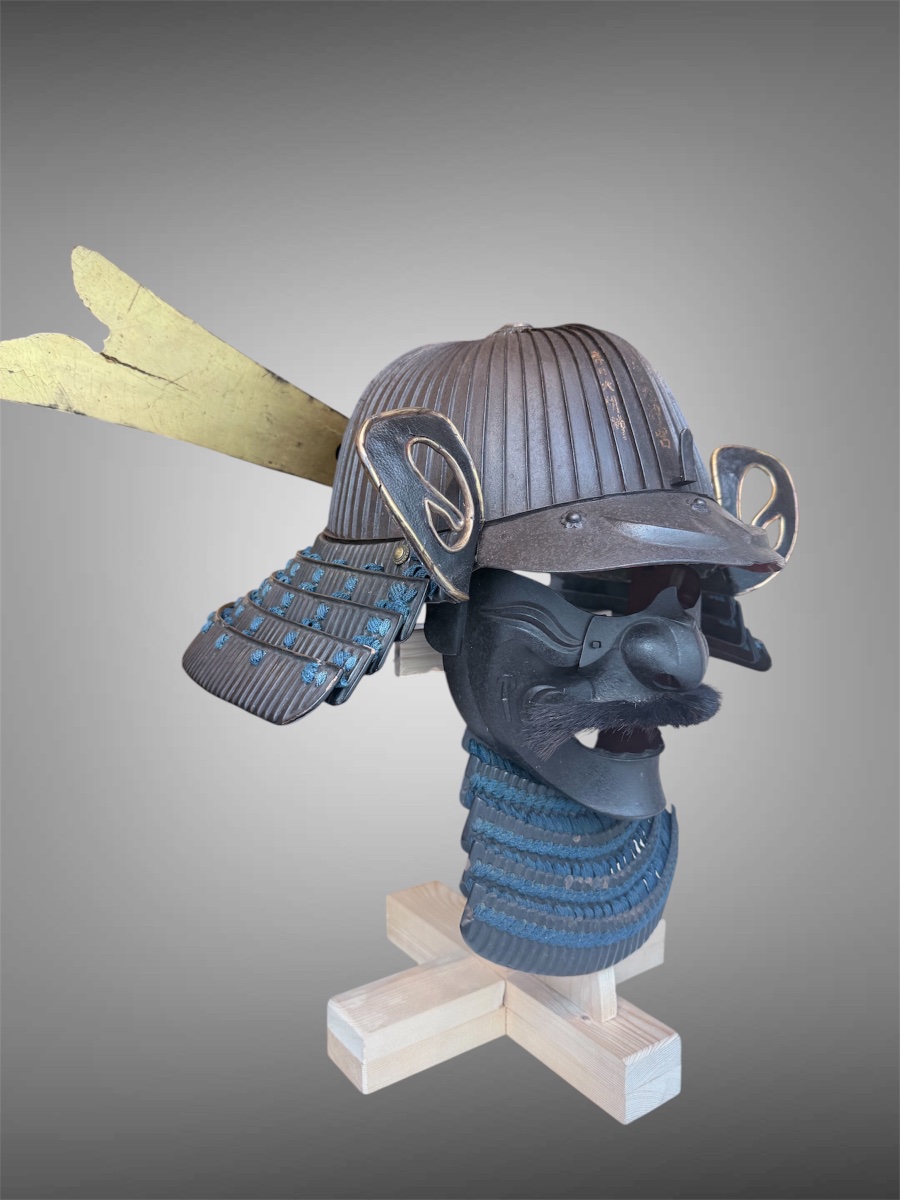
A 62-plate *suji-bachi kabuto* signed by Myochin Munenaga, featuring *fukigaeshi* (turn-backs) pierced in the shape of a gourd; this helmet possesses an interesting and unusual aesthetic. mabisachi with eyebrows in ushidashi and 3 rivets idecorated with flowers At the rear, two gilded ornaments form the *ushiro-date* (rear crest), while the front bears three gilded, engraved invocations to the gods:
.1. Amaterasu Ōmikami → The Great Bodhisattva Hachiman. This is particularly significant for a samurai: Hachiman is the great *kami* (deity) who protects warriors, associated with righteous warfare, courage, and victory. 3. Kasuga Daimyōjin → The Great Deity of Kasuga. These are the deities of the Kasuga Shrine in Nara, traditionally the protectors of the Fujiwara clan and associated with protection, prosperity, and the safety of the warrior. Thus, we have: Amaterasu Ōmikami — Hachiman Daibosatsu — Kasuga Daimyōjin. This is not merely decorative. These are three divine powers invoked to ensure the protection of the *kabuto* (helmet) wearer, with Hachiman at the center—a choice particularly fitting for samurai armor. The fact that the three names are gilded and inscribed directly onto the *hachi* (helmet bowl) is also a detail worth noting in an expert description: these are votive or protective inscriptions (*kakun* or *kinbun*, depending on the context) intended to place the warrior under the protection of the deities.
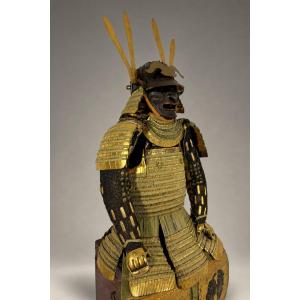
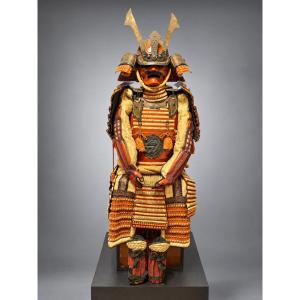
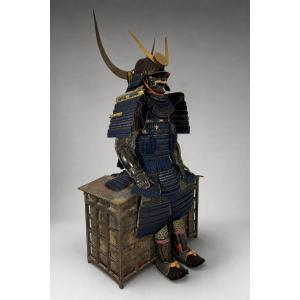
Myōchin Munekane (明珍宗兼) was an artisan of the renowned Myōchin family, a Japanese lineage specializing in samurai armor and ironwork. He was active primarily during the mid-19th century, around the 1850s and 1860s. A specialized source lists his birth year as 1818 and notes that he worked for the Tsuyama Domain in present-day Okayama Prefecture. The Myōchin family was particularly celebrated for their repoussé ironwork, *menpō* (protective face masks), and cuirasses. Munekane is notably associated with a complete 19th-century samurai suit of armor held in the collections of the Wereldmuseum in the Netherlands; this suit was gifted by the Shogun to the King of the Netherlands in 1855—a time when Japan was interested in Dutch ships. Dating to around 1855, this armor is of particular interest due to its connection to diplomatic exchanges between Japan and the Netherlands during the final years of the shogunate. The SieboldHuis museum explicitly identifies it as a suit of armor crafted by Myōchin Munekane. The context is remarkable: in 1855, Japan presented the Netherlands with a collection of Japanese weapons and artifacts as part of the diplomatic relations between the two nations. There are also *menpō* (masks), *kabuto* (helmets), and other armor components bearing Munekane's signature.
Among Japanese samurai, the gourd (*hyōtan*) held rich symbolic significance. Prosperity and abundance: its rounded shape and capacity to hold liquids linked it to wealth and good fortune. Protection and luck: the gourd was considered a lucky charm, especially when carried or depicted on martial gear. Military victory: it is particularly famous for its association with Toyotomi Hideyoshi, whose *uma-jirushi* (battle standard) was a large golden gourd; it thus became a symbol of success and victory. Longevity: in Japanese culture, the gourd could also signify a long life and protection against evil spirits.
12 500 €
Period: 19th century
Style: Asian art
Condition: Good condition
Material: Wrought iron
Reference (ID): 1821456
Availability: In stock
Print