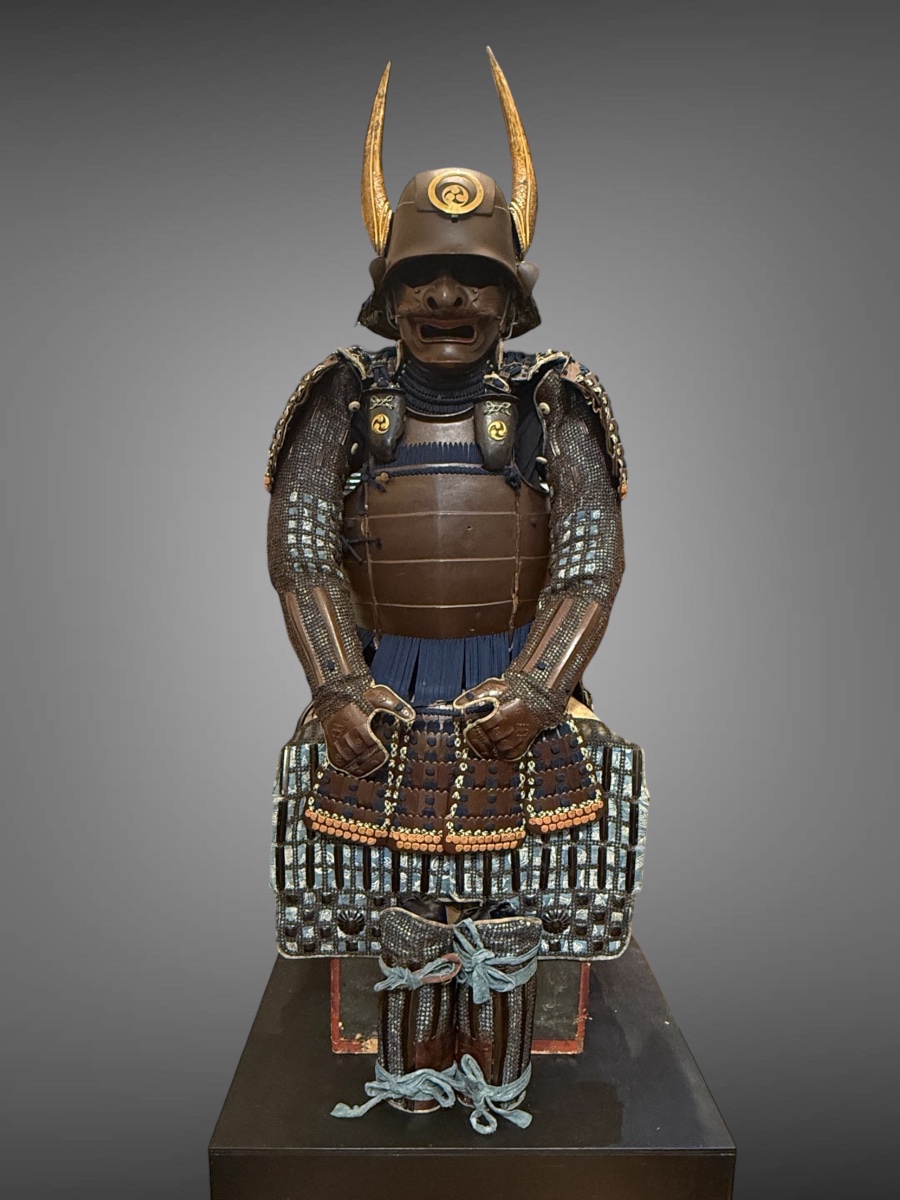


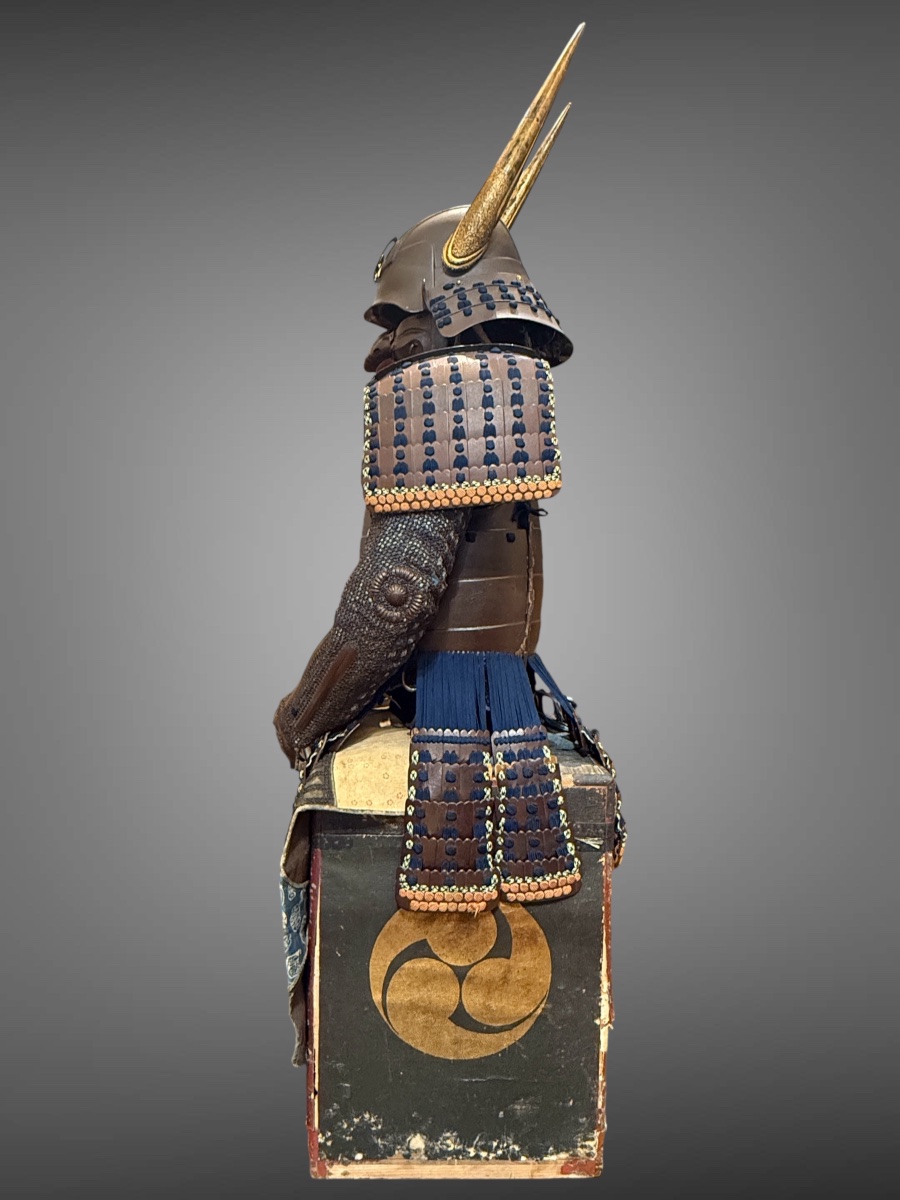
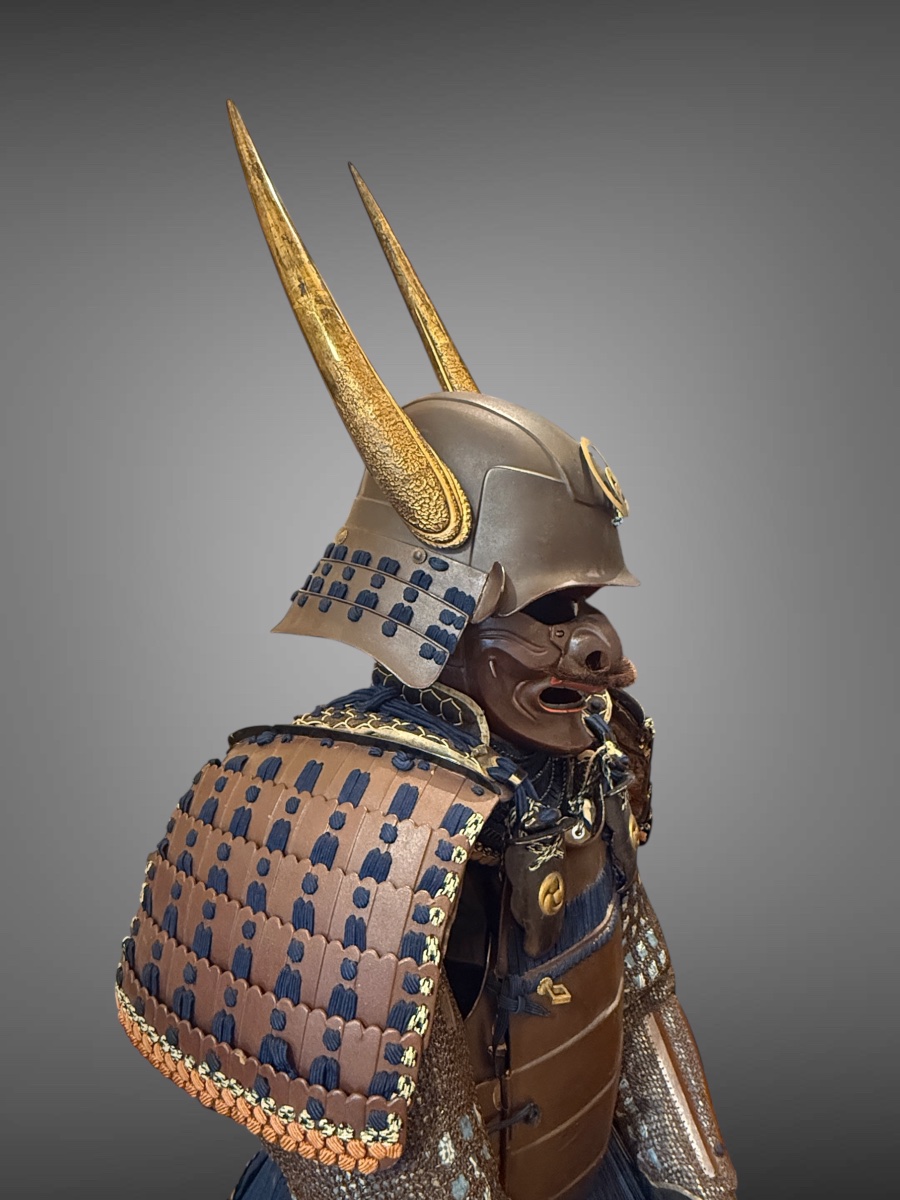
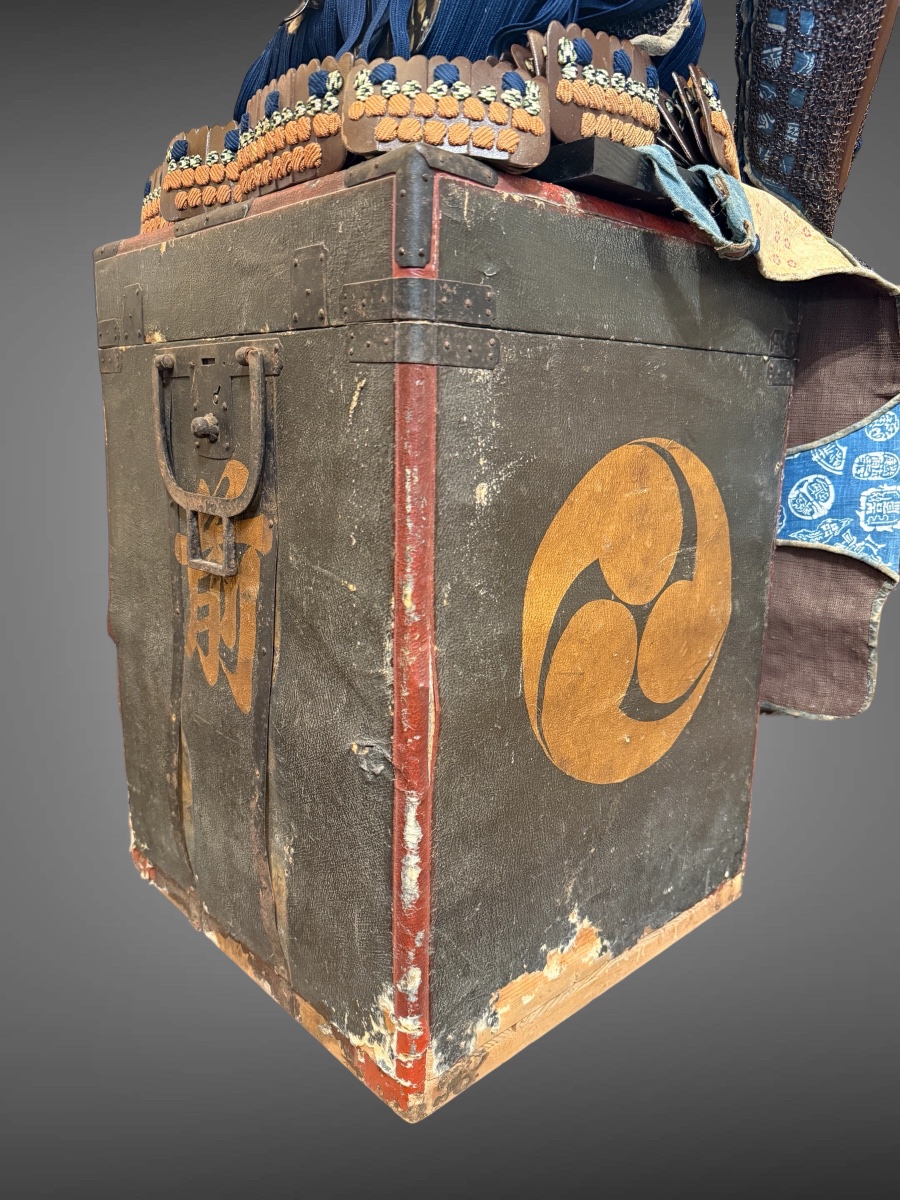
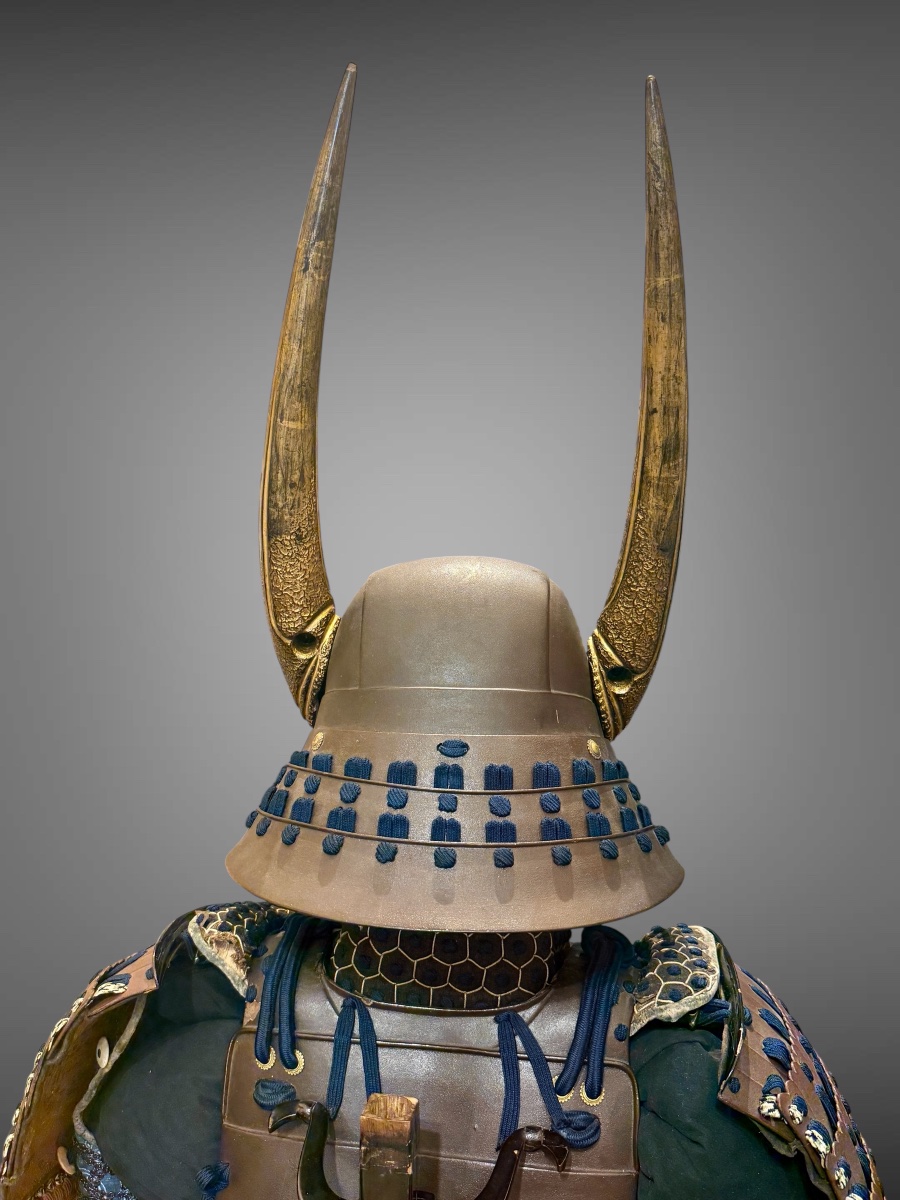
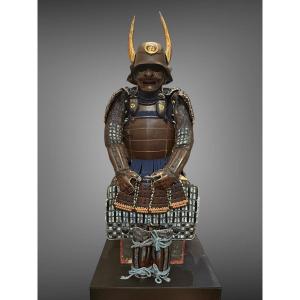


Complete Owari-style Samurai Armor—edo Period (1603–1868).
JAPAN - Edo Period (1603–1868).
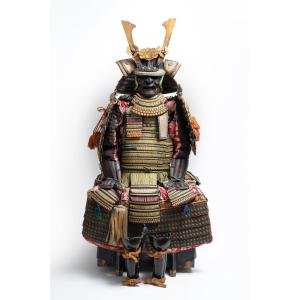
Complete samurai armor.
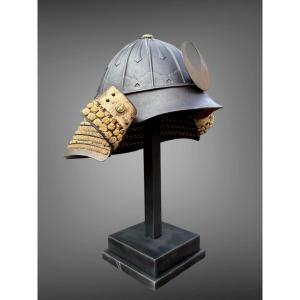
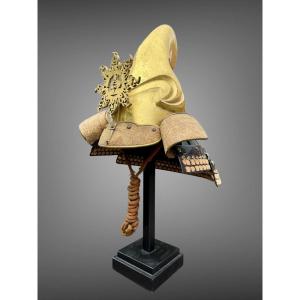
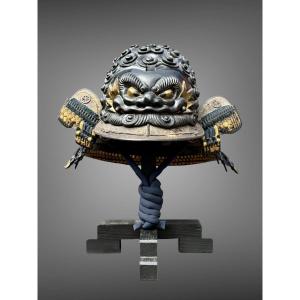
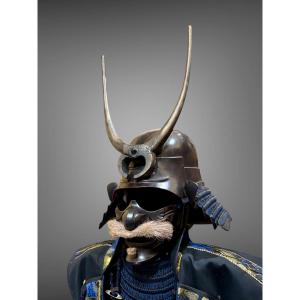
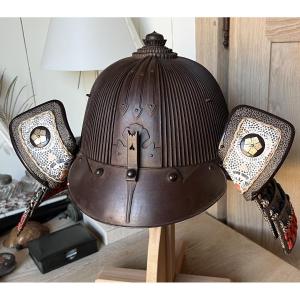
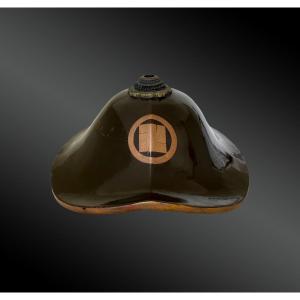
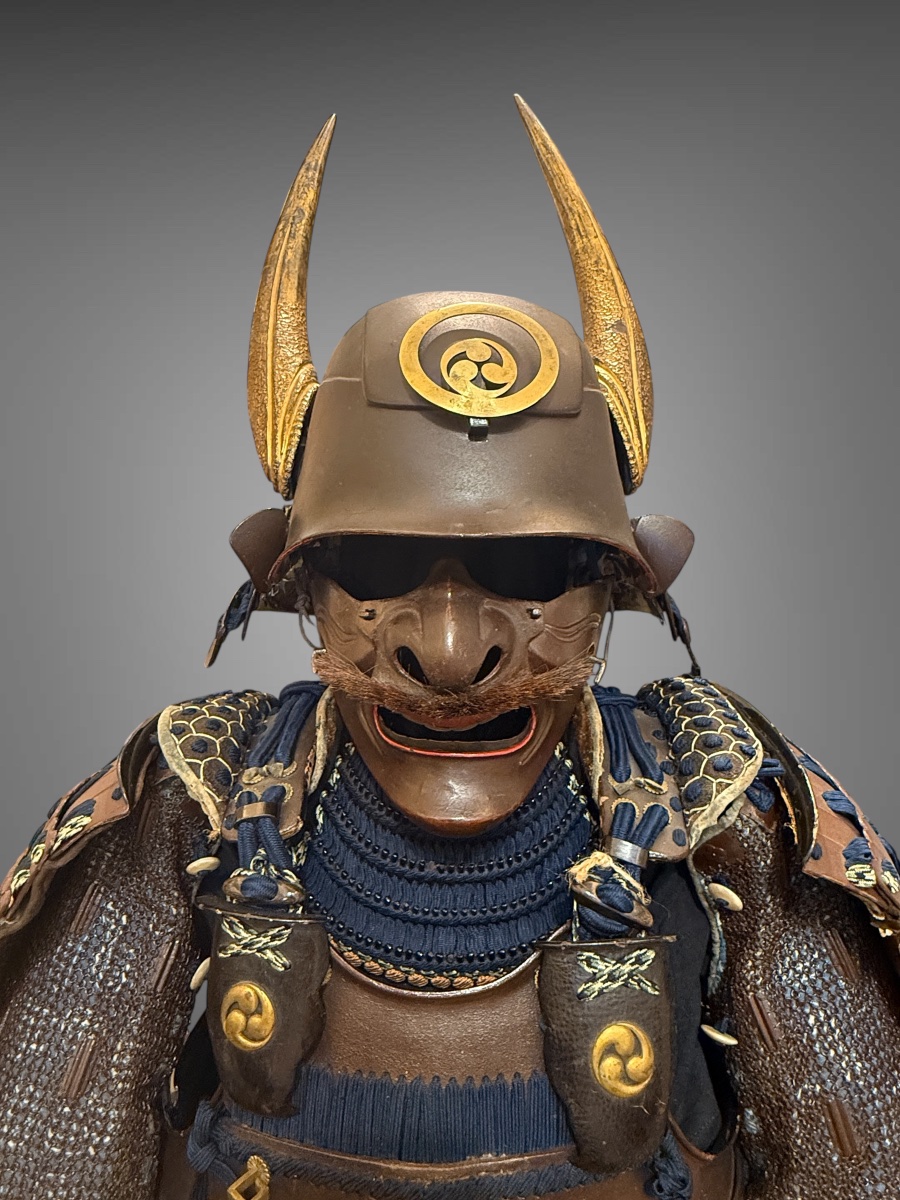
KABUTO (helmet): a simple, sturdy design made of wrought iron with four brown-lacquered plates.
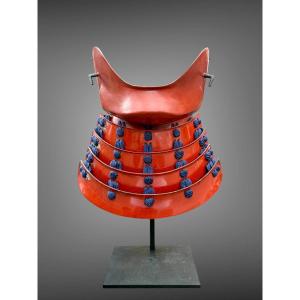
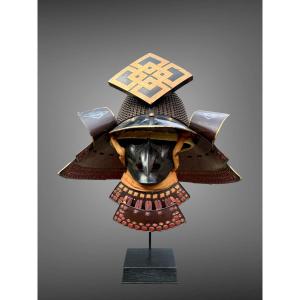
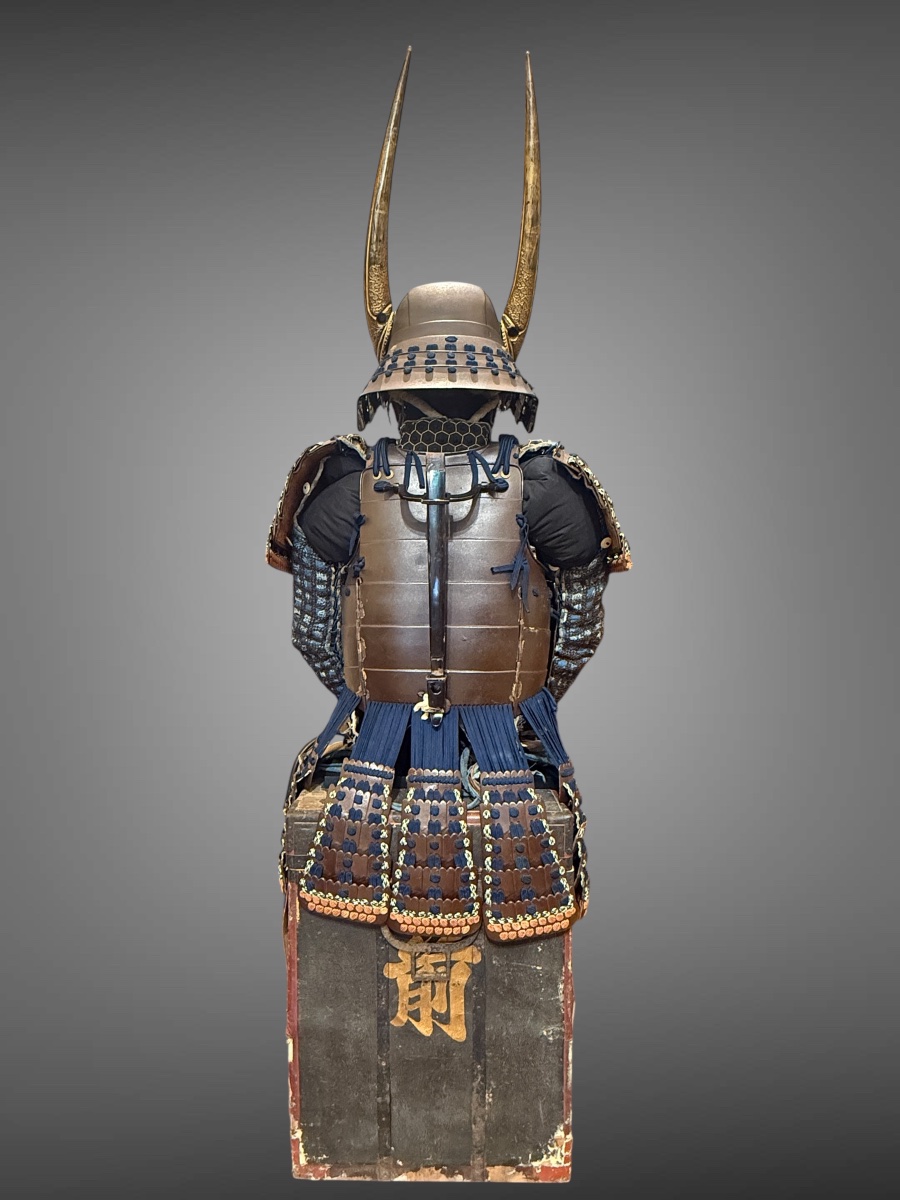
SHIKORO (neck guard) with three tiers, made of brown-lacquered iron and blue silk braiding.
MABI SA SHI (visor) made from a single plate of brown-lacquered wrought iron, integrated with the rest of the kabuto.
MAEDATE made of cut and gilded copper, featuring a mitsudomoe (three swirling commas).
WAKIDATE made of carved, lacquered, and gilded wood, featuring two long side horns.
MEMPO (half-mask) made of matte brown-lacquered wrought iron, with a pronounced chin, a movable nose, whiskers made of natural brown horsehair, visible gilded teeth, lips lacquered in cinnabar red, pierced nostrils, and sweat holes under the chin.
YODARE-KAKE (neck guard) with four tiers, glossy black lacquered and featuring blue silk braiding.
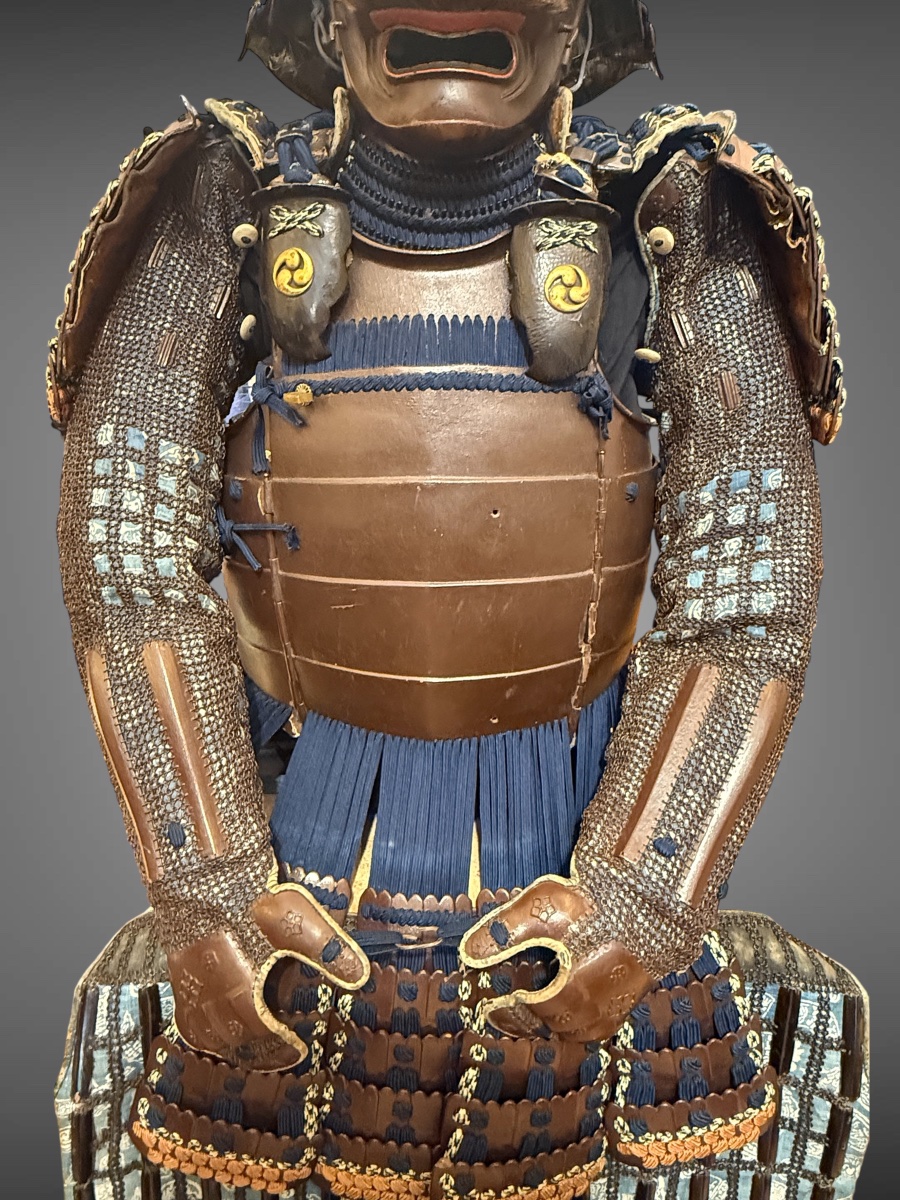
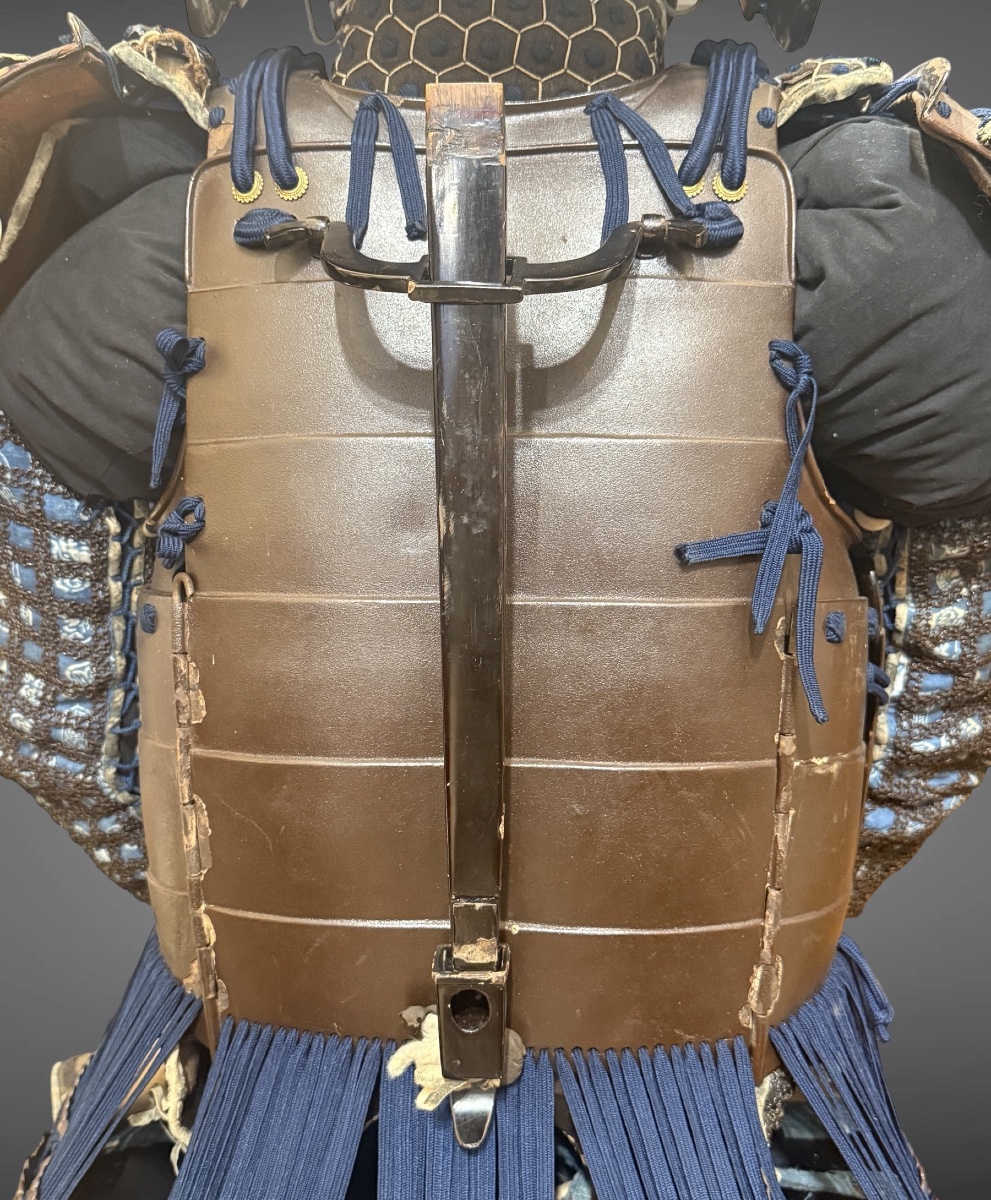
DO (chest plate) made of brown-lacquered wrought iron, modern style (tosei gusoku), consisting of wide horizontal plates, with blue silk braiding.
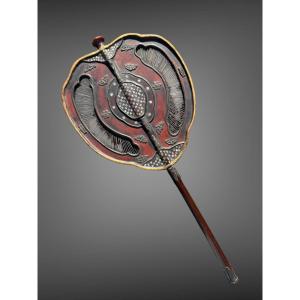
SODE (shoulder guards) with six tiers lacquered in matte brown and blue, white, and orange silk braiding.
KOTE (arm guards) made of kusari (chain mail) and matte brown lacquered iron plates, characteristic of armor designed to maintain good mobility.
KUSAZURI (skirt) with five rows, lacquered in matte brown and featuring blue, white, and orange silk braiding.
HAIDATE (underskirt) made of light blue quilted fabric, chain mail, and lacquered iron plates.
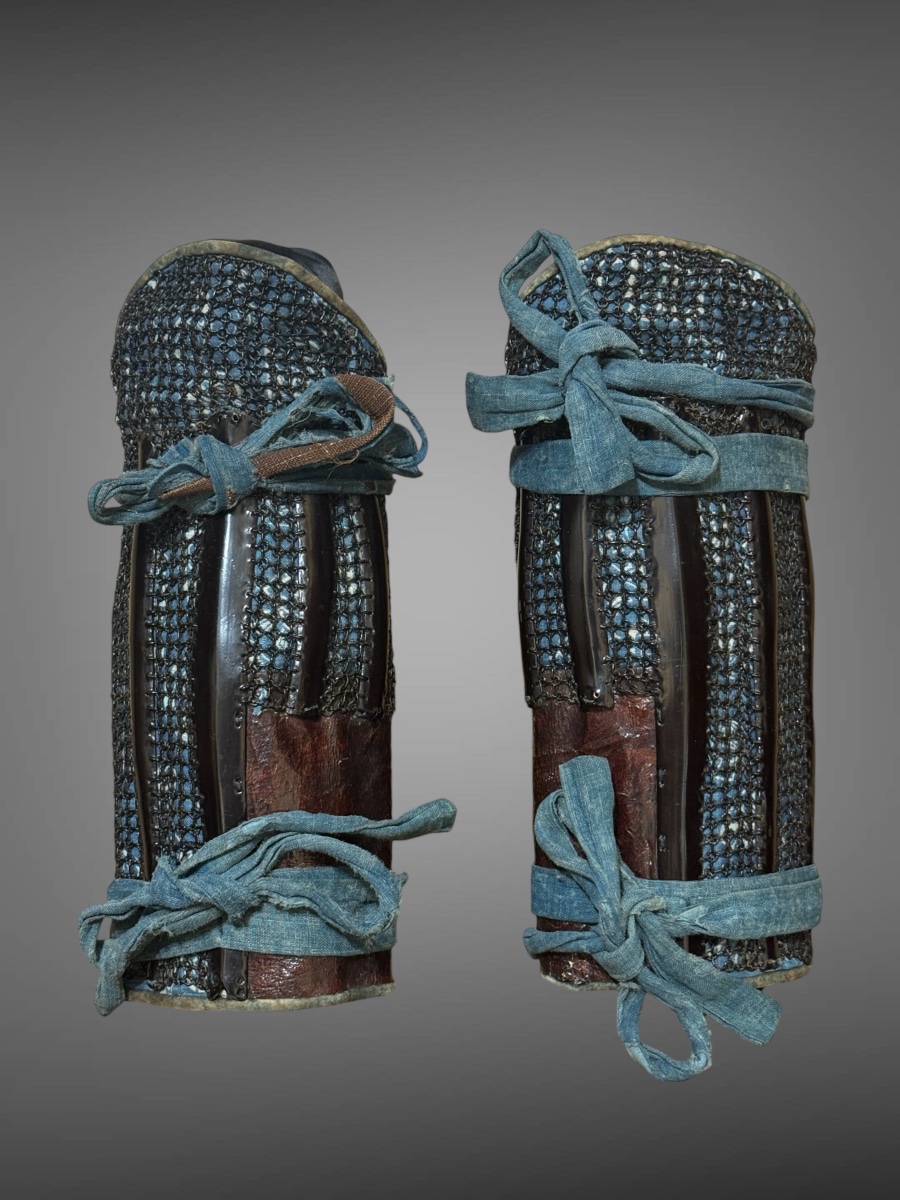
SUNEATE (leg guards) made of kusari chain mail, glossy black lacquered iron plates, blue quilted fabric, and leather.
Dimensions of the armor in a seated position: 153 x 54 x 52 cm.
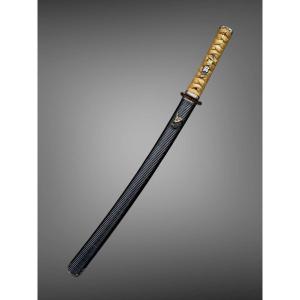
Sold with its display stand and GUSOKU BITSU (transport chests) made of wood covered in leather with metal reinforcements; it is adorned with the mitsudomoe motif.
Additional photos and details available upon request.
Notes: The term “Owari” here refers to the former Owari Province, the Tokugawa domain. The armor associated with this region is still functional and designed for combat. It is also heavily influenced by armor from the late 17th and early 18th centuries. Its martial appearance features simple forms that are more functional than decorative, along with a very sturdy helmet.
Period: 19th century
Style: Asian art
Condition: Good condition
Material: Wrought iron
Width: 54 cm.
Height: 153 cm.
Depth: 52 cm.
Reference (ID): 1779480
Availability: In stock