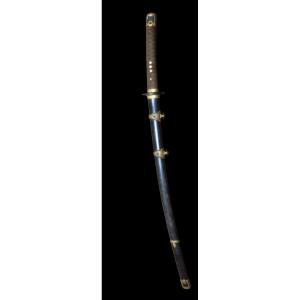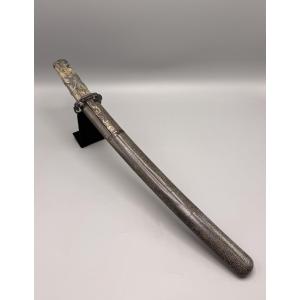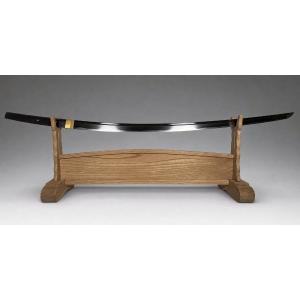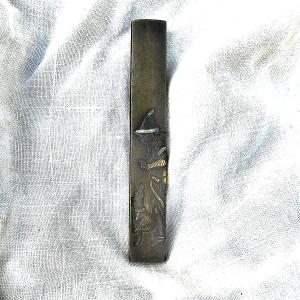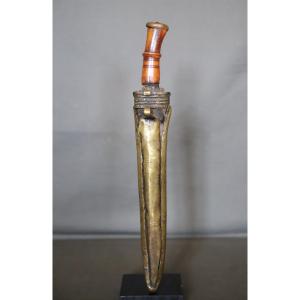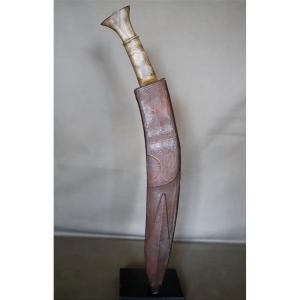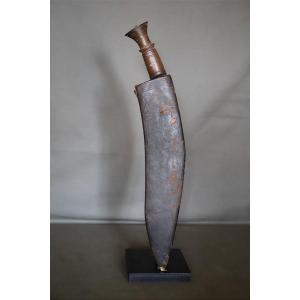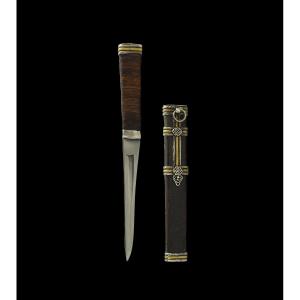
Indian dagger (katar) - India, 17th-18th century. Double-edged blade with a reinforced point (commonly called a "mail-piercing" or "armor-piercing" dagger). Forged steel handle. Solid, no play. Length[...]
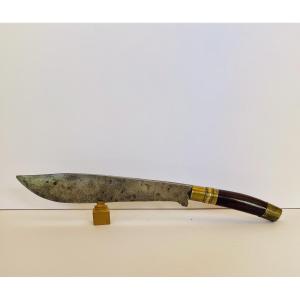
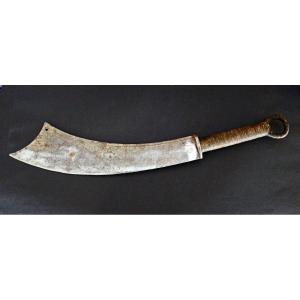
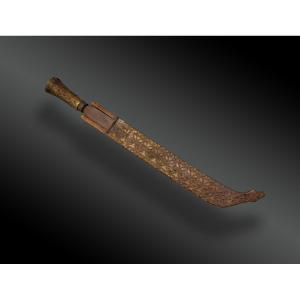
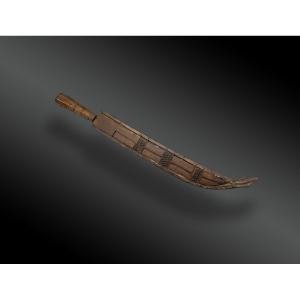
Heavy-bladed dagger - Southern China, Vietnam, 19th century. Wooden handle wrapped with cord and wrist strap. Brass guard and pommel. Curved, strong, and heavy blade, single-edged and widening towards[...]
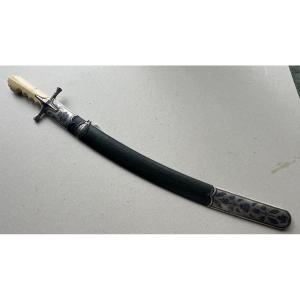
Large Chinese sword in gilt bronze and steel. A very beautiful, large sword, 113 cm in total height, dating from the early 20th century. The entire piece is in very good overall condition, both the bl[...]
A very rare Zhan Ma Dao, a "horse-cutting sword" from southern China. What distinguishes it from other Dao swords is the exceptional thickness of its blade and its oversized length. This weapon was tr[...]
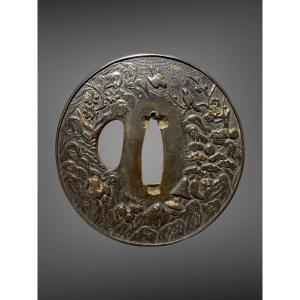
Naga Maru Gata (oval) shaped tsuba. Made of chiseled iron in the Hira Bori style and inlaid with Taka Zogan copper, gilt copper, and silver uniformly on both sides. Depicts a pagoda in nature at the f[...]
A rectangular tsuba (handguard) from the Nadegaku Gata period, dating from the 18th-19th centuries. Made of iron with inlaid takazogan decoration in copper and silver, depicting two figures at a windo[...]
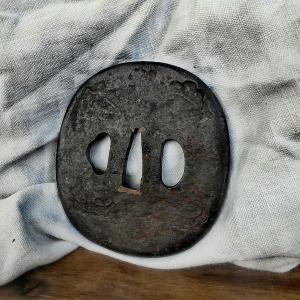
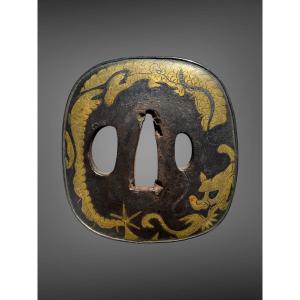
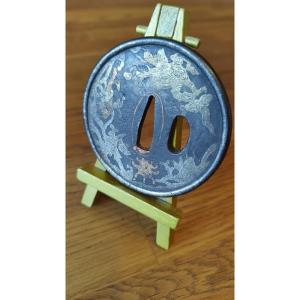
Naga Maru Gata (oval) shaped tsuba of the Namba type. Made of iron with a -sukashi decoration of dragons chasing the sacred pearl among the clouds. The rim is hemmed, no signature. Dimensions: 7.6 mm [...]
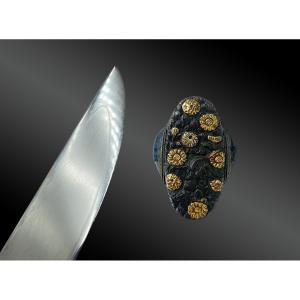
Late Edo period Naga Ma Ru Gata (oval) shaped tsuba. Made of iron with inlaid Taka Zogan decoration in copper and silver depicting a meat cleaver. Beautiful condition, no unnecessary cleaning. Dimensi[...]
Naga Maru Gata (oval) shaped tsuba. Made of iron inlaid with a silver Taka Zogan depicting a butterfly flying above foliage. Beautiful condition, no cleaning required. Dimensions: 72mm x 80mm. Feel fr[...]
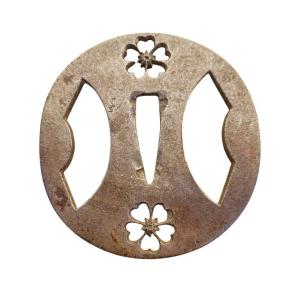
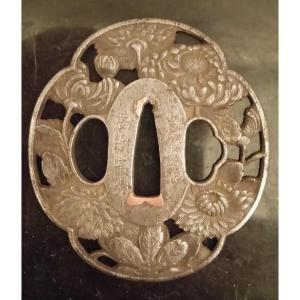
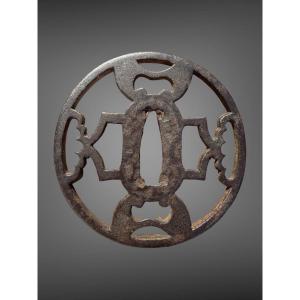
Iron tsuba in the shape of the Maru Gata, from the Saotome school. Openwork decoration in yo-sukashi of flower petals (2 missing). Mid-Edo period, no signature. Diameter: 82 mm
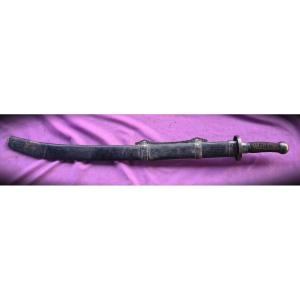
A strong Chinese saber known as a dadao - China, first half of the 20th century. Dadao literally means "great saber" in Chinese. This type of rustic saber reached its peak after the fall of the Qing d[...]
Chinese short sword known as a paidao - Southern China, Northern Vietnam, 19th century. This type of short sword was generally used by the Qing army in combination with a round, woven rattan shield. I[...]
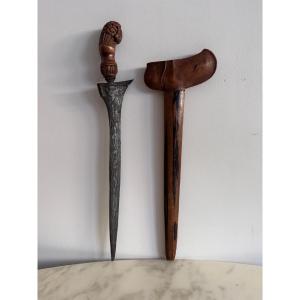
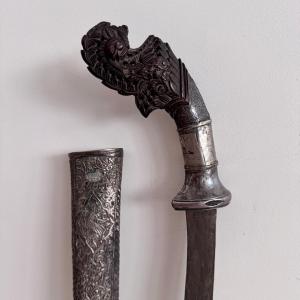
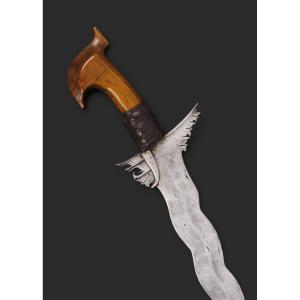
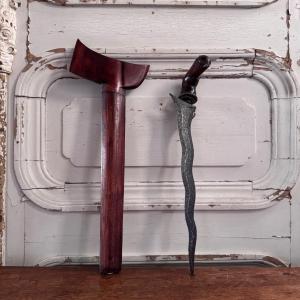
Indonesian kris with stone inlays. Finely carved hardwood handle, bone ring, and ruby and emerald-colored stones. Richly decorated scabbard with floral and foliate motifs and a serpentine steel blade.[...]
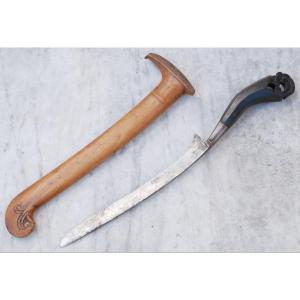
This weapon is an Indonsian sword called "Klewang" . It is typical from the Sumatra Island. It was collectedduring the19th century in the North of the Sumatra Island. Blade is a nice smith's work, in [...]
TSUBA mokko gataJapanEdo period (1603–1868)Iron, gold, copper, silverH: 6.2 cm; L: 6.5 cm; W: 3 mmH nakago-ana: 2.4 cmIron tsuba chiselled with a bird perched on a branch above a river, enhanced with [...]
TSUBA mokko gata signedJapanEdo period (1603–1868)Iron, gold, copper, silverH: 7.3 cm; L: 6.8 cm; W: 3 mmH nakago-ana: 2.9 cmIron tsuba chiselled with a man in a kimono reading on a bridge under a tre[...]
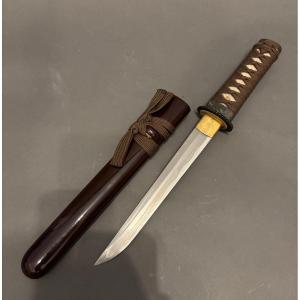
This Japanese weapon has unusual dimensions; its proportions are those of a tanto rather than a wakizashi. In one of the photos, it is shown with a standard-sized tanto, allowing the size difference t[...]
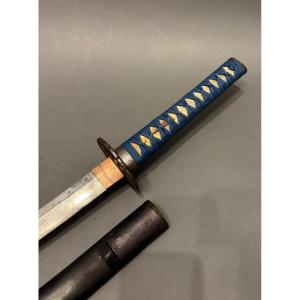
Mid-Edo period wakizashi. 56 CM Blade: Torii zori shape, Gunome midare ha temper line still visible. O-kissaki point, Iri-yamagata tang. Some dents and oxidation on the kizu. Mount: Menuki depicting [...]
JAPAN - Edo period (1603-1868). Wrought iron tsuba nagamaru-gata, chased in hira bori and inlaid in iroe hira zogan of copper, silver and gold, decorated with a figure crossing a bridge on one side an[...]
JAPAN - Edo Period (1603-1868). Wrought iron, openwork, chased in hira bori and inlaid with iroe hira zogan of copper, gilt copper, and silver, depicting the legend of Shiba Onko breaking a jar to sav[...]
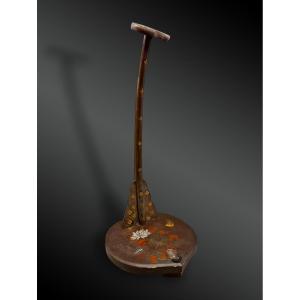
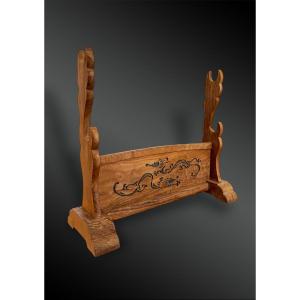
JAPAN - Edo Period (1603-1868). TESSEN, a war fan with 15 iron blades and two hammered iron master blades. Very slight oxidation. Dimensions: 32 x 23 cm. Sold with its custom-made stand. Dimensions wi[...]
A Filipino mandeo saber with its damaged bamboo and rattan scabbard, a partially rusted steel blade, a carved bone and horsehair grip, and brass inlays. It's in its original condition, which is part o[...]
This sword is a Dao, the traditional Vietnamese sword, although it is also used in southern China. It can be dated to the 19th century. This type of sword is often presented as an execution sword, but[...]
JAPAN - Edo period (1603-1868). Wrought iron tsuba nagamaru-gata, chased in hira bori and gilded, decorated with a child riding a buffalo in front of a bridge on one side and a waterfall on the other,[...]
JAPAN - Edo period (1603-1868). Wrought iron tsuba mokko-gata, openwork, chased in hira bori and inlaid in iroe hira zogan of copper, gilt copper and silver with a scene of samurai engaged in a naval [...]
JAPAN - Edo period (1603-1868). Tsuba maru-gata in suaka carved with radiating motifs, kogai-hitsu hana, encircled by a mimi in shakudo. Very slight wear and oxidation. Diameter: 7.2 cm.
This Indonesian kris boasts a beautiful blade, crafted using a forging technique with various metals to create a lovely decorative effect. The sheath is made of wood, and the handle is carved wood. It[...]
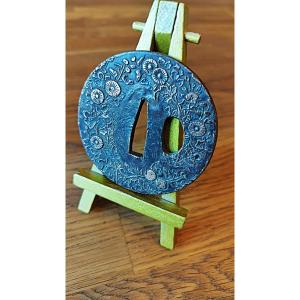
JAPAN - Hammered iron tsuba maru gata, Edo period, with inlaid decoration of flowers in their branches in the form of a zogan in gold. Unsigned. Diameter: 8 cm
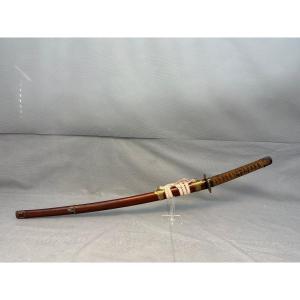
JAPAN - Edo Period (early 19th century). Samurai wakizashi in shirasaya style. Zoomorphic kashira in chased copper, patinated black and gold, depicting a shishi (a type of fish). Fushi in finely chase[...]
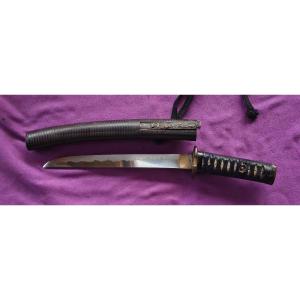
JAPAN - Edo Period (1603-1868). Samurai Tanto. FUSHI and KASHIRA in a set of chased, patinated, and gilded copper decorated with horses and flowers on a nanako background (very slight oxidation). TSUK[...]
JAPAN - Edo Period (1603-1868). Samurai Katana. FUSHI and KASHIRA in a set in silvered copper depicting stylized geese flying in clouds. TSUKA in wood covered with ray skin and black silk braid. MENUK[...]
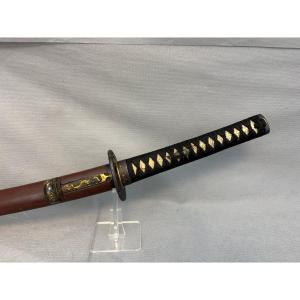
JAPAN - Edo Period (1603-1868). Samurai Katana. Black patinated copper kashira. Chiseled, patinated, and gilded copper fushi depicting a bamboo forest. Wooden tsuka covered with red-dyed stingray skin[...]
Carved bone kris (dagger) handle depicting a demon - Indonesia, 19th century. A very fine and expressive sculpture. The demon is depicted with a protruding belly and genitals. The face has a grotesque[...]
This kris has a lovely patina and a finely crafted, wavy blade. The piece is in generally good condition, with some small cracks in the wood and typical signs of wear consistent with use. Our photos a[...]
Chinese Saber - China, late 19th/early 20th century. This rustic saber is notable for retaining its original, traditional lacing around the handle. It has a slightly curved, single-edged blade and a r[...]
Muromachi period tachi with a mumei shirasaya blade attributed to Fuyuhiro. The blade has a Hozon certificate and is from the Soshu school. Its nagassa is 67 cm long. The hada is made of itame and the[...]
A very fine wakizashi by Hisamichi with a Tokubetsu certificate. Muromachi period. It has a 56 cm nagasa (stem). It retains its 19th-century polish and is extremely well preserved. It features a very [...]
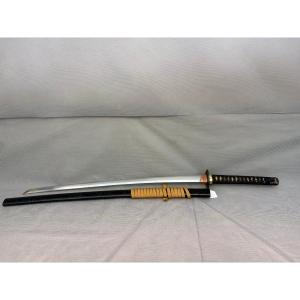
Exceptional katana signed Echizen Kuni Junin Kanenori. This swordsmith worked during the Tensho period (1573-1592). The blade has a 73 cm nagasa (fuller). The temper is Notare Gonome with a kissaki (h[...]
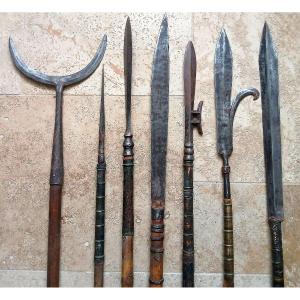
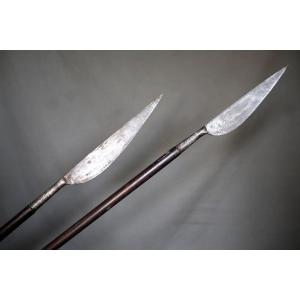
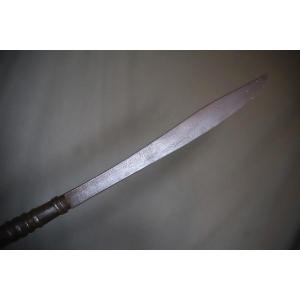
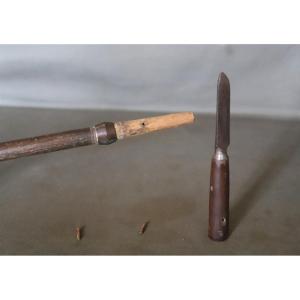
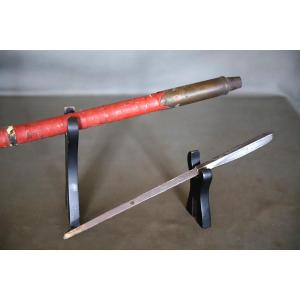
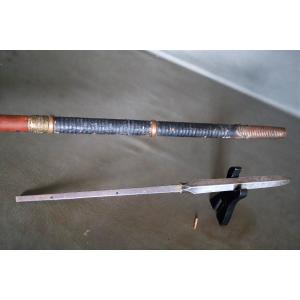
This large war halberd originates from Indochina. It was collected in the 19th century by a French Officer. The shaft has been shortened for an exhibition, but since the cut is at an angle, it would b[...]
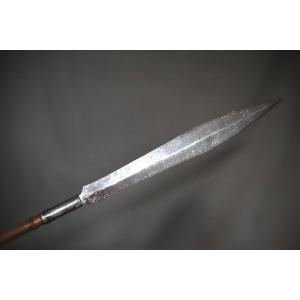
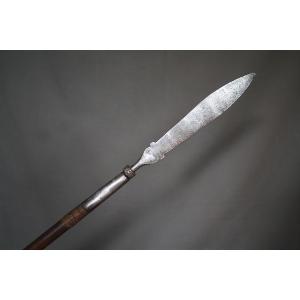
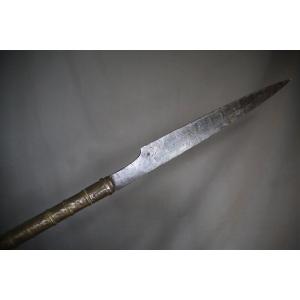
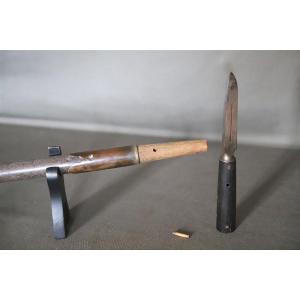
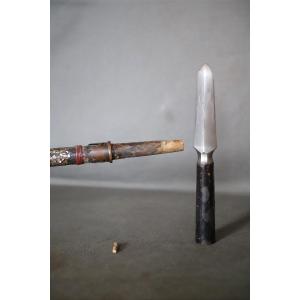
This beautiful spear from the H'mong ethnic group comes from the highlands of Northern Vietnam. It was collected in the 19th century by a French officer. Its authenticity and age are indisputable. Mor[...]
India, early 20th century – Maratha dagger known as a "Bich'hwa." Double-curved blade adorned with gold damascened scrolls. Lapis lazuli handle, a rare and highly symbolic stone traditionally reserved[...]
Here is a traditional Indonesian kris, complete with its sheath. The guard has the typical curved shape, while the finely carved handle depicts a stylized figure of mythological inspiration. This kris[...]
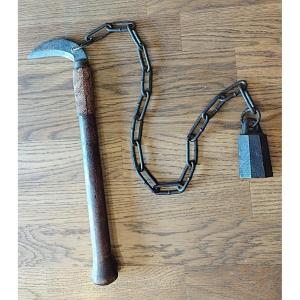
Indian bulova axe - Northeast India, 19th century. The bulova axe is a rustic weapon of the indigenous peoples of Northeast India. The axe head is usually crescent-shaped. This one has a much rarer fo[...]
Era: Mid-19th century, Rattanakosin period (around 1860), reign of King Mongkut (Rama IV), era represented in the film "Anna and the King". Origin: Siam (now Thailand) Materials: Silver damask steel b[...]
TSUBA Shin No Maru GataJapanEdo period (1603–1868)Iron, shakudo, gold, copper, silverH: 8.5 cm; W: 8.1 cm; Thickness: 3 mm H. Nakago Hitsu Ana: 2.7 cmIron tsuba covered with shakudo, chiselled with a [...]
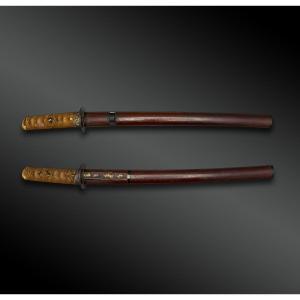
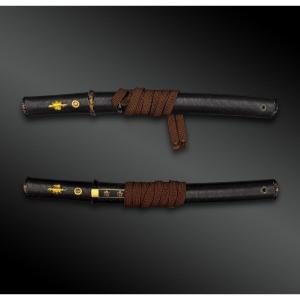
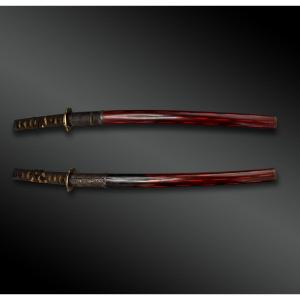
Daisho (dagger) with two wakizashi (swords), the blade of the larger one certainly not being the original. This may have been done for ceremonial purposes or for a merchant who was not allowed to carr[...]
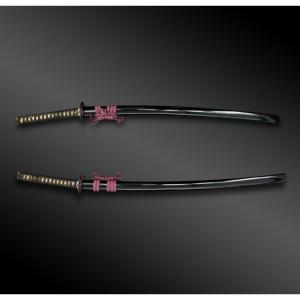
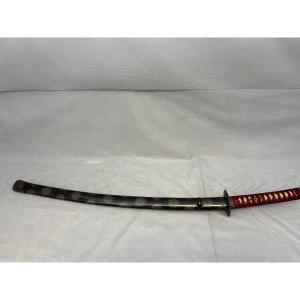
Katana from the late Edo to Meiji period. Blade: Otoshi-zukuri (V-shaped cross-section with two faces) blade, Iori-mune (two-sided) blade spine. O-kissaki (long) points. Shinoji (11 mm) (face 1). Jiga[...]
Ancient ritual keris – Indonesia (Java or Bali), pre-Islamic period
Fully forged from a single piece of iron, length: 17.5 cm
Rare ancient keris, entirely forged from one single piece of iron, inclu[...]
Nagamaru Gata (oval) shaped tsuba, signed. Made of openwork iron in the Maru Bori style and inlaid with gilded and silvered brass in the Hira Zogan style. Depicting two figures facing each other: on o[...]
Proantic uses a cookie to analyze traffic and improve its service by using Google Analytics. Data sent to Google Analytics (frequency of visits to the site and pages visited) are anonymous. No other cookie tracks your activity, your personal data is not collected. Thank you for helping us to have better understanding how Proantic is used.