

Knife Known As Aikushi - Japan - Edo Period (1603–1868)
KNIFE known as Aikushi
Japan
Edo period (1603–1868)
Steel, wood, lacquer, gold, shakudo, copper
Nagasa: 26.5; Nakago: 10 cm
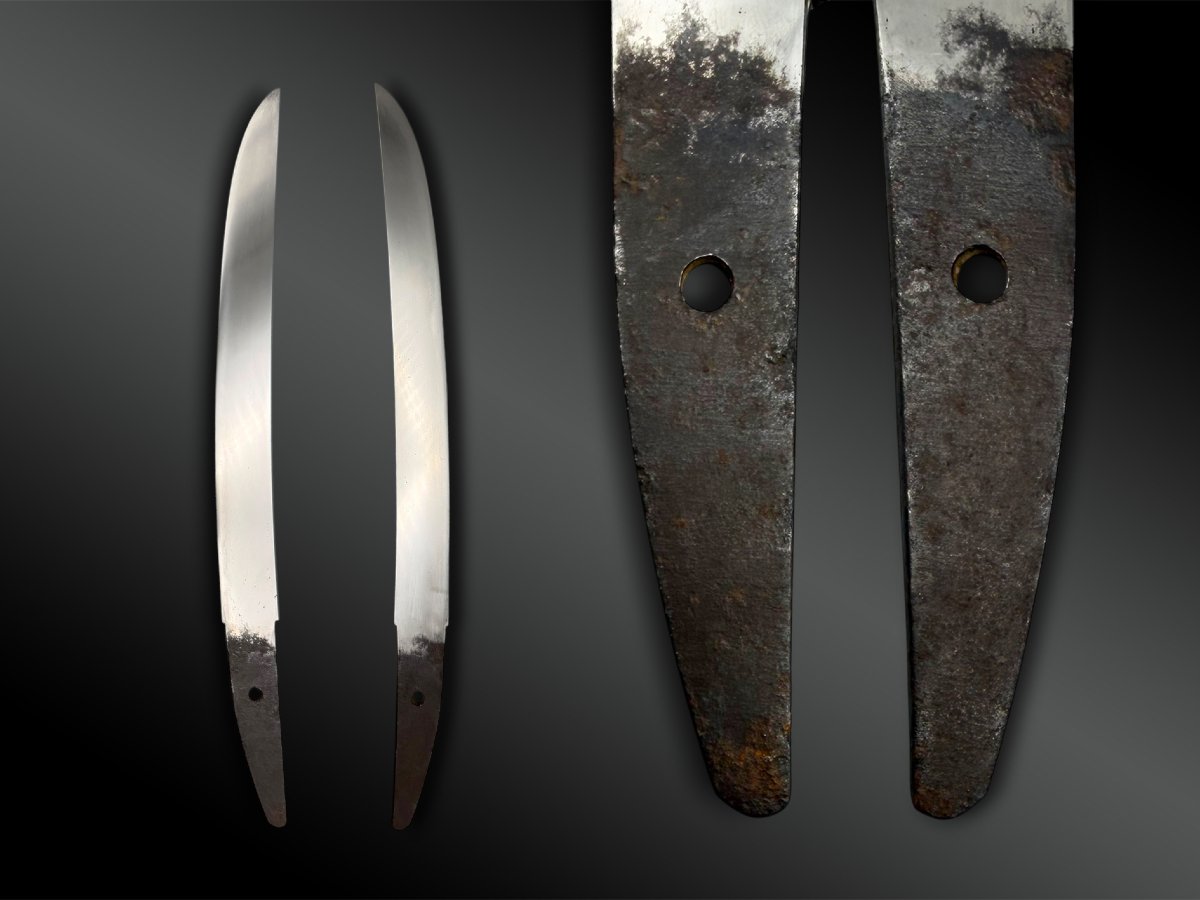
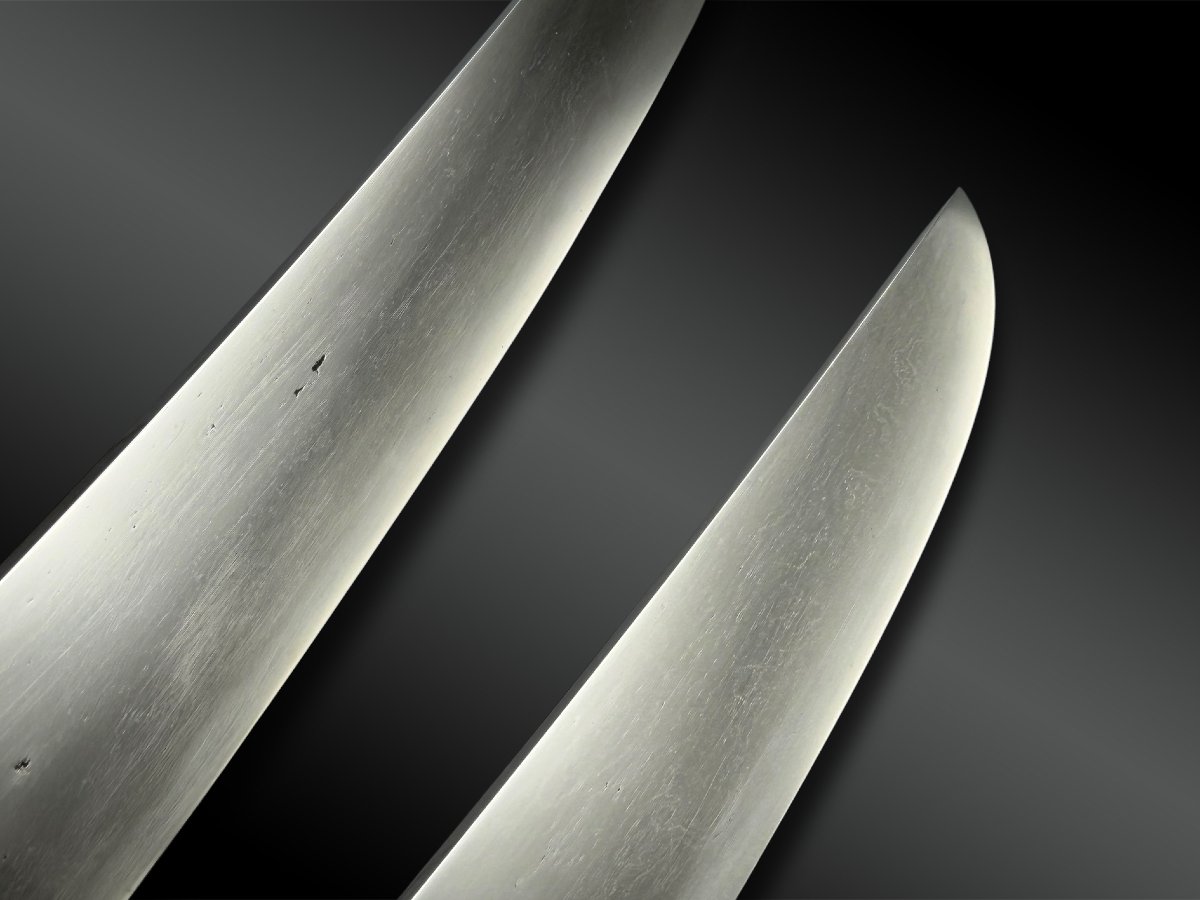
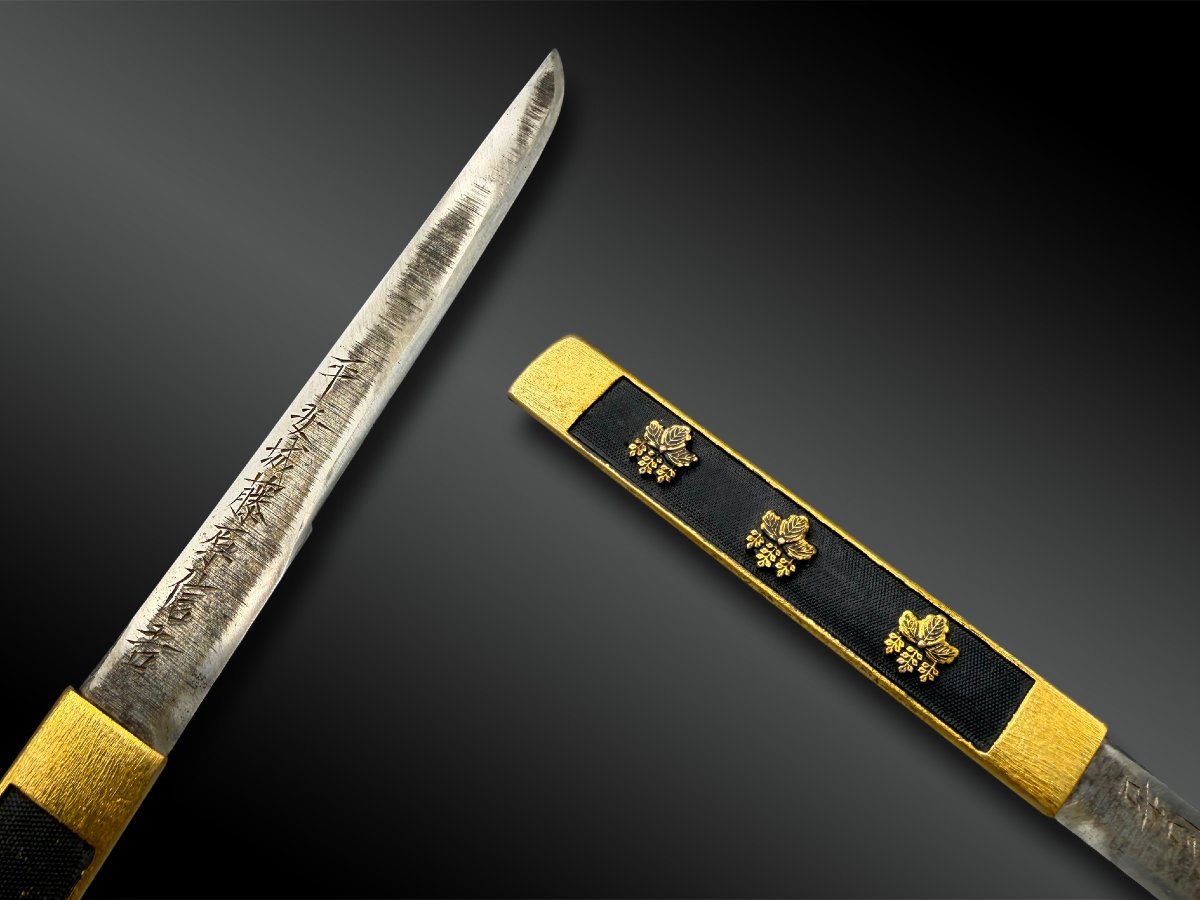
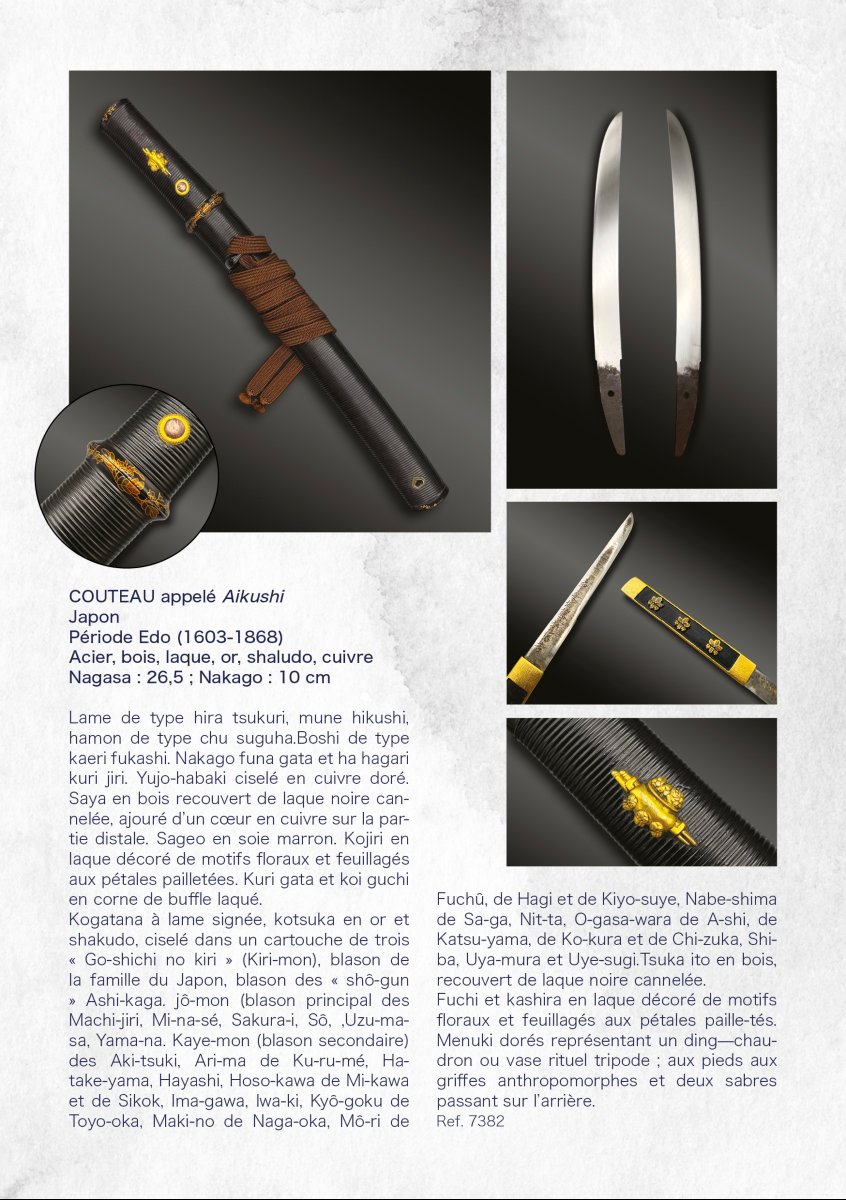
Hira tsukuri blade, mune hikushi, chu suguha-style hamon.
Kaeri fukashi-style boshi.
Funa gata nakago and ha hagari kuri jiri.
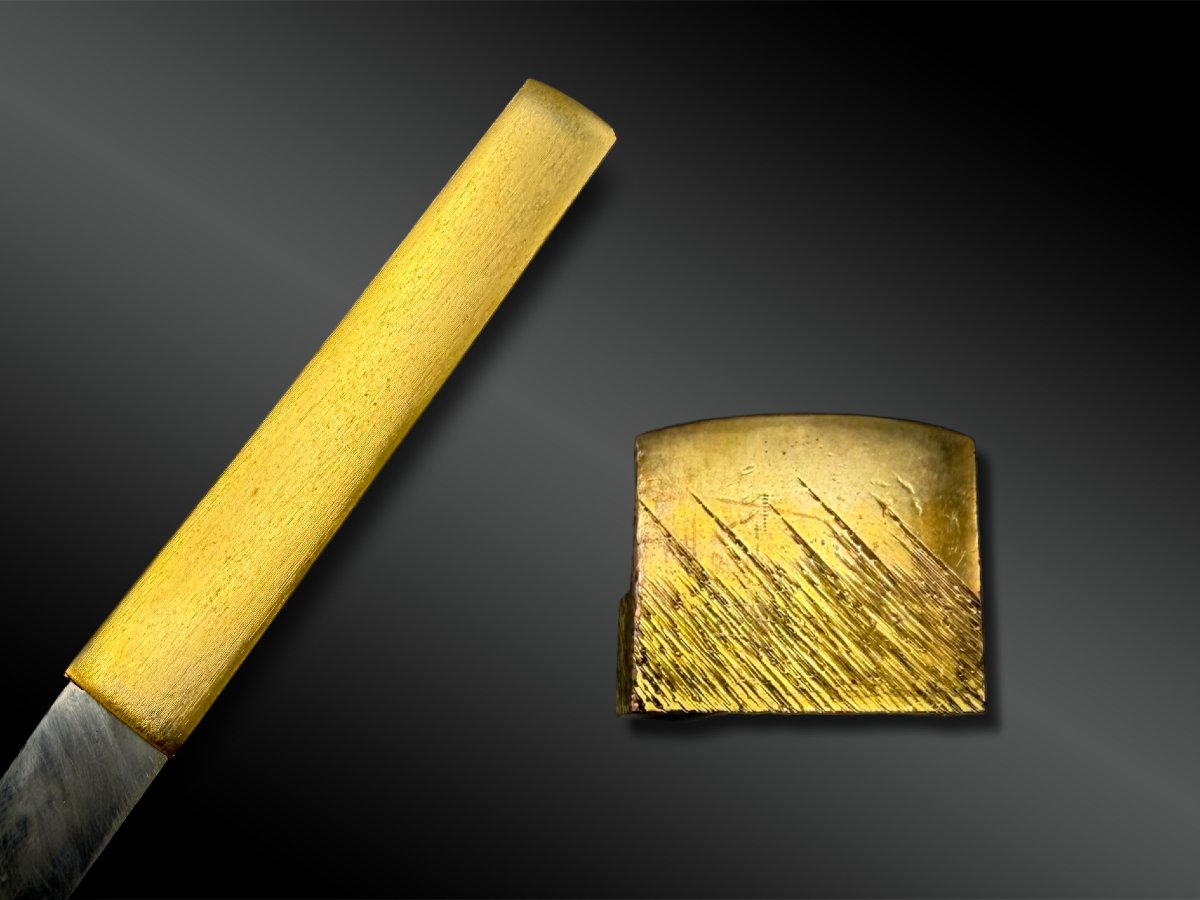
Chiseled yujo-habaki made of gilded copper.
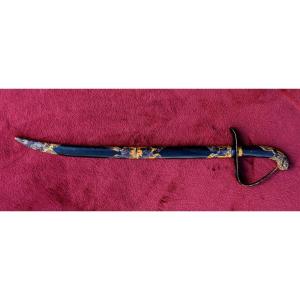
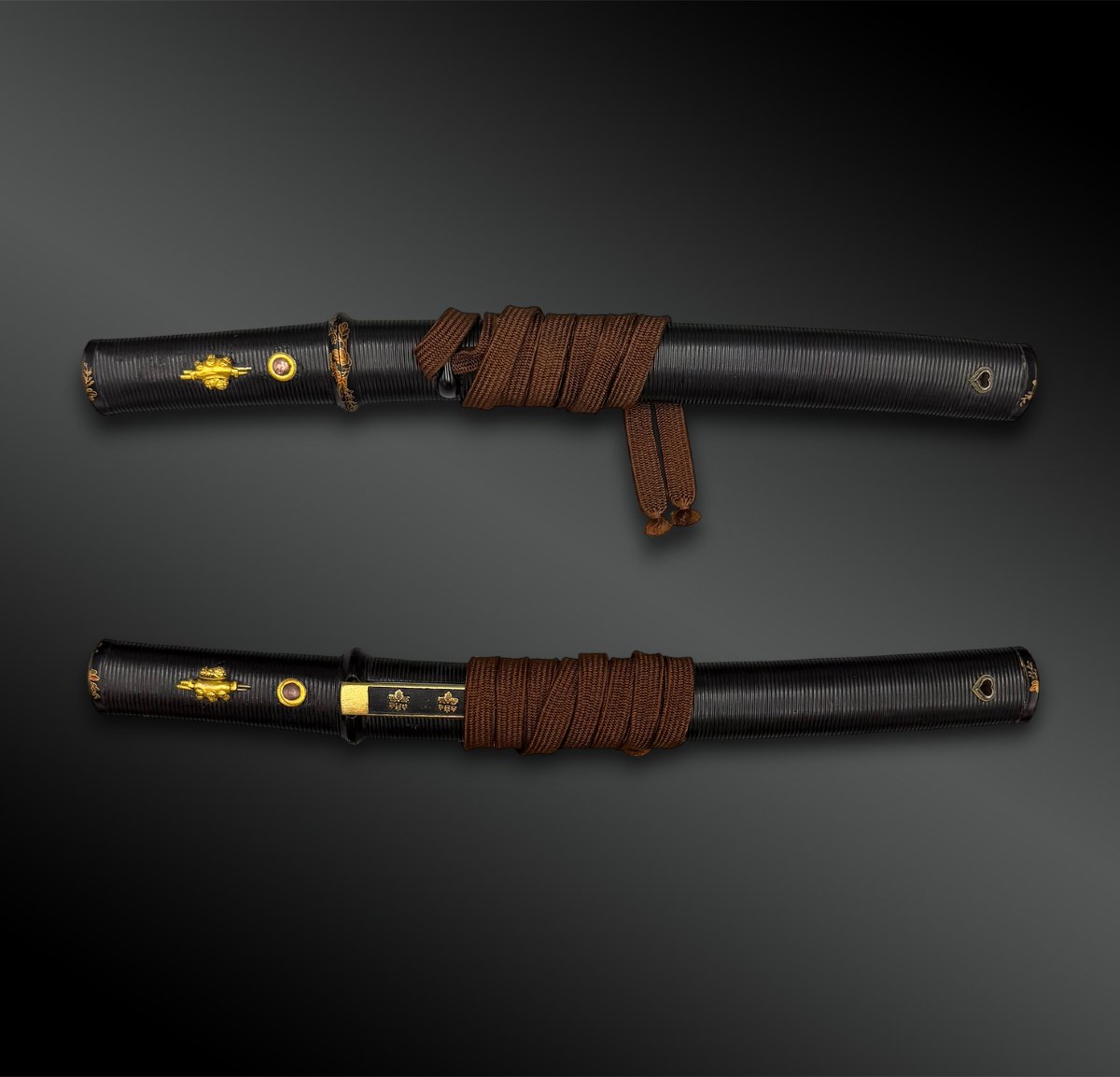
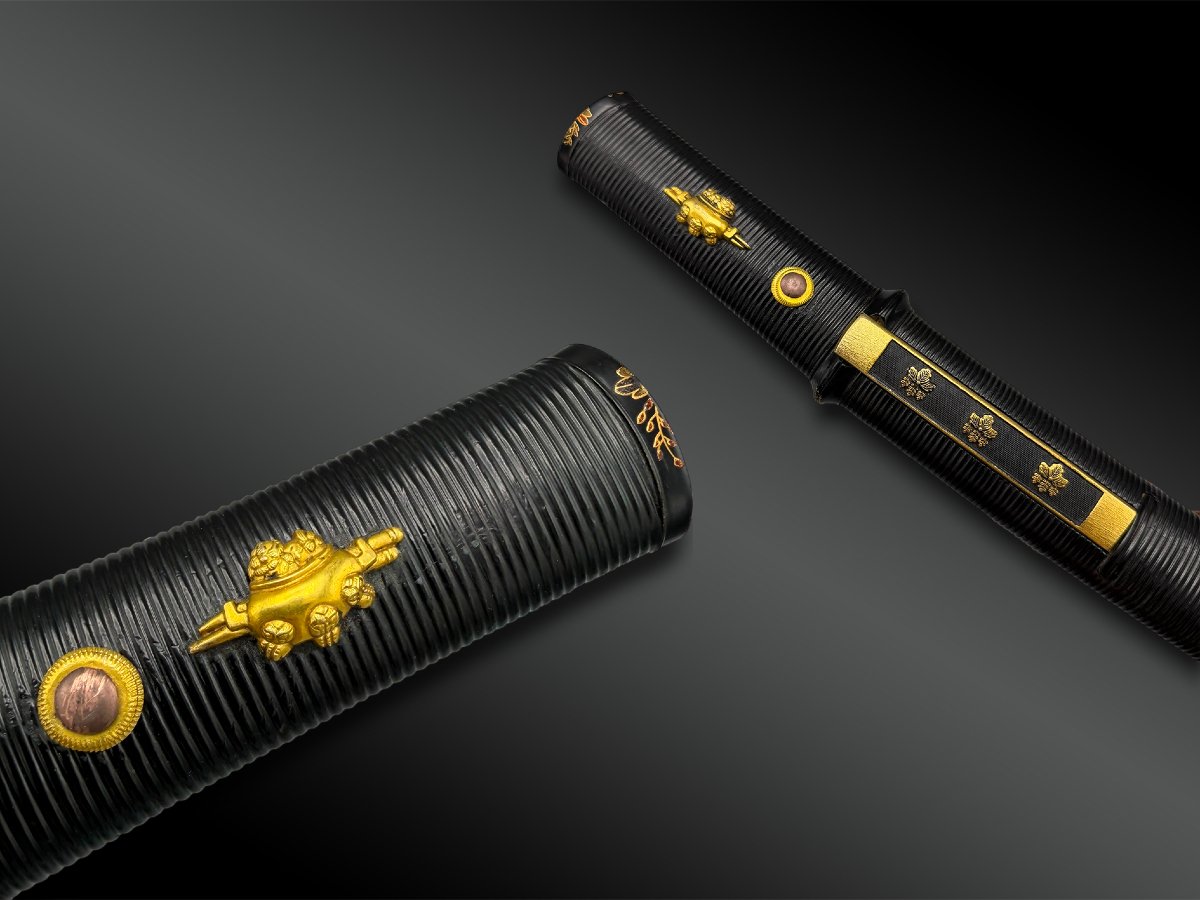
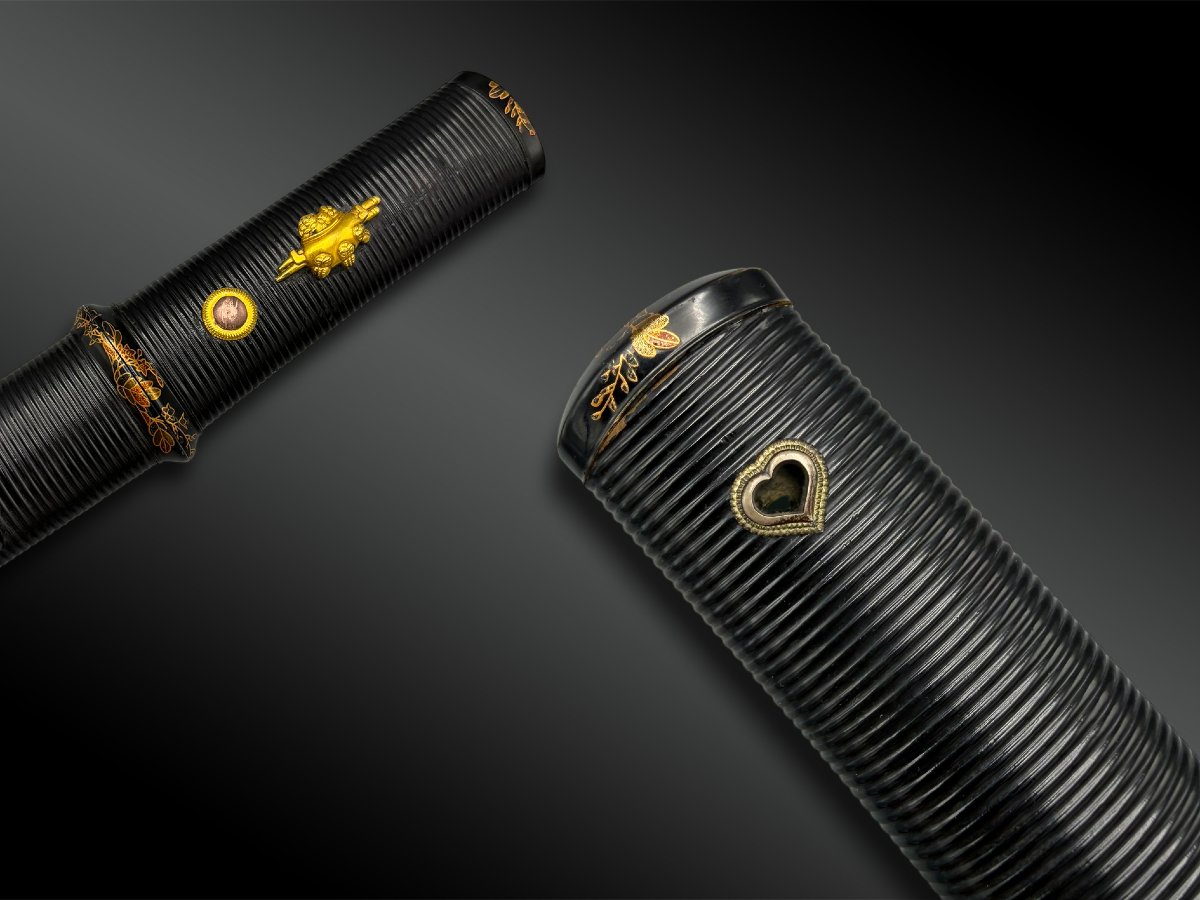
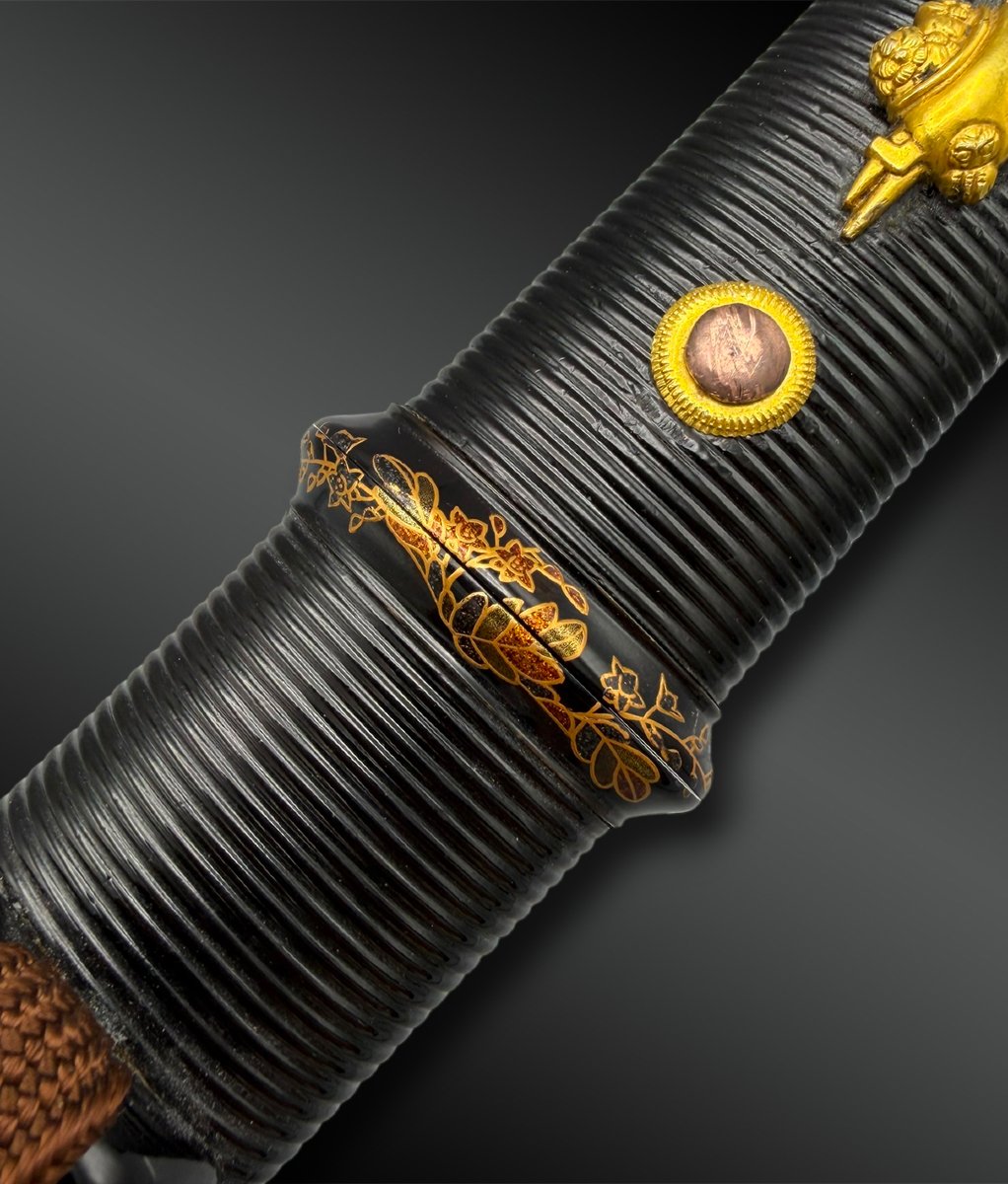
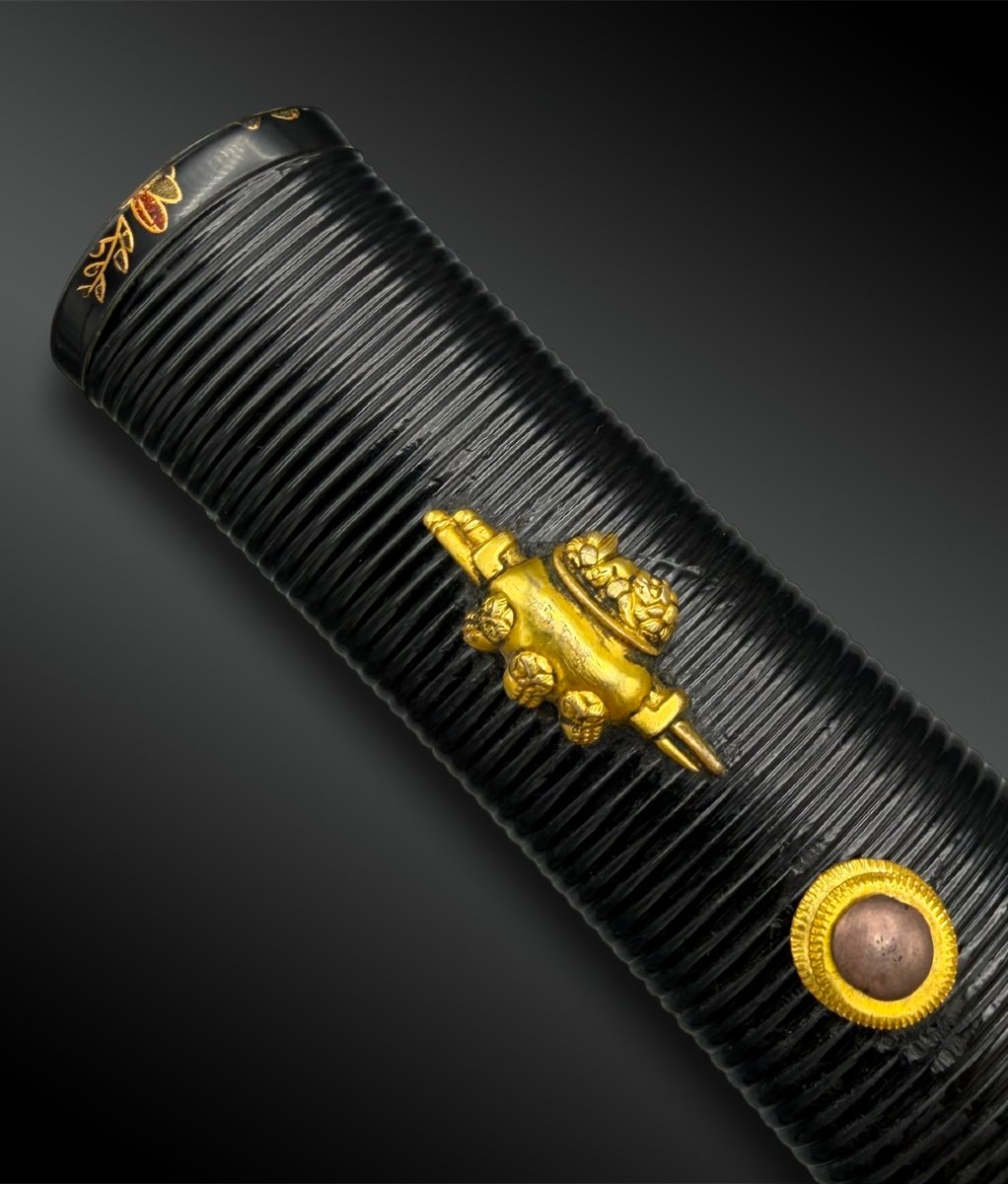
Wooden saya covered with fluted black lacquer, openworked with a copper heart at the distal end.
Brown silk sageo.
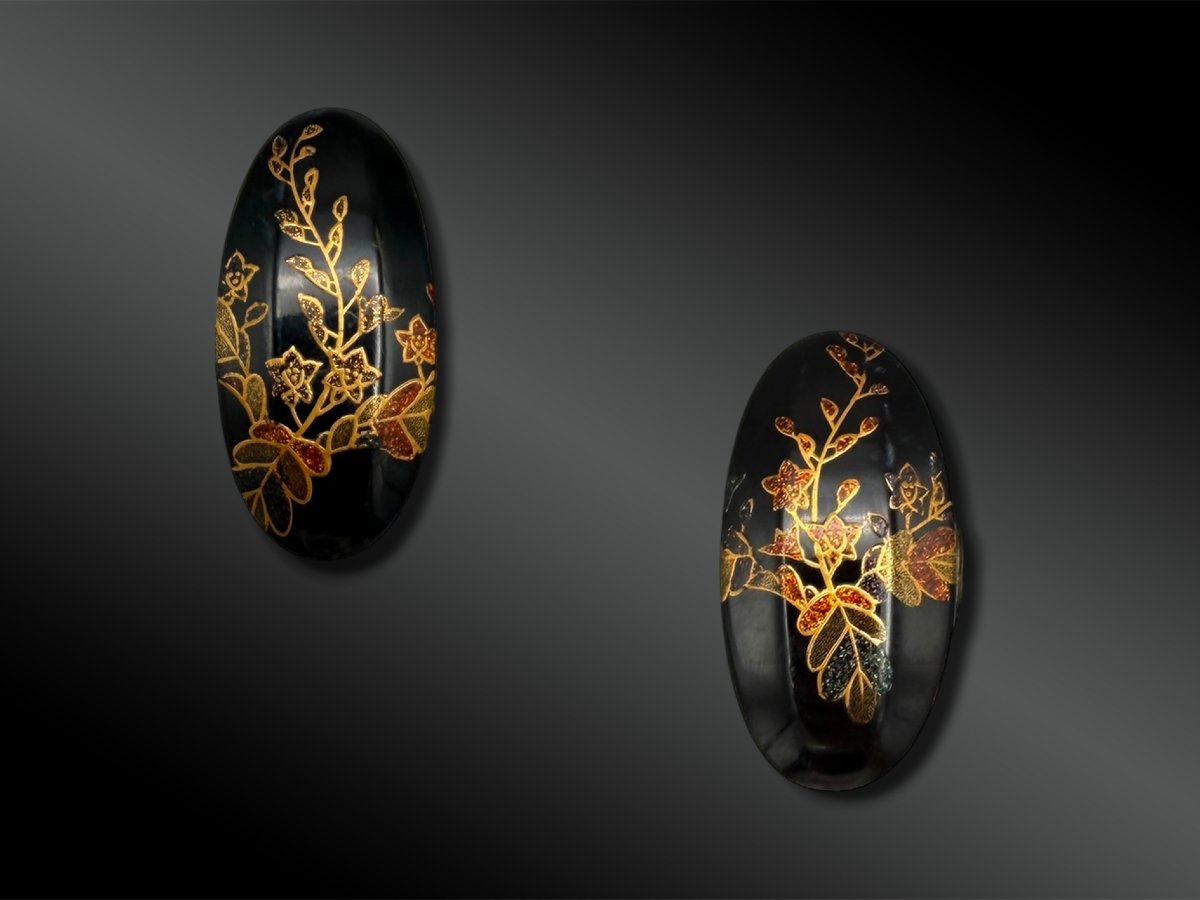
Lacquered kojiri decorated with floral and foliage motifs featuring glittering petals.
Kuri gata and koi guchi made of lacquered buffalo horn.
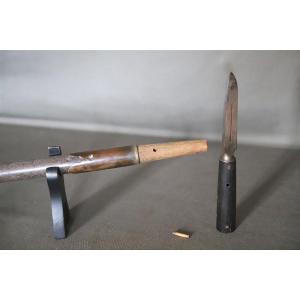
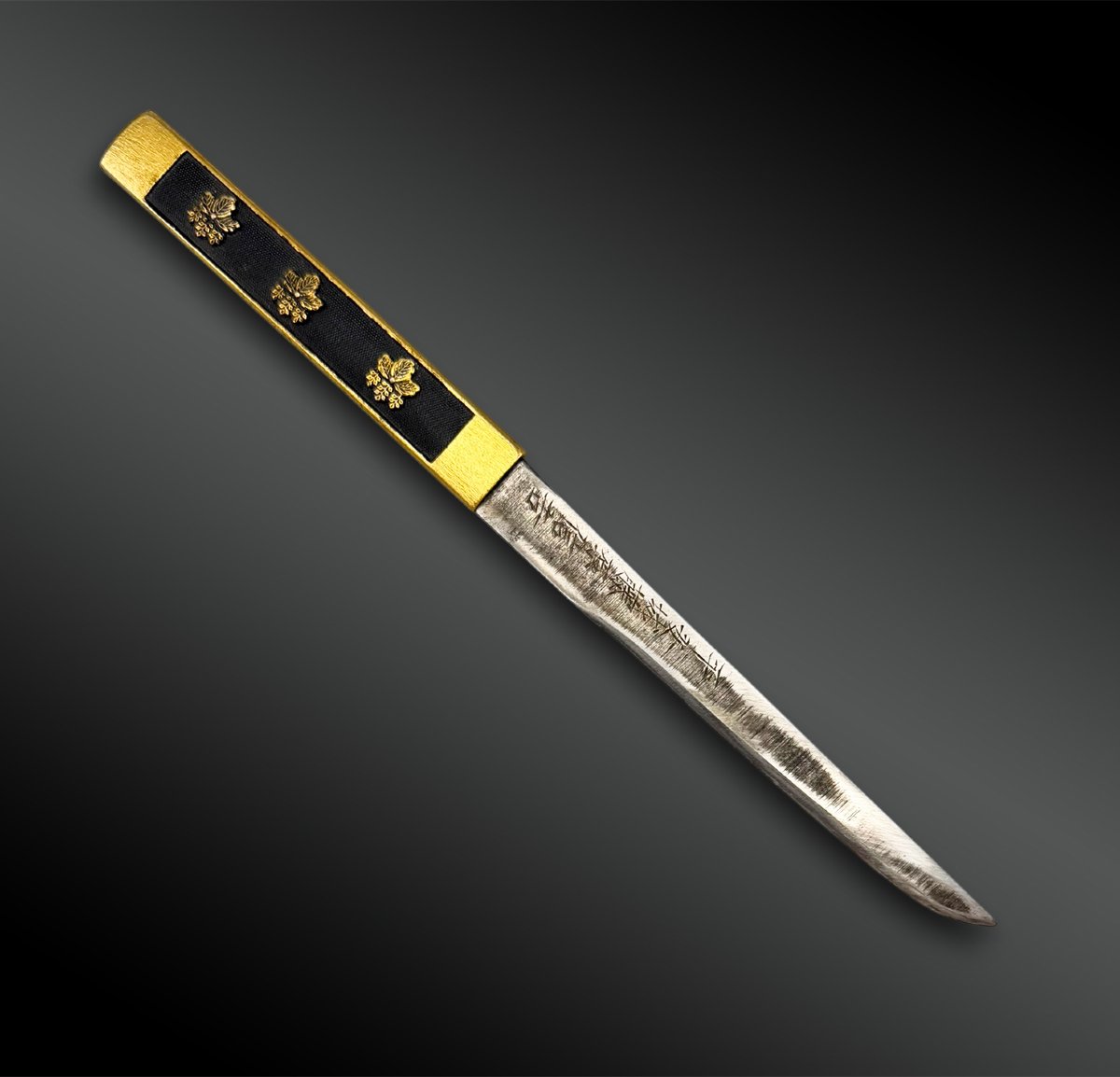
Kogatana with a signed blade; kotsuka made of gold and shakudo, engraved within a cartouche featuring three “Go-shichi no kiri” (Kiri-mon), the family crest of Japan and the crest of the Ashikaga shoguns. Jô-mon (main crests of the Machi-jiri, Mi-na-sé, Sakura-i, Sô, Uzu-ma-sa, and Yama-na families). Kaye-mon (secondary crest) of the Aki-tsuki, Ari-ma of Ku-ru-mé, Ha-take-yama, Hayashi, Hoso-kawa of Mi-kawa and Shikoku, Ima-gawa, Iwa-ki, Kyô-goku of Toyo-oka, Maki-no of Naga-oka, Mô-ri of Fuchû, Hagi, and Kiyo-suye, Nabe-shima of Sa-ga, Nit-ta, O-gasa-wara from A-shi, Katsu-yama, Ko-kura, and Chi-zuka, Shi-ba, Uya-mura, and Uye-sugi. Wooden tsuka ito, covered with fluted black lacquer.
Fuchi and kashira in lacquer decorated with floral and foliage motifs featuring straw-colored petals.
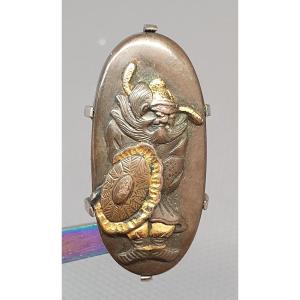
Gilded menuki depicting a ding-chaudron or ritual tripod vase; with anthropomorphic clawed feet and two crossed swords on the back.
Ref. 7382
Text and photos © FCP CORIDON
Japan
Edo period (1603–1868)
Steel, wood, lacquer, gold, shakudo, copper
Nagasa: 26.5; Nakago: 10 cm
Hira tsukuri blade, mune hikushi, chu suguha-style hamon.
Kaeri fukashi-style boshi.
Funa gata nakago and ha hagari kuri jiri.
Chiseled yujo-habaki made of gilded copper.
Wooden saya covered with fluted black lacquer, openworked with a copper heart at the distal end.
Brown silk sageo.
Lacquered kojiri decorated with floral and foliage motifs featuring glittering petals.
Kuri gata and koi guchi made of lacquered buffalo horn.
Kogatana with a signed blade; kotsuka made of gold and shakudo, engraved within a cartouche featuring three “Go-shichi no kiri” (Kiri-mon), the family crest of Japan and the crest of the Ashikaga shoguns. Jô-mon (main crests of the Machi-jiri, Mi-na-sé, Sakura-i, Sô, Uzu-ma-sa, and Yama-na families). Kaye-mon (secondary crest) of the Aki-tsuki, Ari-ma of Ku-ru-mé, Ha-take-yama, Hayashi, Hoso-kawa of Mi-kawa and Shikoku, Ima-gawa, Iwa-ki, Kyô-goku of Toyo-oka, Maki-no of Naga-oka, Mô-ri of Fuchû, Hagi, and Kiyo-suye, Nabe-shima of Sa-ga, Nit-ta, O-gasa-wara from A-shi, Katsu-yama, Ko-kura, and Chi-zuka, Shi-ba, Uya-mura, and Uye-sugi. Wooden tsuka ito, covered with fluted black lacquer.
Fuchi and kashira in lacquer decorated with floral and foliage motifs featuring straw-colored petals.
Gilded menuki depicting a ding-chaudron or ritual tripod vase; with anthropomorphic clawed feet and two crossed swords on the back.
Ref. 7382
Text and photos © FCP CORIDON
2 980 €
Period: 18th century
Style: Asian art
Condition: Excellent condition
Reference (ID): 1816163
Availability: In stock
Print