

Inkstone Known As Suzuribako - Japan - Edo Period, 18th Century
WRITING BOX known as Suzuribako
Japan
Edo period, 18th century
Wood, lacquer, silver
H: 18.4; L: 16.5; W: 3.8 cm
(very slight minor chips)
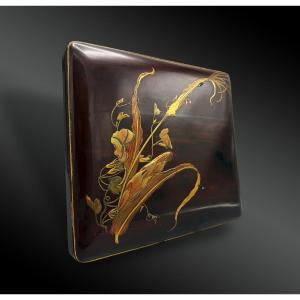
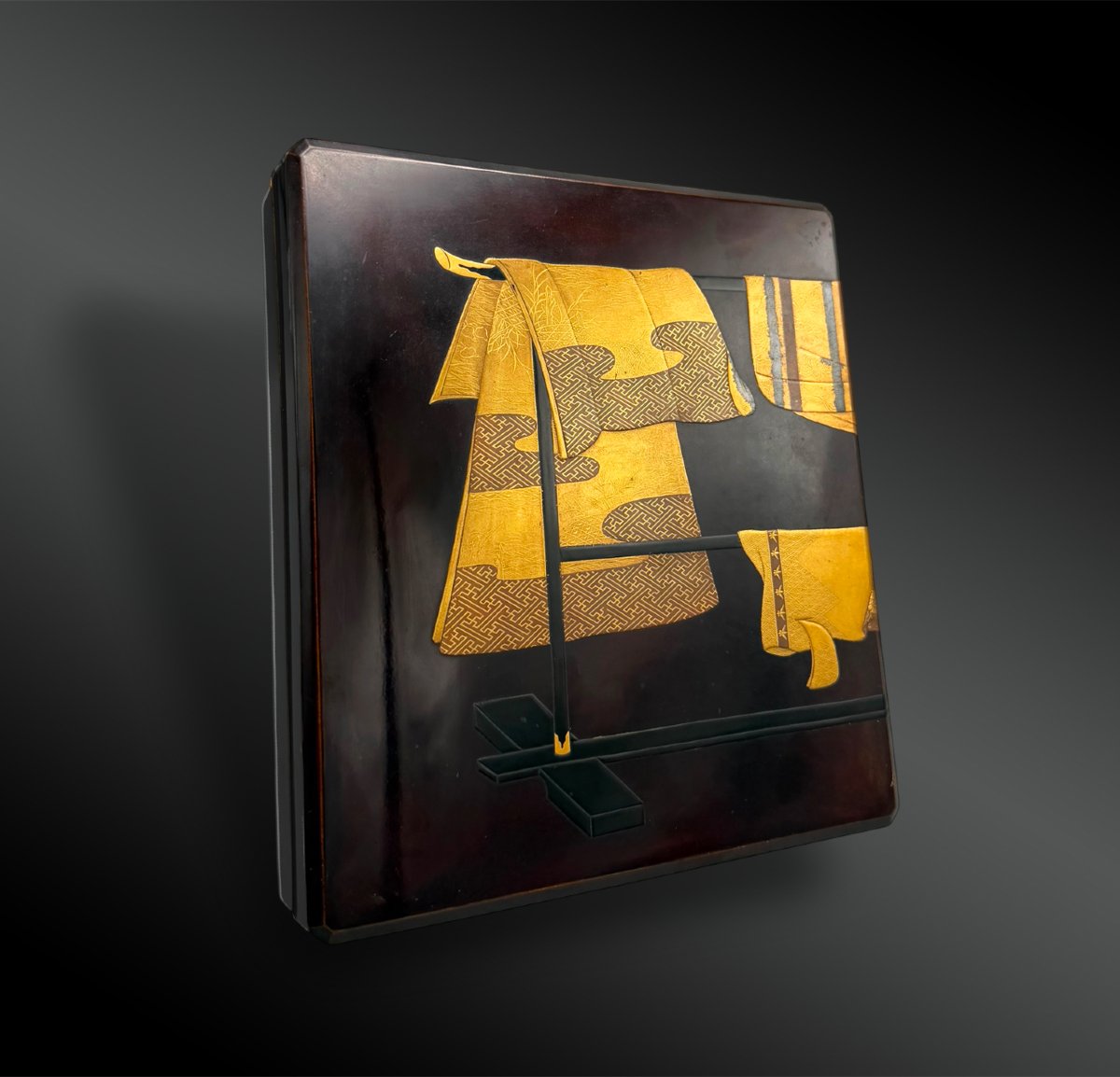
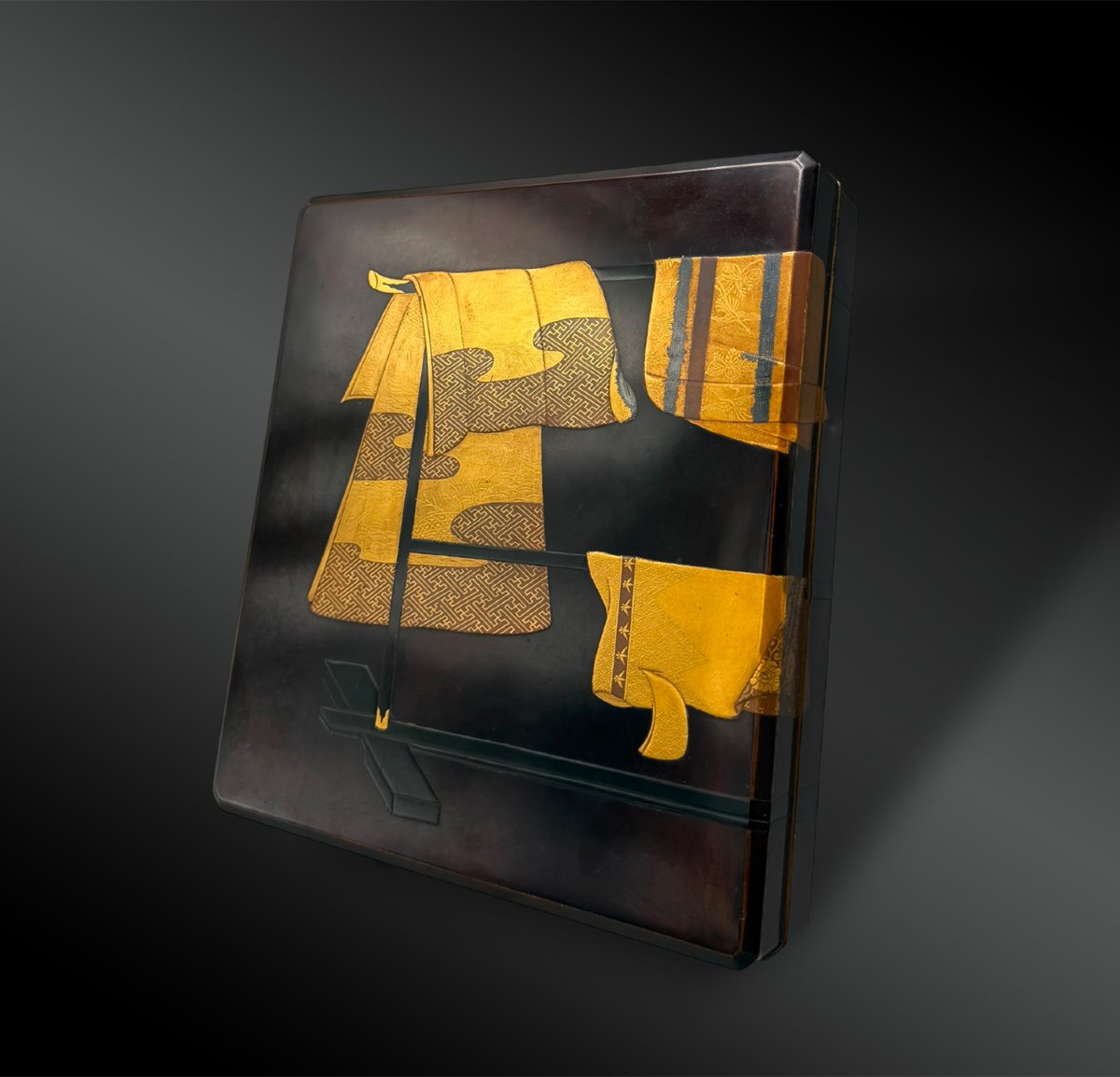
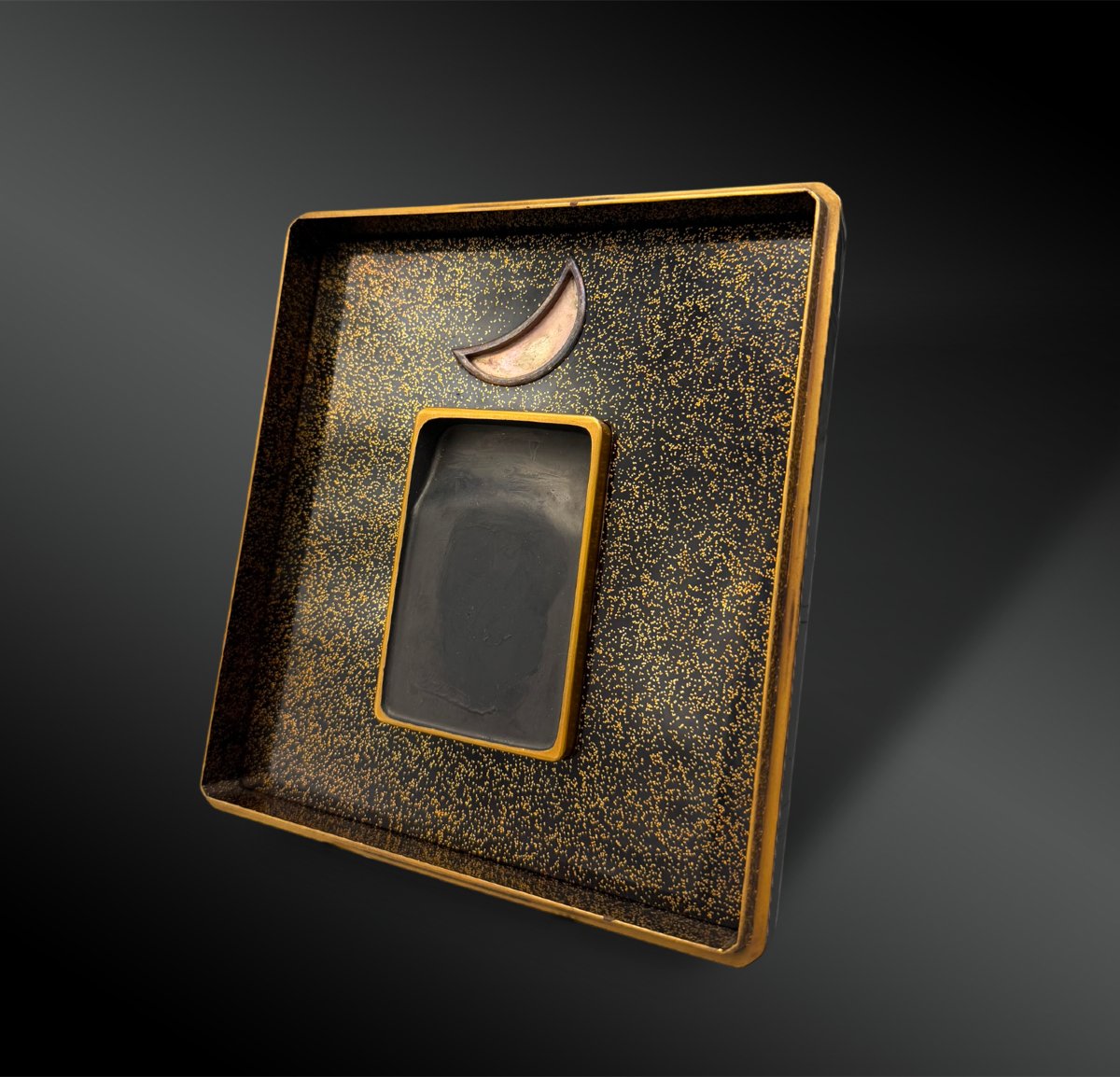
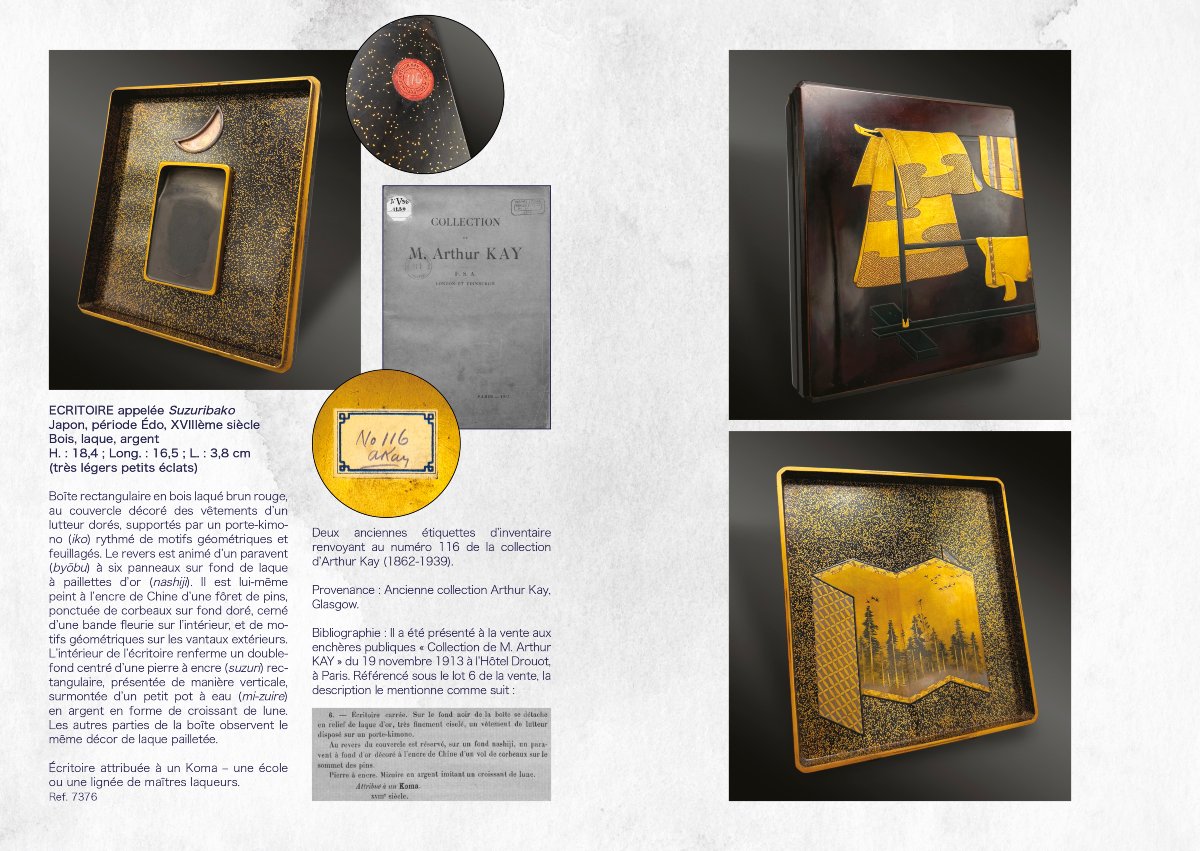
Rectangular box made of reddish-brown lacquered wood, with a lid decorated with the gilded garments of a sumo wrestler, supported by a kimono stand (iko) adorned with geometric and foliage motifs. The reverse side features a six-panel folding screen (byōbu) on a background of gold-flaked lacquer (nashiji). The screen itself is painted in Indian ink, depicting a pine forest dotted with crows on a gold background; it is bordered by a floral band on the inner panels and geometric motifs on the outer panels. The interior of the writing box contains a false bottom centered around a rectangular inkstone (suzuri), positioned vertically, surmounted by a small silver water pot (mizuire) shaped like a crescent moon. The other parts of the box feature the same glitter lacquer decoration.
Writing box attributed to a Koma—a school or lineage of master lacquerers.
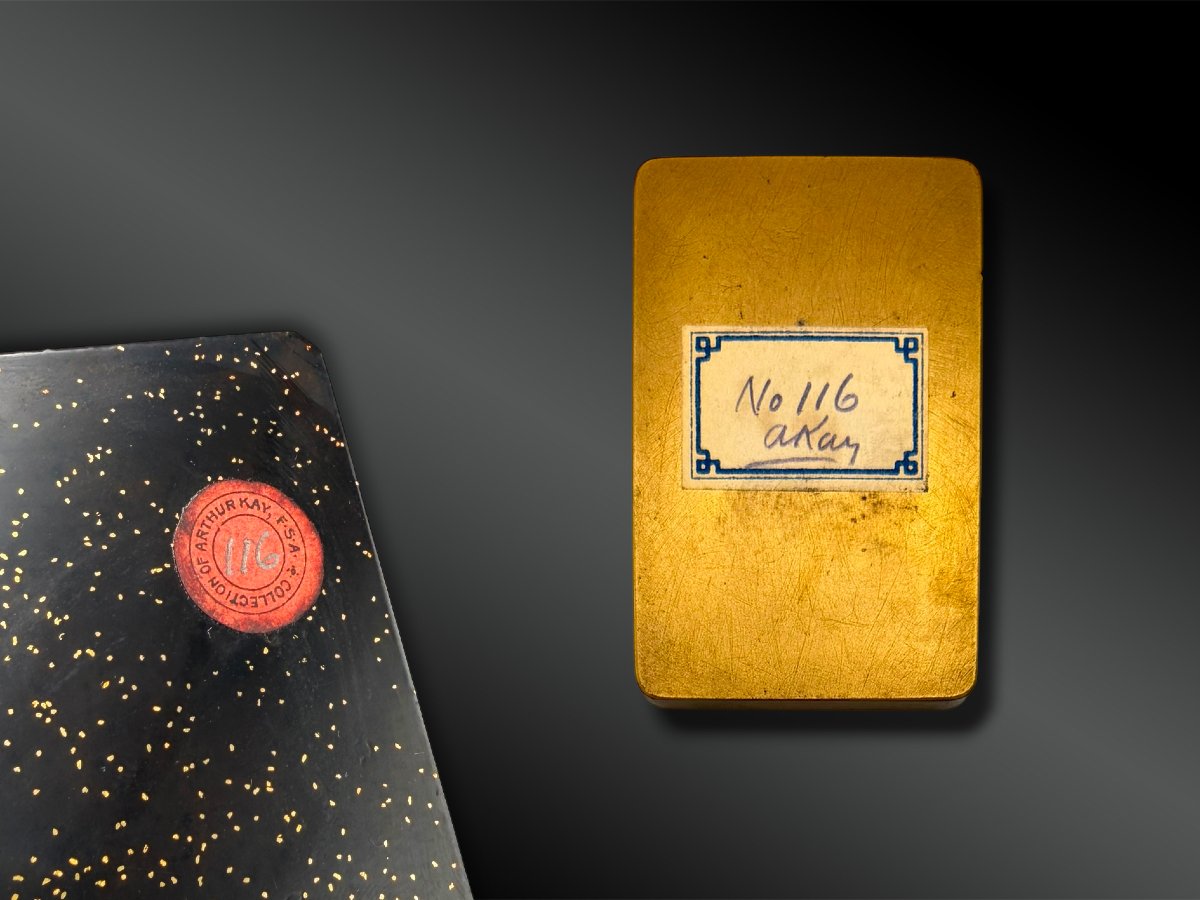
Two old inventory labels referring to lot number 116 in the collection of Arthur Kay (1862–1939).
Provenance: Former Arthur Kay Collection, Glasgow.
Bibliography: It was offered for sale at the public auction titled “Collection of Mr. Arthur KAY” on November 19, 1913, at the Hôtel Drouot in Paris. Listed as Lot 6 in the sale.
Ref. 7376
Text and photos © FCP CORIDON
Japan
Edo period, 18th century
Wood, lacquer, silver
H: 18.4; L: 16.5; W: 3.8 cm
(very slight minor chips)
Rectangular box made of reddish-brown lacquered wood, with a lid decorated with the gilded garments of a sumo wrestler, supported by a kimono stand (iko) adorned with geometric and foliage motifs. The reverse side features a six-panel folding screen (byōbu) on a background of gold-flaked lacquer (nashiji). The screen itself is painted in Indian ink, depicting a pine forest dotted with crows on a gold background; it is bordered by a floral band on the inner panels and geometric motifs on the outer panels. The interior of the writing box contains a false bottom centered around a rectangular inkstone (suzuri), positioned vertically, surmounted by a small silver water pot (mizuire) shaped like a crescent moon. The other parts of the box feature the same glitter lacquer decoration.
Writing box attributed to a Koma—a school or lineage of master lacquerers.
Two old inventory labels referring to lot number 116 in the collection of Arthur Kay (1862–1939).
Provenance: Former Arthur Kay Collection, Glasgow.
Bibliography: It was offered for sale at the public auction titled “Collection of Mr. Arthur KAY” on November 19, 1913, at the Hôtel Drouot in Paris. Listed as Lot 6 in the sale.
Ref. 7376
Text and photos © FCP CORIDON
3 280 €
Period: 18th century
Style: Asian art
Condition: Excellent condition
Reference (ID): 1816475
Availability: In stock
Print