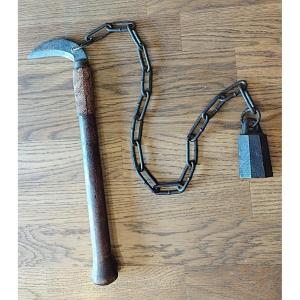


Kusarigama - Concealed Weapon (kakushi-buki) — Kobudo / Bujutsu
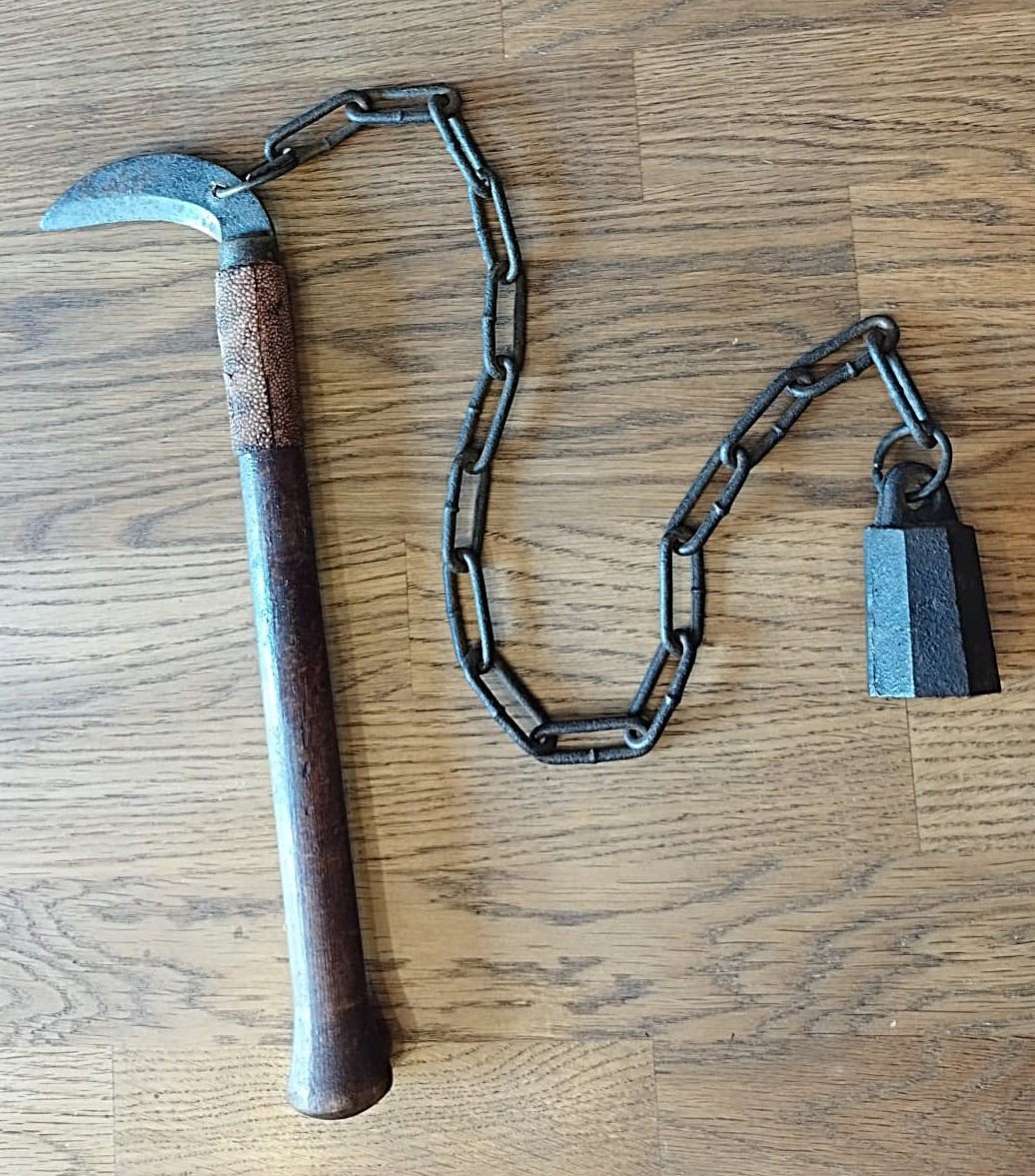
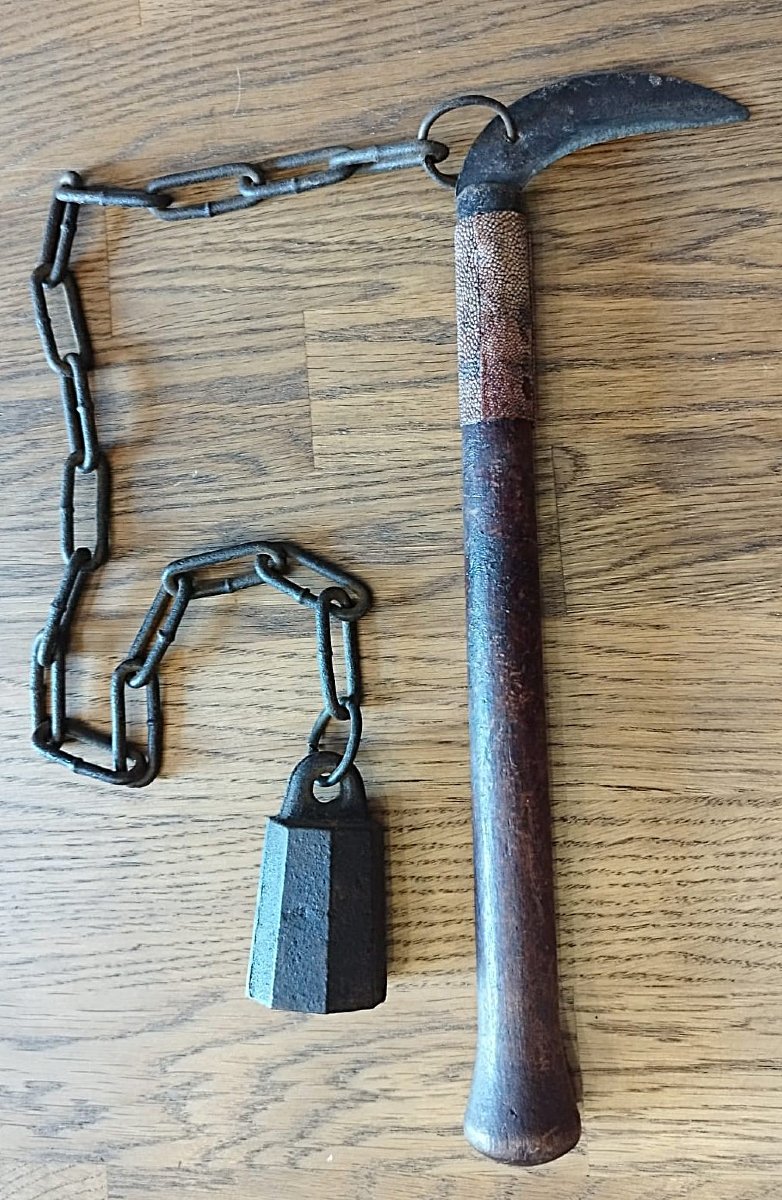
A rare weapon: an ancient Kusarigama (Tan-Kusarigama) designed for concealment (Kakushi-buki),from the late Edo period (19th century). (Kobudo weapon: consisting of akama + chain + weight).
Concealable examples that have survivedentire centuries (with their original weight) are much rarer on themarket than classic models.
“An exceptional example of late Edo-period Japanese martial arts: a compact,heavy, perfectly balanced weapon of impeccable authenticitywith all its original parts.”
Unlike the largebattlefield models, this compact design belongs to theKakushi-buki family (concealable close-quarters weapons). Worndiscreetly at the belt or under a coat, it was used byurban patrolmen, bodyguards, or Bujutsu masters to neutralizean enemy armed with a sword in a confined space; it was also used bypractitioners of traditional Bujutsu schools (such as the Isshin-ryu tradition).
Concealable examples that have survivedentire centuries (with their original weight) are much rarer on themarket than classic models.
“An exceptional example of late Edo-period Japanese martial arts: a compact,heavy, perfectly balanced weapon of impeccable authenticitywith all its original parts.”
Unlike the largebattlefield models, this compact design belongs to theKakushi-buki family (concealable close-quarters weapons). Worndiscreetly at the belt or under a coat, it was used byurban patrolmen, bodyguards, or Bujutsu masters to neutralizean enemy armed with a sword in a confined space; it was also used bypractitioners of traditional Bujutsu schools (such as the Isshin-ryu tradition).
- 100% original: The blade, thedried-wood handle, the hand-forged chain, and the Fundo form anindivisible whole.
Untouched patina: Surface oxidation is evenand uniform across all metal parts, attesting to more than 150 to200 years of history without alteration or modern restoration.
Every detailof this object speaks to its effectiveness in combat:
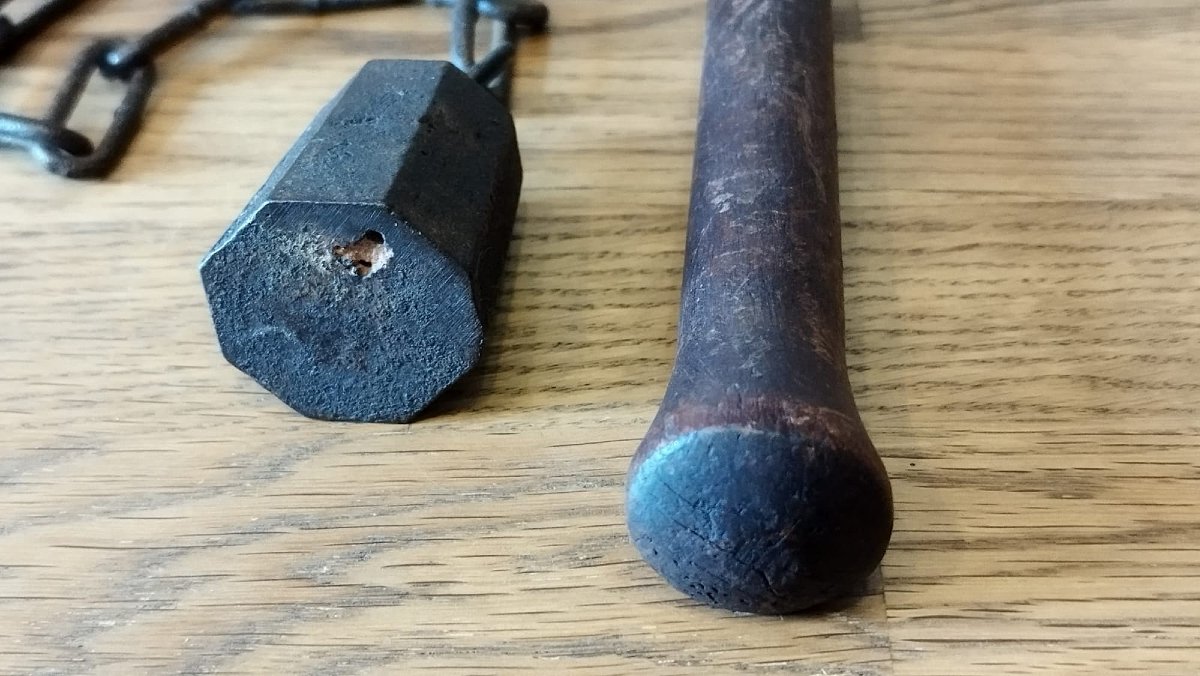
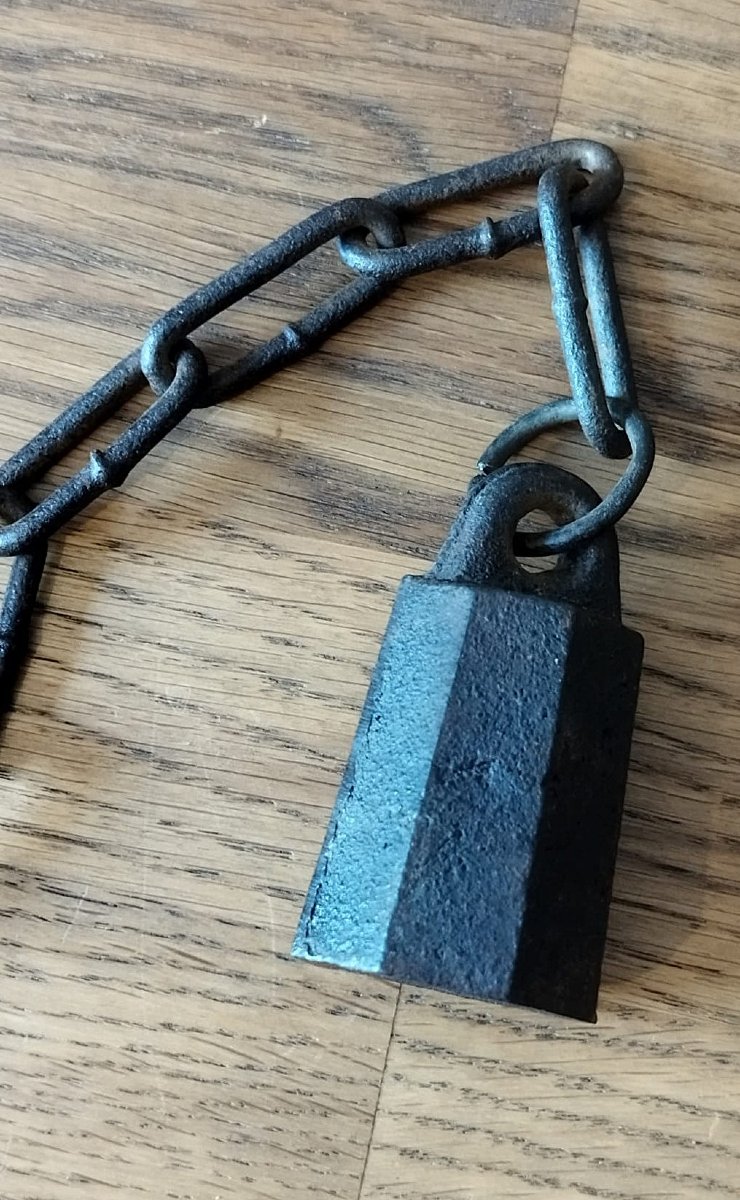
A formidable weight-to-size ratio: The Fundo (hexagonal steel mace) alone weighs 350 grams, or morethan 60% of the weapon’s total weight (580 g). Combined with a short, 55-cmchain made of wrought iron, link by link (Waketsu), it delivered a devastating impactcapable of shattering a saber blade or a bone at close range.
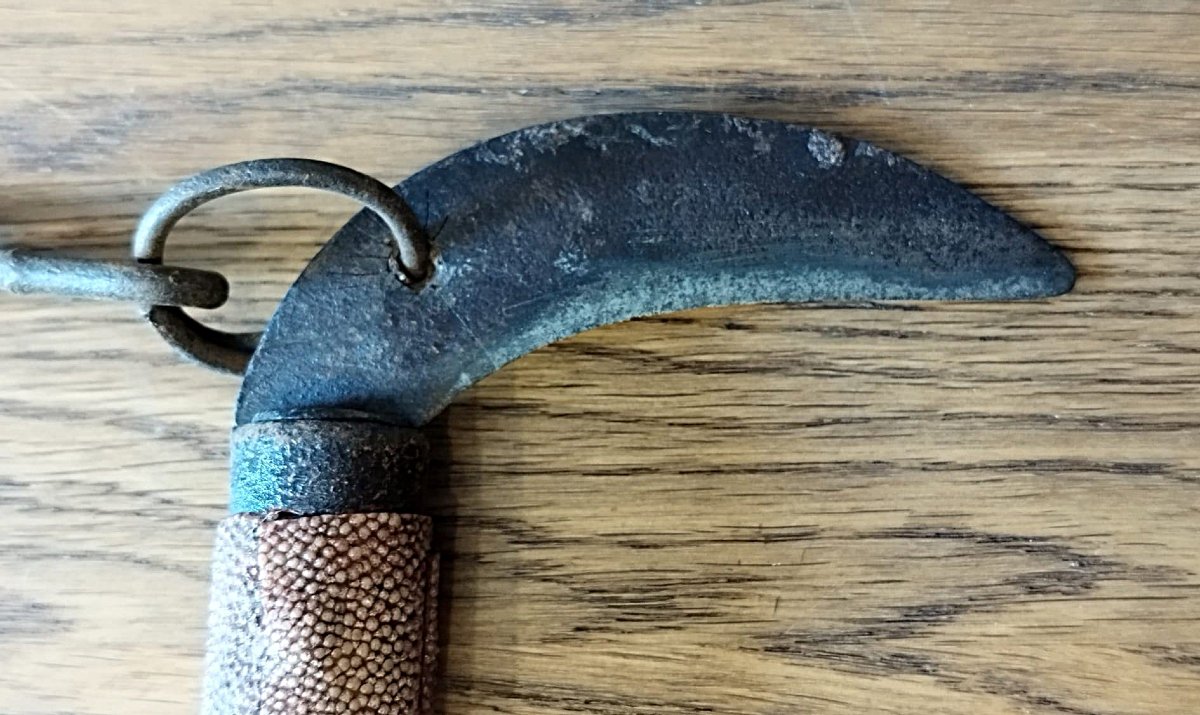
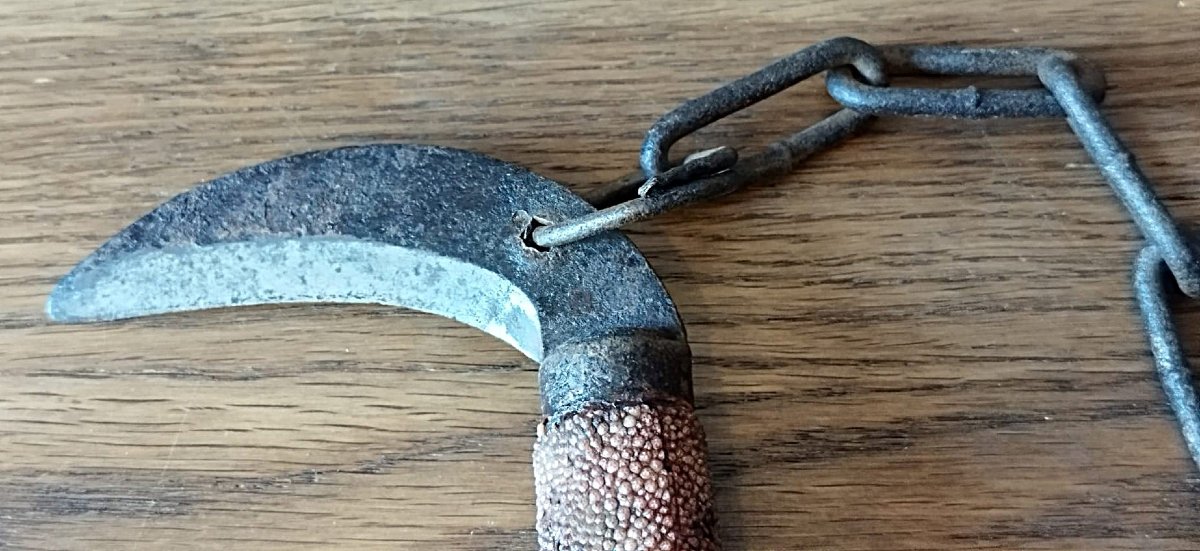
Blade assembly: Thecurved blade is inserted into a through-hole at the top of the wooden hilt andsecured beneath the ferrule. This is the traditional historical assembly method that ensuresthe rigidity of the entire weapon.Back-side chain attachment:The first link of the chain is attached directly through a hole drilled intothe back of the blade, a hallmark of certain specialized combat schools(such as the Isshin-ryu school).
- Blade (Kama): Dimensions: Length = 8.6 cm | Height = 3.3 cm | Thickness = 2 mm
Specifics: Curved forged steelblade. The first link of the chain is secured directly through a holeon the back of the blade.
Assembly: Authentic traditional assembly: the base of the blade is fitted into a through-slot at the top of the handle and locked in place under the ferrule.
Handle: Dimensions: Length = 27 cm
Material: Wood weathered by age, with an ergonomic profile that widens at the heel.
Reinforcement (Samegawa): The upper portion features a stingray skin sheath applied in three fitted sections. This lining beneath the ferrule serves both as structural reinforcement to prevent the wood from splitting under the force of violent tugs and impacts transmitted by the chain.
Chain (Kusari) : Dimensions: Length = 55 cm - Material: Hand-forged iron (Waketsu), elongated links hammer-welded.
Mass/Weight (Fundo): Dimensions: Weight = 350 g | Diameter = 3.8 cm | Height = 7 cm
Special Features: Very heavy forged iron weight with a hexagonal/octagonal cross-section with a welded suspension ring.Total Dimensions and Weight: Total length (handle): 30.5 cm Total weight: 580 g (of which 350 g is for the handle alone)
Period: Late Edo period (1800–1868)
Condition: Overall Condition: Very good original condition. Complete, sound, and rigid piece.
Patina: Very beautiful period patina. The blade, chain, and fundo exhibit perfectly uniform natural surface oxidation.
Wood and Shagreen: The wood and shagreen are well-preserved.
820 €
Period: 19th century
Style: Asian art
Condition: Good condition
Material: Wrought iron
Reference (ID): 1804597
Availability: In stock
Print