

Japanese Katana Sword, Attributed To Toshikazu, With Nbthk Certificate - Late Edo (19th Century).
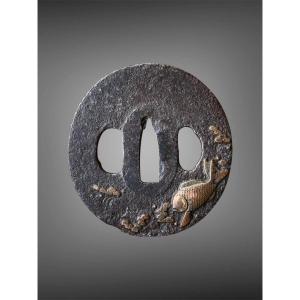
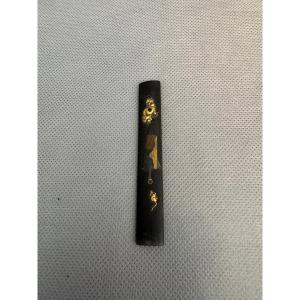
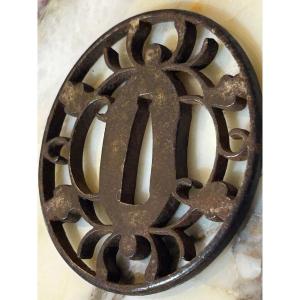
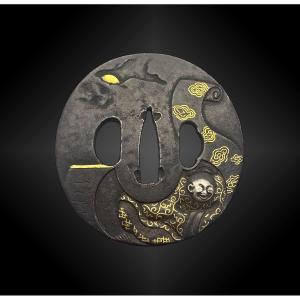
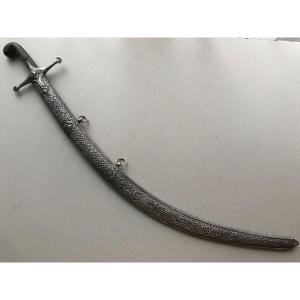
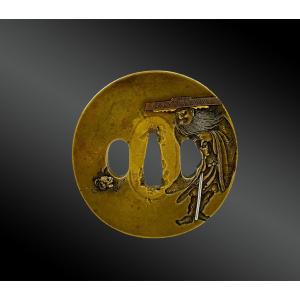
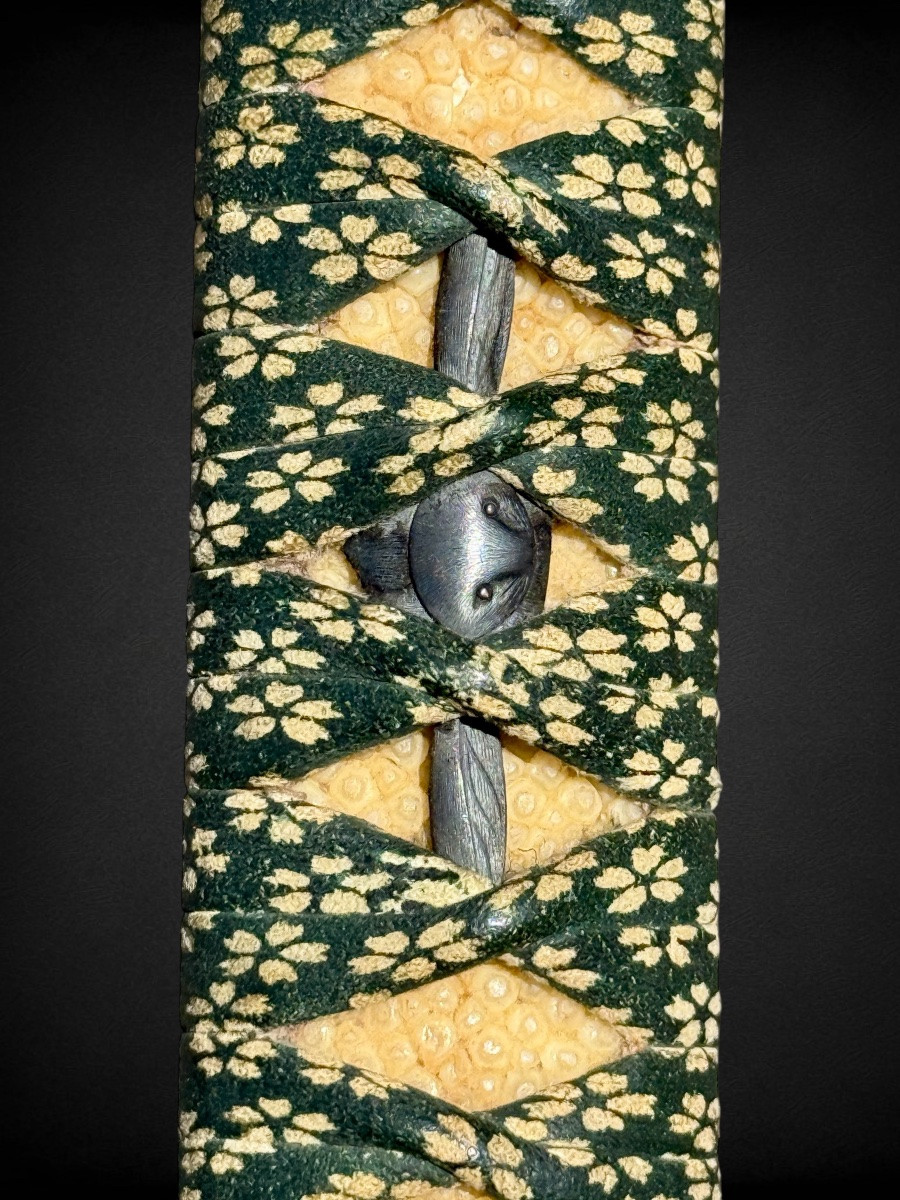
JAPAN - End of the Edo Period (19th century). Samurai Katana. FUSHI - KASHIRA in silver-plated copper with a butterfly decoration among plants (symbol of rebirth). TSUKA in wood covered with ray skin, braided with green-tinted leather with a stylized flower motif. MENUKIS in chiseled and patinated copper depicting a rabbit with outstretched ears. TSUBA marugata in iron inlaid with copper threads forming concentric undulations. SAYA in wood covered with a textured black lacquer. Simple HABAKI in gilded copper. Straight blade, wide throat, regular hamon, straight and well marked, the tang pierced three times, unsigned. Sold with the stand, its silk case for transport and its NBTHK certificate. NBTHK also known as Nihon Bijutsu Touken Hozon Kyokai (the Society for the Preservation of Japanese Sword Art), is one of the oldest Japanese sword appraisal organizations in modern Japan. Dimensions: 107 x 8 x 8 cm. Blade length with tang: 89 cm. Cutting edge length: 69.0 cm. Curvature (sori): 1.2 cm. Notes: This blade is attributed to Saiiyounoshin Toshikaz(西條臣俊),real name Yano Toshikazu, in the second year of the Ansei era (1855: at the end of the Edo period). He was an apprentice of Chounsai Tsunatoshi, one of the most famous swordsmiths of the late Edo period. Toshikazu lived in Yotsuya, Edo (present-day Tokyo). He also served the Saijyo clan, which ruled part of the Yonezawa Domain (present-day Ehime Prefecture). Saijyounoshin is the name of the title he received, and Yano is his surname. Tsunatoshi was born in 1798 in Yonezawa City, Hashu Province (Yamagata Prefecture) as the third son of Izumi no Kami Kunihide. His surname was Kato, and he was the younger brother of Kato Tsunahide. Tsunatoshi's real name was Kato Hachiro. Tsunatoshi served the Yonezawa Uesugi clan, a powerful feudal lord in present-day Yamagata Prefecture. Early in his career, he moved to the city of Edo to learn swordsmithing techniques from Suishinshi Masahide, one of the most renowned swordsmiths of the late Edo period. There is also a record of him forging swords in Osaka and Kumamoto while his base was in the town of Azabu in Edo City (present-day Tokyo). He settled in Edo City around 1823 and created most of his works there. He began running his school there and resided in the Uesugi family home. It is said that he received a stipend from them. He was given the honorable title of Chounsai in the first year of the Bunka era (1854). The school to which Tsunatoshi belonged then flourished in the late Edo period, training many swordsmiths who later became historically important swordsmiths.
6 800 €
Period: 19th century
Style: Asian art
Condition: Good condition
Material: Wrought iron
Length: 107 cm.
Height: 8 cm.
Depth: 8 cm.
Reference (ID): 1568374
Availability: In stock
Print