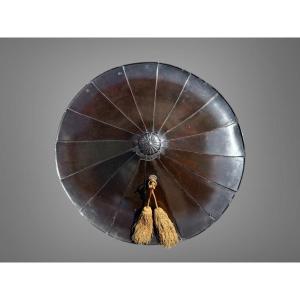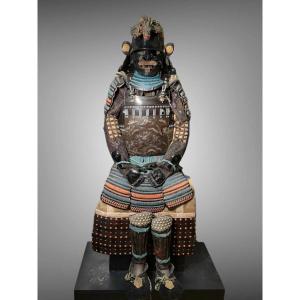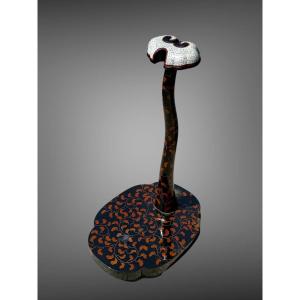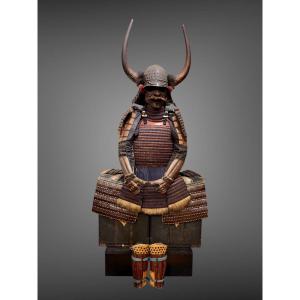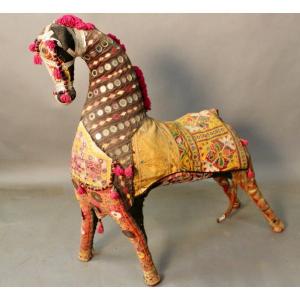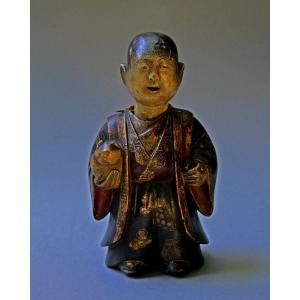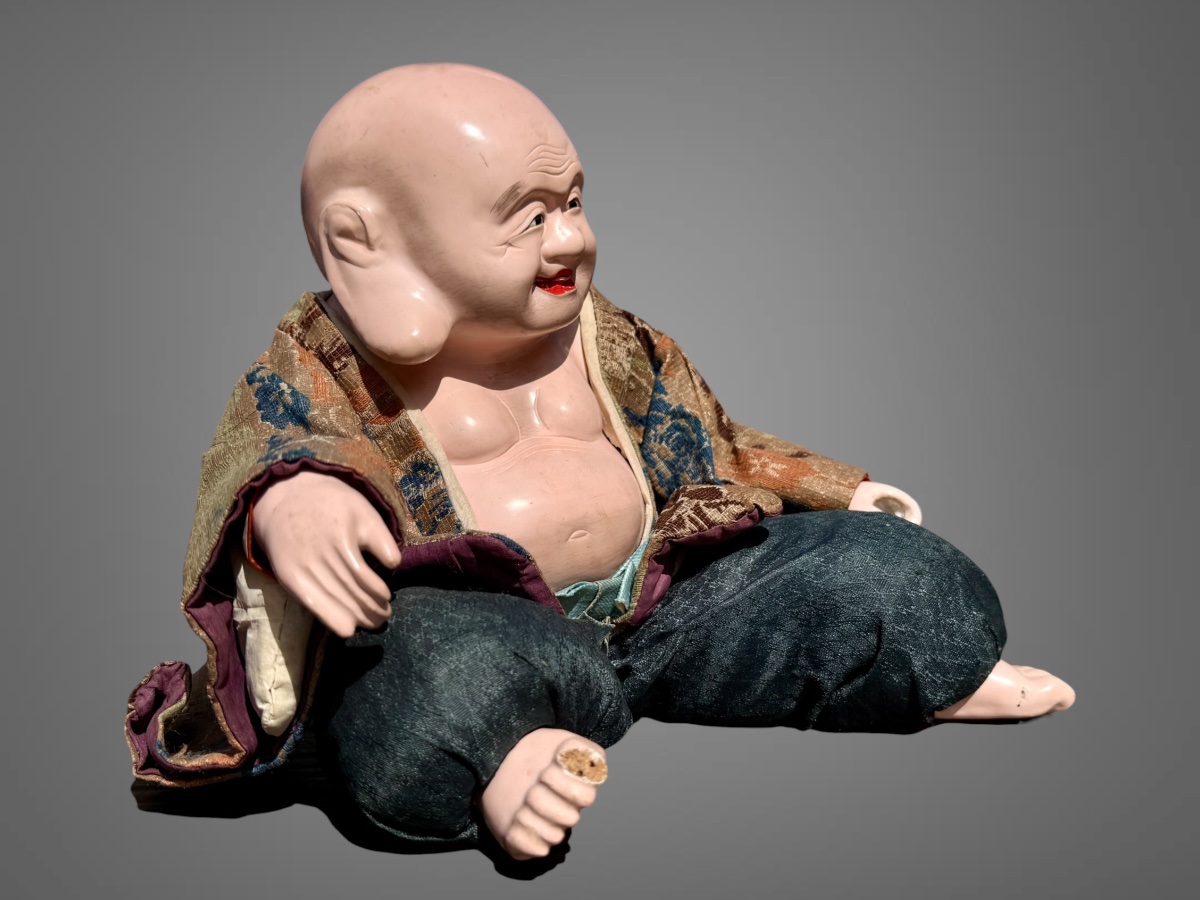
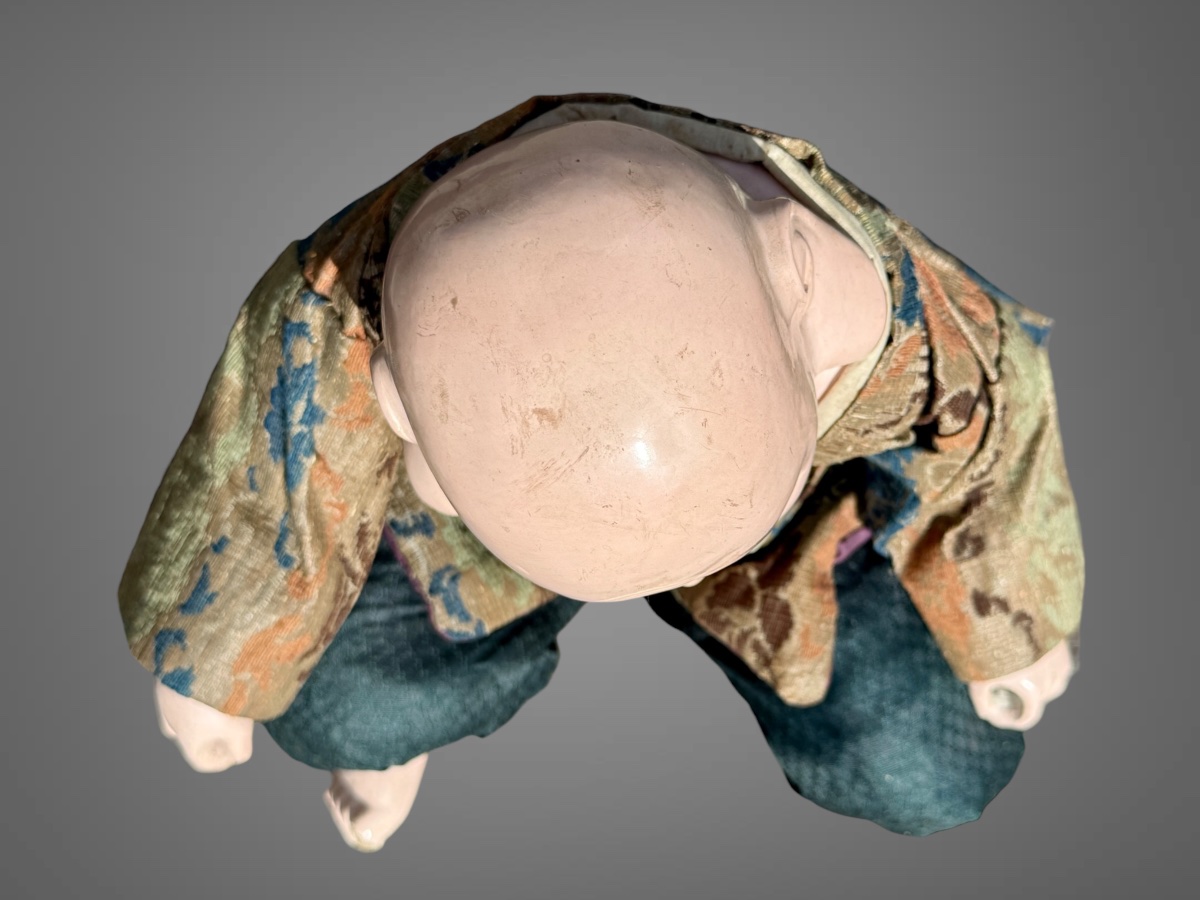
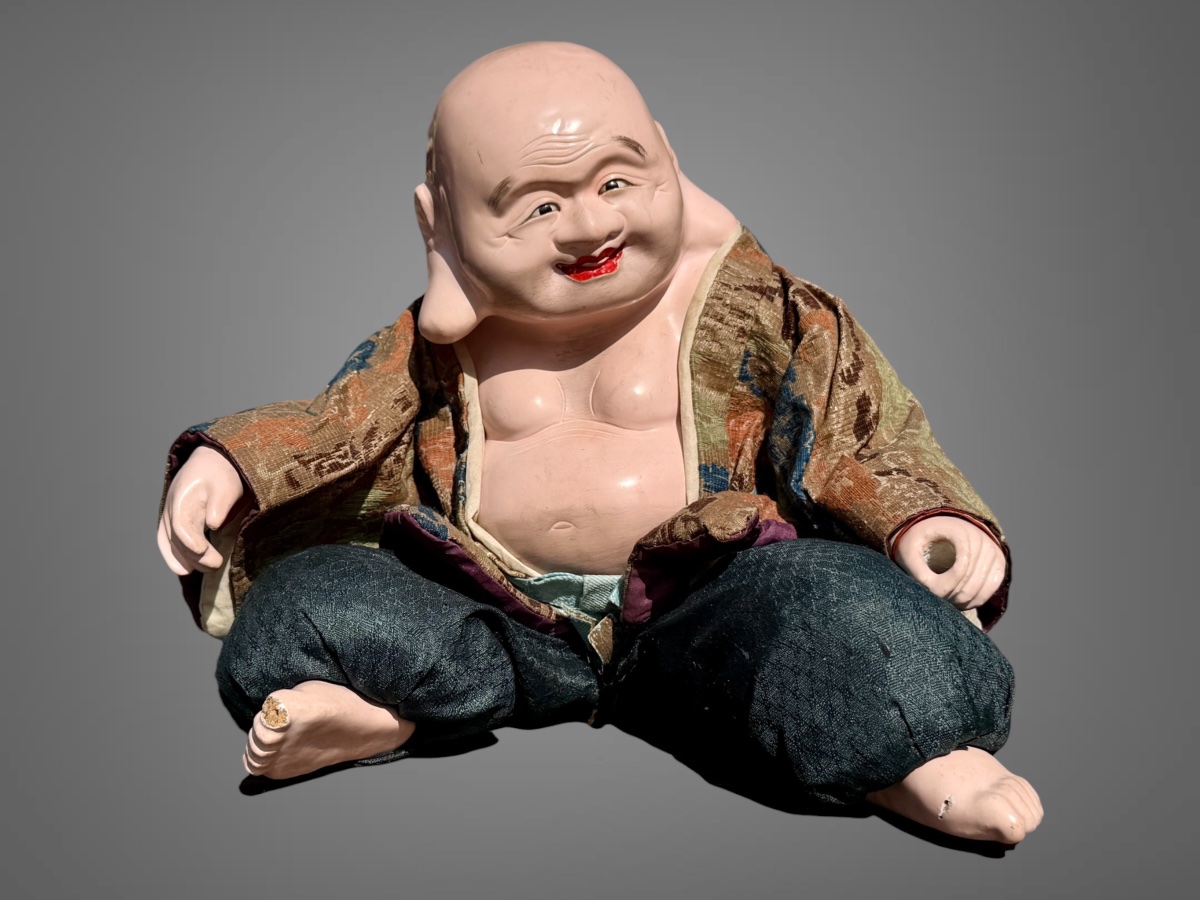
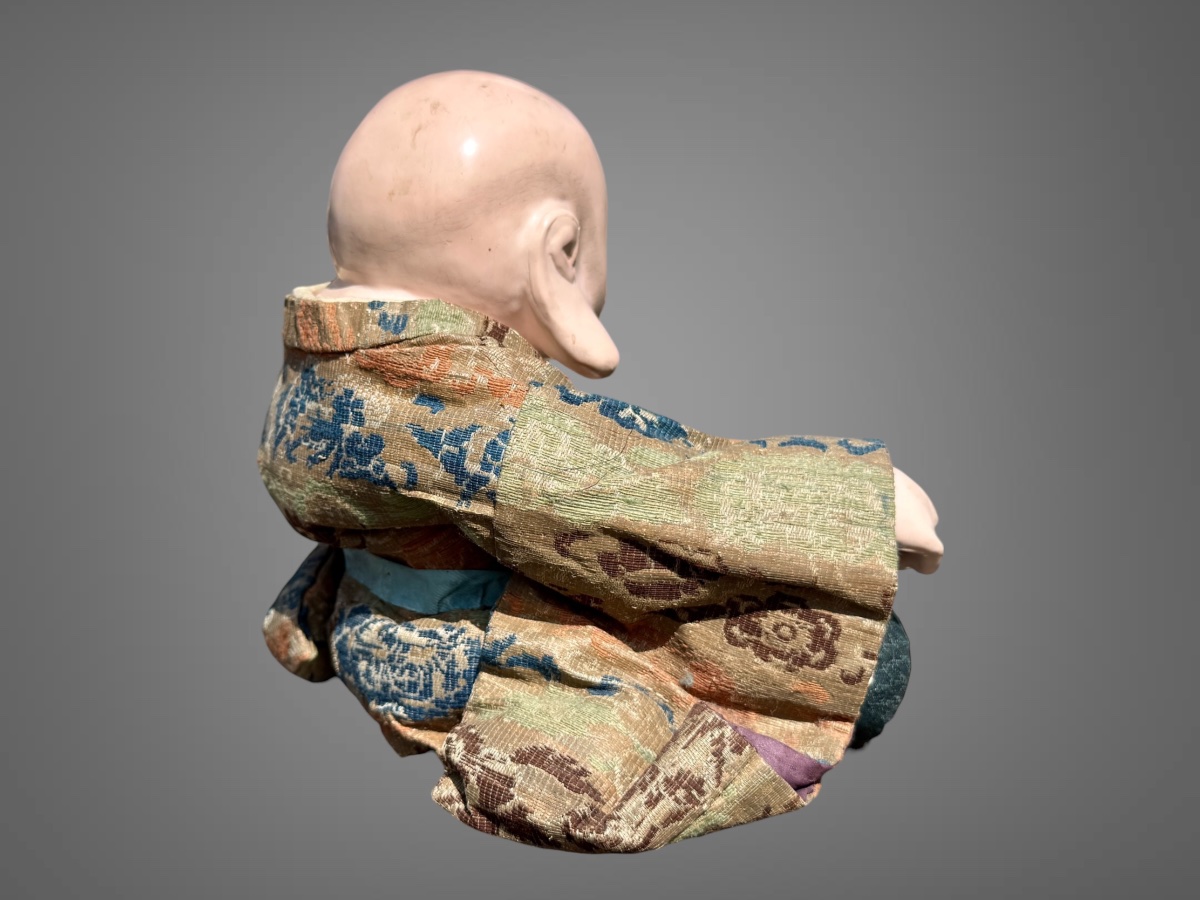
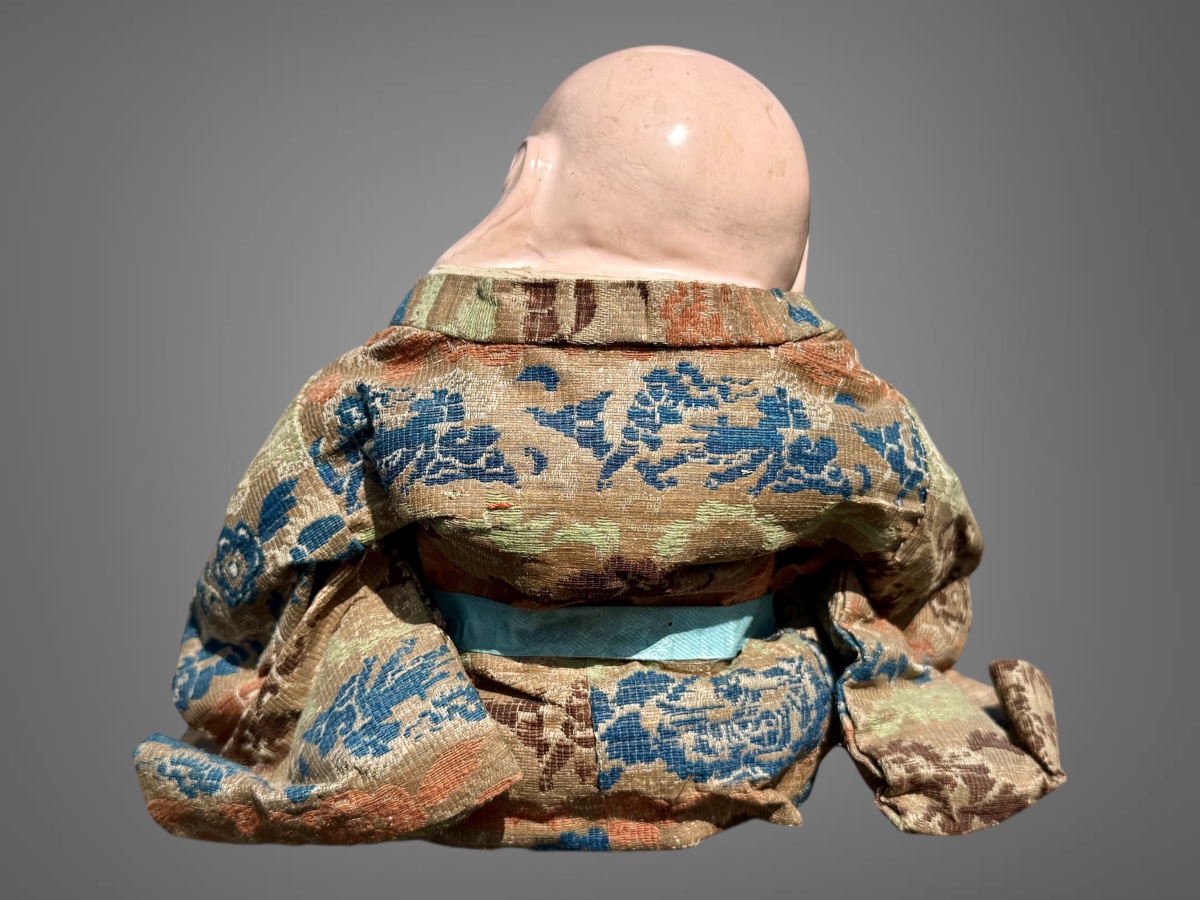
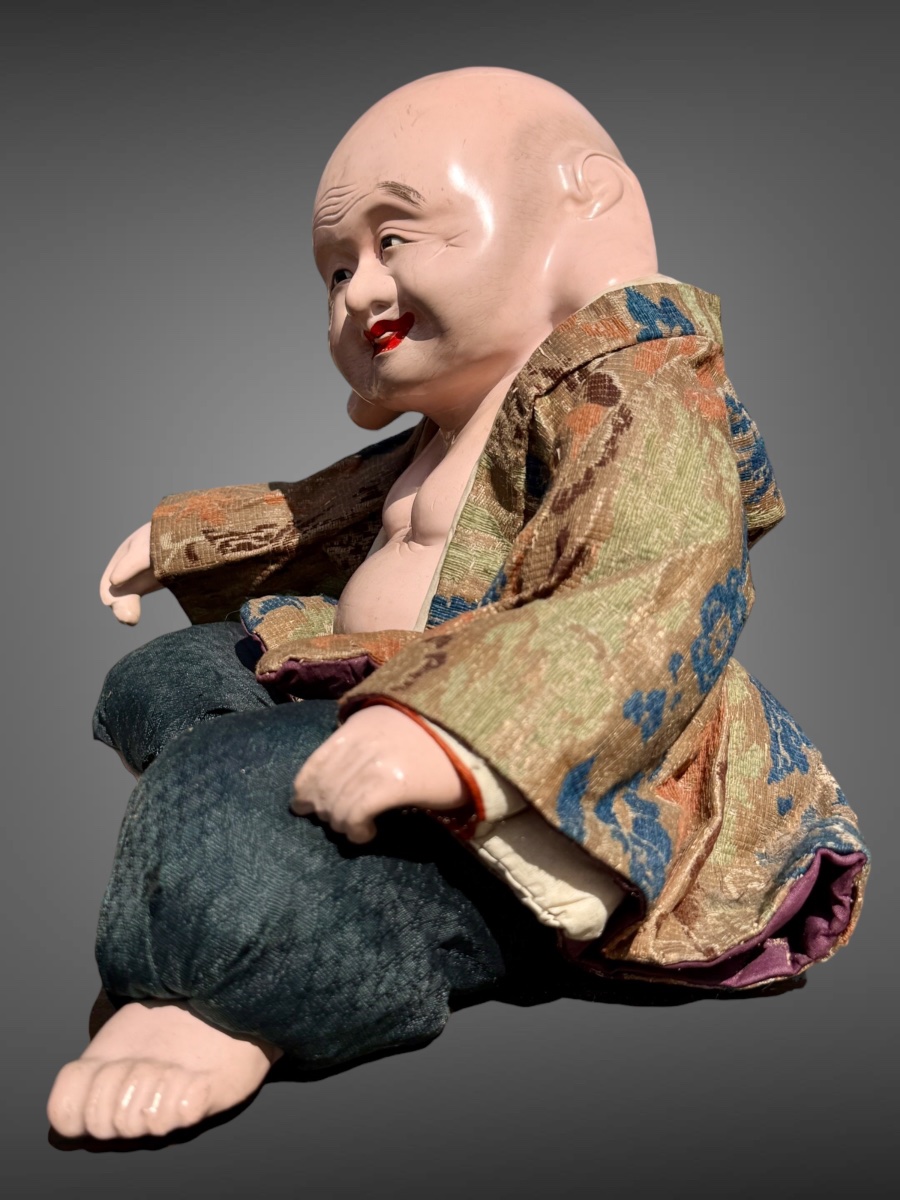
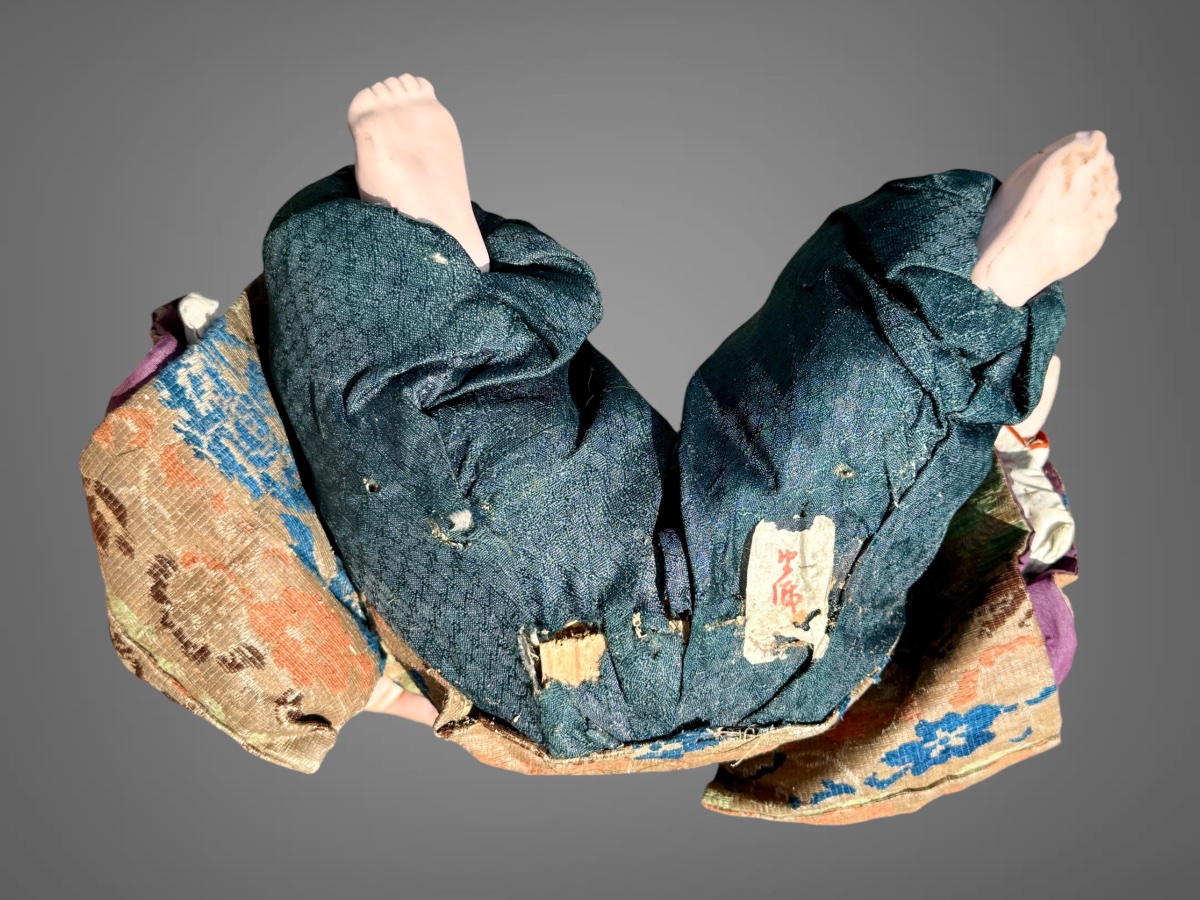
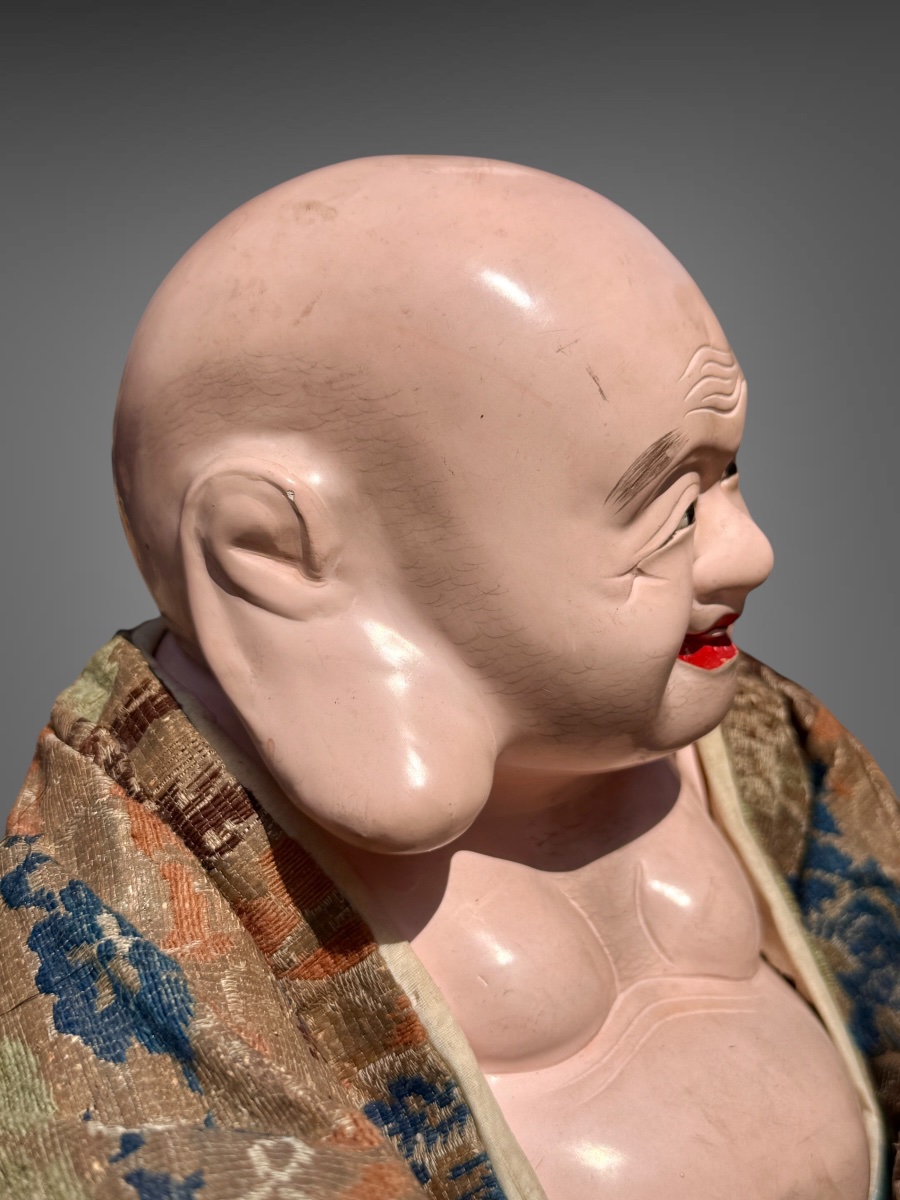
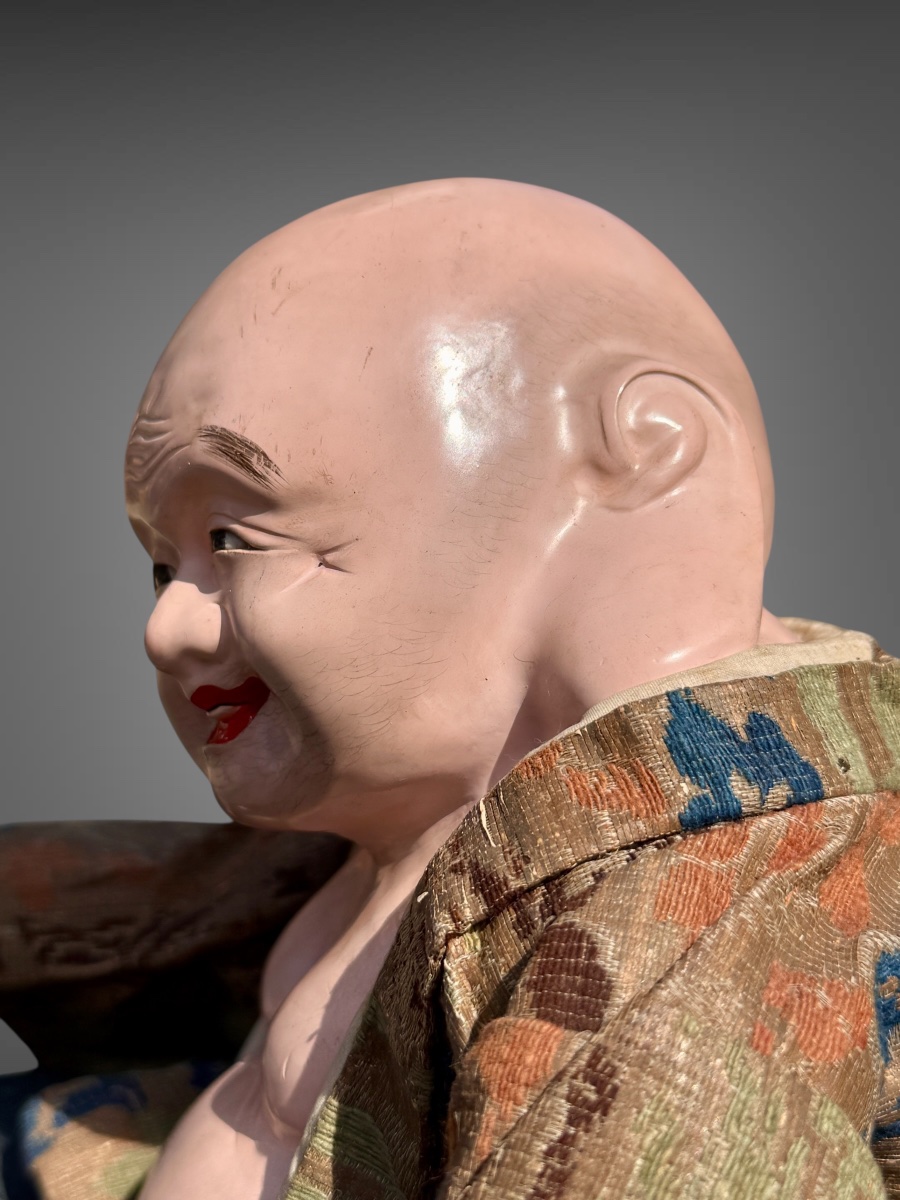
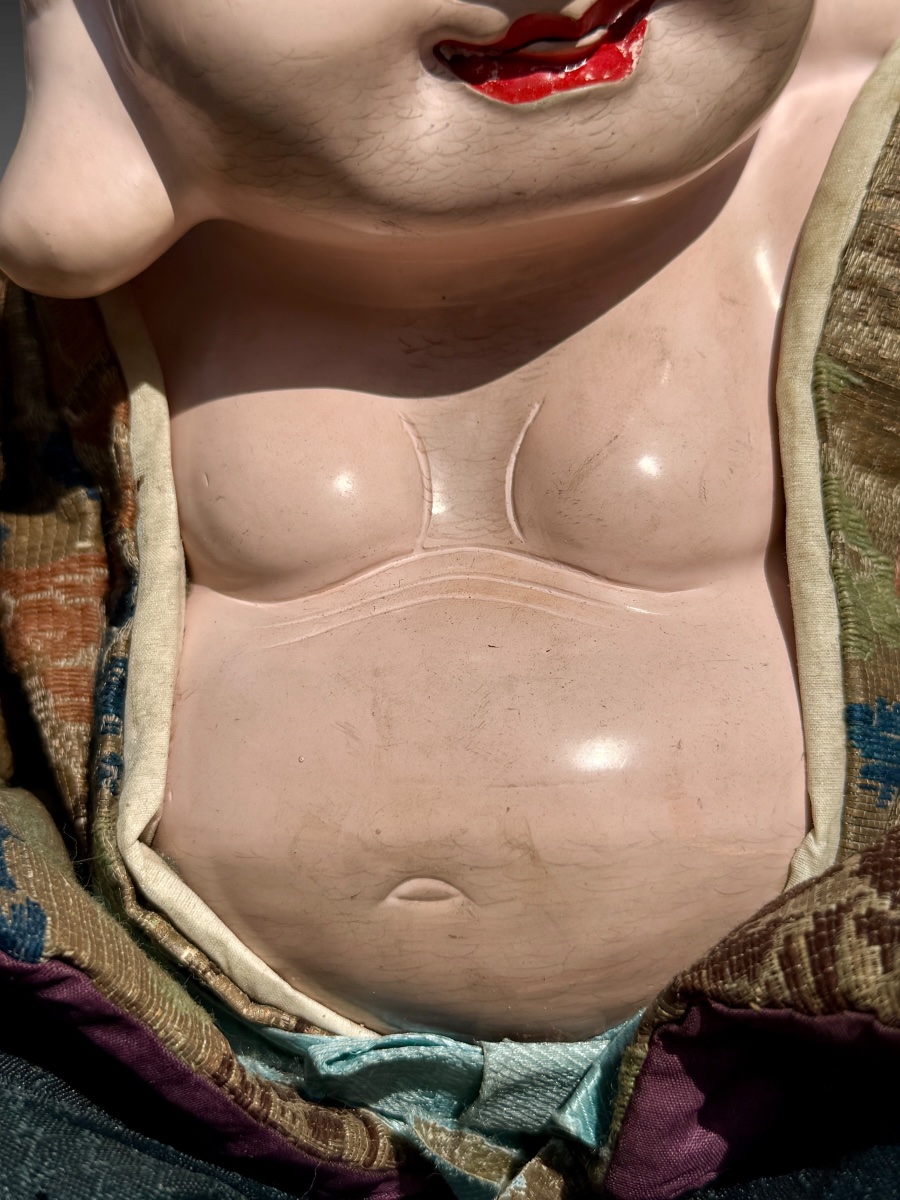
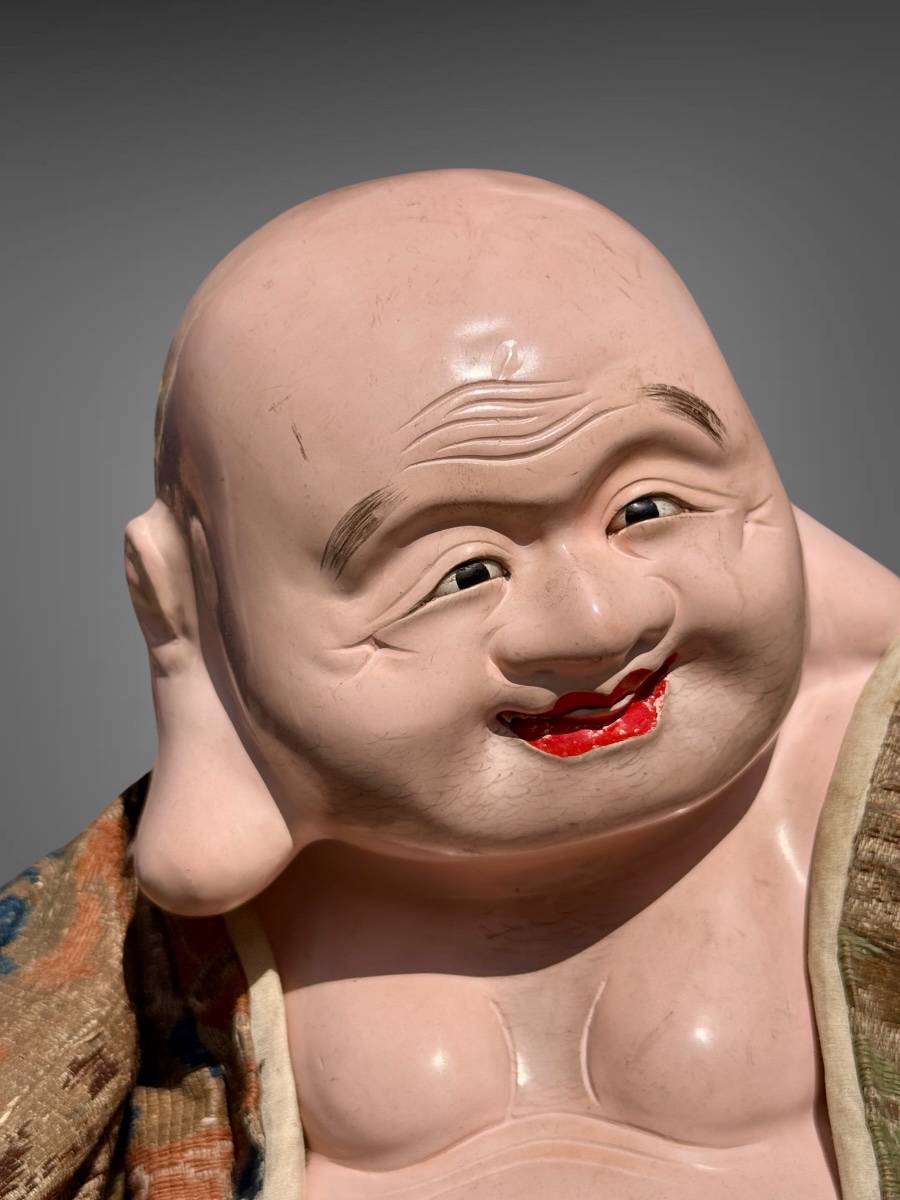
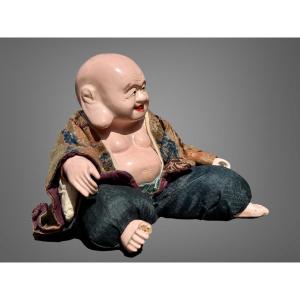


Musha Ningyô Doll Depicting The God Hotei - Edo Period (1603–1868).
JAPAN - Edo period (1603–1868).
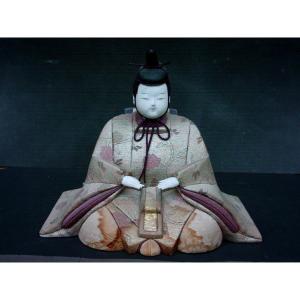
Musha Ningyô doll depicting Hotei, one of the Seven Gods of Good Fortune, made of lacquered wood, silk, and straw.
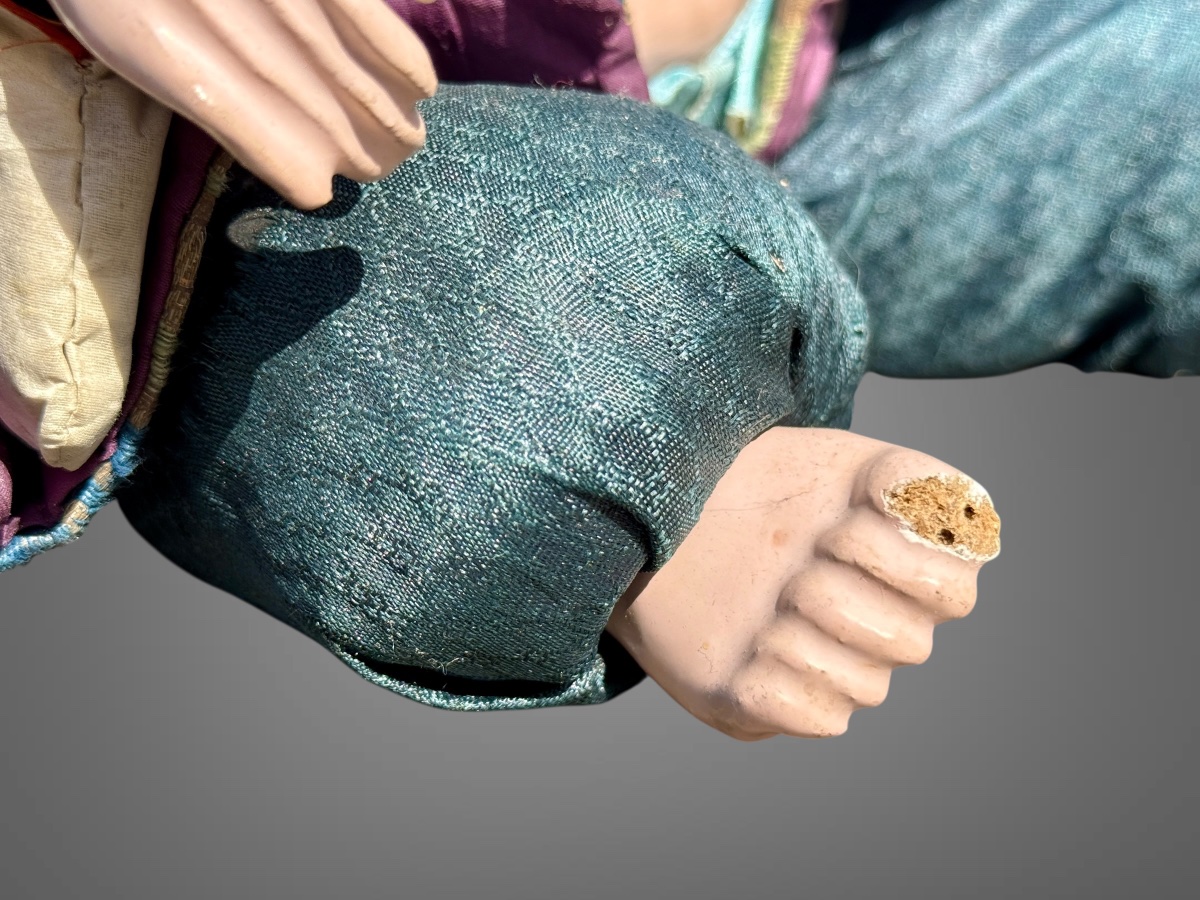
Minor damage (to the right big toe) and signs of wear.
Dimensions: 22.5 x 25 x 19 cm.
Notes: Hotei is one of the most popular figures in the Japanese Buddhist pantheon. Inspired by the Chinese monk Budai, who lived at the end of the Tang Dynasty (9th–10th centuries), he is traditionally depicted as a jovial man with a rounded belly, large earlobes, a shaved head, a broad smile, and carrying a large canvas bag from which he distributes its contents to the needy. Introduced to Japan along with Zen Buddhism, Hotei has become one of the Seven Gods of Good Fortune (Shichifukujin). A symbol of generosity, abundance, joy, and contentment, he is also associated with wisdom and serenity, making his image a powerful good-luck charm in Japanese culture.
Period: 19th century
Style: Asian art
Condition: Good condition
Material: Painted wood
Width: 25 cm.
Height: 22,5 cm.
Depth: 19 cm.
Reference (ID): 1789801
Availability: In stock