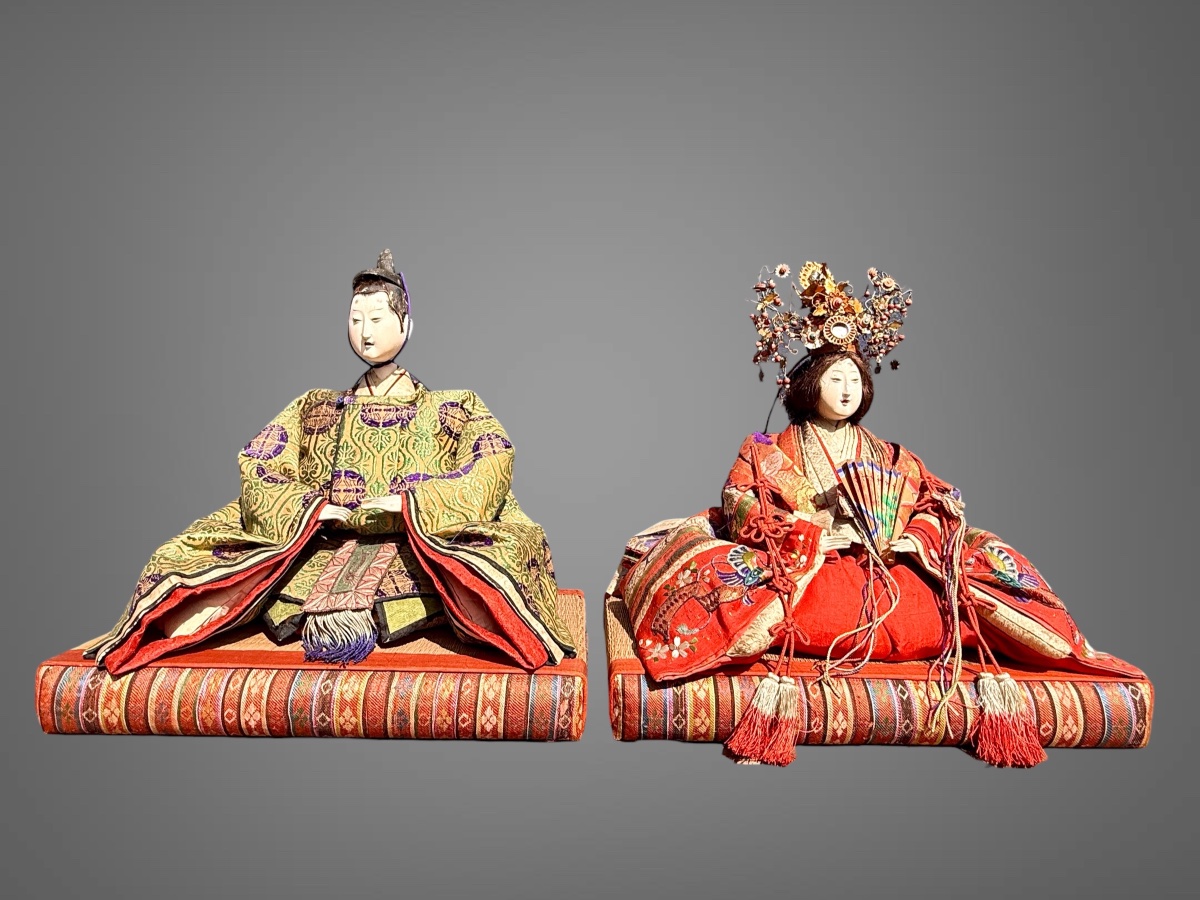
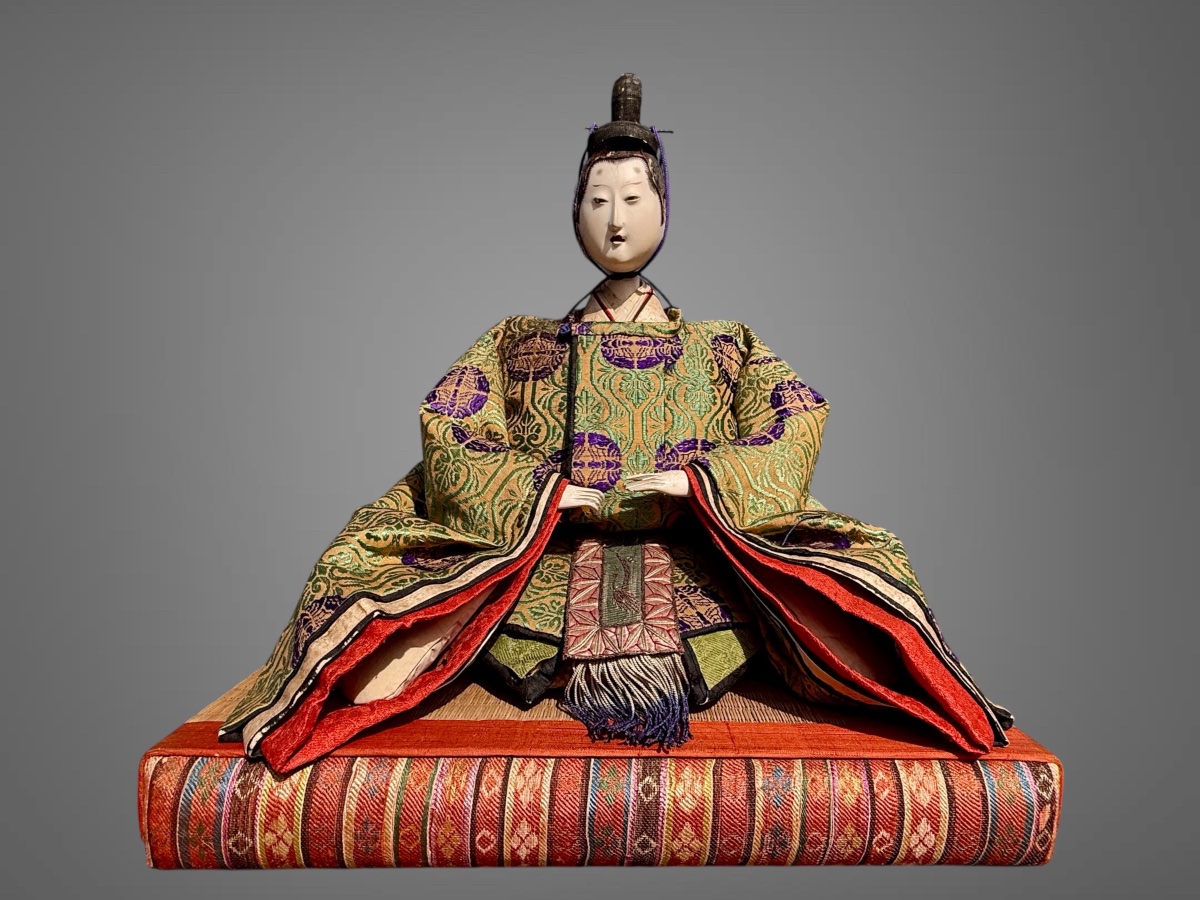
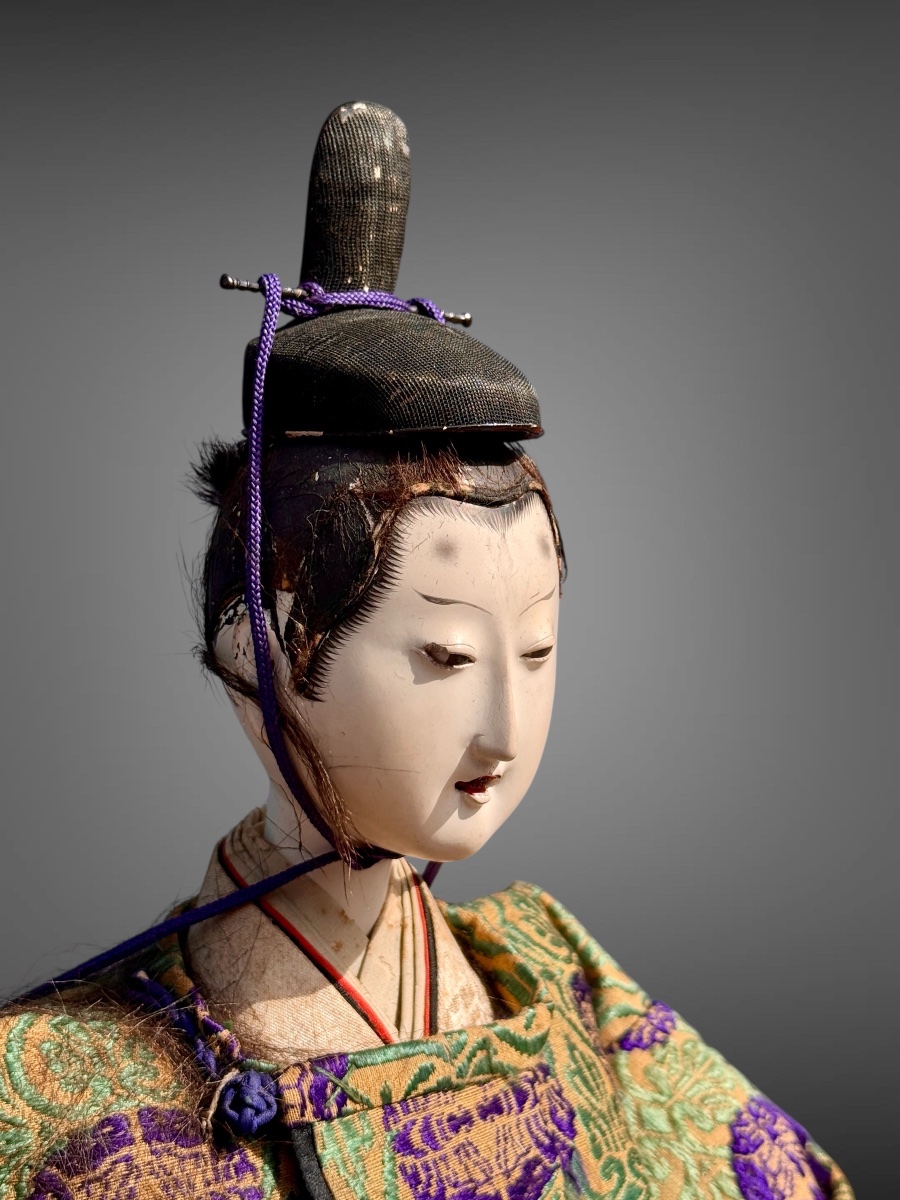
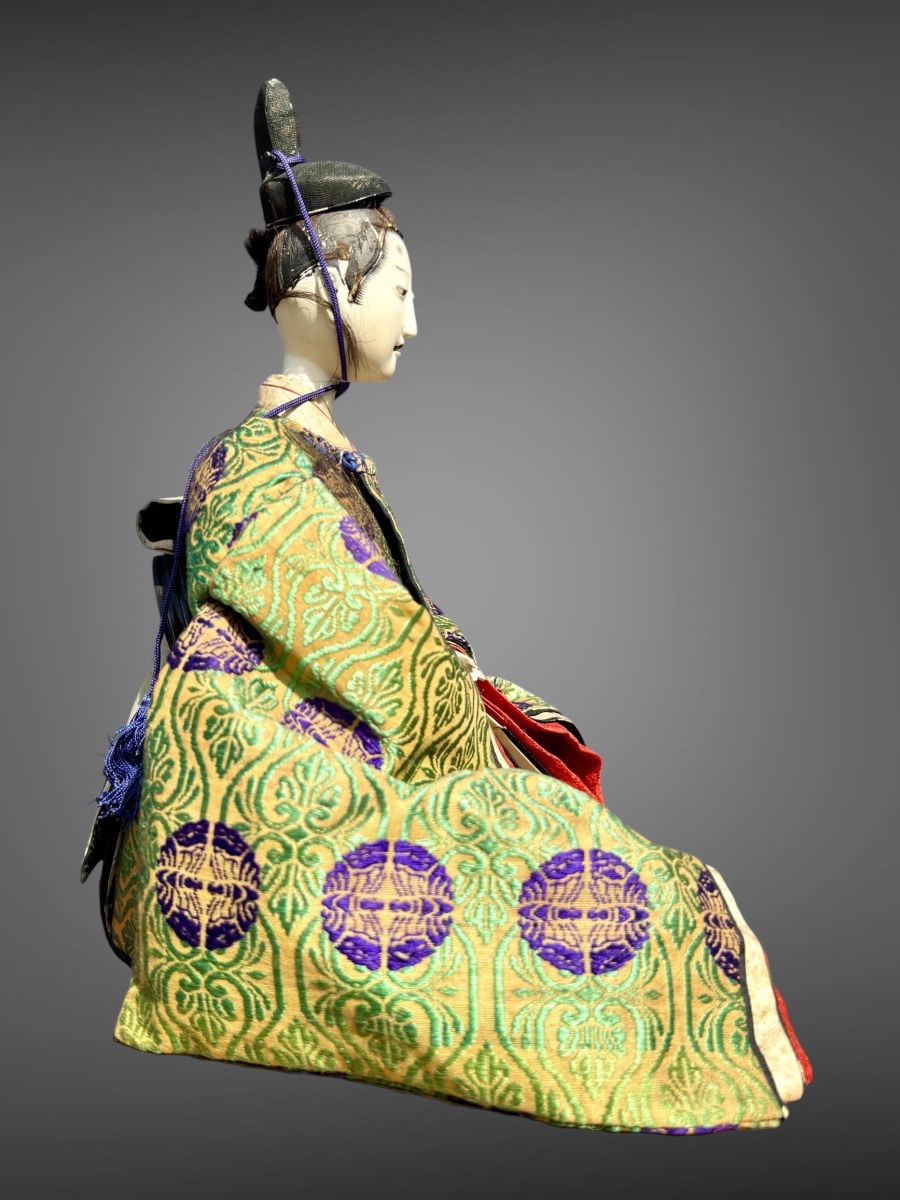
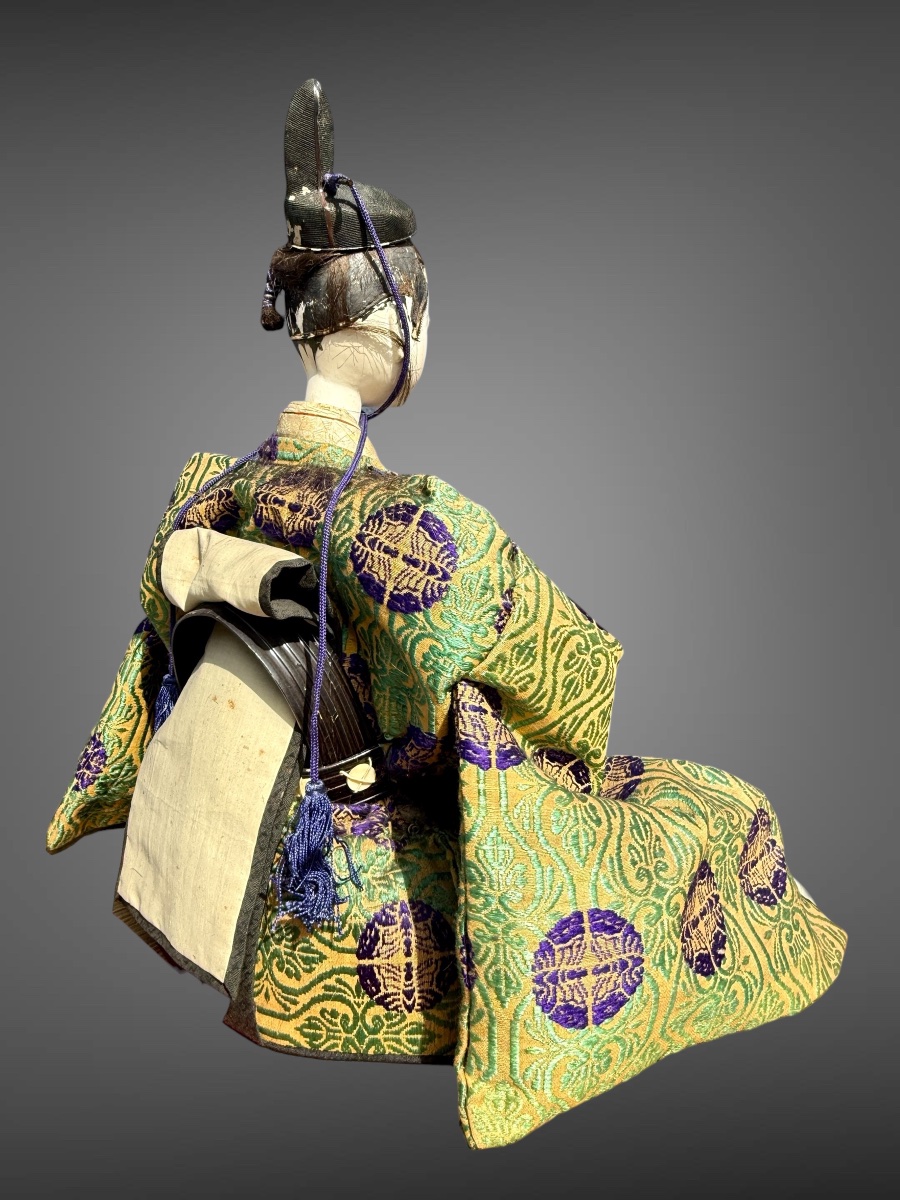
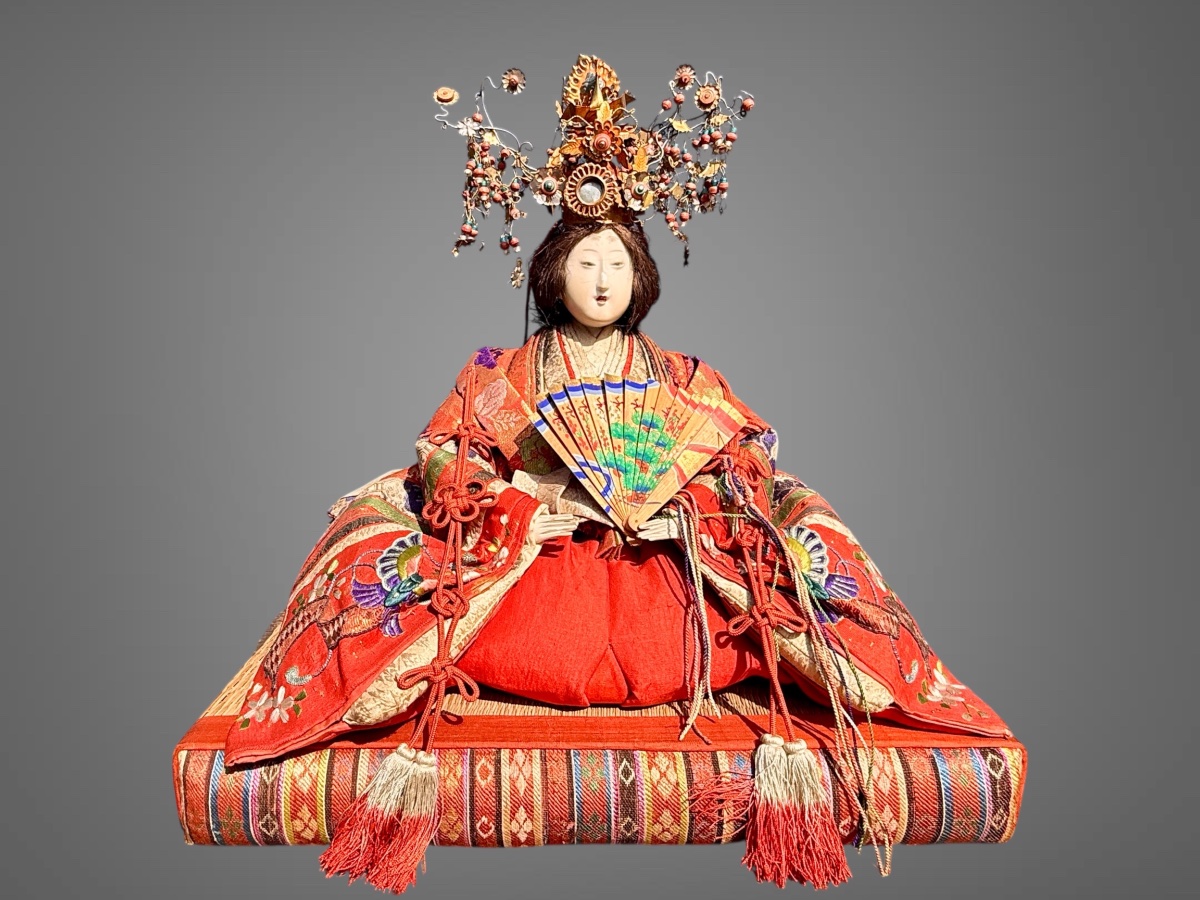
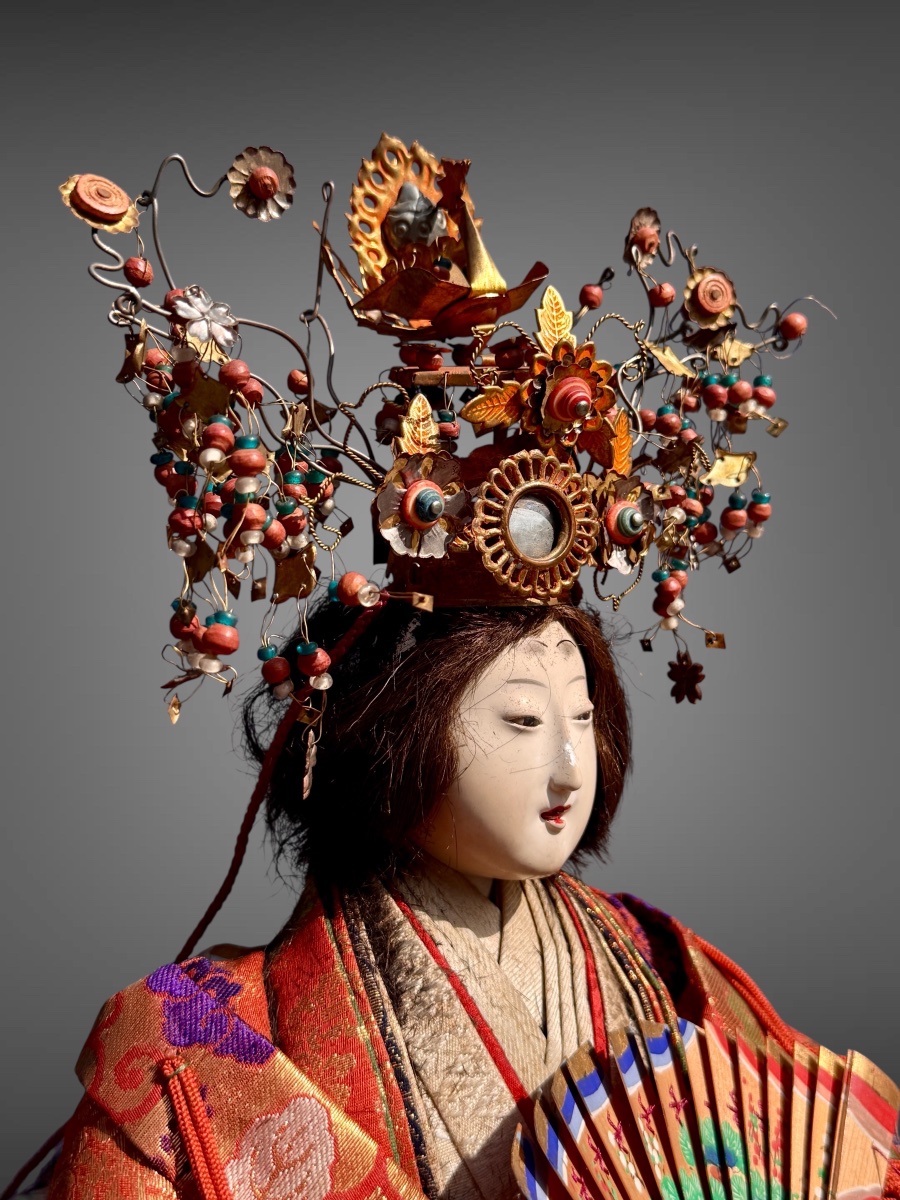
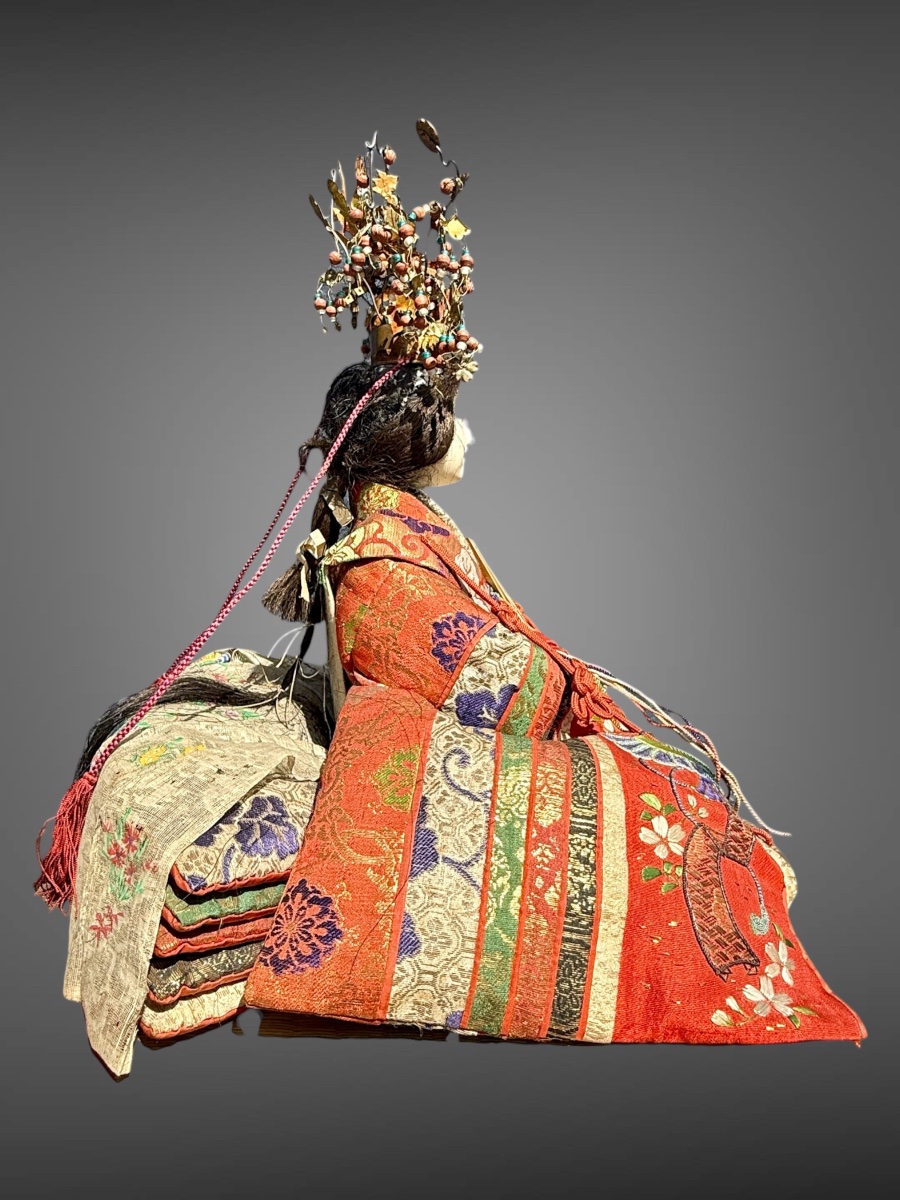
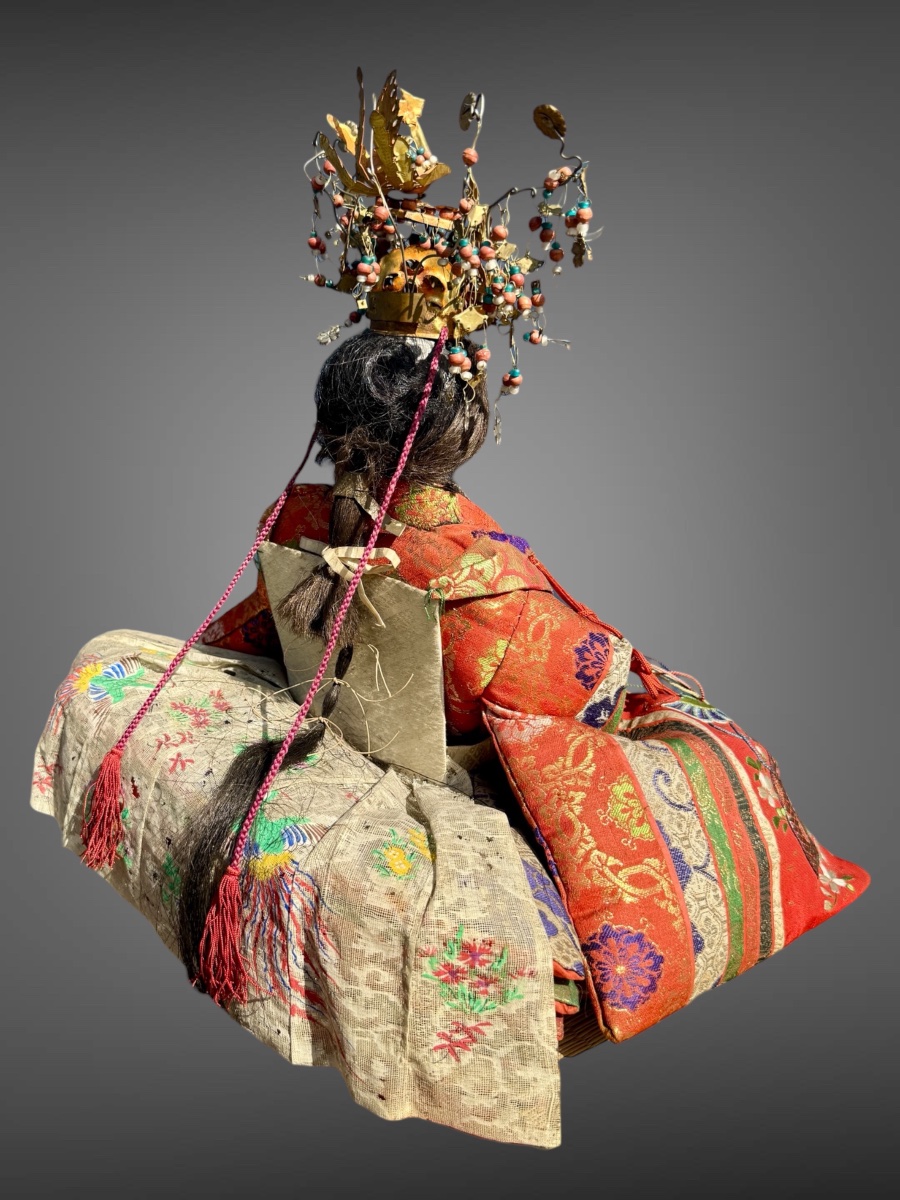
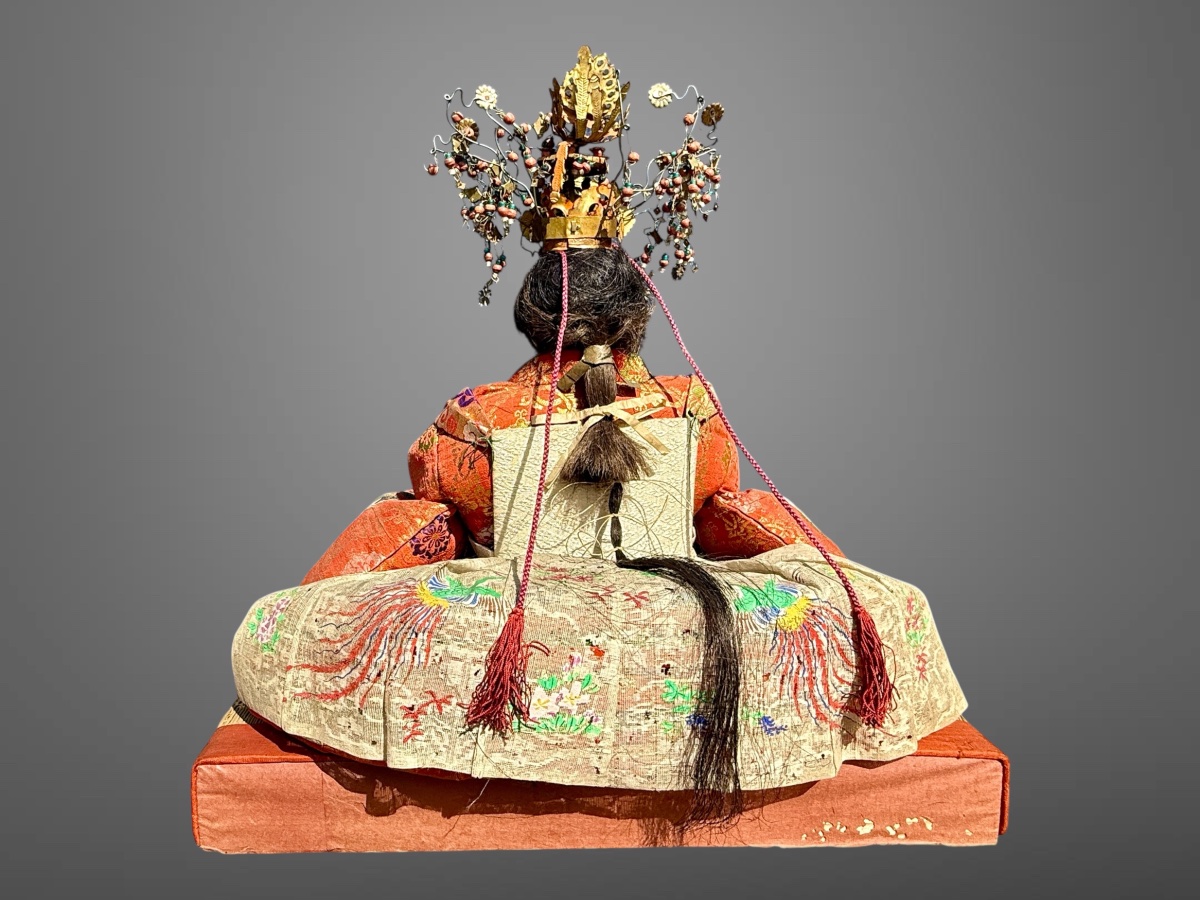


Kokin-bina-style Dolls Depicting The Imperial Couple—edo Period (1603–1868).
JAPAN - Edo Period (1603–1868).
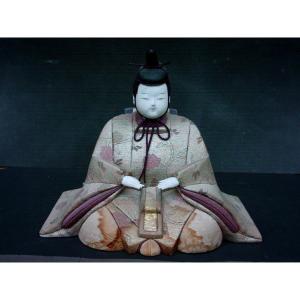
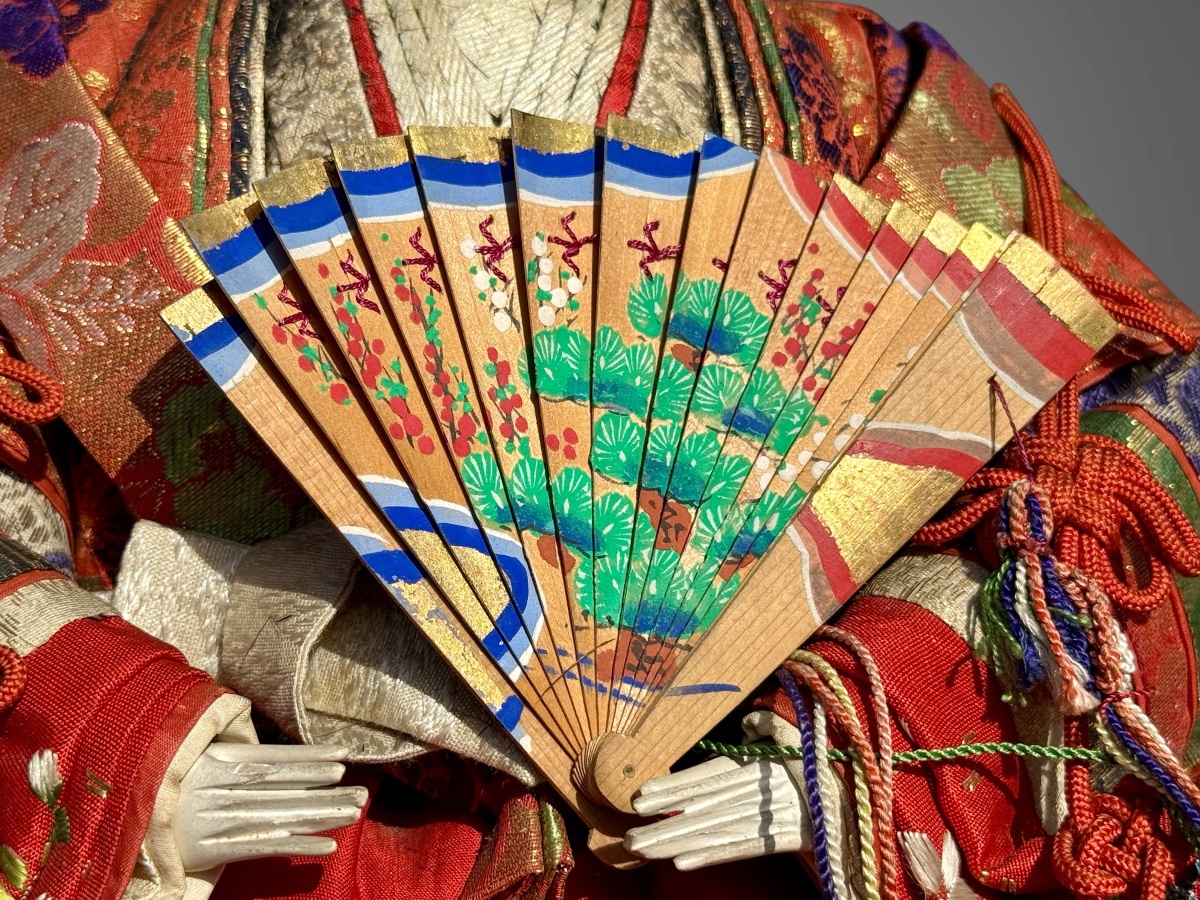
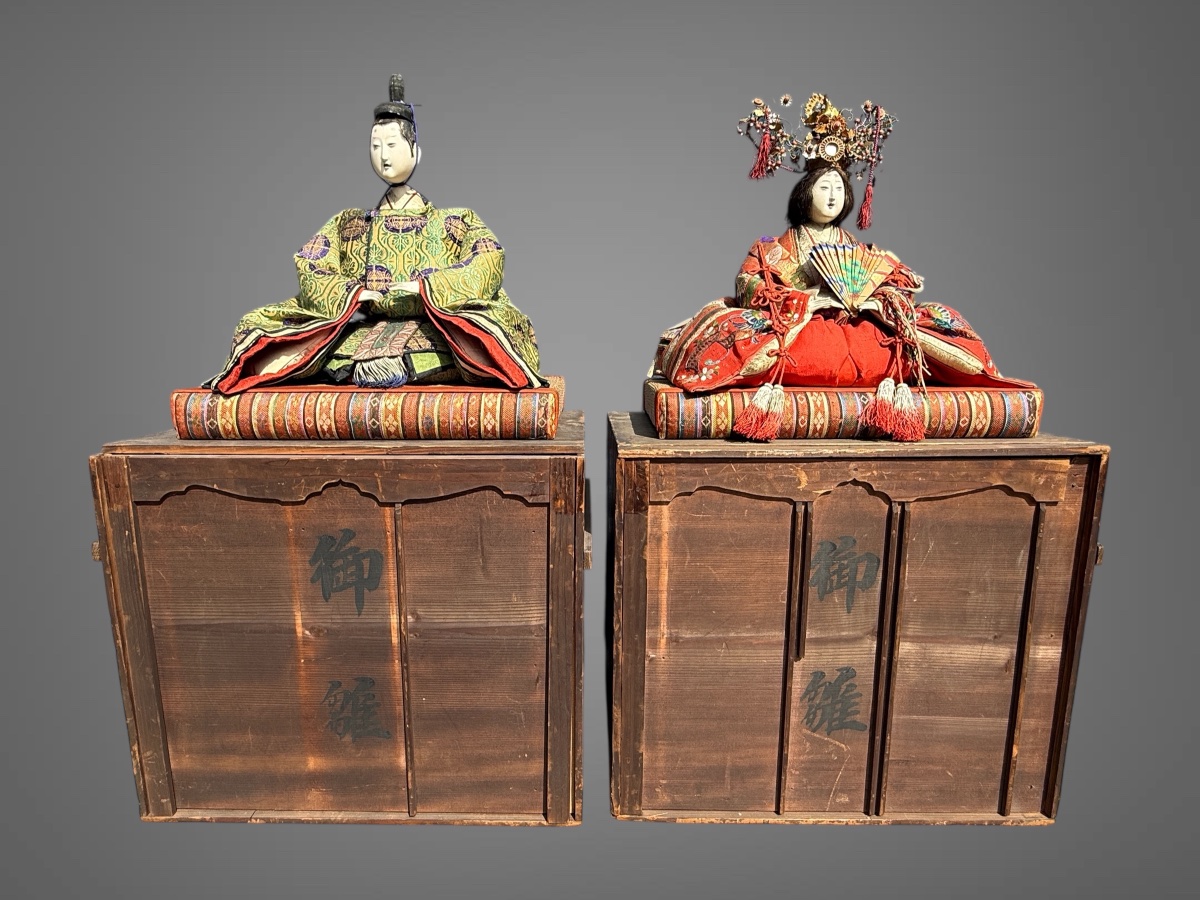
A pair of “Kokin-bina” dolls depicting the imperial couple, made of wood, silk, metal, glass, and human hair; each doll comes with its original storage box.
Some minor chips and wear; a very decorative set.
Dimensions of the Empress: 40 x 39 x 27 cm.
Dimensions of the emperor: 41 x 39 x 27 cm.
Dimensions of a storage box: 40.5 x 49 x 34 cm.
Notes: This type of doll was developed in the 1770s by an Edo-based manufacturer named Hara Shugetsu; Kokin-bina are Japanese dolls representing the imperial couple, consisting of the Emperor (Odairi-sama) and the Empress (Ohina-sama). Their name refers to the Kokin style, which emerged at the end of the Edo period (1603–1868) and flourished during the Meiji era (1868–1912). This style is characterized by faces with delicate, harmonious features, slender proportions, and richly detailed costumes inspired by Heian-period (794–1185) court attire.
Kokin-bina embody the aesthetic ideal of the imperial nobility and reflect the refinement of Japanese craftsmanship. Displayed at the top of display stands during the Hinamatsuri festival, they symbolize harmonious union, prosperity, and the passing down of traditions. Their creation, which requires meticulous craftsmanship passed down from generation to generation, combines carving, modeling, painting, and textile work, making each pair a true work of art.
Period: 19th century
Style: Asian art
Condition: Good condition
Material: Silk
Width: 39 cm.
Height: 41 cm.
Depth: 27 cm.
Reference (ID): 1789763
Availability: In stock