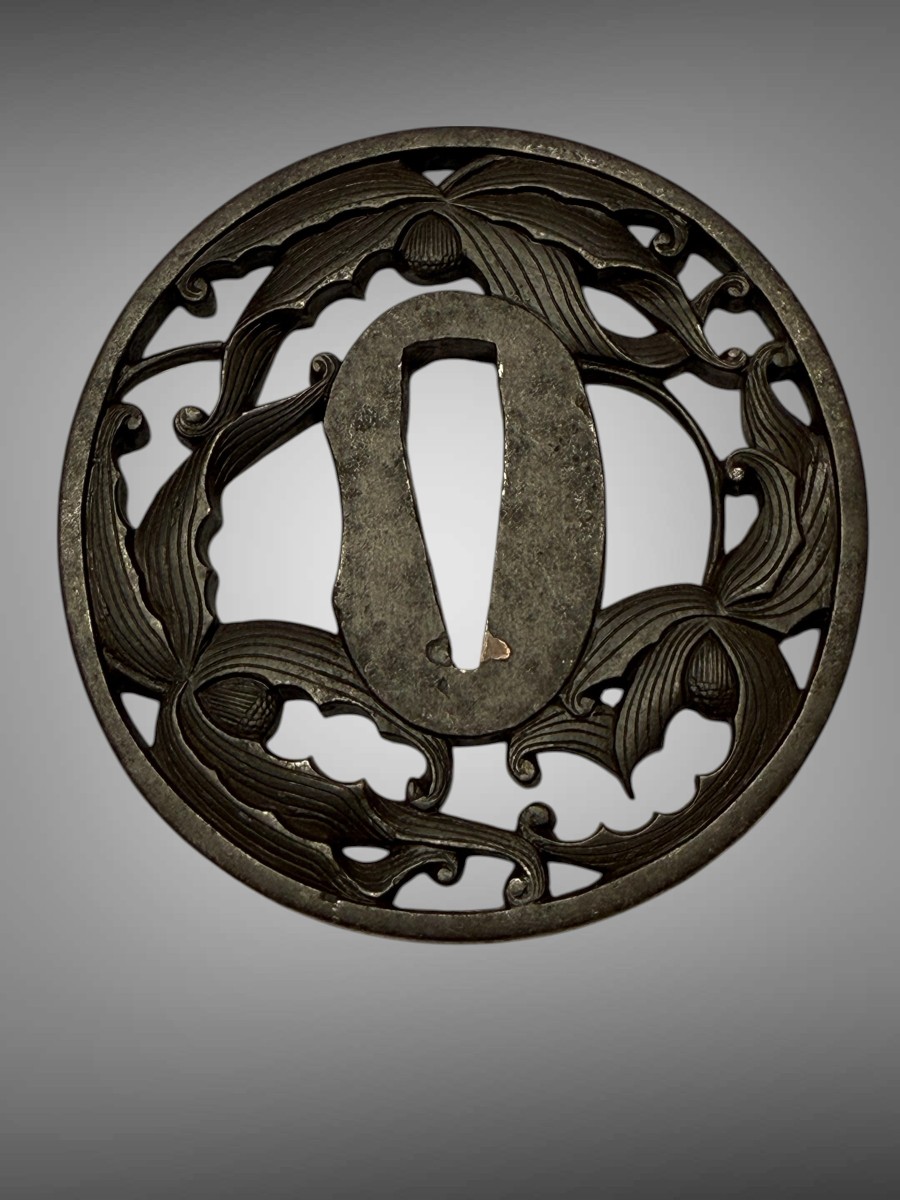
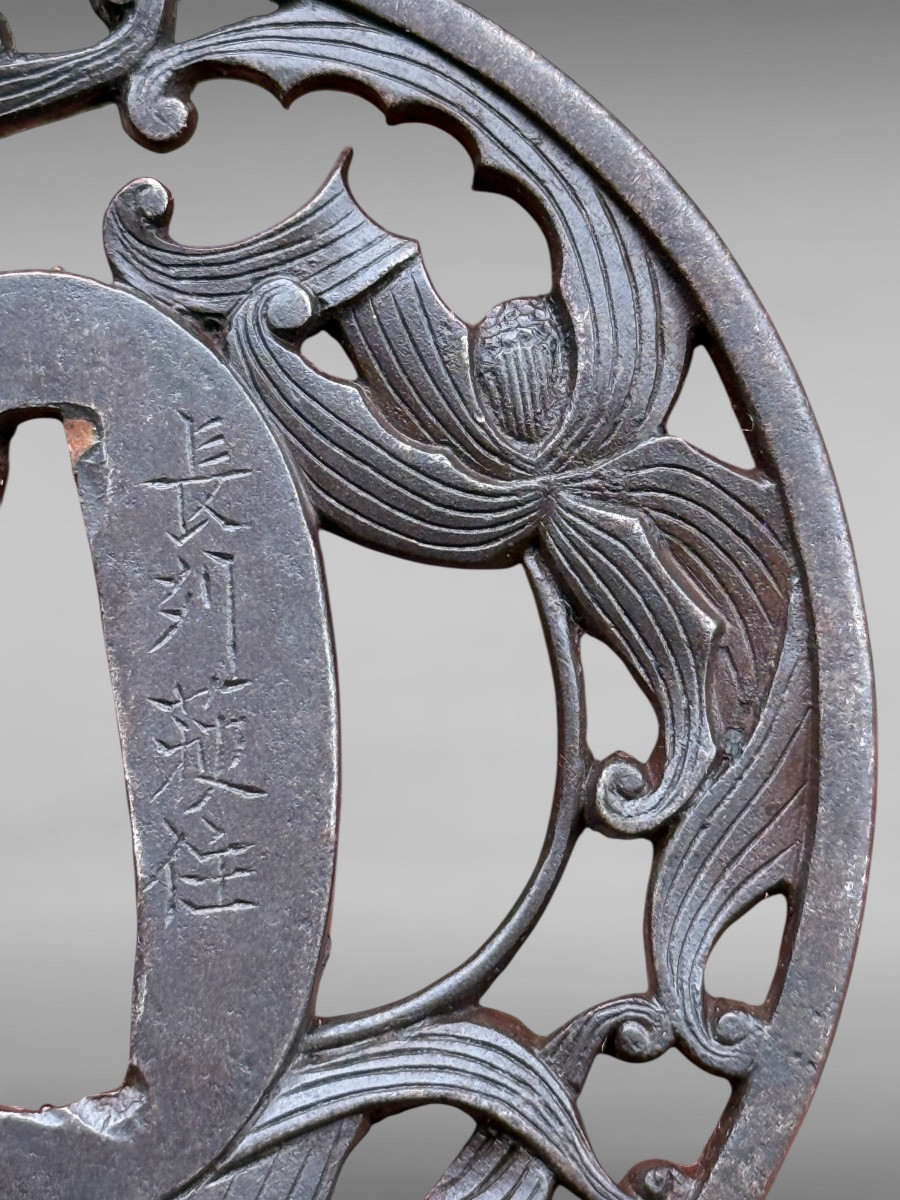
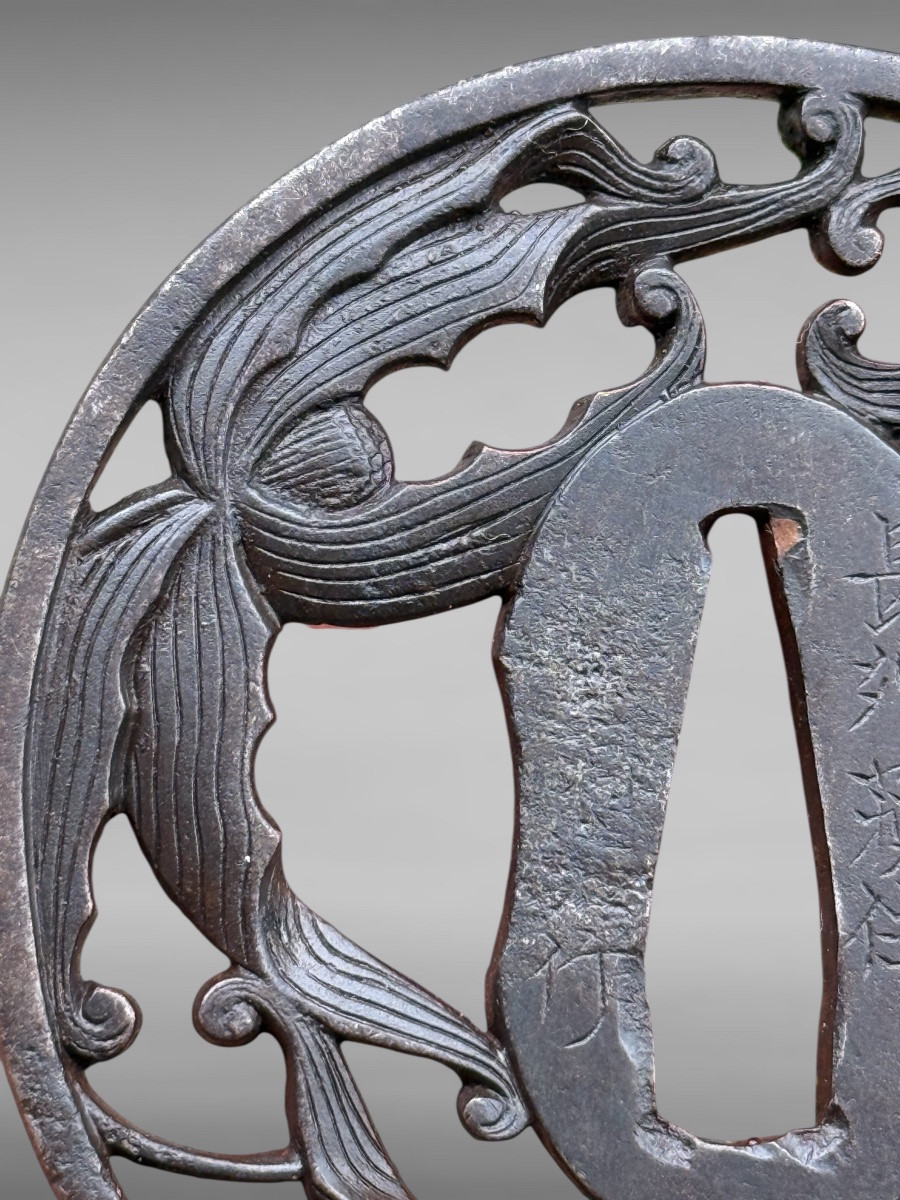
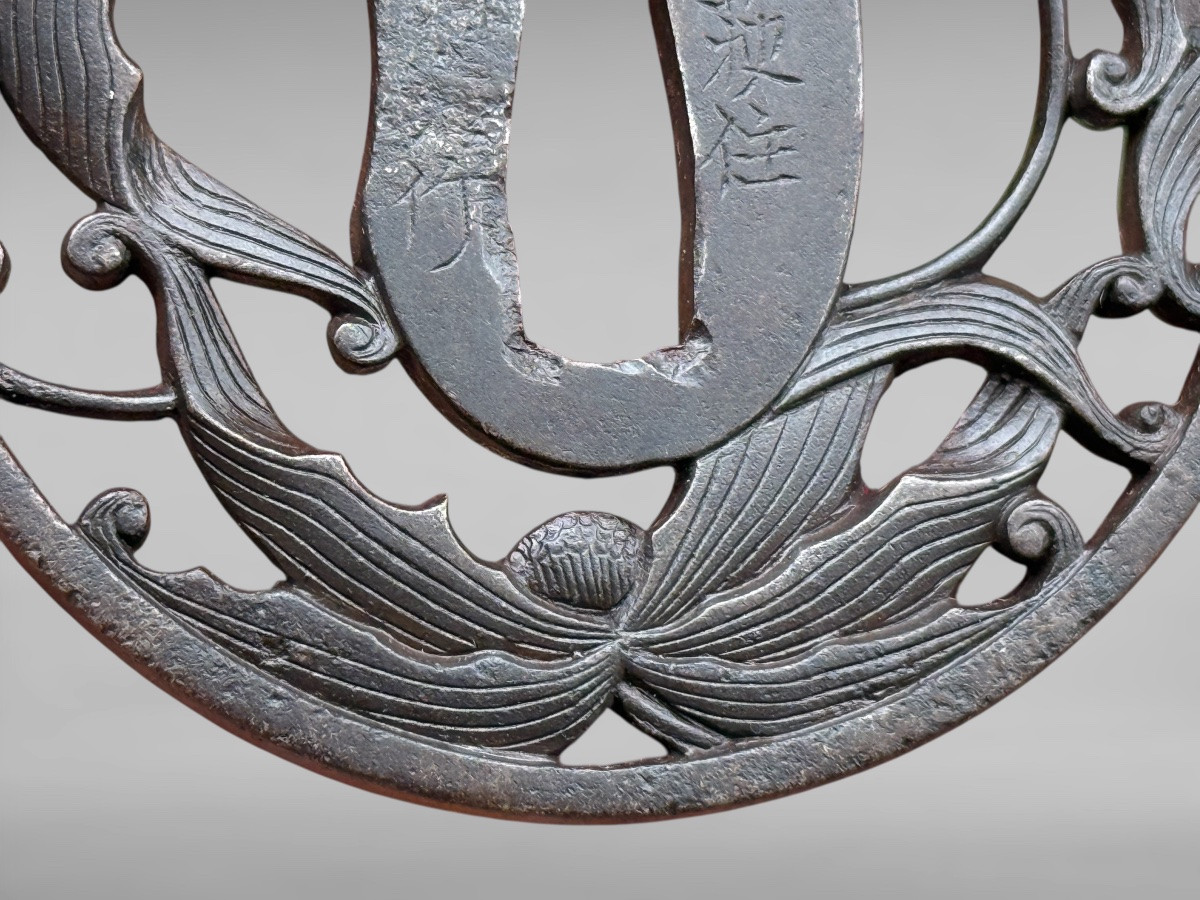

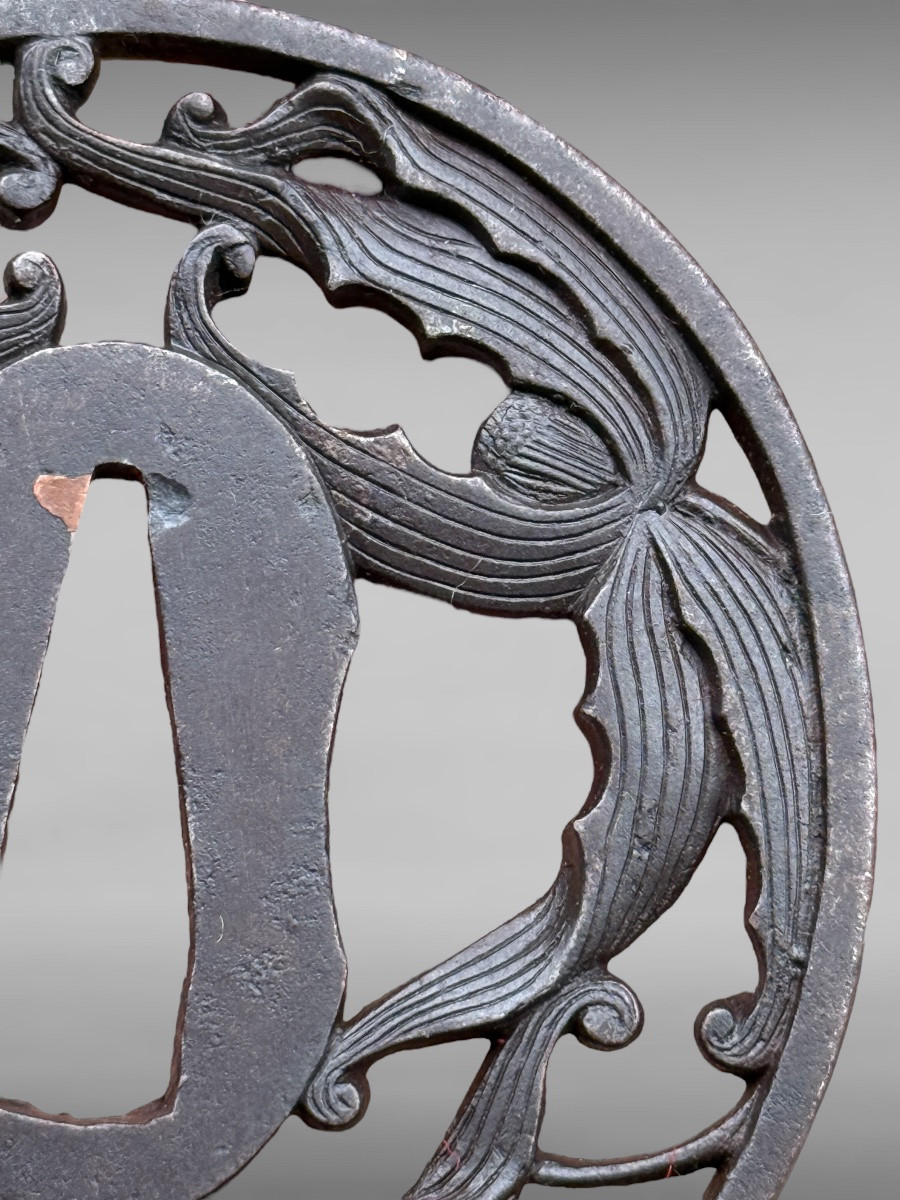

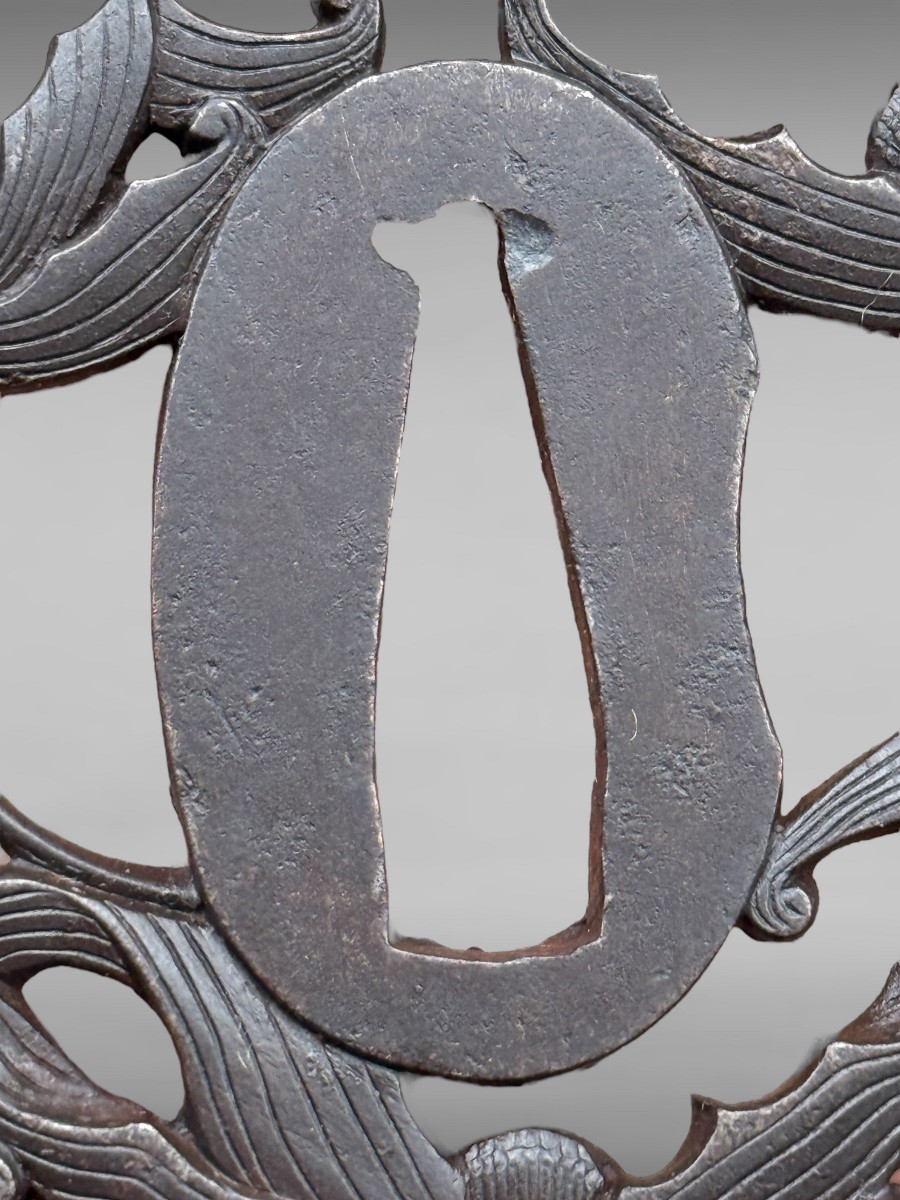


Tsuba Maru Gata In Openwork Iron With Plant Motifs - Edo Period - D. 7cm.
Type
: Tsuba ajouré (sukashi)
·
Signature
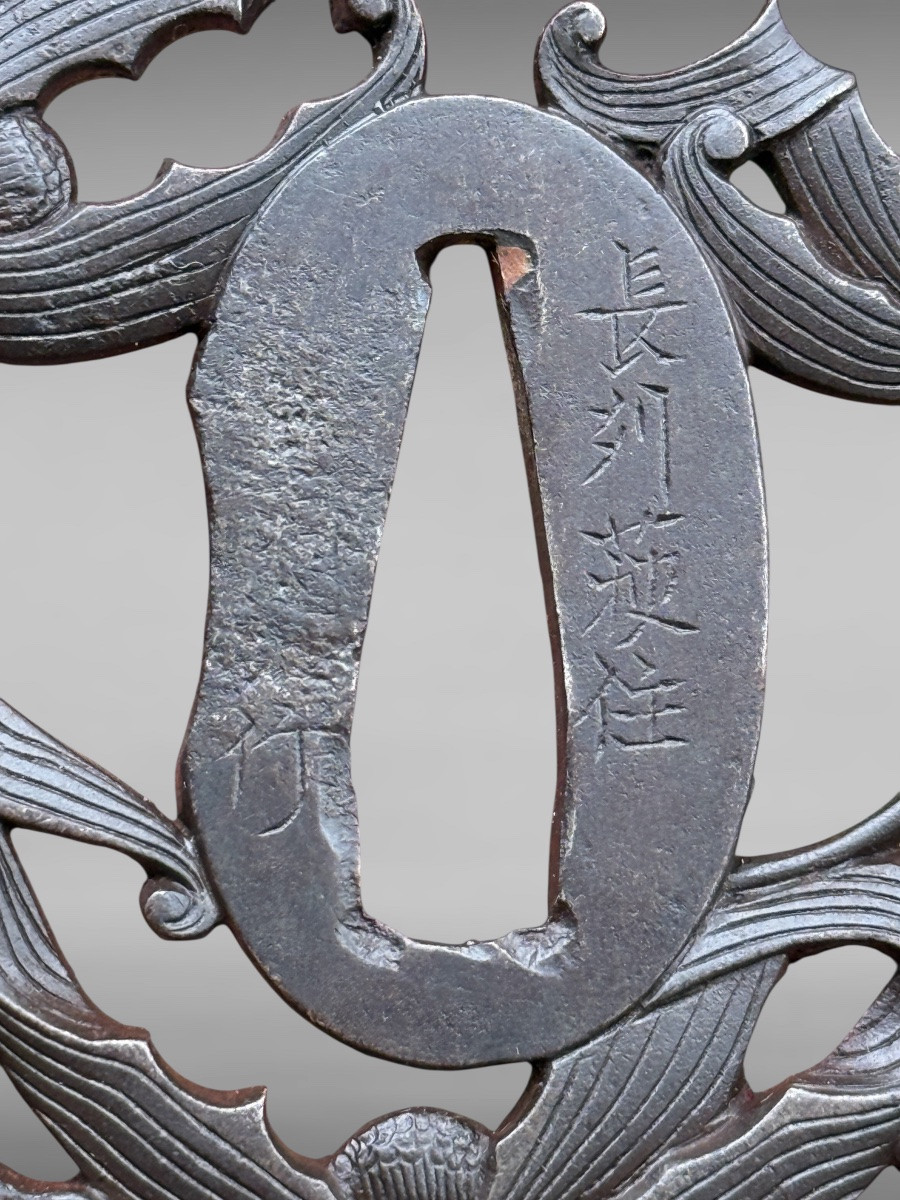
: Bushū jū Masayoshi (武 州 住 正 義)
·
School
probable: Bushū-Itō or related
·
Period
: Late Edo (ca. 1800–1860)
·
Material
: Carved patinated iron
·
Reason
: Iris or paulownia (kiri) foliage
Inscription (mei 銘): visible on the face
flat near the nakago-ana (opening for the blade tang).
The characters are:
武 州 住 正 義 (Bushū
jū Masayoshi)
this translates to "Masayoshi, resident of Bushū (Musashi province)".
Bushū (武 州) corresponds to the current Tokyo/Saitama region.
Several blacksmiths and tsuba craftsmen there have
worked between the 17th and 19th centuries, notably members of Bushū-Itō schools
and Bushū-Masayoshi.
The style with an openwork vegetable pattern, with neat relief
and to dense iron, corresponds well to the end of the Edo period (around 1800–1860).
: Tsuba ajouré (sukashi)
·
Signature
: Bushū jū Masayoshi (武 州 住 正 義)
·
School
probable: Bushū-Itō or related
·
Period
: Late Edo (ca. 1800–1860)
·
Material
: Carved patinated iron
·
Reason
: Iris or paulownia (kiri) foliage
Inscription (mei 銘): visible on the face
flat near the nakago-ana (opening for the blade tang).
The characters are:
武 州 住 正 義 (Bushū
jū Masayoshi)
this translates to "Masayoshi, resident of Bushū (Musashi province)".
Bushū (武 州) corresponds to the current Tokyo/Saitama region.
Several blacksmiths and tsuba craftsmen there have
worked between the 17th and 19th centuries, notably members of Bushū-Itō schools
and Bushū-Masayoshi.
The style with an openwork vegetable pattern, with neat relief
and to dense iron, corresponds well to the end of the Edo period (around 1800–1860).
380 €
Period: 19th century
Style: Asian art
Condition: Good condition
Material: Wrought iron
Diameter: 7 cm.
Reference (ID): 1640424
Availability: In stock
Print