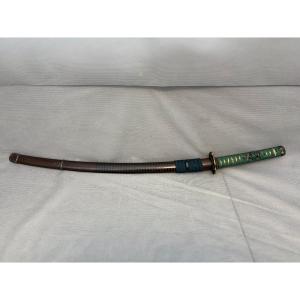
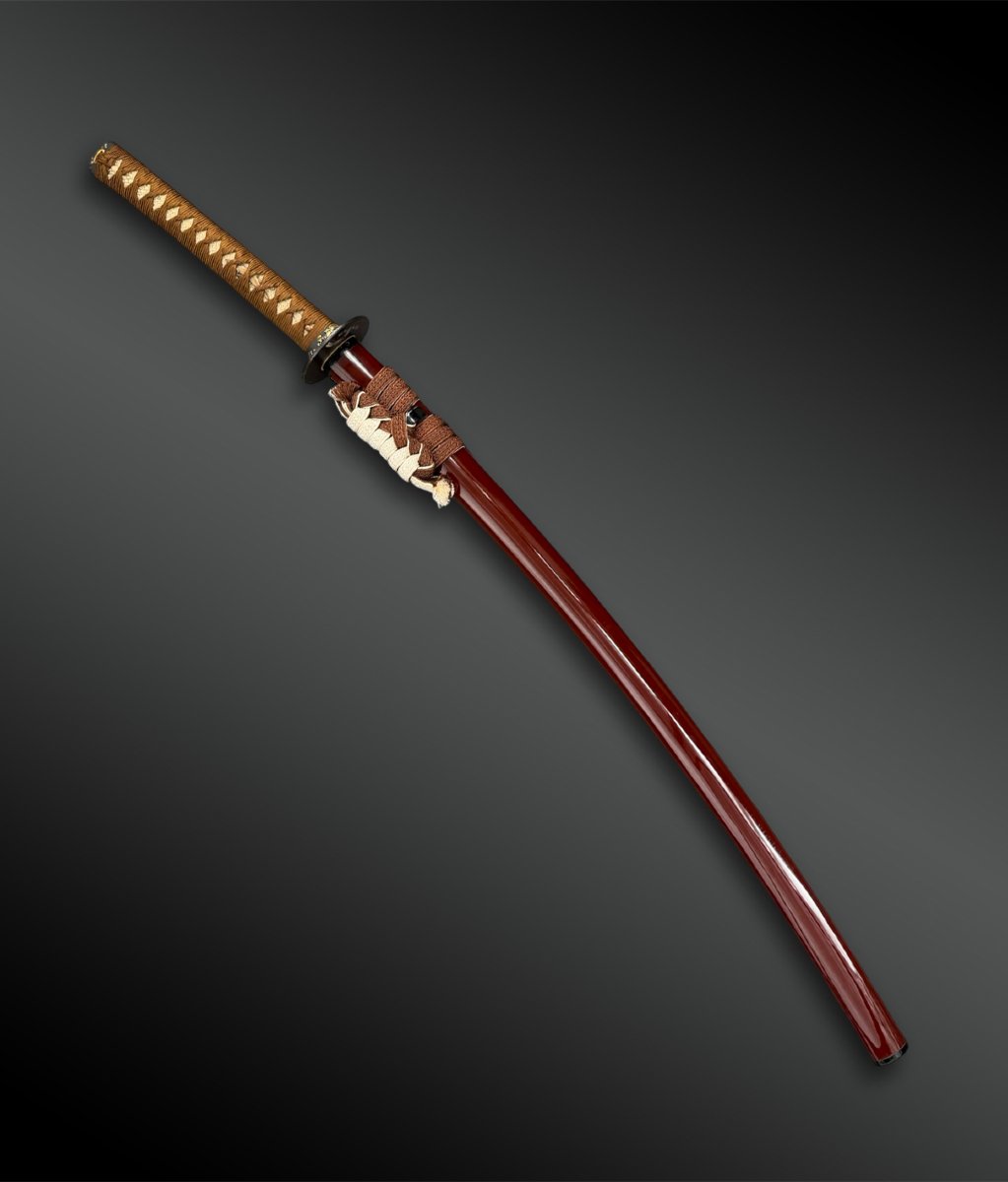


Sabre Known As Katana, Signed "a Fud Mio" - Japan - Edo Period (1603–1868)
SABERS known as Katana, signed A Fud Mio
Japan
Edo period (1603–1868)
Steel, wood, lacquer, gold, iron, shakudo
Nagasa: 70.5; Nakago: 21 cm
Sori: 2 cm
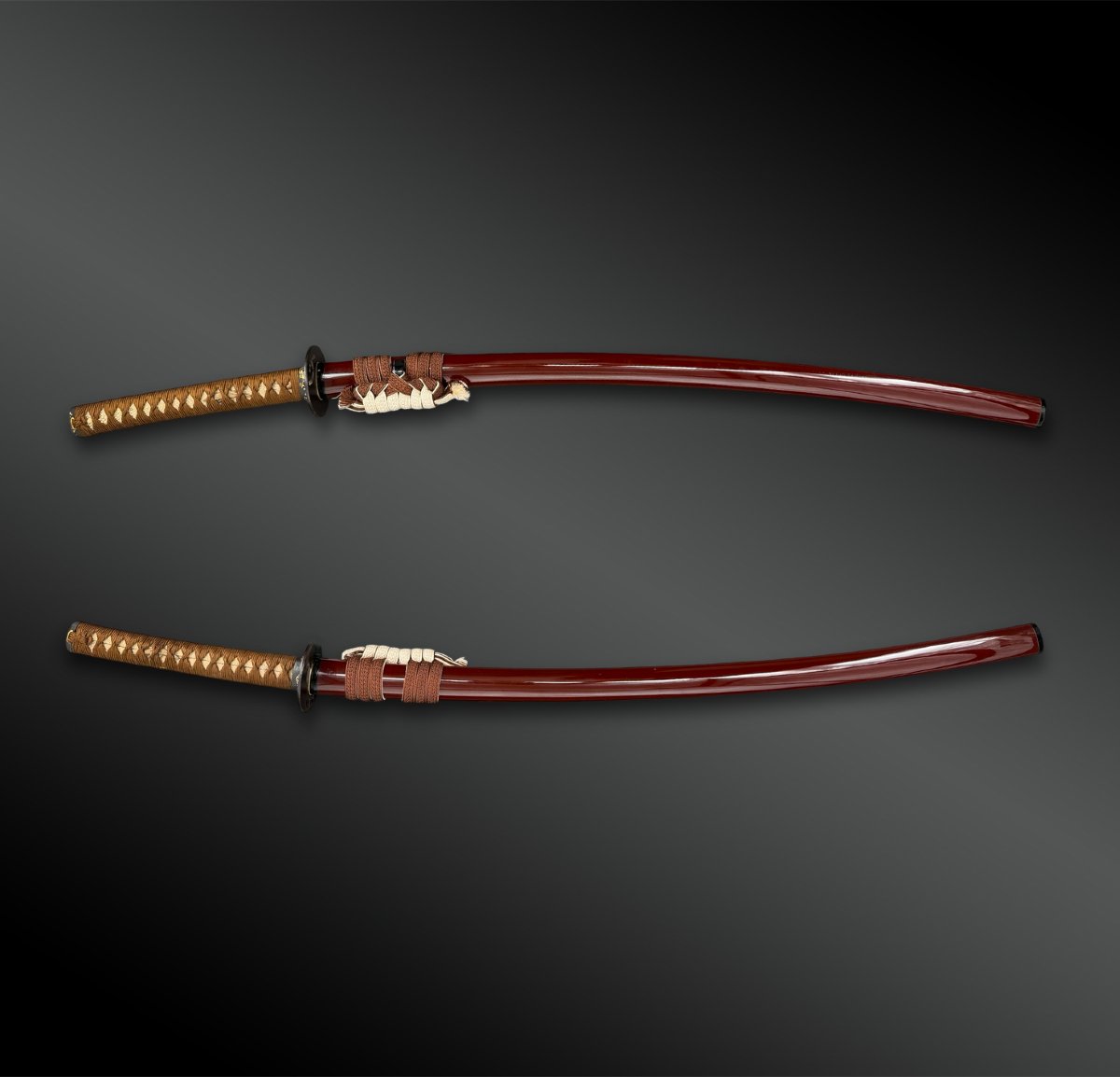
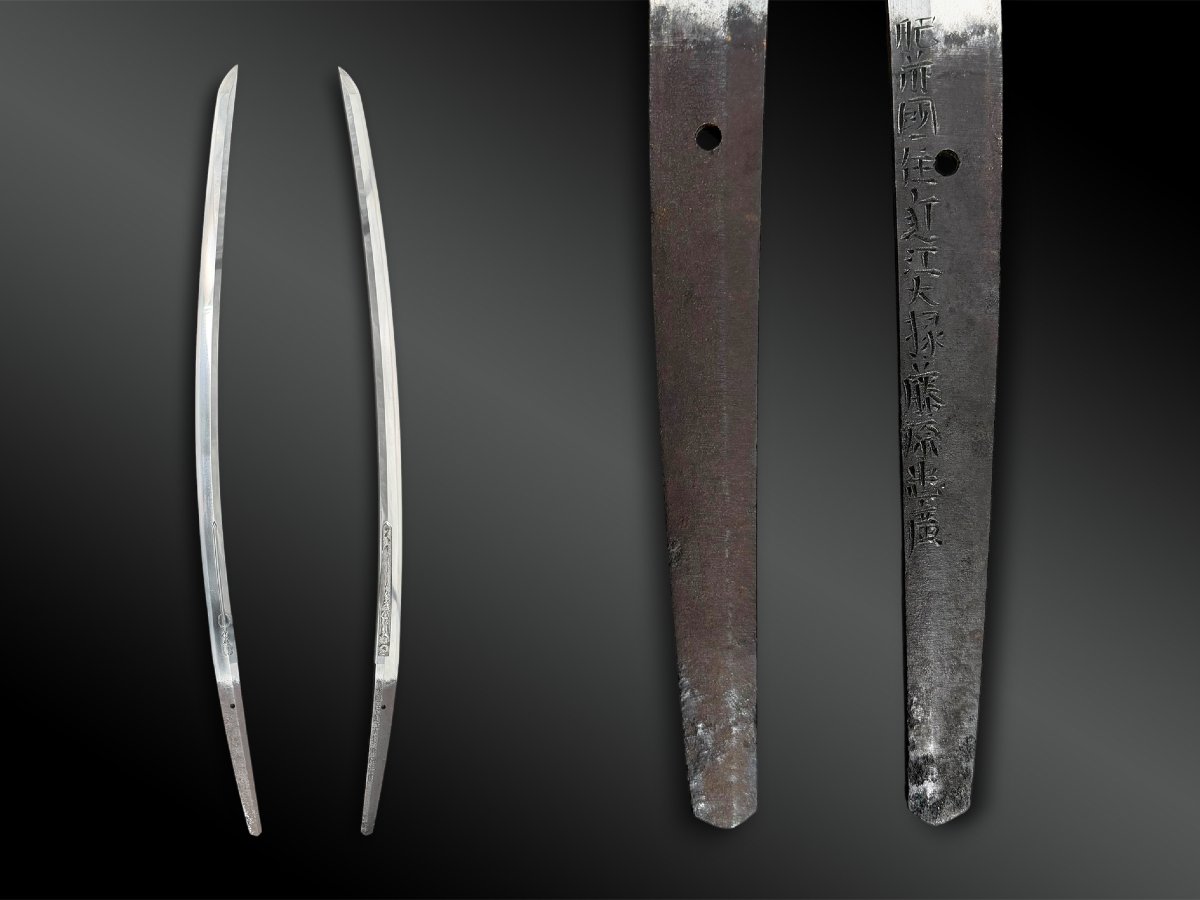
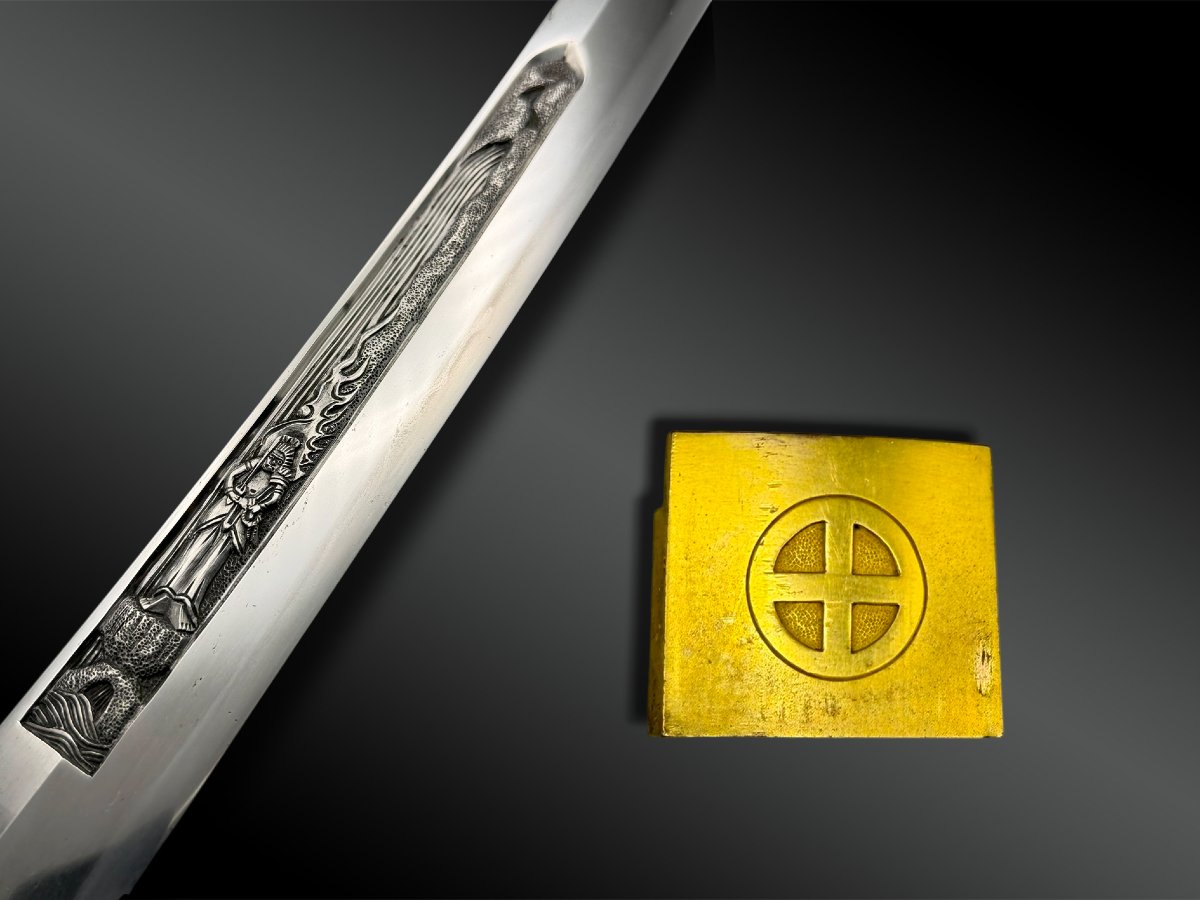
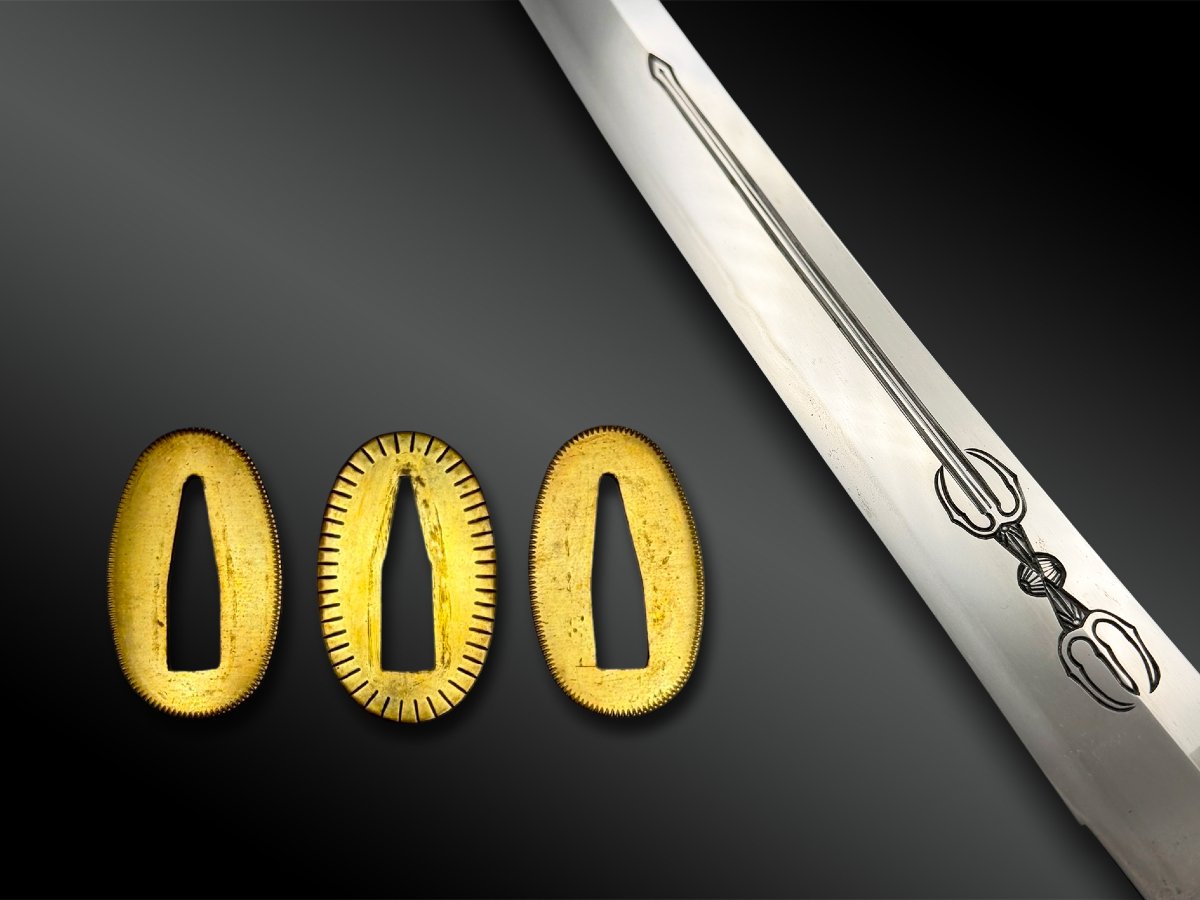
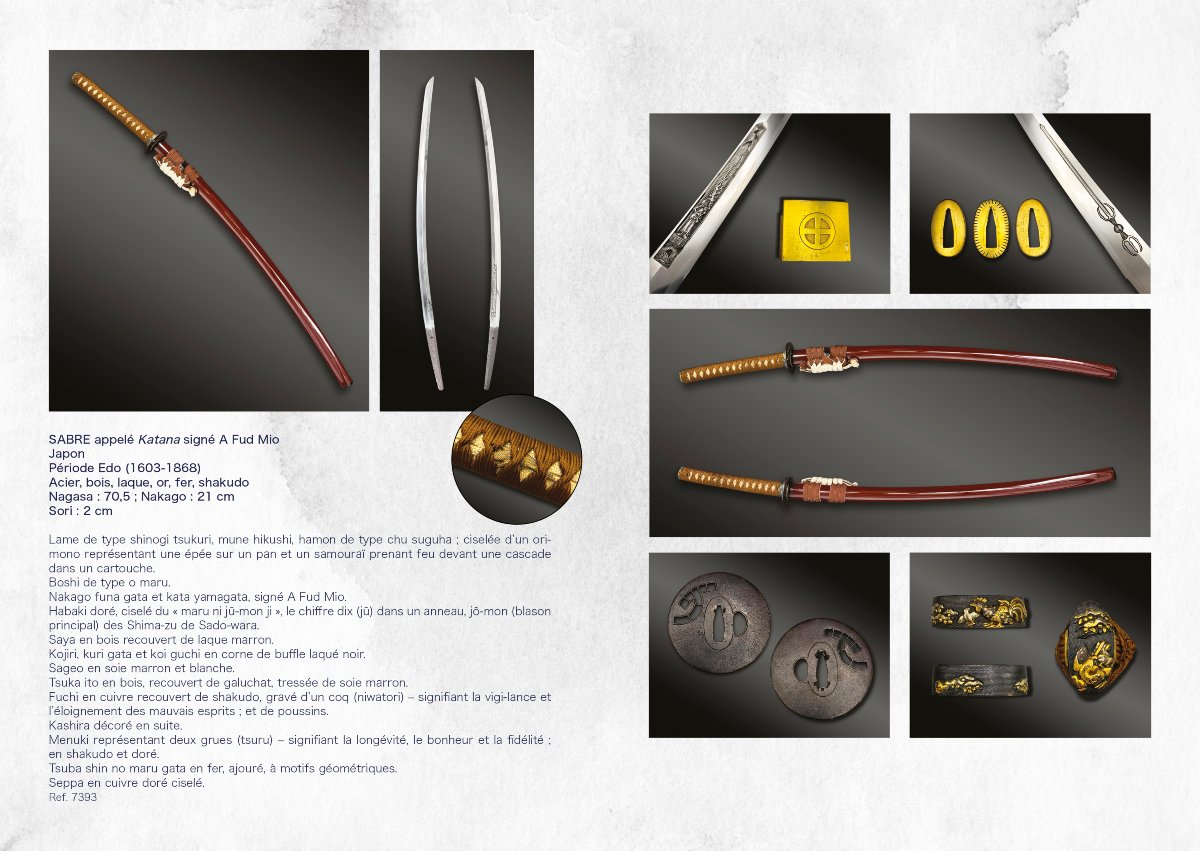
Shinogi-tsukuri blade, mune hikushi, chu-suguha-style hamon; engraved with an ori-mono depicting a sword on one side and a samurai engulfed in flames in front of a waterfall within a cartouche.
O-maru-style boshi.
Funa-gata and kata-yamagata nakago, signed A Fud Mio.
Gilded habaki, engraved with the “maru ni jû-mon ji”—the number ten (jû) within a ring—the jô-mon (main crest) of the Shima-zu clan of Sado-wara.
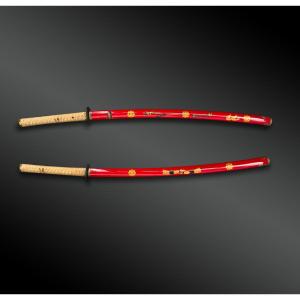
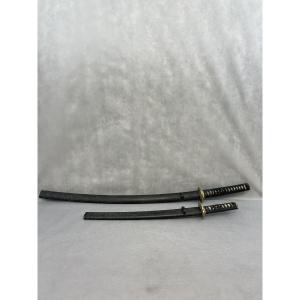
Wooden saya coated with brown lacquer.
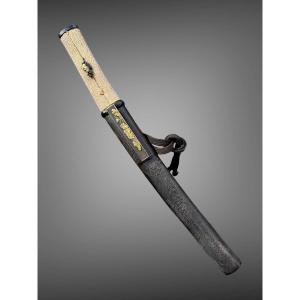
Kojiri, kuri gata, and koi guchi made of black-lacquered buffalo horn.
Sageo made of brown and white silk.
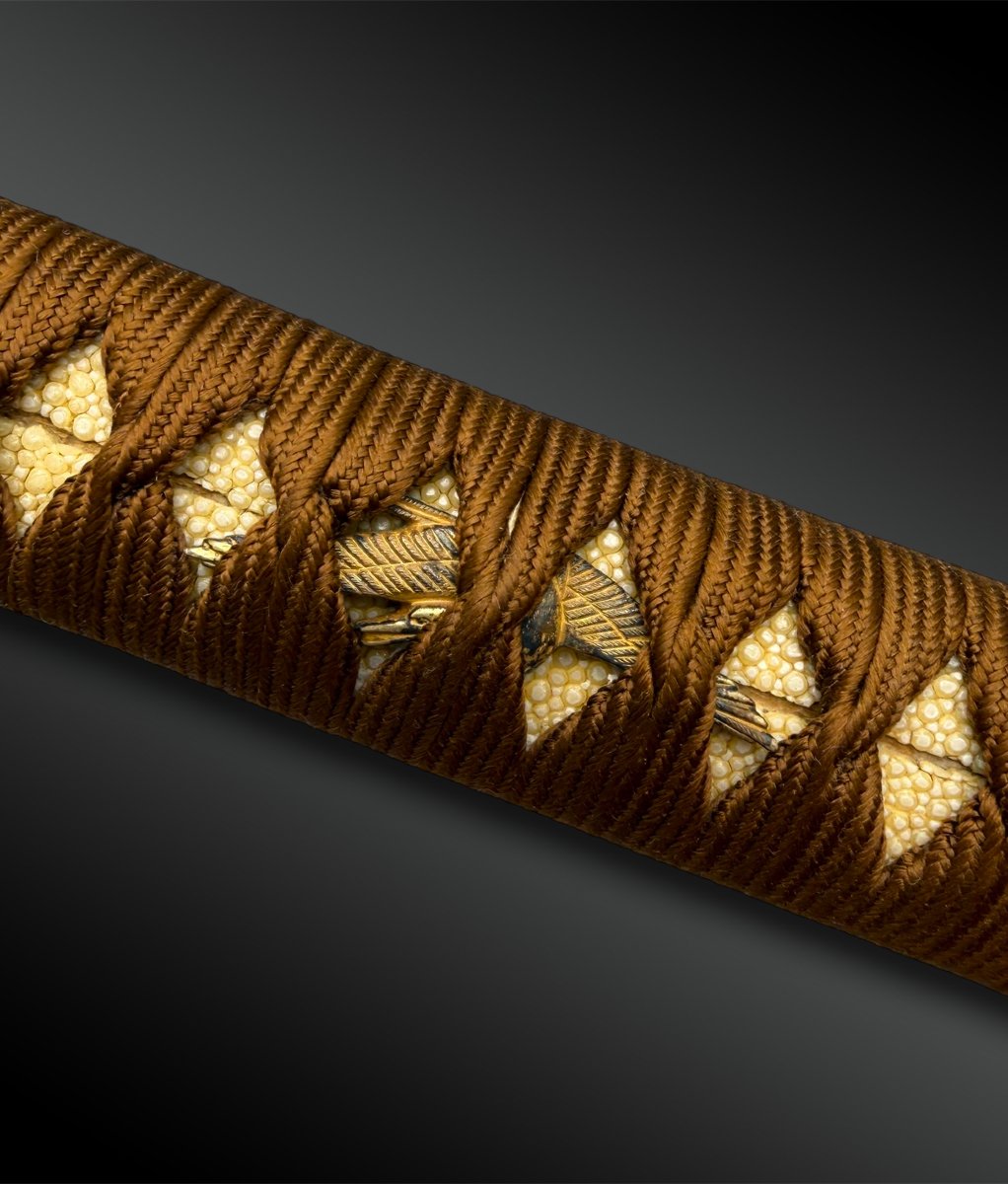
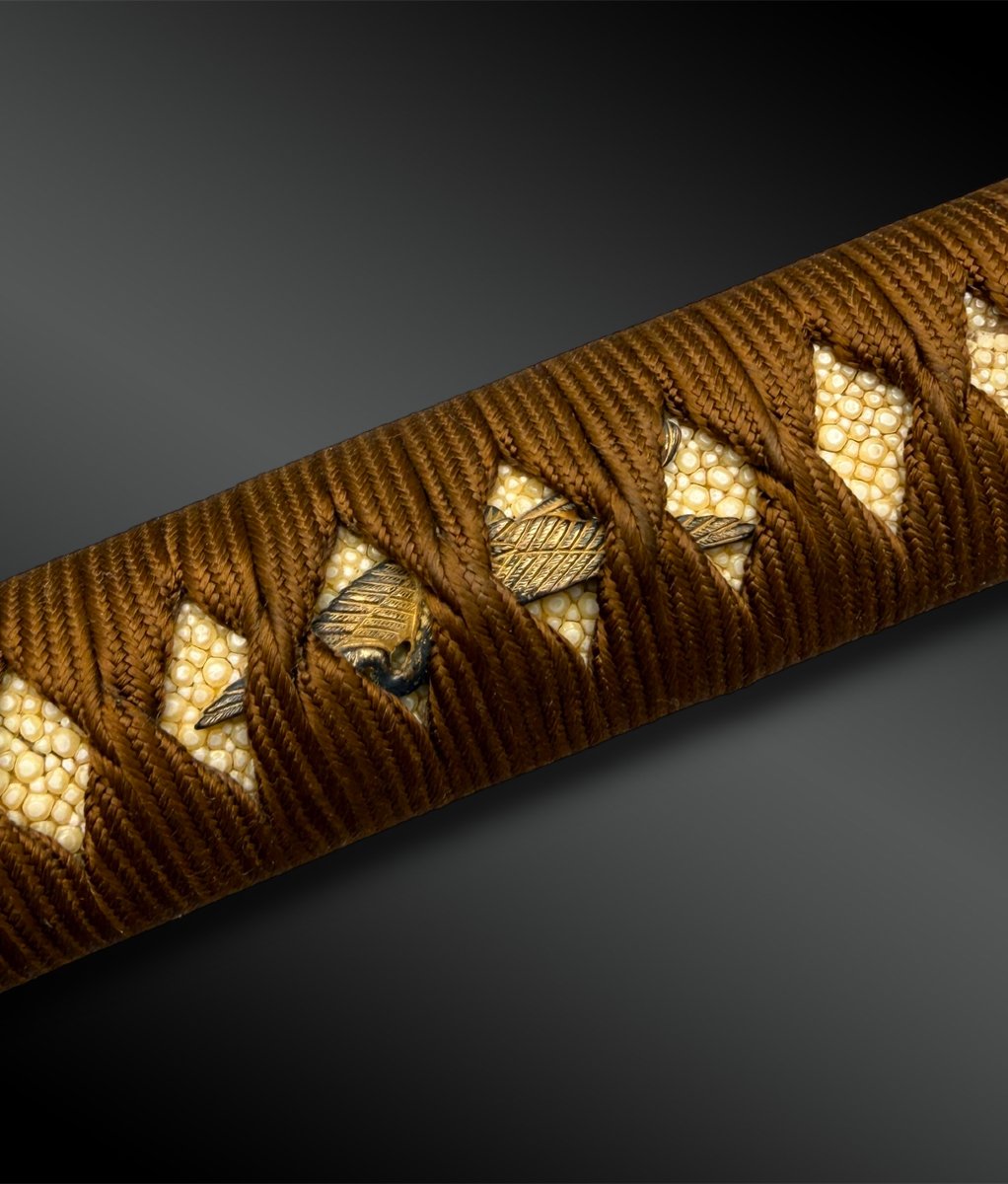
Wooden tsuka ito, covered in shagreen and braided with brown silk.
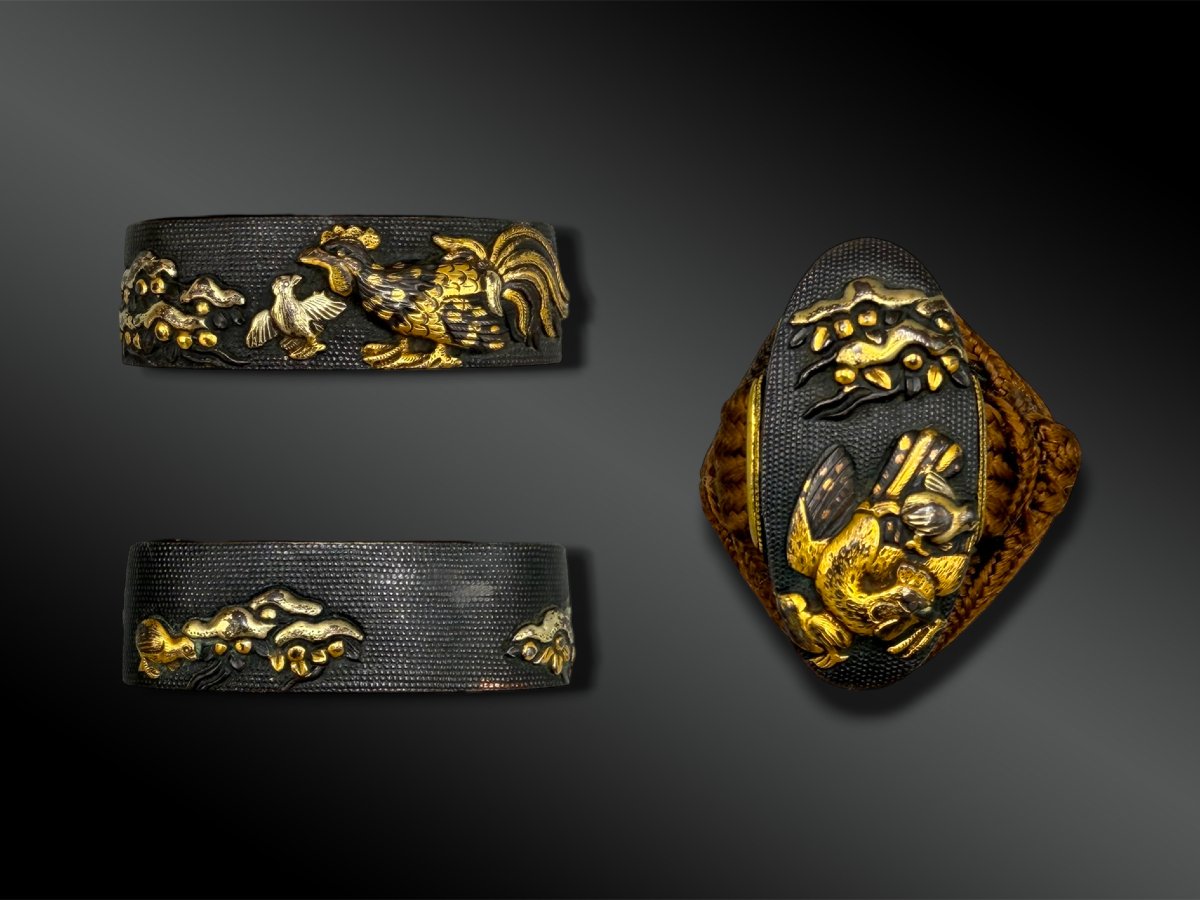
Fuchi made of copper overlaid with shakudo, engraved with a rooster (niwatori)—symbolizing vigilance and the warding off of evil spirits—and chicks.
Kashira decorated in matching style.
Menuki depicting two cranes (tsuru)—symbolizing longevity, happiness, and fidelity—made of shakudo and gilded.
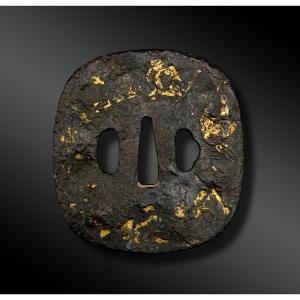
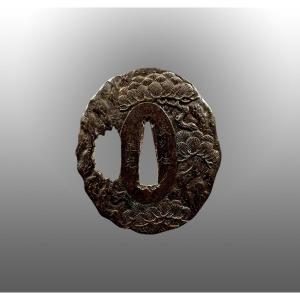
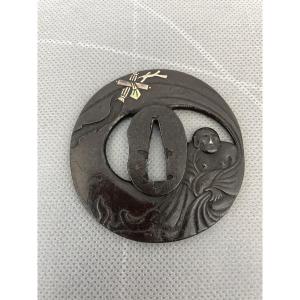
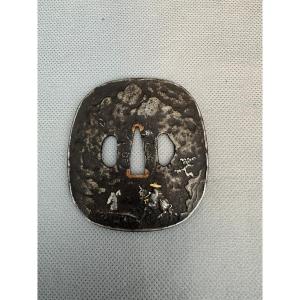
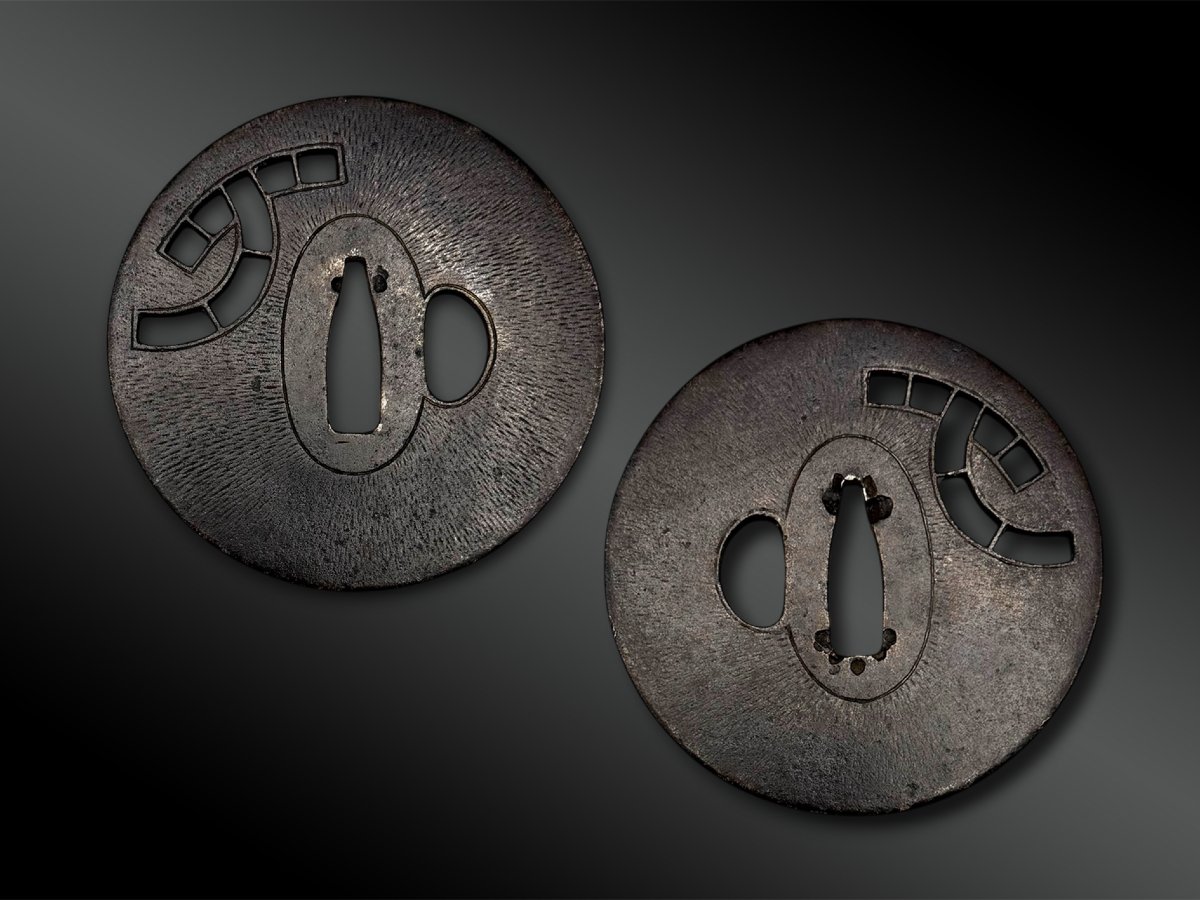
Iron tsuba in the “shin no maru” style, openwork, with geometric motifs.
Gilded, chiseled copper seppa.
Ref. 7393
Text and photos © FCP CORIDON
Japan
Edo period (1603–1868)
Steel, wood, lacquer, gold, iron, shakudo
Nagasa: 70.5; Nakago: 21 cm
Sori: 2 cm
Shinogi-tsukuri blade, mune hikushi, chu-suguha-style hamon; engraved with an ori-mono depicting a sword on one side and a samurai engulfed in flames in front of a waterfall within a cartouche.
O-maru-style boshi.
Funa-gata and kata-yamagata nakago, signed A Fud Mio.
Gilded habaki, engraved with the “maru ni jû-mon ji”—the number ten (jû) within a ring—the jô-mon (main crest) of the Shima-zu clan of Sado-wara.
Wooden saya coated with brown lacquer.
Kojiri, kuri gata, and koi guchi made of black-lacquered buffalo horn.
Sageo made of brown and white silk.
Wooden tsuka ito, covered in shagreen and braided with brown silk.
Fuchi made of copper overlaid with shakudo, engraved with a rooster (niwatori)—symbolizing vigilance and the warding off of evil spirits—and chicks.
Kashira decorated in matching style.
Menuki depicting two cranes (tsuru)—symbolizing longevity, happiness, and fidelity—made of shakudo and gilded.
Iron tsuba in the “shin no maru” style, openwork, with geometric motifs.
Gilded, chiseled copper seppa.
Ref. 7393
Text and photos © FCP CORIDON
11 000 €
Period: 18th century
Style: Asian art
Condition: Excellent condition
Reference (ID): 1816416
Availability: In stock
Print