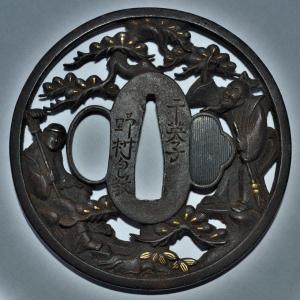
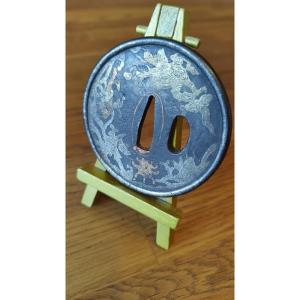


Antique Tsuba From The Shoami School / Nanban (hizen) Influence, Ritual And Mythological Motifs
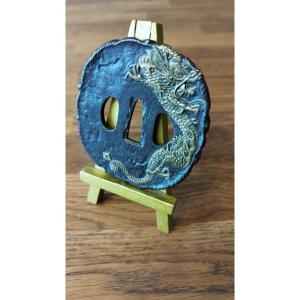
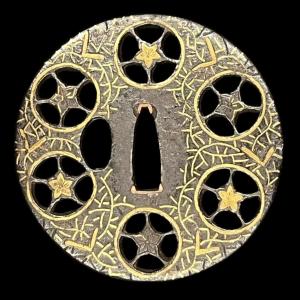
Rare antique Tsuba (18th century) from the Shoami School / Nanban Influence (Hizen), Ritual and Mythological Decoration.
This hand-forged, burnished iron Tsuba features remarkable decorative density on both sides, combined with rare goldsmithing and fitting work. It is a work of great narrative finesse, blending spiritual protection, martial and Zen/Shinto garden symbolism, and technical virtuosity.
Price excludes shipping fees and presentation stand.
Characteristics :Type: Tsuba for Katana / Tachi
Shape (Gata): Maru-gata (round)
Dimensions: Diameter: 77.5 mm | Thickness: 4.3 mm
Weight: 125 g
Main Material: Burnished forged iron with a deep dark patina
Inlays (Zogan): Brass/copper alloy (Shinchu), red copper (Akagane), precious metals
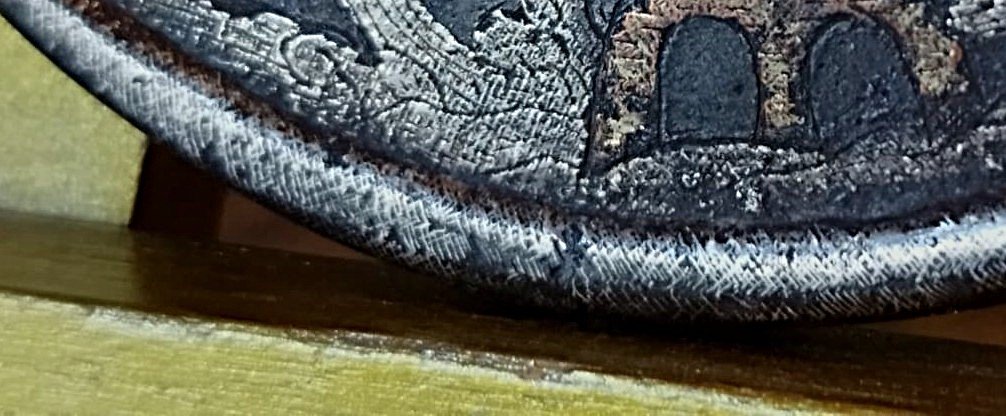
Rim (Mimi): Dote-mimi (rounded/rolled rim), worked with fine Nunome-zogan cross-hatching
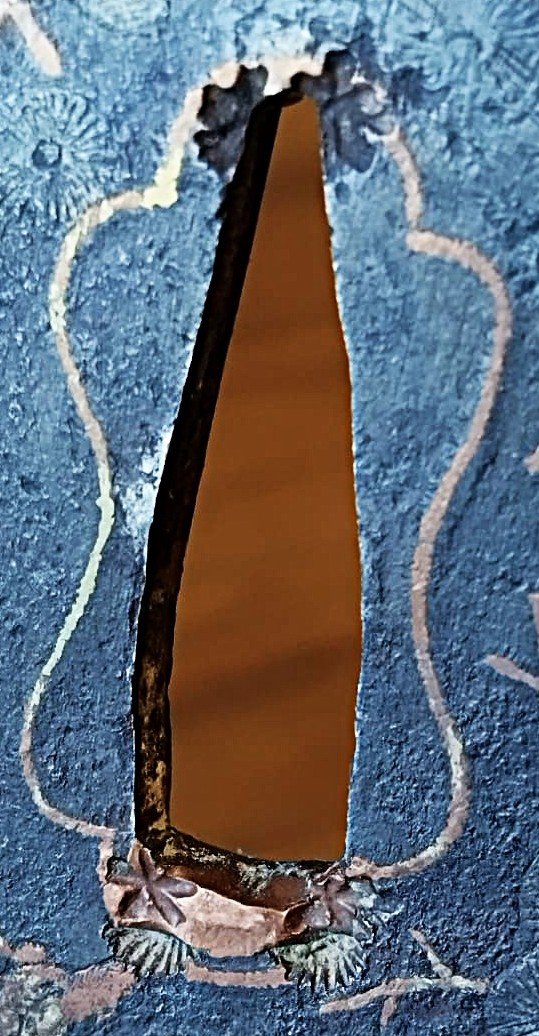
Fittings (Sekigane): Soft copper at the top and bottom of the Nakago-ana
Period: Late Edo (circa 1750–1830)
Style: Shoami School / Nanban Influence (Hizen)
Condition: Very good condition, with a beautiful original patina on the burnished iron.
Inlays: Main relief and wire decoration in very good overall condition. Natural and authentic age wear on the surface gilding along the rim (Mimi), testifying to the piece's antiquity and history.
Structure: No deformation; healthy, solid metal.
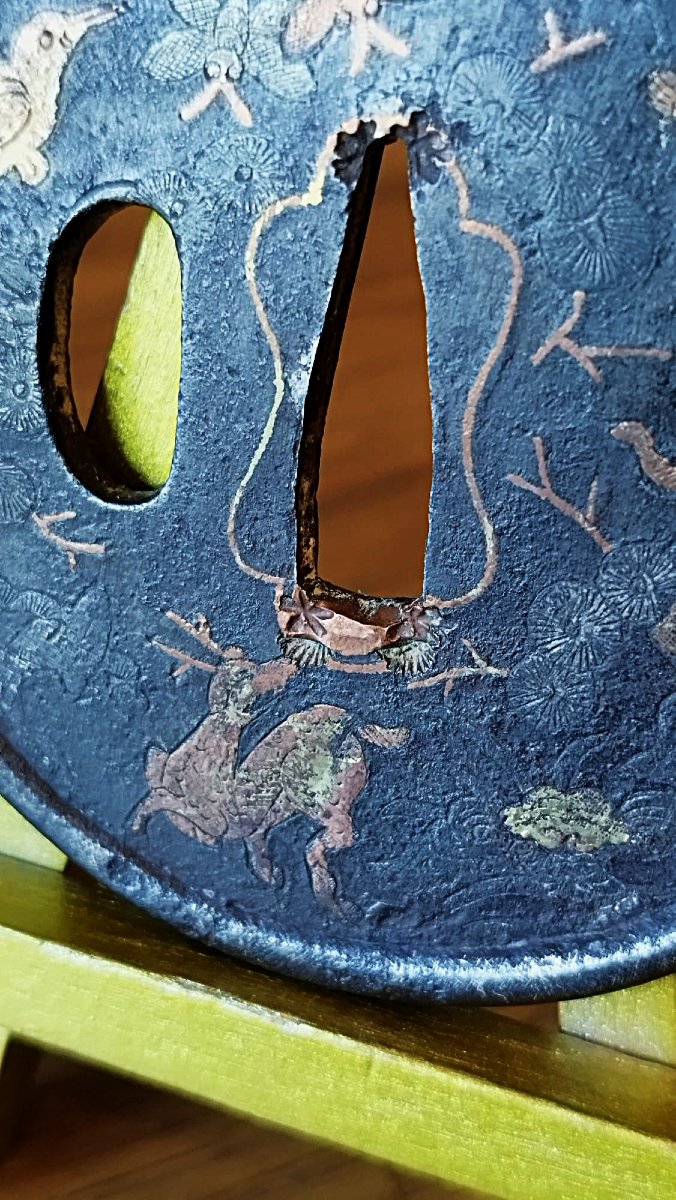
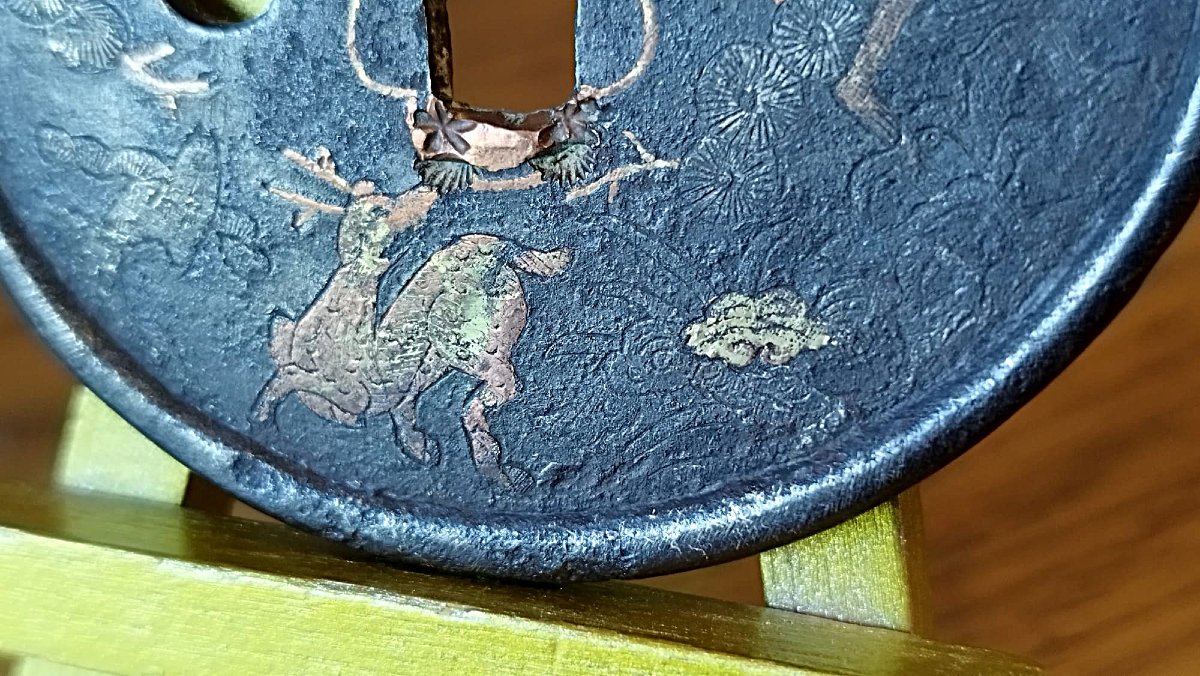
Artisan Fitting (Exceptional Sekigane): Unlike standard utilitarian adjustments, the copper wedges (Sekigane) around the central opening feature artistic punch marks made with carved chisels (Tagane-ato), depicting 5- and 6-petal blossoms (cherry/plum) and fan motifs. A rare testament to the swordsmith's Kodawari (obsessive attention to detail).
Concealed Miniature Cartouche on the Seppa-dai: Surrounding the Nakago-ana, the area meant to be covered by the Seppa washers reveals an inlaid lobed cartouche that served as a protective talisman reserved for the owner's private viewing.
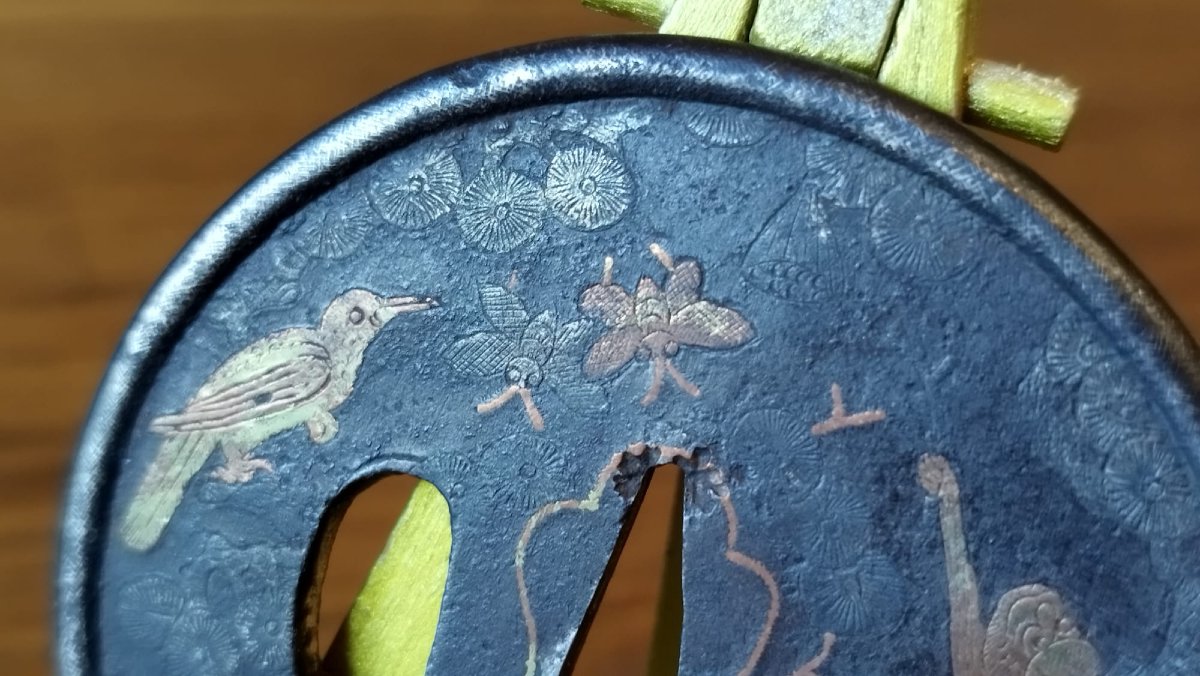
Punch-Marked Kiku-mon Background: The entire iron surface is fully stamped with delicate chrysanthemum flower (Kiku) motifs, adding relief, a vibrant texture, and imperial symbolism of eternity to the background.
Textured Rim (Nunome-zogan): The outer rim retains the traditional cross-hatched striation ("linen weave") designed to hold mechanical metal inlays, characteristic of elite late-Edo workshops.
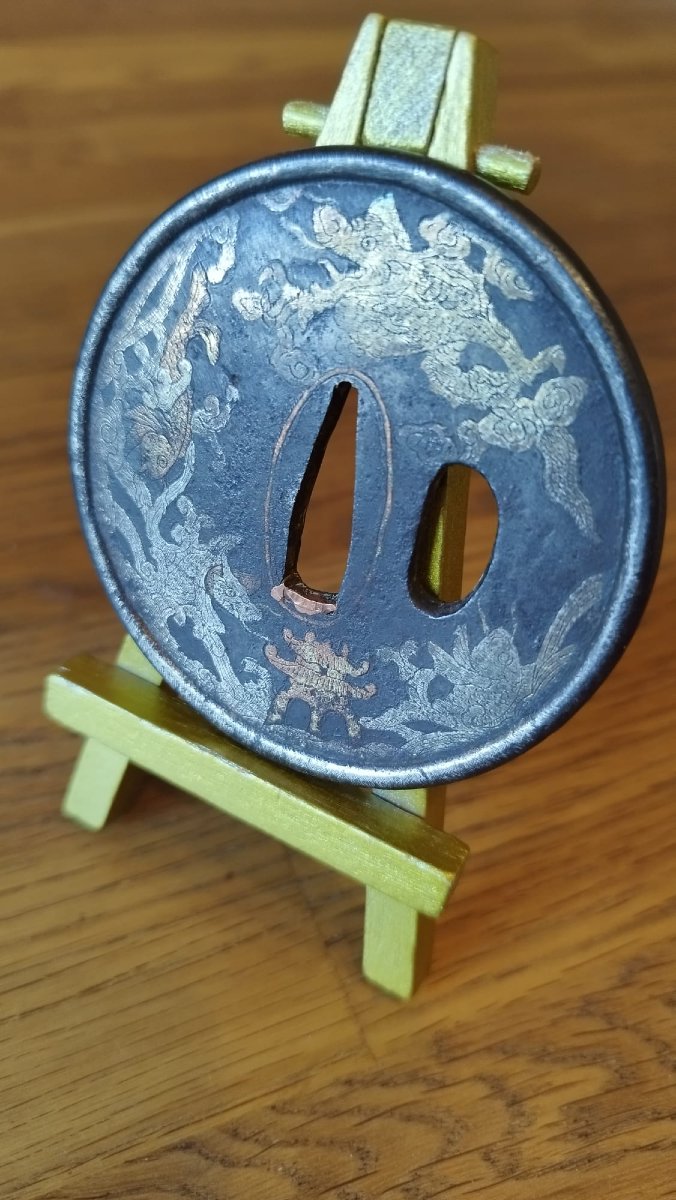
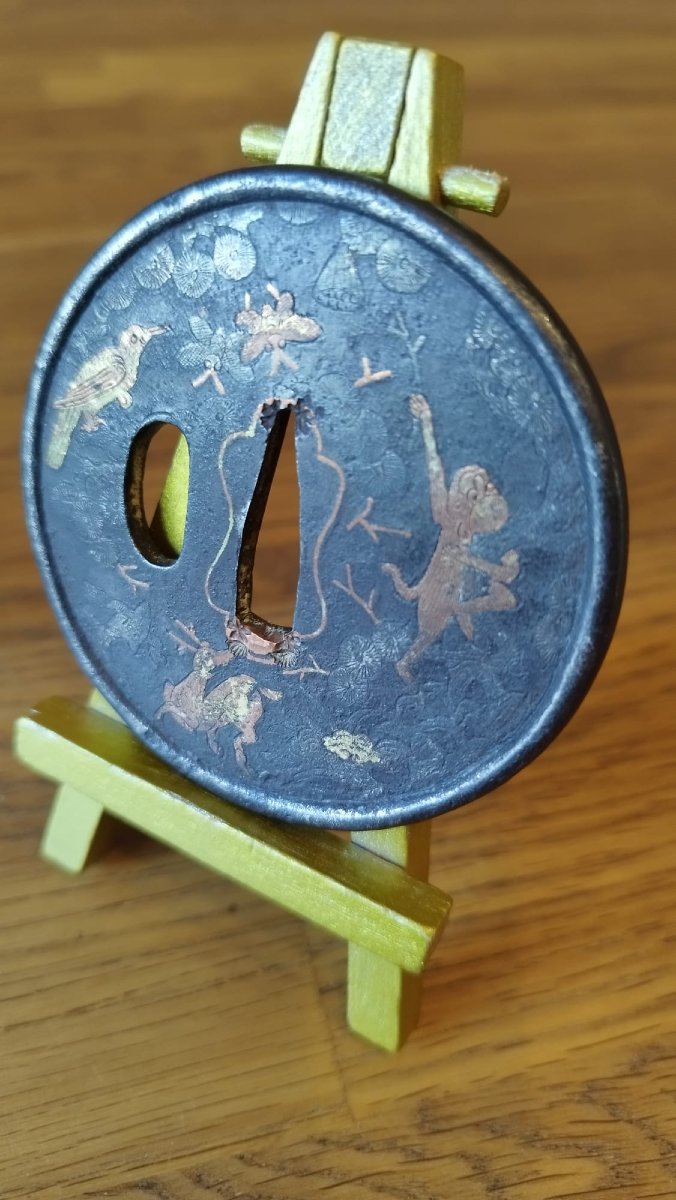
The central theme is not a simple "bestiary," but a classic double-sided symbolic composition representing the Celestial/Animal World (Side A) and the Fabulous/Mythological World (Side B). The piece is designed as an allegorical diptych illustrating the duality of the warrior code (Bushido).
Background: Entirely engraved with rosettes or small stylized flowers reminiscent of the chrysanthemum (Kiku).
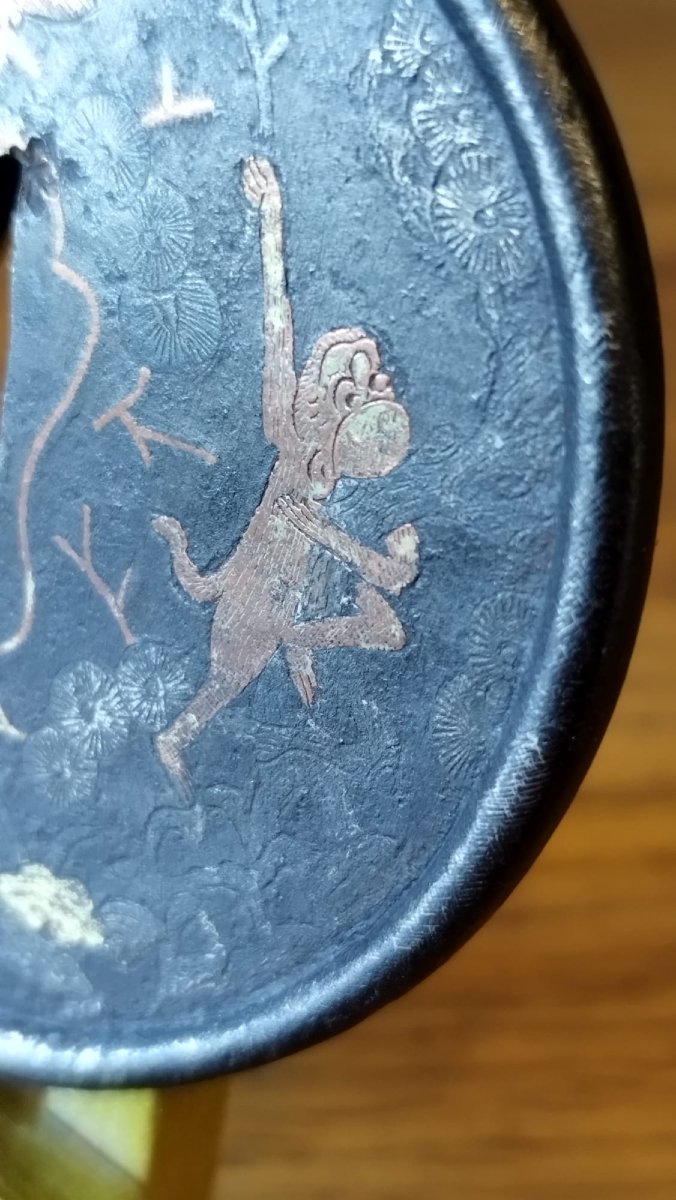
The Monkey (Saru): Symbol of agility, martial responsiveness, and a divine messenger protecting against evil spirits.
The Deer (Shika): Shinto figure of purity, longevity, and harmony with nature.
The Bird and Butterflies: Evocation of spiritual serenity (Kacho-fugetsu) and metamorphosis.
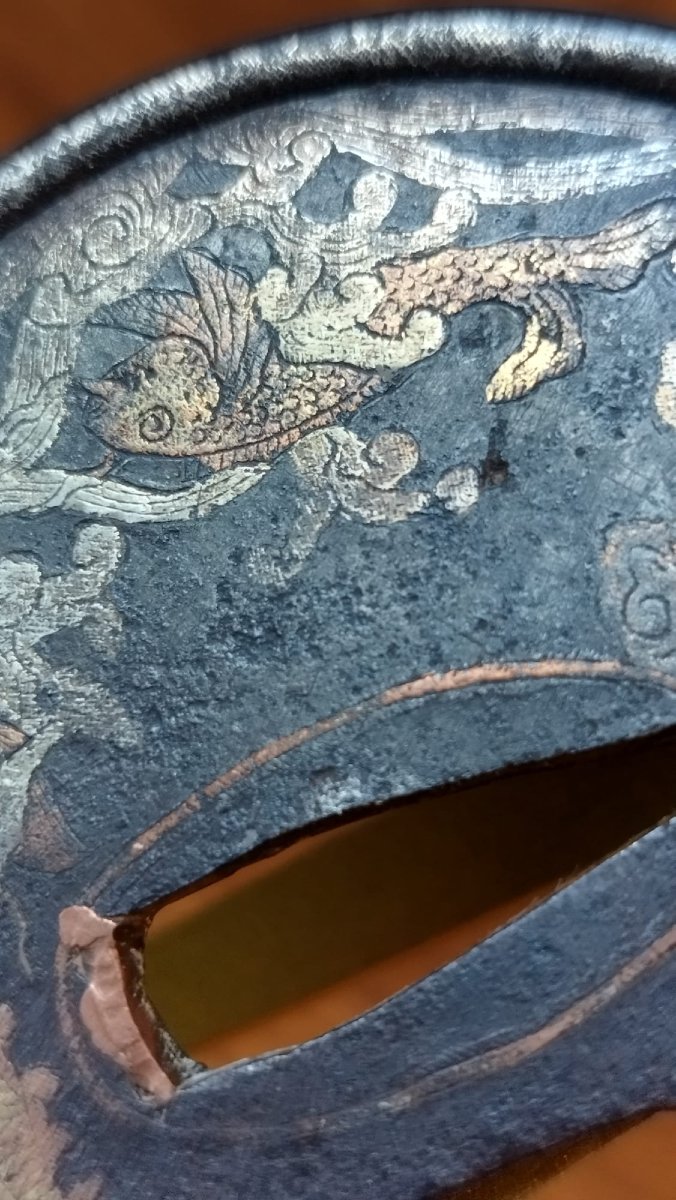
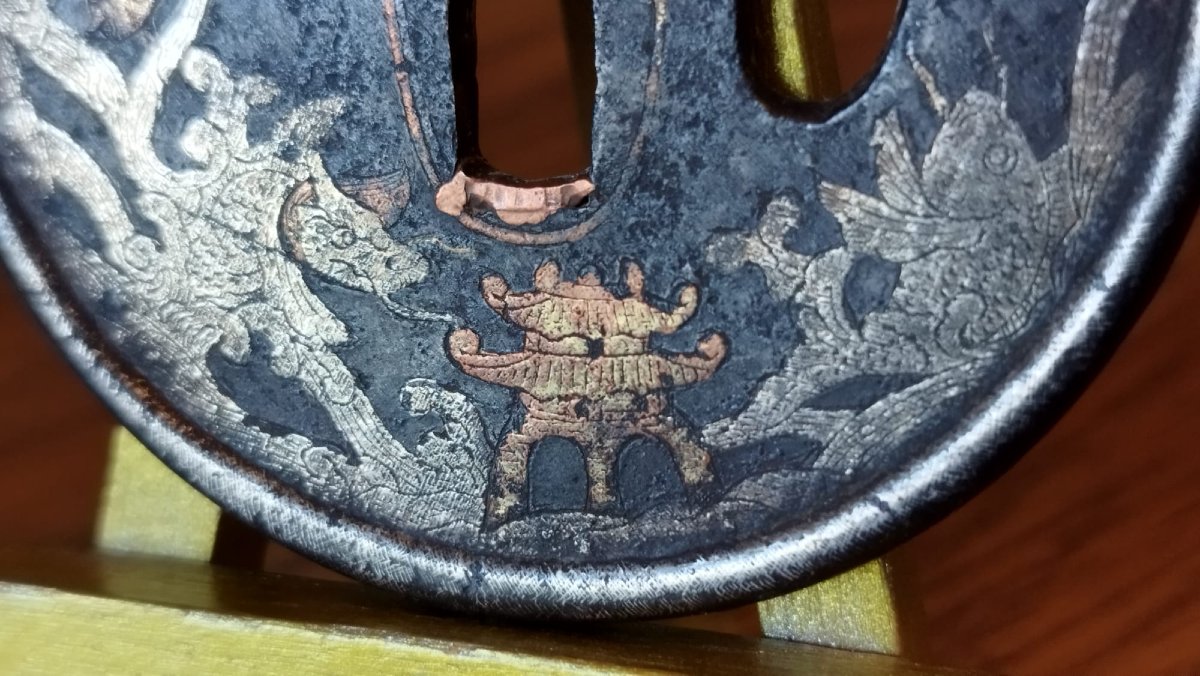
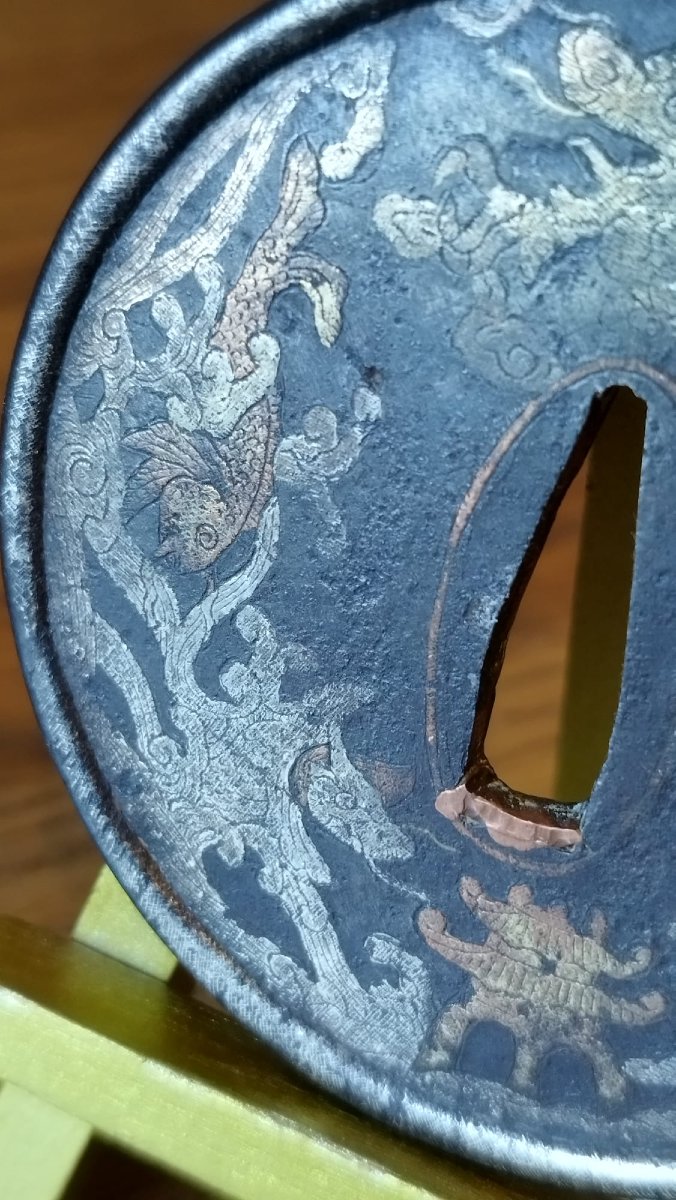
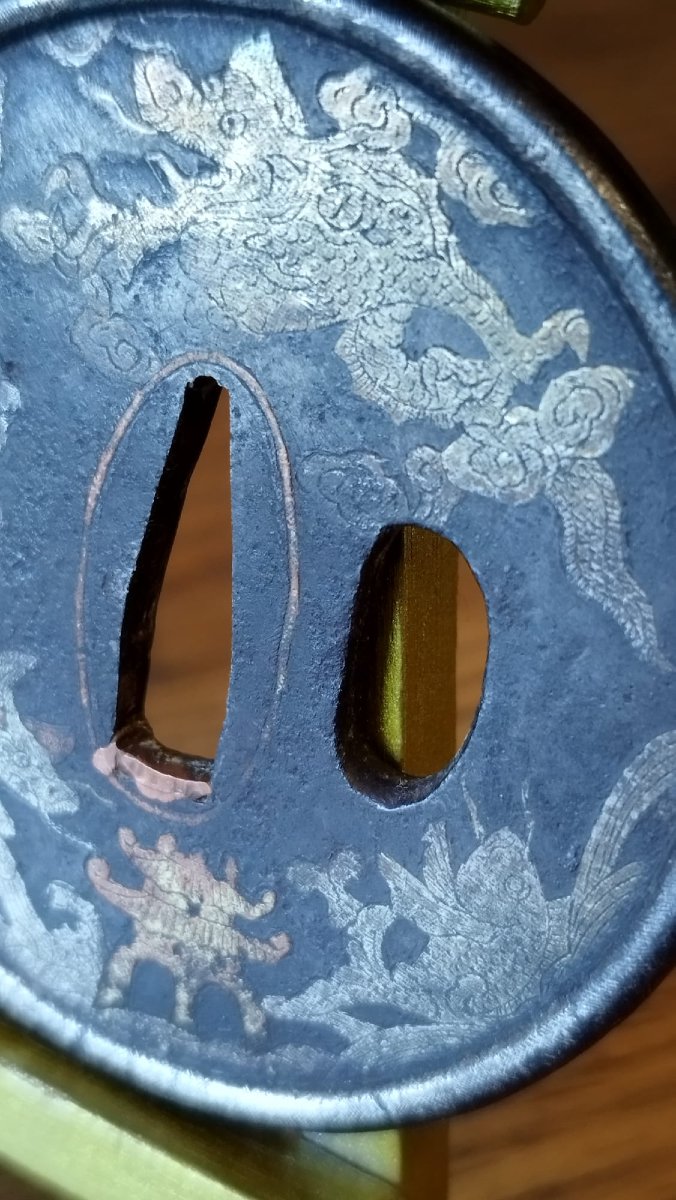
The Carp (Koi) and The Dragon (Ryu): An illustration of the famous "Dragon Gate" legend. The carp swimming up the rapids symbolizes the absolute perseverance of the Samurai, transforming into a powerful and victorious celestial dragon at the top of the waterfall. For the samurai, it is the allegory of unwavering perseverance, hard work, and victory over adversity.
Pagoda Lantern Motif (Toro): This delicate inlaid motif represents a stone pagoda garden lantern. A protective talisman guiding the warrior through the darkness, serving as a poetic detail.
By bringing these two sides together, the swordsmith condensed an entire philosophy of life:
Inner / Outer: On one side, serene nature (earth/forest); on the other, the force of the elements (water/sky).
The Warrior's Fulfillment: The samurai bearing this sword is called to embody the agility of the monkey and the nobility of the deer in daily life (Side A), while maintaining the tenacity of the carp and the power of the dragon in the face of combat and death (Side B).
The background, fully punch-marked with floral motifs (Chrysanthemums/Kiku), seals this composition under the patronage of the imperial flower—a symbol of eternity and perfection.
Period: 18th century
Style: Asian art
Condition: Excellent condition
Material: Wrought iron
Reference (ID): 1804529
Availability: In stock