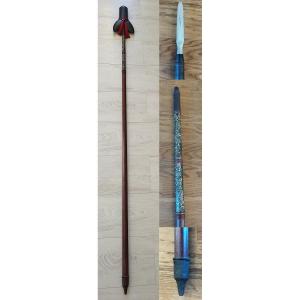


Japanese Ceremonial Spear - Sankaku Yari (te-yari) - Edo - Mumei
JAPANESE APPARATUS LANCE - SANKAKU YARI (TE-YARI) -EDO - MUMEI
Sold excluding shipping costs
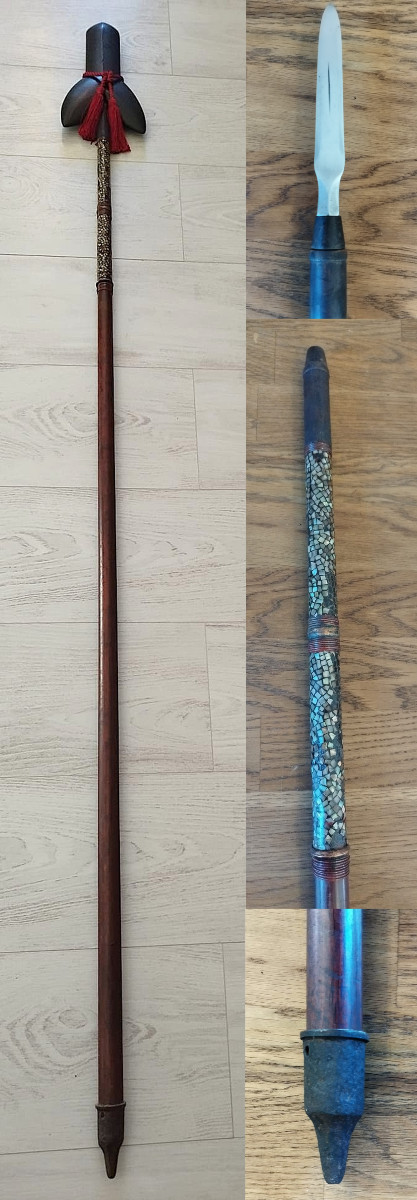
Authentic piece from the Late Edo period (19th century), no modernmodern parts (except possibly the scabbard cords). ThisTe-Yari is not a simple rank-and-file soldier's weapon (Ashigaru), but an officer's or bodyguard'san officer's or bodyguard's piece. Its intermediate length made it ideal for protectingprotection of interiors or official processions.
The extravagant shape of its scabbardscabbard served as a badge of rank and a visual rallying point, identifyingidentify the prestige of the clan when traveling to Edo.precious testimony to Japanese craftsmanship of the late feudal period.
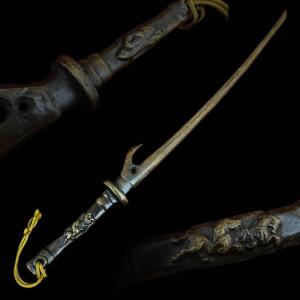
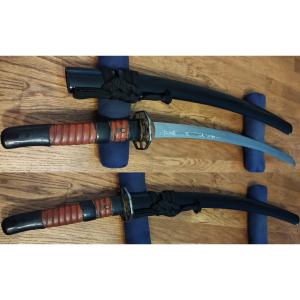
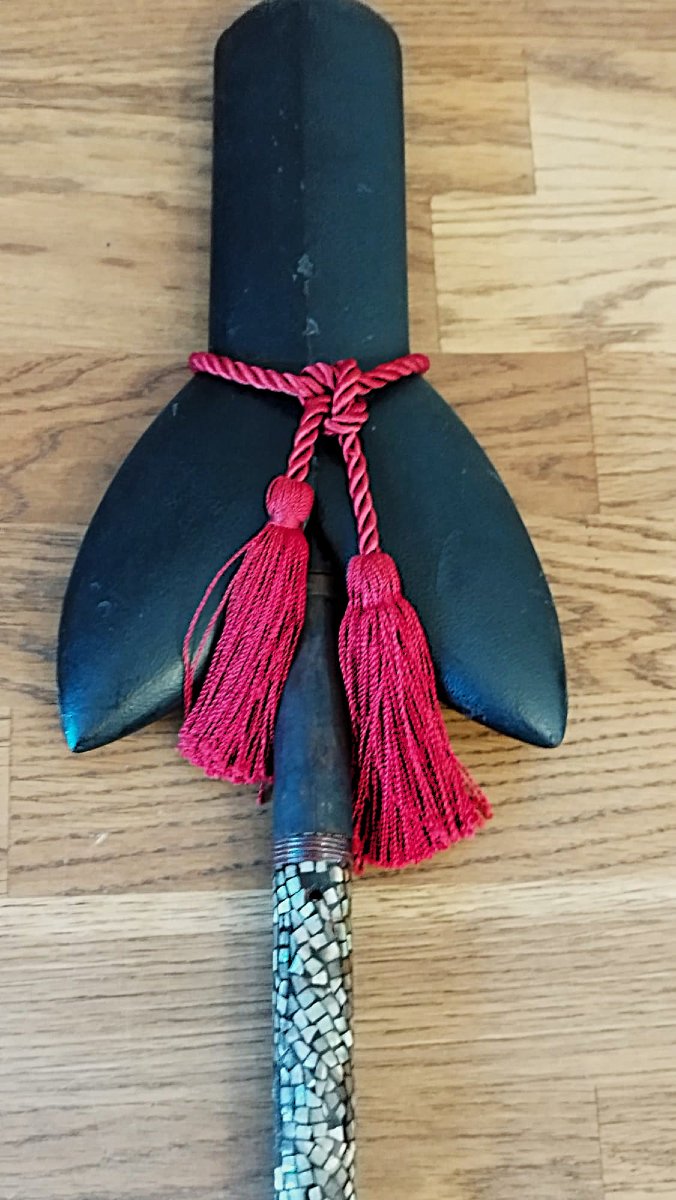
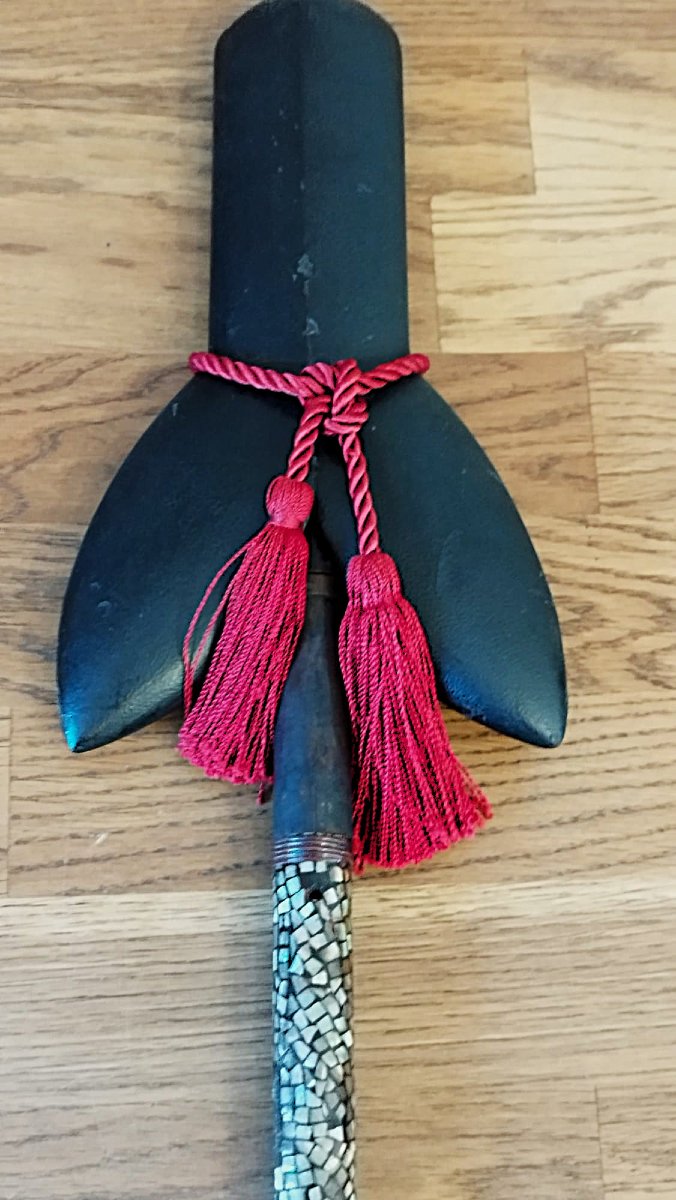
Shape: Kawari-saya with a curious stylized arrowhead" or "whale tail" shape, typical of typical of honor guards at Daimyo processions (Sankin-kotai).
Finish : Ishime-ji textured black lacquer Ishime-ji type (stone-skin look), highly resistant.
Ornamentation : Decorative Fusahimo cord in bright red silk Fusahimo decorative silk cord completes the martial parade aesthetic.
Sold excluding shipping costs
Authentic piece from the Late Edo period (19th century), no modernmodern parts (except possibly the scabbard cords). ThisTe-Yari is not a simple rank-and-file soldier's weapon (Ashigaru), but an officer's or bodyguard'san officer's or bodyguard's piece. Its intermediate length made it ideal for protectingprotection of interiors or official processions.
The extravagant shape of its scabbardscabbard served as a badge of rank and a visual rallying point, identifyingidentify the prestige of the clan when traveling to Edo.precious testimony to Japanese craftsmanship of the late feudal period.
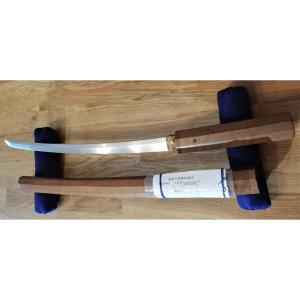
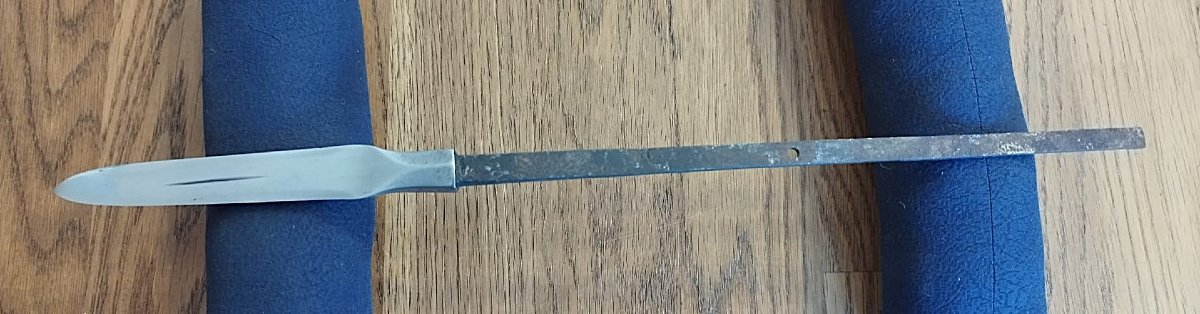
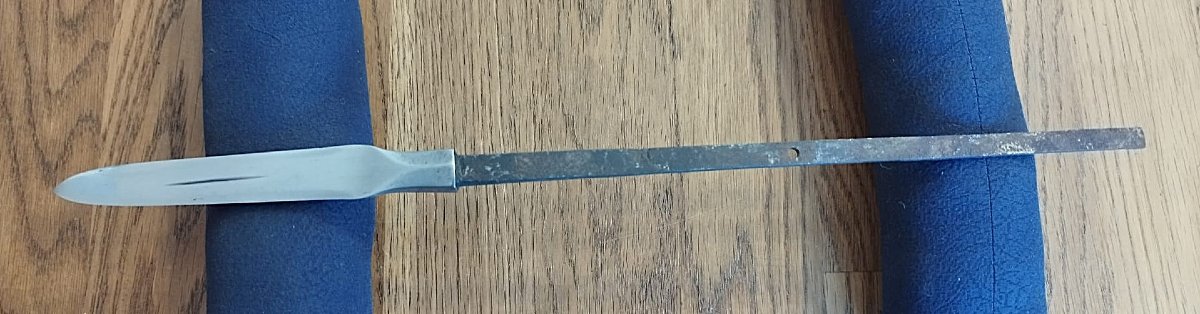
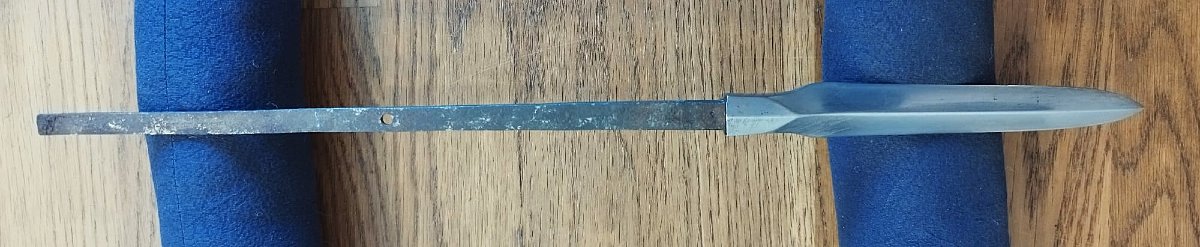
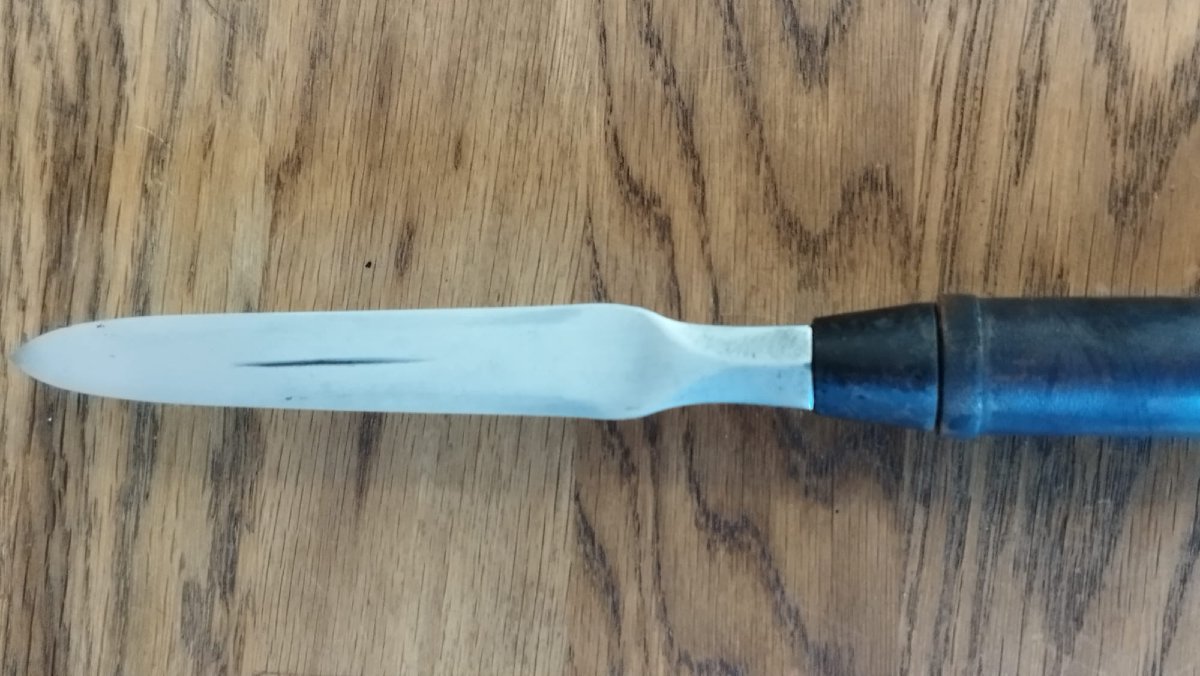
- Blade type: Sankaku Yari (Spear with triangular section)
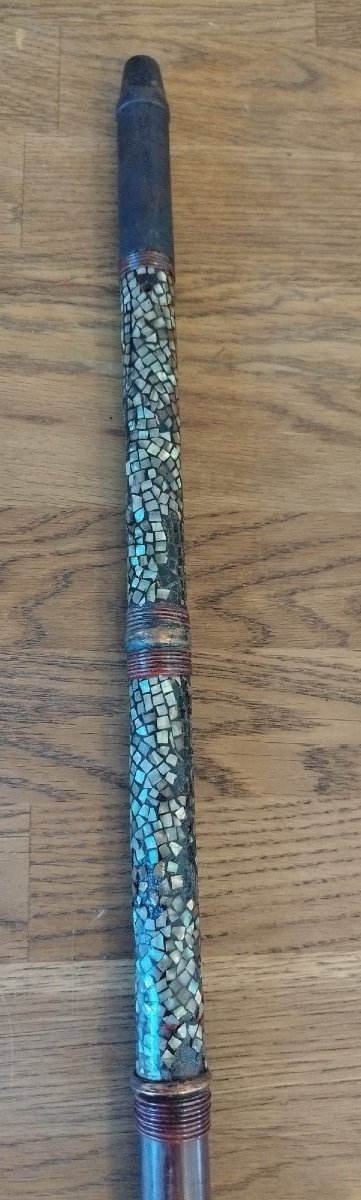
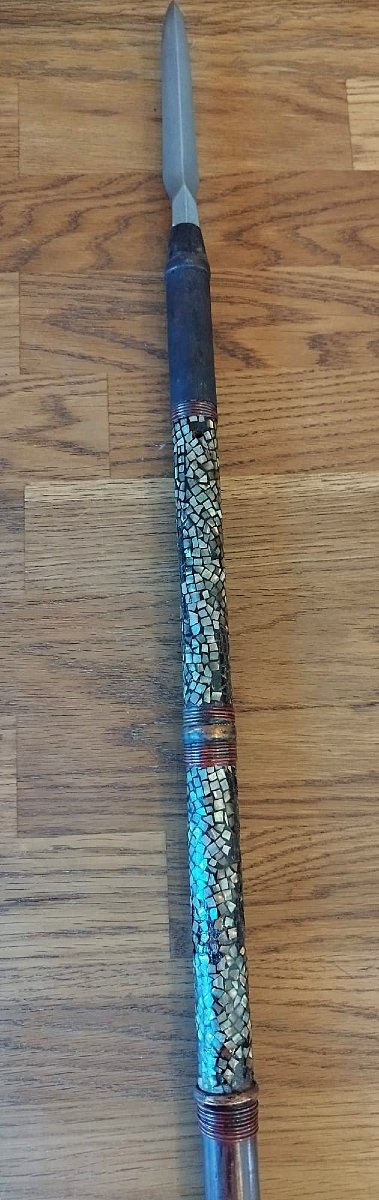
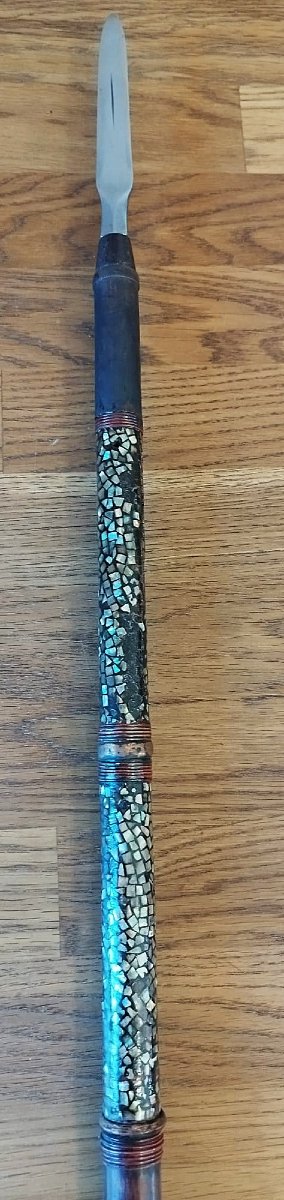
Shaft finish:Aogai-Raden maki (Mother-of-pearl inlays)
Condition:Beautiful historic condition, complete with original accessories.accessories.
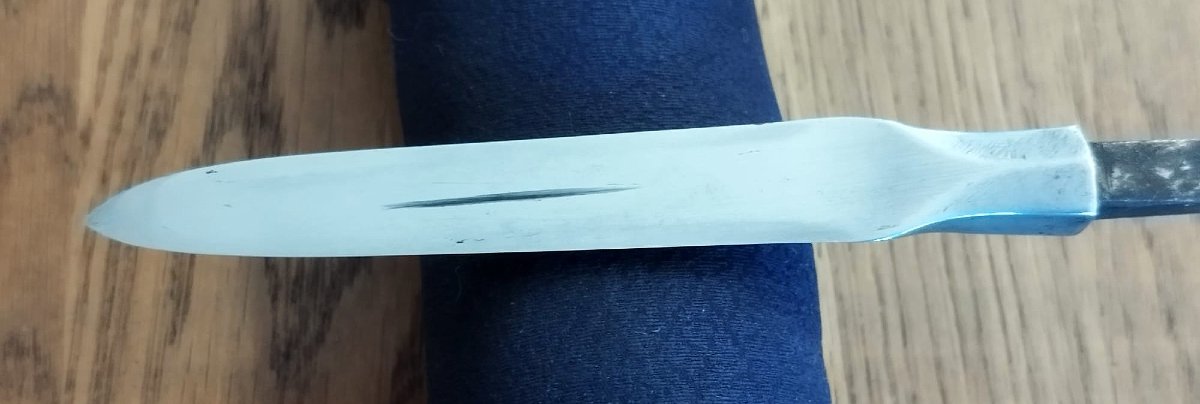
- Shape: Sankaku-Zukuri. Three-sided designed for stabbing. Presence of a groove (Hi) on the flat side the original groove is faded.
Dimensions Short blade (Te-Yari type), offering great maneuverability.
Forging Japanese steel traditional with well-preserved, sharp edges (Kado).
Toughening (Hamon) Chu-Suguha style (straight line straight line of medium width, approx. 5-6 mm). The temper line is clearly visible visible and healthy, testifying to the excellent health of the steel despite historical polishings.
Silk (Nakago) : Long through silk for optimum strength, unsigned (Mumei), natural wear patina.
- Length total: approx. 1.65 m with scabbard (ideal for indoor display).
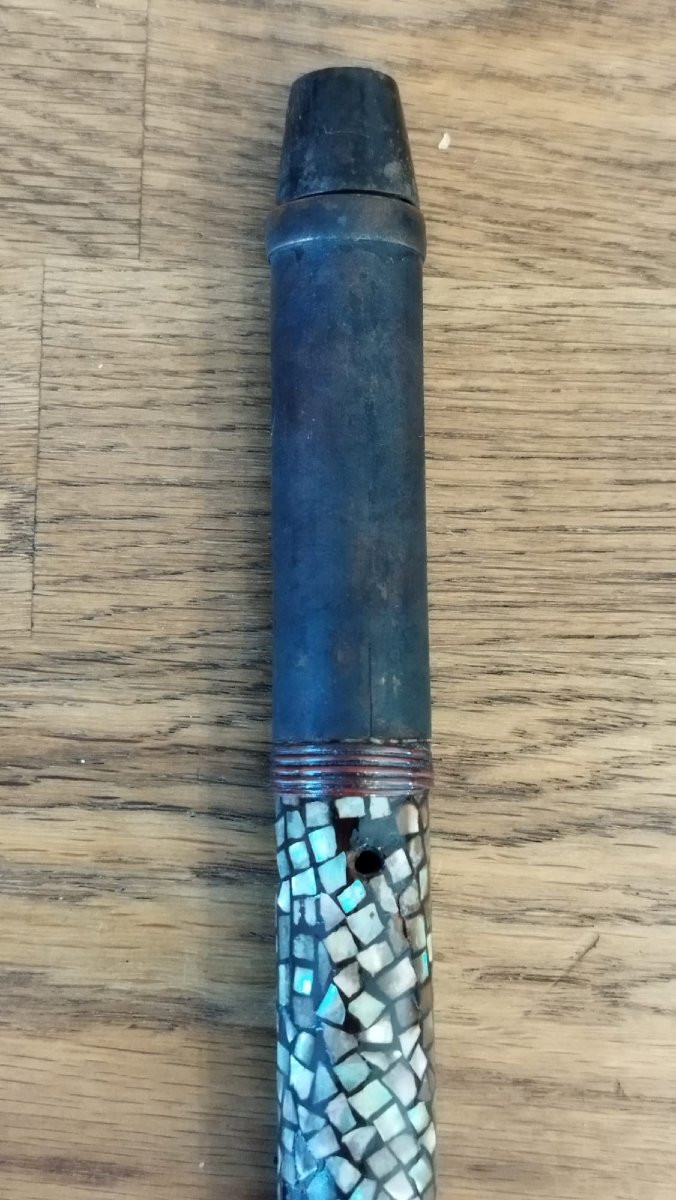
Decoration(Raden) : Top section richly inlaid with abalone mother-of-pearl (Aogai) on black Urushi lacquer. Some missing mother-of-pearl, attesting to the age and authenticity and authenticity of the piece (Wabi-Sabi patina).
Strengths (Hirumaki): Presence metal ribbon reinforcement rings (copper alloy) to protect the wood from and preventing splitting.
Heel (Ishizuki) : Protective solid iron tip at the lower end end, serving as a counterweight for balance and a secondary striking weapon. secondary striking weapon.
Shape: Kawari-saya with a curious stylized arrowhead" or "whale tail" shape, typical of typical of honor guards at Daimyo processions (Sankin-kotai).
Finish : Ishime-ji textured black lacquer Ishime-ji type (stone-skin look), highly resistant.
Ornamentation : Decorative Fusahimo cord in bright red silk Fusahimo decorative silk cord completes the martial parade aesthetic.
1 550 €
Period: 19th century
Style: Asian art
Condition: Good condition
Material: Wrought iron
Reference (ID): 1739351
Availability: In stock
Print