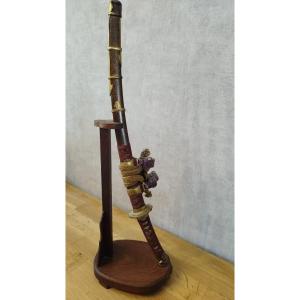


Itomaki-no-tachi Japanese Mini Ceremonial Sword From The Late Edo Period
CEREMONIAL MINI ITOMAKI-NO-TACHI FROM THE LATE EDO PERIOD (19th century)
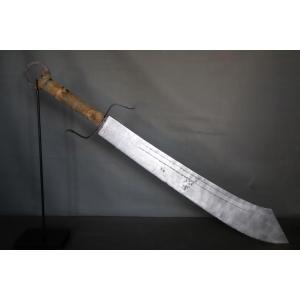
GENERAL OVERVIEW: Please note, this is a mini-sword measuring 50 cm in total length!
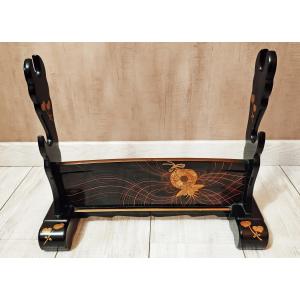
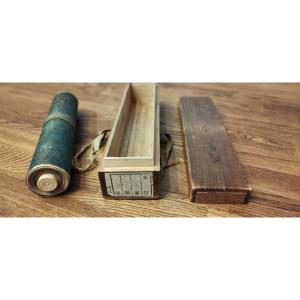
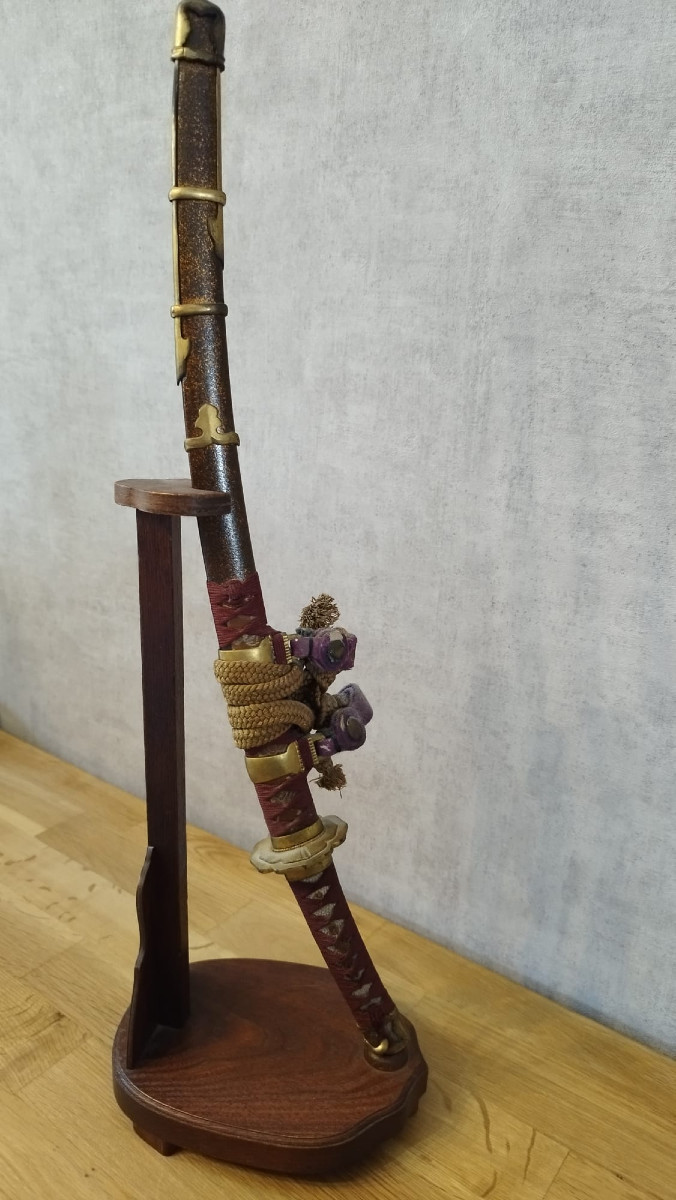
This sword is sold (shipping costs extra) with its traditional vertical display stand made of solid wood.
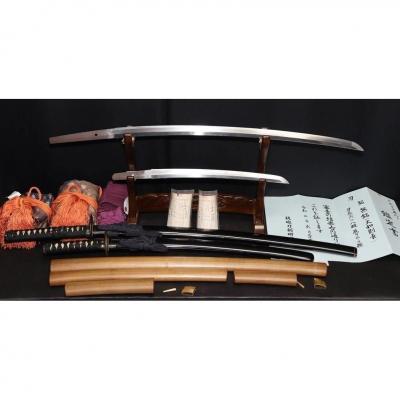
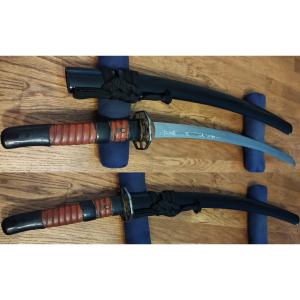
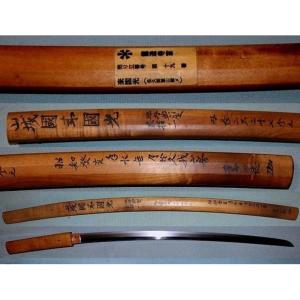
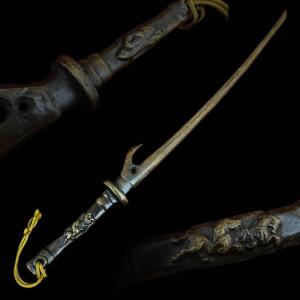
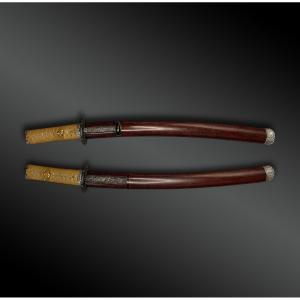
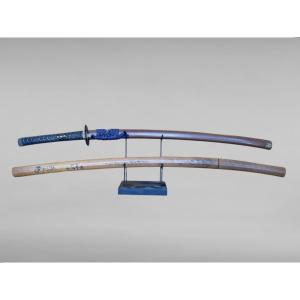
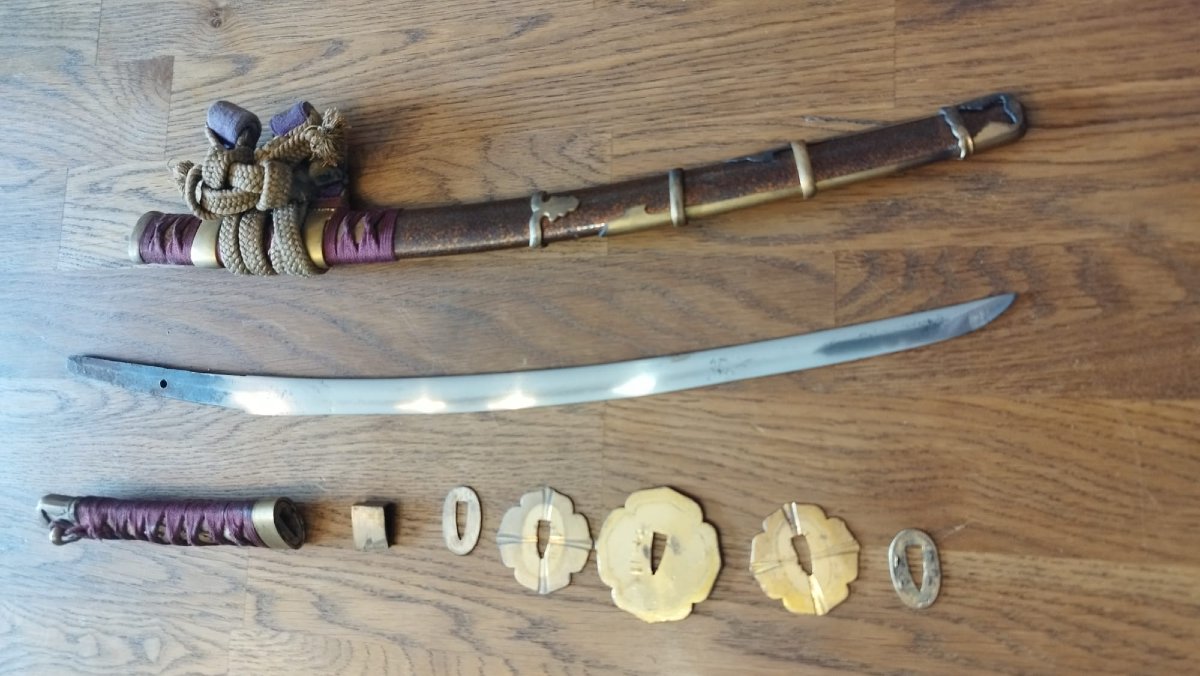
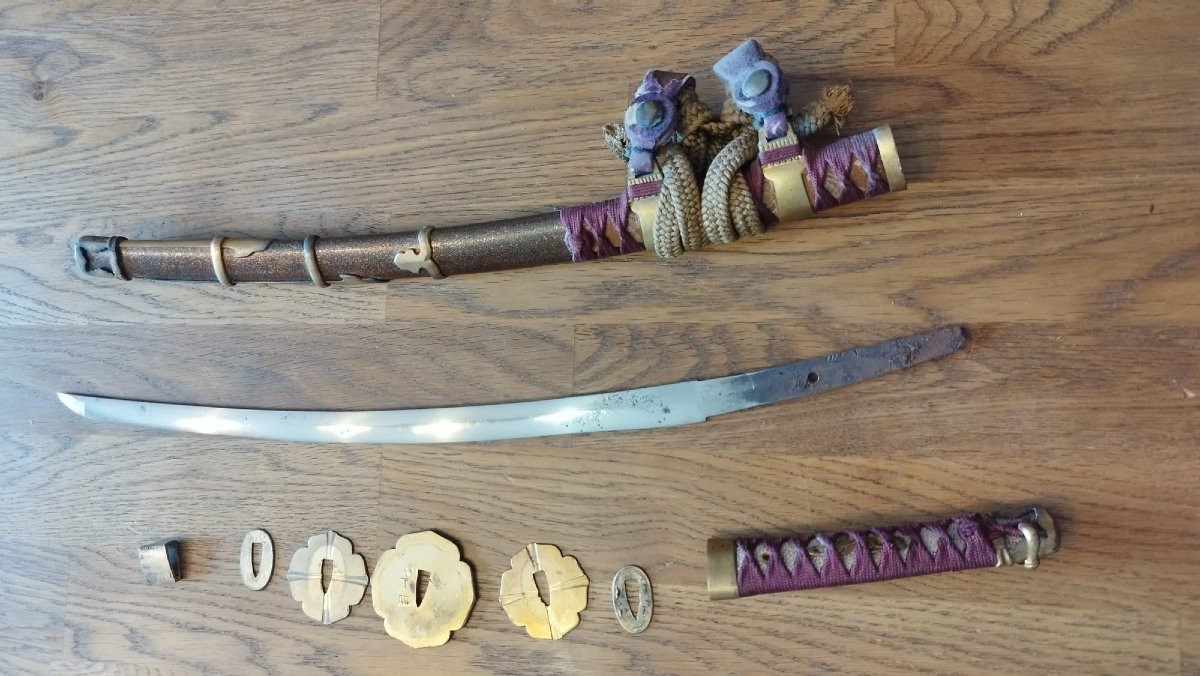
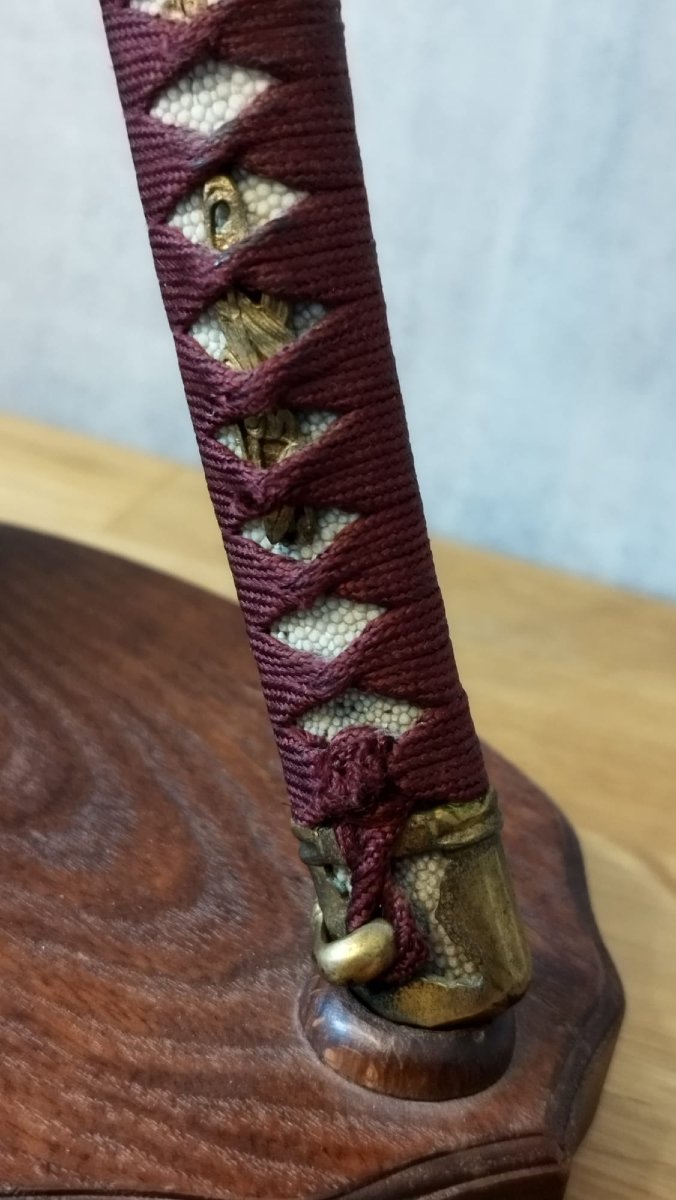
This exceptional piece is a reduced-scale Mini Itomaki-no-Tachi, executed with rigorous precision. Unlike decorative reproductions, this is a prestige object where every component has been hand-forged and fitted according to the exact proportions of a full-sized great sword (Tachi).
Of rare integrity, this set has never been separated or reassembled, thus preserving its original patina and the perfect fit of late 19th-century craftsmanship.
Miniatures of this level of detail, traditionally forged and preserved with their complete Itomaki-no-Tachi mount, are rare opportunities on the Japanese art market.
Condition: Perfect collector's condition. No modern restoration has been performed to preserve its historical integrity.
Visual Expertise: The consistency of the patina between the blade, the tang, and the fittings guarantees a homogeneous period piece.
HISTORICAL CONTEXT AND USES (SACRED ART)
Far beyond a simple collector's item, this prestige sword (total length approx. 50 cm) is part of the most noble traditions of the Japanese aristocracy:
Votive Offering (Hoto): Intended for the treasures of Shinto shrines or Buddhist temples. Its "museum" state of conservation suggests it was a sacred object, protected from handling and the passage of time.
Spiritual Protection Sword (Mamori-katana): A purifying blade offered at high-ranking births or as a wedding dowry in dignitary families to ward off evil influences.
Protocol Object and Court Gift: The Itomaki-no-Tachi style represents the highest grade of protocol. This miniature may have served as a diplomatic gift between clans or as an honorary reward.
TECHNICAL ANALYSIS OF THE BLADE (SUGATA)
The blade is a feat of miniaturization, maintaining a formidable sharpness.
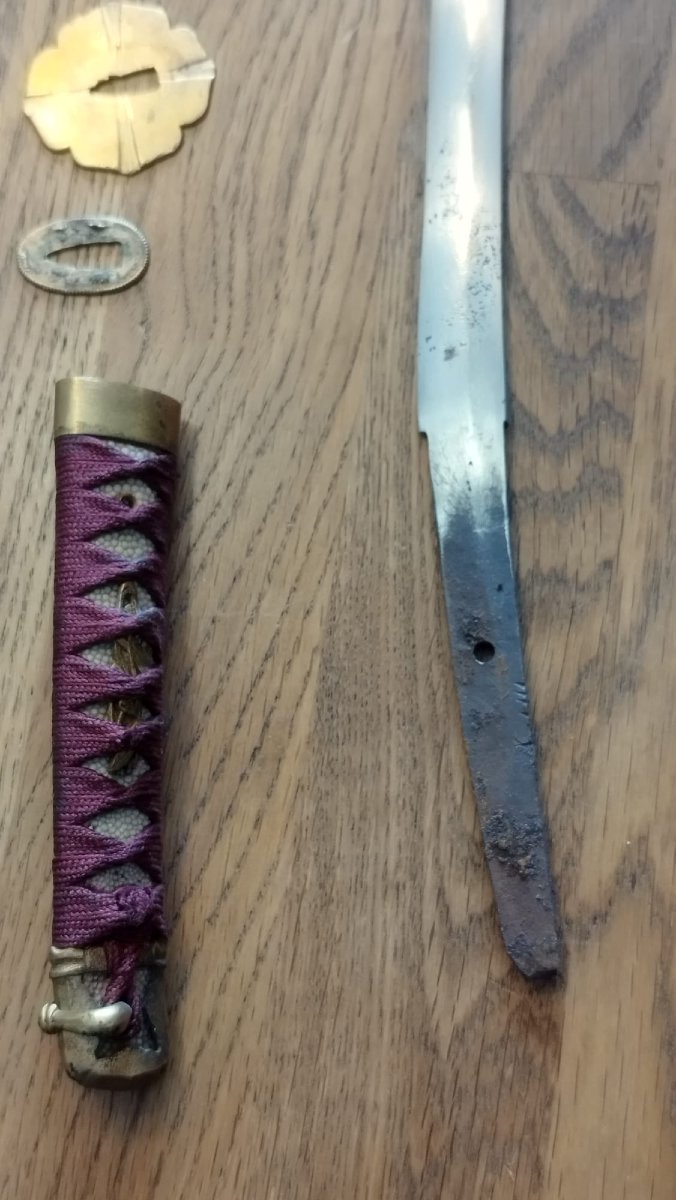
Type: Traditionally forged blade made of carbon steel.
Nagasa (Blade length): 30.5 cm.
Sori (Curvature): 1.8 cm. A very pronounced curvature, characteristic of the aesthetics of suspended swords of the era.
Moto-haba (Width at base): 1.8 cm. Exceptional slenderness that highlights the swordsmith's mastery.
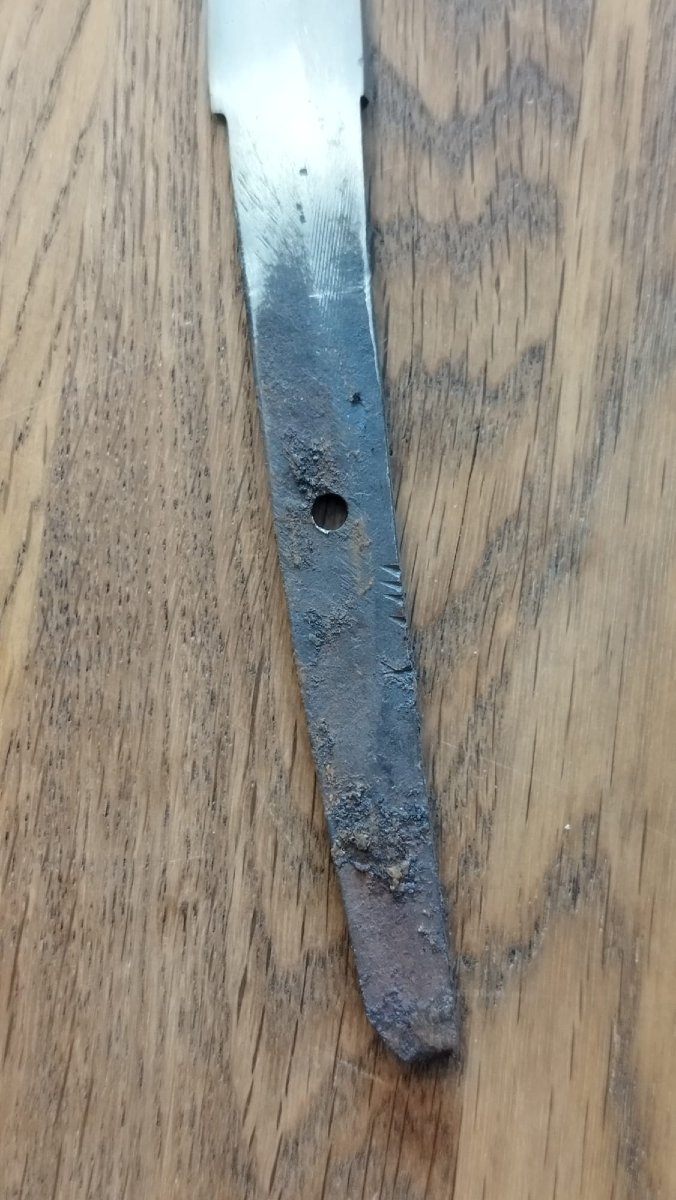
Nakago (Tang): Ubu form (original, not shortened).
Yasurime (File marks): Kosu-chigai style (pronounced oblique), testifying to a rigorous academic execution.
Patina: Deep and stable black rust, a natural certificate of a 19th-century forge.
Steel Condition: The forge grain (Hada) is visible under light. Presence of old oxidation traces, a few forge flaws (Kizu), and scratches—irrefutable proof of non-industrial manual labor.
DESCRIPTION OF THE MOUNT (KOSHIRAE)
The set is remarkable for the use of noble materials and the technical consistency of the fittings.
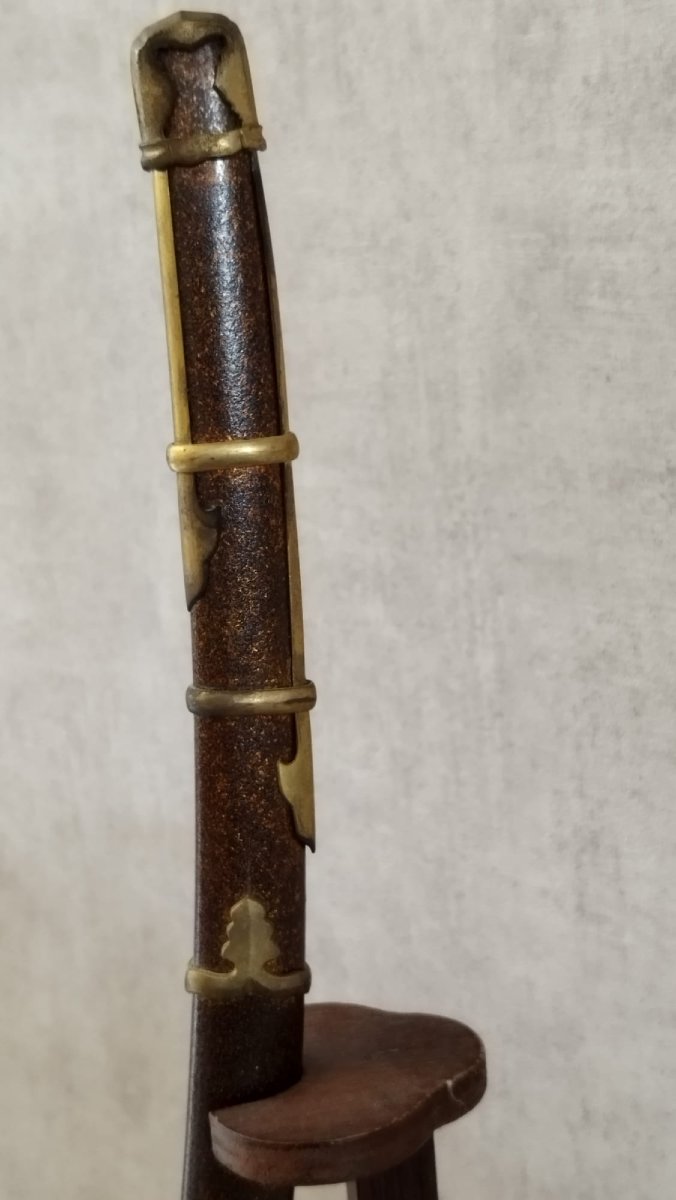
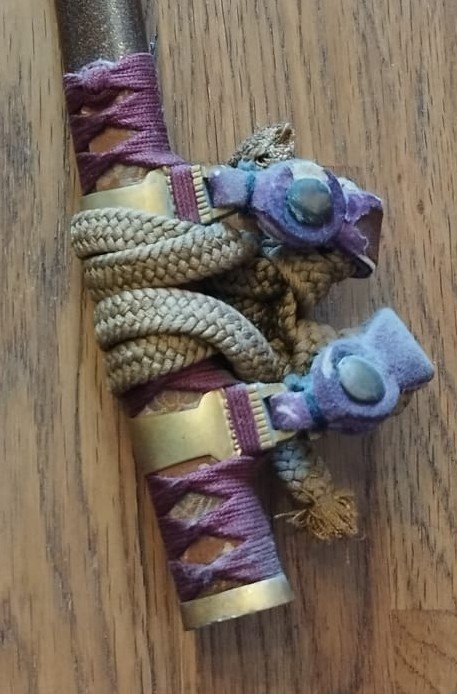
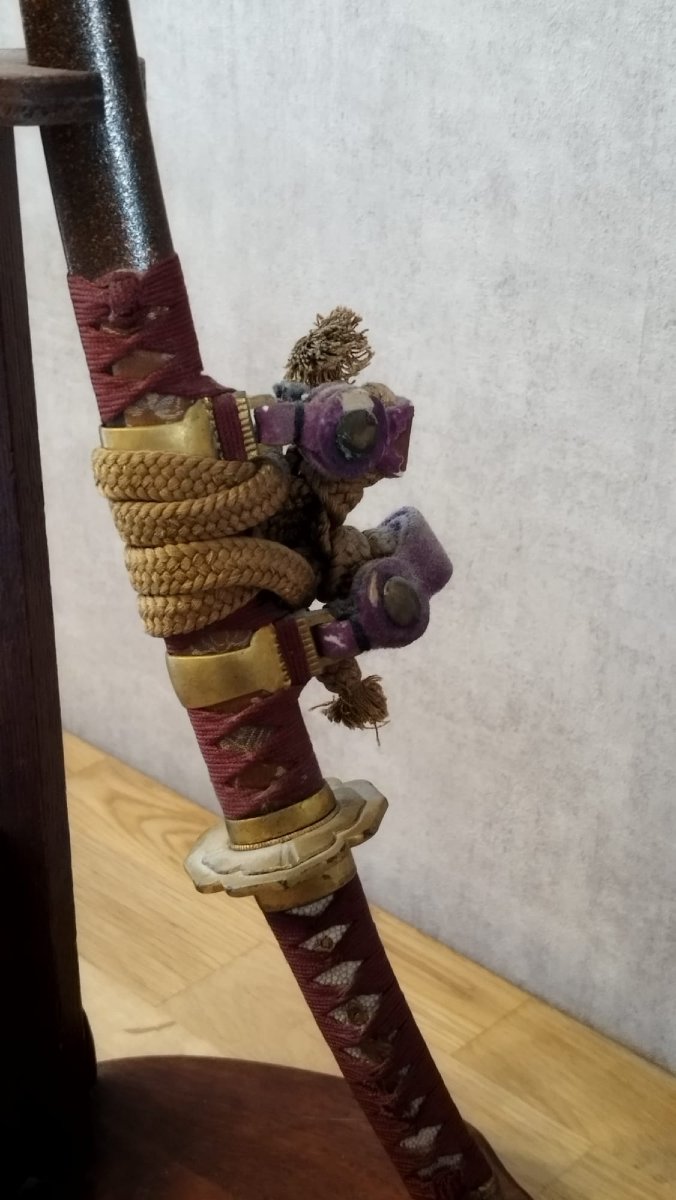
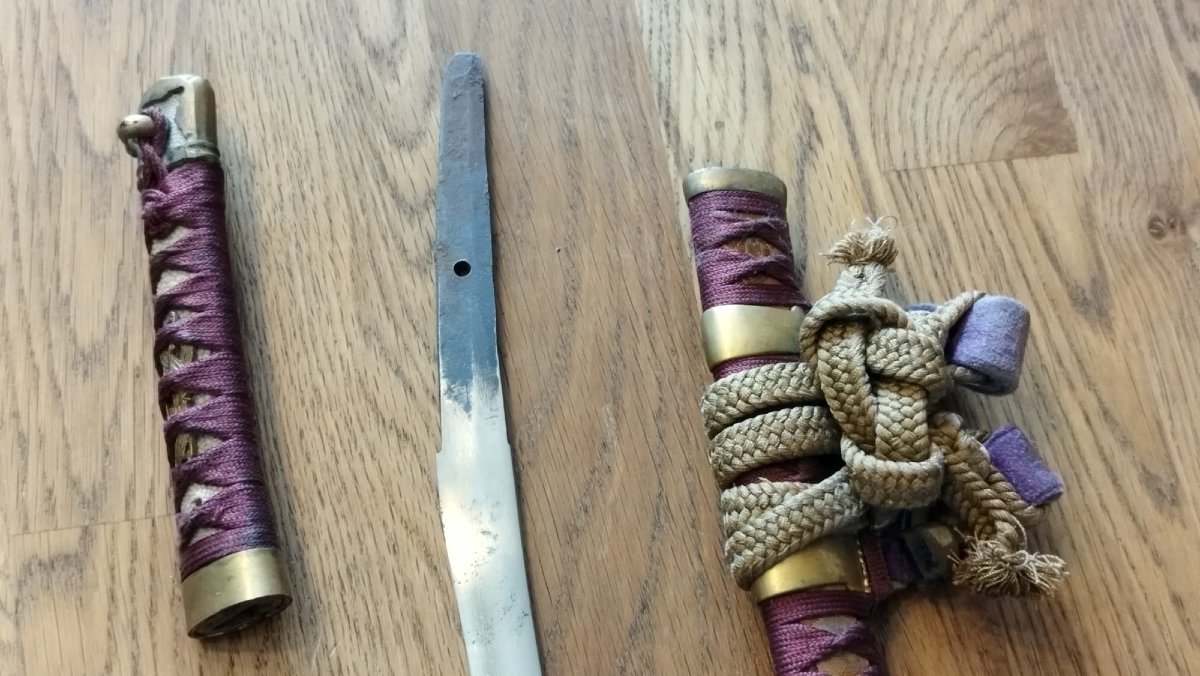
Itomaki Style: Characterized by the silk braid covering the upper third of the scabbard, protecting the lacquer from friction.
Tsuka (Handle): Covered in high-quality Samegawa (rayskin) with large nodules. Silk braid (Tsuka-maki) in purple silk, Morotsumi-maki style, perfectly tensioned.
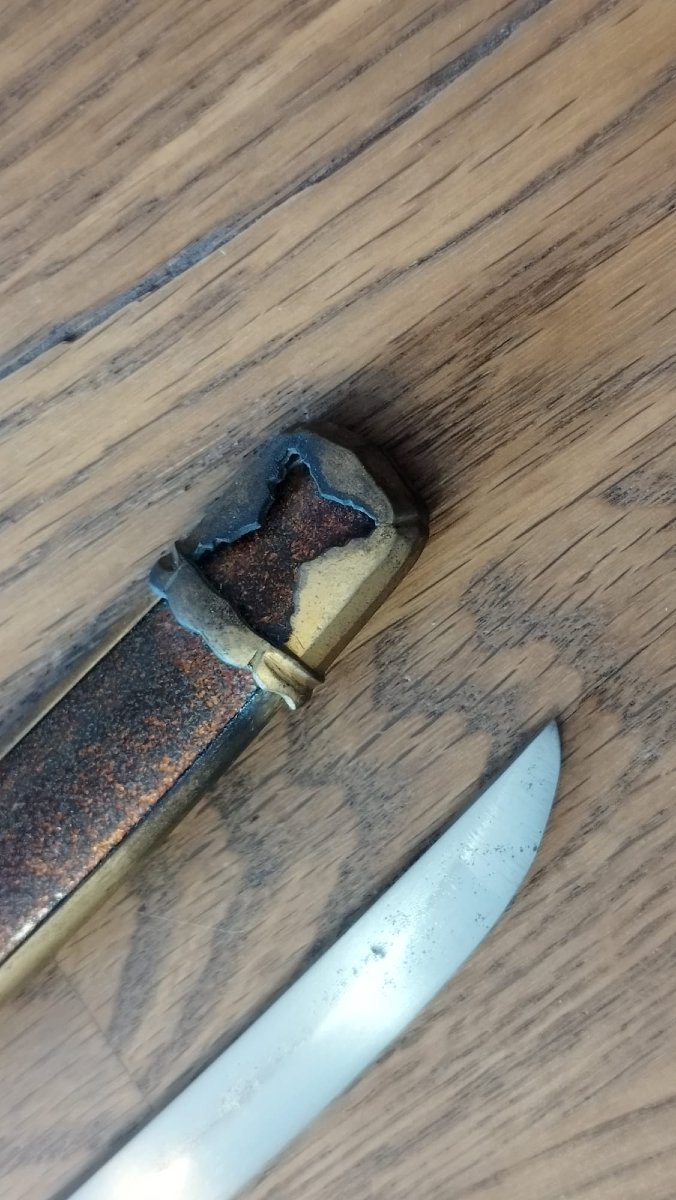
Saya (Scabbard): Finished in Nashiji-type lacquer (amber base with gold dust inclusions), offering a grainy and precious appearance.
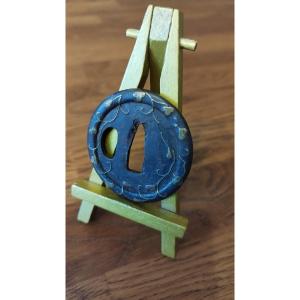
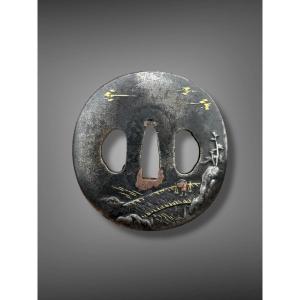
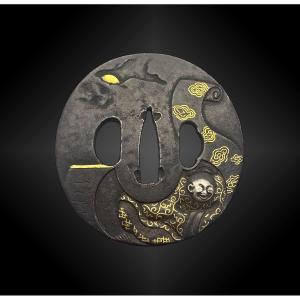
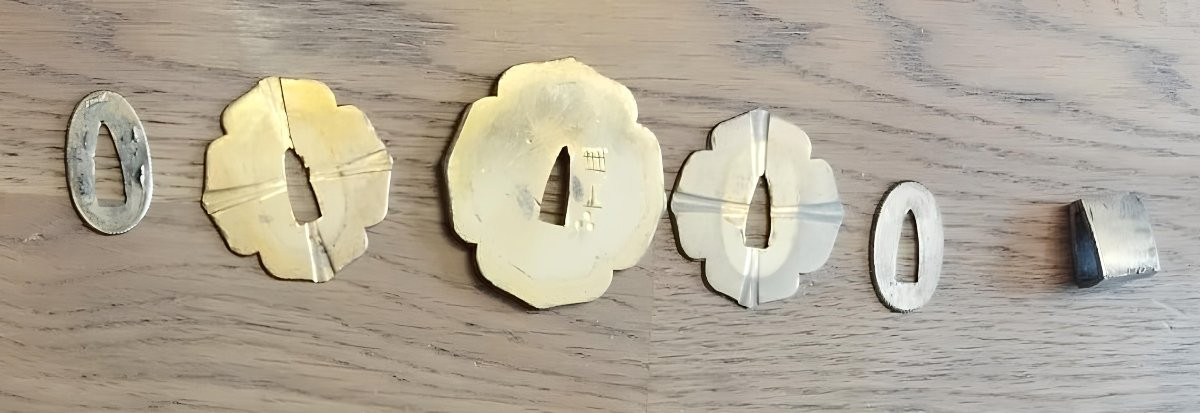
Tsuba (Guard): Aoi-gata shape (hollyhock leaf) in gilded copper/brass. Inner face marked with workshop signs.
Kanagu (Fittings): Complete set in gilded metal (brass/copper) including the Kabuto-gane (pommel), Ashi (suspension mounts), Semegane, and Ishizuki (scabbard end cap). Exceptional condition.
Habaki and Seppa: Copper/silver Habaki fitted to the millimeter. Presence of the complete original set of 4 Seppa.
Sageo (Cord): Original beige/gold braided silk, tied in Tachi-musubi (parade knot).
Period: 19th century
Style: Asian art
Condition: Perfect condition
Material: Wrought iron
Reference (ID): 1741424
Availability: In stock