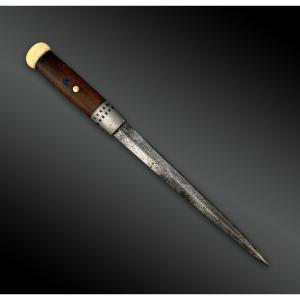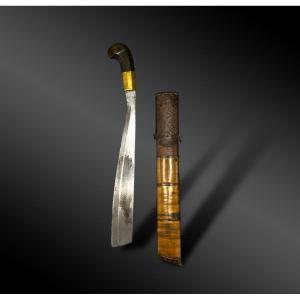
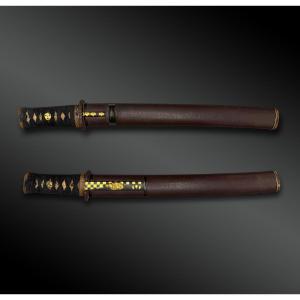


Knife Known As A Tanto, Signed By Fujiwara Kunishige Saku - Japan - Edo Period (1603–1868)
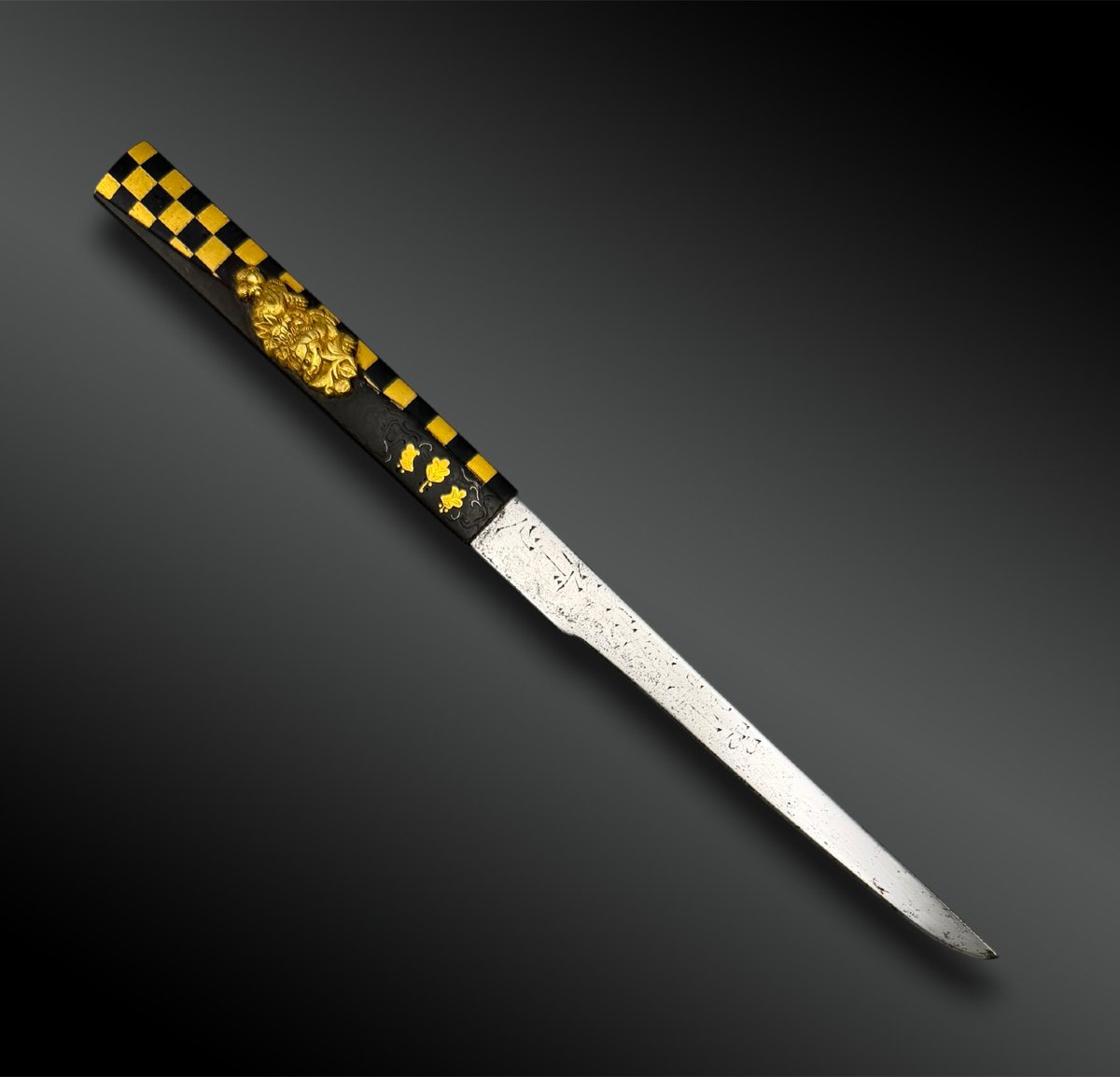
Tanto knife signed Fujiwara Kunishige Saku
Japan
Edo period (1603–1868)
Steel, wood, lacquer, copper, shibuichi, gold, shakudo
Nagasa: 26.8; Nakago: 9.5 cm
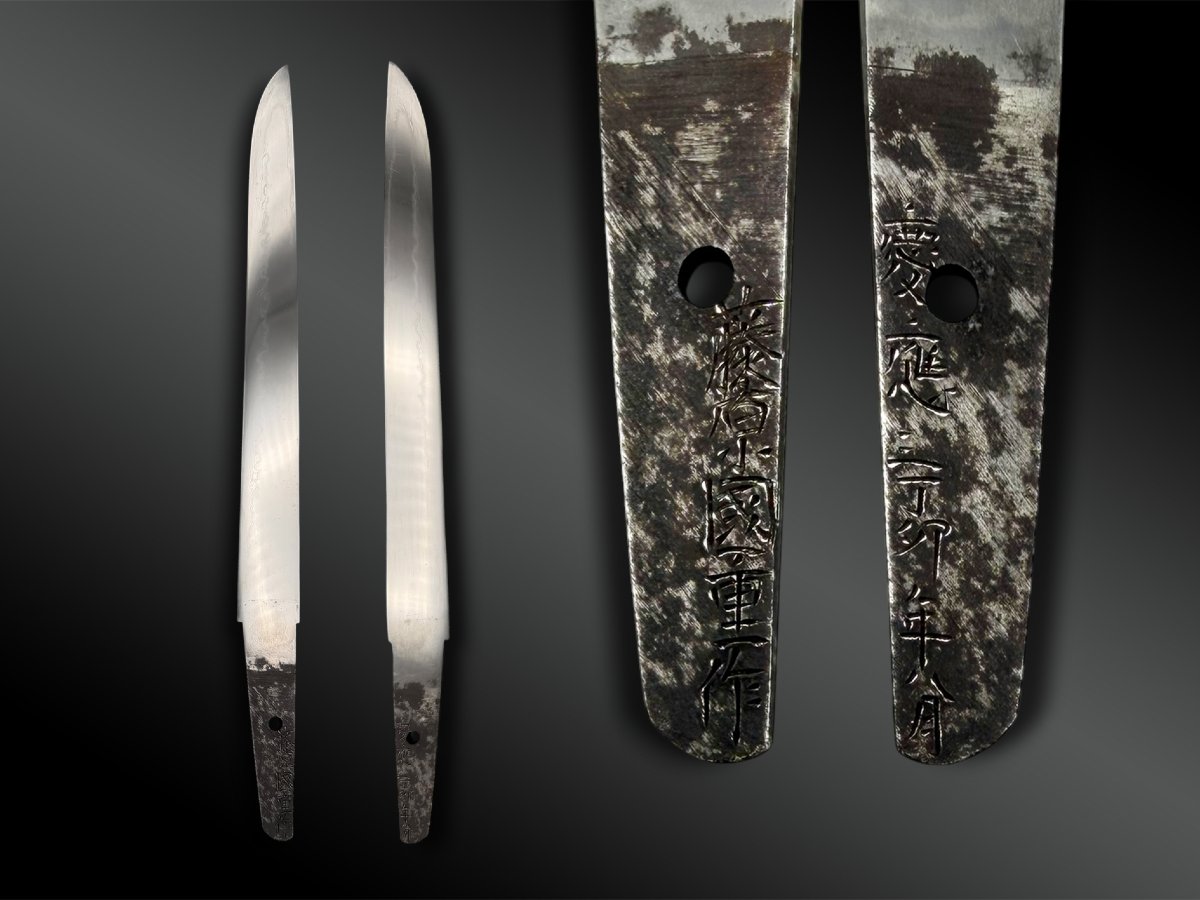
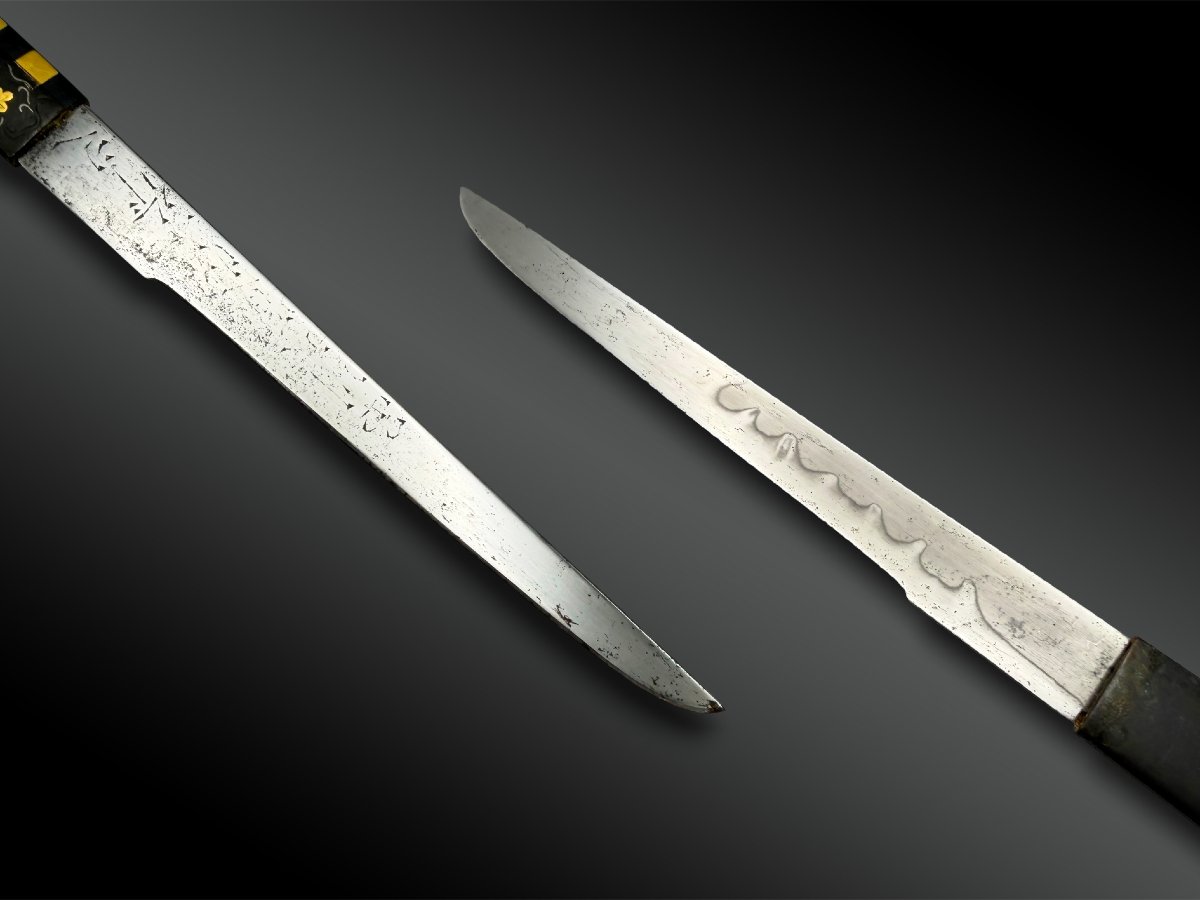
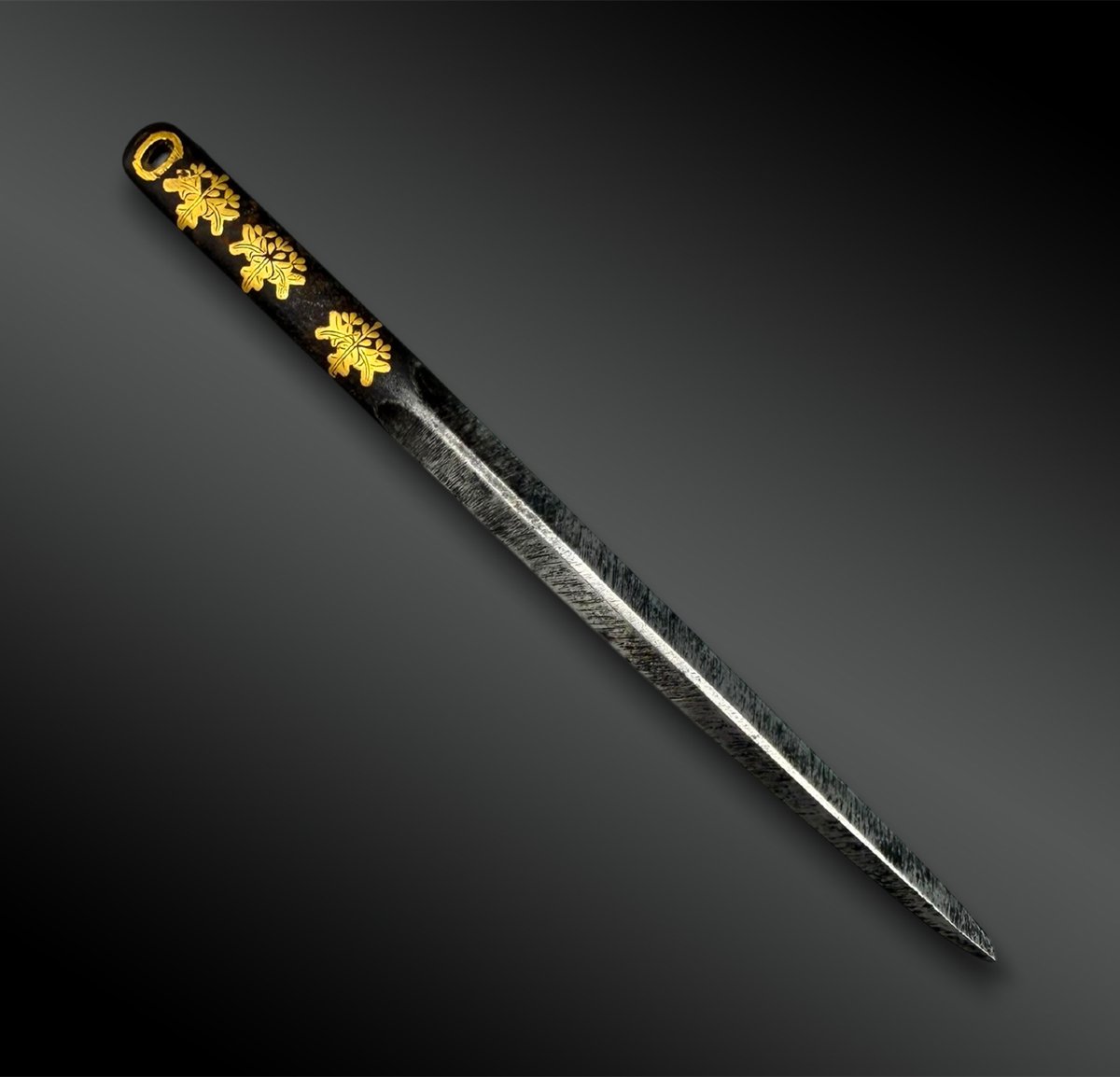
Hira-tsukuri-style blade, mune hikushi, kawazu-choji-style hamon.
Ko-maru-style boshi.
Funa-gata nakago with ha-hagari kuri-jiri.
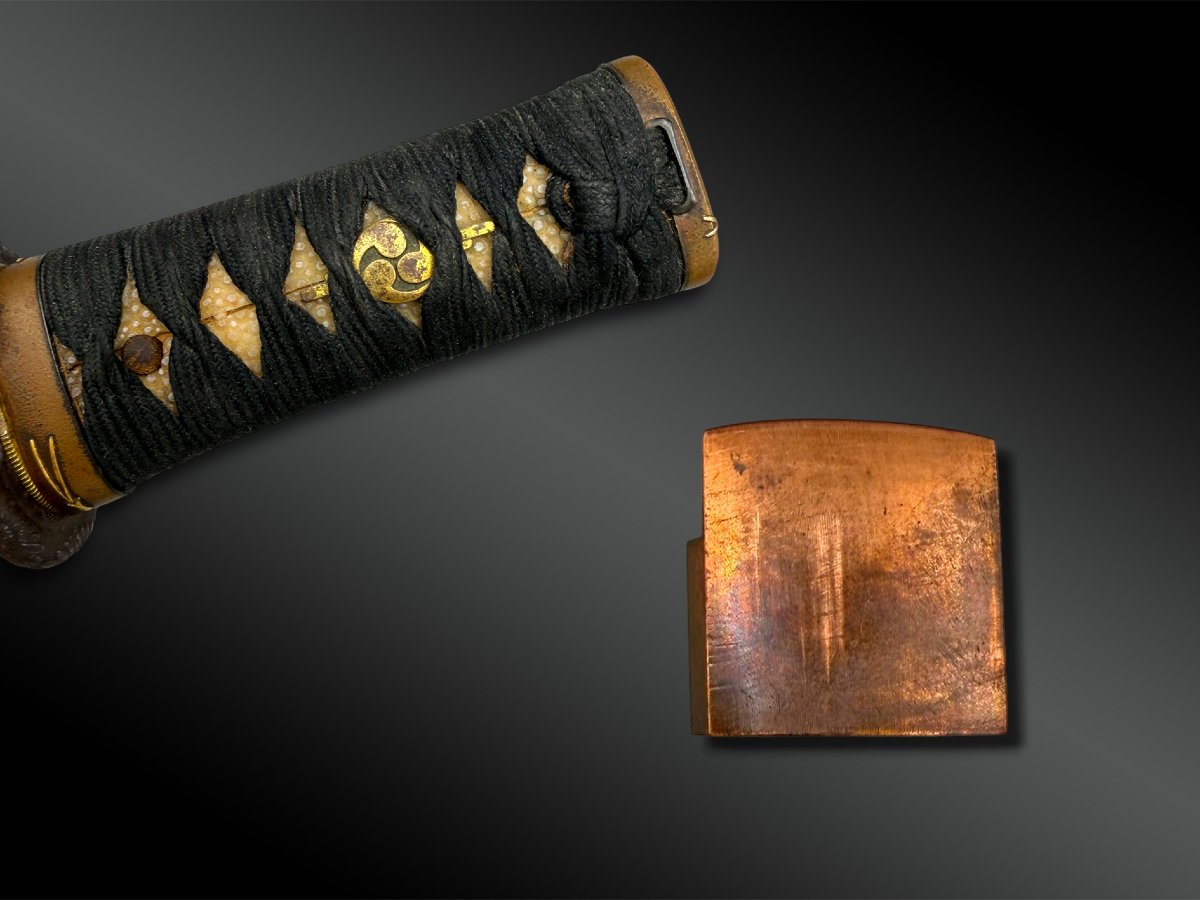
Copper habaki.
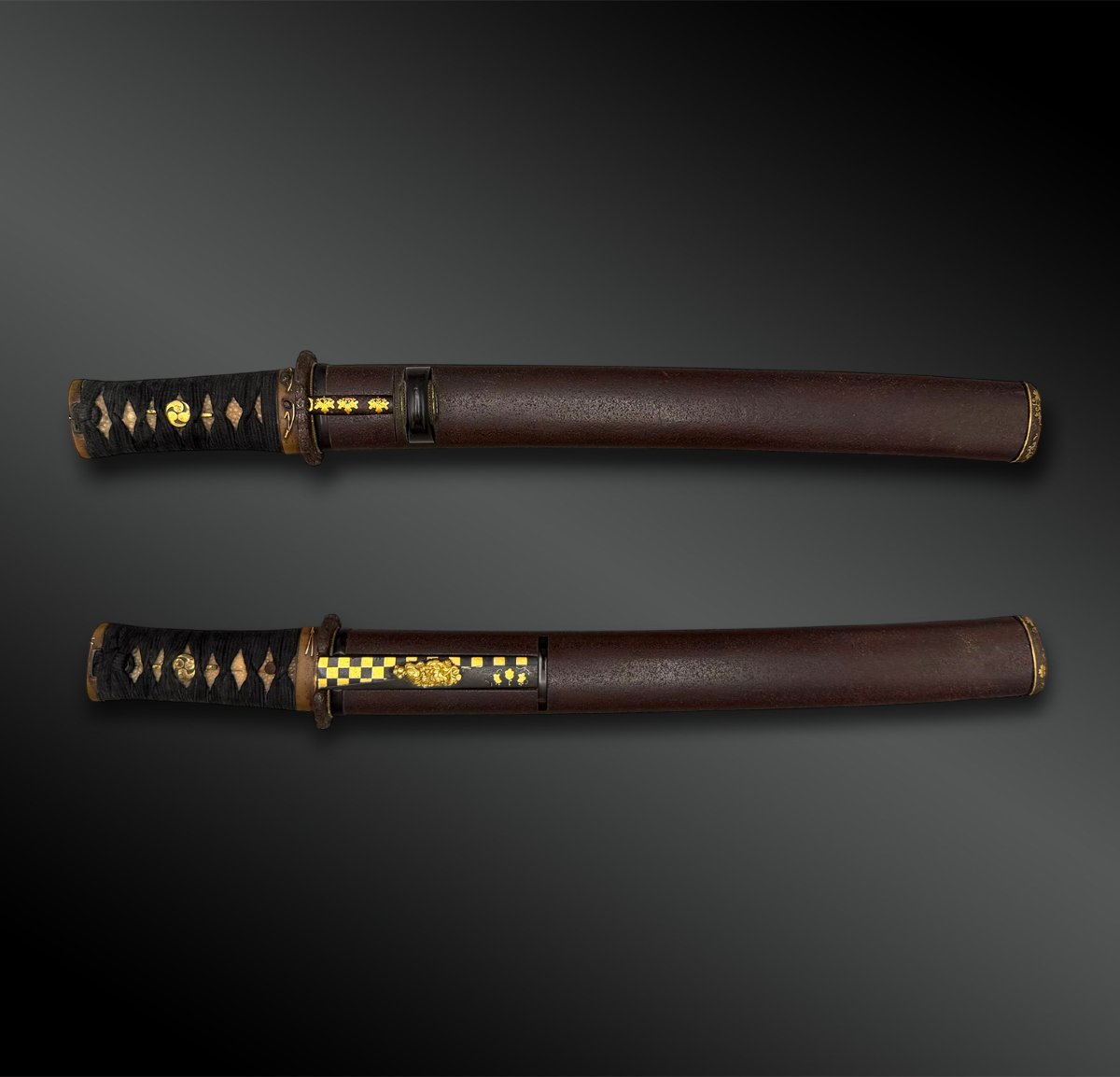
Saya made of wood coated with matte red lacquer.
Iron kojiri, decorated with gold cherry blossoms.
Kuri gata and koi guchi made of water buffalo horn.
Shitodome made of chiseled brass.
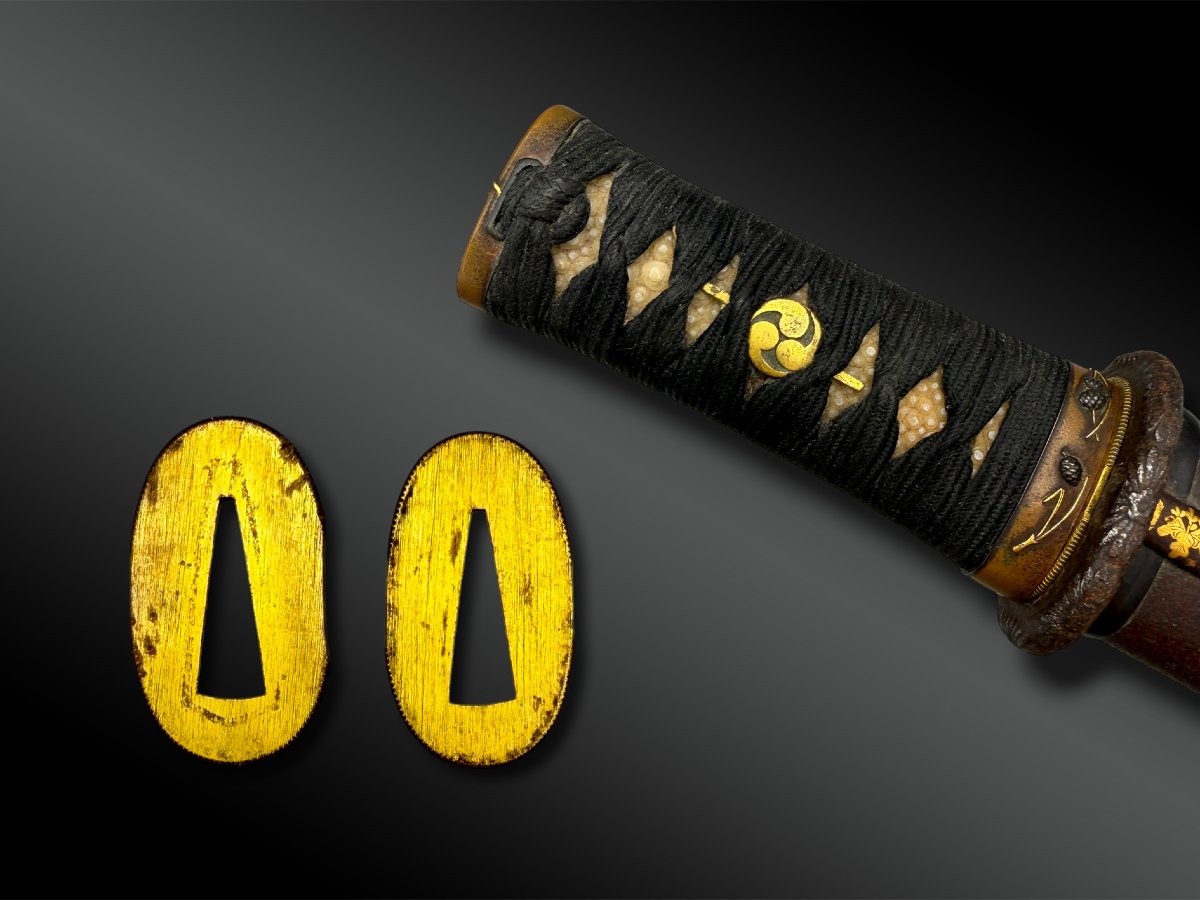
Tsuka ito made of wood, covered with stingray skin, and braided with black silk.
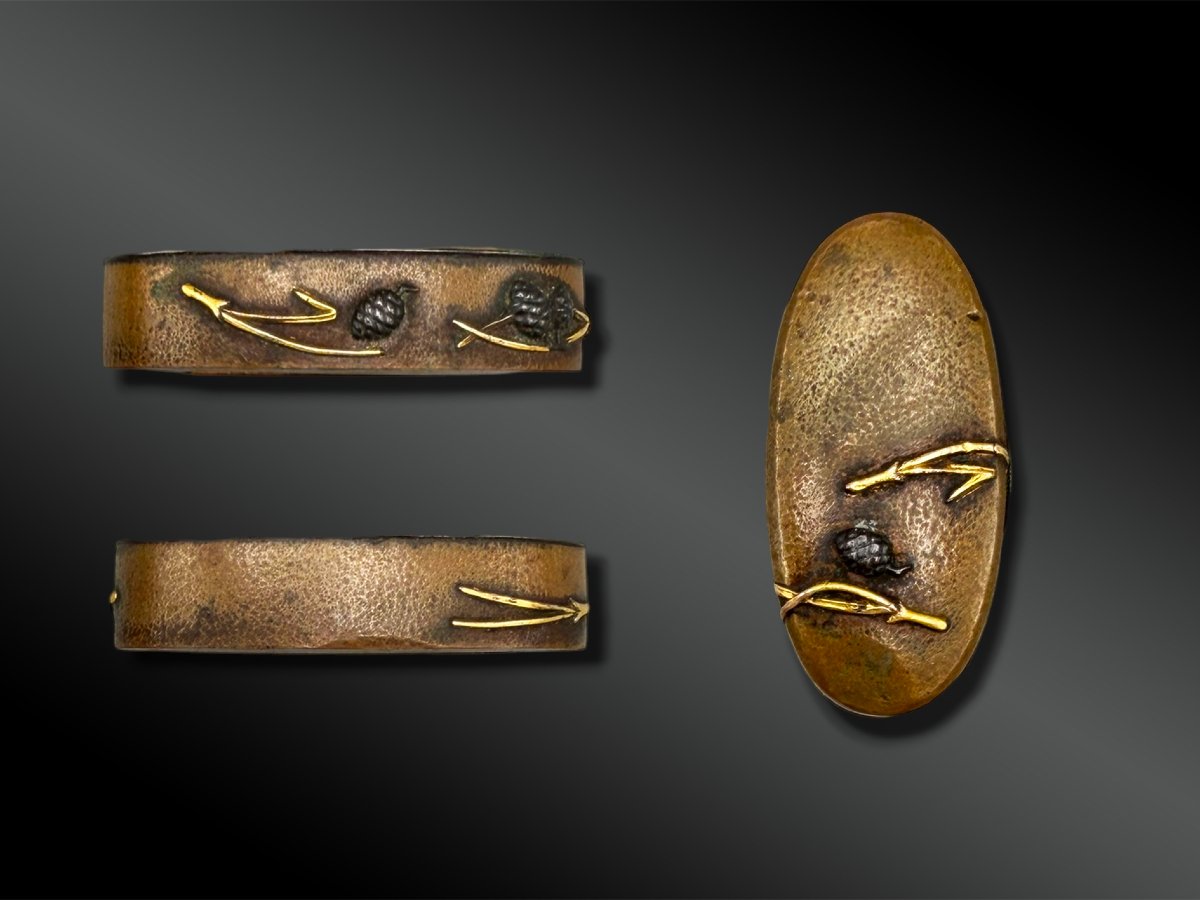
Fuchi and kashira made of copper coated with shibuichi, chiseled with shakudo pine cones featuring gold branches—a reference to the matsu (pine) tree, a symbol of longevity, resilience and endurance, constancy and fidelity, prosperity, and good fortune.
Menuki depicting the migi mitsu tomo-yé, a triple (tomo-yé) twisting to the left (hidari), the jô-mon (main crest) of the Funa-koshi, Hashi-moto, Hiji-kata, Ita-kura of An-naka, and Niwa-sé; Ko-baya-kawa, Ku-ki of Aya-bé, Miya-nari, O-gura, Oka-bé, Ô-ki, Ô-miya, Shô-taï, Ume-zono, Yama-moto; and the kaye-mon (secondary crest) of the Ari-me of Ku-ru-mé and Fuki-age, and the Ita-kura of Fuku-shima; in gold.
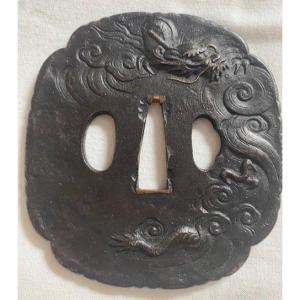
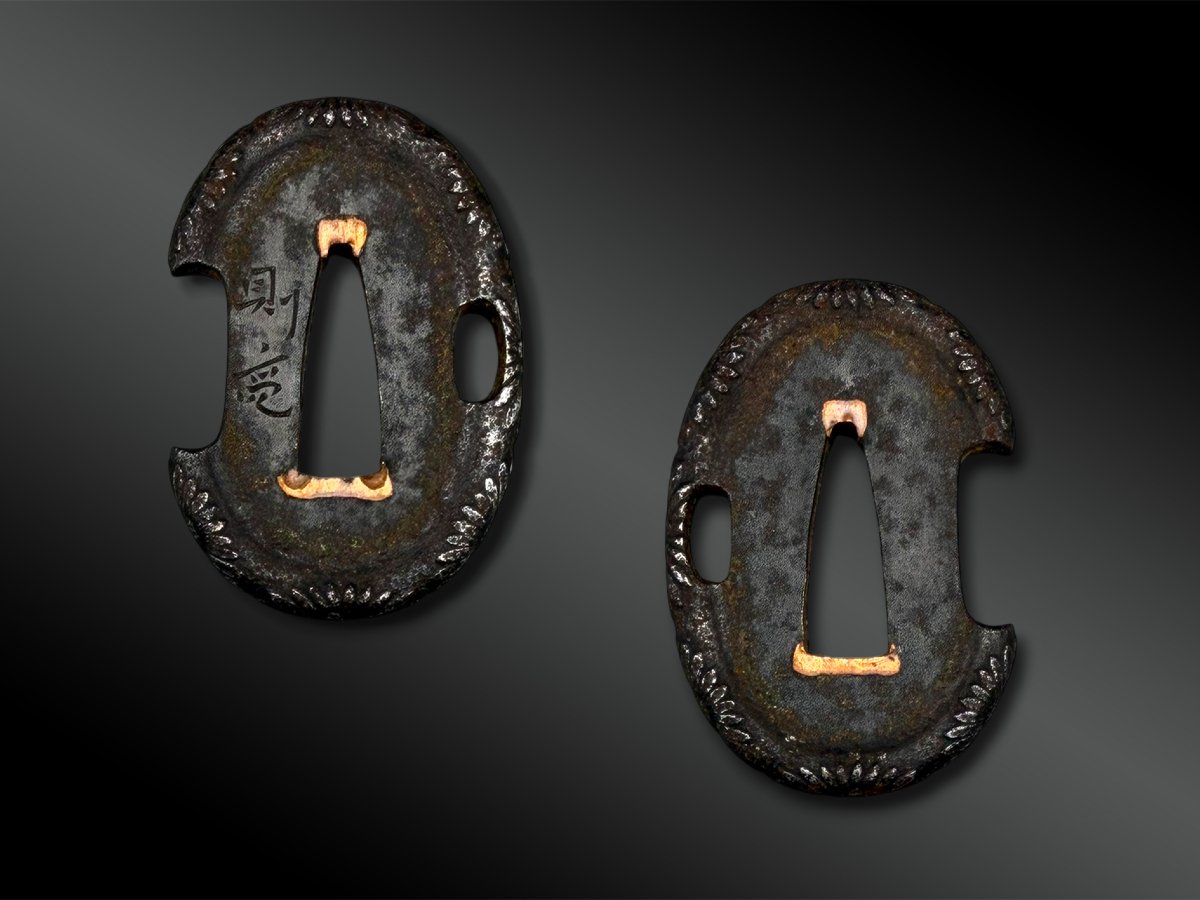
Iron tsuba, engraved with chrysanthemums, signed; copper sekigane.
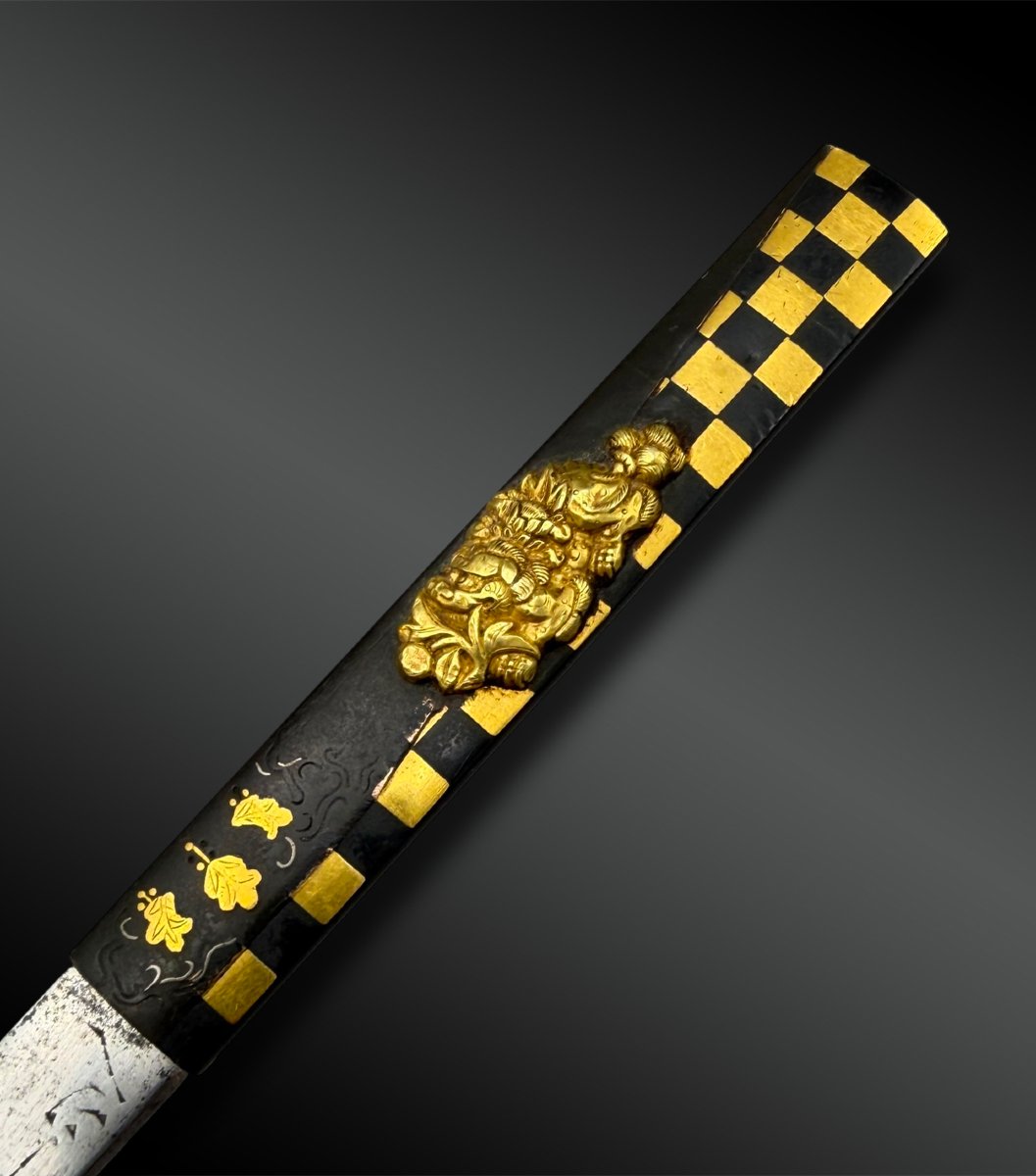
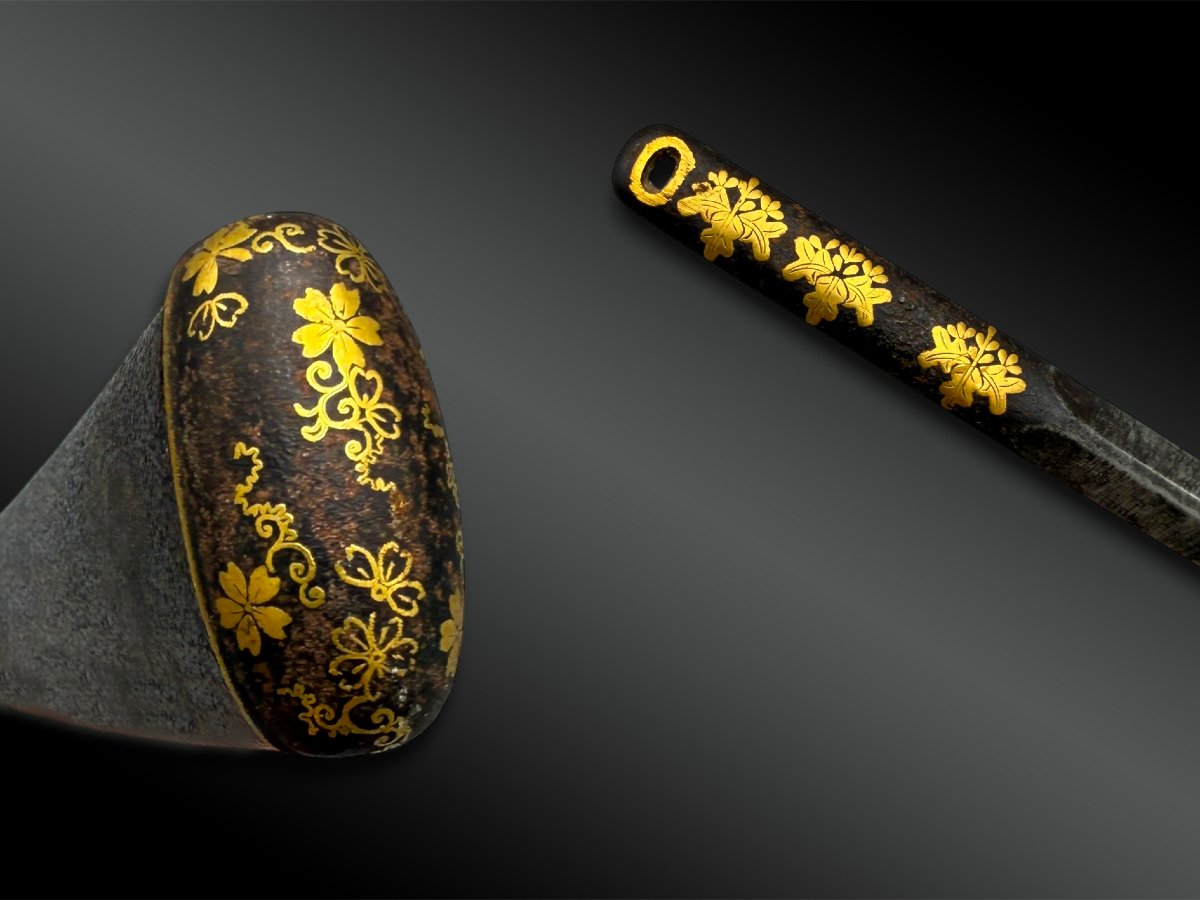
Kogatana with a signed blade and amon; copper kotsuka-hitsu, overlaid with shakudo, featuring geometric patterns, oak leaves, and a shi-shi, all accented with gold.
Openwork umabari, decorated with three “go-san no kiri” (see “kiri-mon”) in gold; “kaye-mon” (secondary crest) of the Kuchi-ki, Ku-ki of San-da, Matsu-daïra of Ito-i-gawa and Mo-ri (see “Matsu-daira”), Mori of A-kô and Mi-ka-zuki, O-gasa-wara of Kara-tsu, O-ta of Kashiwa-bara, Séki, Sen-goku, Tani, and Waki-zaka.
Chiseled gilt copper seppa.
Ref.: 7415
Text and photos © FCP CORIDON
Japan
Edo period (1603–1868)
Steel, wood, lacquer, copper, shibuichi, gold, shakudo
Nagasa: 26.8; Nakago: 9.5 cm
Hira-tsukuri-style blade, mune hikushi, kawazu-choji-style hamon.
Ko-maru-style boshi.
Funa-gata nakago with ha-hagari kuri-jiri.
Copper habaki.
Saya made of wood coated with matte red lacquer.
Iron kojiri, decorated with gold cherry blossoms.
Kuri gata and koi guchi made of water buffalo horn.
Shitodome made of chiseled brass.
Tsuka ito made of wood, covered with stingray skin, and braided with black silk.
Fuchi and kashira made of copper coated with shibuichi, chiseled with shakudo pine cones featuring gold branches—a reference to the matsu (pine) tree, a symbol of longevity, resilience and endurance, constancy and fidelity, prosperity, and good fortune.
Menuki depicting the migi mitsu tomo-yé, a triple (tomo-yé) twisting to the left (hidari), the jô-mon (main crest) of the Funa-koshi, Hashi-moto, Hiji-kata, Ita-kura of An-naka, and Niwa-sé; Ko-baya-kawa, Ku-ki of Aya-bé, Miya-nari, O-gura, Oka-bé, Ô-ki, Ô-miya, Shô-taï, Ume-zono, Yama-moto; and the kaye-mon (secondary crest) of the Ari-me of Ku-ru-mé and Fuki-age, and the Ita-kura of Fuku-shima; in gold.
Iron tsuba, engraved with chrysanthemums, signed; copper sekigane.
Kogatana with a signed blade and amon; copper kotsuka-hitsu, overlaid with shakudo, featuring geometric patterns, oak leaves, and a shi-shi, all accented with gold.
Openwork umabari, decorated with three “go-san no kiri” (see “kiri-mon”) in gold; “kaye-mon” (secondary crest) of the Kuchi-ki, Ku-ki of San-da, Matsu-daïra of Ito-i-gawa and Mo-ri (see “Matsu-daira”), Mori of A-kô and Mi-ka-zuki, O-gasa-wara of Kara-tsu, O-ta of Kashiwa-bara, Séki, Sen-goku, Tani, and Waki-zaka.
Chiseled gilt copper seppa.
Ref.: 7415
Text and photos © FCP CORIDON
2 280 €
Period: 17th century
Style: Asian art
Condition: Excellent condition
Reference (ID): 1816131
Availability: In stock
Print