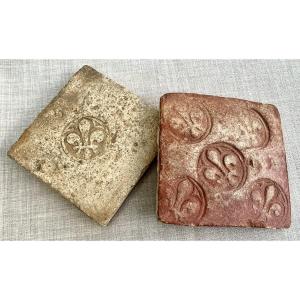
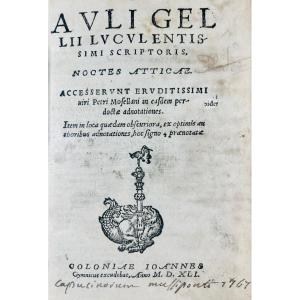
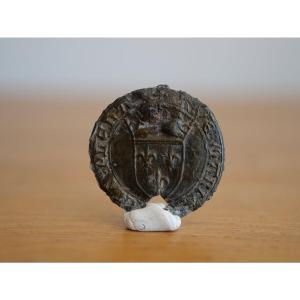
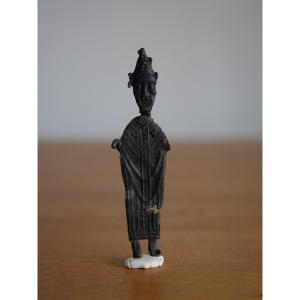
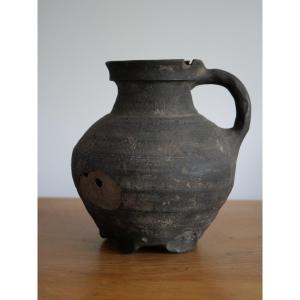
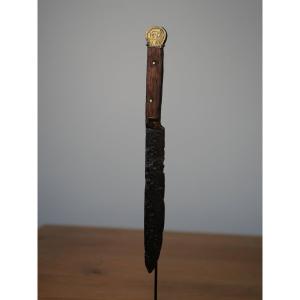
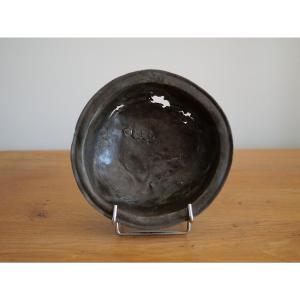
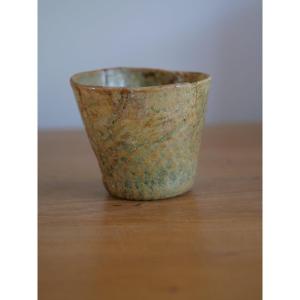
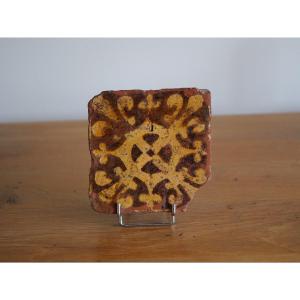
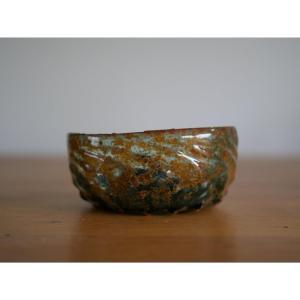
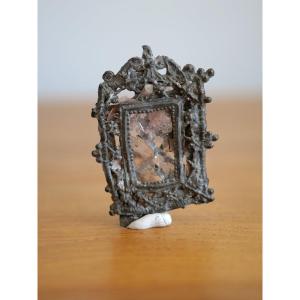
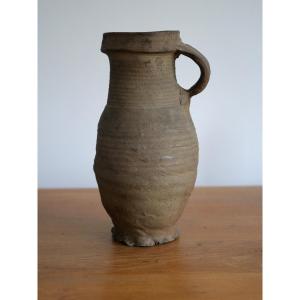
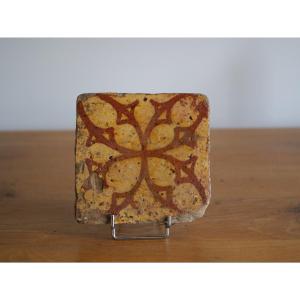
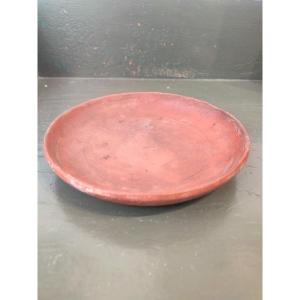
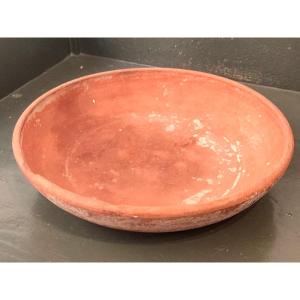
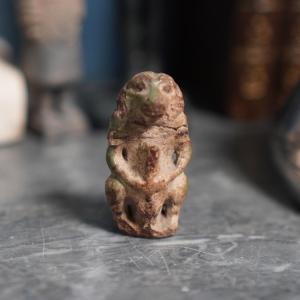
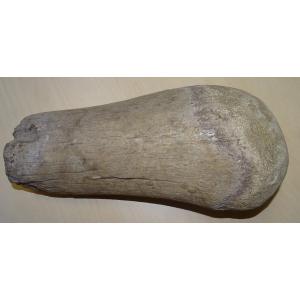
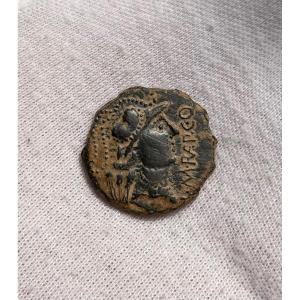
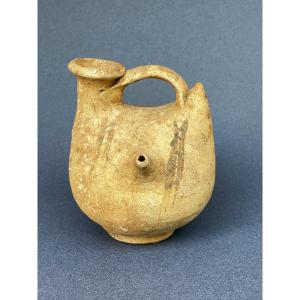
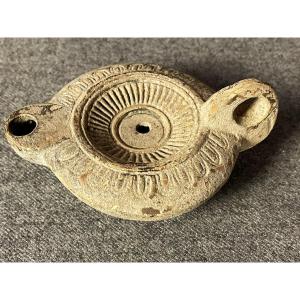
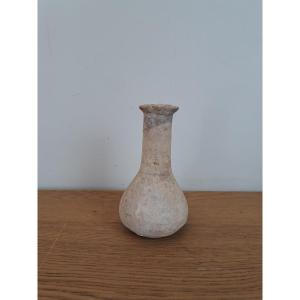
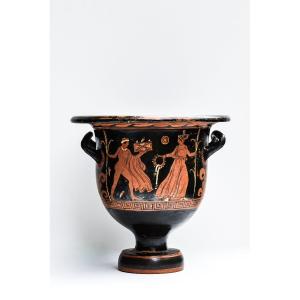
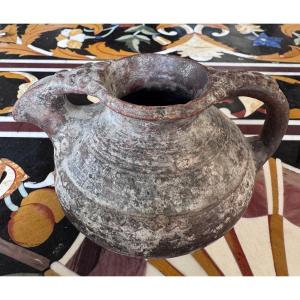
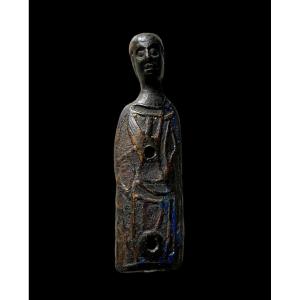
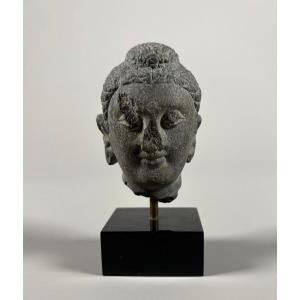
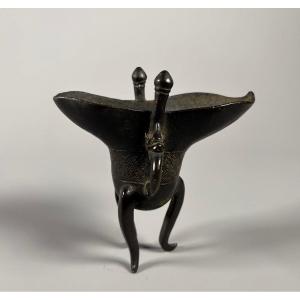
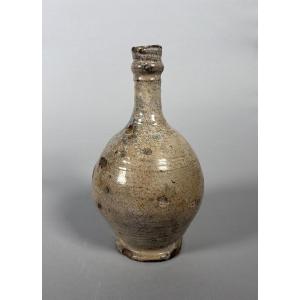
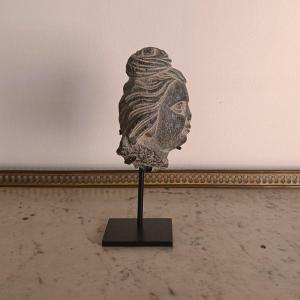
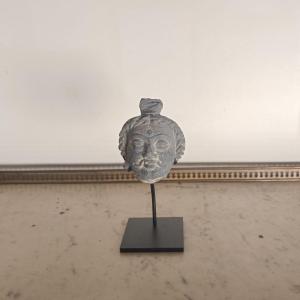
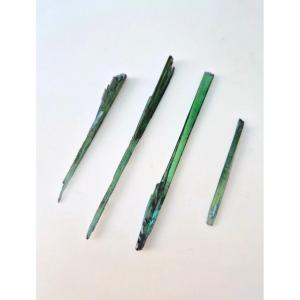
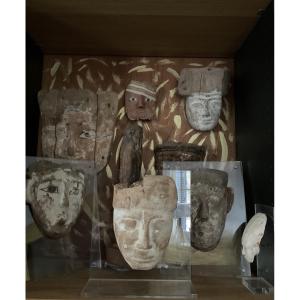
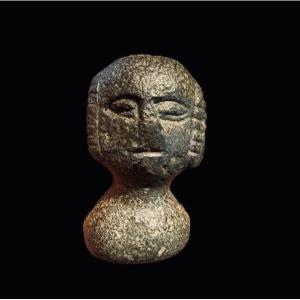
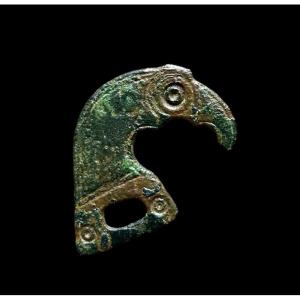
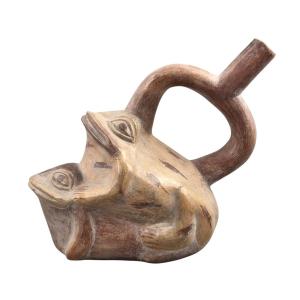
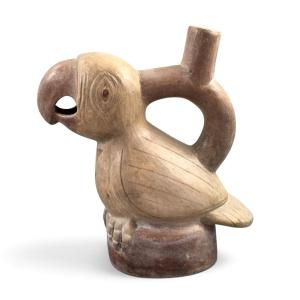
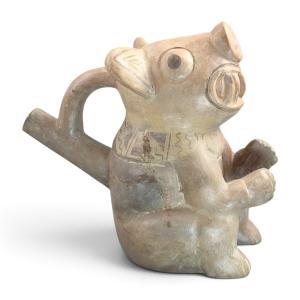
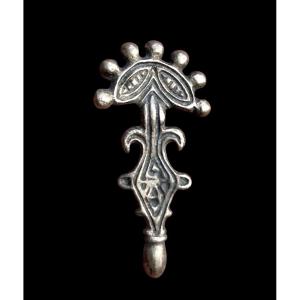
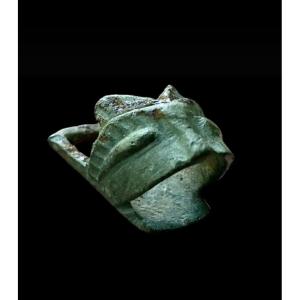
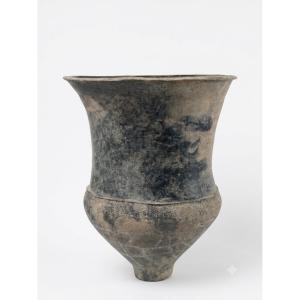
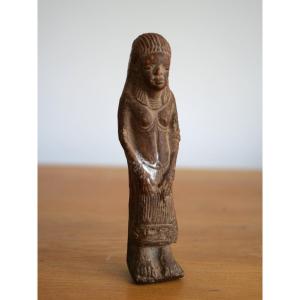
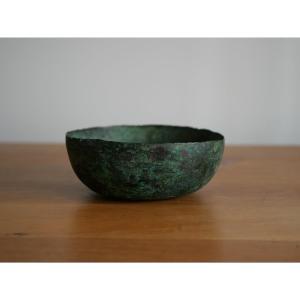
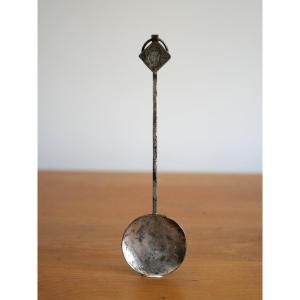
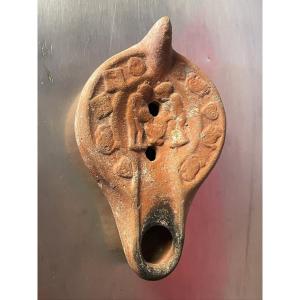
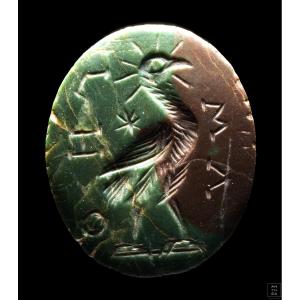
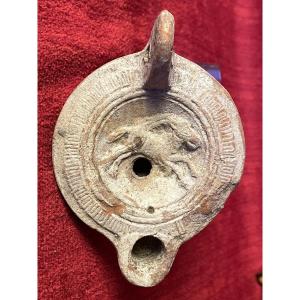
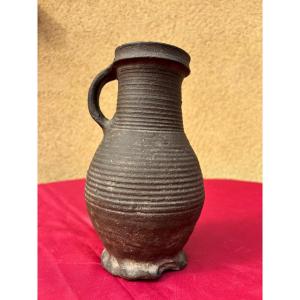
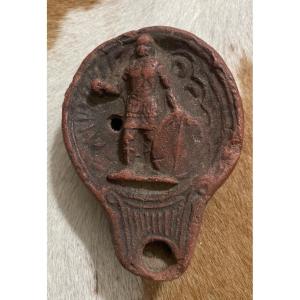
A drinking cup intended for the consumption of water or wine.The cup is made of terracotta, lightly glazed at the bottom, with a yellow slip.It is designed to be held in the palm of the hand; a latera[...]
Small blown glass vessel, aubergine-purple in color, with a hemispherical body finely pinched in four places, forming regular indentations probably made by hand during shaping. The neck, wide and funn[...]
A small, translucent blown glass vase with a hemispherical body ribbed with carefully rhythmic, regular vertical fluting. The clean, well-defined raised lines give the piece a structured visual repres[...]
Magnificent petrified wood cross-section on a base. Estimated period: Neogene - Miocene (20.44-23.03 million years ago). Petrified wood is a mineralized piece of a fallen tree covered with a layer of [...]
Coptic textile (tabula) - Egypt, Byzantine period, 4th-7th century AD. Beautiful depiction of a galloping horseman. The textile is presented under glass in a gilded wooden frame. A similar example is [...]
Coptic textile (tabula) - Egypt, Byzantine period, 4th-7th century AD. A beautiful and rare depiction of a warrior with a shield. He appears nude, except for a cloak draped over his shoulders. The tex[...]
Bi DISCChinaGreen marbled stone, probably jadeDiameter: 4.5 cmThickness: 1.5 cm(on bronze base)Large flat disc made of polished green stone, with a circular hole in the centre.The earliest jade bi dis[...]
A beautiful bronze sculpture of Harpocrates standing in a walking pose, with his index finger to his mouth. He wears the lock of hair he wore as a child. The bronze has an oxidized patina. From a form[...]
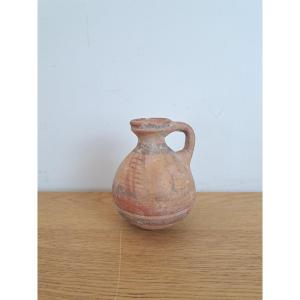
Charming terracotta pot or vase, Gallo-Roman or Roman period, round in shape, with a circular decoration at the base of the neck. Traces of old red pigment are present. The neck may have been shortene[...]
A small, compact, blown-glass cup with a slightly flattened, hemispherical body at the base for stability. The intentionally wide opening is accentuated by a flat, rolled lip forming a thick circular [...]
Mayan gold medallion depicting an 'Ahau' tribal chief. Prestigious amulet, dating back to the 15th-16th century. The medallion, approximately 5 cm in diameter and made of 12 kt gold, weighs 18.5 grams[...]
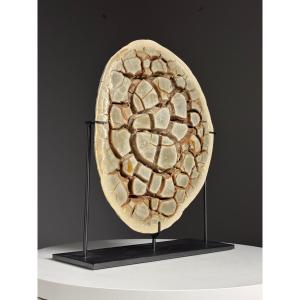
Magnificent cross-section of a septarian nodule on a metal stand. Septarian nodules are fossilized mud bubbles dating back 50 to 70 million years. Belgium is an important site for the discovery of the[...]
Male Marble Bust – Roman Period. This white marble Roman male bust depicts a mature man with a realistic face. The sculpture reveals a deeply furrowed forehead, pronounced nasolabial folds, hollow che[...]
Antique Marble Trapezophorus – Head of a Roaring Beast Roman Period, 1st–2nd Century AD. Roman trapezophorus in light-colored marble, 14 cm high (excluding the 2.5 cm base), depicting the head of a ro[...]
Fossil fragment of prehistoric deer antler, CERVUS MEGACEROS, the "Giant Bog Deer," North Sea region. Light wood and black lacquered metal base. Length: 32 cm. Free and insured shipping within mainlan[...]
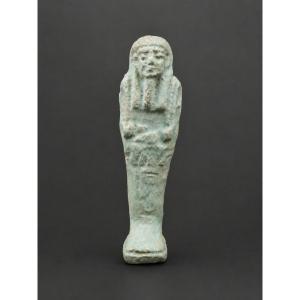
Egyptian blue faience ushabti, depicted in a mummy-like shape, with arms crossed over the chest. It features a hieroglyphic inscription in a worn column on its back. The faience is predominantly turqu[...]
Eight ancient Roman beads: 3 glass beads, including one faceted blue bead, 1 hard stone bead, and 4 ceramic beads. Excavation patina. Period: 2nd century BC - 2nd century AD. Origin: North Africa. For[...]
Clothing clasp in the shape of a scorpion. Bronze piece with a double patina. China, Han period (206 BC–220 AD). Exquisite craftsmanship and high-quality detail. Length: 9 cm. Free and insured shippin[...]
An identical model exhibited at the Metropolitan Museum of Art in New York, Islamic Art section, late 12th century, Hamadan region, sold with certificate, delivery possible.
Roman intaglio depicting Serapis surmounting an eagle, Roman art, 2nd century AD. This orange carnelian intaglio represents Serapis in profile, a syncretic Greco-Egyptian deity, identifiable by his lo[...]
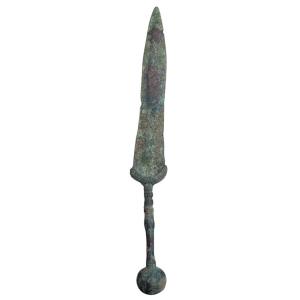
Northern Gaul – Gallia Belgica (according to Julius Caesar's terminology) 2nd – 3rd century AD. Cast bronze; green archaeological patina with dark brown hues. Length: approx. 17.5 cm (Old damage to th[...]
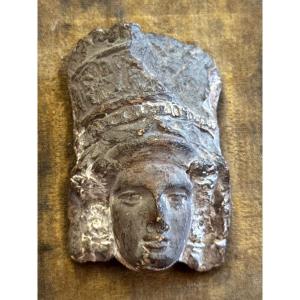
This is a rare pilgrimage badge, made of lead, decorated with the sun at its center and radiating rays all around. It was discovered many years ago near Little Walsingham, Norfolk. Although the symbol[...]
The goddess Astarte, Cyprus, 8th century BC, with her hands pressed to her breasts. A head of Harpocrates in red clay (with marine concretions on the surface), from the Ptolemaic period. A Syro-Hittit[...]
A very beautiful terracotta statue of a seated, nude woman, likely representing fertility. Her face is typical of Huastec culture. Her skull is deformed, reflecting the custom of binding the heads of [...]
Visible in Paris. Hand delivery possible in the capital and its suburbs. Free delivery within France. Contact me for shipping within Europe and worldwide. Mounted intaglio in gold and carnelian. Weigh[...]
Djenne ring, Niger Delta, Mali. The bronze jewel consists of an open ring, the ends of which meet and extend upwards to form a voluminous decorative element in the shape of a pear, ending as a point[...]
Originally from Italy, from the Florence region. Once the slabs have been cut and polished, the sediments accumulated in the limestone reveal ruiniform designs: landscapes, seas, towers, keeps... I'l[...]
An imposing sculpted terracotta brick, part of the corpus of funerary architectural elements from the Han dynasty, a period marked by a strong symbolic codification of the afterlife and the rise of a [...]
This miniature terracotta table, covered in green and honey glazes typical of Ming period funerary workshops, is a fine example of furniture intended to accompany the deceased into the afterlife. Rais[...]
A small terracotta offering table transports us to the heart of Ming dynasty Chinese funeral rituals. Resting on four tubular legs glazed in a deep green, it evokes the rustic furniture of traditional[...]
Two small, miniature pieces of furniture, crafted from terracotta and covered in a deep green glaze, seem to emerge untouched from a silent world: the funerary dwellings of Ming dynasty China. Their c[...]
On the carefully gridded upper surface, two recesses hold a tripod pot and a small bowl—both removable—also coated in a glossy green glaze. The slightly bulbous pot still bears the marks of hand-model[...]
Half-gros for Charles I of Anjou, minted in Marseille, 1246/1266. Inscription: COMES PVINCIE (Count of Provence), head of Charles I facing left; reverse, city gate surmounted by a cross. Inscription: [...]
Denarius of Julius Caesar, minted in 45 BC. Venus facing left, no inscription. Reverse: Captive Gaul beneath a trophy. Coin minted in Spain in 45 BC. Weight: 3.52 grams. Diameter: 20 mm. Condition: Ve[...]
Denarius of Emperor Nerva, minted in Rome in 98. Laureate head right. Inscription: IMP Nerva Caes Aug Germain PMTRP II. Reverse: Two clasped hands (Concord). Inscription: IMP II Cos IIII PP. Weight: 3[...]
Antoninianus of Caracalla, minted in Rome in 215. Right-facing portrait of Caracalla with radiate crown. Inscription: Antoninus Pius Aug. Germain. Reverse: Radiate lion passant to the left, holding a [...]
Large bronze coin, known as AES GRAVE. Dated: 225-217 BC. Diameter: 64 mm. Coin without inscription, laureate head of Janus / galley prow to the right, below, value mark. Rare coin in Very Fine to Ext[...]
Small painted amphora, origin Lebanon/Phoenician; 4th/5th century BC. It features a painted decoration of concentric circles on both sides and measures 14 cm high by 8 cm wide. The piece is in very go[...]
Small spice jar, late period (5th/6th century), decorated with a painted black band across the middle of the body and the rim of the neck, and three rows of small dots between the two. Origin: Lebanon[...]
Bronze wall sconce with a lion's head, Roman period, 2nd century. This object weighs 90.55 grams and measures 5.5 x 5.3 cm. It is 2.5 cm thick. The piece is very well preserved with a green patina. So[...]
A very rare Gothic metal belt buckle bearing a phrase inscribed in a scroll separated by a fleur-de-lis. The inscription is on both sides. 8 cm long, 1.8 cm high. 15th century
Denarius of Empress Julia Domna (212), wife of Septimius Severus. Obverse: Portrait of Julia facing right, legend: Julia Augusta (Julia, Empress). Reverse: The goddess Cybele seated on a curule chair,[...]
This small 3rd-century pitcher is representative of typical Roman pottery of that period. It has a small handle extending up to the neck, and its body is subtly keeled. It is modestly sized: 14 cm hig[...]
Proantic uses a cookie to analyze traffic and improve its service by using Google Analytics. Data sent to Google Analytics (frequency of visits to the site and pages visited) are anonymous. No other cookie tracks your activity, your personal data is not collected. Thank you for helping us to have better understanding how Proantic is used.