

Artifact – Antiquity – Terracotta Oil Lamp With Documentation – Dauphin – Archaeology
Date: 3rd–4th century A.D.
Origin: Roman Africa
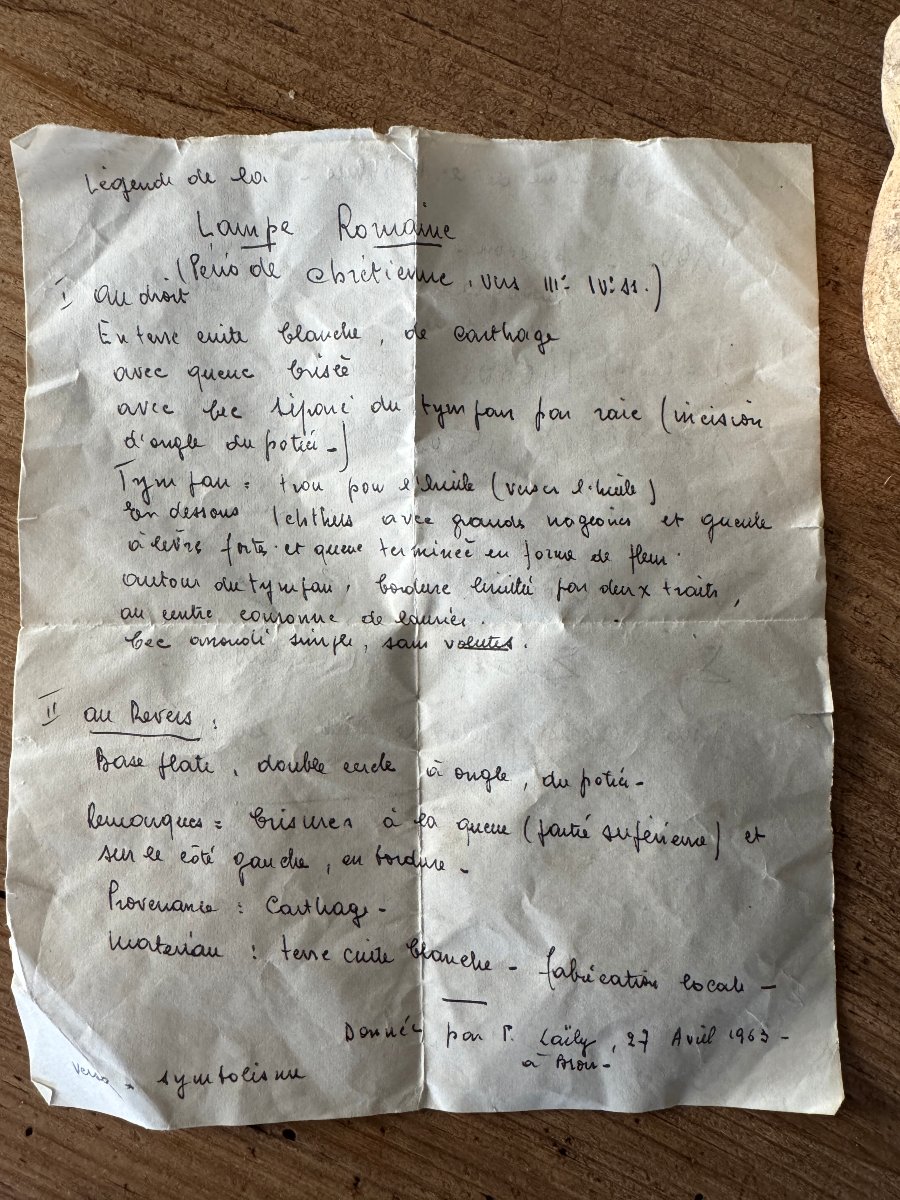
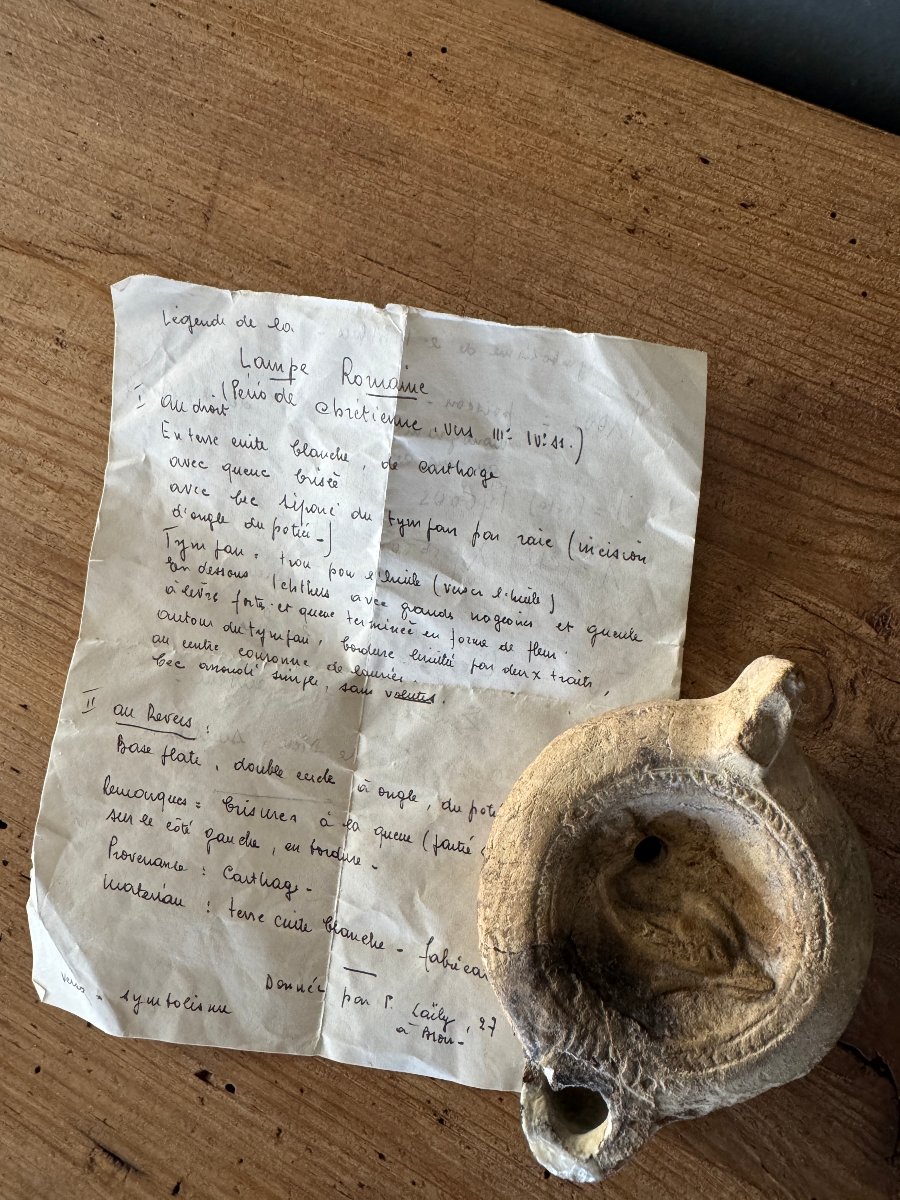
Former provenance: Carthage, according to a handwritten note dated April 27, 1963
Provenance: Former private collection
The Dolphin and the Sea – A Symbol of Good Fortune and Protection in the Ancient World
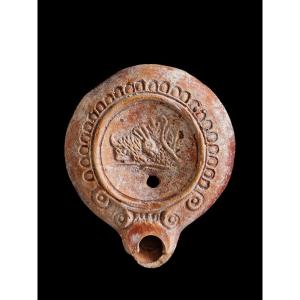
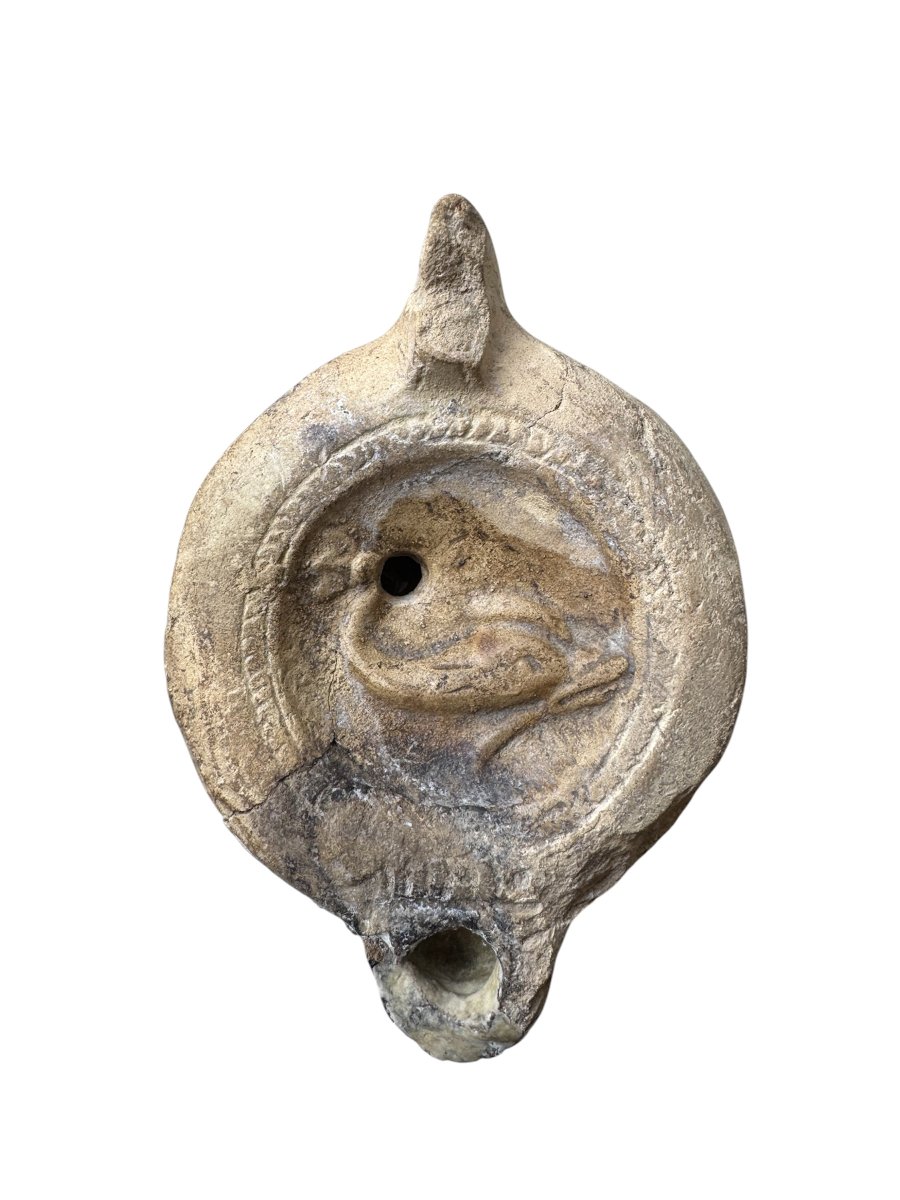
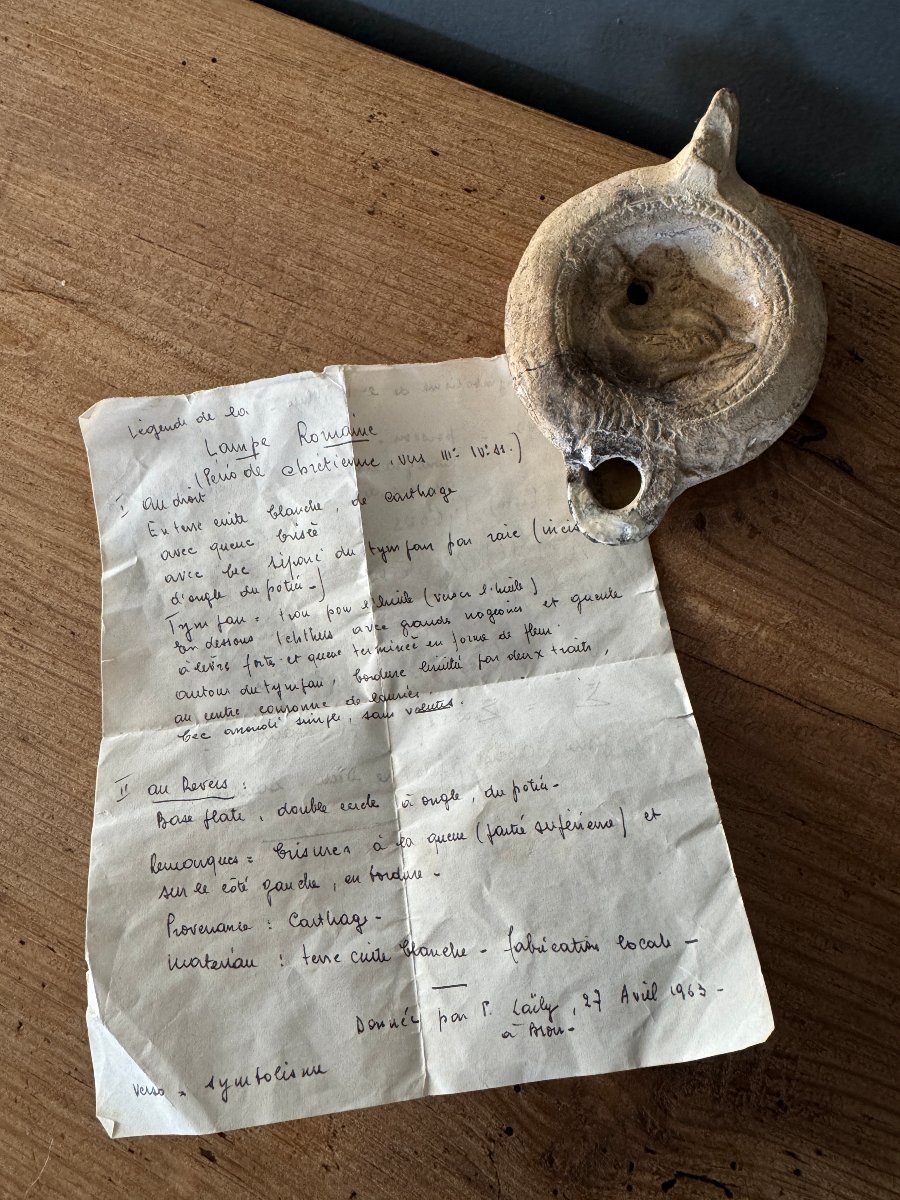
A rare Roman oil lamp made of light-colored terracotta, formerly from Carthage according to documentation that has been preserved with the object since 1963.
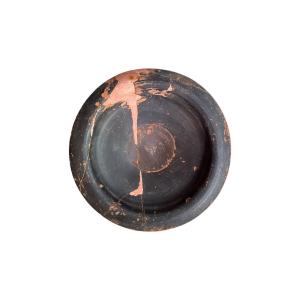
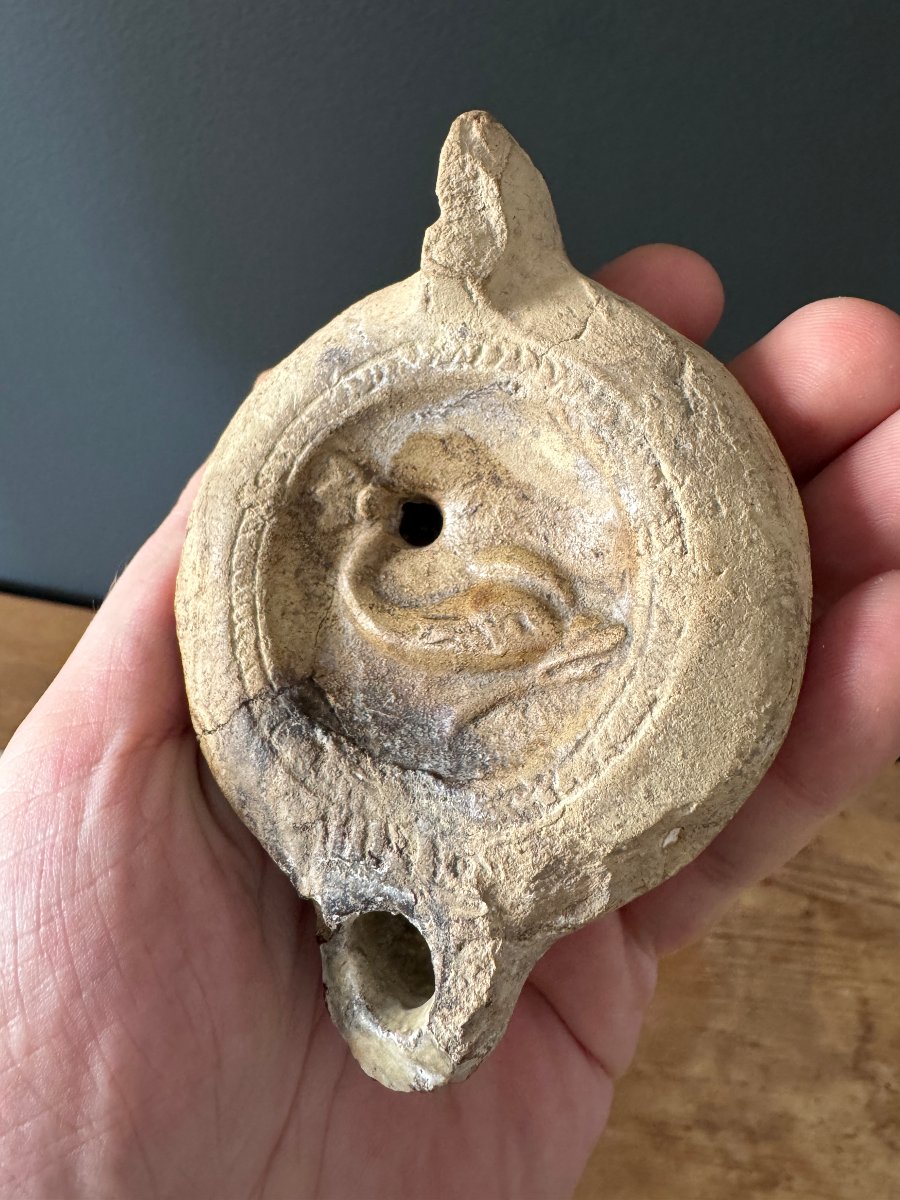
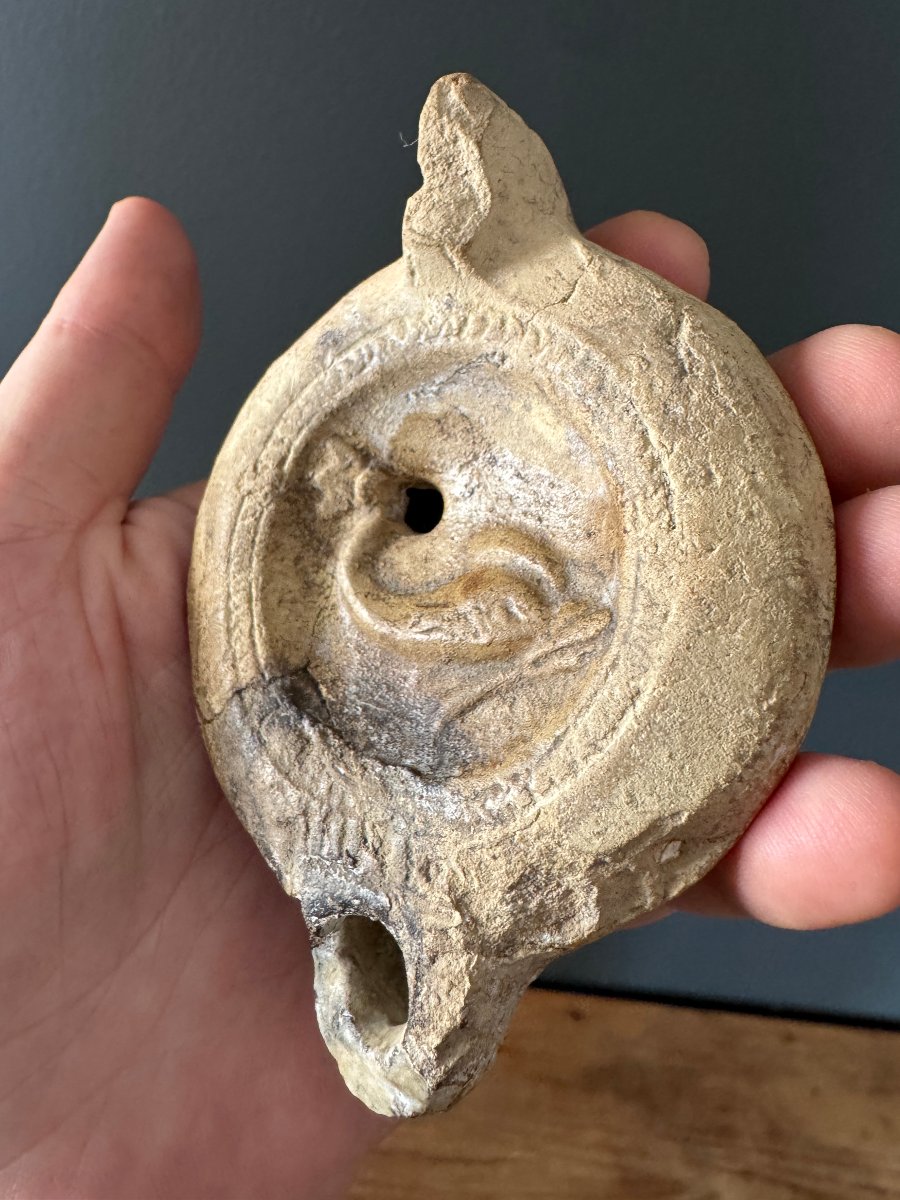
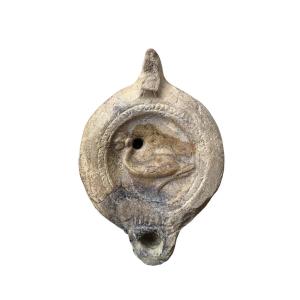
Circular in shape, the lamp features a concave disc-shaped reservoir pierced by a filling hole, extended by a spout designed to hold the wick. The central medallion, surrounded by a molded border with a regular pattern, is adorned with a stylized dolphin depicted in relief, recognizable by its curved body, elongated rostrum, and fins.
A creature particularly cherished in Greco-Roman antiquity, the dolphin belongs to the vast iconographic repertoire associated with the sea and the aquatic world. Considered a beneficial and protective animal, it appears frequently in ancient art, notably on mosaics, coins, ceramics, and everyday objects.
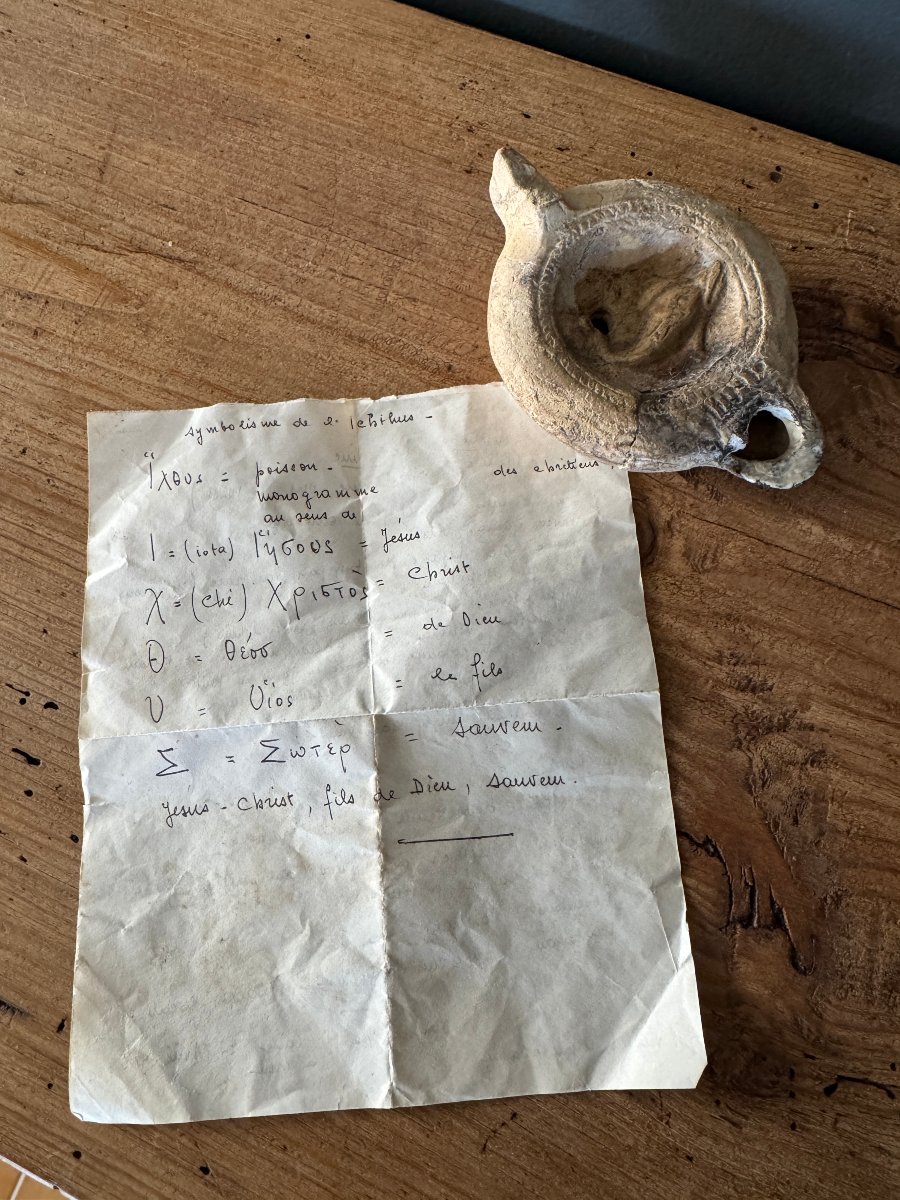
The piece is of additional interest due to the preservation of its original handwritten inventory note, dated April 27, 1963. This document explicitly states “Provenance: Carthage,” as well as that it was made of light-colored terracotta—which was then considered a local material—and suggests a date in the 3rd–4th centuries A.D.
The author of this old description, however, had interpreted the central motif as a fish and, on the reverse side of the document, reflected on the Ichthys, a symbol used in early Christianity to represent Christ.
This earlier iconographic identification must be corrected: the animal depicted on the medallion is a dolphin, not an Ichthys fish. The Christian interpretation presented in the record cannot therefore be accepted as a definitive reading of the design. Nevertheless, this documentation remains particularly interesting as an ancient record of the study, provenance, and collection history of the object, with which it has been preserved for over sixty years.
This lamp thus constitutes an interesting example of terracotta lamp production in Roman Africa, remarkable both for its dolphin motif and for the exceptional preservation of its ancient handwritten documentation, which mentions a provenance from Carthage as early as 1963.
Description
Material: Light-colored terracotta
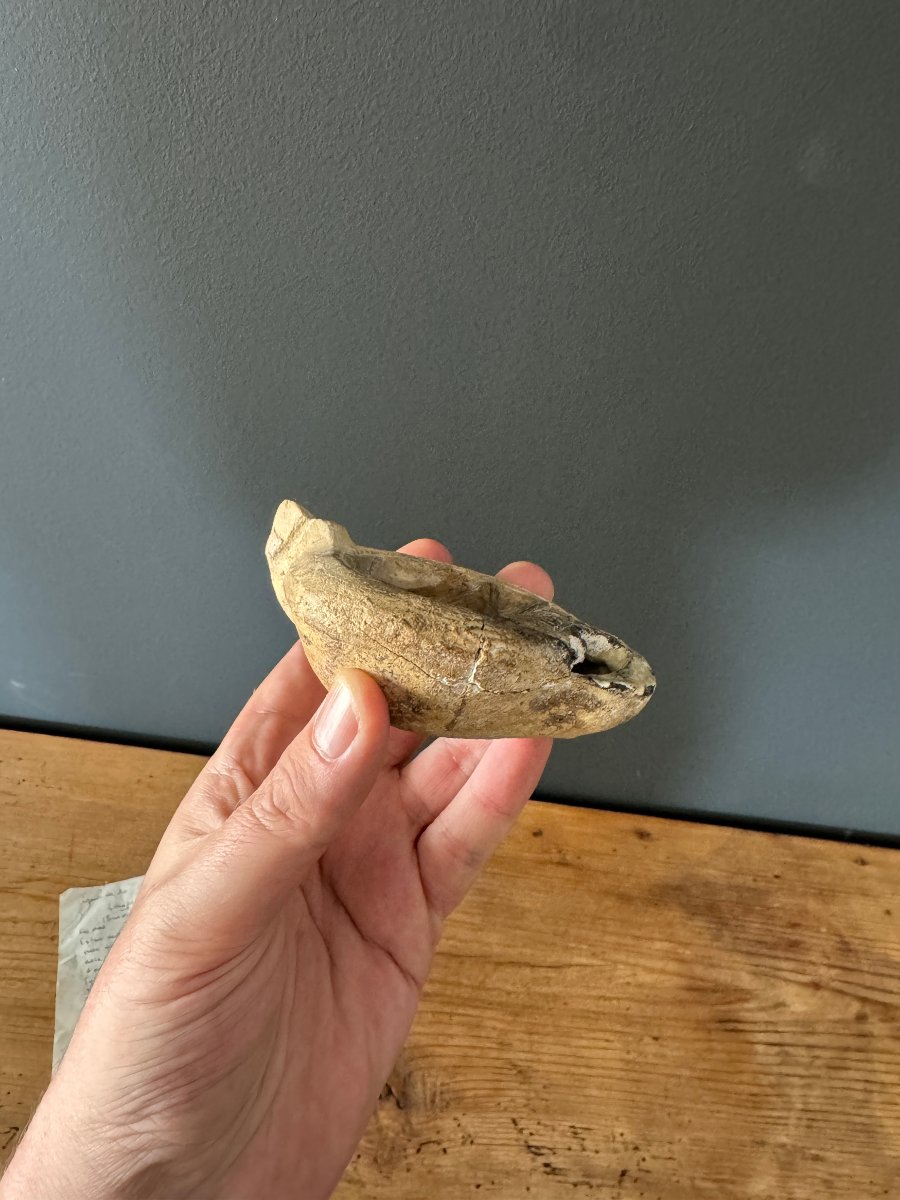
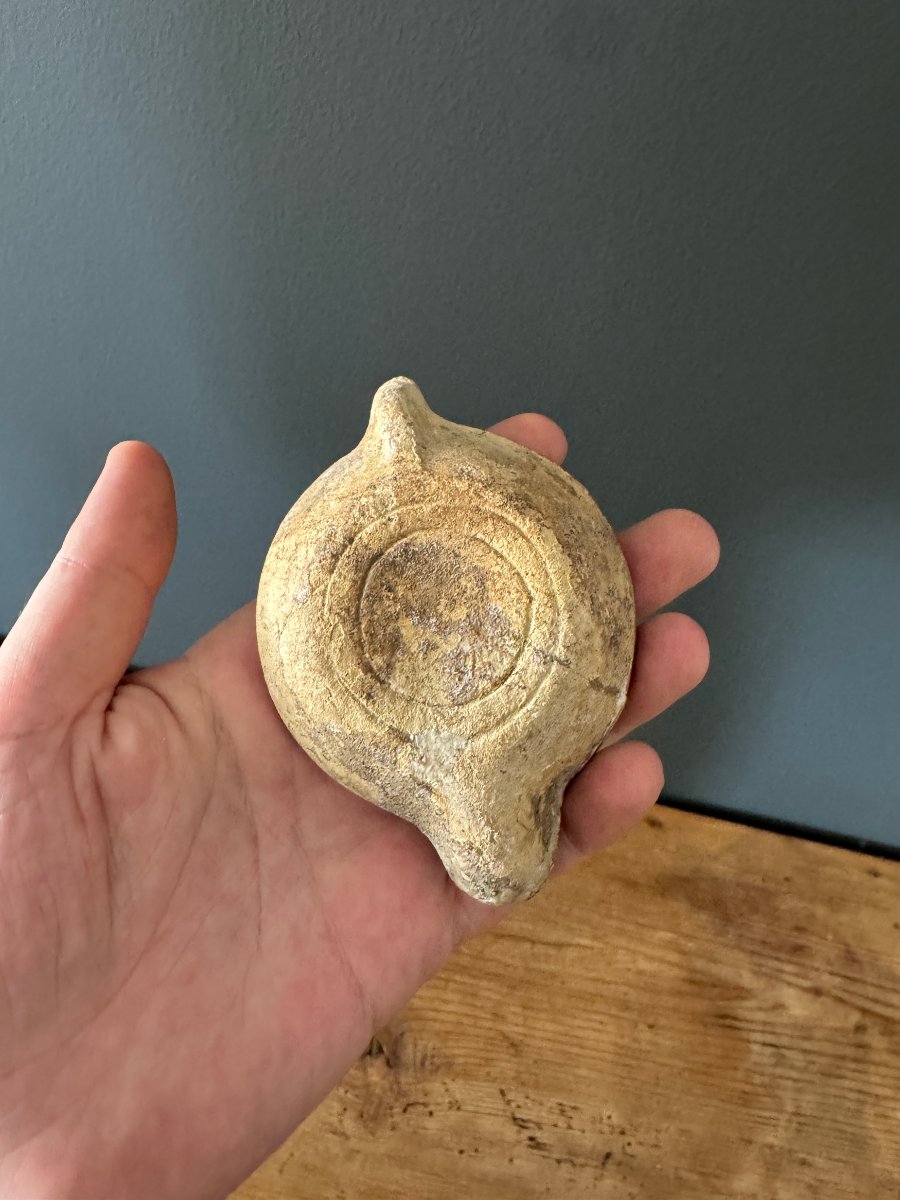
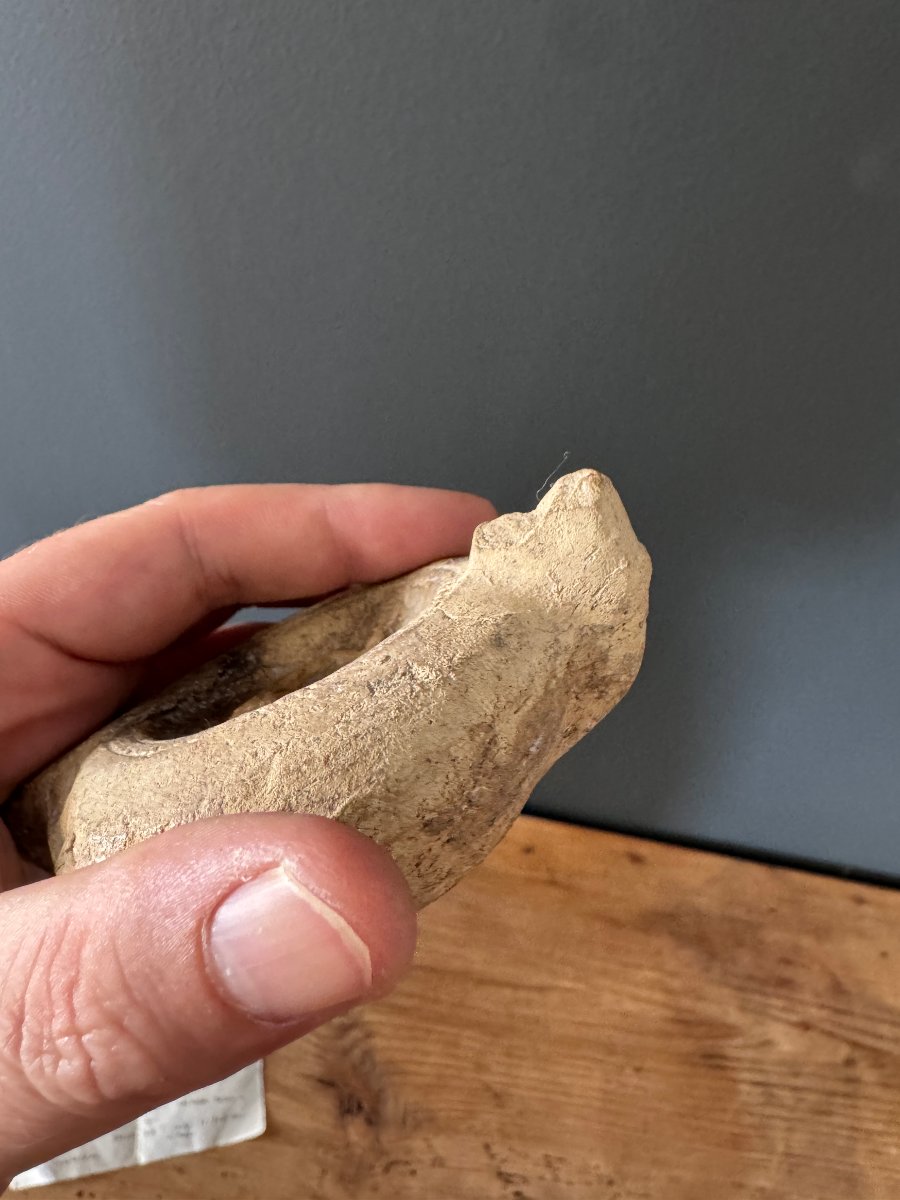
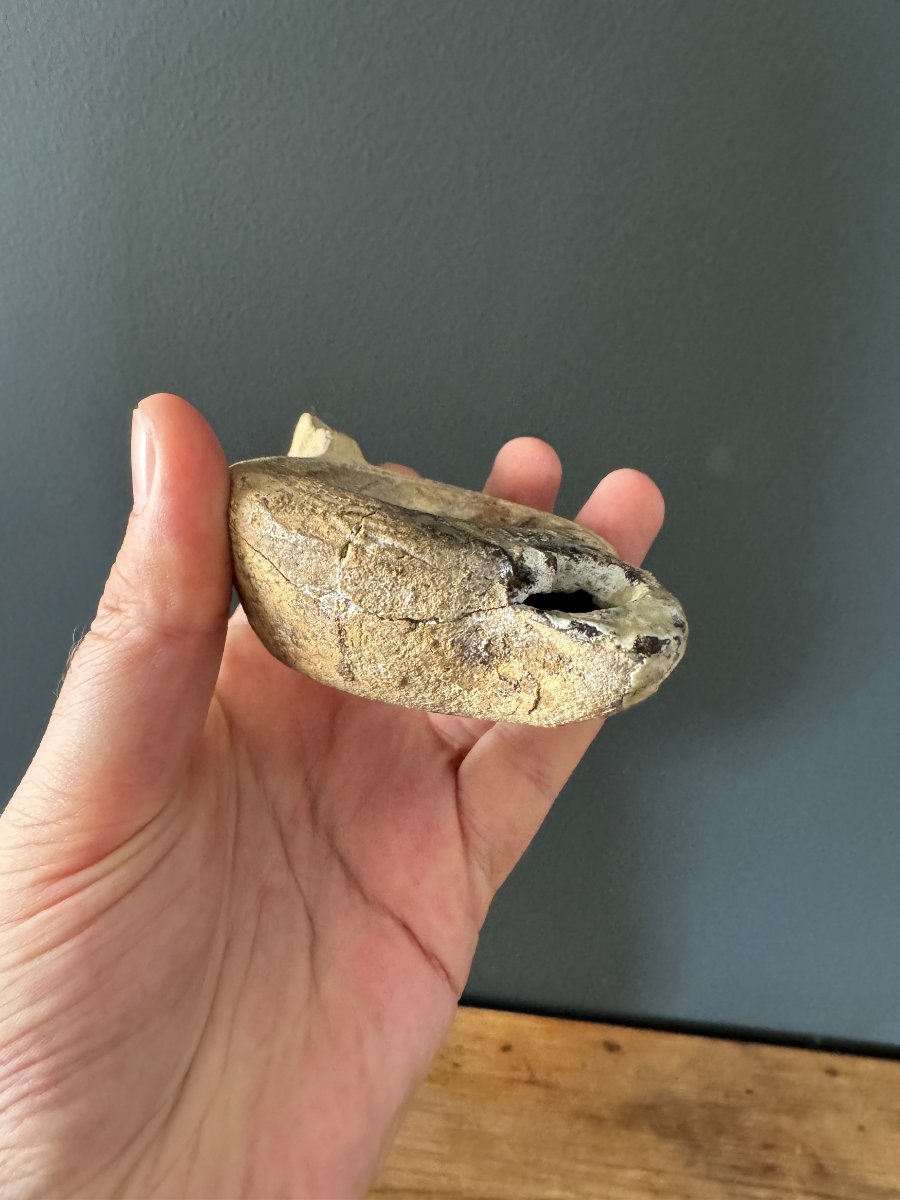
Shape: Circular lamp with a concave disc, a projecting spout, and a handle that is now incomplete
Decoration:
• Central medallion depicting a stylized dolphin in relief
• Molded border with a regular decorative pattern
• Fuel hole located on the disc
Technique: Casting
Condition
Archaeological condition.
The piece exhibits several signs of age, notably an incomplete handle, cracks, wear, and visible repairs, consistent with its history and already partially documented in historical records.
The central decoration remains perfectly identifiable and legible.
Dimensions
Length: 10.5 cm
Provenance
Former private collection.
Former provenance: Carthage, according to a handwritten note preserved with the object and dated April 27, 1963.
This historical documentation accompanies the lamp and constitutes an important part of its collection history.
Bibliography
Deneauve (1969): Lamps of Carthage, Paris
Bussière (2000): Ancient Lamps of Algeria, Montagnac
Bailey (1980): A Catalogue of the Lamps in the British Museum, London
Chrzanovski (2006): Light! Lighting in Antiquity, Milan
Loeschcke (1919): Lamps from Vindonissa, Zurich
ALL SHIPMENTS ARE MADE EXCLUSIVELY BY DHL EXPRESS.
Period: Before 16th century
Style: Rome and Antic Greece
Condition: En l'etat
Material: Terracotta
Reference (ID): 1796925
Availability: In stock