

Shamanic Pendant Vase, Quimbaya Culture, Colombia, Circa 500–1500 Ce, Pre-columbian
Quimbaya Culture, Colombia, Central Cauca Valley. circa 500–1500 CE.
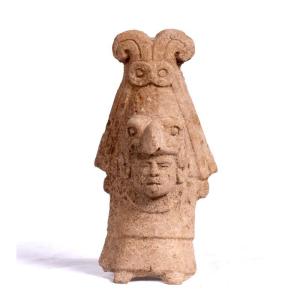
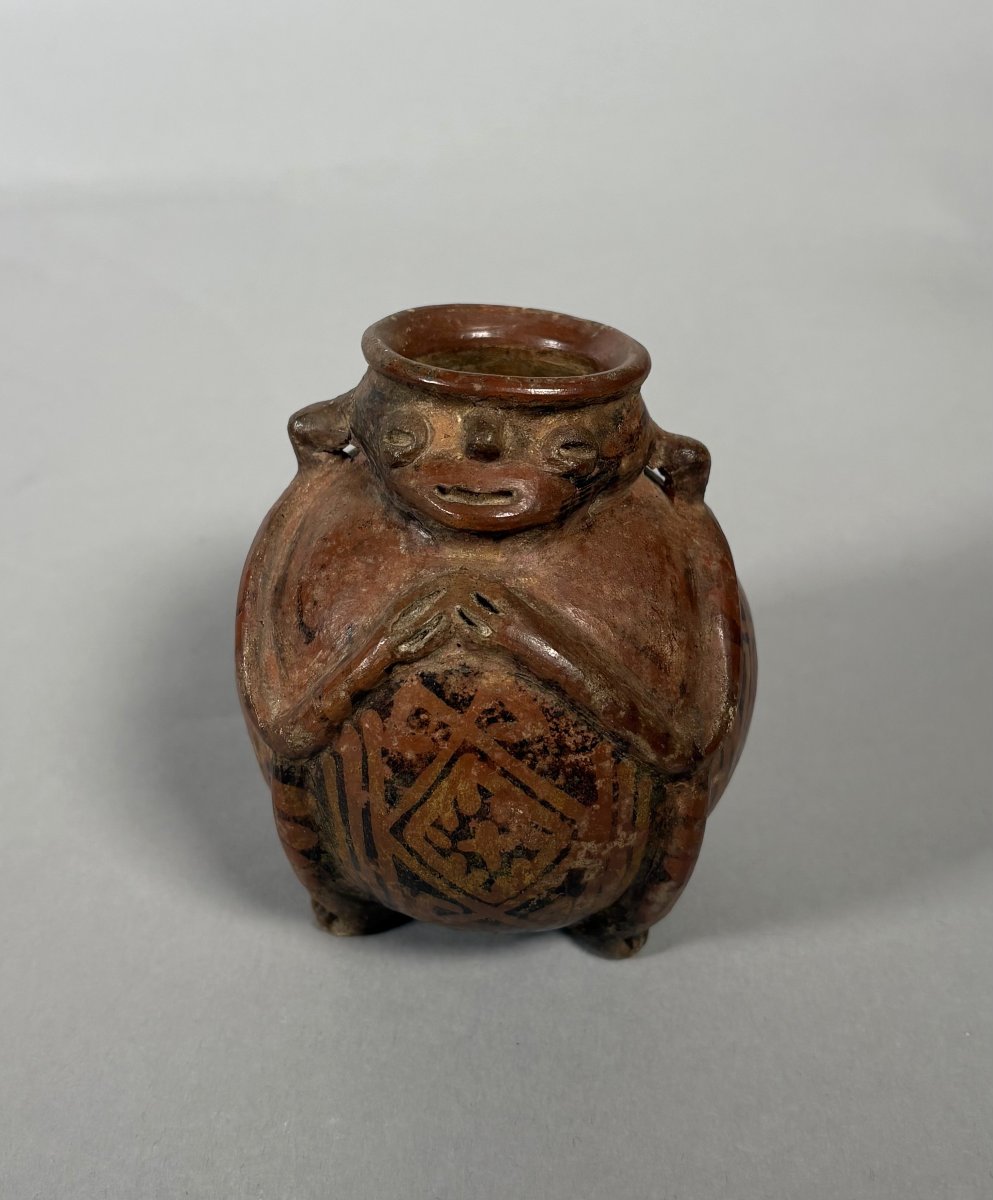
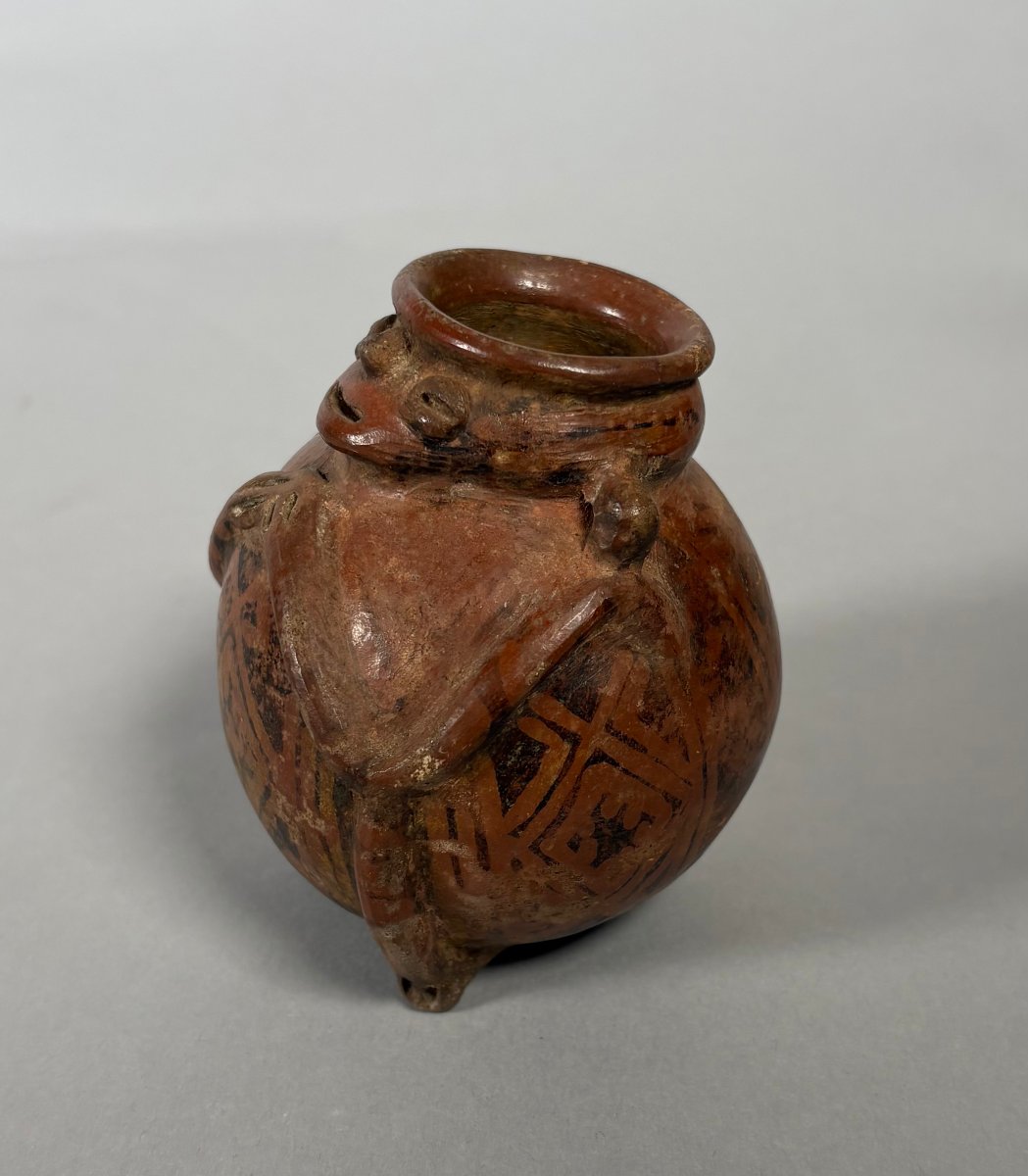
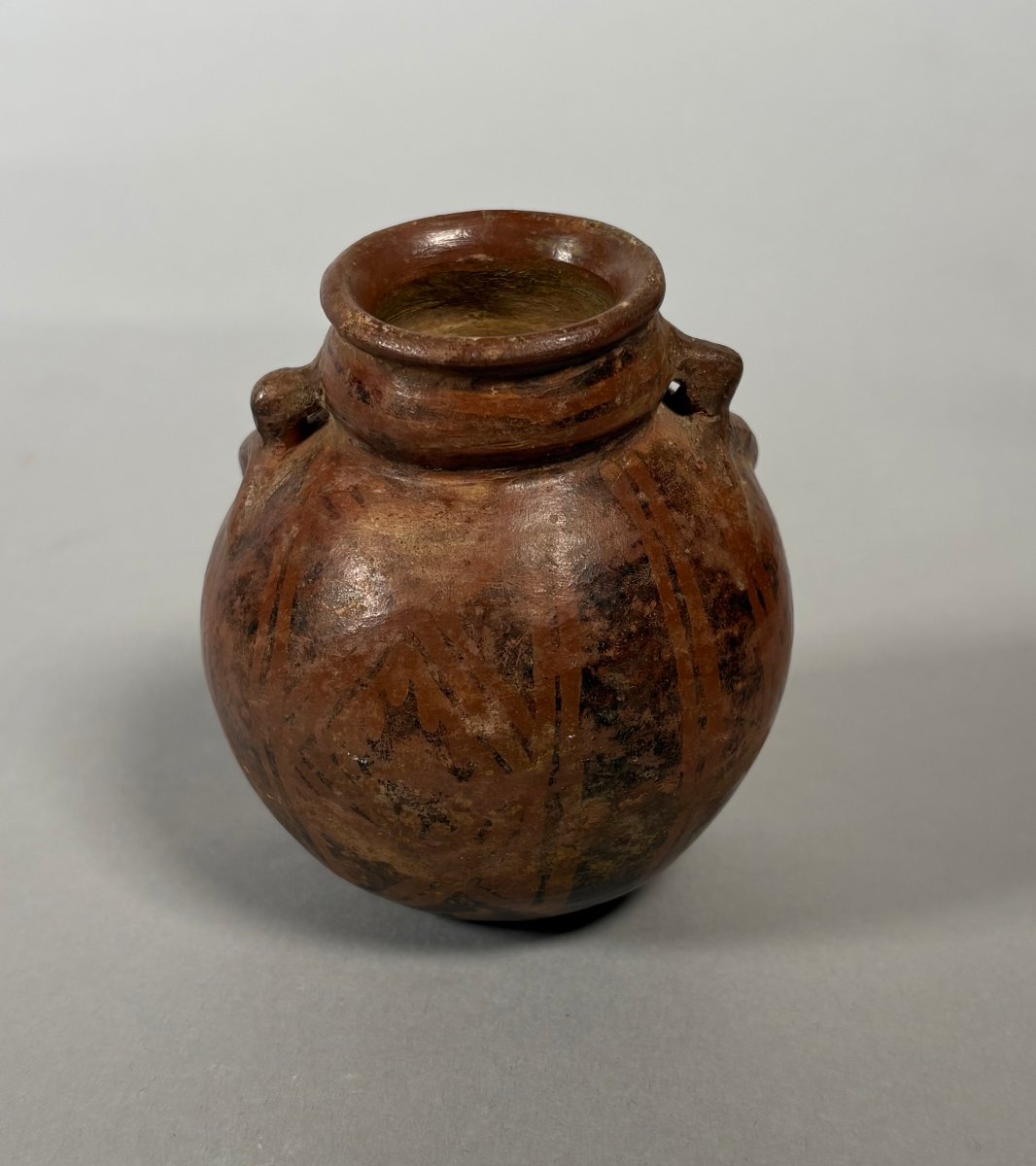
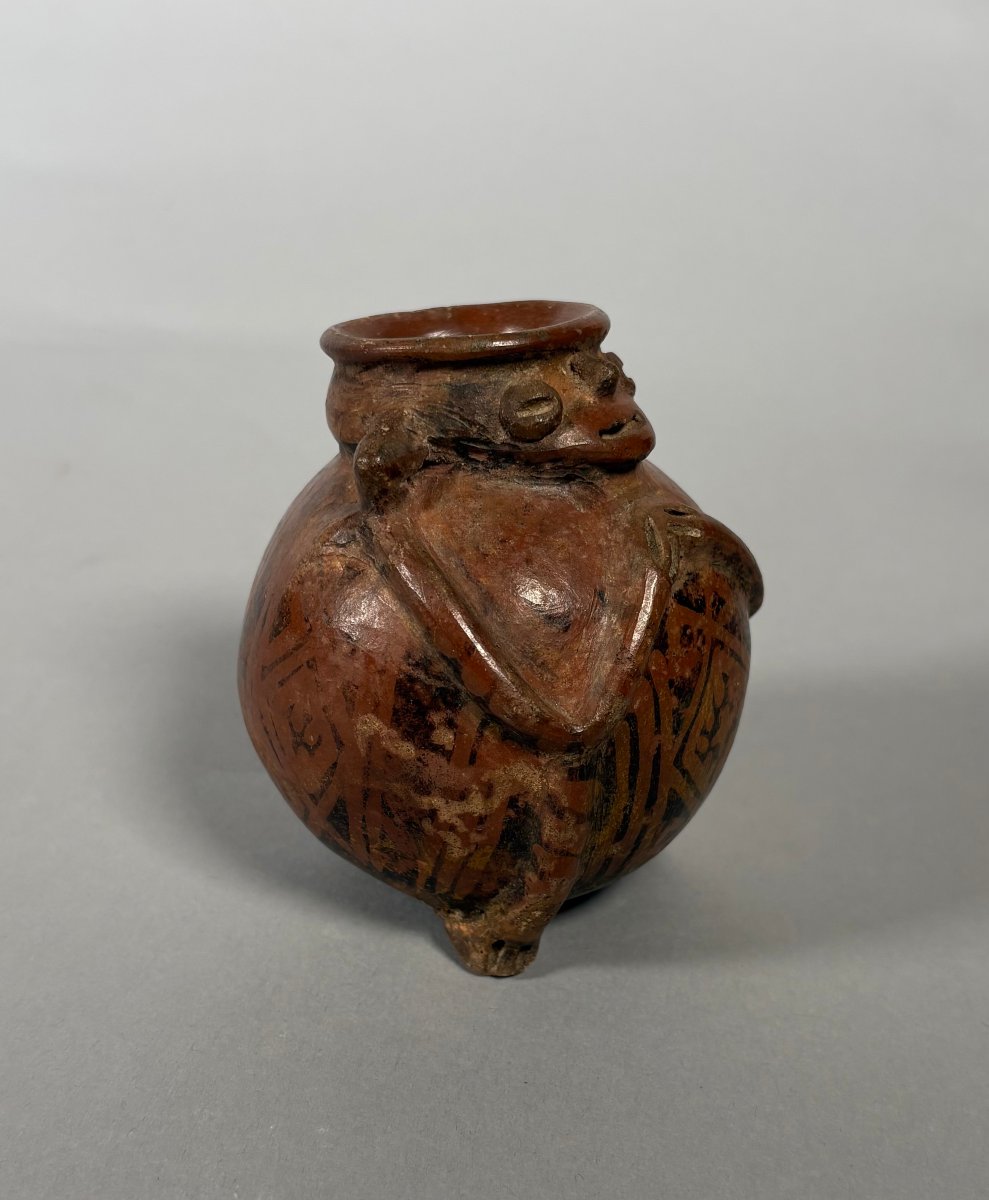
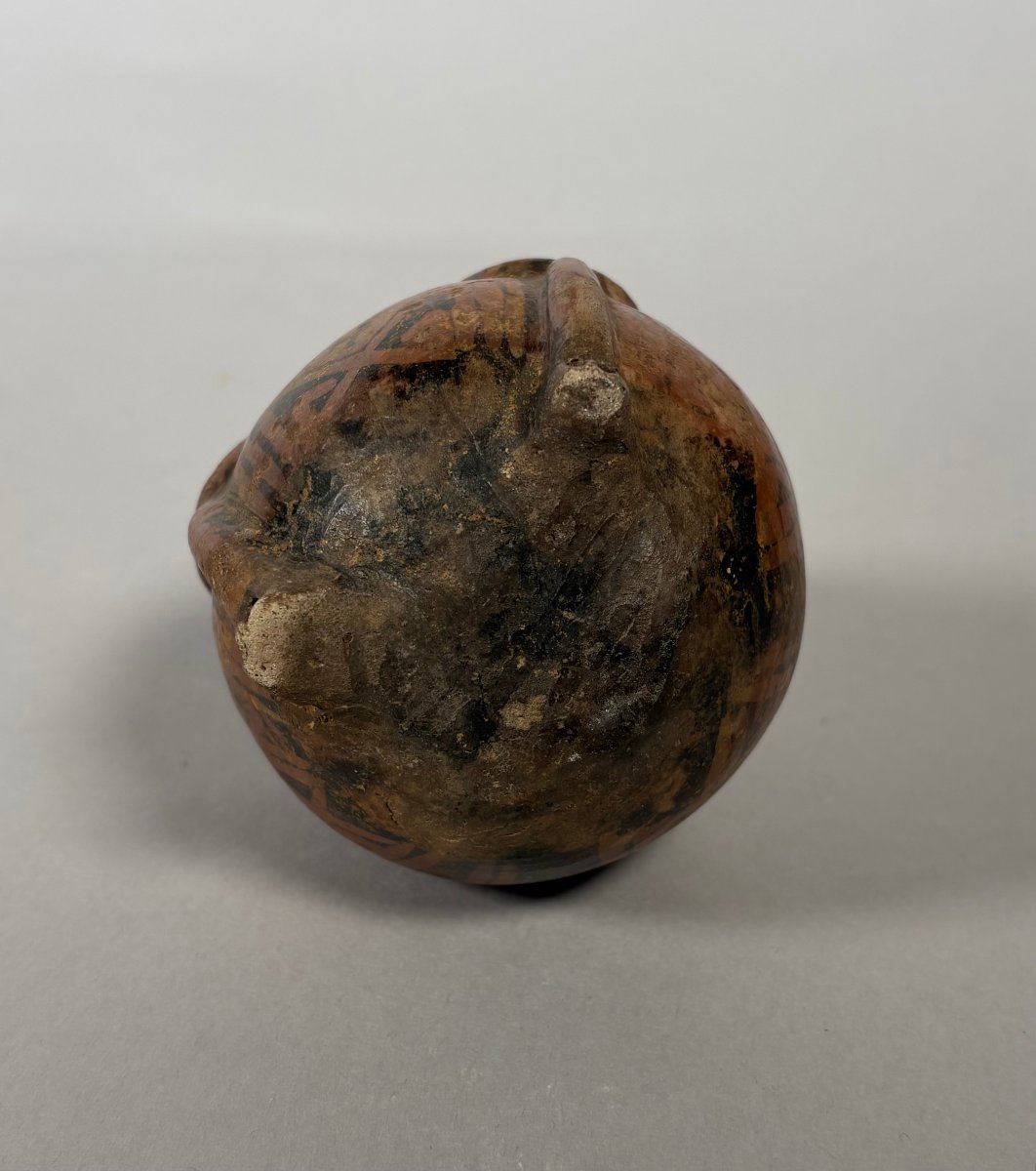
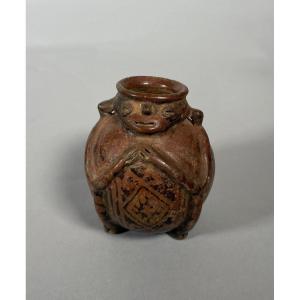
A jar-shaped vase in the form of a seated anthropomorphic figure, with the top of the head wide open, forming the opening of the vessel.
The figure is depicted in a seated position. Its arms are modeled in slight relief, folded forward, with the hands delicately joined on its abdomen (a classic gesture of devotion or contemplation).
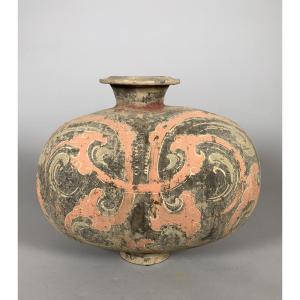
On its belly and legs, there is a superb geometric design painted in black on a reddish-orange background. This diamond-shaped motif, containing cross-like forms or stylized patterns (sometimes associated with the representation of a crocodile or a geometricized frog), is typical of the decorative style of this region.
The presence of perforations in the ears indicates that the object was worn as a pendant serving as an amulet or a portable offering vessel
These small pottery pieces were often placed in pit graves (huacas) as offerings to accompany the deceased into the afterlife.
Its small size suggests that it may have been used to store precious substances, such as body paint pigments, perfumed oils, or lime (used to release active ingredients when chewing coca leaves during shamanic ceremonies).
Dimensions: 9.5 x 8 x 7.5 cm
Provenance: - Private collection in southern France
A certificate of authenticity will be provided to the purchaser.
Taxes and customs duties are included in the shipping costs for international shipments
A jar-shaped vase in the form of a seated anthropomorphic figure, with the top of the head wide open, forming the opening of the vessel.
The figure is depicted in a seated position. Its arms are modeled in slight relief, folded forward, with the hands delicately joined on its abdomen (a classic gesture of devotion or contemplation).
On its belly and legs, there is a superb geometric design painted in black on a reddish-orange background. This diamond-shaped motif, containing cross-like forms or stylized patterns (sometimes associated with the representation of a crocodile or a geometricized frog), is typical of the decorative style of this region.
The presence of perforations in the ears indicates that the object was worn as a pendant serving as an amulet or a portable offering vessel
These small pottery pieces were often placed in pit graves (huacas) as offerings to accompany the deceased into the afterlife.
Its small size suggests that it may have been used to store precious substances, such as body paint pigments, perfumed oils, or lime (used to release active ingredients when chewing coca leaves during shamanic ceremonies).
Dimensions: 9.5 x 8 x 7.5 cm
Provenance: - Private collection in southern France
A certificate of authenticity will be provided to the purchaser.
Taxes and customs duties are included in the shipping costs for international shipments
1 000 €
Period: Before 16th century
Style: Tribal Art
Condition: Excellent condition
Material: Terracotta
Reference (ID): 1796279
Availability: In stock
Print