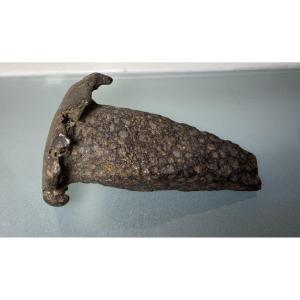
Very large fossilized mammoth tooth on a custom base. The mammoth was a large, hairy mammal that lived during the Ice Age and is related to the elephant. It adapted to the cold climate thanks to its t[...]
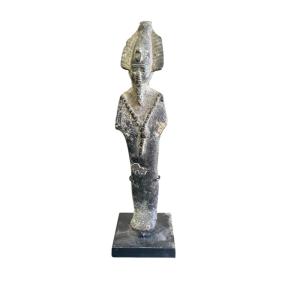
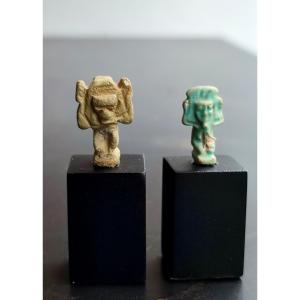
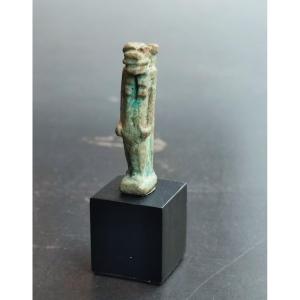
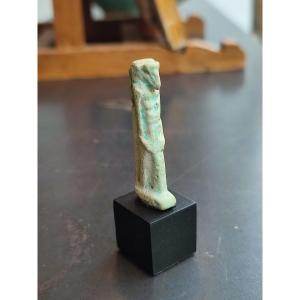
Small bronze head of Osiris on a small porphyry block. Egypt. Late Period (664-332 BC), Saite period. Dimensions of the head: 42 x 26 x 11 mm. 16.75 g. Charming small head of the god Osiris, wearing t[...]
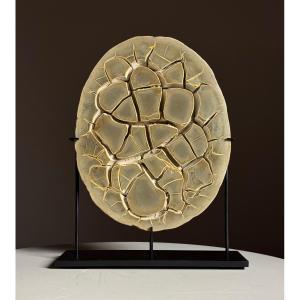
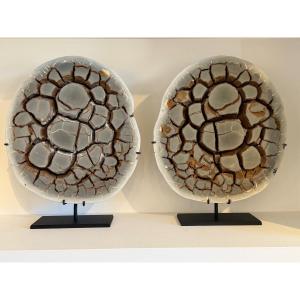
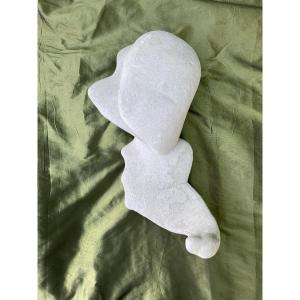
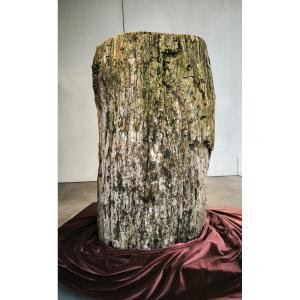
Absolutely unique. A gigantic fragment of a Fontainebleau Gogotte on a custom-made base. A Fontainebleau Gogotte is a natural sandstone formation that formed millions of years ago in the Fontainebleau[...]
Boucle médiévale dorée Collection BigotUne boucle dorée originale, probablement d'époque mérovingienne, mais assurément du haut Moyen Âge.La dorure est probablement en or ou en cuivre ; il s'agit d'un[...]
Le Tene Bronze Fibula Brooch.A bronze fibula from the La Tene culture civilization. A triangular arch, spring with four turns and internal rope and broken pin. Formerly from a Dutch Collection
Detailed observation under ×10 magnification and raking light of a silver denarius of the Mauretanian Kingdom, showing on the obverse a diademed head of King Juba II facing right (legend REX IVBA clea[...]
Detailed observation under ×10 magnification and raking light of a posthumous silver denarius of Septimius Severus deified, struck in Rome around 211 AD, displaying a refined bearded portrait and a CO[...]
Small blue-green glazed faience scarab amulet of remarkable chromatic depth, dating from the reign of Amenhotep III (Amarna Period, circa 1391–1353 B.C.). Entirely preserved, it displays a finely segm[...]
Magnificent sestertius in orichalcum, struck under the reign of Trajan between A.D. 103 and 111, measuring 36 mm in diameter and weighing 23.54 g.The obverse bears a laureate, draped, and cuirassed po[...]
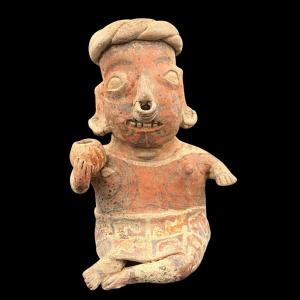
Votive fragment in reddish-orange terracotta, depicting a stylized human torso truncated at the shoulders and pelvis. The right hand placed on the chest expresses the gesture of self-offering, a disti[...]
Set of four rare cast iron candlesticks from the gothic period. Tripod base which one has been repaired strongly long time ago (has visible on the photos). Rests of old black paint. France, 15th centu[...]
An impressive fragmentary Roman bust in limestone depicting Vulcan (Hephaestus), god of fire and the forge. The god is shown bare-chested, his right hand folded across the chest holding a bundle of bl[...]
A rare Greek terracotta figurine depicting Silenus, the mythical companion of Dionysus, portrayed in a squatting position typical of the comic and Dionysian imagery of the 5th century BC. The god, sho[...]
Large Celtic Pendant with three Horse Heads.An ancient symbol of three horses is the Celtic ornamental knot, which represents the Celtic goddess of horses, Epona. These symbols also connect to the num[...]
Roman Gladiator / Legion Bronze Figure.An original bronze figure depicting a Gladiator or Legion soldier.These kinds of figurines would have been widespread over the Roman Empire and would have depict[...]
Magnificent gold solidus struck at Carthage under Constantine IV (668–685 AD), with his co-emperors Heraclius and Tiberius, dated by the 6th indiction (IY 6 = 677/678).On the obverse, a helmeted and c[...]
Carved limestone fragment representing, on the left, a crouching dog with a slightly worn muzzle, and on the right, the lower part of a draped human leg standing as a vertical support. The stone, anci[...]
Meticulous examination under ×10 magnification and raking light of a Chinese funerary terracotta statuette of a dog, dated to the Han dynasty. The animal sits in a tripod posture, with the hindquarter[...]
Originating from a rigorously documented provenance chain—former Belgian private collection, transfer through a Spanish antiquarian in 2022, and subsequent return to Brussels—this Etruscan terracotta [...]
Impressive Etruscan votive head representing a male figure, mould-made in hollow terracotta with a flat back pierced by a ventilation hole. This type of production, known as a testa votiva, belonged t[...]
Elegant funerary figure of a Tang Dynasty court lady (仕女俑), modelled in reddish-grey terracotta, coated with a white slip and painted in original polychromy. Authentic pigment remains are clearly visi[...]
Etruscan anatomical votive head in terracotta, examined under ×10 magnification and raking light. The modelling, of strong sculptural presence, shows a full, frontal face framed by a short, wavy hairs[...]
Tête féminine en marbre finement sculptée, présentant une chevelure ondulée retenue par un ruban lisse (tainia) ceignant la nuque d’une oreille à l’autre. Les lobes, percés à l’origine pour recevoir d[...]
Fragment of a pile from the foundations of the old Temple Gate in Paris, part of the fortifications of Charles V (1364-1380), removed during the construction of line 3 (lot 4) of the Paris metro and p[...]
Corinthian capital corner with two acanthus leaf points and volute.Roman art, 2nd-3rd century white marblewidth: 22 cmheight: 17 cmdepth: 17 cmCan be used as a wall bracket to display an antique objec[...]
Funerary mask in hard stone, carved from fine-grained granodiorite, depicting a youthful face beneath a close-fitting “cap” wig. The modelling is confident and characteristic of late workshops: softly[...]
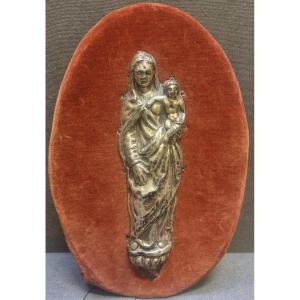
Virgin and Child Jesus. Carved and polychrome wood. Spanish School, 14th century. A polychrome wooden carving with gold highlights depicting the Virgin Mary seated on a low throne, wearing a cloak, t[...]
How clever… back then, we may not have washed our hands, but we knew how to put away our scissors, after God knows what procedure, by carefully folding the finger slots to take up less space in the ca[...]
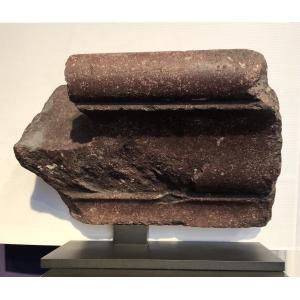
Fragment of imperial porphyry, suitable for use as a statue base. Porphyry, a prestigious material extracted primarily in Egypt (notably at Mons Porphyrites), was prized in Roman antiquity and beyond [...]
Very pretty pair of small glazed terracotta bowls. They are oval in shape and have small "ears" on each side, used as handles. Green in color, they have a very pretty iridescence of the glaze. Origin:[...]
Antique Bronze Fertility Goddess Pendant Roman. A very interesting pendant having a figure or deity in the middle. Provenance: Originally from Dutch collection.
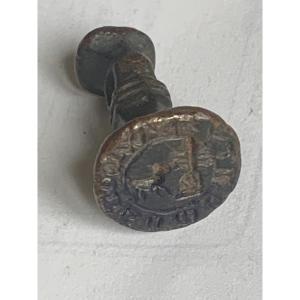
Medieval Wax Seal with Cross.An interesting and heavily worn wax seal which might have some rams head , horses or creatures heads.Provenance:Ex Dutch collection.
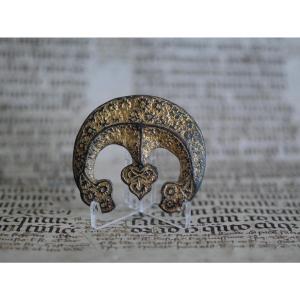
Medieval Alloy Disk Pendant.A beautiful medieval amulet. The material is likely an alloy from bronze or copper likely with some silver.The disk is decorated with Spirals and Triskeles.These style can [...]
Imperial Roman Cross Bow Fibula Brooch (Prov) Bigot CollectionA large bronze fibula / brooch from the Roman imperial period.Provenance:Originally from Bigot Collection
Celtic Horseman WarriorA Celtic horseman having a raised arm, made of some alloy possibly lead or mixed with other metals like bronze etc.Provenance:Formerly from a private Dutch collection
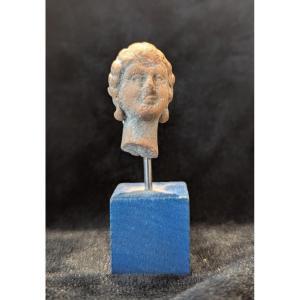
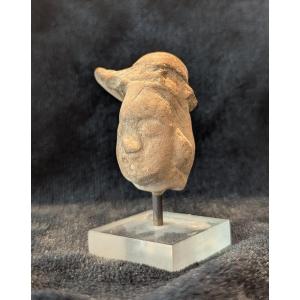
Here is a very beautiful terracotta statue head. The marks on the forehead and on the top of the head suggest an Egyptian crown. It comes from the estate of a collector who worked for several years in[...]
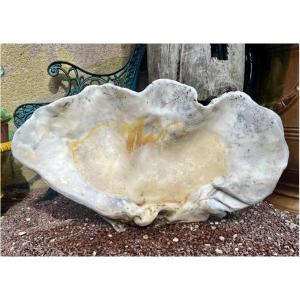
Giant fossilized clam "Tridacna Gigas" Length: 74 cm Width: 55 cm Weight: approx. 60 kg Sold with CITES (Washington Convention) Exceptional material, the fossil clam gave rise to unique objects reserv[...]
Very pretty Stick woman in terracotta with painted engobe. The face is very fine and serene, the hair is tied into a braid and attached to the back of the skull. Presented on a removable base. A therm[...]
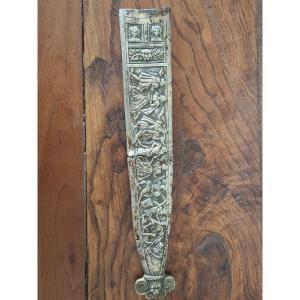
A very rare depiction on this medieval copper alloy table knife terminal. Usually, saints, martyrs, and animals are depicted on the engravings of a finial, but here a lunar gargoyle was chosen. Probab[...]
Rare small pilgrimage badge decorated with a man in the center surrounded by a legend border. Mixture of lead and tin. Gothic period – Second part of the 14th century. 1.8 cm in diameter. An almost id[...]
Pre-Columbian, Tabasco, Mexico, Olmec, circa 1150–500 BC. A finely carved jadeite kneeling figure with hands placed beneath an offering bowl, a bent torso, and an elongated head (misformed due to arti[...]
Small 15th/16th century sheepskin traveler's Bible. Written in Aramaic, it comes with its case and travel pouch. Some parts were likely damaged by fire. A beautiful collector's item from a very early [...]
Bronze Age European BeltAn ancient Bronze Age European belt comprised of numerous interlocking vertical bronze elements stems with five knobs / globules on each. The hook has had some restoration. The[...]
Catalan limestone sarcophagus from the 14th or 15th century, from the Church of Notre Dame de la Merci in Perpignan, decorated with coats of arms and writing in ancient Latin.
Surya, solar deity. Stone sculpture, South India, 11th-12th century Important stone sculpture representing Surya, the sun god of Hindu mythology, identifiable by his tall headdress and serene face enc[...]
Silver Byzantine Period Ring Ottoman or ByzantineThe ring is signet ring and also the head can roatate and the ring can be changed into a pendant.Material: Silver Condition: Very good.
9th -10th Century Viking Silver Penannular Glass Knobbed Brooch Medieval PeriodA beautiful medieval silver brooch, circa 9th to 10th century Viking.Private Dutch collection.
Roman or Byzantin Bronze Pentagram RingA medieval era Roman or Byzantine rind with Pentagram engaving, some damage and bending of the band.Provenance:Private Spanish Collection.
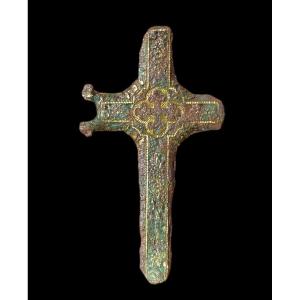
Fragment de pendentif quadrilobe médiéval en bronze, collection BigotGrand fragment de pendentif, provenant probablement d'une croix.Magnifique bague de grande taille, provenant de l'Empire turc/ottom[...]
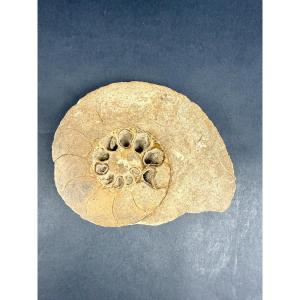
Pair of sectioned fossilized ammonites – approx. 35 cm Superb pair of fossilized ammonites, presented in longitudinal section, revealing their finely drawn and crystallized internal chambers. Each hal[...]
Terracotta representation of Silenus - Greece, Hellenistic period (4th-1st century BC)Rare representation of Silenus seated, with prominent belly and phallus, holding an amphora and a cup in his hands[...]
Terracotta head of a female goddess - North India, 5th-1st century BC. This type of head is called in English "Akra devi type", because of the many examples that have been found in Akra during excavat[...]
Proantic uses a cookie to analyze traffic and improve its service by using Google Analytics. Data sent to Google Analytics (frequency of visits to the site and pages visited) are anonymous. No other cookie tracks your activity, your personal data is not collected. Thank you for helping us to have better understanding how Proantic is used.