

Offering Plate Featuring Saint George
Slaining The Dragon
Nuremberg (Germany)
Early 16th century (around 1500-1530)
Repulsed, chiseled and engraved brass
Diameter: 41.8 cm
Depth: 3 cm
Weight: 1,420 g
⸻
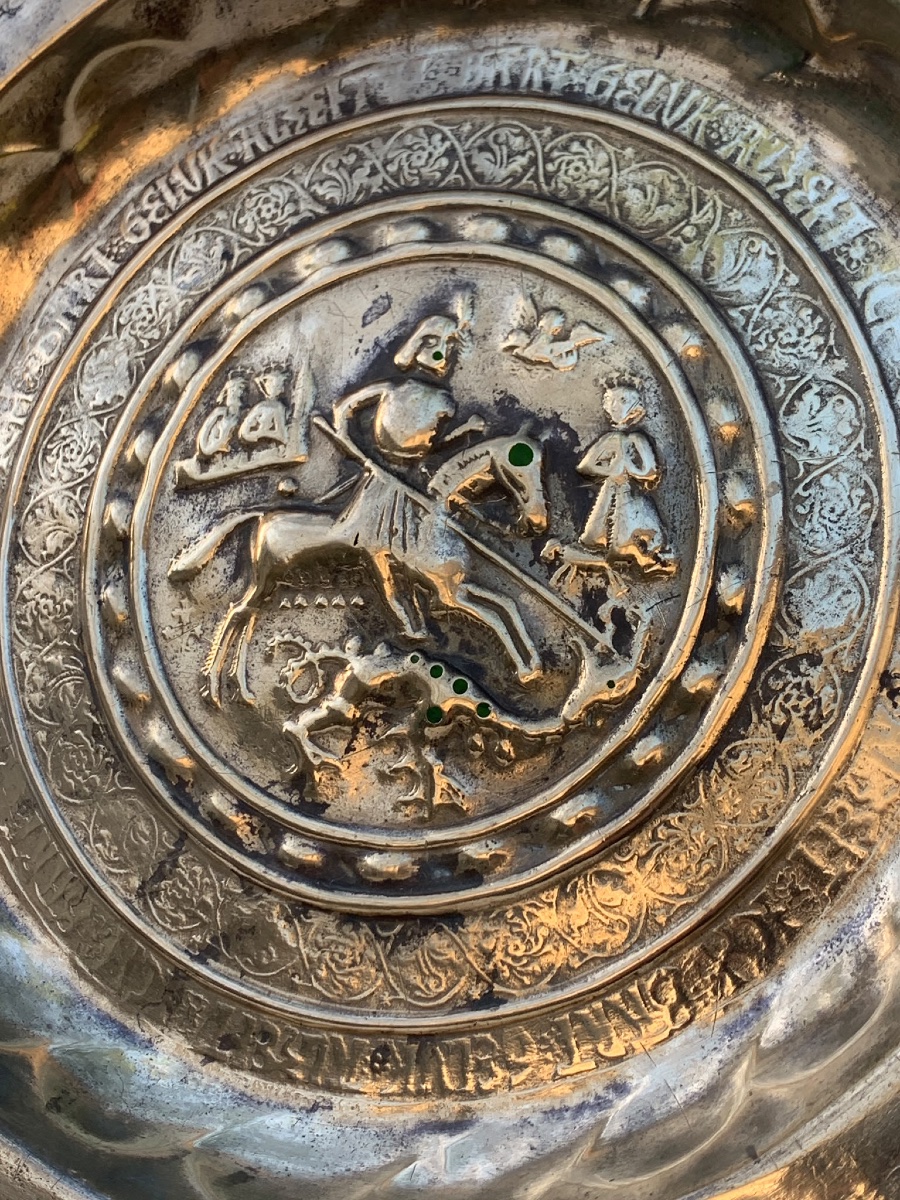
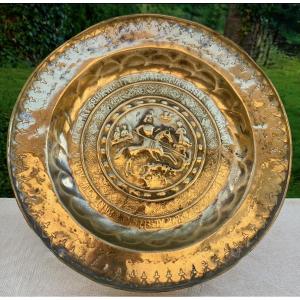
Important offering dish in pushed back, chiseled and engraved brass made in the Nuremberg workshops at the beginning of the 16th century.
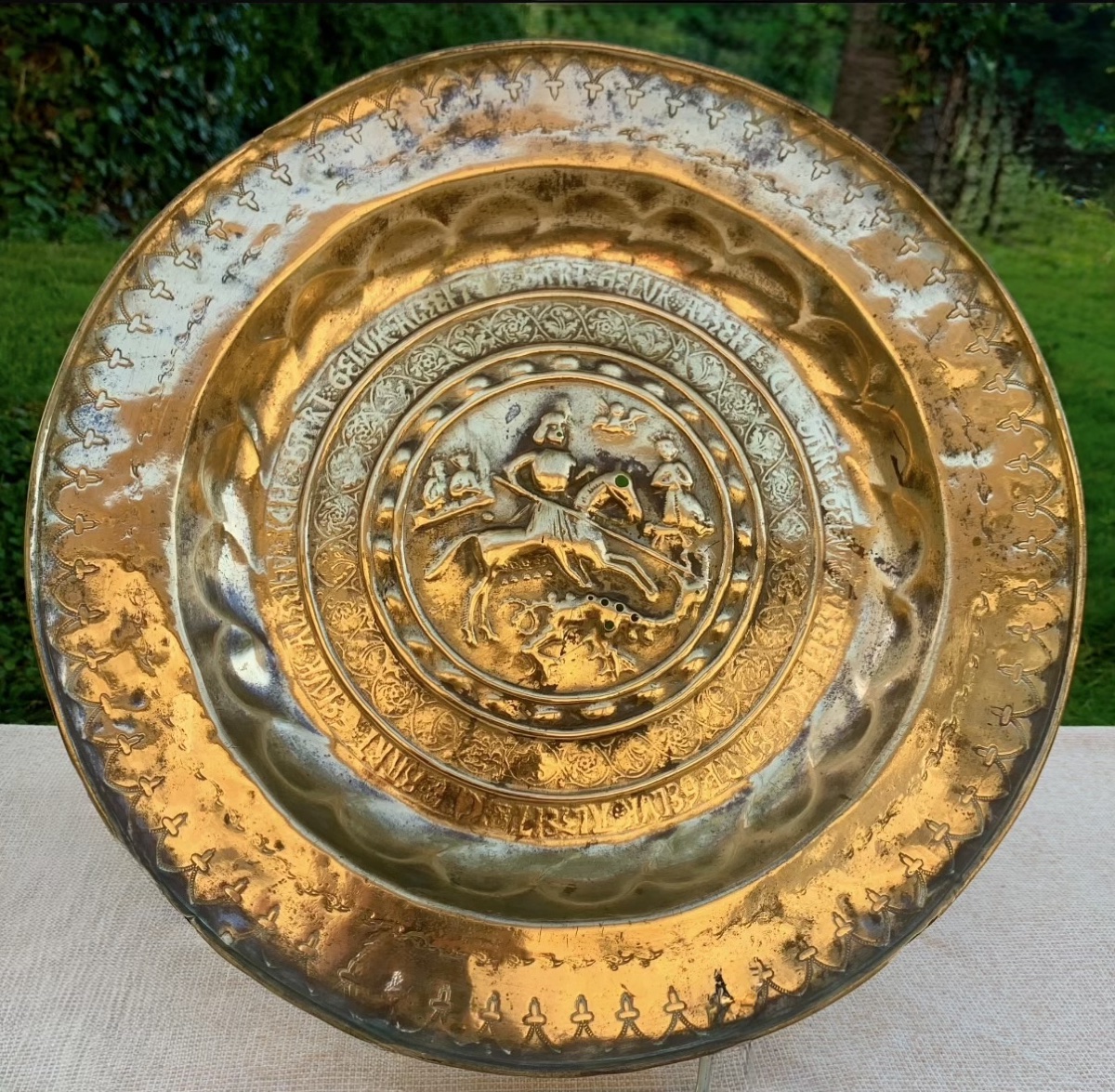
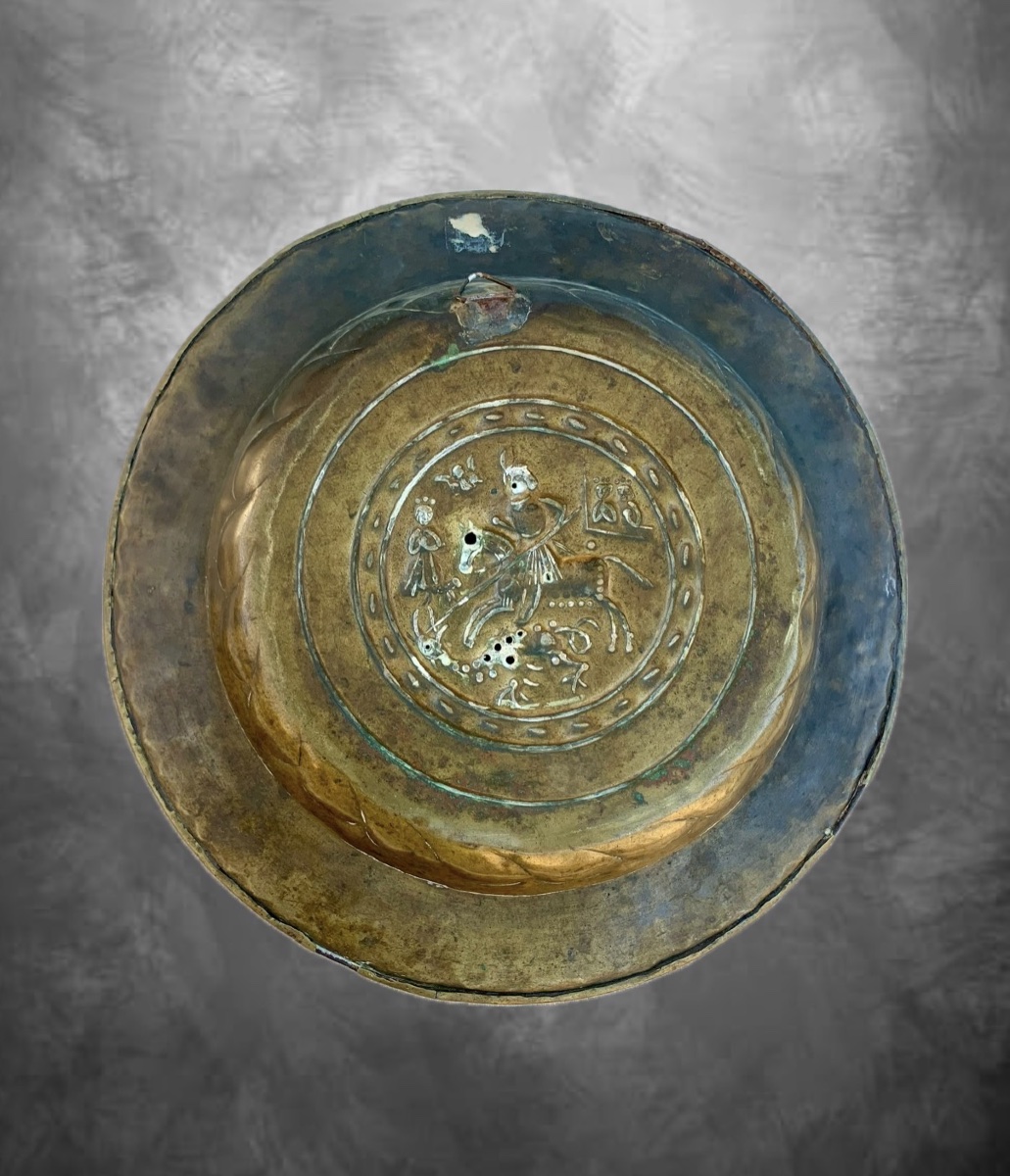
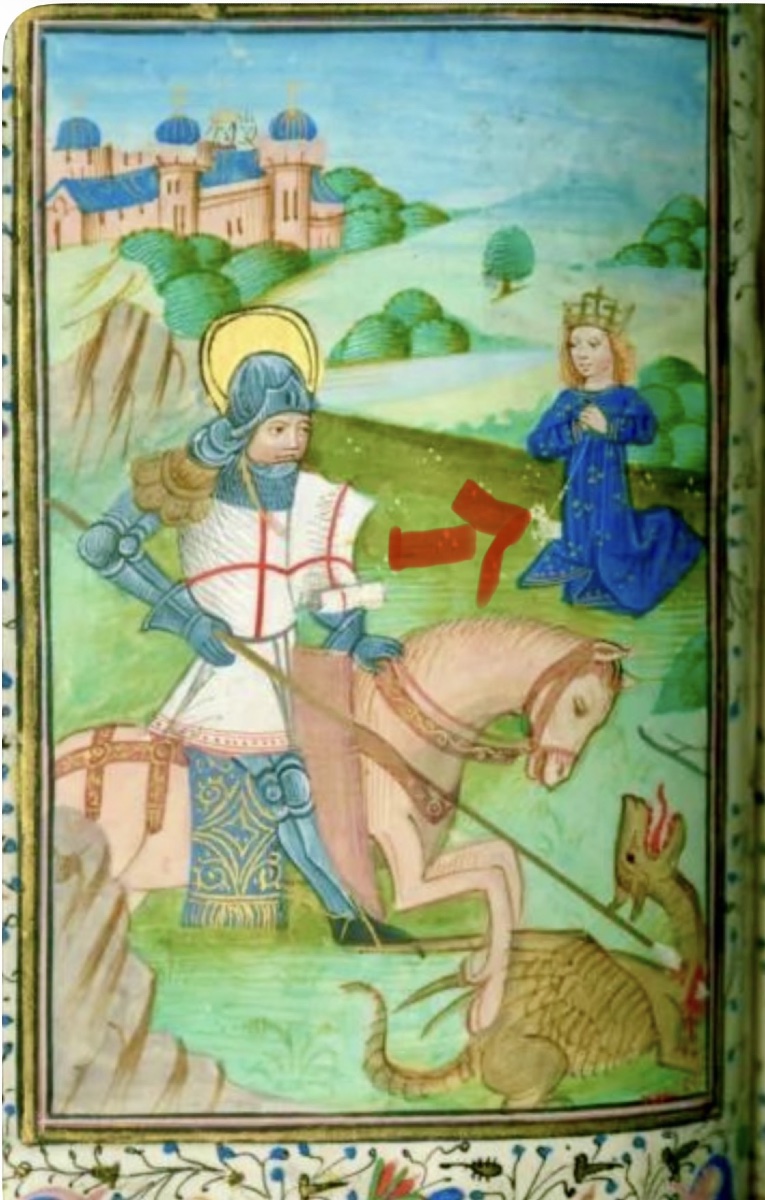
The central medallion develops a particularly complete representation of the legend of St. George crushing the dragon, one of the most popular stories in medieval Europe.
According to the tradition reported by The Golden Legend, a dragon sowed terror on the outskirts of a city and periodically demanded human victims. When the fate designated the king's daughter, she was led out of the walls to be delivered to the monster. It was then that Saint George, a Christian knight, intervened and triumphed over the creature.
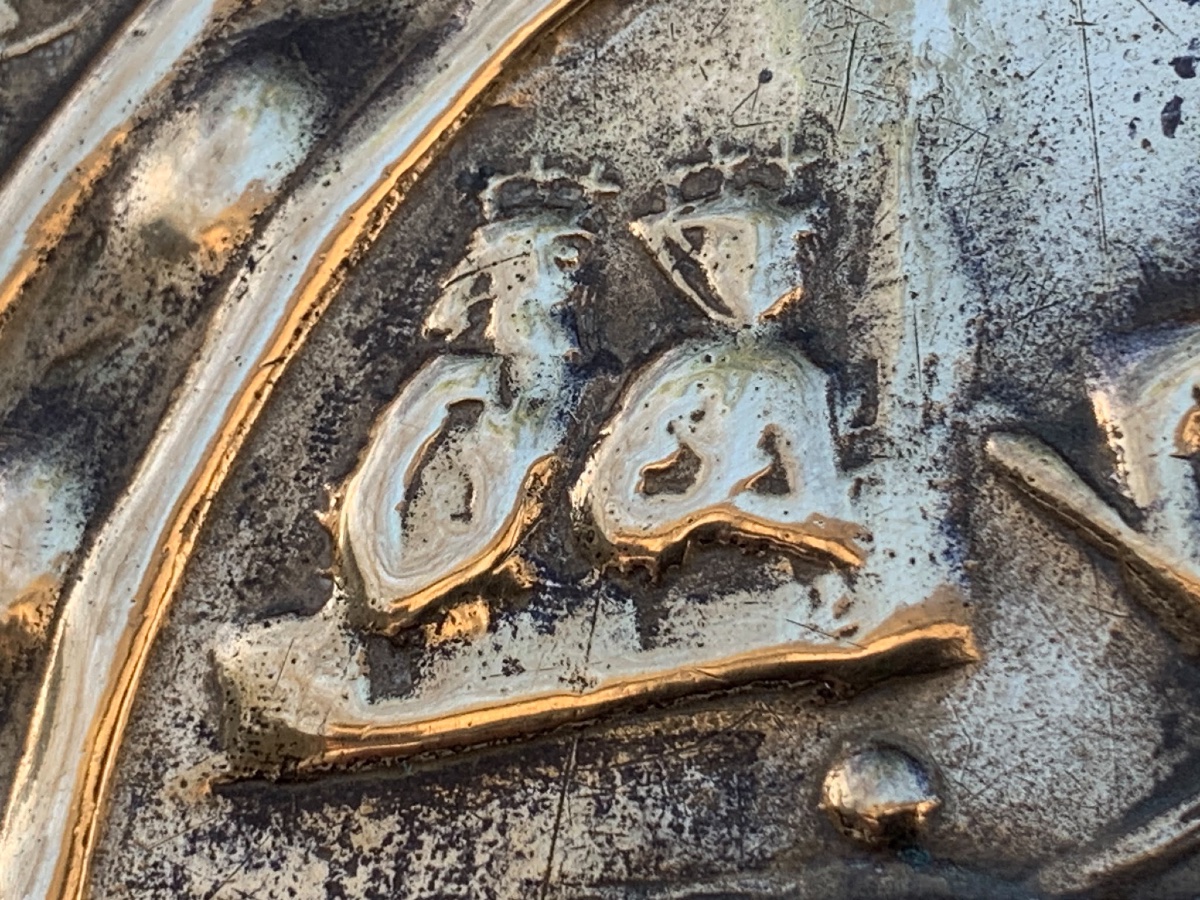
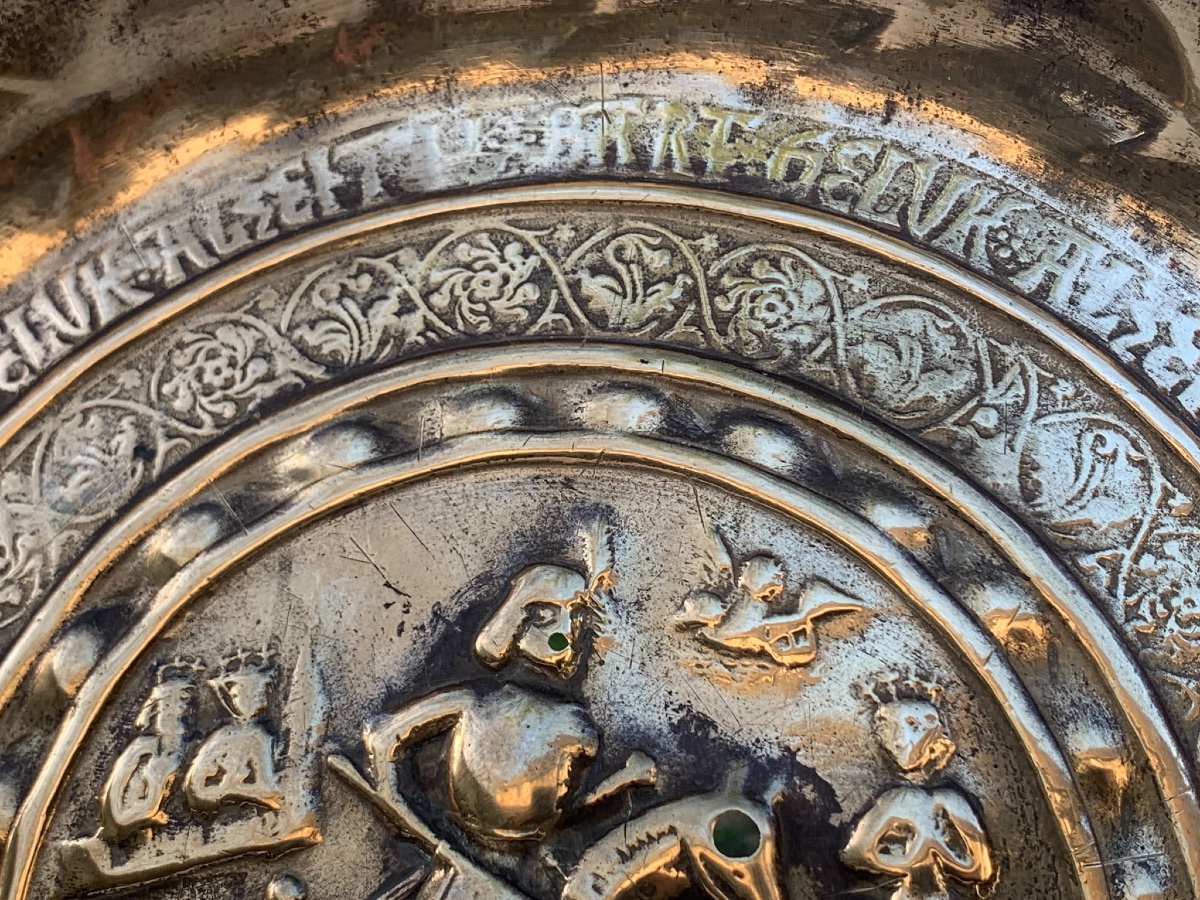
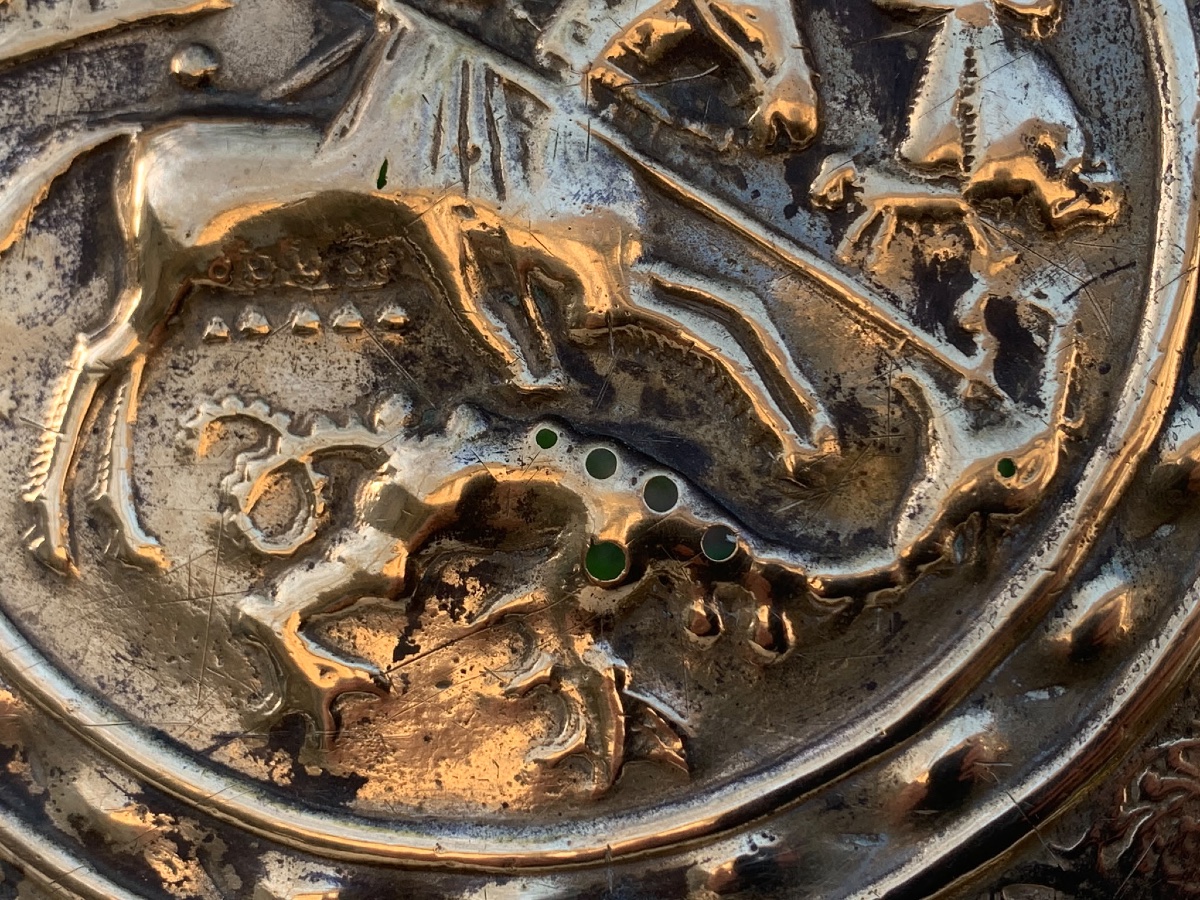
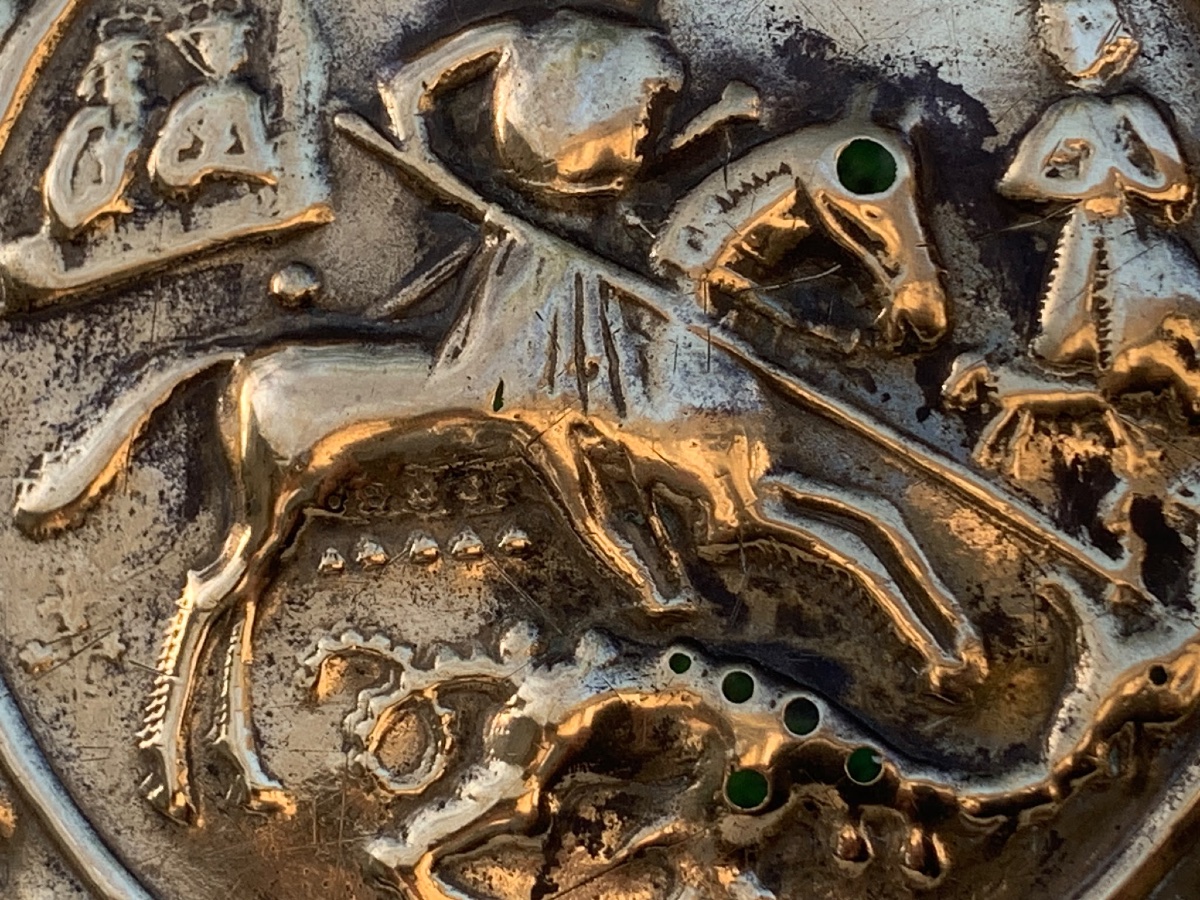
The composition brings together all the protagonists of the story. Saint George appears on horseback, lowering his long spear against the dragon. On the left sit the king and queen observing the scene from a loggia. On the right stands the princess saved from sacrifice. At his feet is a small yard dog, a particularly remarkable iconographic detail. A traditional symbol of fidelity, it frequently accompanies ladies of high birth in the illuminated manuscripts of the late Middle Ages. Above the fight appears a heavenly angel emphasizing the providential character of victory.
Through the simultaneous presence of the king, queen, princess, dog, angel, dragon and holy knight, the work goes beyond simple heroic representation to become a true visual narration condensing the entire legend.
The treatment of the figures retains a deeply Gothic character. The elongated forms, the stylization of the bodies and the primacy of the narrative over realism directly evoke the illuminations of the 15th century. The horse of Saint George, schematic and expressive, still belongs fully to the visual universe of the late Middle Ages. This survival of the medieval language contrasts with the elegance of the peripheral setting, already influenced by the first developments of the Germanic Renaissance.
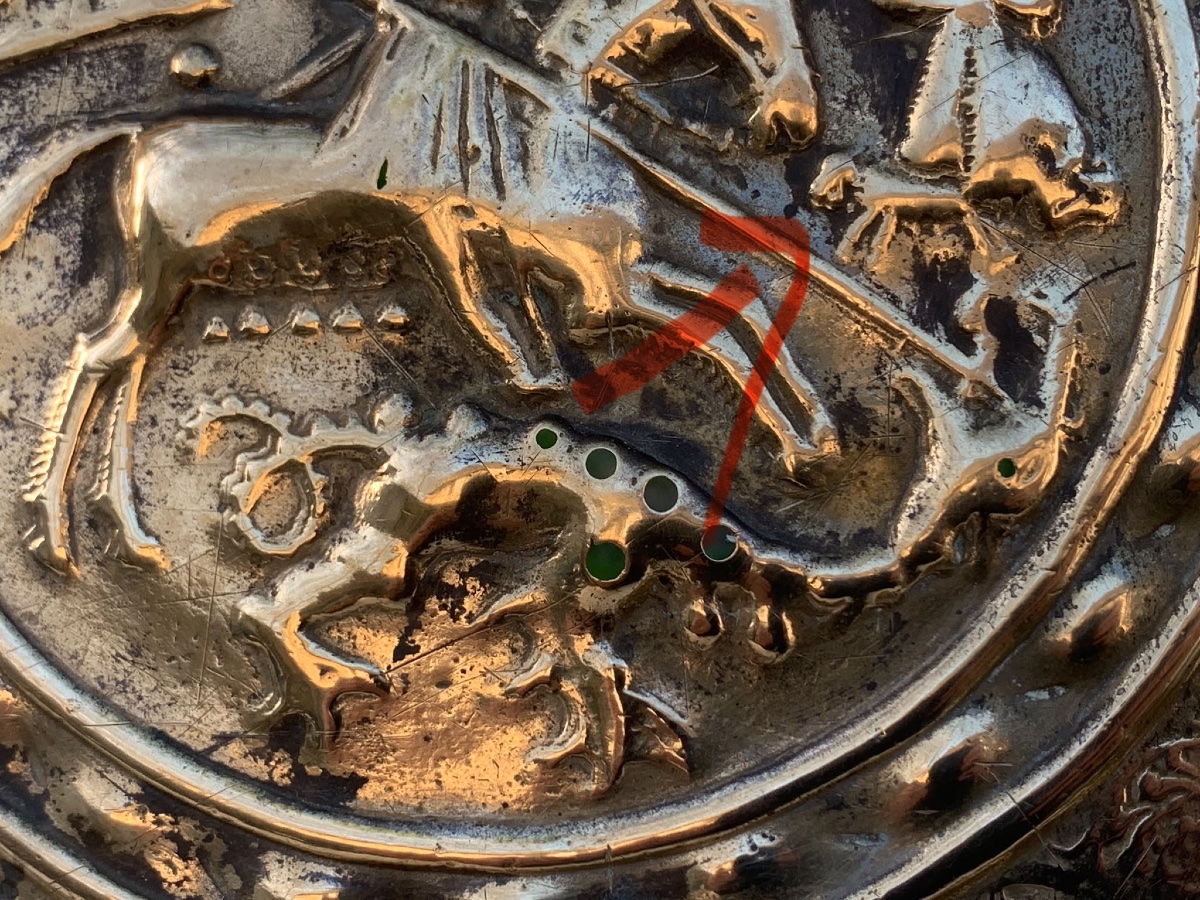
The decor of the horse and the dragon reinforces this impression of antiquity. The horse's eye is represented by a strongly marked circular pellet, while its mane and the dorsal crest of the dragon are punctuated by a succession of small spherical reliefs. These elements are not an anatomical search but a decorative language inherited from Gothic tradition, where ornamental rhythm still prevails over realism.
These details give the work a particularly attractive archaic character and testify to the permanence of medieval iconographic models in the Nuremberg workshops of the early 16th century. While the object already belongs chronologically to the Renaissance, his imagination remains deeply rooted in the chivalrous universe of the late Middle Ages.
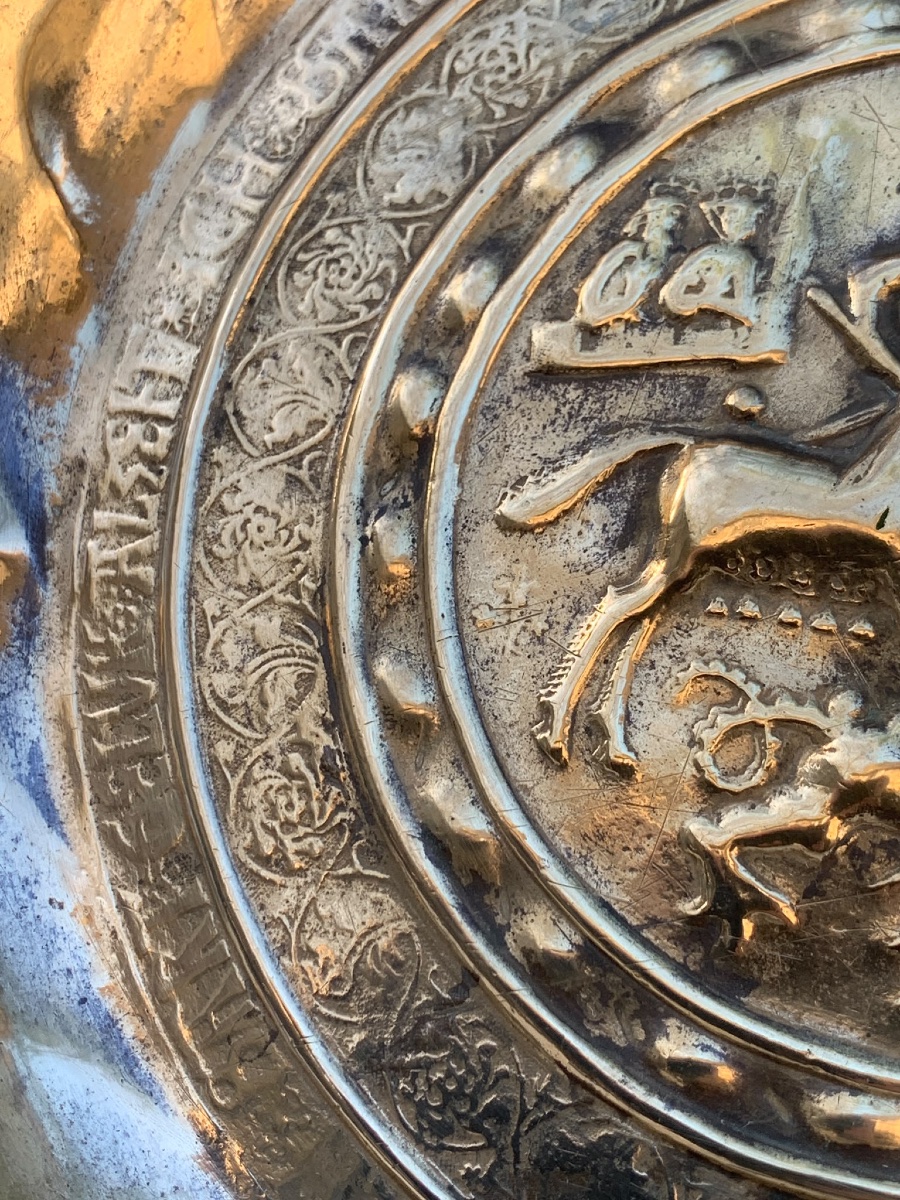
The set is surrounded by an inscription in Gothic characters and a rich vegetable frieze composed of rinceaux, rosettes and stylized flowers. This refined ornamentation illustrates the remarkable know-how of the Nuremberg workshops, whose productions were distributed throughout Europe.
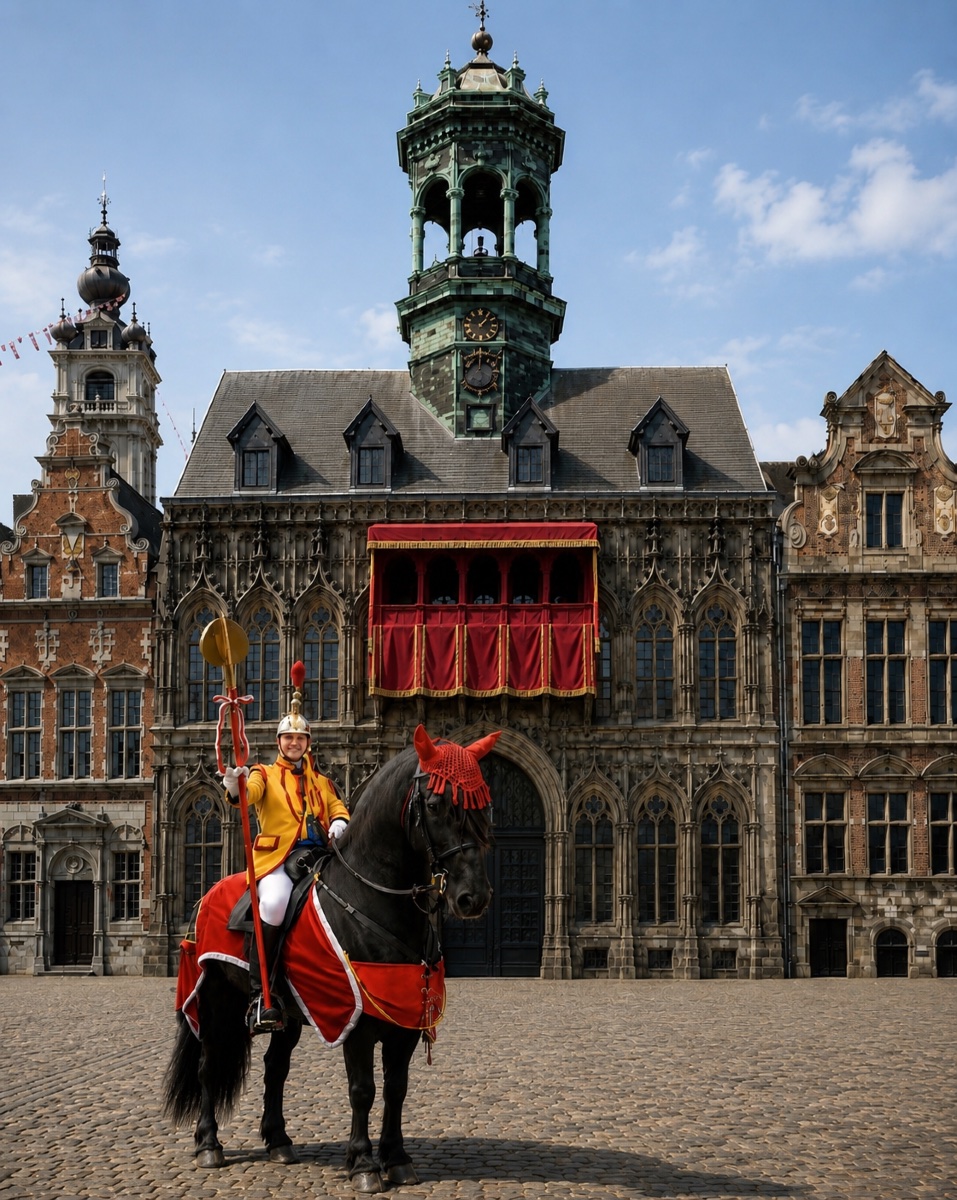
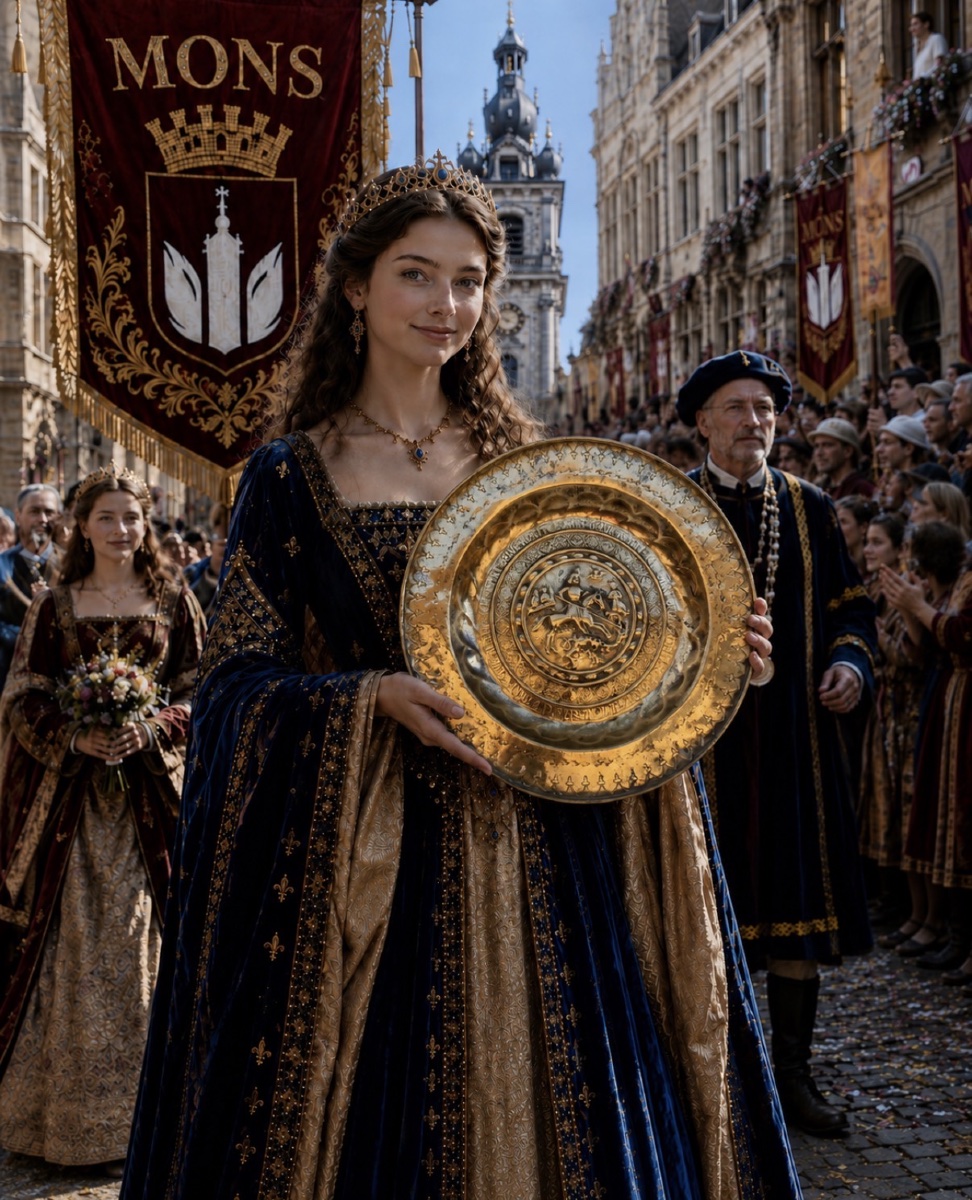
This representation finds a particularly striking echo in the former southern Netherlands and more especially in Mons, where the famous Lumeçon is still perpetuated today.
Every year, on the Grand-Place de Mons, Saint George appears on horseback and publicly faces the dragon under the gaze of thousands of spectators. The authorities, personalities and guests of honor take place in the large medieval loggia reconstituted on the facade of the City Hall, surprisingly recalling the one depicted on this plate, where the king and queen attend the deliverance of the princess.
The rapprochement is all the more striking as the Light takes its name from the circular movement performed by the protagonists of the fight. For centuries, Saint George and the Dragon have turned in opposite directions in the center of the Grand-Place, drawing a vast figure symbolizing the confrontation of Good and Evil.
This same logic structures the present dish. The entire composition is organized around a unique narrative center - the fight between Saint George and the Dragon - then unfolds in successive concentric circles: central medallion, moldings, ornamental friezes, Gothic inscription and peripheral marli. As the actors of the Lumeçon gravitate around the arena, the viewer's gaze is naturally invited to travel the entire scene.
Thus, more than five centuries after its realization, this dish appears not only as a remarkable testimony to the Germanic art of the early sixteenth century, but also as a reflection of a medieval imagination still alive. The knight, the spear, the dragon, the princess, the little dog, the loggia and the crowd gathered around the fight still find their extension in the Luneçon de Mons, one of the most extraordinary survivals of European medieval traditions.
An emblematic work of the pivotal period between the Middle Ages and the Renaissance, this dish is an exceptional testimony to the permanence of the legend of Saint George through the centuries.
Condition: very good general state of conservation. Presence of small old gaps in the lateral grip areas, discreet and not very noticeable once the object is presented. These minor alterations are consistent with its exceptional antiquity of more than five centuries as well as its original utilitarian vocation.
Nuremberg (Germany)
Early 16th century (around 1500-1530)
Repulsed, chiseled and engraved brass
Diameter: 41.8 cm
Depth: 3 cm
Weight: 1,420 g
⸻
Important offering dish in pushed back, chiseled and engraved brass made in the Nuremberg workshops at the beginning of the 16th century.
The central medallion develops a particularly complete representation of the legend of St. George crushing the dragon, one of the most popular stories in medieval Europe.
According to the tradition reported by The Golden Legend, a dragon sowed terror on the outskirts of a city and periodically demanded human victims. When the fate designated the king's daughter, she was led out of the walls to be delivered to the monster. It was then that Saint George, a Christian knight, intervened and triumphed over the creature.
The composition brings together all the protagonists of the story. Saint George appears on horseback, lowering his long spear against the dragon. On the left sit the king and queen observing the scene from a loggia. On the right stands the princess saved from sacrifice. At his feet is a small yard dog, a particularly remarkable iconographic detail. A traditional symbol of fidelity, it frequently accompanies ladies of high birth in the illuminated manuscripts of the late Middle Ages. Above the fight appears a heavenly angel emphasizing the providential character of victory.
Through the simultaneous presence of the king, queen, princess, dog, angel, dragon and holy knight, the work goes beyond simple heroic representation to become a true visual narration condensing the entire legend.
The treatment of the figures retains a deeply Gothic character. The elongated forms, the stylization of the bodies and the primacy of the narrative over realism directly evoke the illuminations of the 15th century. The horse of Saint George, schematic and expressive, still belongs fully to the visual universe of the late Middle Ages. This survival of the medieval language contrasts with the elegance of the peripheral setting, already influenced by the first developments of the Germanic Renaissance.
The decor of the horse and the dragon reinforces this impression of antiquity. The horse's eye is represented by a strongly marked circular pellet, while its mane and the dorsal crest of the dragon are punctuated by a succession of small spherical reliefs. These elements are not an anatomical search but a decorative language inherited from Gothic tradition, where ornamental rhythm still prevails over realism.
These details give the work a particularly attractive archaic character and testify to the permanence of medieval iconographic models in the Nuremberg workshops of the early 16th century. While the object already belongs chronologically to the Renaissance, his imagination remains deeply rooted in the chivalrous universe of the late Middle Ages.
The set is surrounded by an inscription in Gothic characters and a rich vegetable frieze composed of rinceaux, rosettes and stylized flowers. This refined ornamentation illustrates the remarkable know-how of the Nuremberg workshops, whose productions were distributed throughout Europe.
This representation finds a particularly striking echo in the former southern Netherlands and more especially in Mons, where the famous Lumeçon is still perpetuated today.
Every year, on the Grand-Place de Mons, Saint George appears on horseback and publicly faces the dragon under the gaze of thousands of spectators. The authorities, personalities and guests of honor take place in the large medieval loggia reconstituted on the facade of the City Hall, surprisingly recalling the one depicted on this plate, where the king and queen attend the deliverance of the princess.
The rapprochement is all the more striking as the Light takes its name from the circular movement performed by the protagonists of the fight. For centuries, Saint George and the Dragon have turned in opposite directions in the center of the Grand-Place, drawing a vast figure symbolizing the confrontation of Good and Evil.
This same logic structures the present dish. The entire composition is organized around a unique narrative center - the fight between Saint George and the Dragon - then unfolds in successive concentric circles: central medallion, moldings, ornamental friezes, Gothic inscription and peripheral marli. As the actors of the Lumeçon gravitate around the arena, the viewer's gaze is naturally invited to travel the entire scene.
Thus, more than five centuries after its realization, this dish appears not only as a remarkable testimony to the Germanic art of the early sixteenth century, but also as a reflection of a medieval imagination still alive. The knight, the spear, the dragon, the princess, the little dog, the loggia and the crowd gathered around the fight still find their extension in the Luneçon de Mons, one of the most extraordinary survivals of European medieval traditions.
An emblematic work of the pivotal period between the Middle Ages and the Renaissance, this dish is an exceptional testimony to the permanence of the legend of Saint George through the centuries.
Condition: very good general state of conservation. Presence of small old gaps in the lateral grip areas, discreet and not very noticeable once the object is presented. These minor alterations are consistent with its exceptional antiquity of more than five centuries as well as its original utilitarian vocation.
3 200 €
Period: Before 16th century
Style: Renaissance, Louis 13th
Condition: Good condition
Material: Brass
Diameter: 41,8 cm
Reference (ID): 1783372
Availability: In stock
Print