




Type XIII Crusader Knight's Sword, 14th Century
Type XIII Crusader Knight's Sword, 14th century
This Crusader knight's sword is an exceptional piece.
Provenance: The Klingbeil Collection, one of the most prestigious collections in Europe. Sold on December 13, 2011 (lot 16) by the auctioneers Pierrs Berge Associates and Hermann Historica at the “LE MUSÉE FANTASTIQUE” auction of Karsten Klingbeil
“ ANCIENT WEAPONS AND ARMOR”—Brussels.
Dated to the 14th century, this sword is likely of German origin. It undoubtedly belonged to a high-ranking, wealthy, and influential knight, initially believed to be a member of the Equestrian Order of the Holy Sepulcher. Recent research, however, suggests that it may have belonged to the Order of the Knights of the Hospital of St. John of Jerusalem.
Provenance: The Klingbeil Collection, one of the most prestigious collections in Europe.
Similar swords were also offered as pious donations to the Arsenal of Alexandria during the reign of Viceroy Sayf al-din Aristay.
The blade appears to correspond to Oakeshott’s Type XIII classification.
The references below indicate the age and origin of this sword, as well as its connections to military orders. It is important to note that most Crusaders and military orders used the Cross of Jerusalem, as knighting ceremonies took place in the Church of the Holy Sepulcher. These references are taken from “David Alexander: European Swords in the Collections of Istanbul” and the “Buletinul Comisiunii Monumentelor Istorice 1935, Year XXVIII,” which contains the article “Odoare romăneşti la Stambul” by Emil Vârtosu. Numerous other references exist, undoubtedly making this sword an exceptional find, rarely seen in such good condition.
Description:
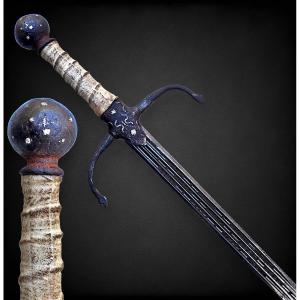
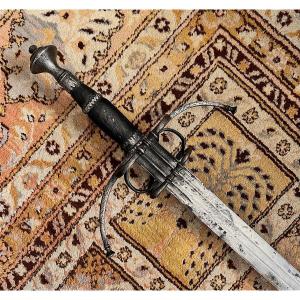
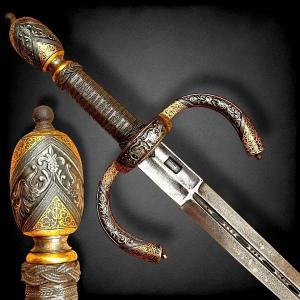
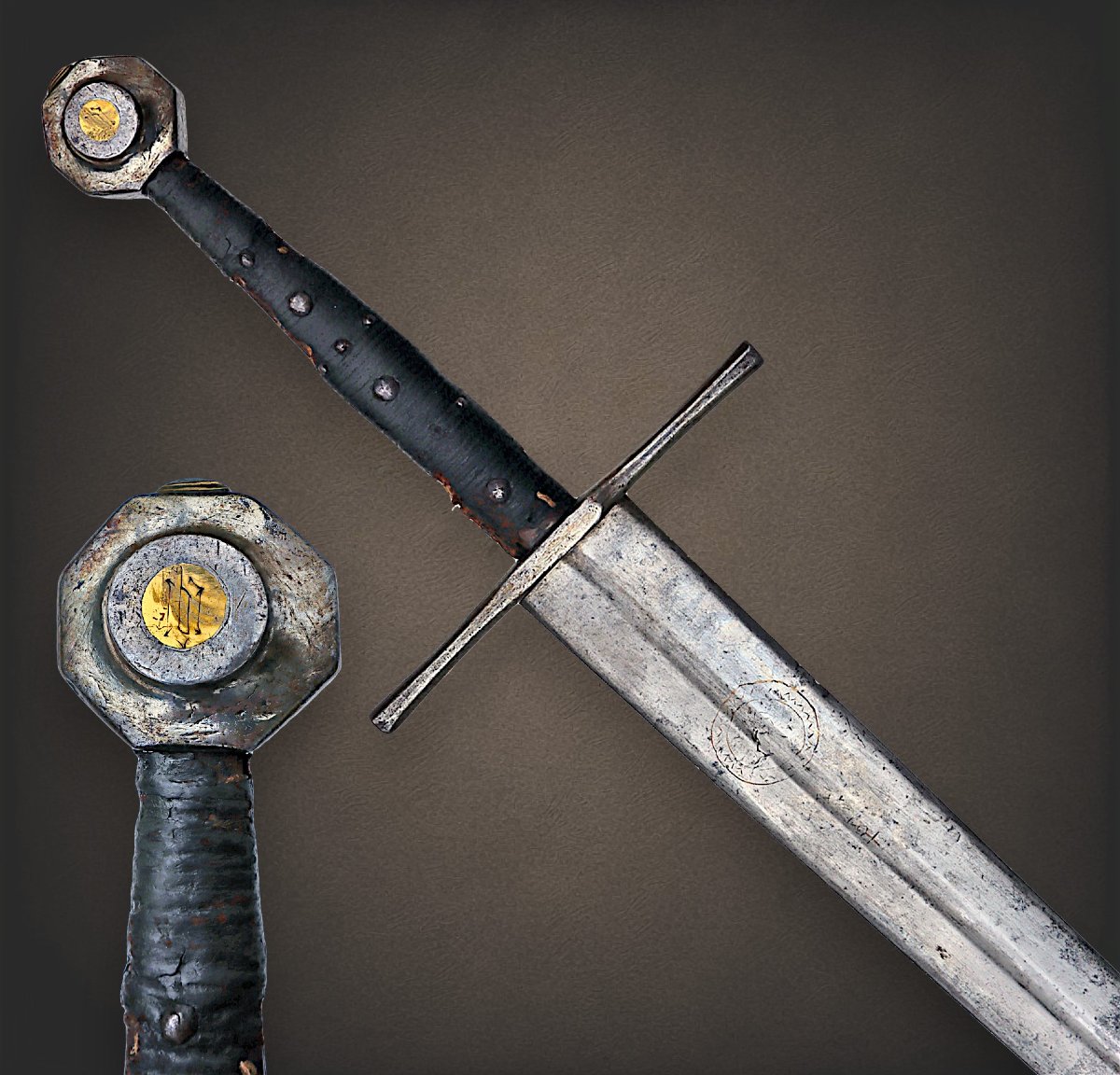
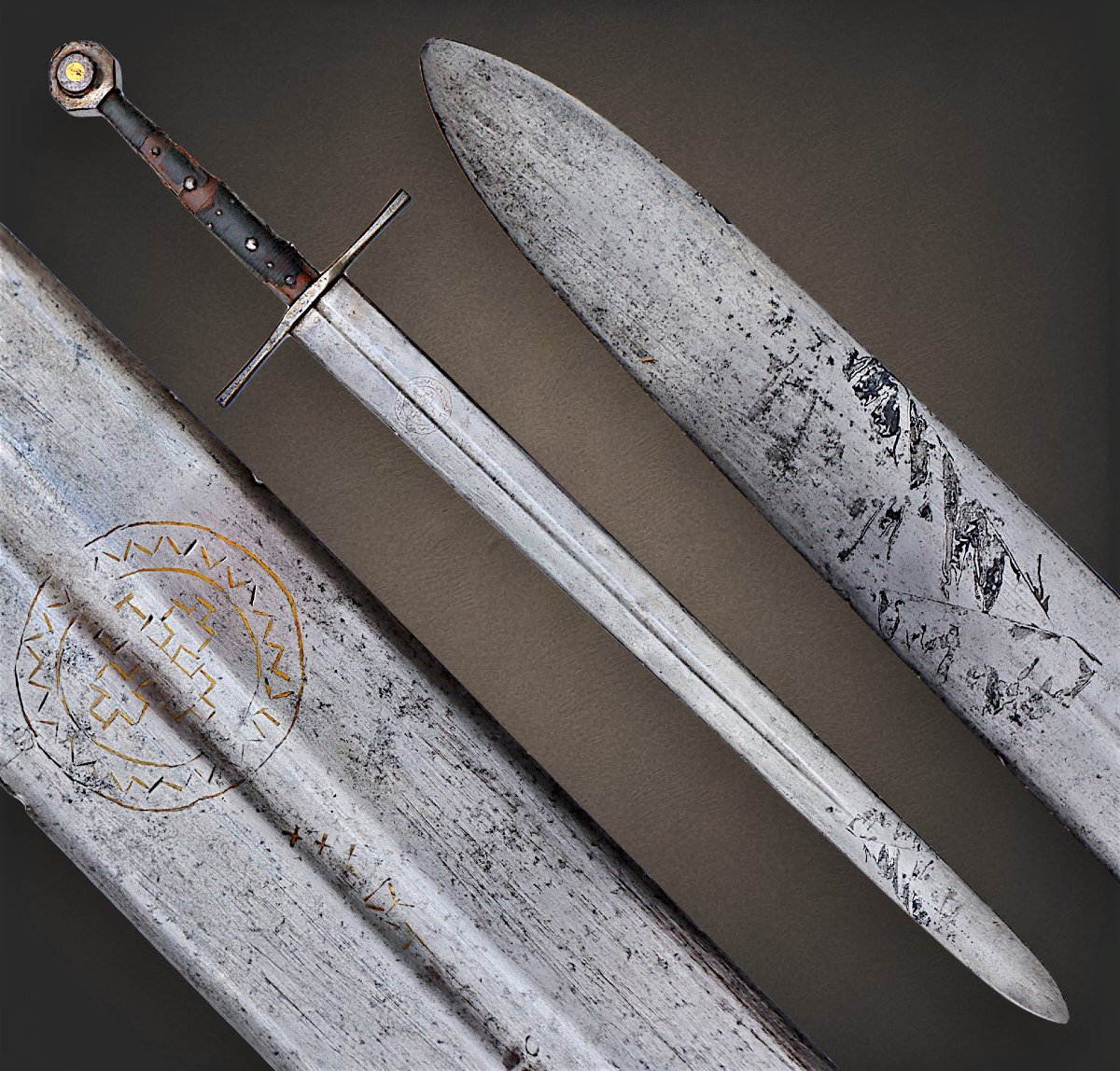
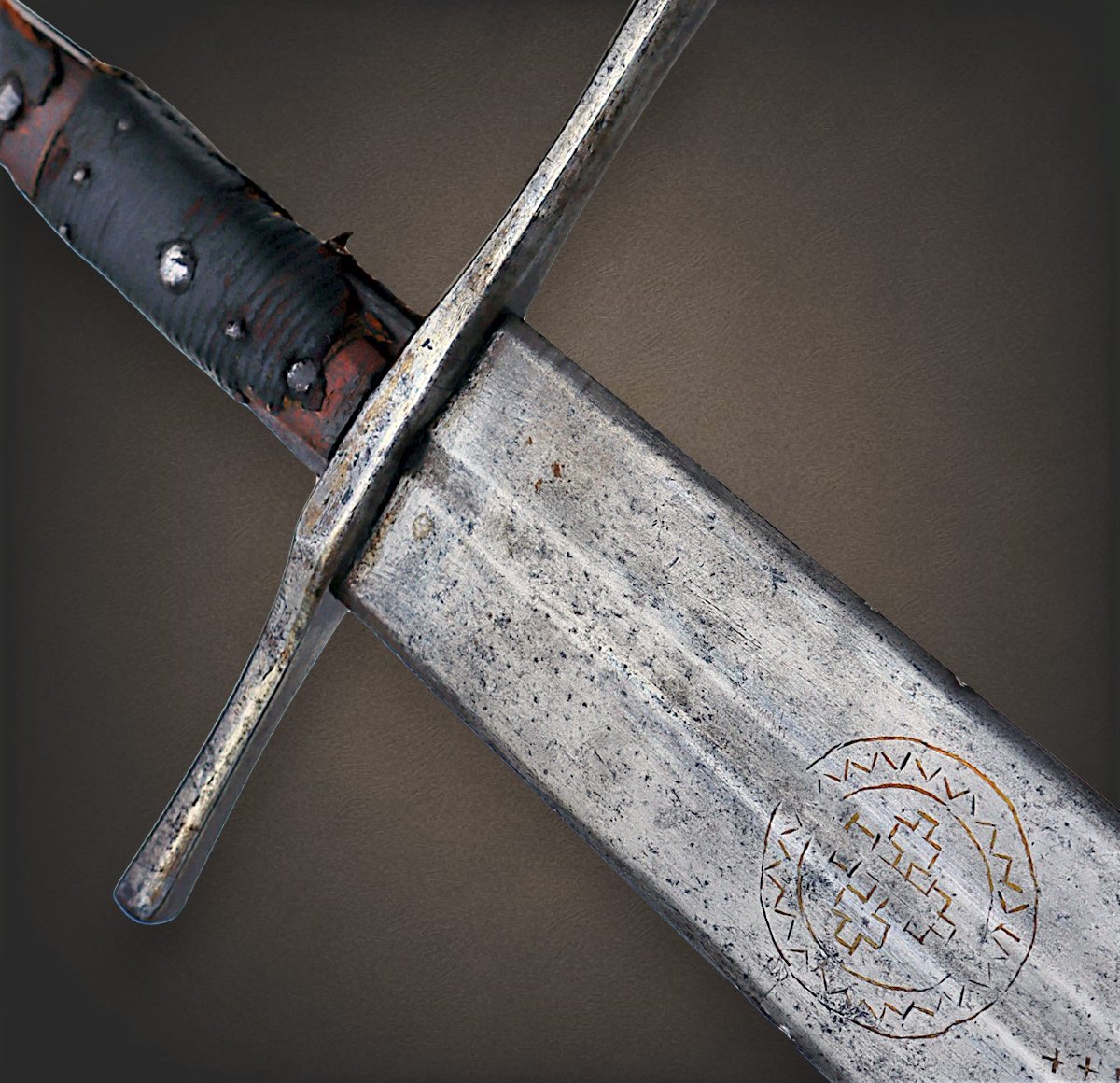
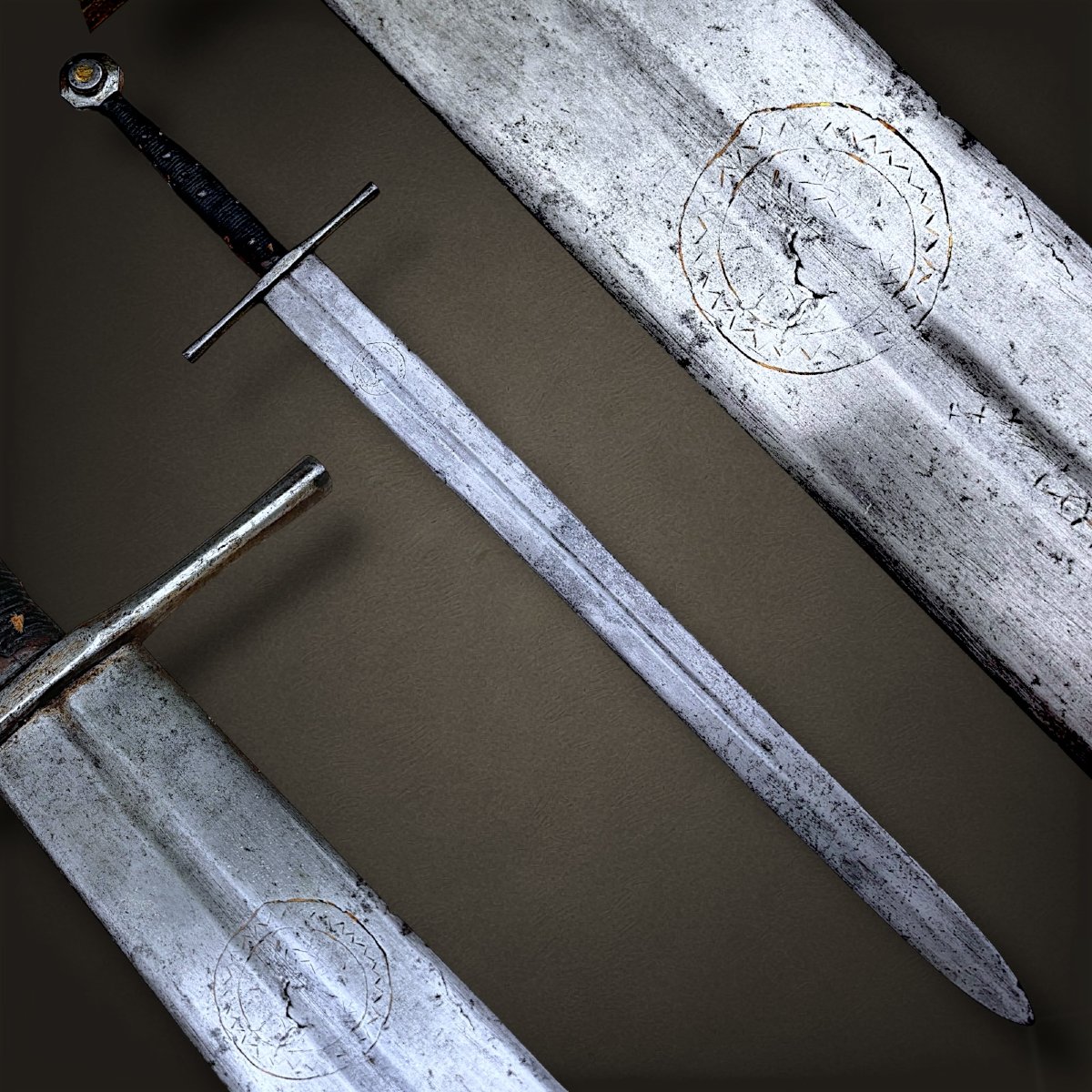
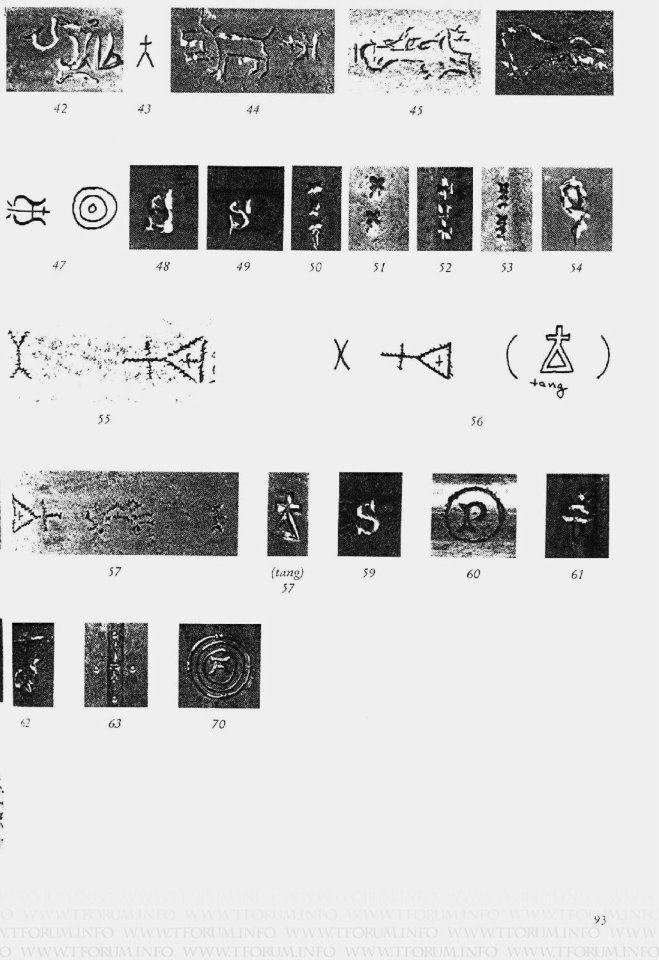
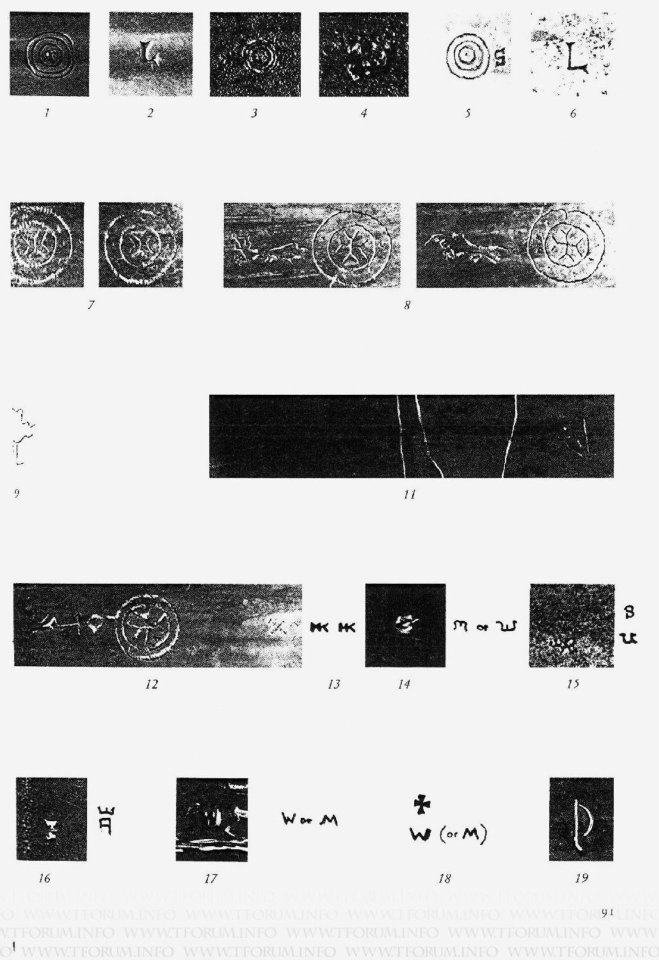
Blade dating from approximately 1300–1400, adorned with an apocryphal Jerusalem cross. The blade is wide and shortened, with edges that are nearly parallel along their entire length; on each side, it features a narrow fuller, a globe-shaped mark, and a diagonal row of small crosses, all inlaid with latten.
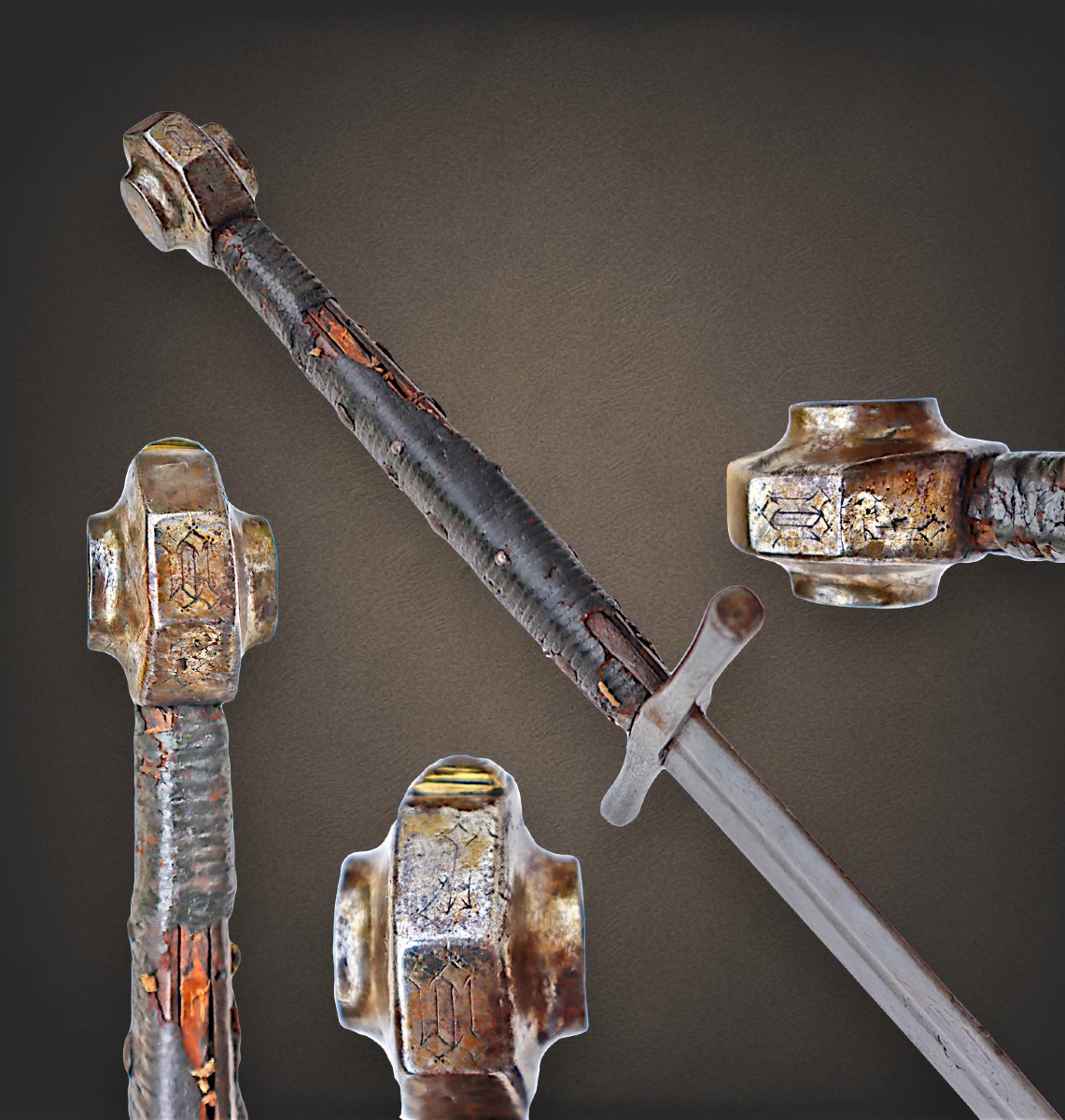
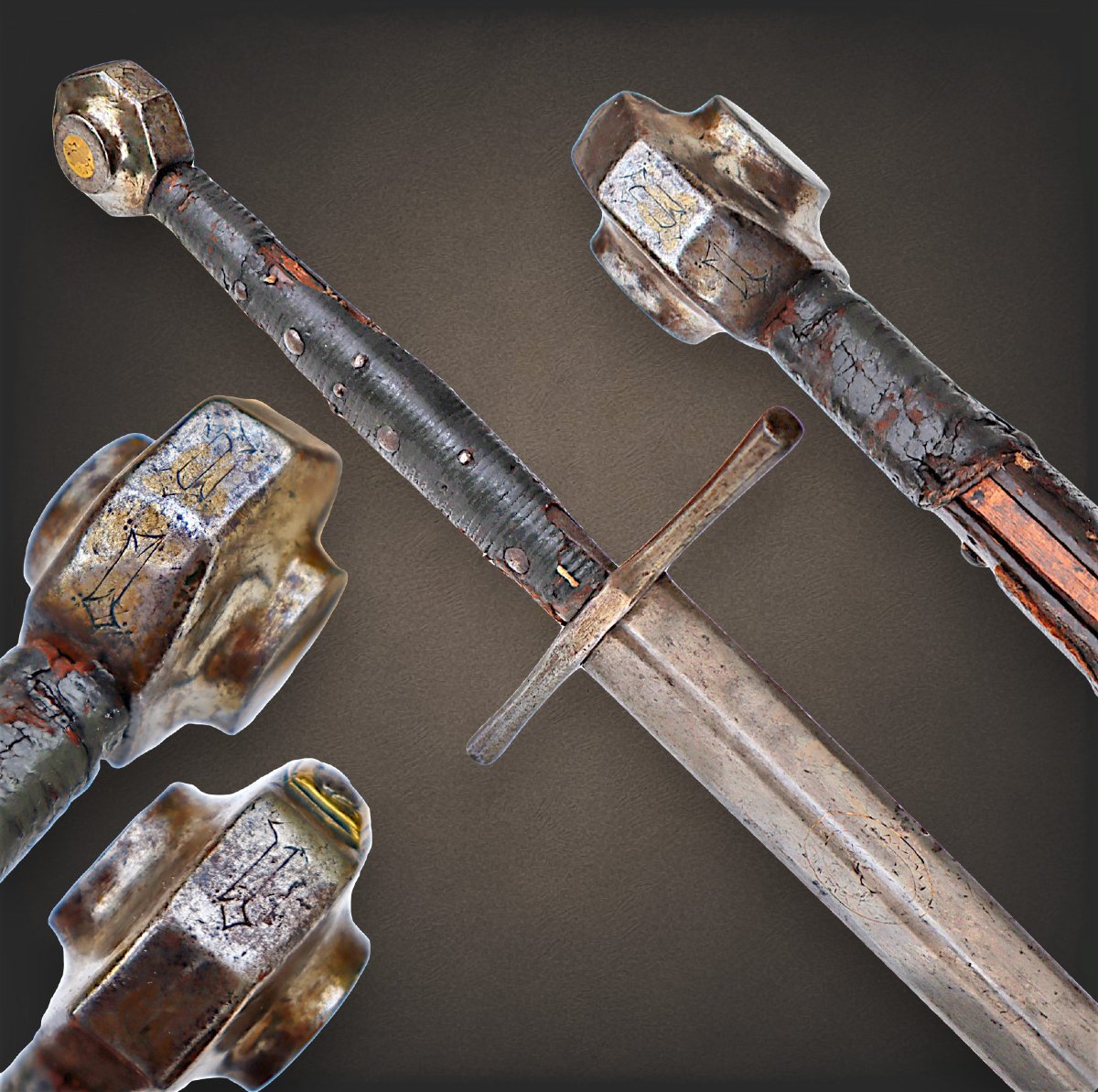
Engraved with a large circular mark, it features a border inlaid with sawtooth-shaped engravings and a tang bearing the remains of a mark (incomplete and illegible). On the other side is a Jerusalem cross, with both circular motifs inlaid with latten. The octagonal, wheel-shaped pommel is engraved with Gothic characters on its sides.
Several crosses, also inlaid with latten, are visible on each side. It is likely that a fourth cross once existed, but it has disappeared over the centuries, following numerous re-sharpenings and polishings during its use.
A sword of exceptional museum-quality, rarely seen, and closely linked to an important order of chivalry!
Specifications:
Total length of the sword: 116.2 cm
Blade length: 87.3 cm
Weight: 2 kg
This Crusader knight's sword is an exceptional piece.
Provenance: The Klingbeil Collection, one of the most prestigious collections in Europe. Sold on December 13, 2011 (lot 16) by the auctioneers Pierrs Berge Associates and Hermann Historica at the “LE MUSÉE FANTASTIQUE” auction of Karsten Klingbeil
“ ANCIENT WEAPONS AND ARMOR”—Brussels.
Dated to the 14th century, this sword is likely of German origin. It undoubtedly belonged to a high-ranking, wealthy, and influential knight, initially believed to be a member of the Equestrian Order of the Holy Sepulcher. Recent research, however, suggests that it may have belonged to the Order of the Knights of the Hospital of St. John of Jerusalem.
Provenance: The Klingbeil Collection, one of the most prestigious collections in Europe.
Similar swords were also offered as pious donations to the Arsenal of Alexandria during the reign of Viceroy Sayf al-din Aristay.
The blade appears to correspond to Oakeshott’s Type XIII classification.
The references below indicate the age and origin of this sword, as well as its connections to military orders. It is important to note that most Crusaders and military orders used the Cross of Jerusalem, as knighting ceremonies took place in the Church of the Holy Sepulcher. These references are taken from “David Alexander: European Swords in the Collections of Istanbul” and the “Buletinul Comisiunii Monumentelor Istorice 1935, Year XXVIII,” which contains the article “Odoare romăneşti la Stambul” by Emil Vârtosu. Numerous other references exist, undoubtedly making this sword an exceptional find, rarely seen in such good condition.
Description:
Blade dating from approximately 1300–1400, adorned with an apocryphal Jerusalem cross. The blade is wide and shortened, with edges that are nearly parallel along their entire length; on each side, it features a narrow fuller, a globe-shaped mark, and a diagonal row of small crosses, all inlaid with latten.
Engraved with a large circular mark, it features a border inlaid with sawtooth-shaped engravings and a tang bearing the remains of a mark (incomplete and illegible). On the other side is a Jerusalem cross, with both circular motifs inlaid with latten. The octagonal, wheel-shaped pommel is engraved with Gothic characters on its sides.
Several crosses, also inlaid with latten, are visible on each side. It is likely that a fourth cross once existed, but it has disappeared over the centuries, following numerous re-sharpenings and polishings during its use.
A sword of exceptional museum-quality, rarely seen, and closely linked to an important order of chivalry!
Specifications:
Total length of the sword: 116.2 cm
Blade length: 87.3 cm
Weight: 2 kg
23 000 €
Period: Before 16th century
Style: Other Style
Condition: Excellent condition
Material: Metal
Length: 116.2 cm
Reference (ID): 1785414
Availability: In stock
Print