


Iberian Iron Falcata (5th-3rd Century Bc), Axel Guttman Collection
Iberian iron falcata (5th-3rd century BC), Axel Guttman collection
One of the most relevant elements of the Iberian Culture is undoubtedly the falcata, a iron sword, with a unique appearance, curved-shaped, with a wide blade.
Used by the Elite Mercenary Units, the Iberian Light Infantry armed with the falcata made by expert Iberian smiths. It was one of the highest quality blades of the Mediterranean. The lighter infantry wore just a short tunic with a wide leather belt and often no armour at all, but occasionally a bronze cap. They carried the falcata and a small buckler shield a caetra. The warriors were known to be superb fighters, they would move with acrobatic elegance. While considered light infantry due to their skill in battle Hannibal counted them as heavy infantry and used them to great effectiveness.
They served with distinction in the Punic wars as well as the Greeks in the Peloponnesian War.
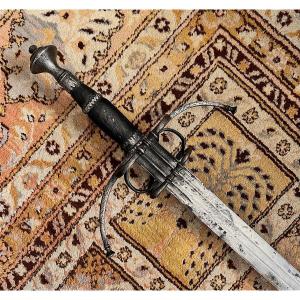
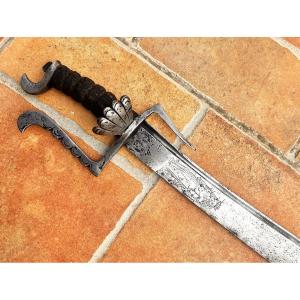
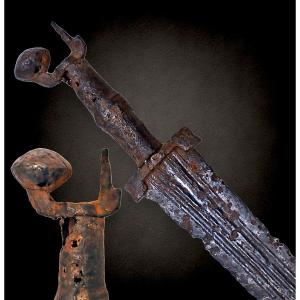
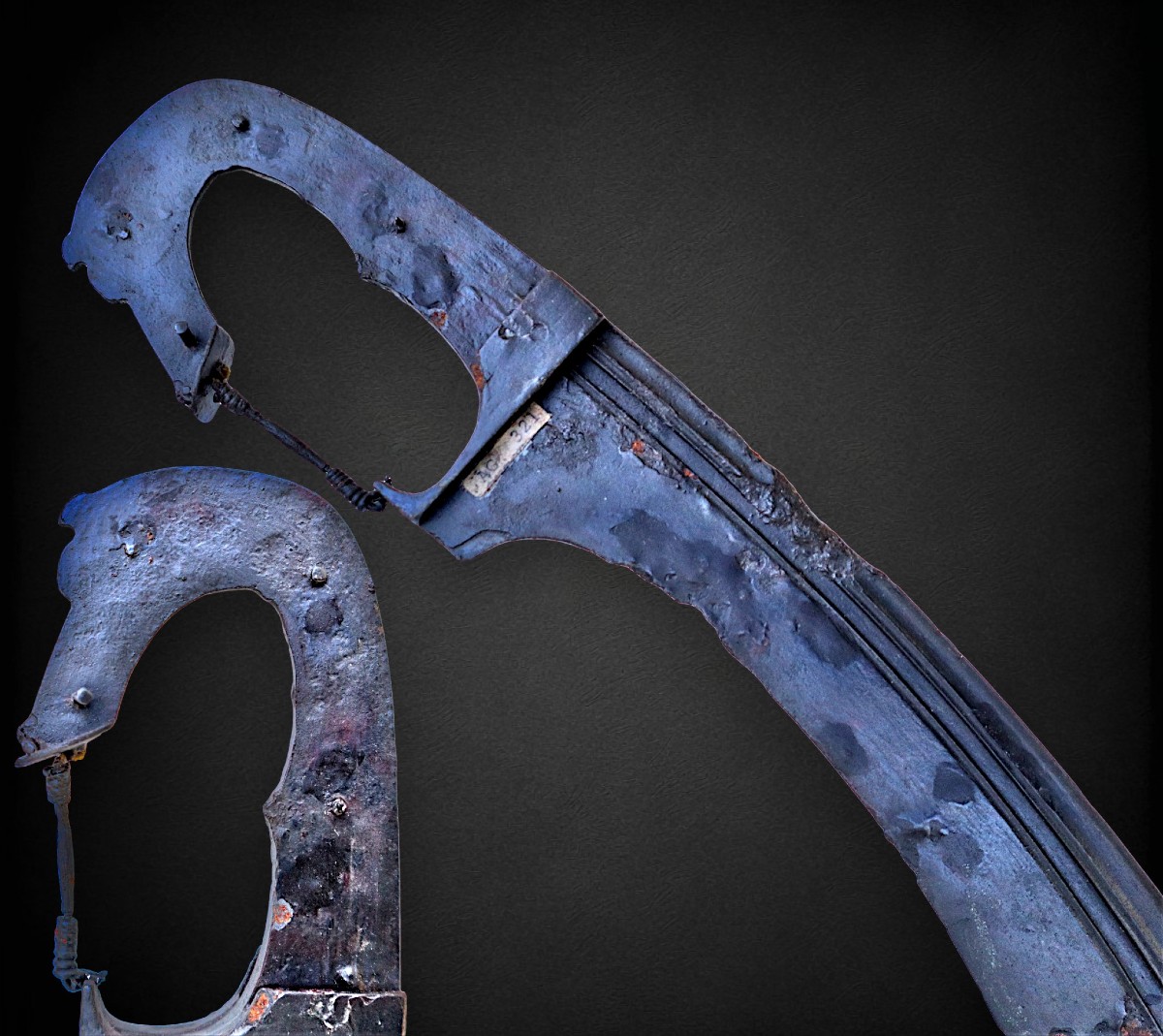
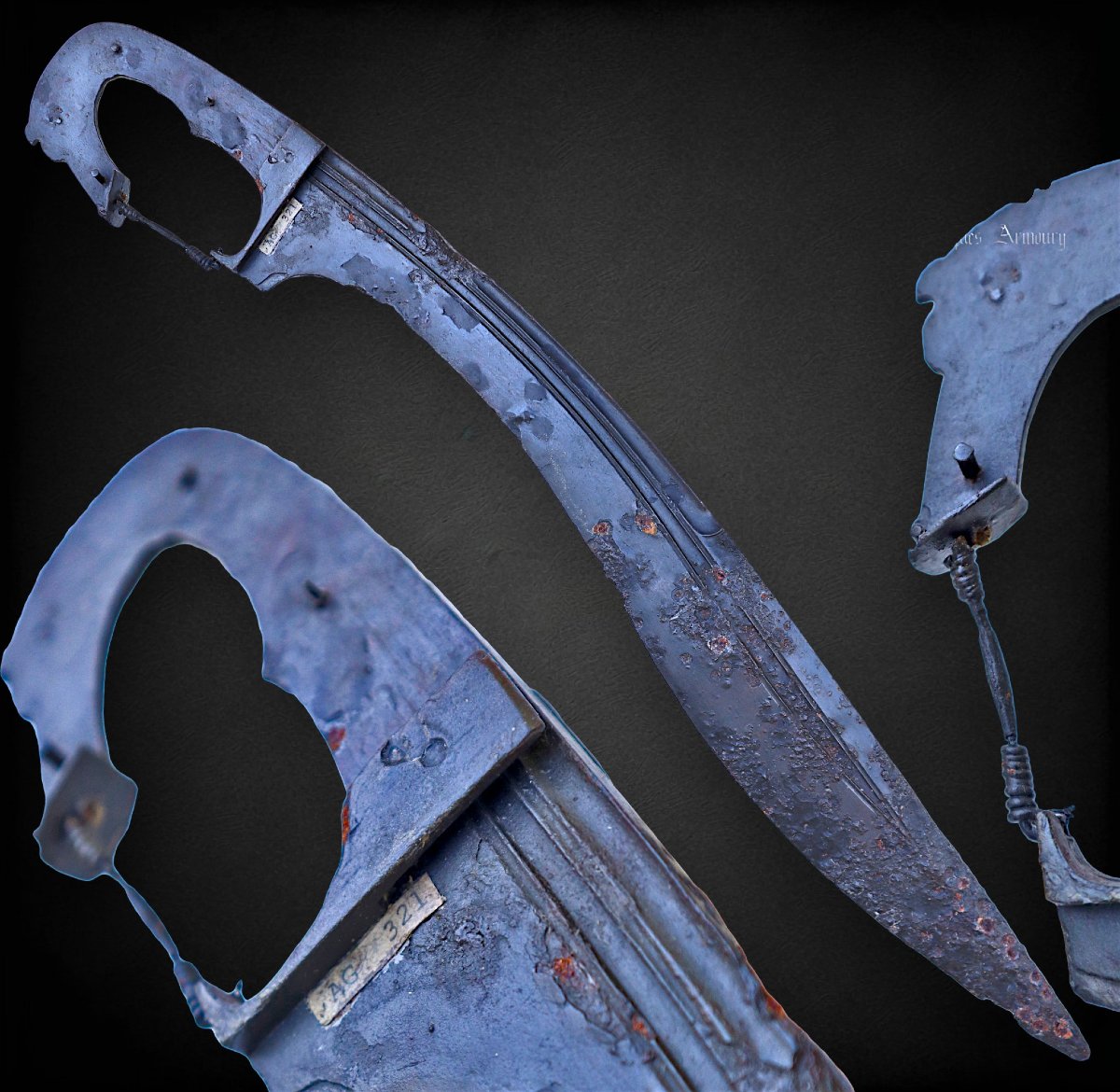
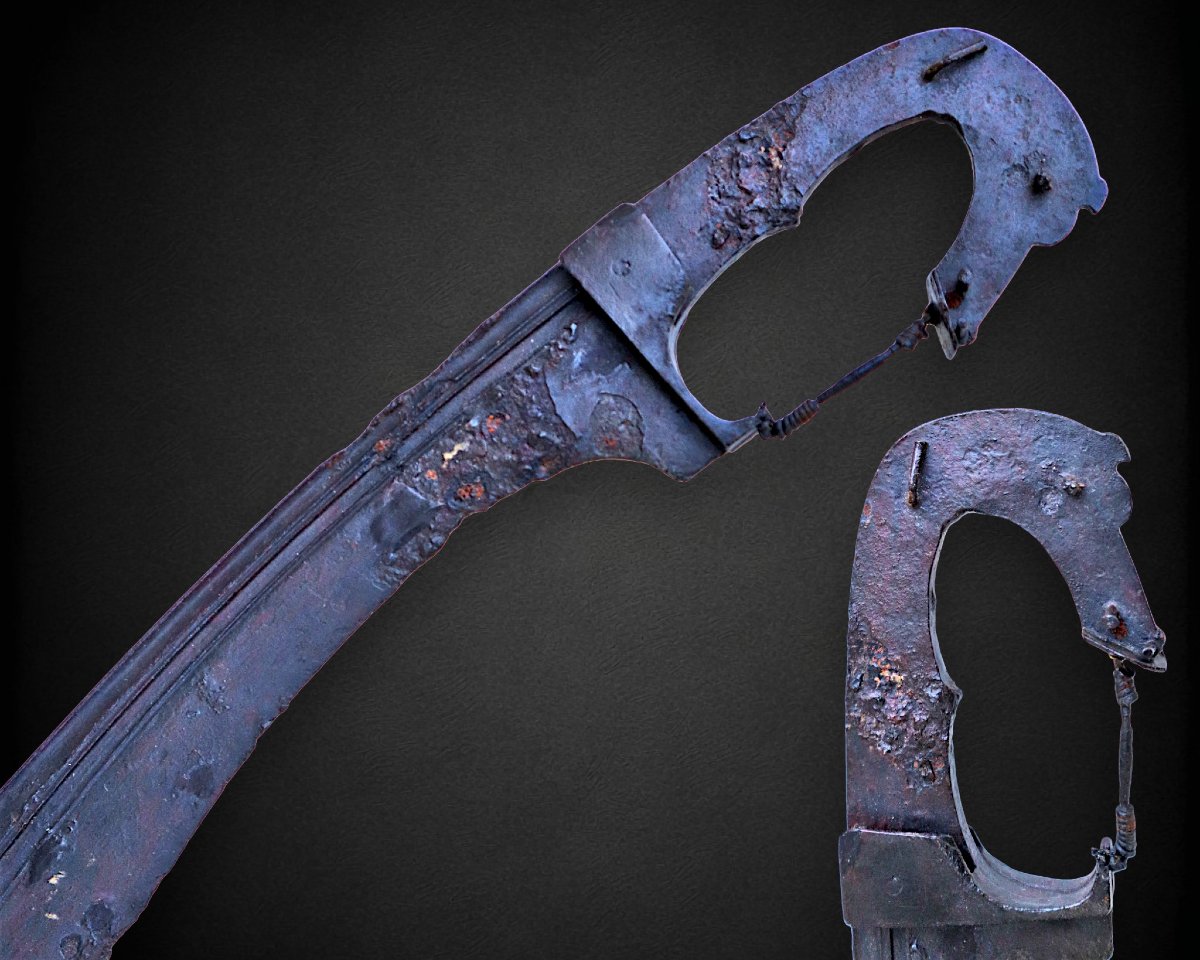
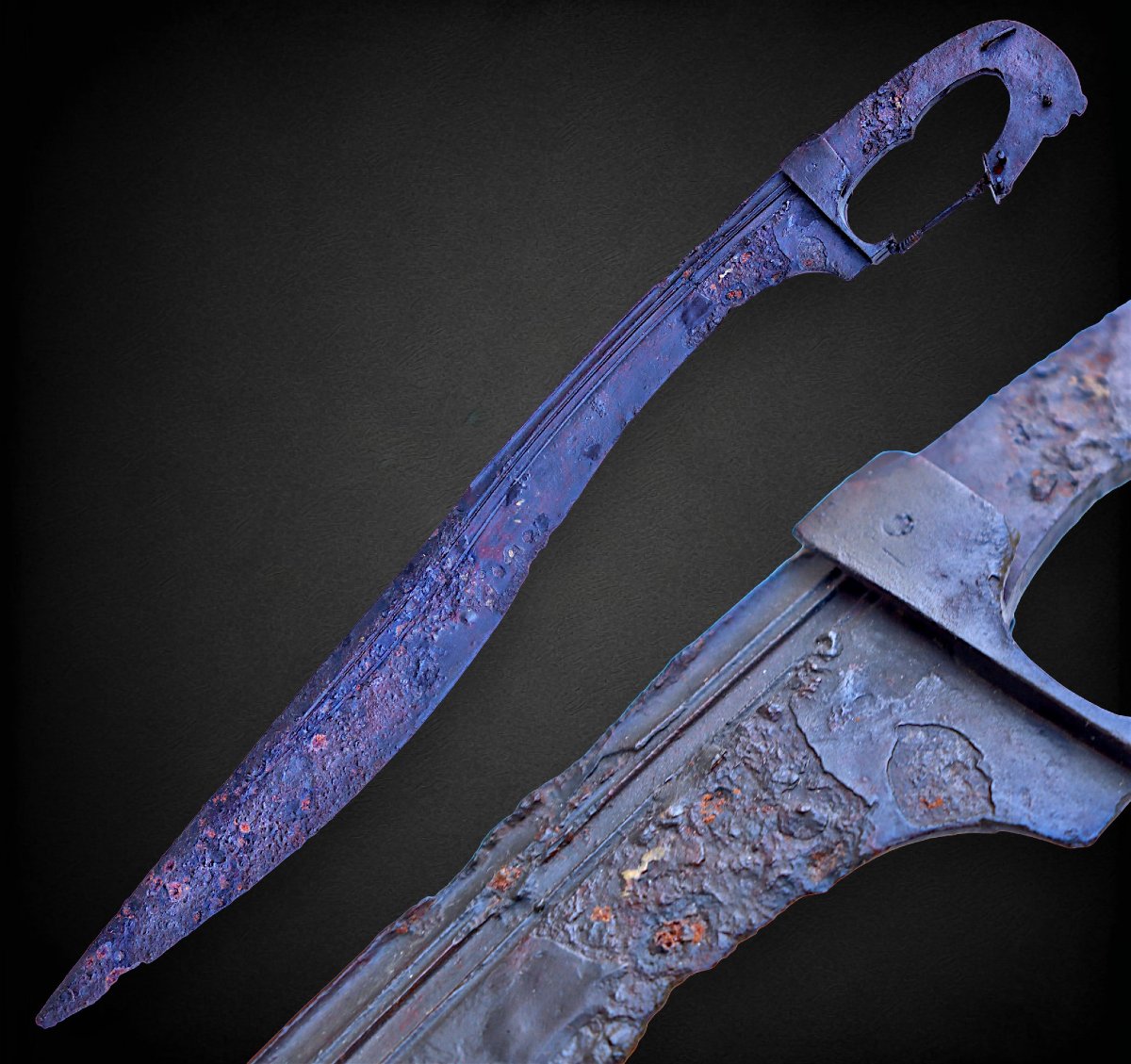
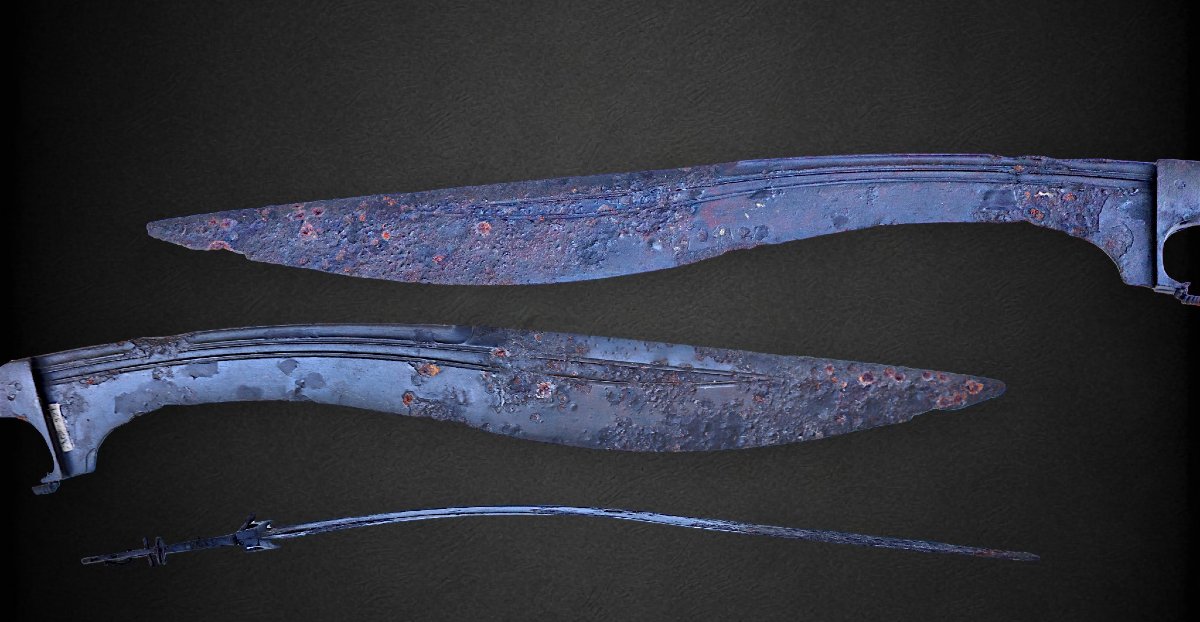
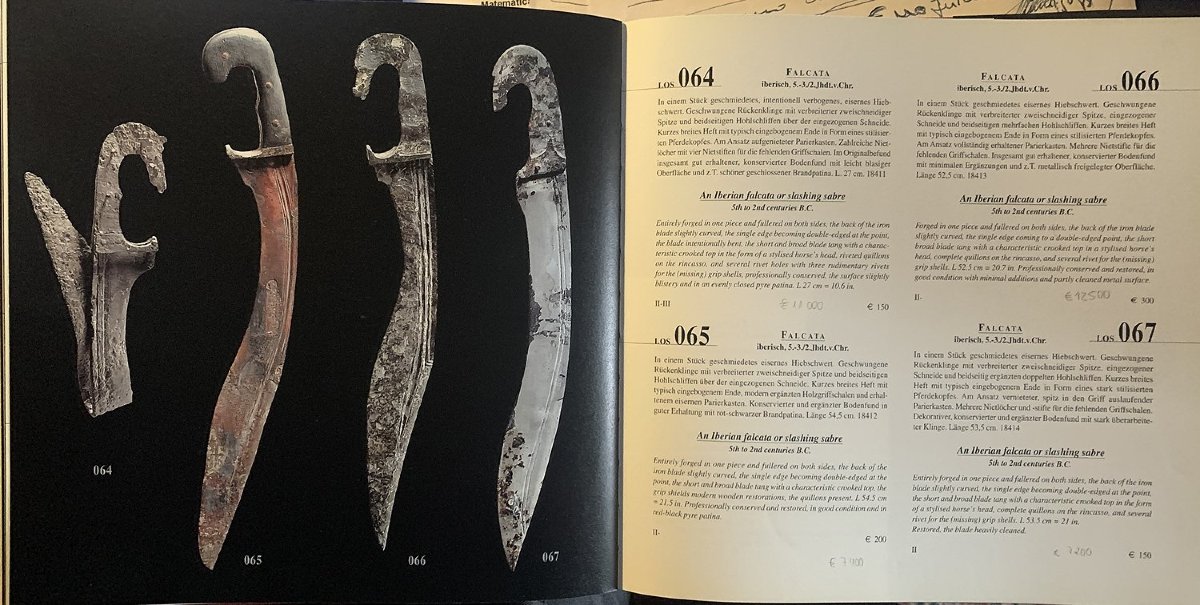
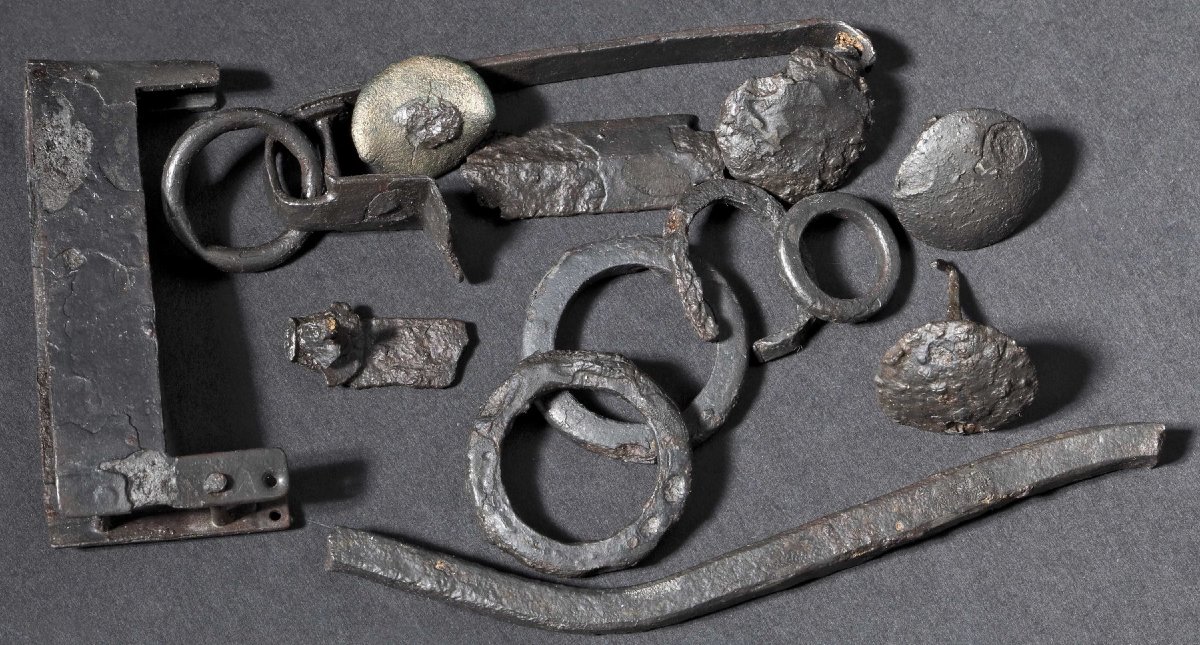
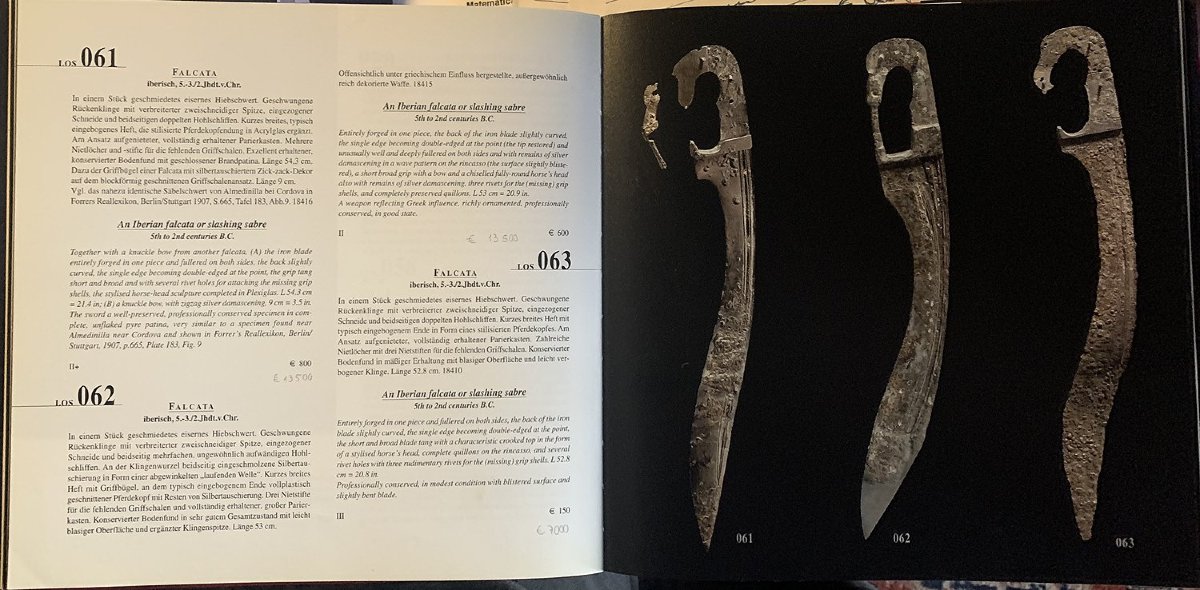
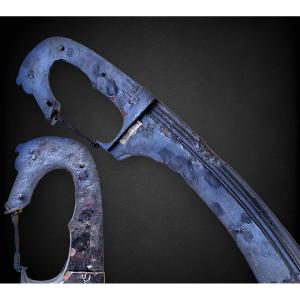
5th – 3rd century B.C. Iron cut-sword forged in one piece, the characteristically curved blade with a fuller and a stepped groove on both sides and double-edged for half its length. The pommel in shape of a horse head, riveted grip bolsters linked to the horse head pommel with iron wire. The hilt retaining five pegs from the attachment of the (lost) grip panels made of organic material. Also preserved are several scabbard mounts and large-headed decorative nails. Partially vesicular corrosion, otherwise fine patina.
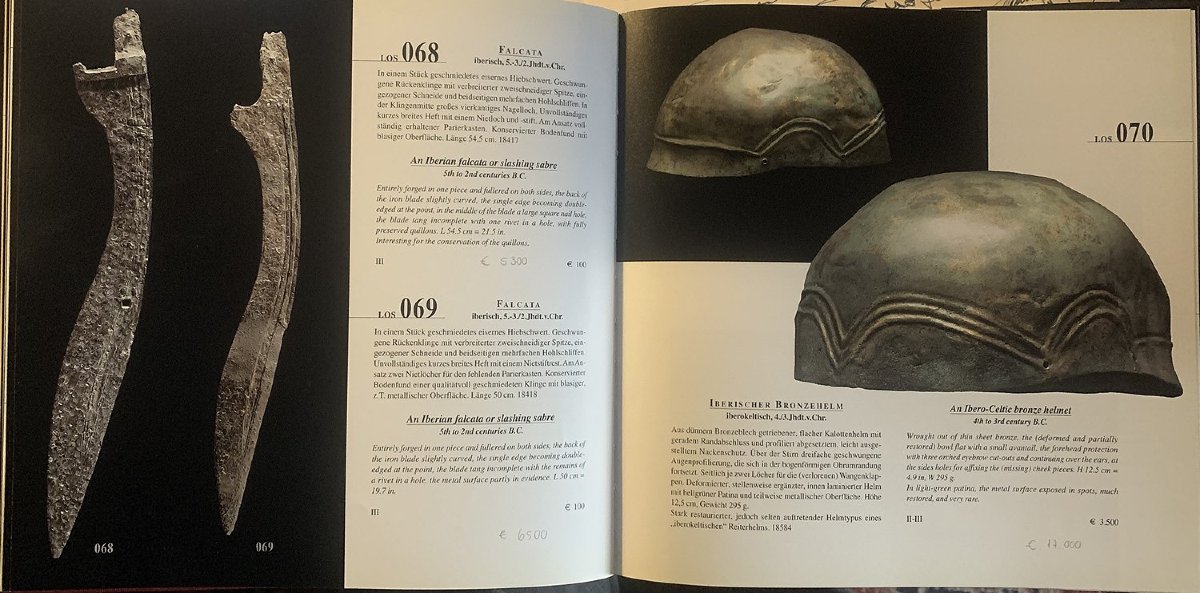
Axel Guttmann Collection (AG 321), acquired in Zurich in 1990. Cf. falcatas of this type from the Guttmann collection – Iberische Eisenwaffen – Hermann Historica, auction 44, 15 May 2003, lots 61 to 69.
One of the finest and best conserved falcatas in the Axel Guttmann collection. It is slightly bent and has been professionally conserved by the curators of the collection. The conserved scabbard iron fittings are also included.
Length 55.5 cm
Blade 45 cm
Period: Before 16th century
Style: Other Style
Condition: Excellent condition
Material: Metal
Length: 55.5 cm
Reference (ID): 1629367
Availability: In stock