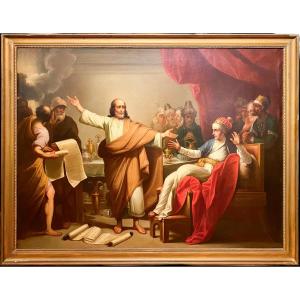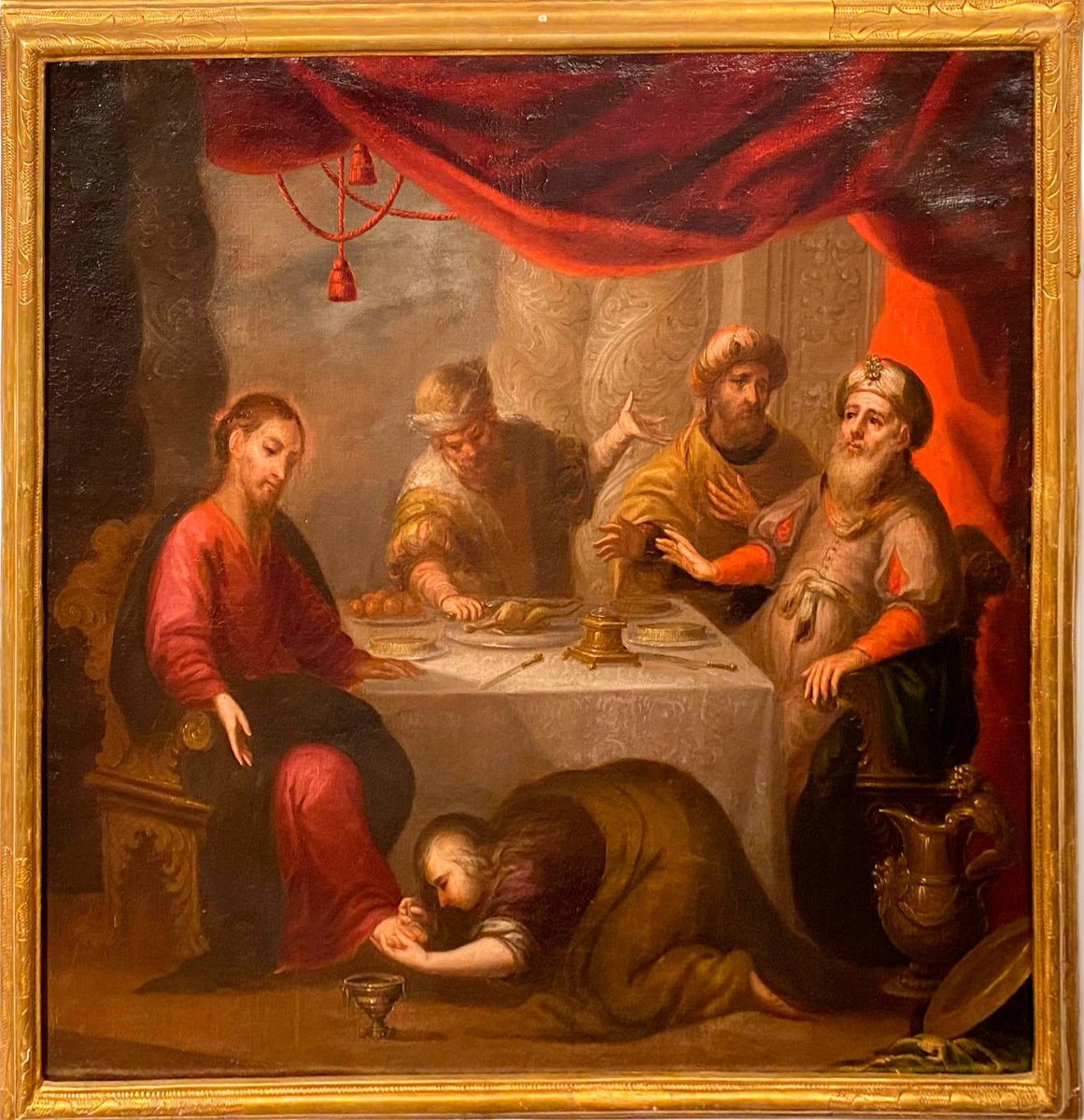
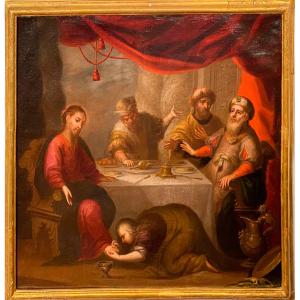


The Anointing Of Christ At Bethany Oil On Canvas Attributed To Juan Of Seville, Granada. 17th Century
Dimensions with frame: 94 cm high x 102 cm wide
Dimensions without frame: 86 cm high x 94 cm wide
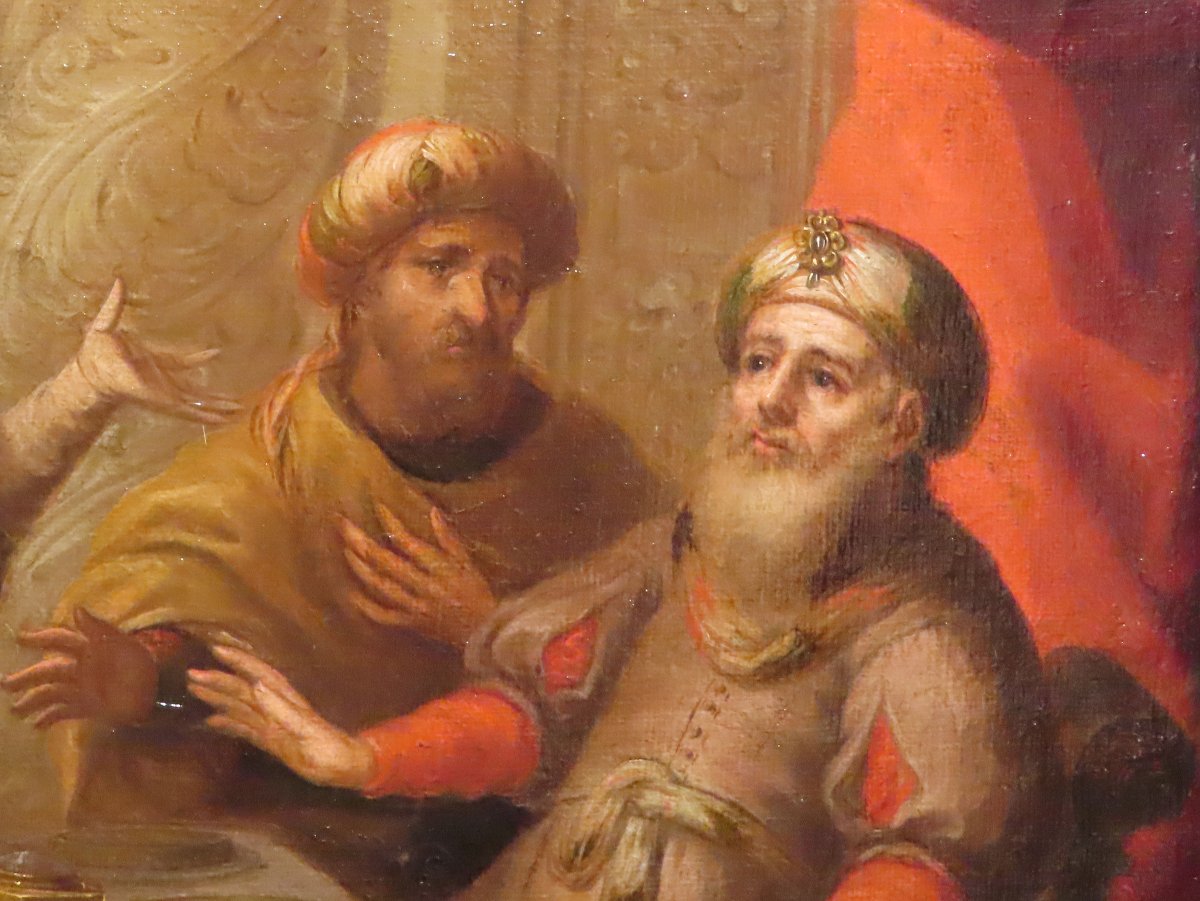
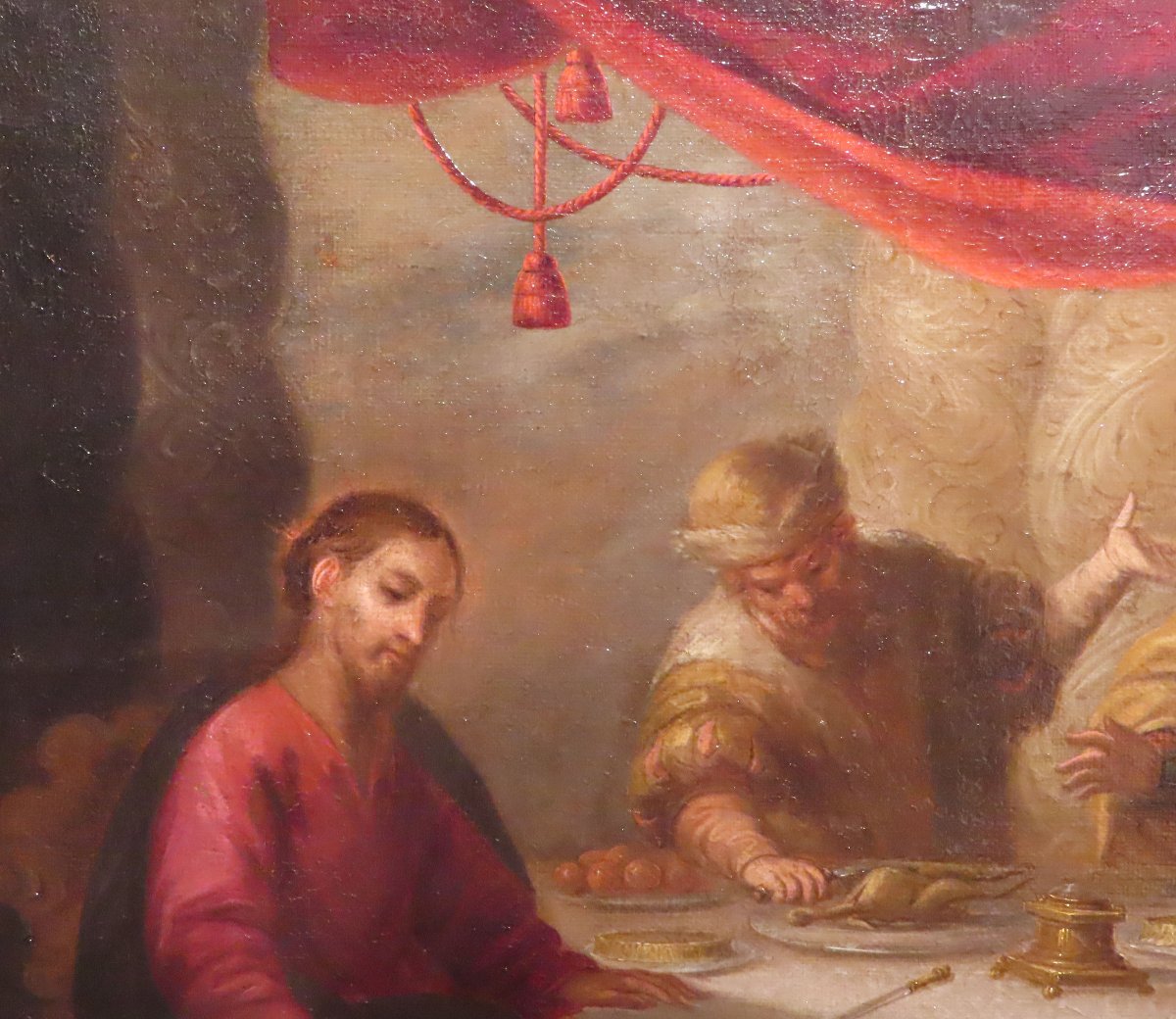
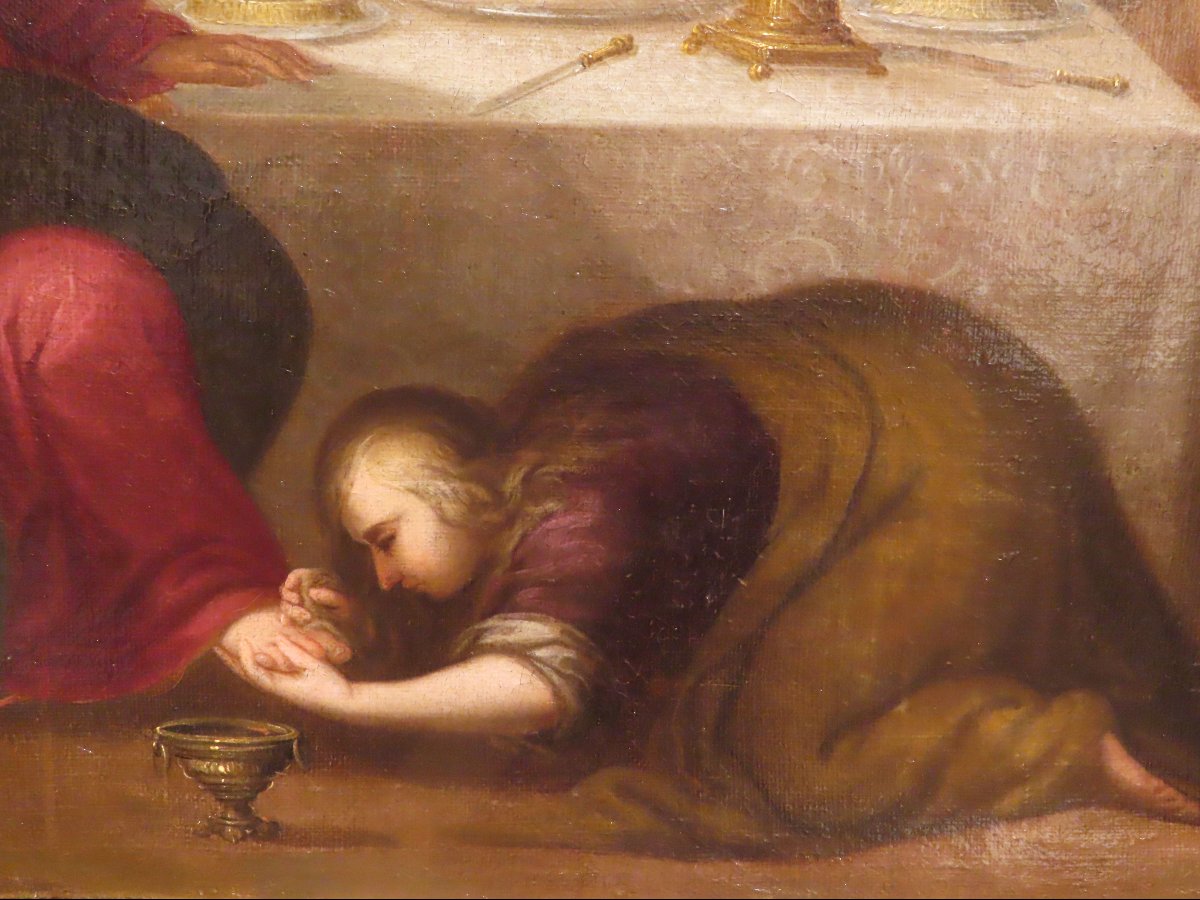
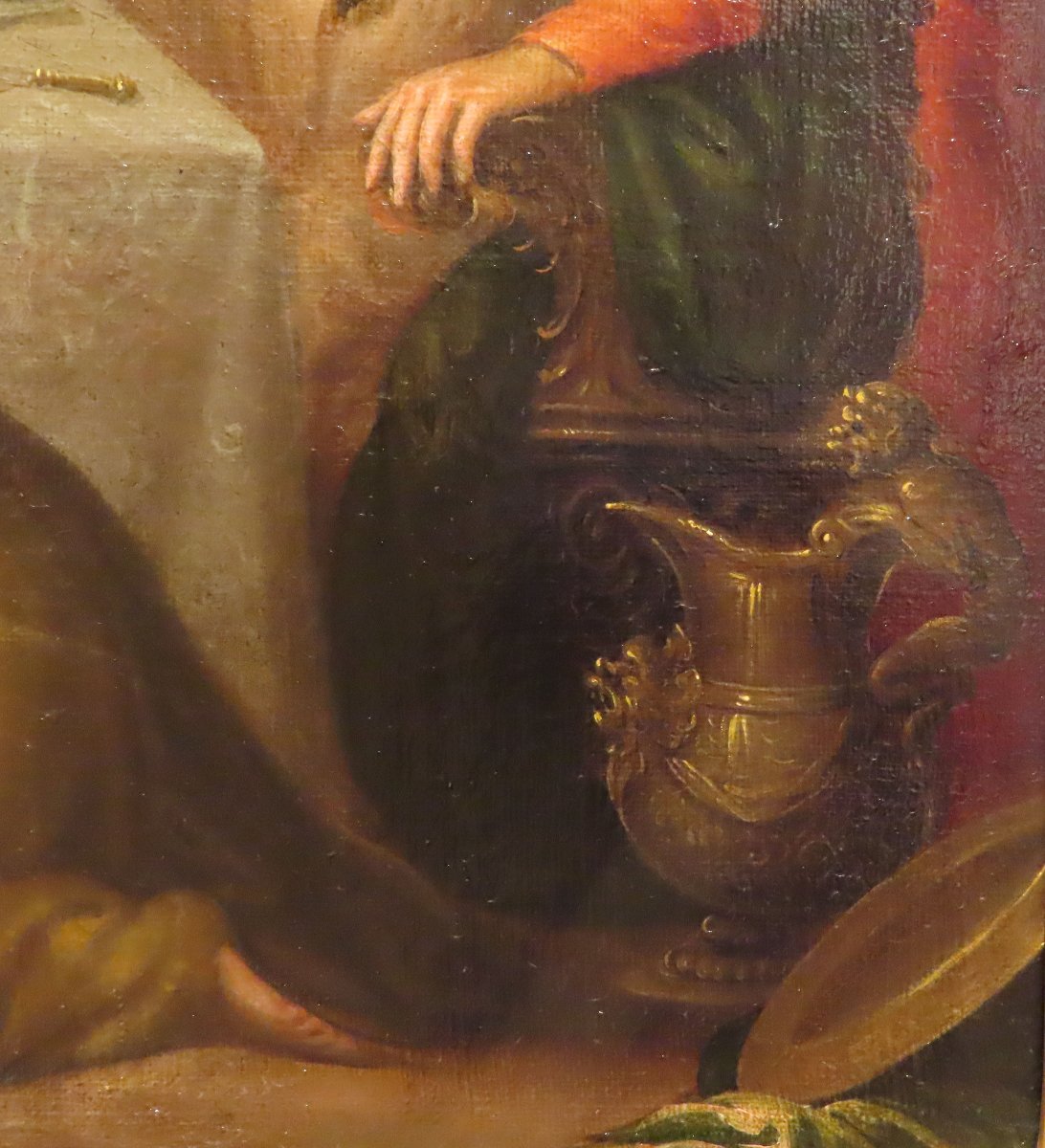
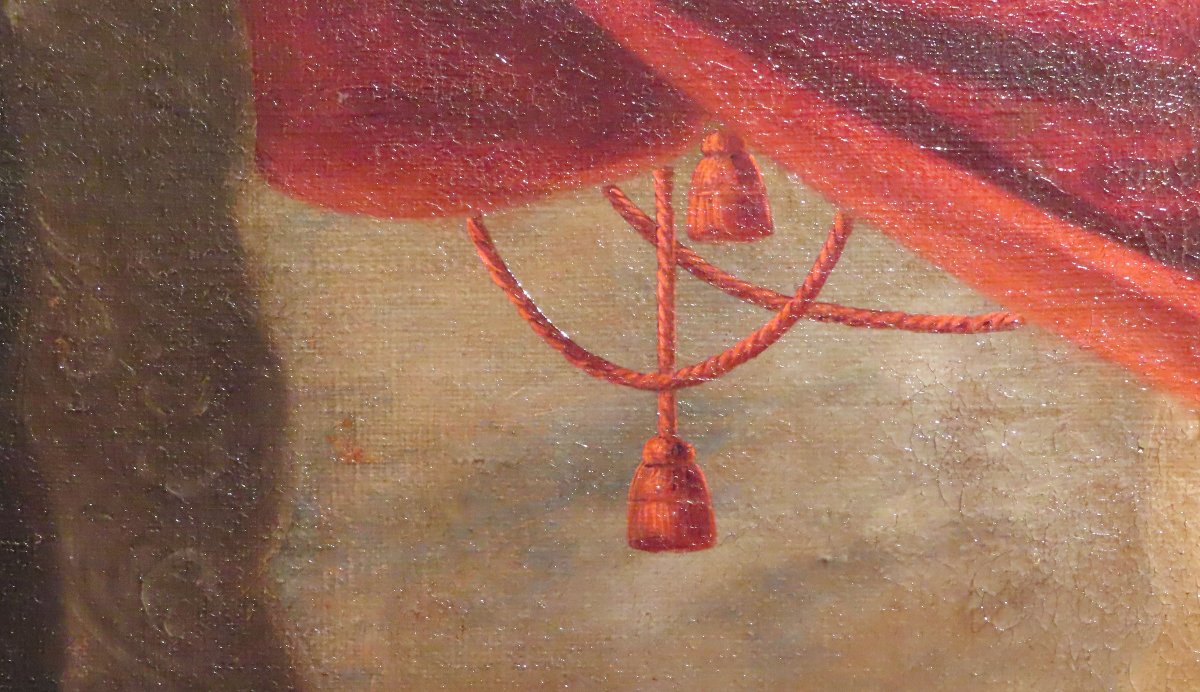
The anointing essentially consists of pouring aromatic substances onto the body ofChrist; these are described in the sources generallyas oils, perfumes, or ointments, or specificallyas nard, whose high cost is emphasized. This precious perfume,preserved in an alabaster jar, was poured on his head, on his feet, or onboth—the head and the feet.The painting perfectly depicts the biblical episode ofthe anointing, which took place in the dining room of the house of Simon thePharisee, according to some, or of Lazarus the leper, according to others.At the head of the table sits Simon, and to his right isdepicted Judas Iscariot, usually with the red beard associated with hismisfortune. Beside him is another unrecognizable male figure. The protagonist of the scene is Christ, and at his feet,Mary, who, taking a pound of pure nard perfume—of great value—anointedJesus’s feet and wiped them with her hair. Furthermore, the interplay of light andshadow places Mary almost in the shadows, at the feetof Jesus.The image of Christ is highly evocative, as he is depictedwith his head slightly bowed, which carries two fundamentalmeanings. On the one hand, humility in the face of Mary’s act of adoration and,on the other hand, anticipation of the cross, symbolizing his preparation for andacceptance of his burial.A series of luxury objects and ornamental elements surroundsthe scene, creating the illusion of a sumptuous residence where the scene takes place. Abasin accompanied by a finely crafted metal ewer, Solomonic columns,and a red curtain in the background frame the figuresaround the table, as well as the Italian Renaissance-style throne onwhich Christ is seated… Juan de Sevilla (Granada, 1643–1695) was one of the leadingpainters of the Granada Baroque and one of the most eminent heirs to the schoolof Alonso Cano. Trained alongside Francisco Alonso Argüello and Pedro deMoya, he developed a personal style characterized by the Flemish influence ofPeter Paul Rubens, Venetian colorism, and echoes of the workof Alonso Cano.
Dimensions without frame: 86 cm high x 94 cm wide
The anointing essentially consists of pouring aromatic substances onto the body ofChrist; these are described in the sources generallyas oils, perfumes, or ointments, or specificallyas nard, whose high cost is emphasized. This precious perfume,preserved in an alabaster jar, was poured on his head, on his feet, or onboth—the head and the feet.The painting perfectly depicts the biblical episode ofthe anointing, which took place in the dining room of the house of Simon thePharisee, according to some, or of Lazarus the leper, according to others.At the head of the table sits Simon, and to his right isdepicted Judas Iscariot, usually with the red beard associated with hismisfortune. Beside him is another unrecognizable male figure. The protagonist of the scene is Christ, and at his feet,Mary, who, taking a pound of pure nard perfume—of great value—anointedJesus’s feet and wiped them with her hair. Furthermore, the interplay of light andshadow places Mary almost in the shadows, at the feetof Jesus.The image of Christ is highly evocative, as he is depictedwith his head slightly bowed, which carries two fundamentalmeanings. On the one hand, humility in the face of Mary’s act of adoration and,on the other hand, anticipation of the cross, symbolizing his preparation for andacceptance of his burial.A series of luxury objects and ornamental elements surroundsthe scene, creating the illusion of a sumptuous residence where the scene takes place. Abasin accompanied by a finely crafted metal ewer, Solomonic columns,and a red curtain in the background frame the figuresaround the table, as well as the Italian Renaissance-style throne onwhich Christ is seated… Juan de Sevilla (Granada, 1643–1695) was one of the leadingpainters of the Granada Baroque and one of the most eminent heirs to the schoolof Alonso Cano. Trained alongside Francisco Alonso Argüello and Pedro deMoya, he developed a personal style characterized by the Flemish influence ofPeter Paul Rubens, Venetian colorism, and echoes of the workof Alonso Cano.
5 000 €
Period: 17th century
Style: Other Style
Condition: Good condition
Material: Oil painting
Width: 94
Height: 86
Reference (ID): 1787068
Availability: In stock
Print