

Saint John The Evangelist, A Wood Carving Attributed To Pedro De La Cuadra, 17th Century.
Dimensions:
140 cm high x 55 cm wide x 44 cm deep
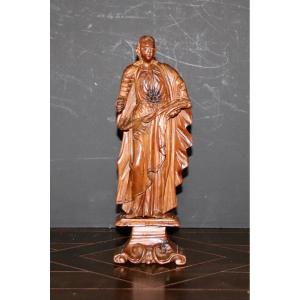
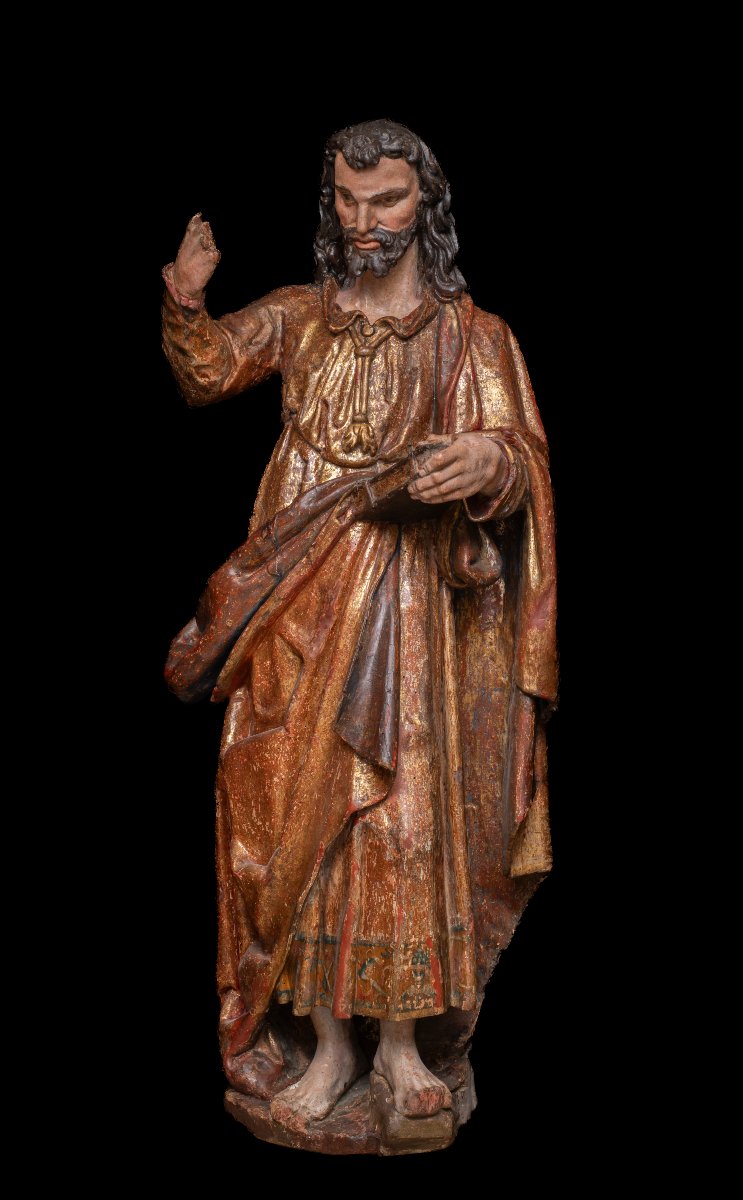
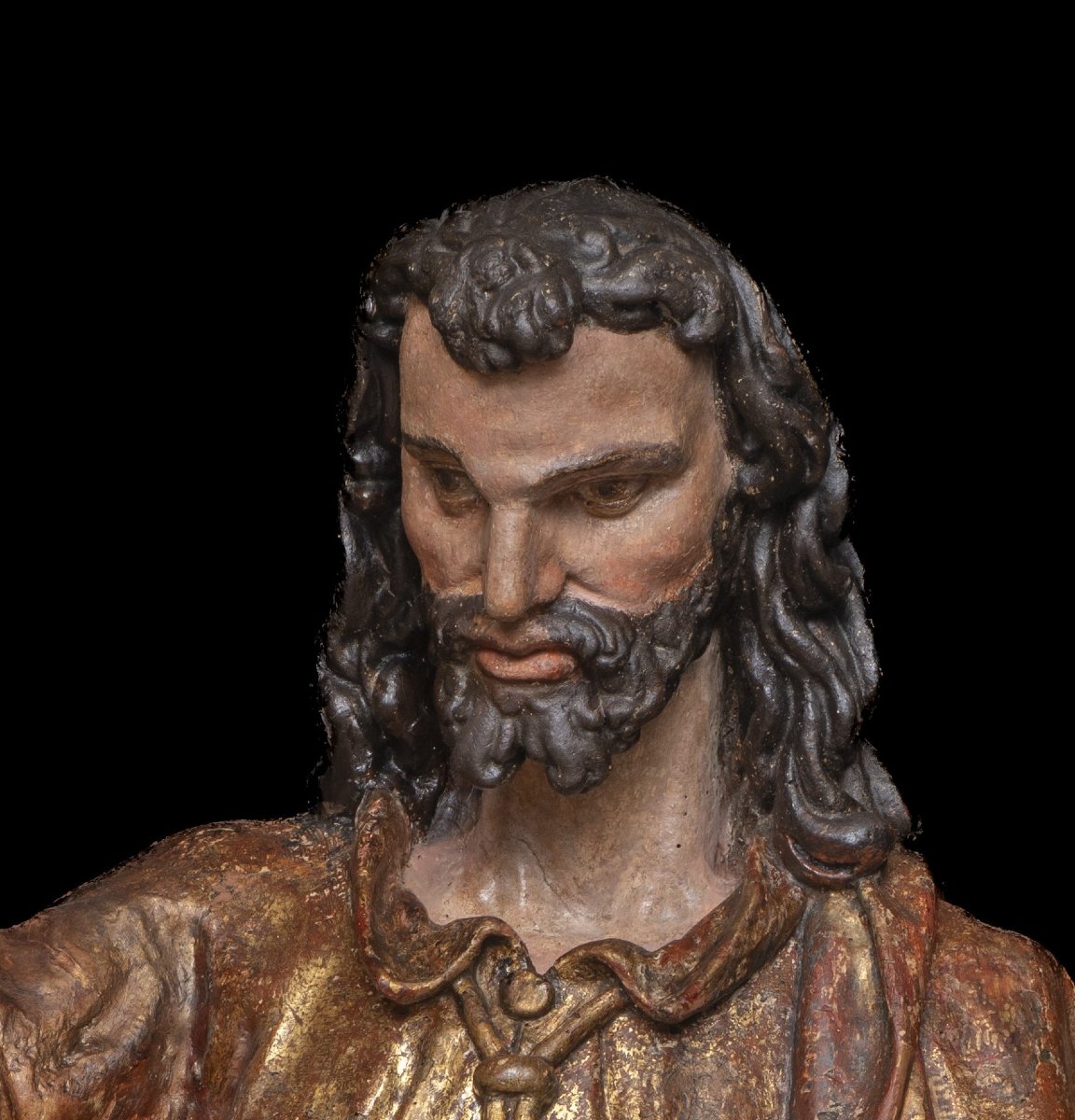
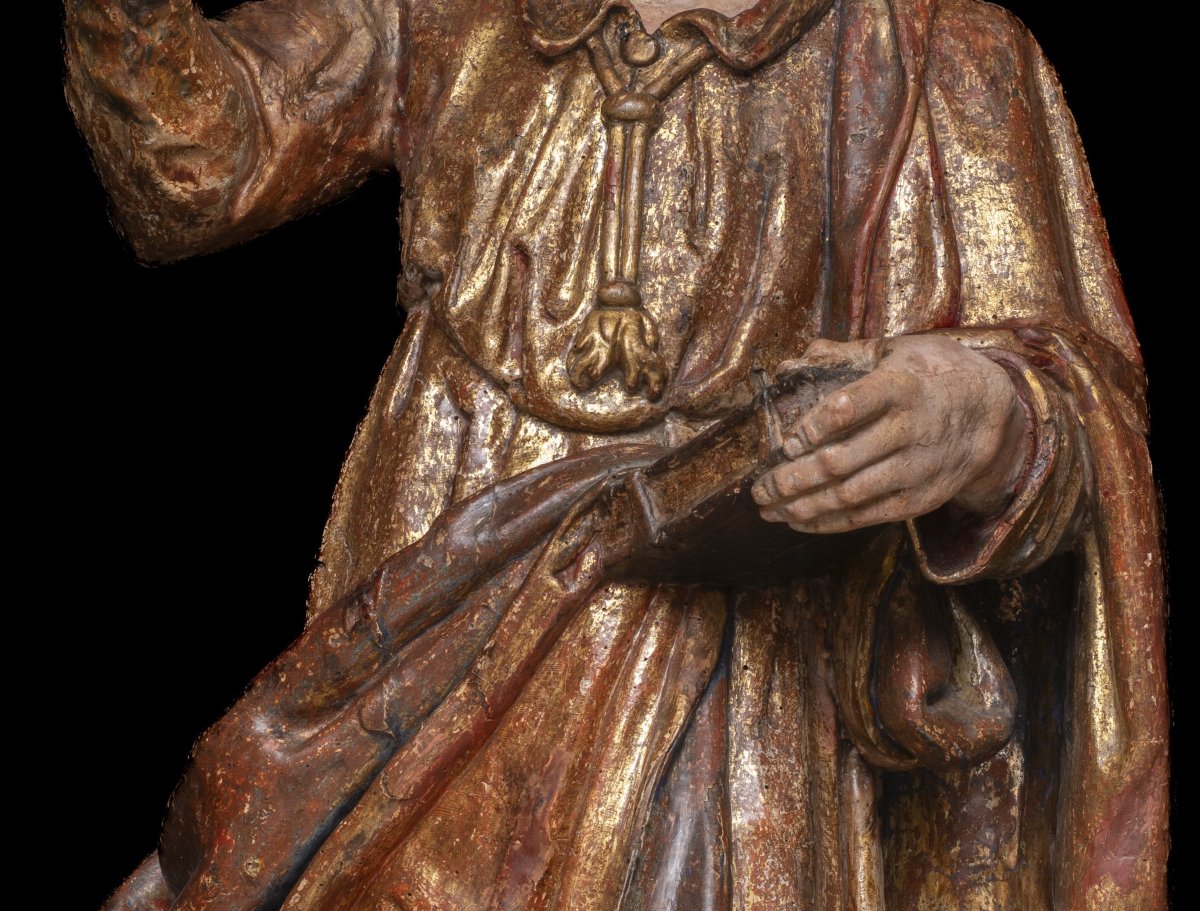
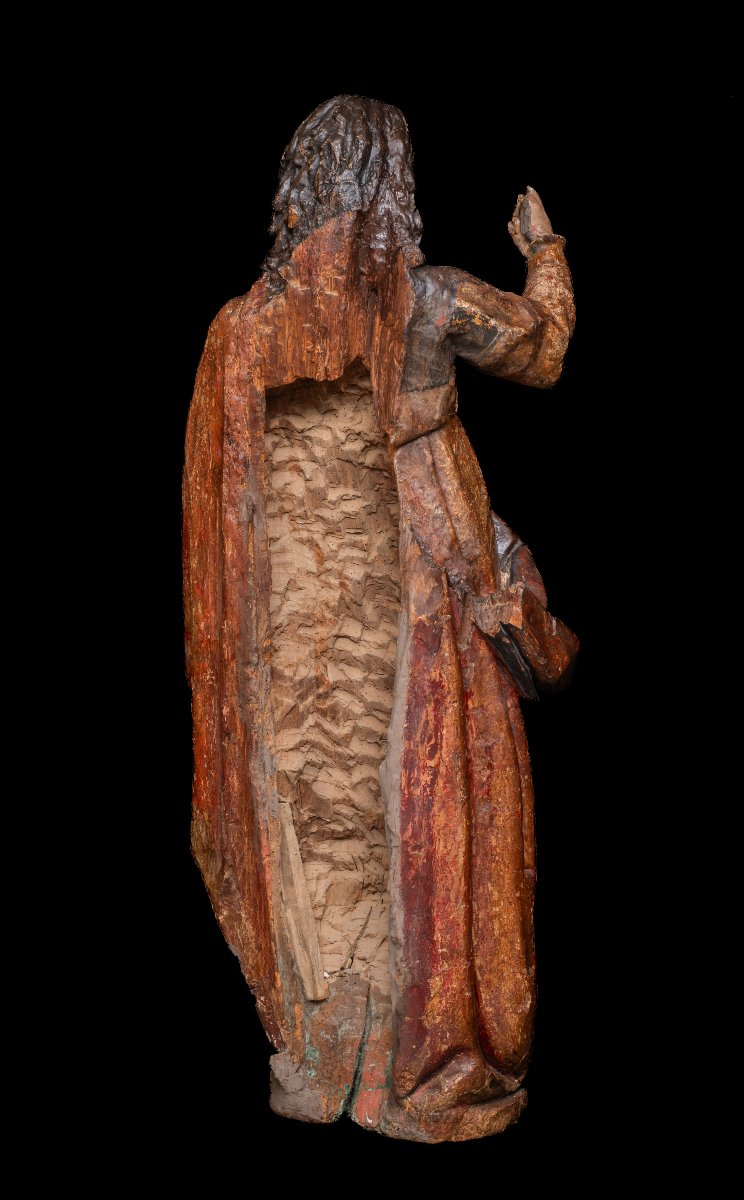
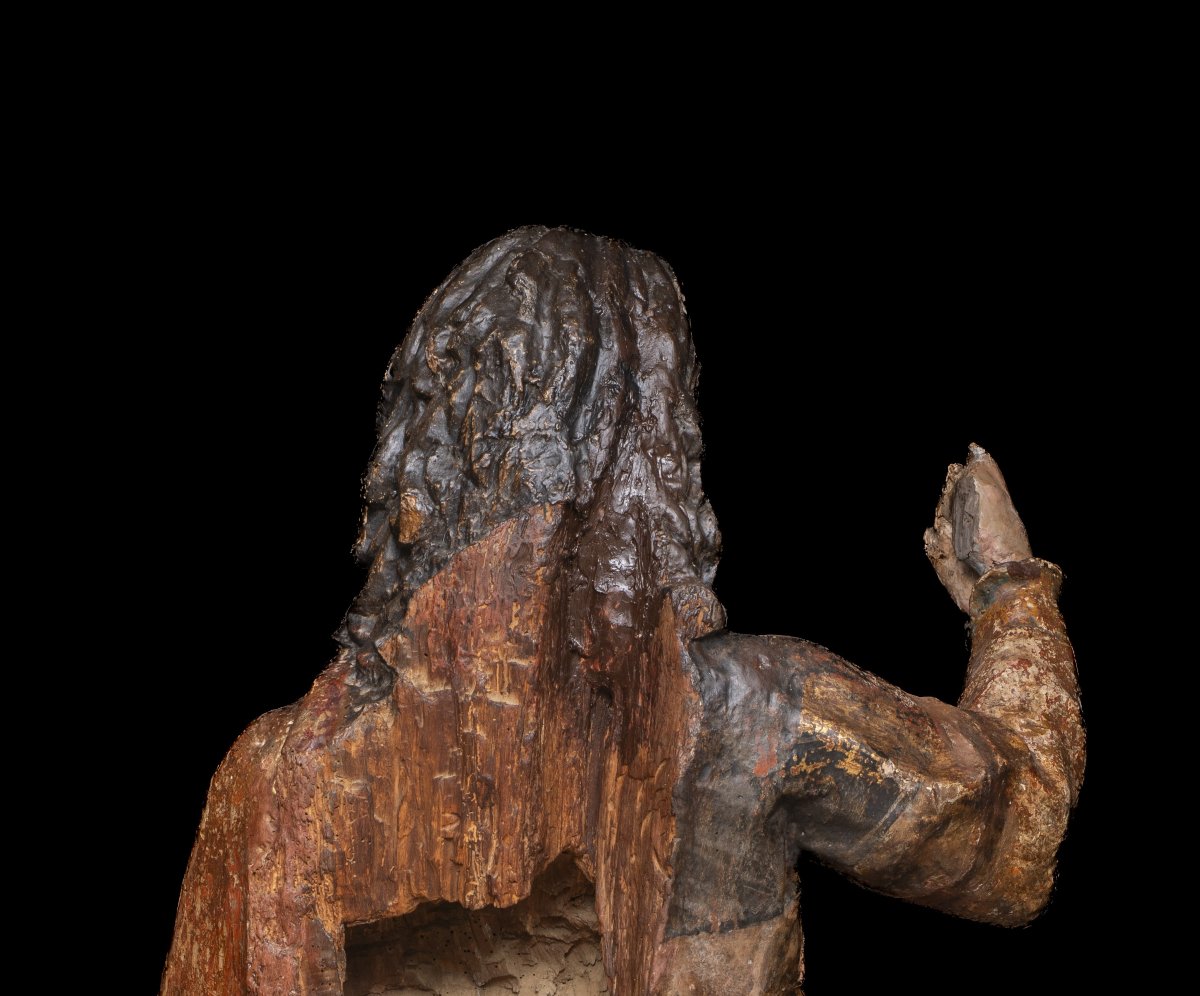
Given its craftsmanship—and particularly the fact that the back is hollowed out—this sculpture was likely part of a larger ensemble or an altarpiece. It almost certainly depicts Saint John the Evangelist holding a book. Although he is one of the most frequently depicted saints in the Christian tradition, such images generally feature attributes associated with key moments in the life of Christ, foremost among which is the chalice, evoking his role at the Last Supper.
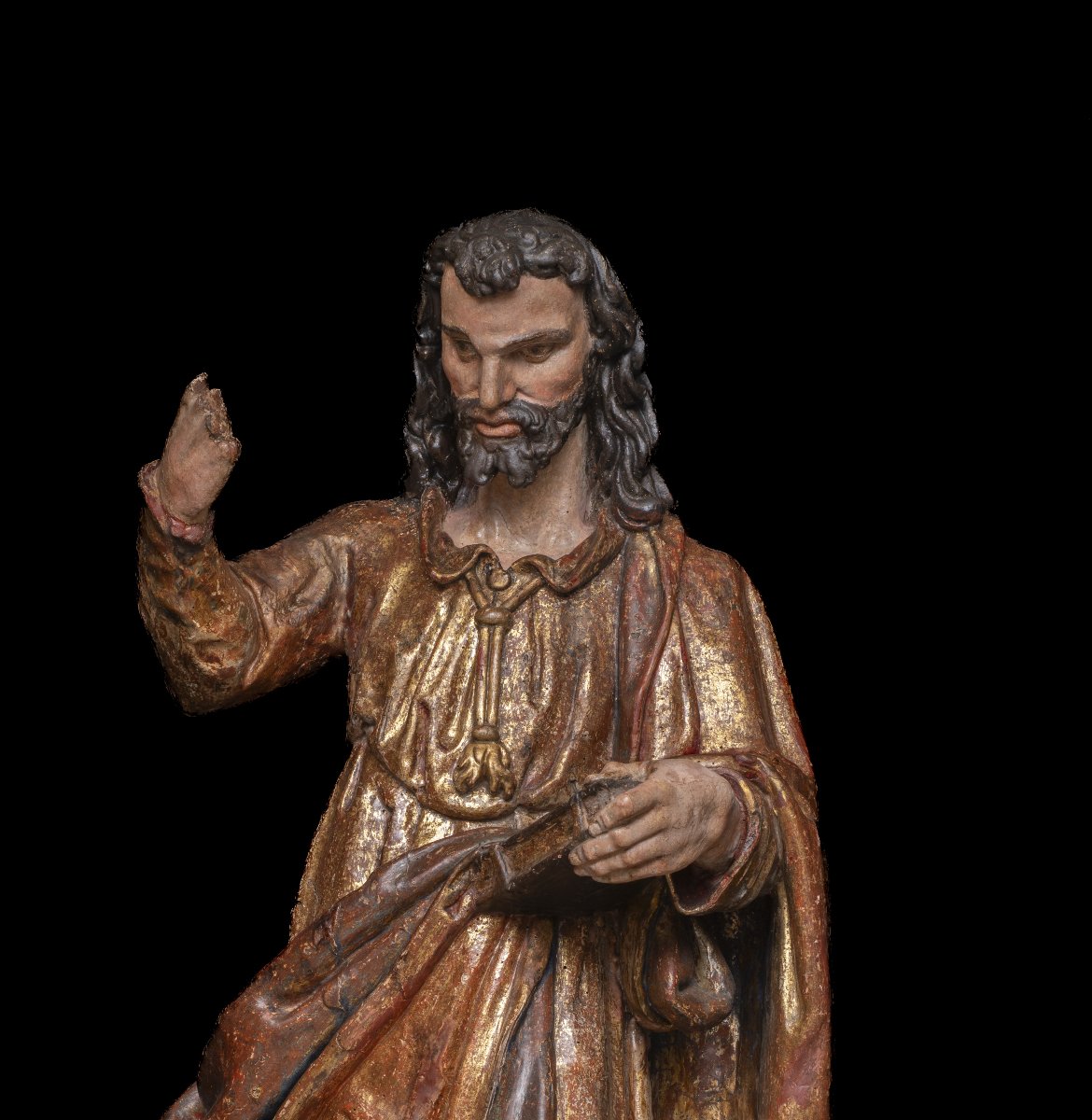
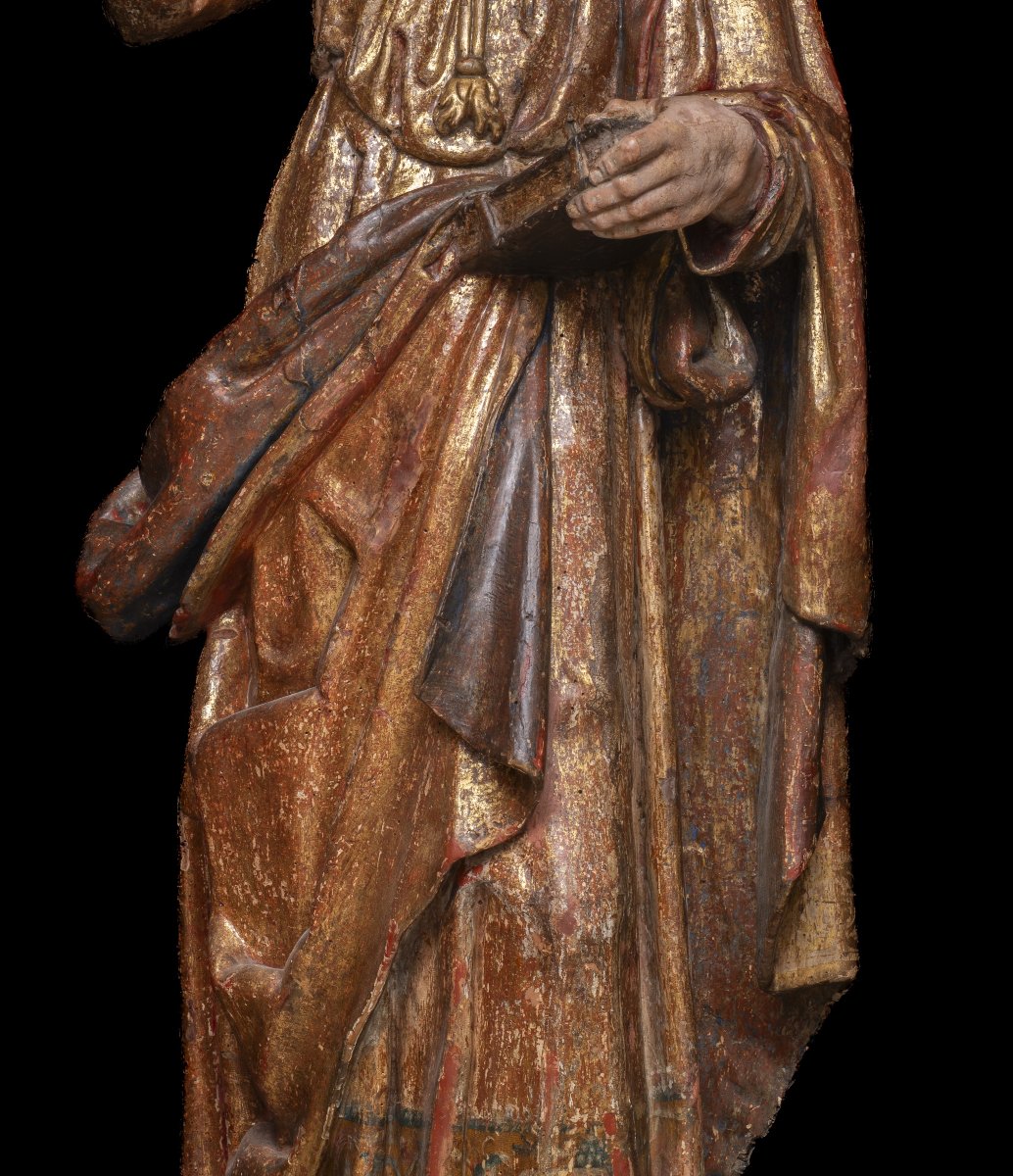
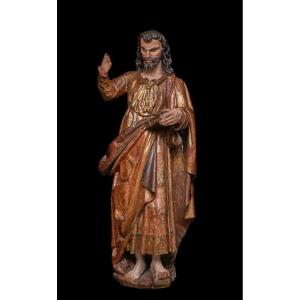
The figure stands with one leg forward, in a posture suggesting that he is offering the book held in one hand, while his head is slightly tilted to the right. His most common attributes are the book and the eagle. The book refers to his role as a writer—the author of both the Gospel and the Book of Revelation—while the eagle symbolizes the Tetramorph, an element absent from this particular work.
His garments are covered by a large, predominantly red cloak that drapes over his left shoulder, gathers at his forearm, and wraps around his body. In Christian iconography, this color signifies spiritual renewal—a theme explicitly expressed in the Gospel according to Saint John; red is the color of blood, associated with martyrs but also with love. Thus, in this depiction, the color symbolizes his love for Jesus (as the “beloved disciple”).
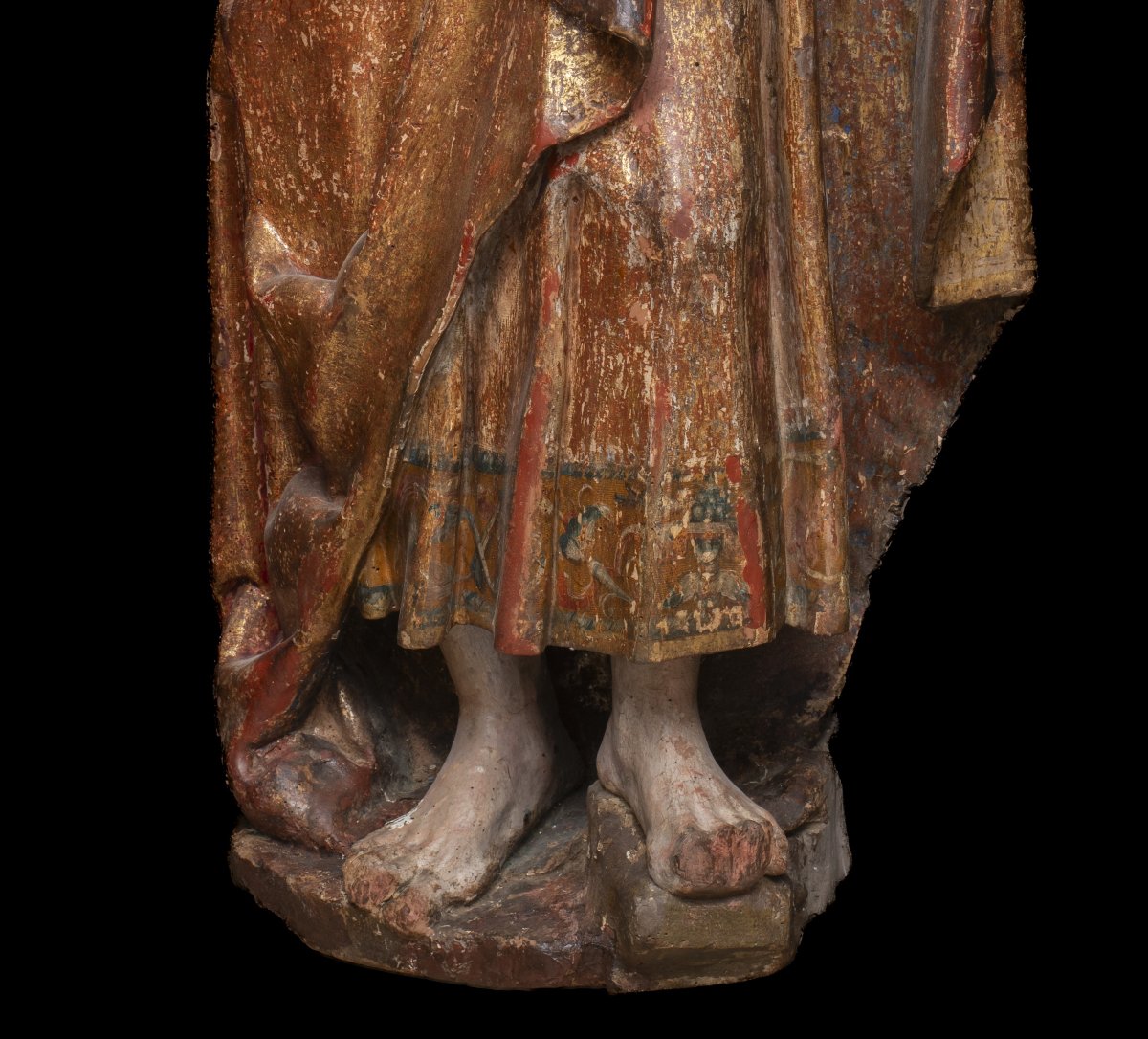
The lower edges of the garments feature *estofado* decoration—tempera paint applied over a sheet of gold leaf—depicting a motif of plant scrolls. Despite some loss of paint, the original polychromy remains visible.
Given its formal characteristics, the work is attributed to Pedro de la Cuadra and his workshop. It should be noted that he was a modest sculptor, active at a time when Francisco de Rincón was directing the statuary workshops in Valladolid and when the up-and-coming Gregorio Fernández—whose human figure types Cuadra adopted during his second period—was beginning to make a name for himself. Pedro de la Cuadra (?–1629) was a Mannerist artist of the late Romanist period, with a very slight naturalistic tendency; however, his work is often characterized by a somewhat crude execution, frequently dominated by the contributions of his apprentices and other masters. The result is an inherently repetitive style of mediocre aesthetic quality, with many of his works exhibiting a certain clumsiness.
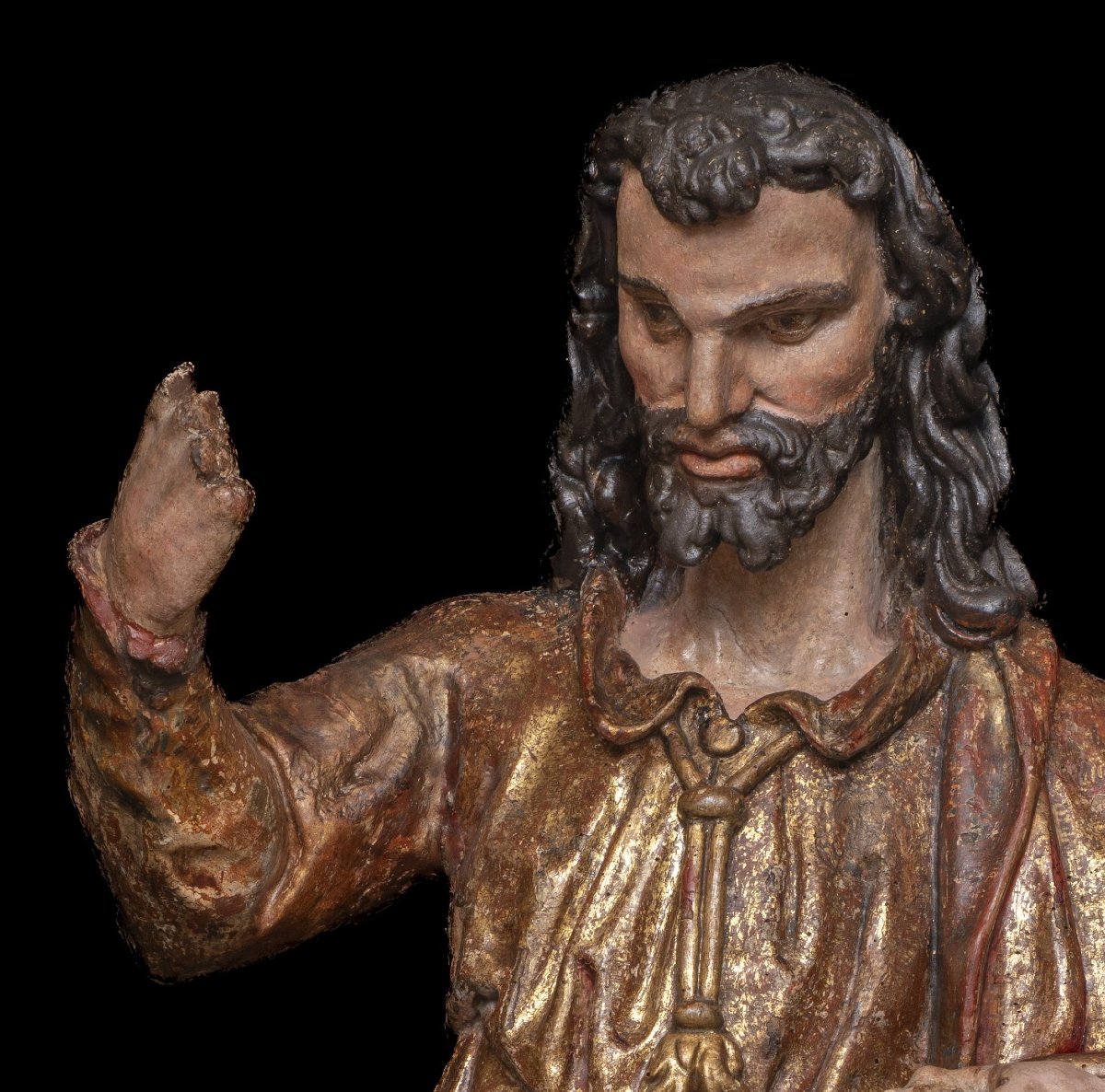
Protruding eyes and Greek-style noses in profile are characteristic features of his figures.
The sculpture shows signs of deterioration in its polychromy, as well as the loss of a hand and a foot
140 cm high x 55 cm wide x 44 cm deep
Given its craftsmanship—and particularly the fact that the back is hollowed out—this sculpture was likely part of a larger ensemble or an altarpiece. It almost certainly depicts Saint John the Evangelist holding a book. Although he is one of the most frequently depicted saints in the Christian tradition, such images generally feature attributes associated with key moments in the life of Christ, foremost among which is the chalice, evoking his role at the Last Supper.
The figure stands with one leg forward, in a posture suggesting that he is offering the book held in one hand, while his head is slightly tilted to the right. His most common attributes are the book and the eagle. The book refers to his role as a writer—the author of both the Gospel and the Book of Revelation—while the eagle symbolizes the Tetramorph, an element absent from this particular work.
His garments are covered by a large, predominantly red cloak that drapes over his left shoulder, gathers at his forearm, and wraps around his body. In Christian iconography, this color signifies spiritual renewal—a theme explicitly expressed in the Gospel according to Saint John; red is the color of blood, associated with martyrs but also with love. Thus, in this depiction, the color symbolizes his love for Jesus (as the “beloved disciple”).
The lower edges of the garments feature *estofado* decoration—tempera paint applied over a sheet of gold leaf—depicting a motif of plant scrolls. Despite some loss of paint, the original polychromy remains visible.
Given its formal characteristics, the work is attributed to Pedro de la Cuadra and his workshop. It should be noted that he was a modest sculptor, active at a time when Francisco de Rincón was directing the statuary workshops in Valladolid and when the up-and-coming Gregorio Fernández—whose human figure types Cuadra adopted during his second period—was beginning to make a name for himself. Pedro de la Cuadra (?–1629) was a Mannerist artist of the late Romanist period, with a very slight naturalistic tendency; however, his work is often characterized by a somewhat crude execution, frequently dominated by the contributions of his apprentices and other masters. The result is an inherently repetitive style of mediocre aesthetic quality, with many of his works exhibiting a certain clumsiness.
Protruding eyes and Greek-style noses in profile are characteristic features of his figures.
The sculpture shows signs of deterioration in its polychromy, as well as the loss of a hand and a foot
3 500 €
Period: 17th century
Style: Other Style
Condition: Condition of use
Material: Painted wood
Width: 55
Height: 140
Depth: 44
Reference (ID): 1789627
Availability: In stock
Print