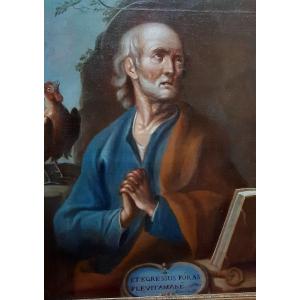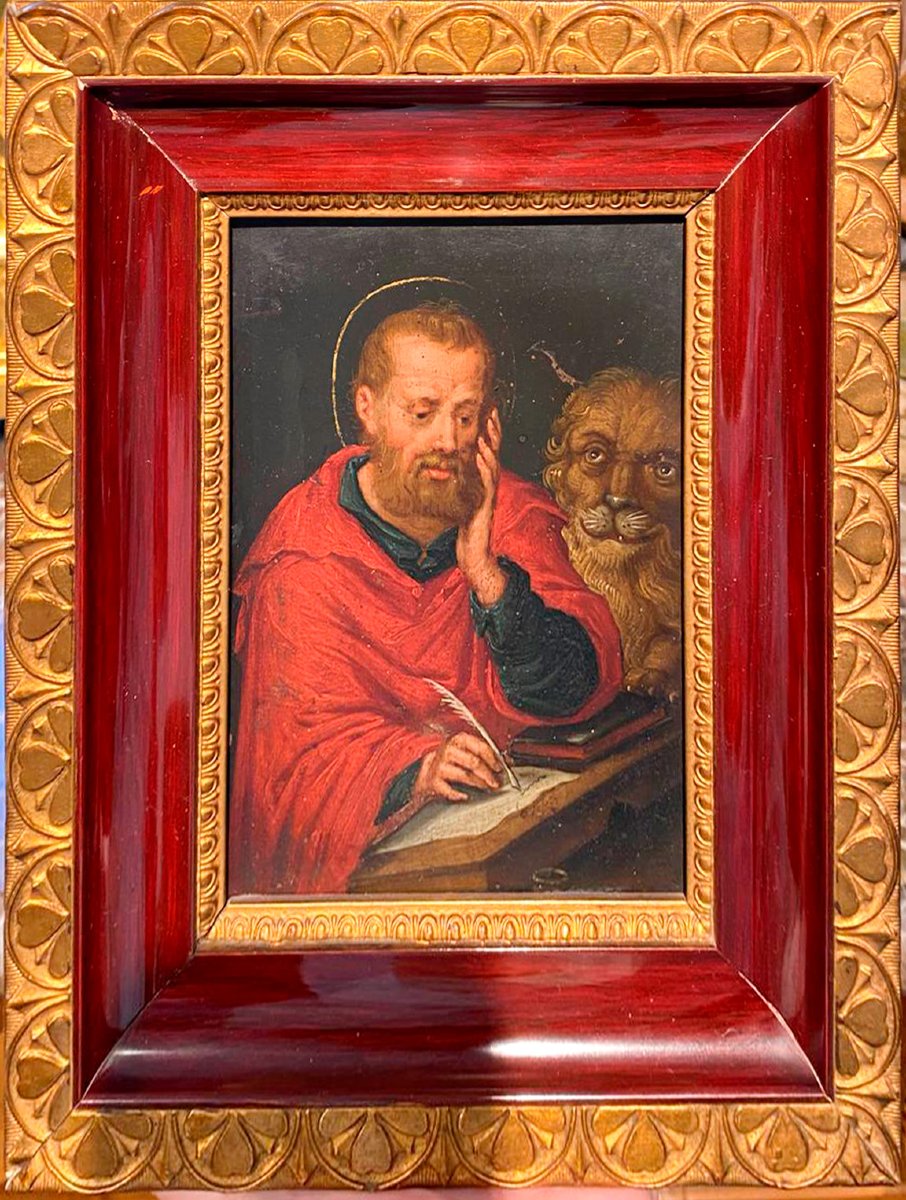
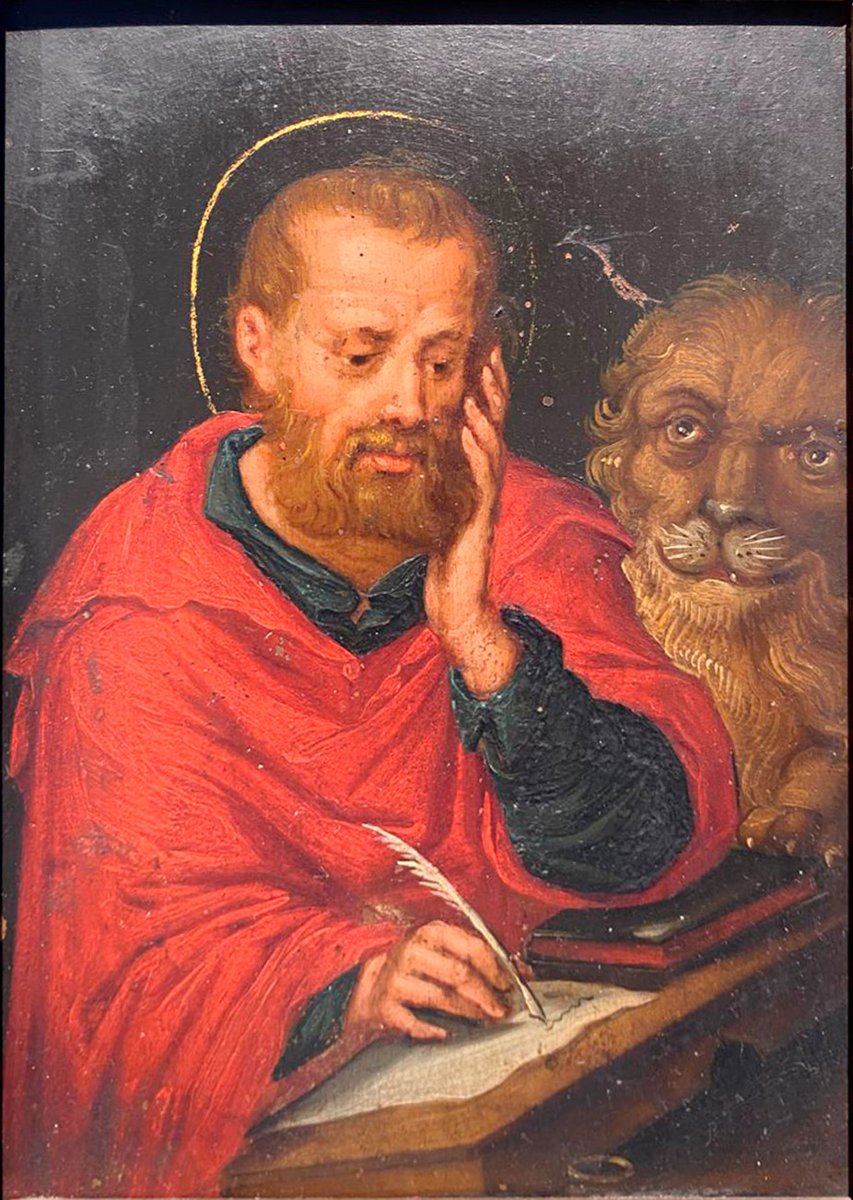
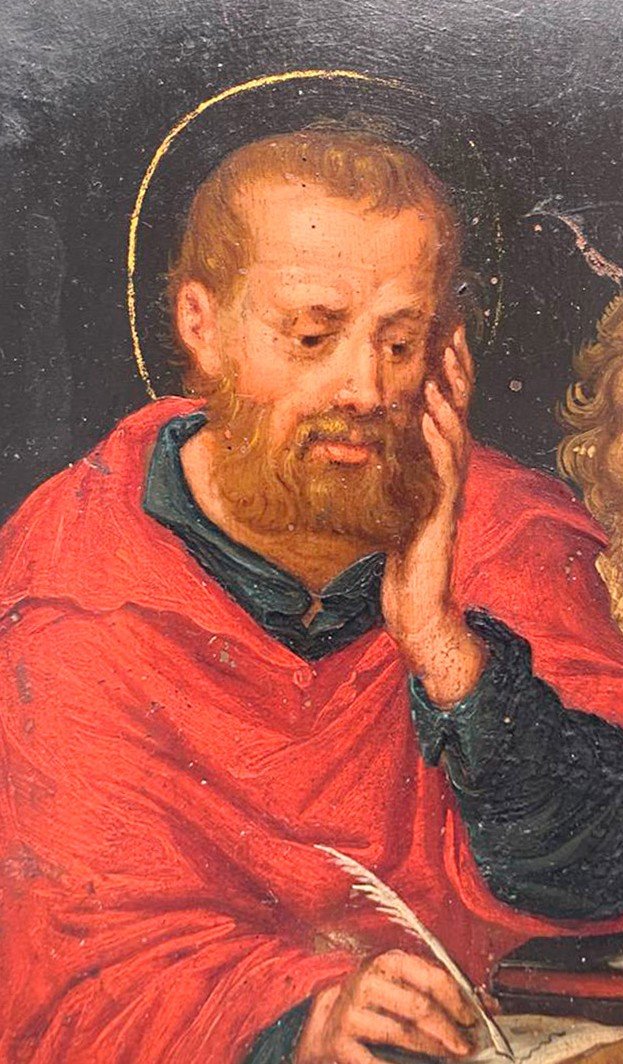
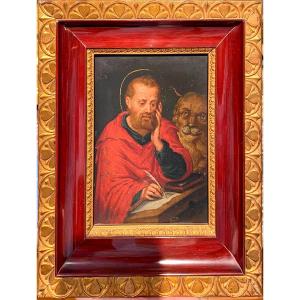


Saint Mark, Oil On Copper, Spanish School, 17th Century
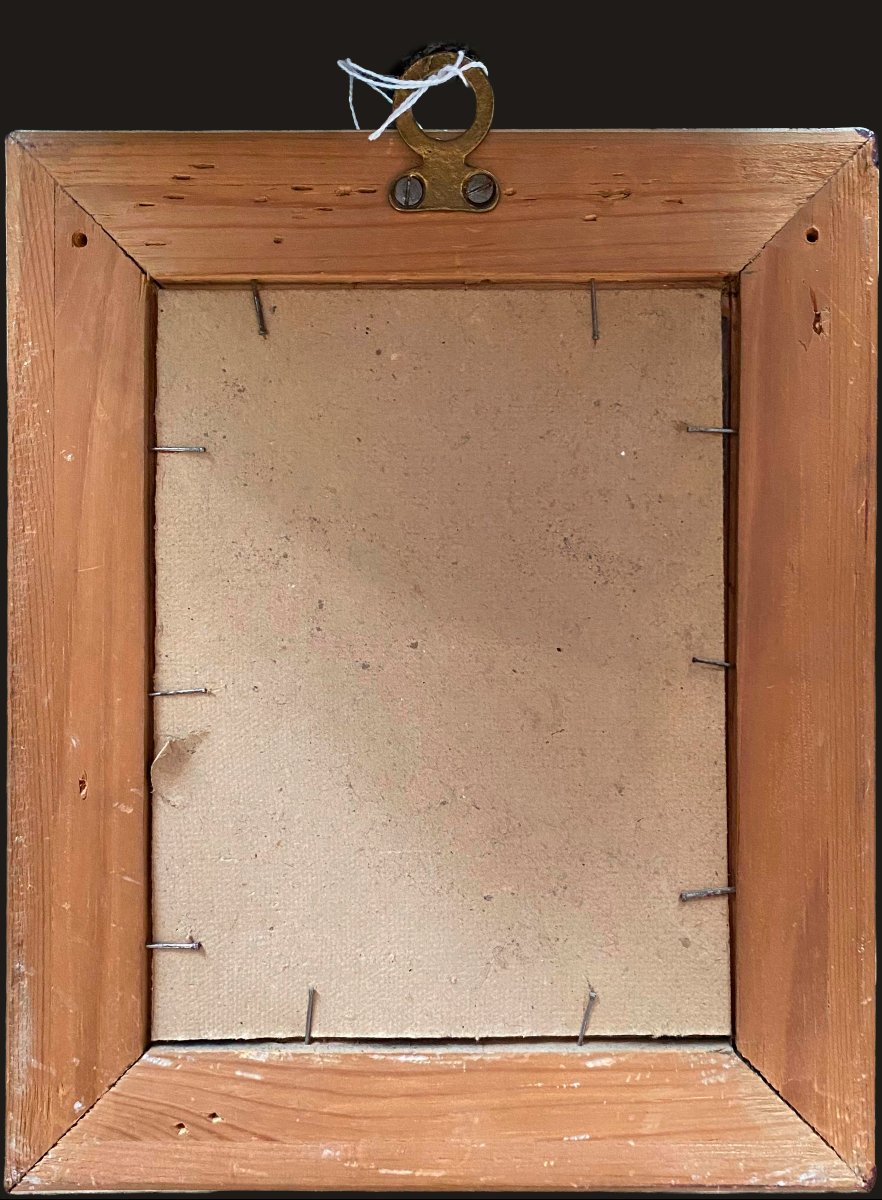
Dimensions with frame: 25 cm high x 21 cm wide Dimensions without frame: 17.5 cm high x 13 cm wide Saint Mark was born into a wealthy Jewish family and worked alongside the apostles Peter and Paul, although he was not a direct disciple of Jesus. He accompanied Paul on some of his missionary journeys, then settled in Rome, where he worked closely with Peter. After Peter’s death, tradition holds that he evangelized Egypt and founded the Church of Alexandria. Some accounts also link him to Aquileia and Venice. He died a martyr in Alexandria between 68 and 72, after suffering persecution at the hands of the pagans. He is credited with writing the Gospel according to Mark, considered the oldest of the Gospels and based on the preaching of Saint Peter. Written in Greek between the 50s and 60s, it is distinguished by its direct and dynamic style, focused on highlighting the power of Jesus Christ through his miracles. Since the 11th century, Saint Mark has been the patron saint of Venice, a city that has adopted his iconographic attribute—the winged lion—as its symbol.
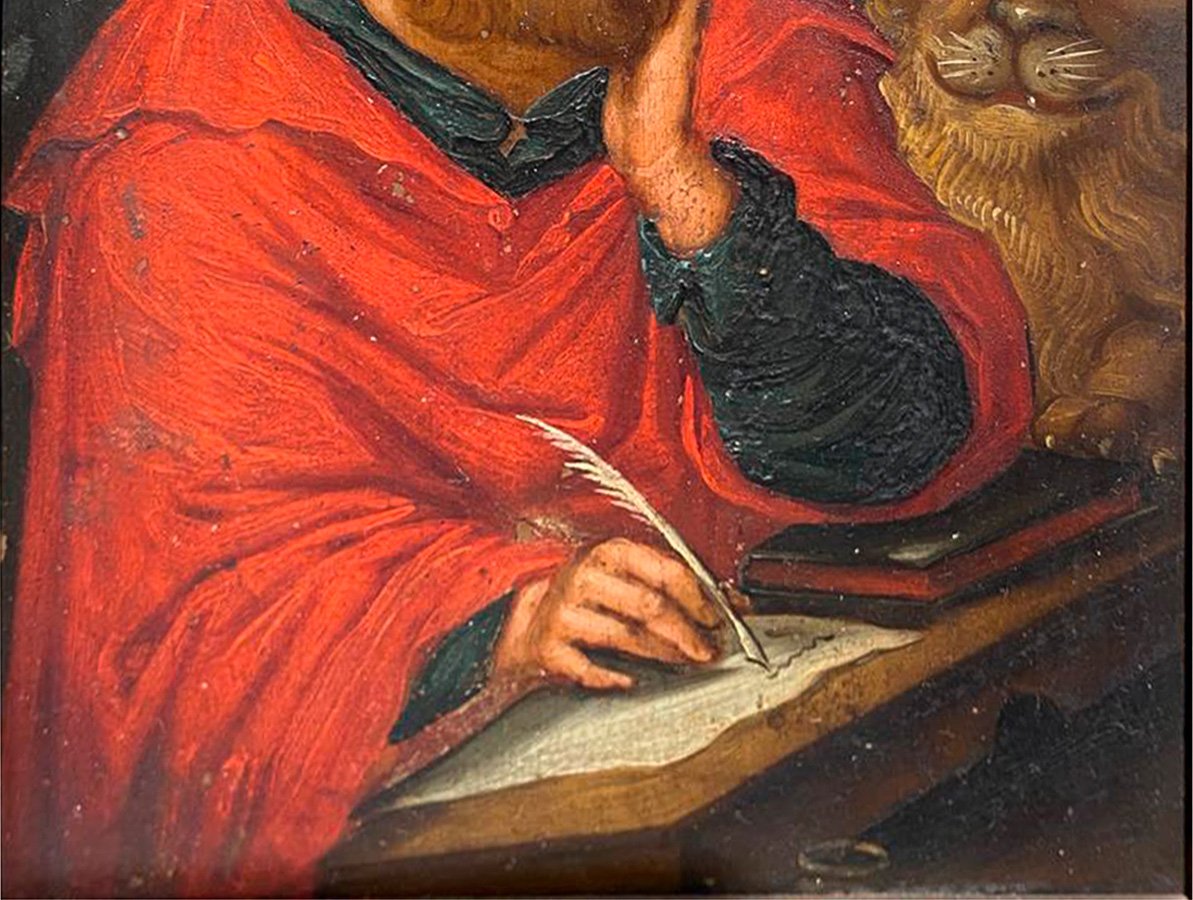
This is because he begins his Gospel by describing John the Baptist as “a voice crying out in the wilderness,” a sound that evokes the mighty roar of a lion. He is also the patron saint of notaries, glassmakers, and opticians, and is venerated by various Christian denominations, including the Catholic Church, the Orthodox Church, and the Coptic Church. In this work, Saint Mark is depicted alongside the lion, which looks at him with an air of curiosity. The saint, depicted in a realistic manner, is writing at his desk—a scene that likely symbolizes the first Gospel. The meticulous rendering of the lion’s fur and Saint Mark’s hair lends the work a striking sense of realism, accentuated by the closeness between the two figures.
This is because he begins his Gospel by describing John the Baptist as “a voice crying out in the wilderness,” a sound that evokes the mighty roar of a lion. He is also the patron saint of notaries, glassmakers, and opticians, and is venerated by various Christian denominations, including the Catholic Church, the Orthodox Church, and the Coptic Church. In this work, Saint Mark is depicted alongside the lion, which looks at him with an air of curiosity. The saint, depicted in a realistic manner, is writing at his desk—a scene that likely symbolizes the first Gospel. The meticulous rendering of the lion’s fur and Saint Mark’s hair lends the work a striking sense of realism, accentuated by the closeness between the two figures.
600 €
Period: 17th century
Style: Other Style
Condition: Good condition
Material: Oil painting on copper
Width: 13
Height: 17,5
Reference (ID): 1786763
Availability: In stock
Print