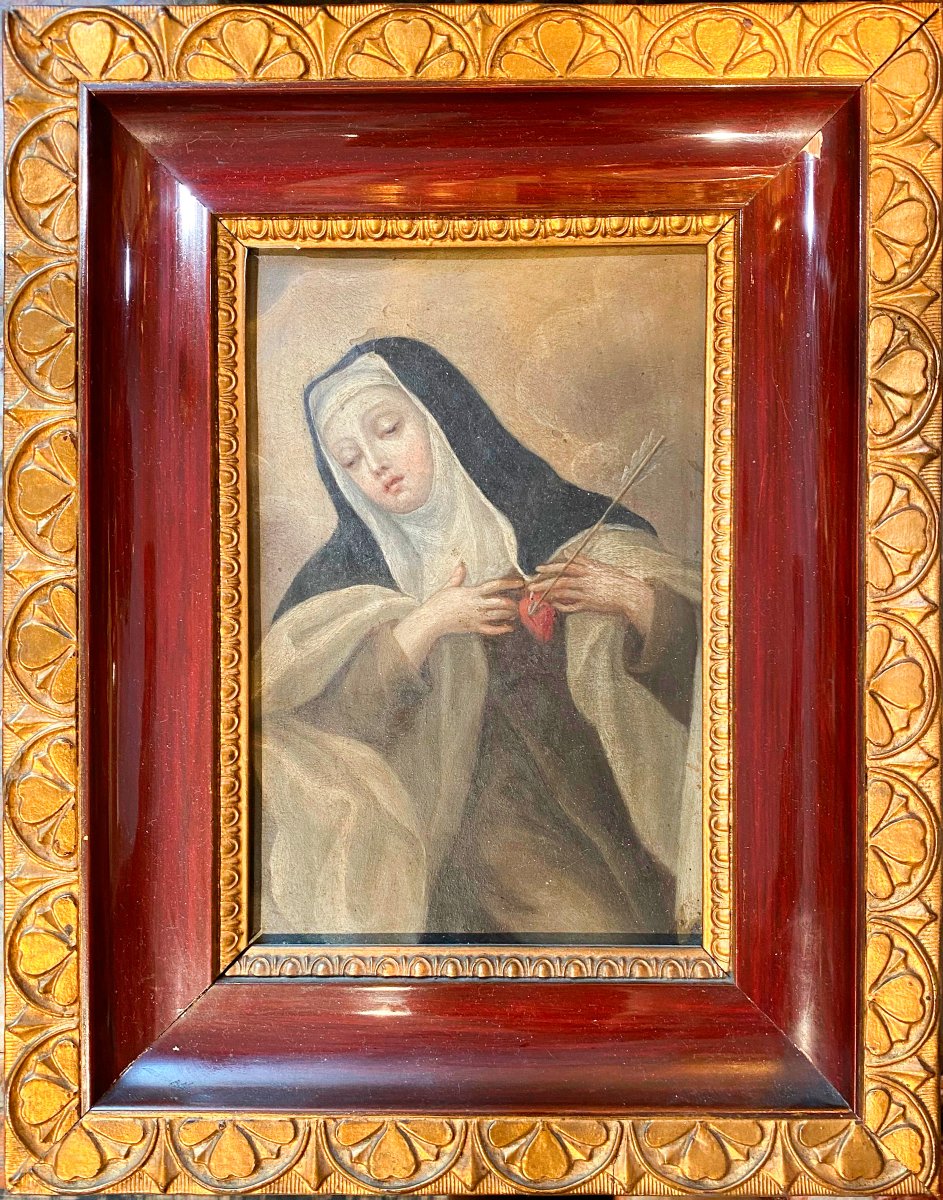
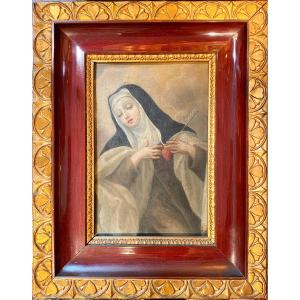


Santa Teresa, Oil On Copper, Spanish School, 17th Century
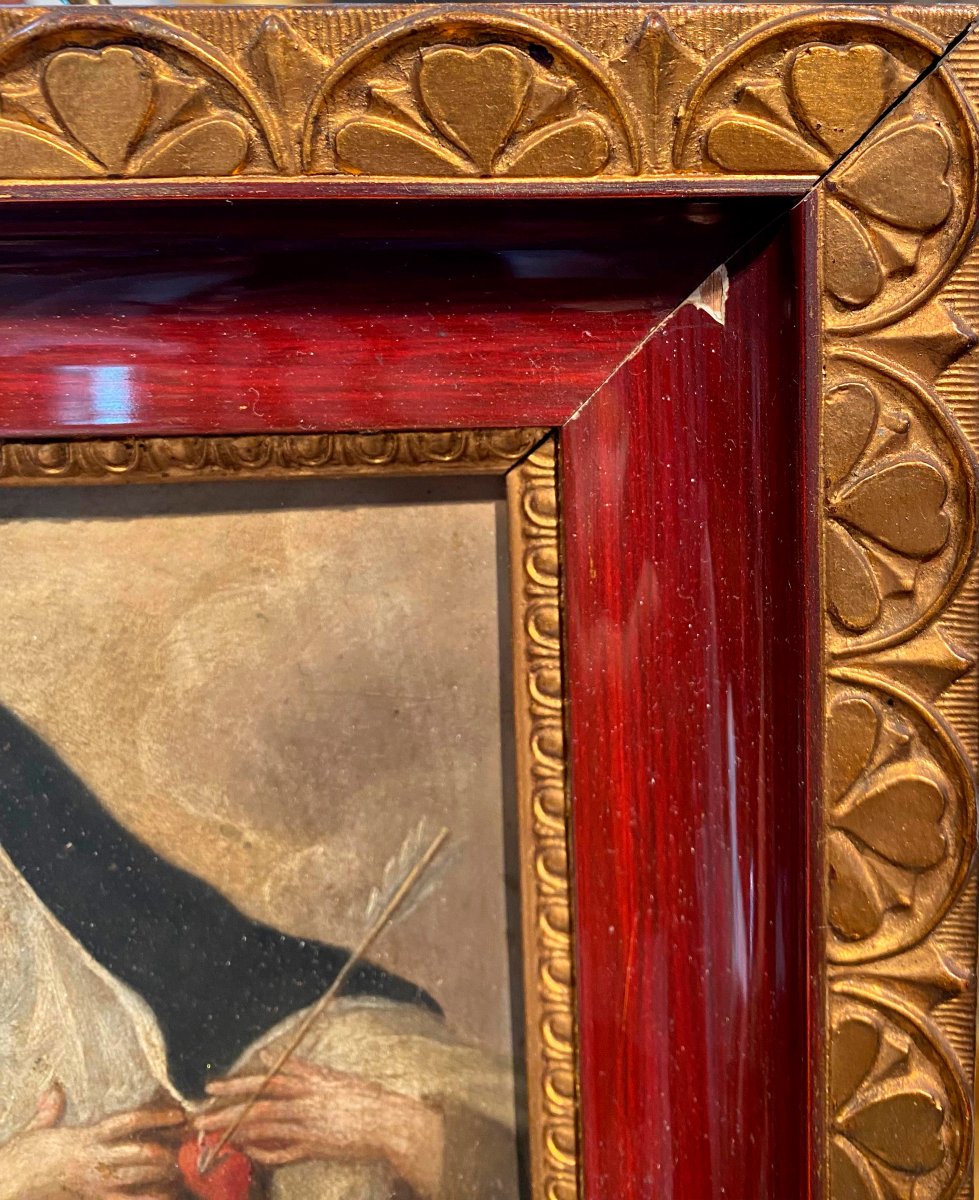
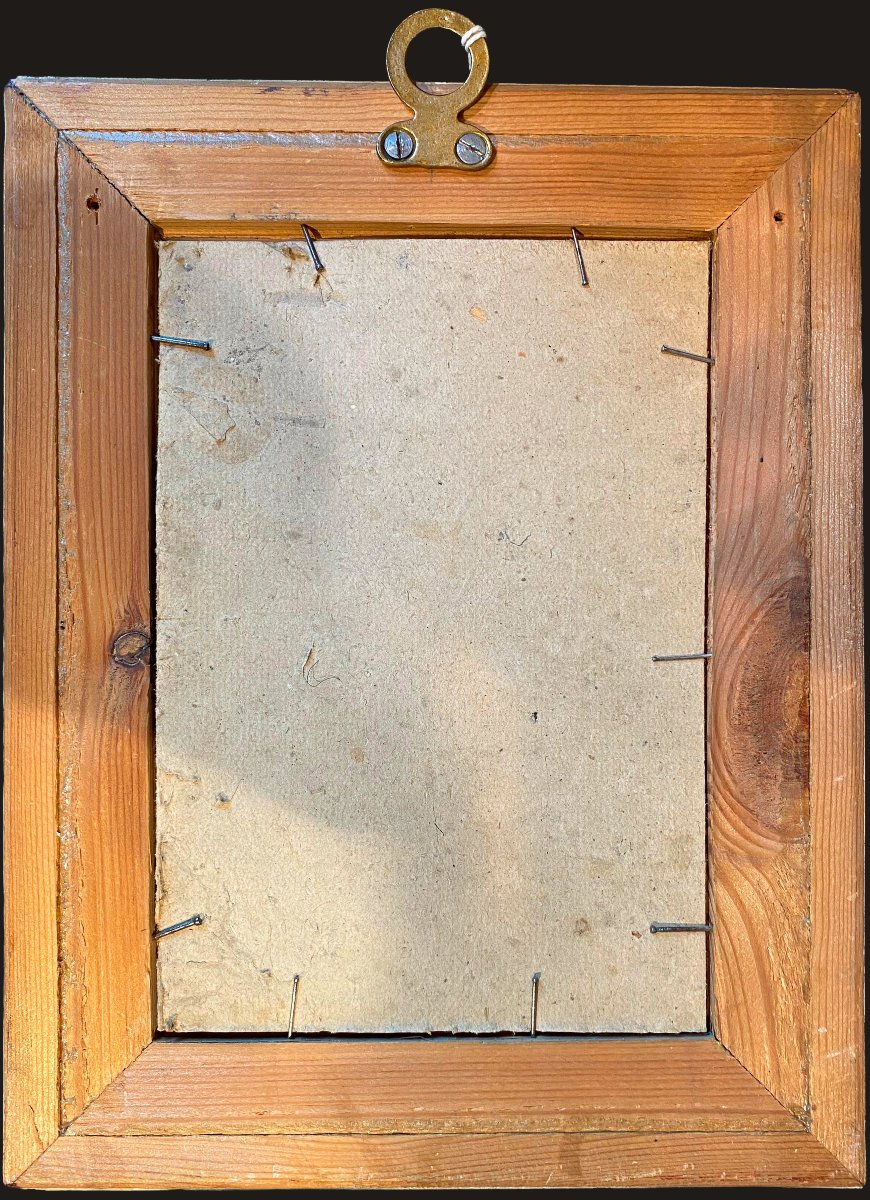
Dimensions with frame: 25.5 cm high x 19.5 cm wide
Dimensions without frame: 17.5 cm high x 12 cm wide
Teresa of Ávila, born in Ávila in 1515, was one of the most important figures in Spanish spirituality during the Golden Age. Against the backdrop of the Protestant Reformation and the Catholic Counter-Reformation spurred by the Council of Trent, she championed a profound religious renewal based on austerity, interior prayer, and a return to the original ideals of monastic life.
She was the principal driving force behind the reform of the Carmelite Order, which gave rise to the future Order of Discalced Carmelites. She founded numerous convents and carried out an intense reform effort, supported by both ecclesiastical authorities and the monarchy of Philip II. Her mystical experiences and her remarkable literary work made her one of the leading figures of Spanish mysticism.
She died in 1582 in Alba de Tormes and was canonized in 1622. Her image was widely depicted in art during the 17th century, particularly within the context of Counter-Reformation spirituality, becoming a recurring theme in Spanish painting, especially in works intended for private devotion.
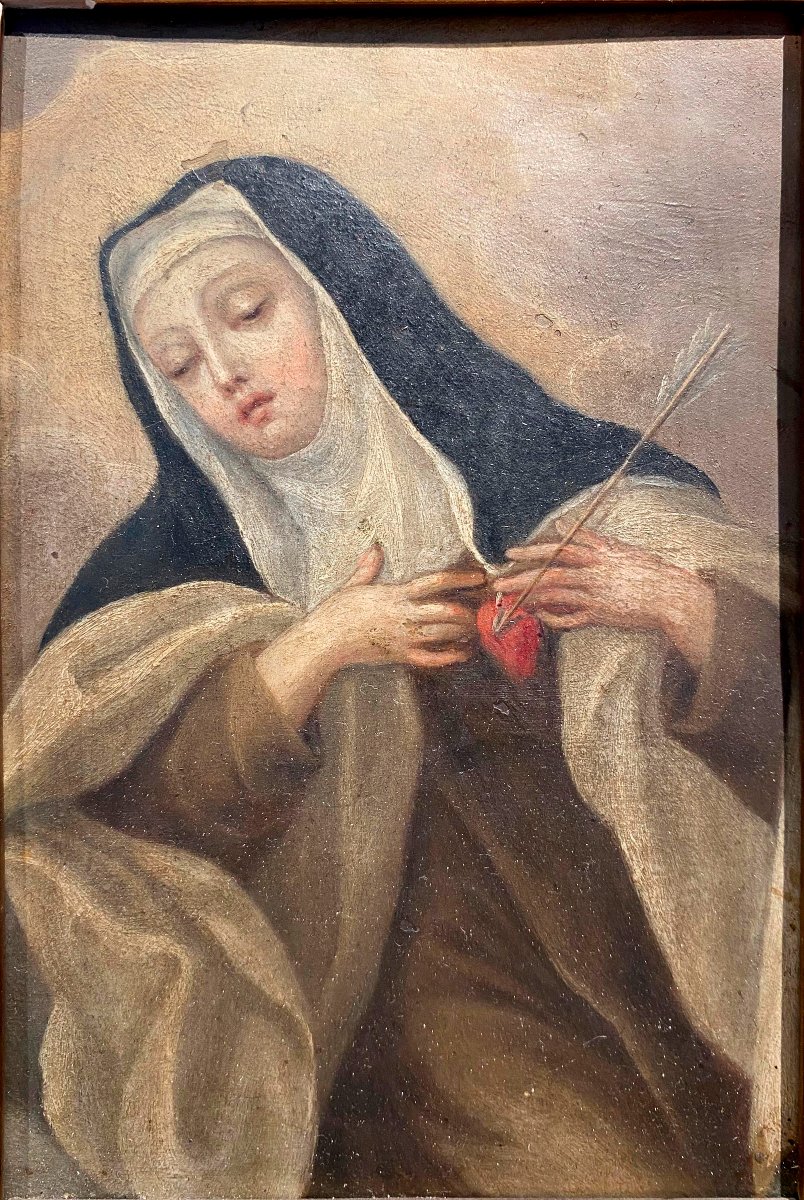
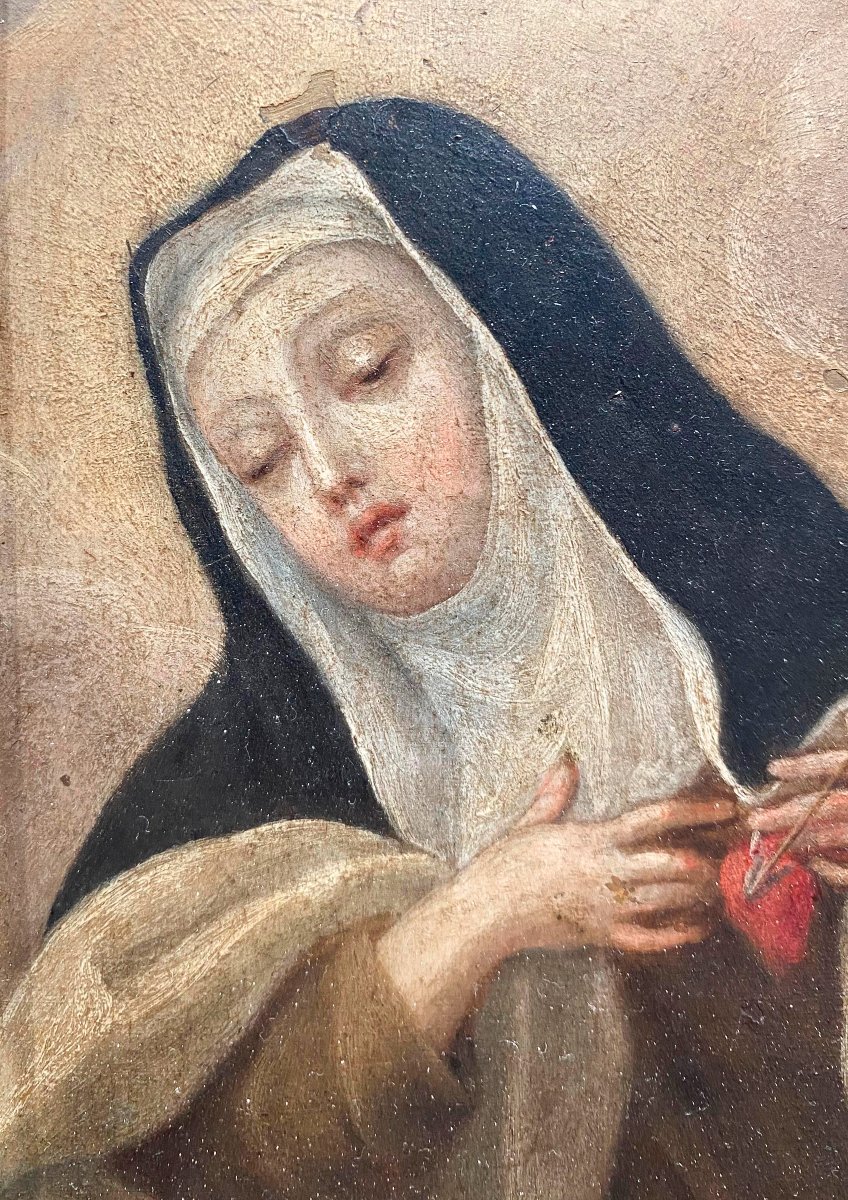
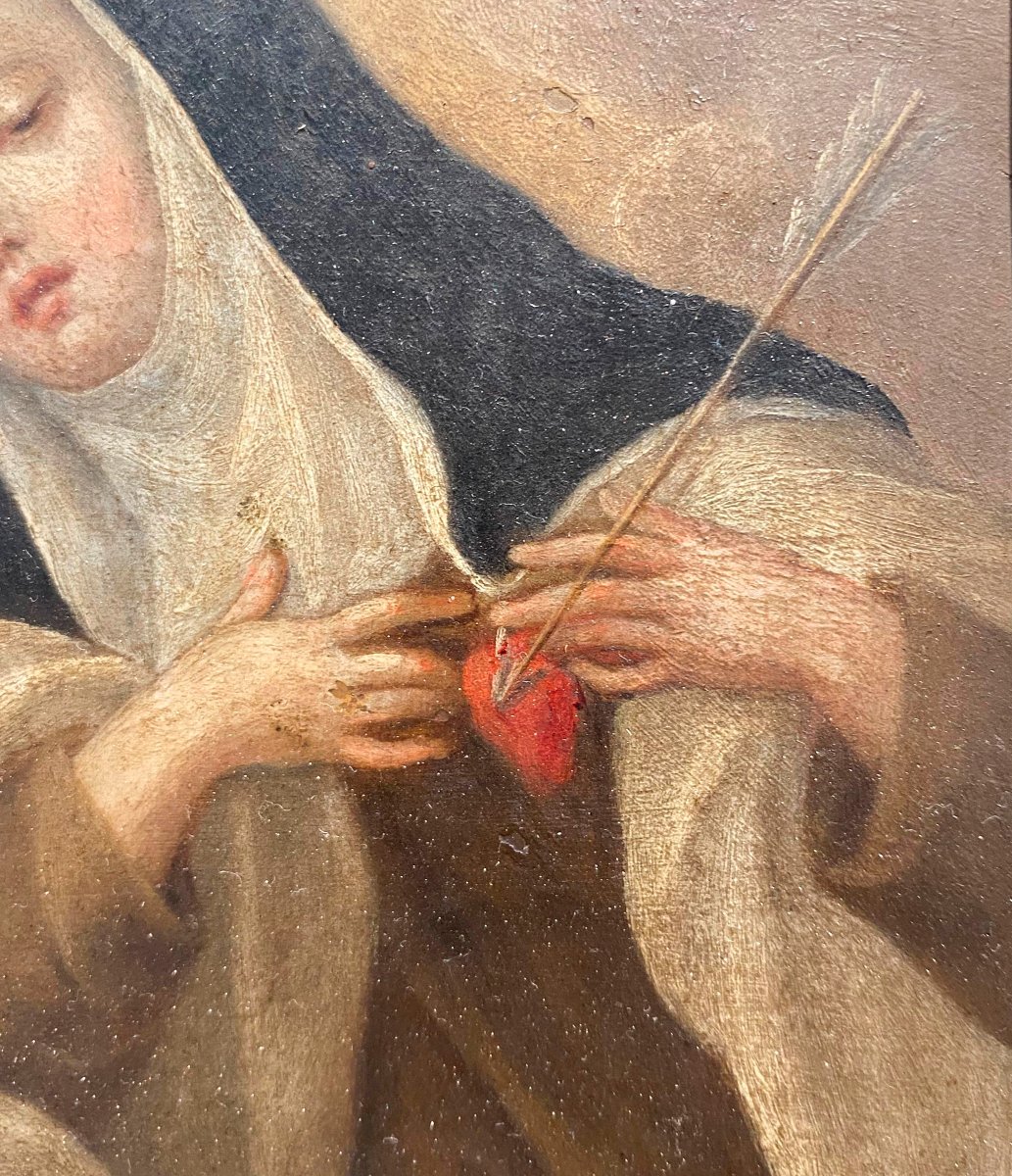
Saint Teresa is depicted according to one of her most remarkable iconographies, dressed in the Carmelite habit—a brown tunic, scapular, and black veil with a white headdress—with her heart pierced by an arrow. This iconography refers to one of the best-known episodes in the life of Saint Teresa: the transverberation, a mystical experience described by the saint herself in her autobiography. According to her account, an angel pierced her heart several times with a fiery dart, causing her intense physical pain accompanied by a profound spiritual union with God.
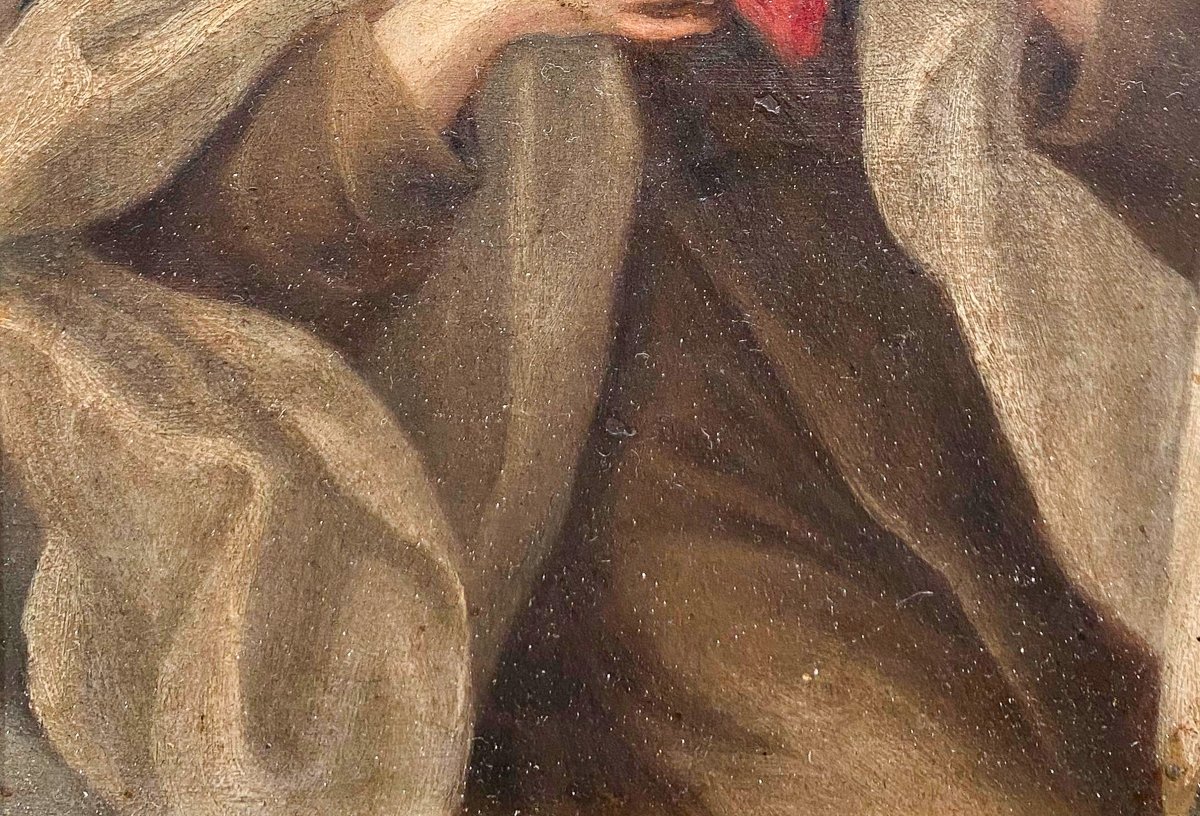
The technique used—oil on copper—ensures that this work perfectly preserves its chromatic intensity and luminosity. Furthermore, it further highlights the glazes and effects of transparency.
Dimensions without frame: 17.5 cm high x 12 cm wide
Teresa of Ávila, born in Ávila in 1515, was one of the most important figures in Spanish spirituality during the Golden Age. Against the backdrop of the Protestant Reformation and the Catholic Counter-Reformation spurred by the Council of Trent, she championed a profound religious renewal based on austerity, interior prayer, and a return to the original ideals of monastic life.
She was the principal driving force behind the reform of the Carmelite Order, which gave rise to the future Order of Discalced Carmelites. She founded numerous convents and carried out an intense reform effort, supported by both ecclesiastical authorities and the monarchy of Philip II. Her mystical experiences and her remarkable literary work made her one of the leading figures of Spanish mysticism.
She died in 1582 in Alba de Tormes and was canonized in 1622. Her image was widely depicted in art during the 17th century, particularly within the context of Counter-Reformation spirituality, becoming a recurring theme in Spanish painting, especially in works intended for private devotion.
Saint Teresa is depicted according to one of her most remarkable iconographies, dressed in the Carmelite habit—a brown tunic, scapular, and black veil with a white headdress—with her heart pierced by an arrow. This iconography refers to one of the best-known episodes in the life of Saint Teresa: the transverberation, a mystical experience described by the saint herself in her autobiography. According to her account, an angel pierced her heart several times with a fiery dart, causing her intense physical pain accompanied by a profound spiritual union with God.
The technique used—oil on copper—ensures that this work perfectly preserves its chromatic intensity and luminosity. Furthermore, it further highlights the glazes and effects of transparency.
600 €
Period: 17th century
Style: Other Style
Condition: Good condition
Material: Oil painting on copper
Width: 12
Height: 17,5
Reference (ID): 1786753
Availability: In stock
Print