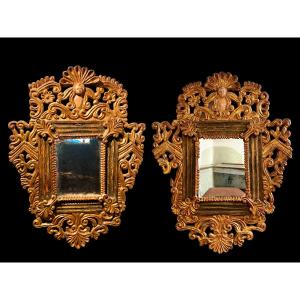


Pair Of Peruvian Mirrors Made Of Carved, Gilded, And Polychrome Wood, 18th Century
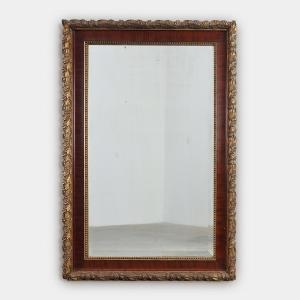
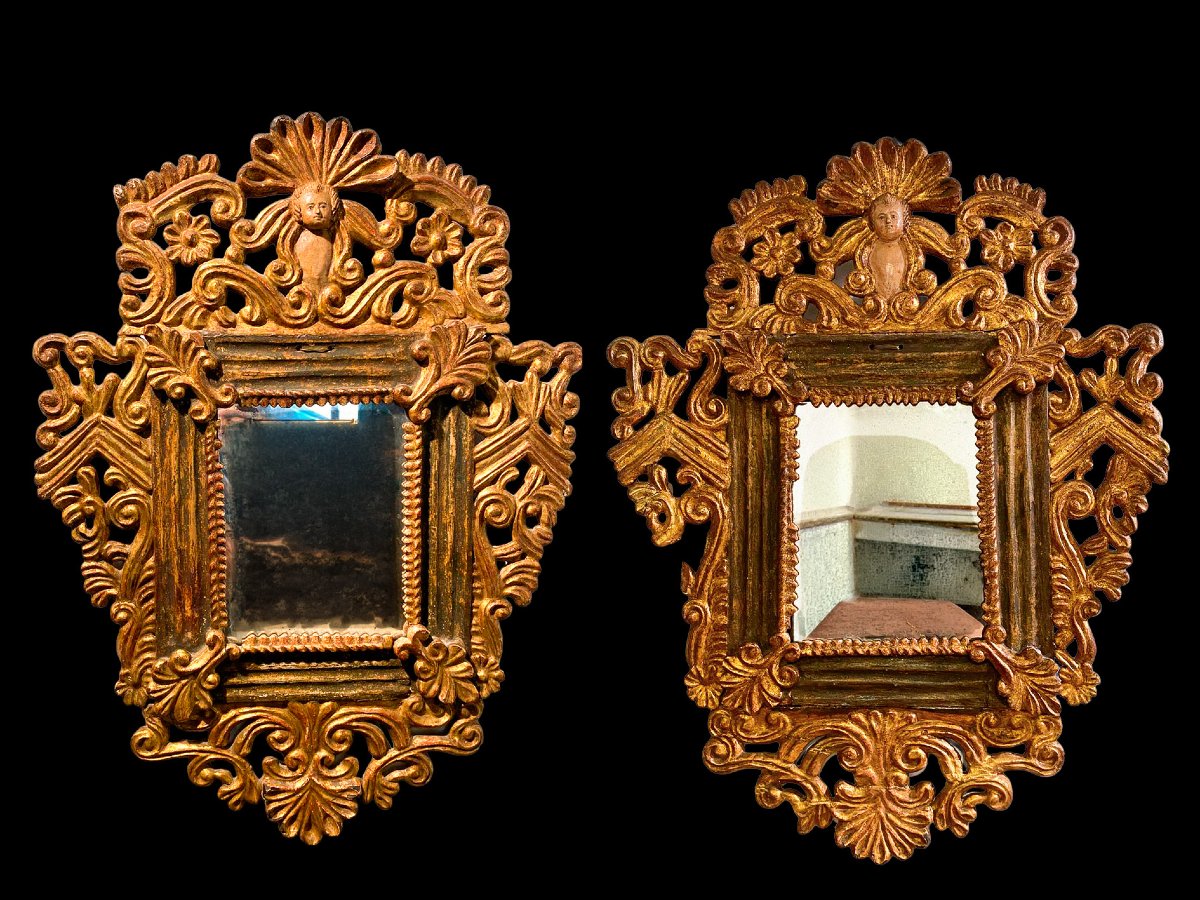
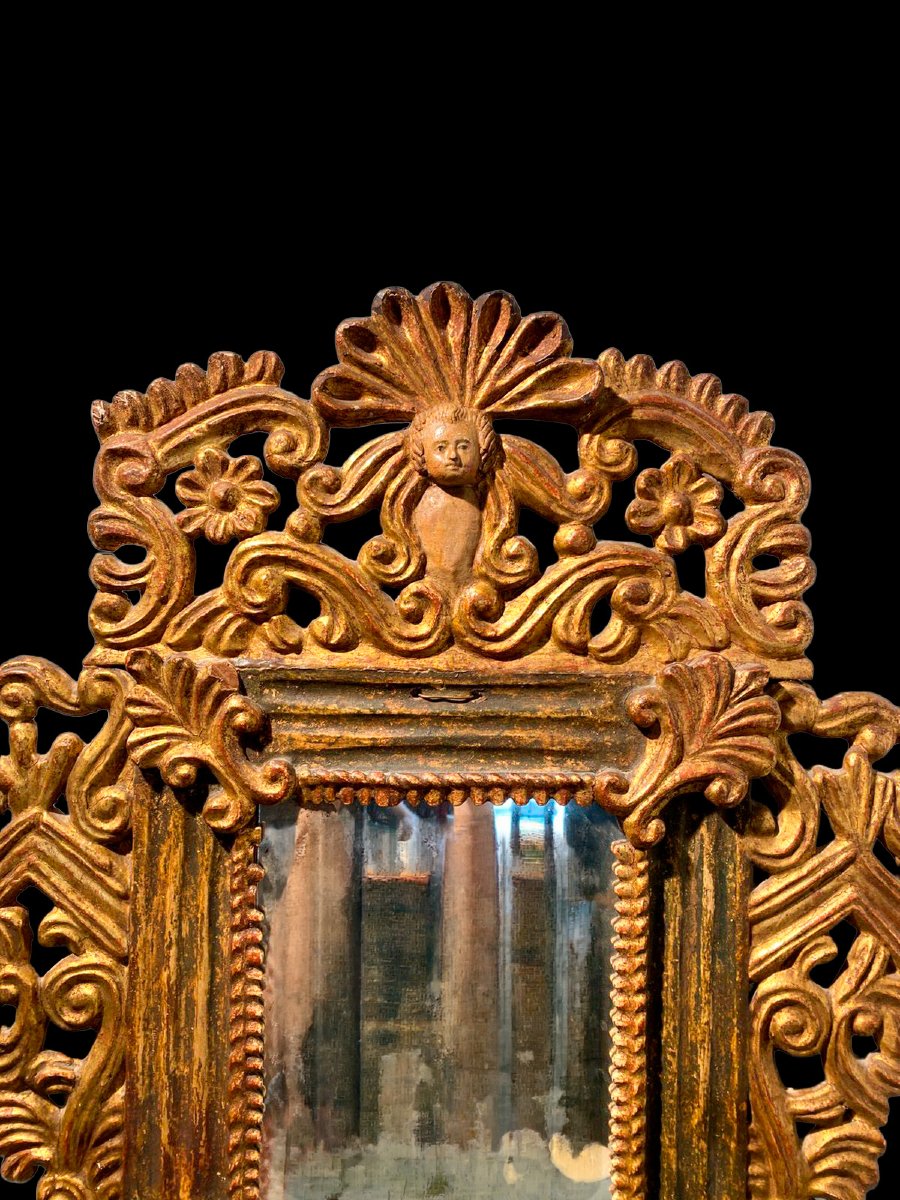
Here we have an interesting pair of Peruvian mirrors from the 18th-century viceregal period, crafted from carved and gilded wood, whose ornamental design is fully in keeping with the late Baroque style that developed in the territories of the Viceroyalty of Peru.
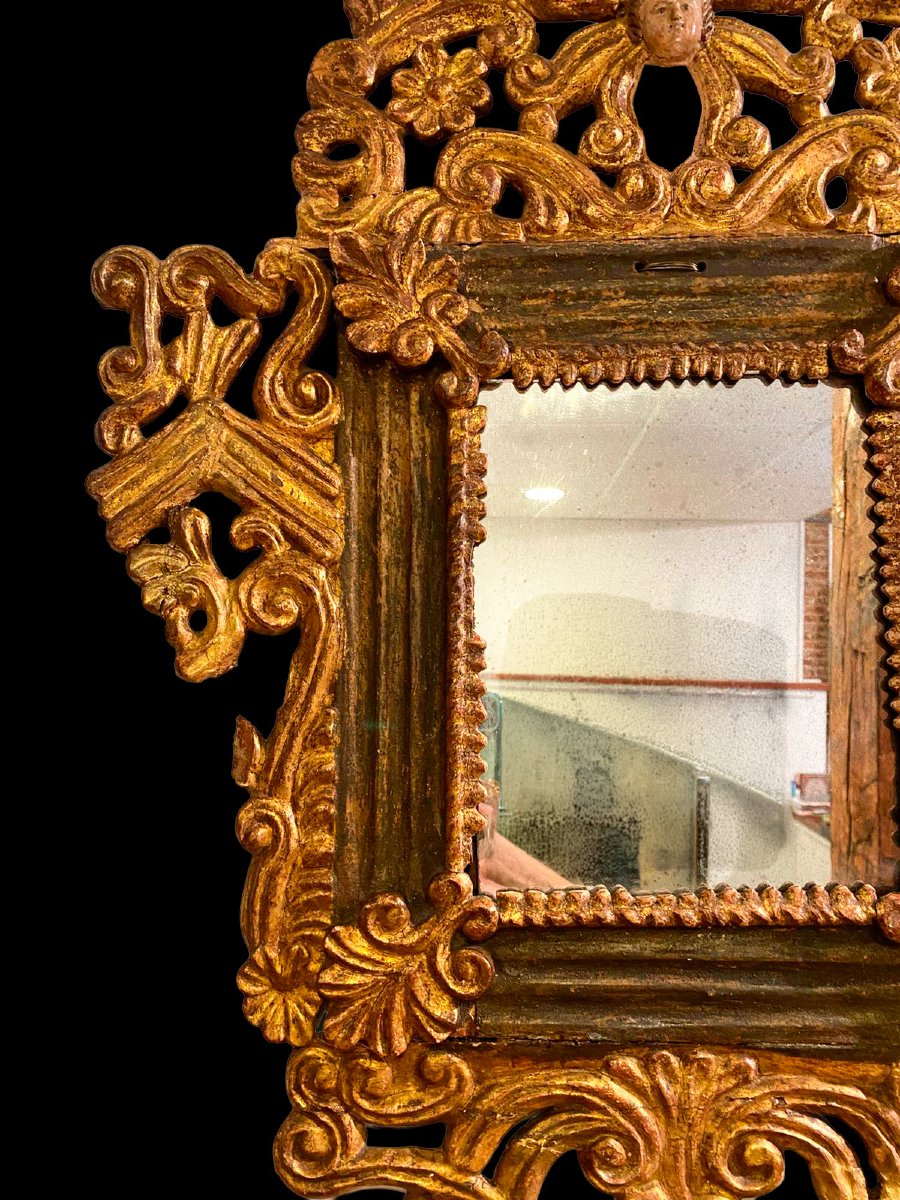
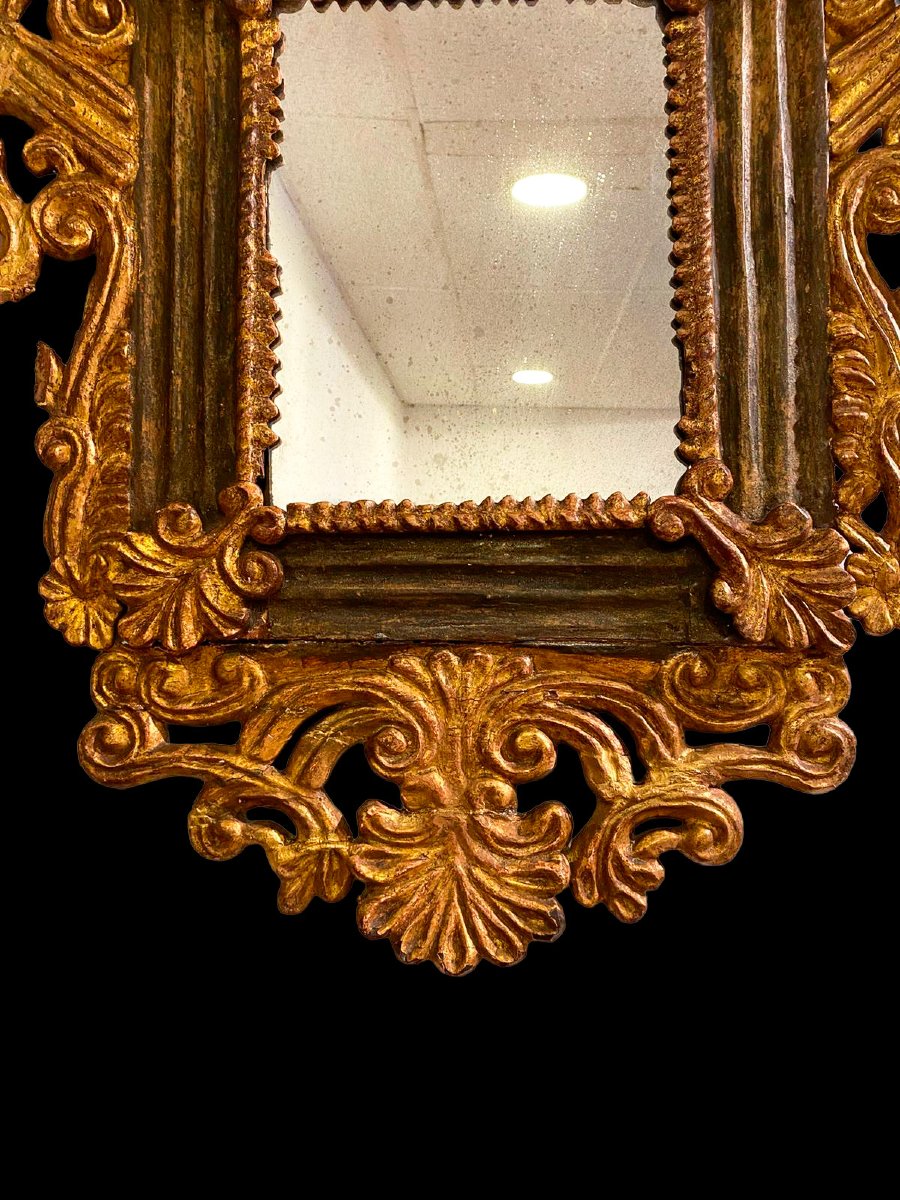
The structure of the two mirrors features a vertical, symmetrical composition centered around a small rectangular lunette. The frame is designed as a true sculptural work in carved wood, where functionality takes a back seat to decoration. Ornamental exuberance is one of the most striking characteristics of the Spanish-American Baroque, which developed its own stylistic language based on European models, enriched by greater compositional freedom and a marked tendency toward horror vacui.
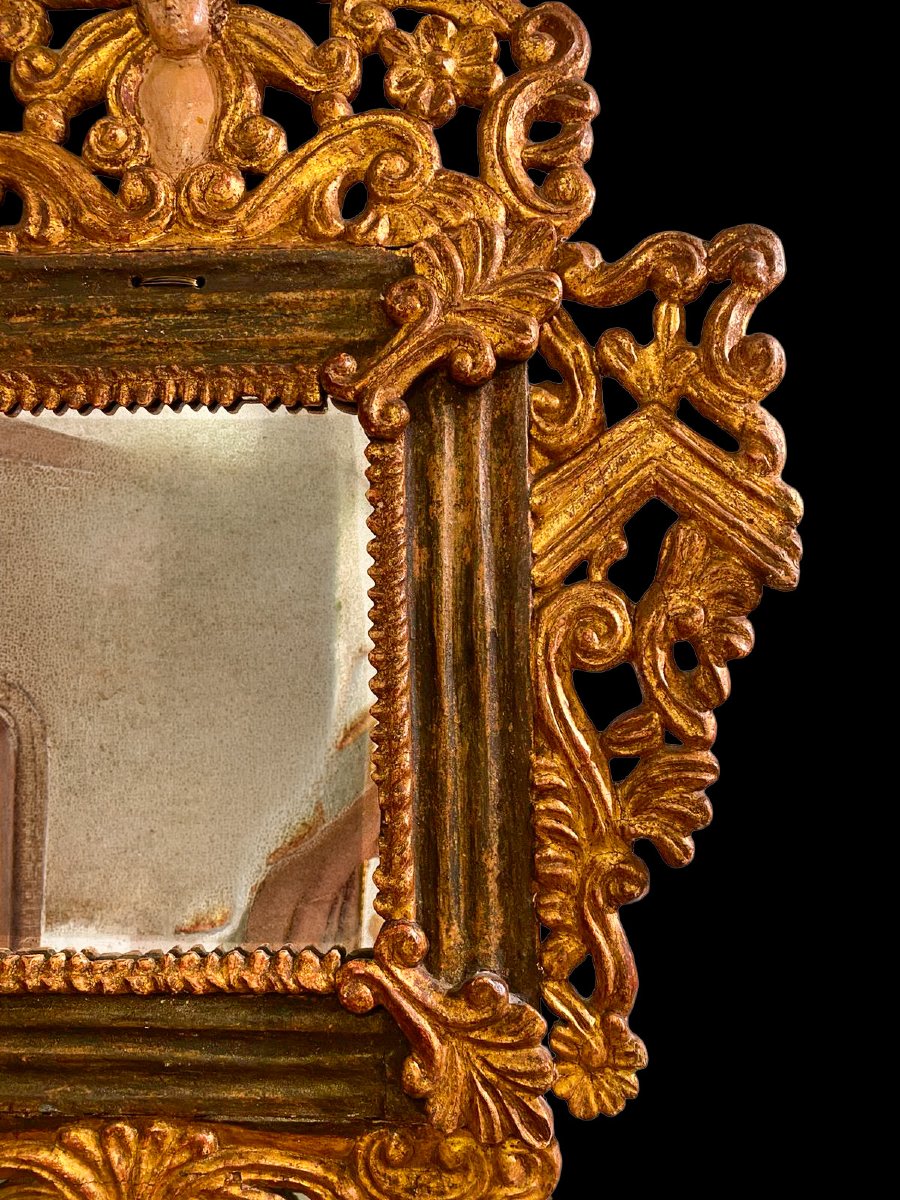
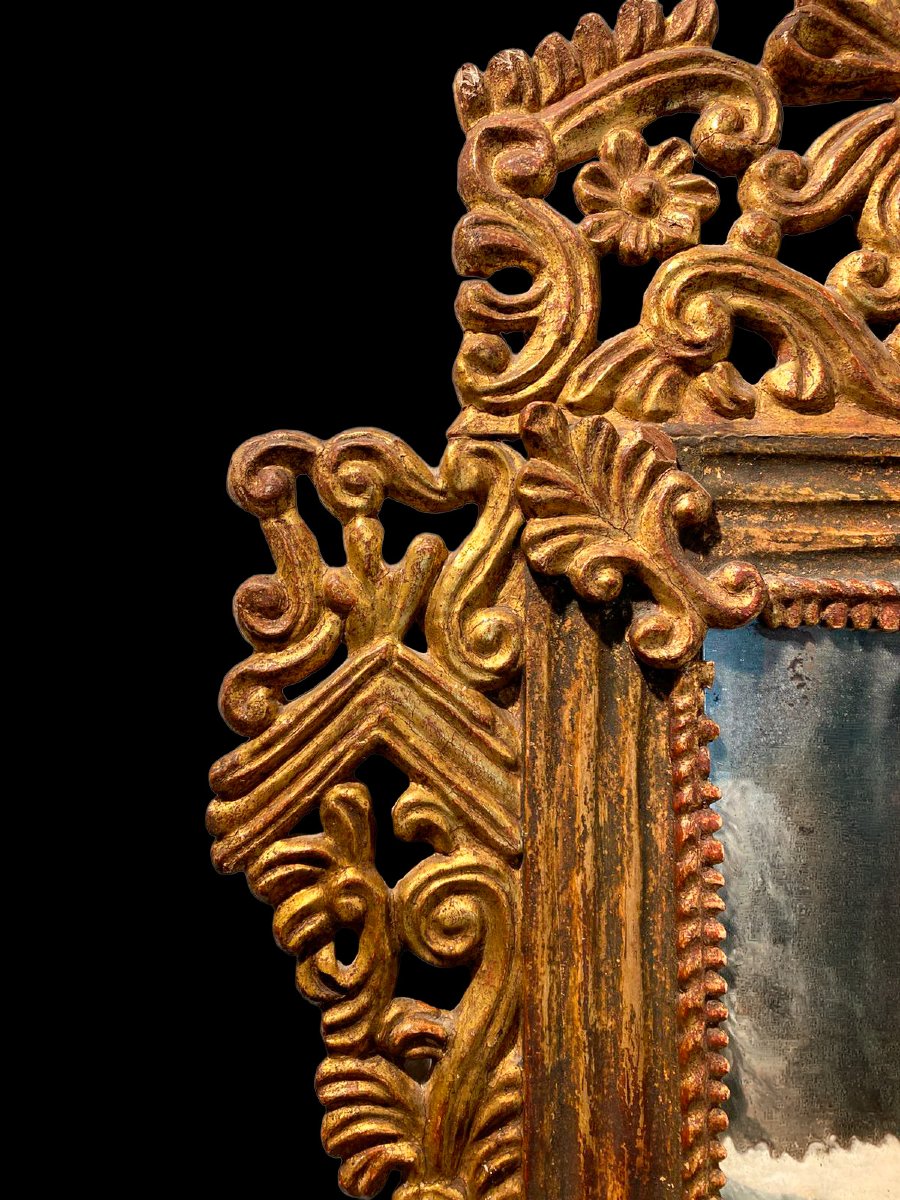
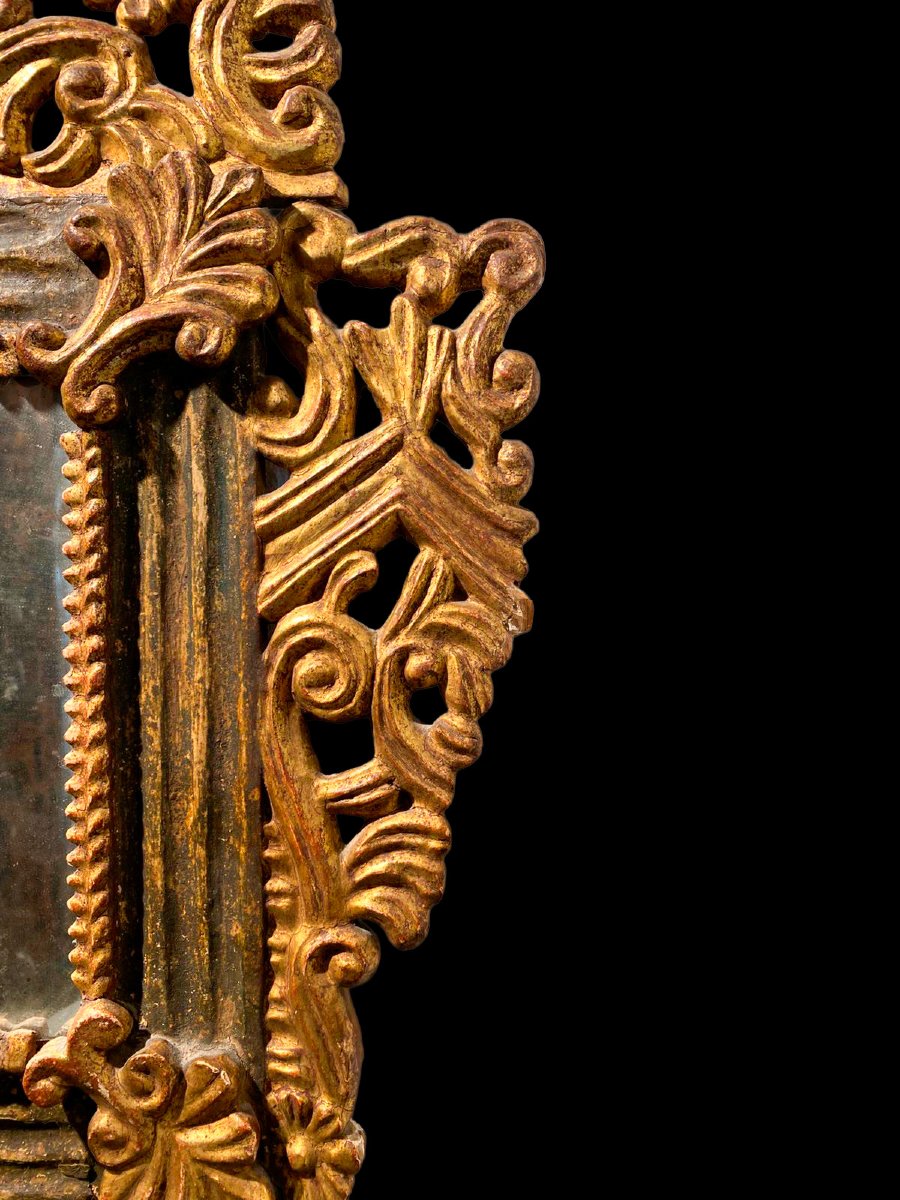
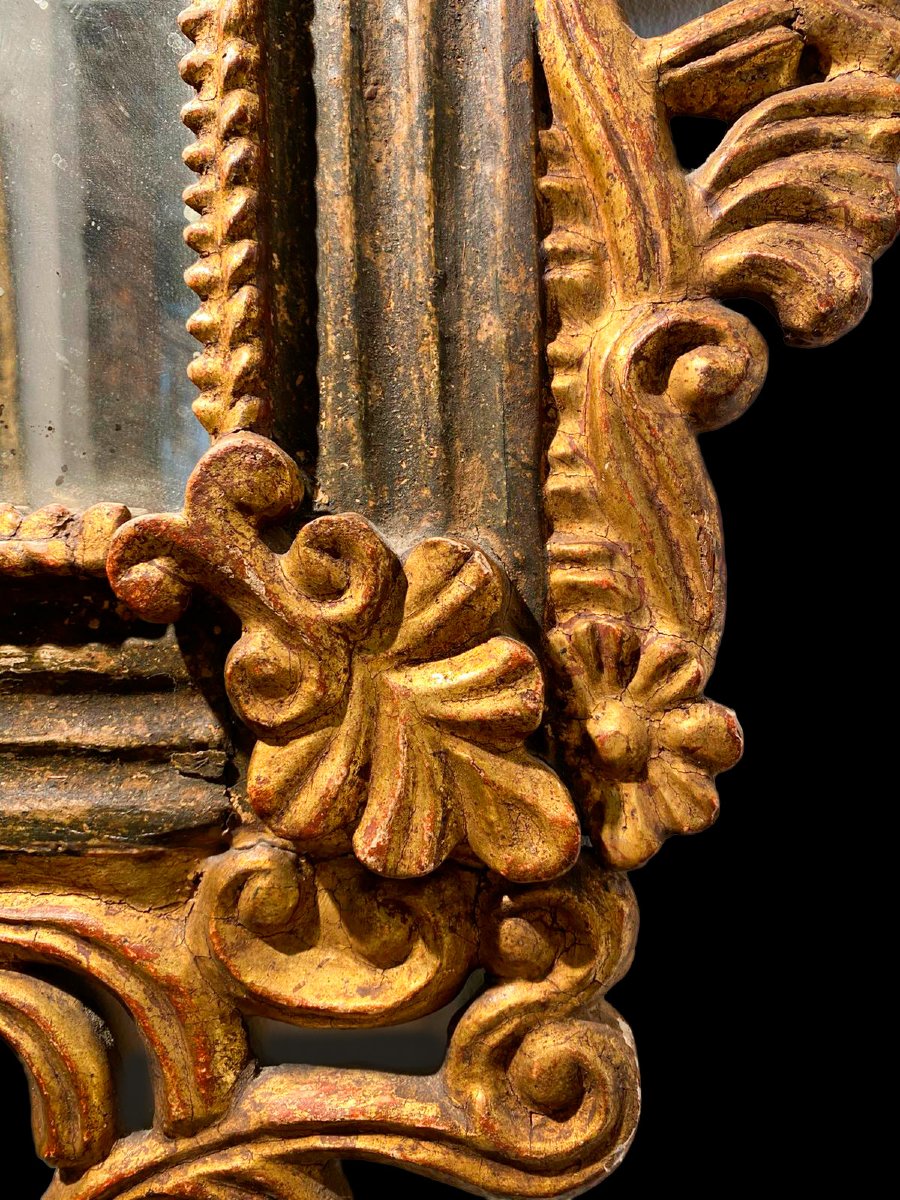
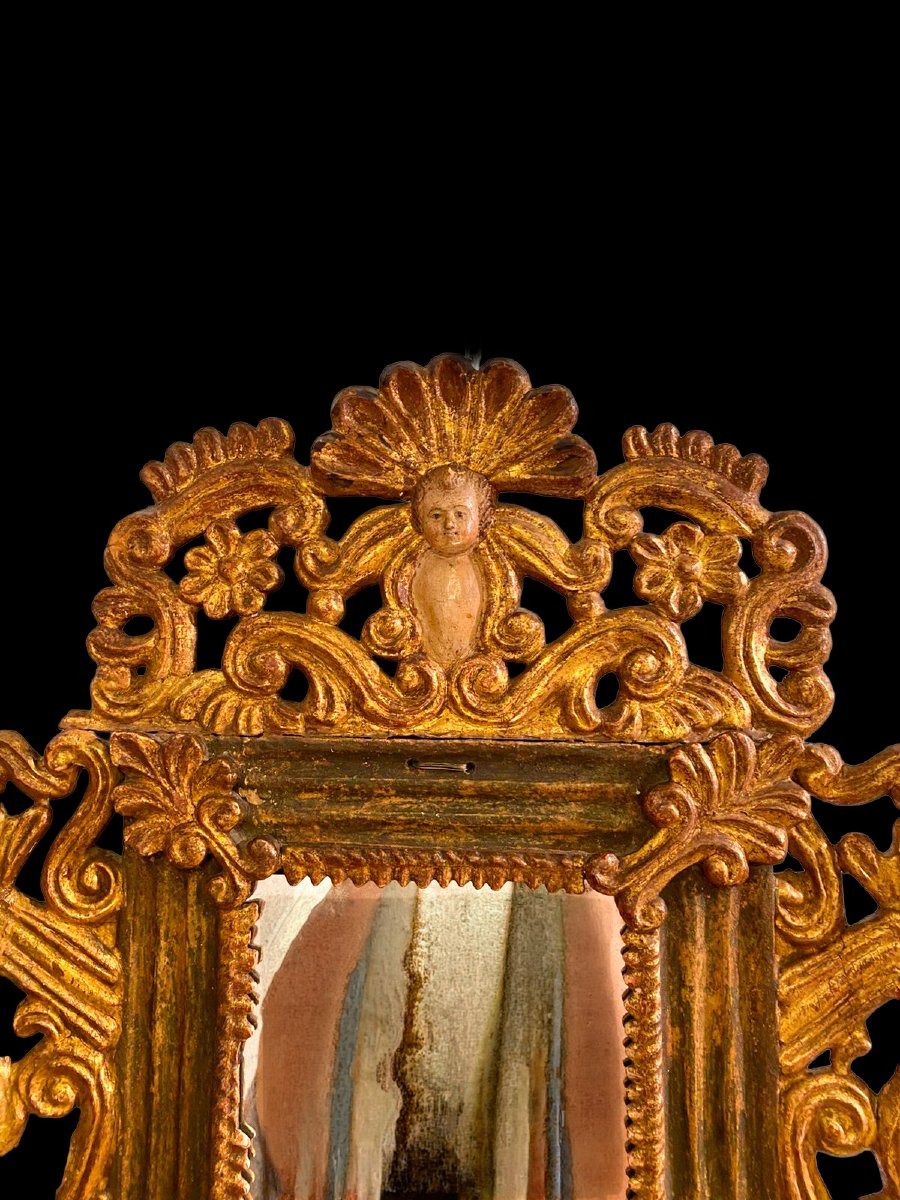
The piece is adorned with a profusion of plant-inspired volutes, stylized leaves, flowers, and highly animated curvilinear motifs, forming a complex network of intertwined shapes that create profound chiaroscuro effects. This ornamental repertoire draws inspiration from the Spanish Baroque tradition, although it was reinterpreted by American workshops through more expressive and dynamic sculpture. The upper crown, dominated by a cherub figure emerging from a large scallop shell or a radial fan, is of particular importance.
This motif carries clear religious and decorative symbolism; it was common in the artistic production of the viceregal era, when angels and cherubs played a prominent role in both religious imagery and the decorative arts.
The sculpture displays remarkable technical quality. The ornamental elements are characterized by vigorous modeling and a judicious alternation between solid volumes and openwork spaces, a technique that visually lightens the composition and creates an effect of extraordinary richness.
The gilding is another fundamental aspect of the work. Although traces of wear and loss due to the passage of time are visible, it retains much of its original splendor. Natural aging has produced a patina that accentuates the contrasts between the brightest areas and those where the underlying ground shows through, lending the work as a whole a remarkable aesthetic quality.
From a stylistic perspective, these pieces belong to the so-called Late Baroque or Spanish-American Rococo Baroque movement. Although they retain the monumentality and ornamental exuberance characteristic of the Baroque at its height, they incorporate a greater decorative lightness and a more fluid movement in the plant motifs.
The abundance of curves, counter-curves, and asymmetrical motifs already foreshadows the Rococo sensibility that spread throughout the Americas during the 18th century.
The function of these mirrors went beyond mere domestic utility. In the context of the viceroyalty, mirrors were objects of prestige associated with urban elites, religious institutions, and representative venues. Acquiring them entailed a high economic cost, due both to the carving and gilding work and to the value of the glass itself. Consequently, these pieces played an important symbolic role as a manifestation of wealth, cultural refinement, and adherence to artistic models from Europe.
Ultimately, this pair of mirrors is an excellent example of the decorative arts of the Viceroyalty of Peru in the 18th century. Their extraordinary ornamental richness, the quality of the carving, the use of gilding, and the presence of iconographic elements characteristic of the Spanish-American Baroque make them representative pieces of the refinement achieved by the workshops of the Viceroyalty. Beyond their practical function, they should be considered objects of prestige intended to embellish and ennoble interior spaces, reflecting the artistic taste and visual culture of the Peruvian elites of the time.
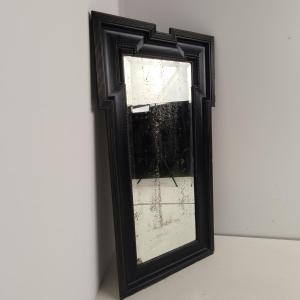
The mirror on the right has a defect visible in the images
The structure of the two mirrors features a vertical, symmetrical composition centered around a small rectangular lunette. The frame is designed as a true sculptural work in carved wood, where functionality takes a back seat to decoration. Ornamental exuberance is one of the most striking characteristics of the Spanish-American Baroque, which developed its own stylistic language based on European models, enriched by greater compositional freedom and a marked tendency toward horror vacui.
The piece is adorned with a profusion of plant-inspired volutes, stylized leaves, flowers, and highly animated curvilinear motifs, forming a complex network of intertwined shapes that create profound chiaroscuro effects. This ornamental repertoire draws inspiration from the Spanish Baroque tradition, although it was reinterpreted by American workshops through more expressive and dynamic sculpture. The upper crown, dominated by a cherub figure emerging from a large scallop shell or a radial fan, is of particular importance.
This motif carries clear religious and decorative symbolism; it was common in the artistic production of the viceregal era, when angels and cherubs played a prominent role in both religious imagery and the decorative arts.
The sculpture displays remarkable technical quality. The ornamental elements are characterized by vigorous modeling and a judicious alternation between solid volumes and openwork spaces, a technique that visually lightens the composition and creates an effect of extraordinary richness.
The gilding is another fundamental aspect of the work. Although traces of wear and loss due to the passage of time are visible, it retains much of its original splendor. Natural aging has produced a patina that accentuates the contrasts between the brightest areas and those where the underlying ground shows through, lending the work as a whole a remarkable aesthetic quality.
From a stylistic perspective, these pieces belong to the so-called Late Baroque or Spanish-American Rococo Baroque movement. Although they retain the monumentality and ornamental exuberance characteristic of the Baroque at its height, they incorporate a greater decorative lightness and a more fluid movement in the plant motifs.
The abundance of curves, counter-curves, and asymmetrical motifs already foreshadows the Rococo sensibility that spread throughout the Americas during the 18th century.
The function of these mirrors went beyond mere domestic utility. In the context of the viceroyalty, mirrors were objects of prestige associated with urban elites, religious institutions, and representative venues. Acquiring them entailed a high economic cost, due both to the carving and gilding work and to the value of the glass itself. Consequently, these pieces played an important symbolic role as a manifestation of wealth, cultural refinement, and adherence to artistic models from Europe.
Ultimately, this pair of mirrors is an excellent example of the decorative arts of the Viceroyalty of Peru in the 18th century. Their extraordinary ornamental richness, the quality of the carving, the use of gilding, and the presence of iconographic elements characteristic of the Spanish-American Baroque make them representative pieces of the refinement achieved by the workshops of the Viceroyalty. Beyond their practical function, they should be considered objects of prestige intended to embellish and ennoble interior spaces, reflecting the artistic taste and visual culture of the Peruvian elites of the time.
The mirror on the right has a defect visible in the images
3 250 €
Period: 18th century
Style: Other Style
Condition: Needs to be restored
Material: Crystal
Width: 58
Height: 77
Reference (ID): 1784888
Availability: In stock
Print