

Ecce Homo Polychrome Terracotta Figure Attributed To José De Mora (1642–1726), 17th Century
Dimensions:
Height: 42 cm
Width: 54 cm
Depth: 26 cm
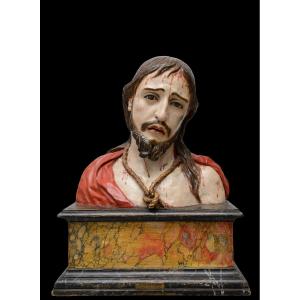
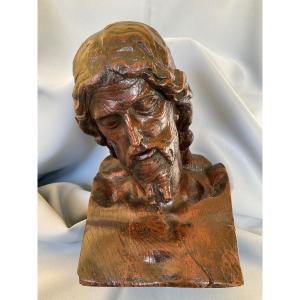
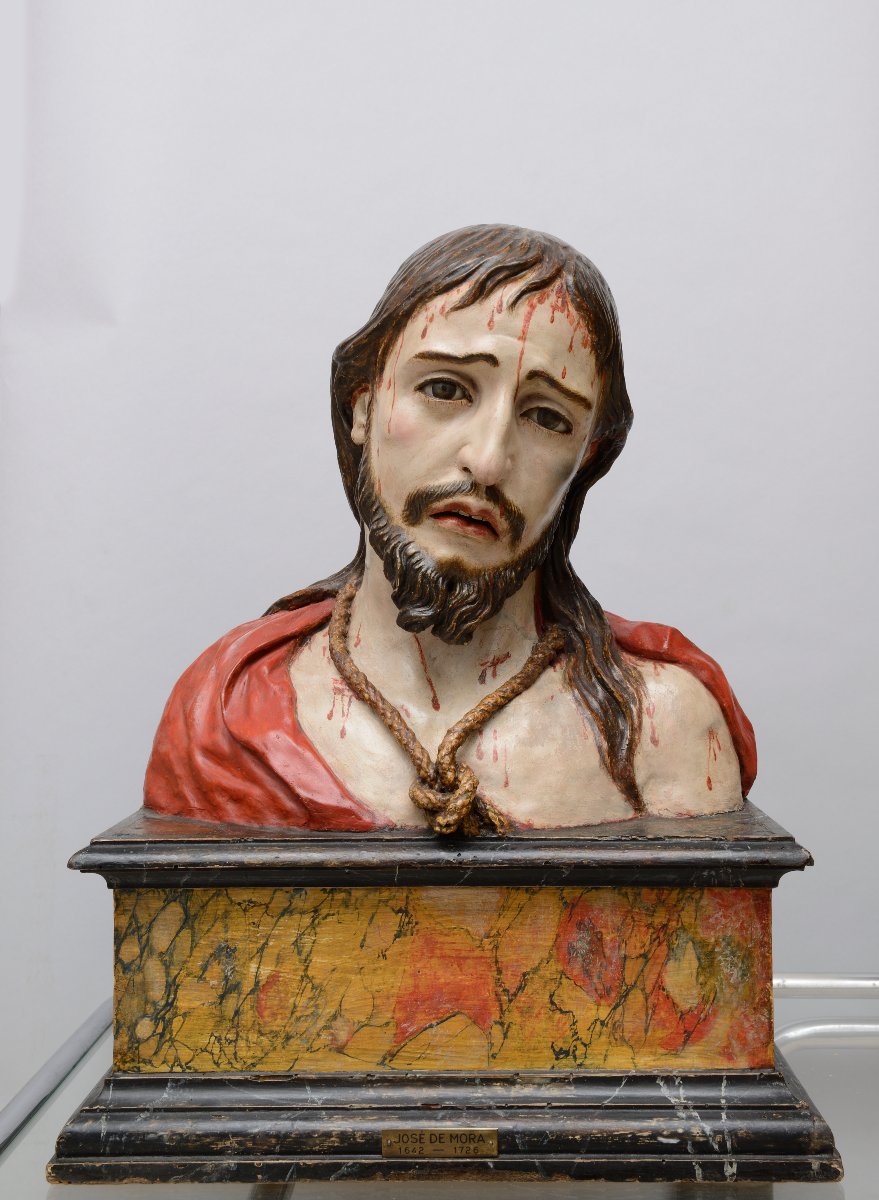
Sculpted in terracotta, with a polychrome wooden base.The “Ecce Homo” iconography depicts Christ at various moments of the Passion, illustrating his sufferings leading up to his death: the Flagellation, the Crowning with Thorns, the Way of the Cross, etc.
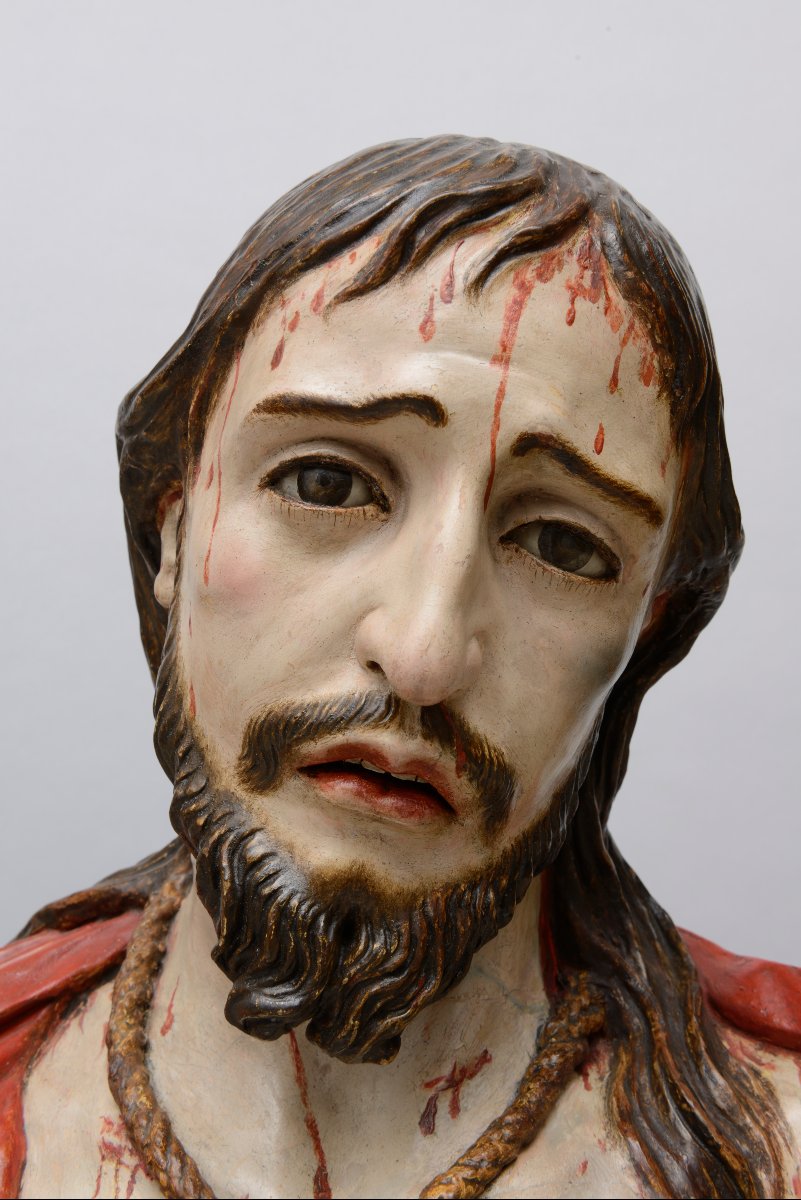
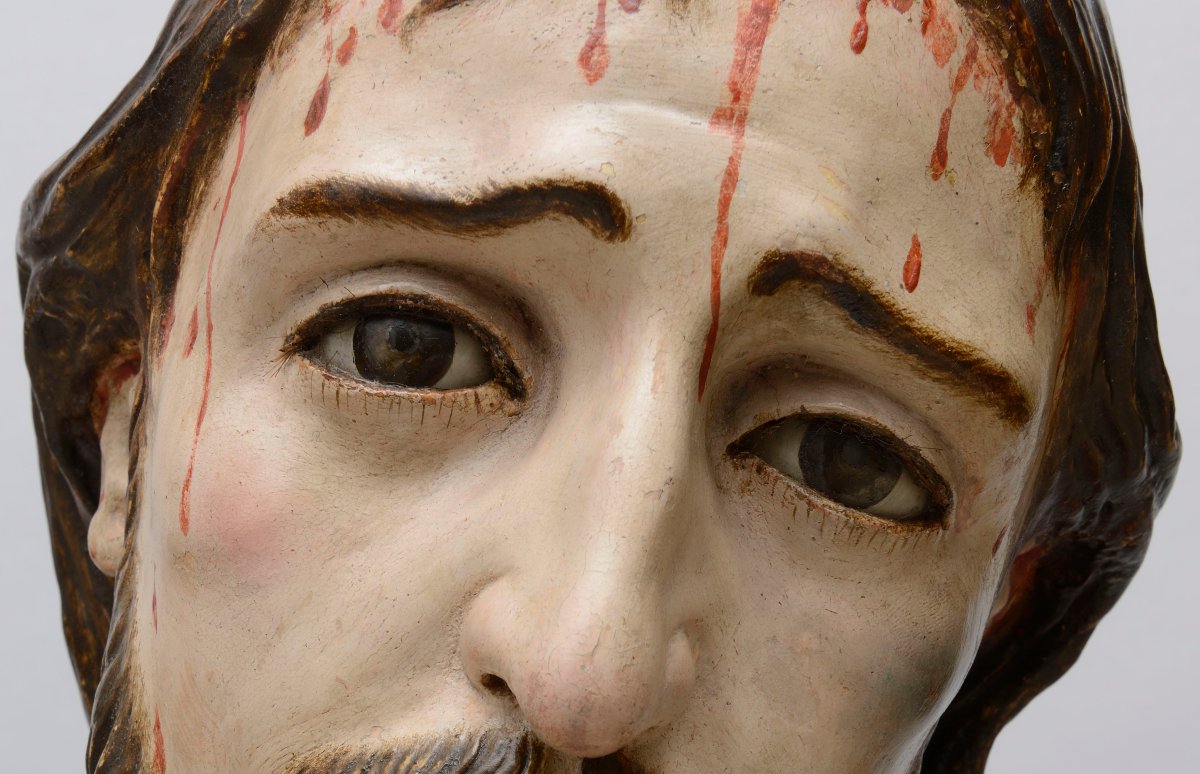
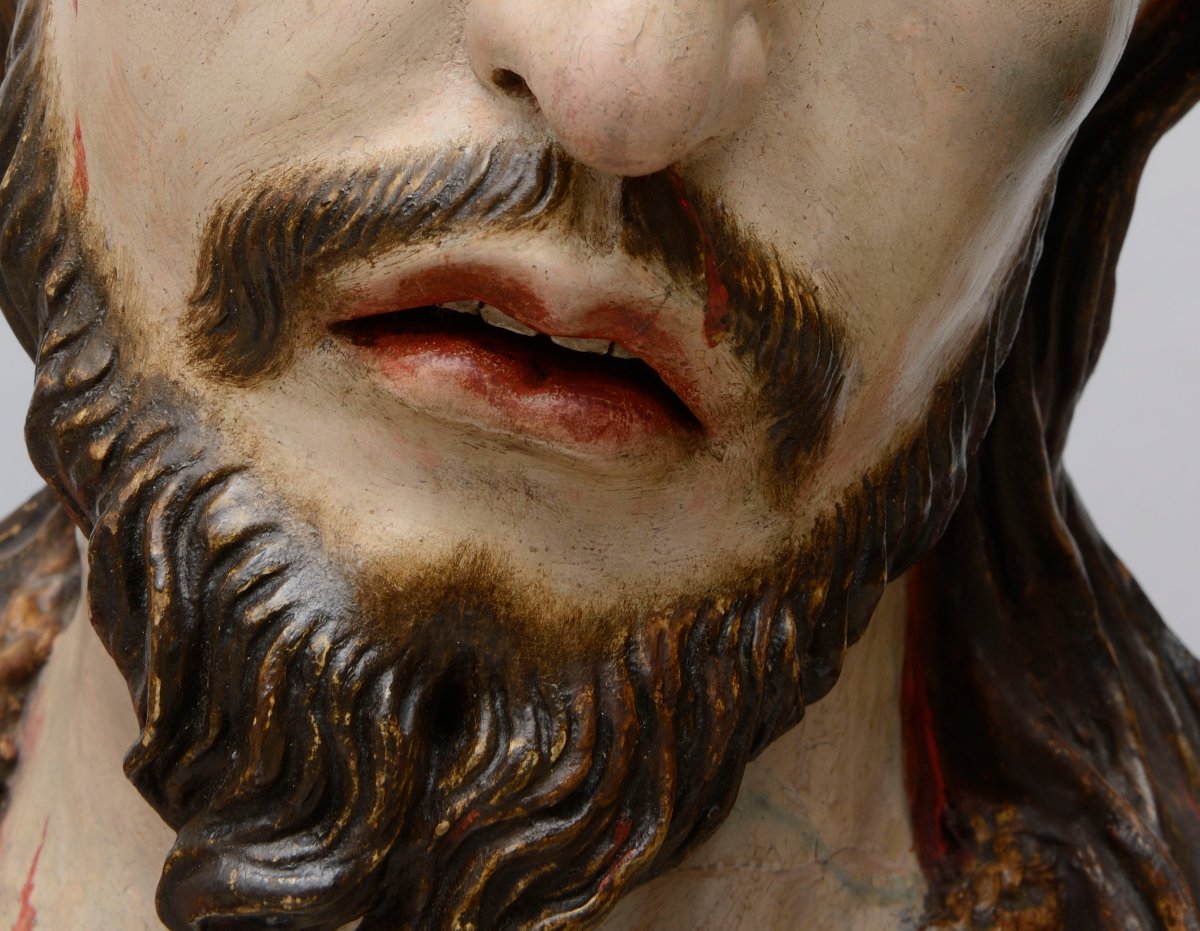
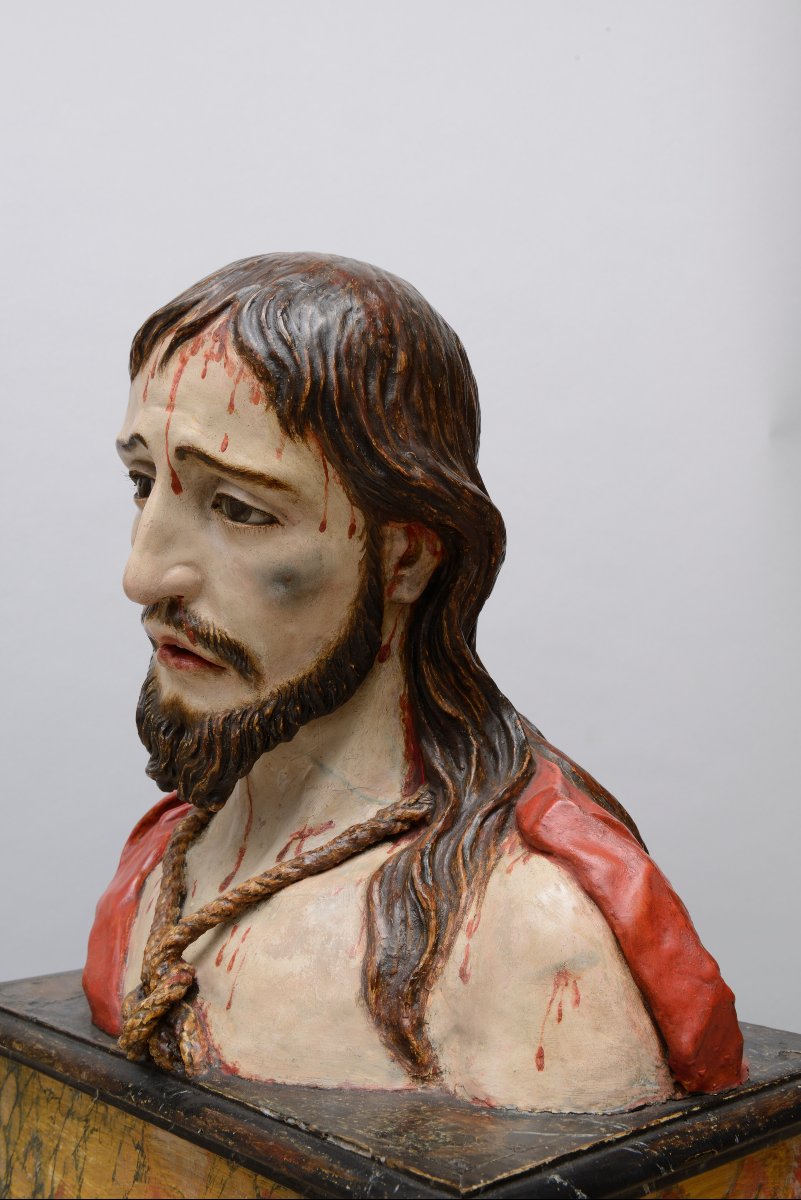
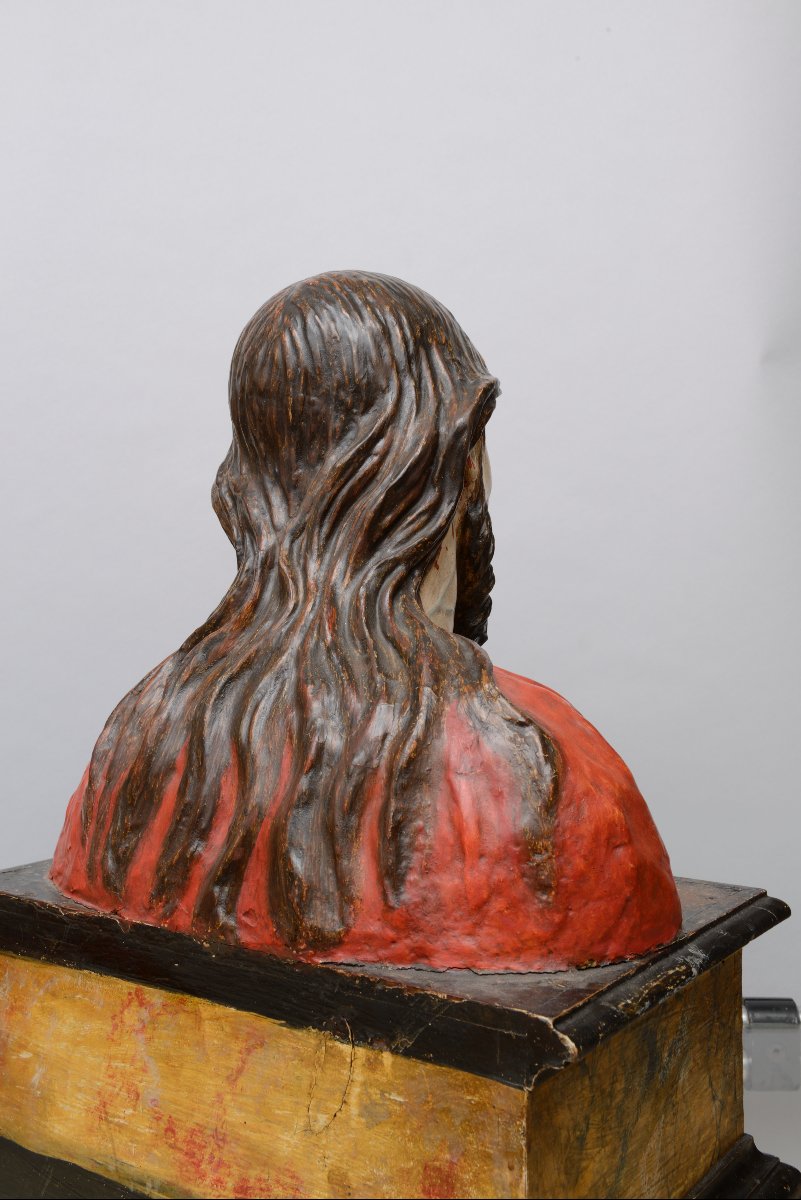
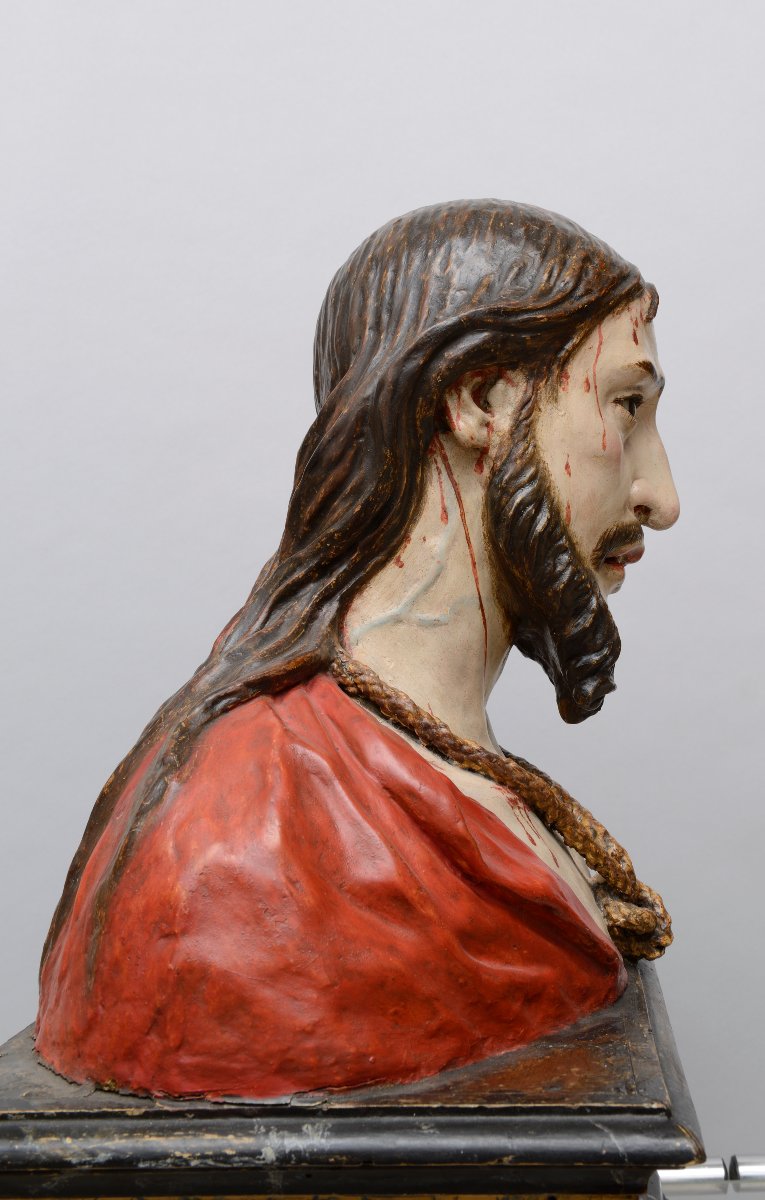
The figure wears a red tunic; his face is bloodied and shows bruises on the cheekbones, marks of the torment he endured. Strands of straight hair fall over his shoulders, framing a face with elongated features and large glass paste eyes accented with natural eyelashes; the head is turned to the side, and the mouth is slightly parted in pain. A rope hangs around the neck, an iconographic element referencing the Passion. The gaze, filled with anguish and despair, is turned toward the sky in a plea for divine help.The bust rests on a narrow, rectangular carved wooden pedestal, adorned with a small plaque identifying José de Mora as the artist.
José de Mora (Baza, Granada, 1642–1726) was a Baroque sculptor, the son of the sculptor Bernardo de Mora. He served his apprenticeship in the workshop of Alonso Cano, whose iconographic models had a considerable influence on his work. Appointed court sculptor to Charles II in 1672, he nevertheless left Madrid to settle permanently in Granada. From his earliest works, he devoted himself to creating pairs of busts depicting the “Ecce Homo” and the “Dolorosa " (Our Lady of Sorrows)—generally small in size—commissioned by convents for private devotion or for small chapels.He was renowned for imbuing his iconographic subjects with great expressive power. His works evoke sadness, loneliness, melancholy, and pain. He often draped his figures in fabric so as not to divert the viewer’s attention from the focal point of the work. He modeled his figures using a stylized approach, elongating their forms.
Height: 42 cm
Width: 54 cm
Depth: 26 cm
Sculpted in terracotta, with a polychrome wooden base.The “Ecce Homo” iconography depicts Christ at various moments of the Passion, illustrating his sufferings leading up to his death: the Flagellation, the Crowning with Thorns, the Way of the Cross, etc.
The figure wears a red tunic; his face is bloodied and shows bruises on the cheekbones, marks of the torment he endured. Strands of straight hair fall over his shoulders, framing a face with elongated features and large glass paste eyes accented with natural eyelashes; the head is turned to the side, and the mouth is slightly parted in pain. A rope hangs around the neck, an iconographic element referencing the Passion. The gaze, filled with anguish and despair, is turned toward the sky in a plea for divine help.The bust rests on a narrow, rectangular carved wooden pedestal, adorned with a small plaque identifying José de Mora as the artist.
José de Mora (Baza, Granada, 1642–1726) was a Baroque sculptor, the son of the sculptor Bernardo de Mora. He served his apprenticeship in the workshop of Alonso Cano, whose iconographic models had a considerable influence on his work. Appointed court sculptor to Charles II in 1672, he nevertheless left Madrid to settle permanently in Granada. From his earliest works, he devoted himself to creating pairs of busts depicting the “Ecce Homo” and the “Dolorosa " (Our Lady of Sorrows)—generally small in size—commissioned by convents for private devotion or for small chapels.He was renowned for imbuing his iconographic subjects with great expressive power. His works evoke sadness, loneliness, melancholy, and pain. He often draped his figures in fabric so as not to divert the viewer’s attention from the focal point of the work. He modeled his figures using a stylized approach, elongating their forms.
25 000 €
Period: 17th century
Style: Other Style
Condition: Good condition
Material: Terracotta
Width: 54
Height: 42
Depth: 26
Reference (ID): 1787852
Availability: In stock
Print