

Carved And Gilded Wooden Lectern, Spanish School, 18th Century, Reign Of Charles Iv
Dimensions: 35.5 cm high x 36.5 cm wide x 31.5 cm deep
Lecterns originated in the early Christian basilicas, where they were used to support heavy books and manuscripts. Initially, people used what were called table lecterns, freestanding lecterns, and “facistoles,” which originated in the early Christian basilicas.
In the beginning, they were mainly made of carved walnut wood, as this was the European wood traditionally reserved for the nobility and the clergy; more rarely, they were crafted from carved stone. In some cases, they were covered with gold leaf, which gave them a distinctive character.
They were used to hold texts and read them aloud for various reasons, ranging from addressing social issues to issuing orders during times of uncertainty.
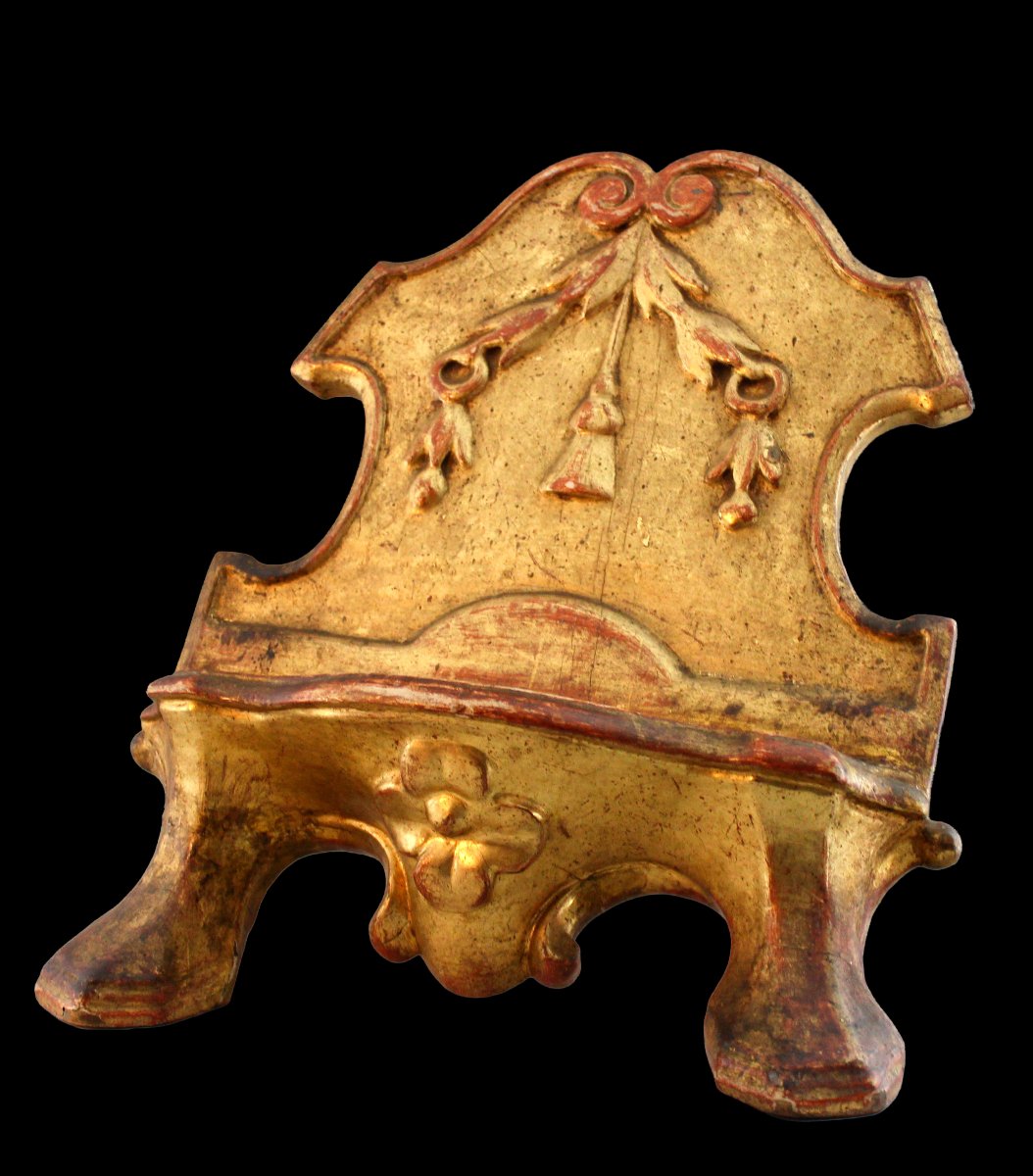
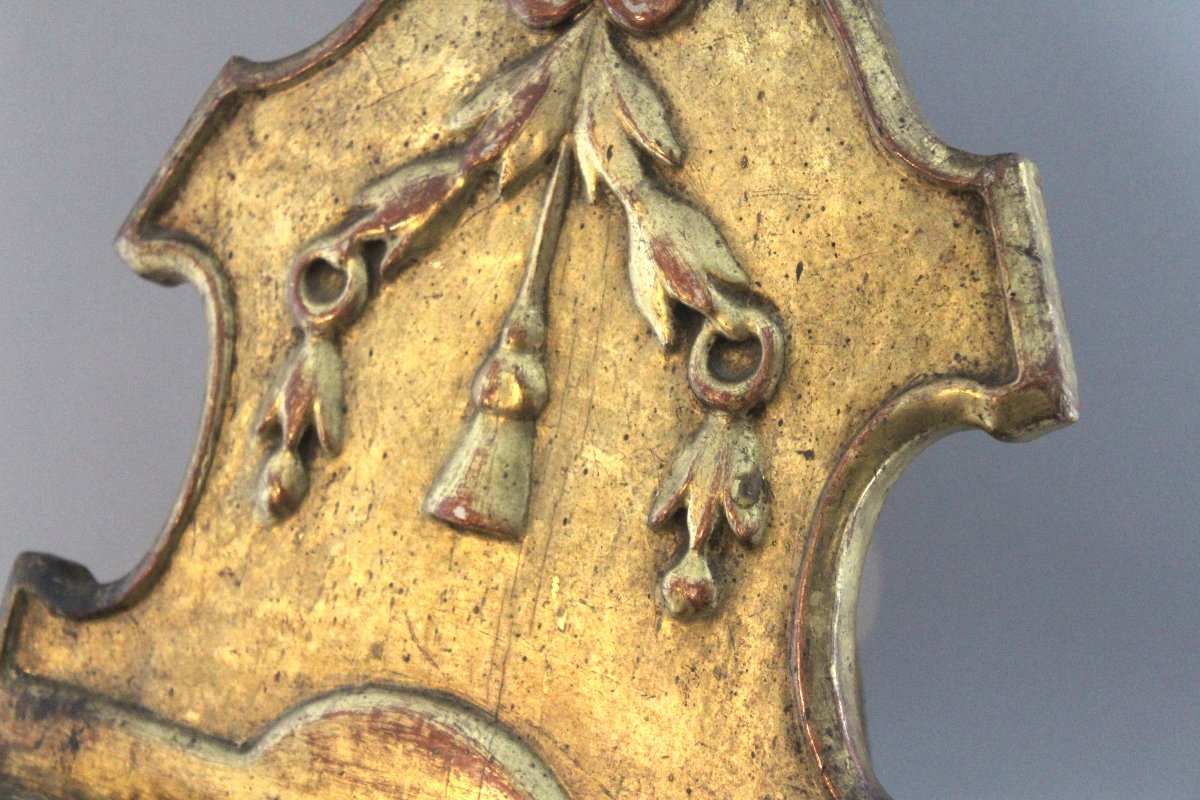
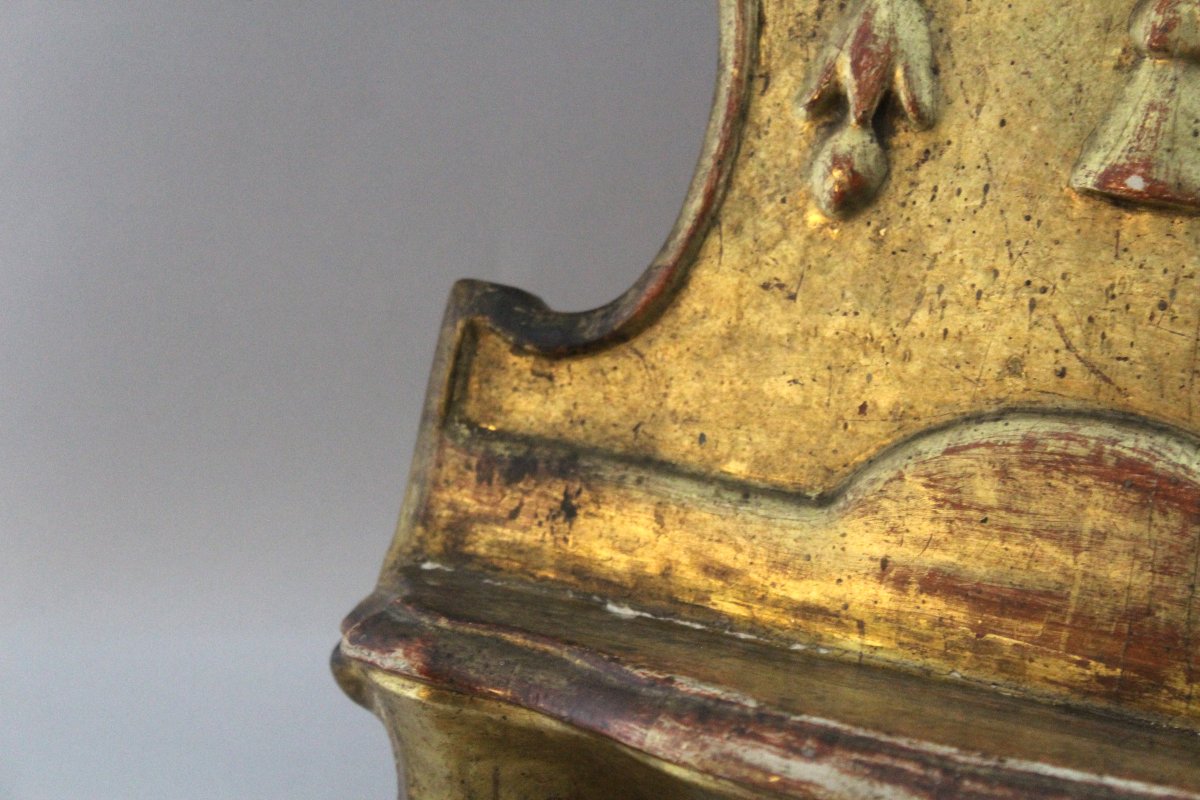
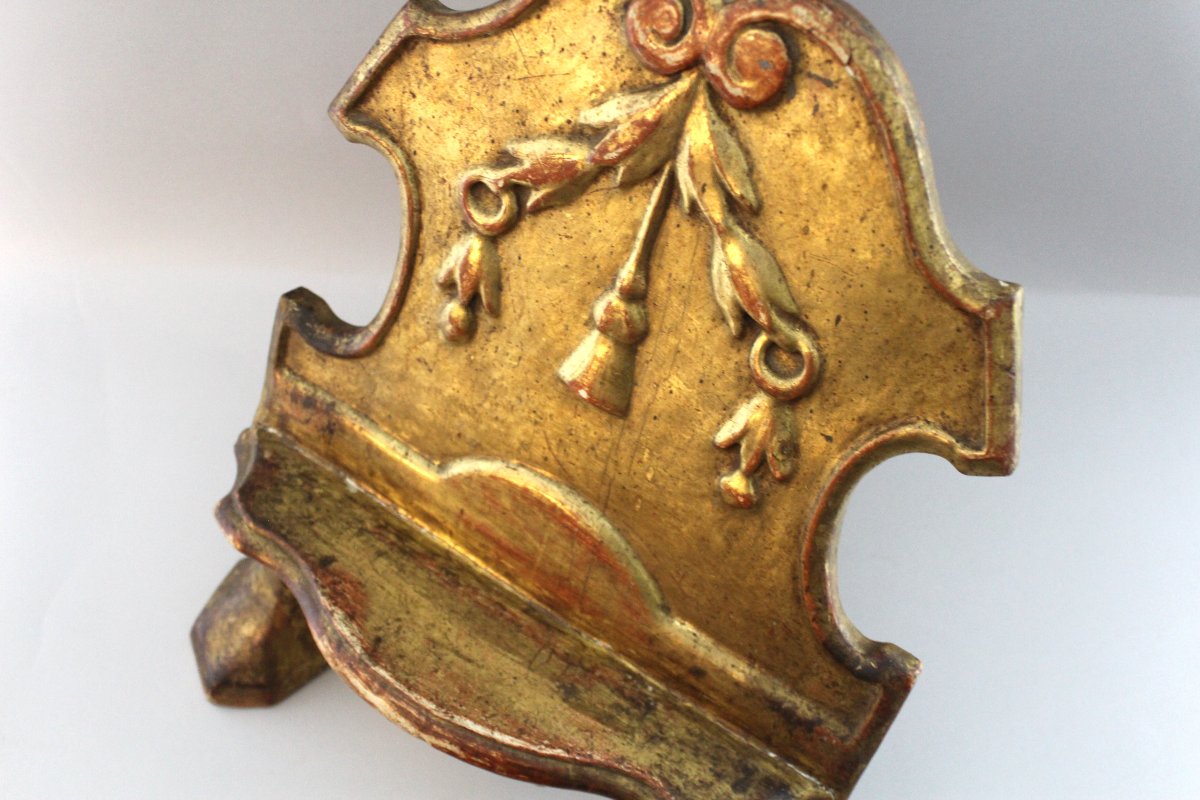
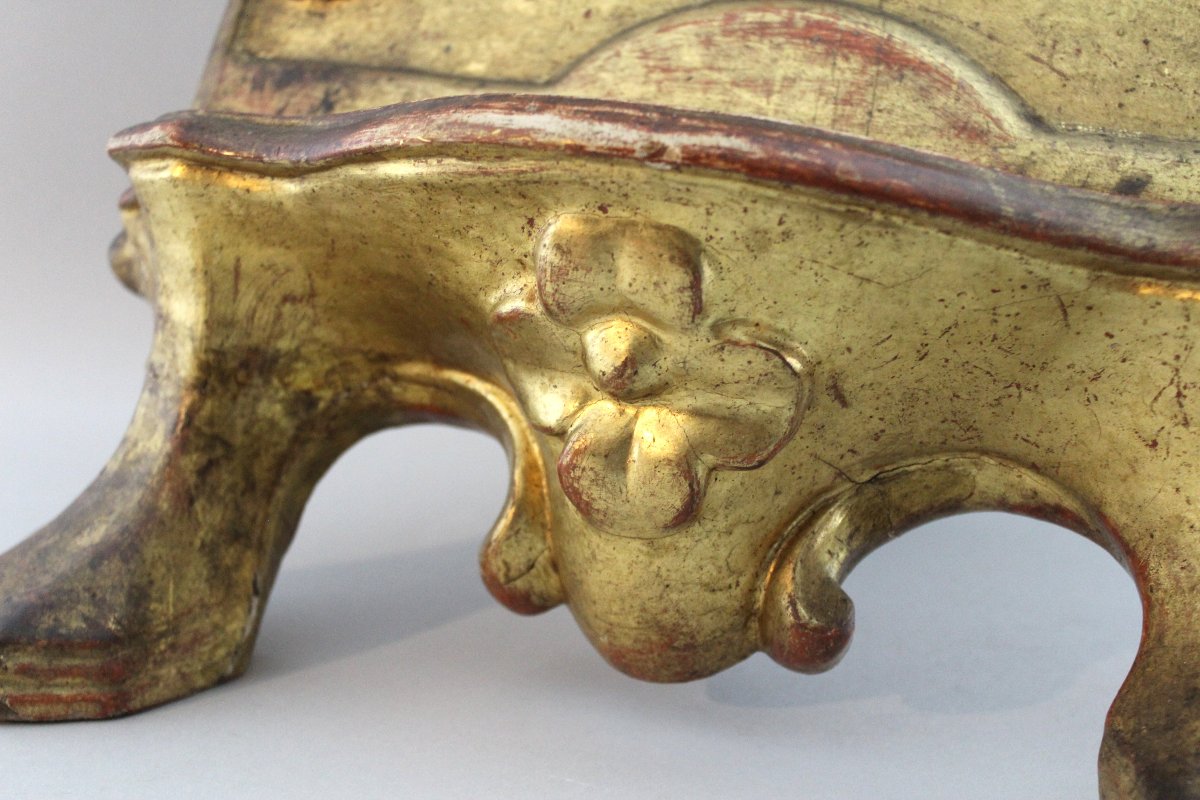
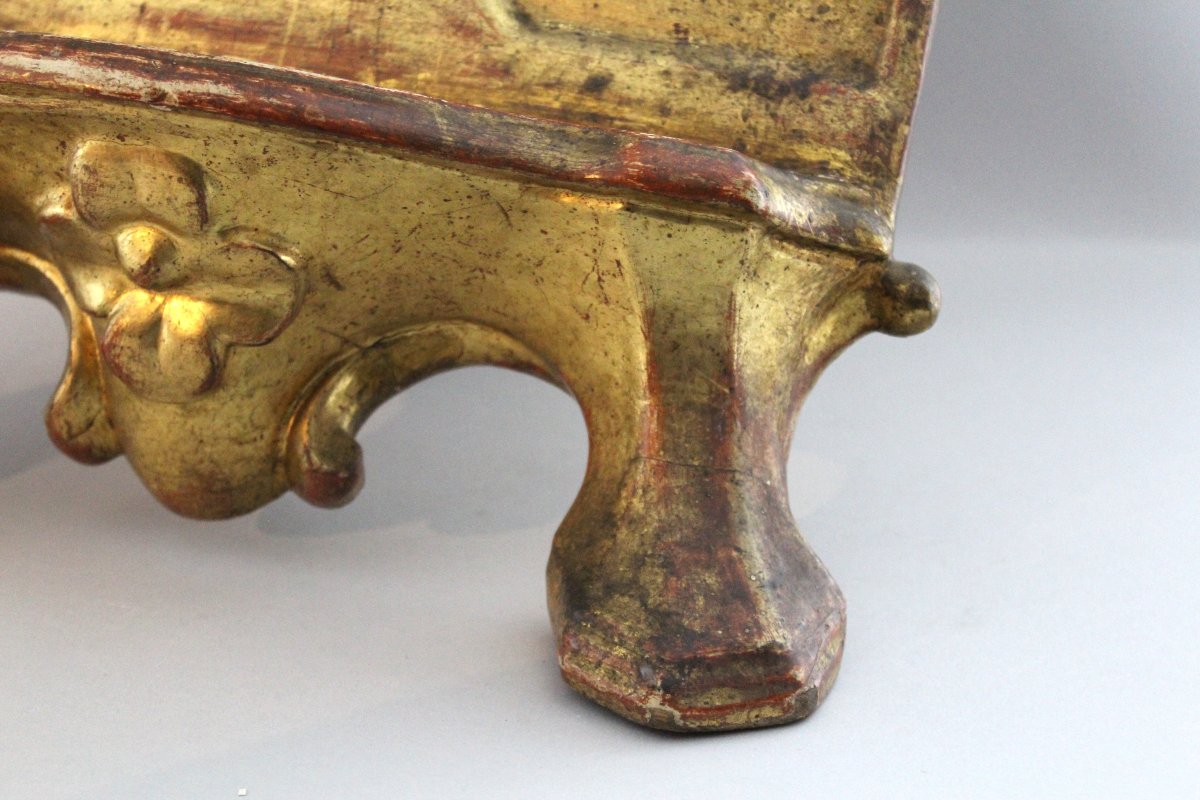
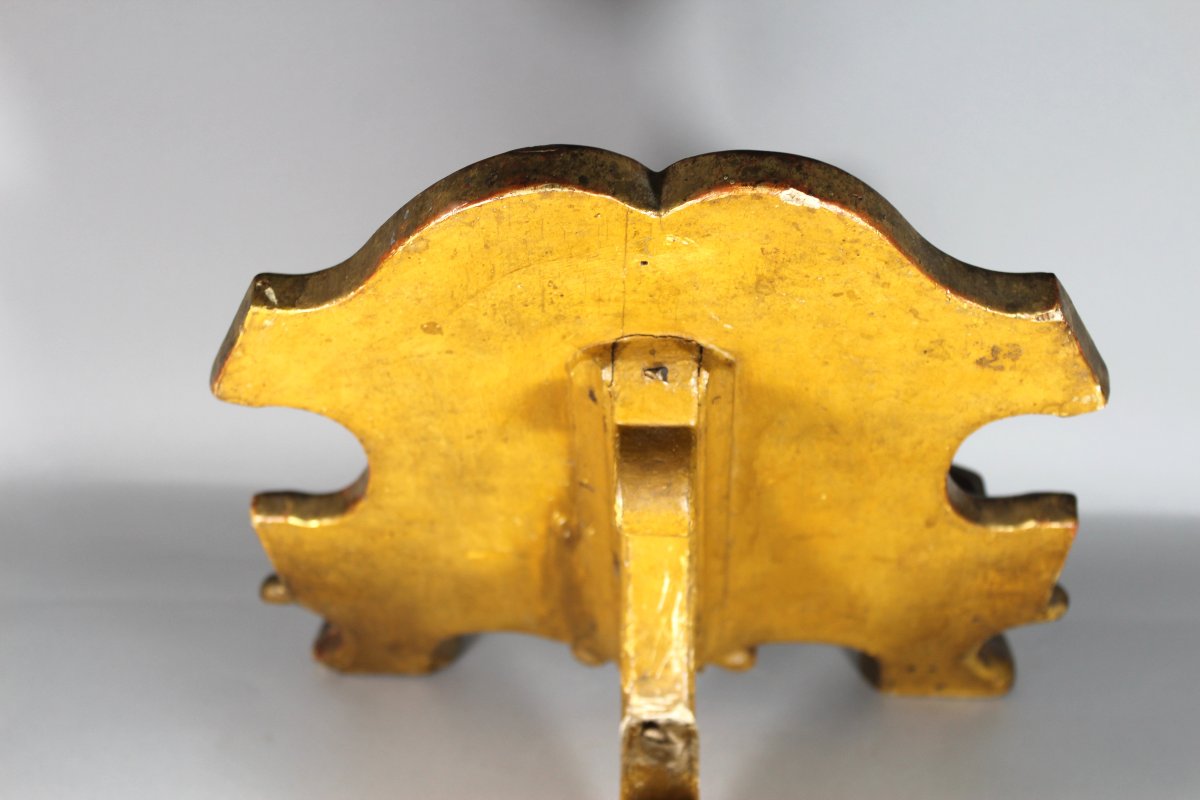
This lectern, dating from the time of Charles IV, is notable for its gilding technique, which also allows one to clearly see the bowl originally used to secure the gold leaf.
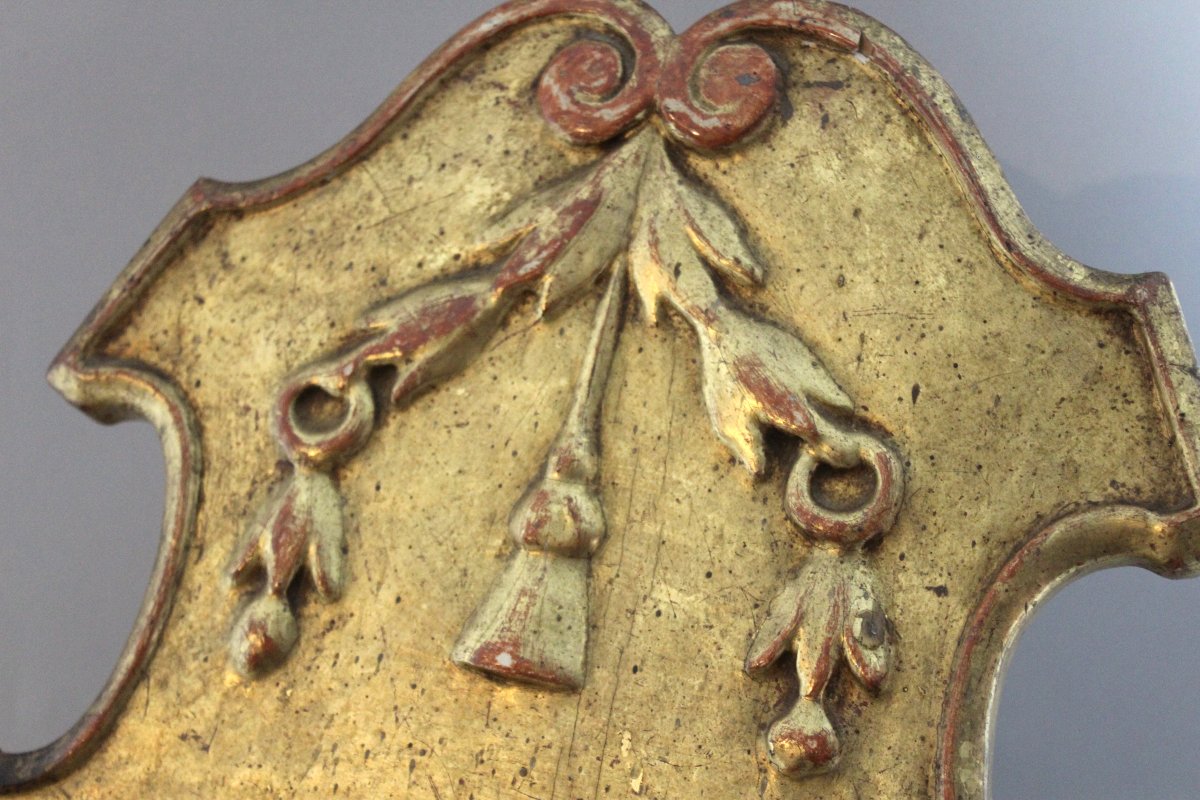
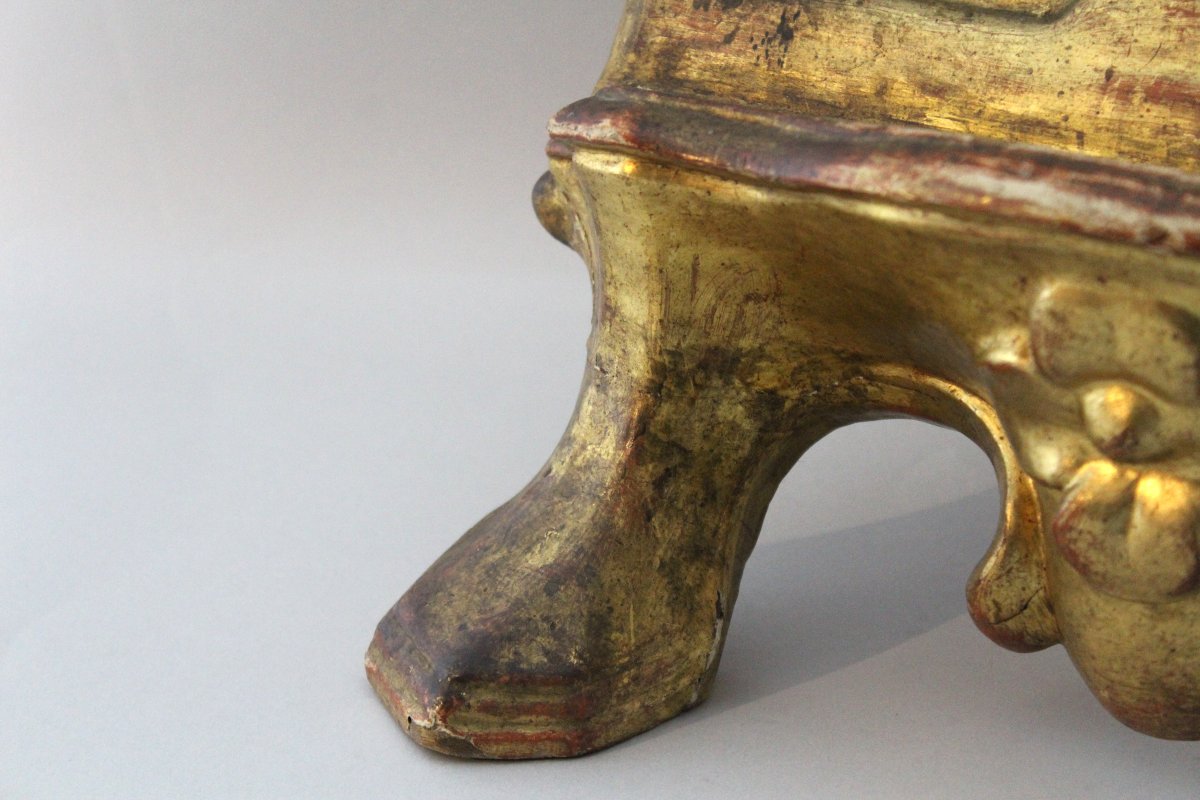
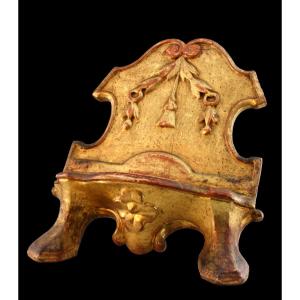
The decoration on the top panel shows how two volutes give rise to plant garlands that appear to support a tassel. At both ends, decorative grooves can be seen. The legs are also richly carved.
Lecterns originated in the early Christian basilicas, where they were used to support heavy books and manuscripts. Initially, people used what were called table lecterns, freestanding lecterns, and “facistoles,” which originated in the early Christian basilicas.
In the beginning, they were mainly made of carved walnut wood, as this was the European wood traditionally reserved for the nobility and the clergy; more rarely, they were crafted from carved stone. In some cases, they were covered with gold leaf, which gave them a distinctive character.
They were used to hold texts and read them aloud for various reasons, ranging from addressing social issues to issuing orders during times of uncertainty.
This lectern, dating from the time of Charles IV, is notable for its gilding technique, which also allows one to clearly see the bowl originally used to secure the gold leaf.
The decoration on the top panel shows how two volutes give rise to plant garlands that appear to support a tassel. At both ends, decorative grooves can be seen. The legs are also richly carved.
700 €
Period: 18th century
Style: Other Style
Condition: En l'etat
Material: Gilted wood
Width: 36,5
Height: 35,5
Depth: 31,5
Reference (ID): 1795751
Availability: In stock
Print