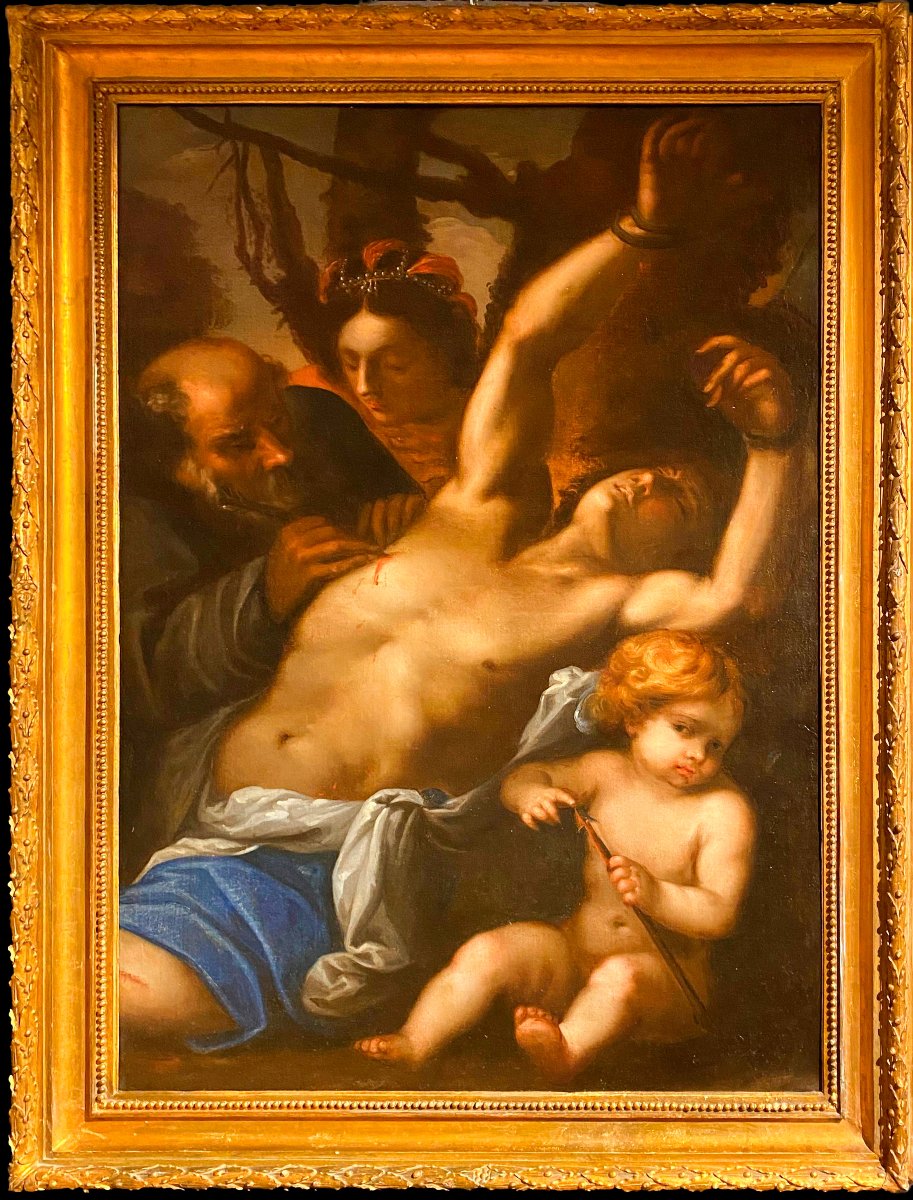
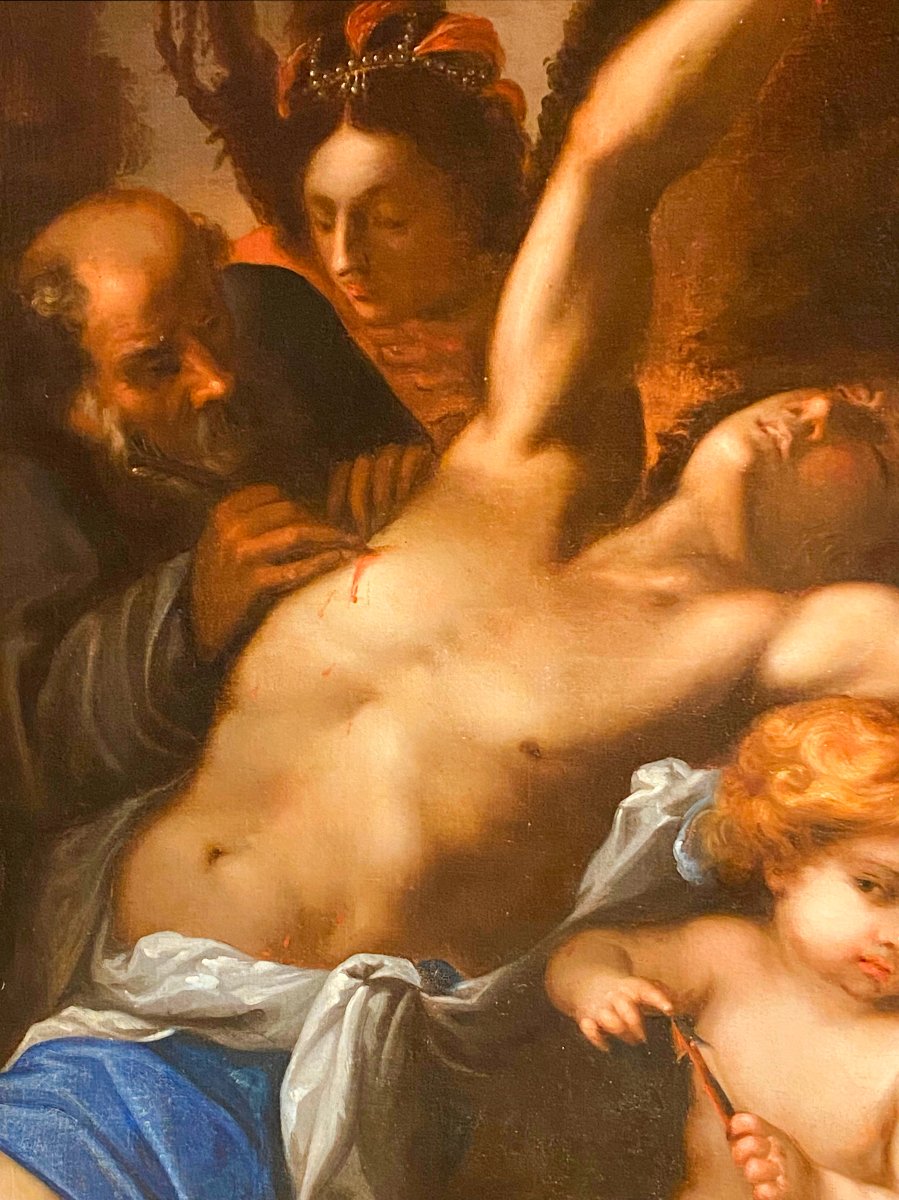
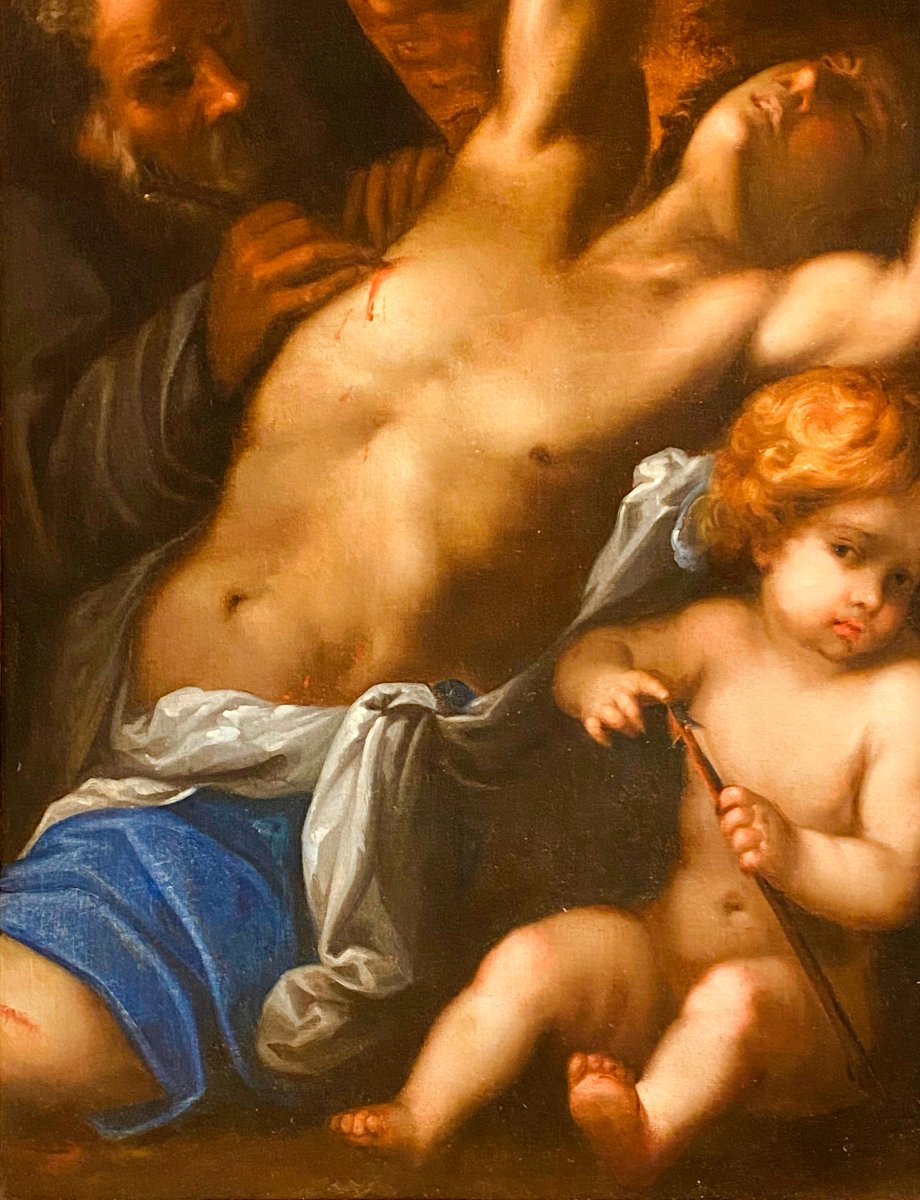
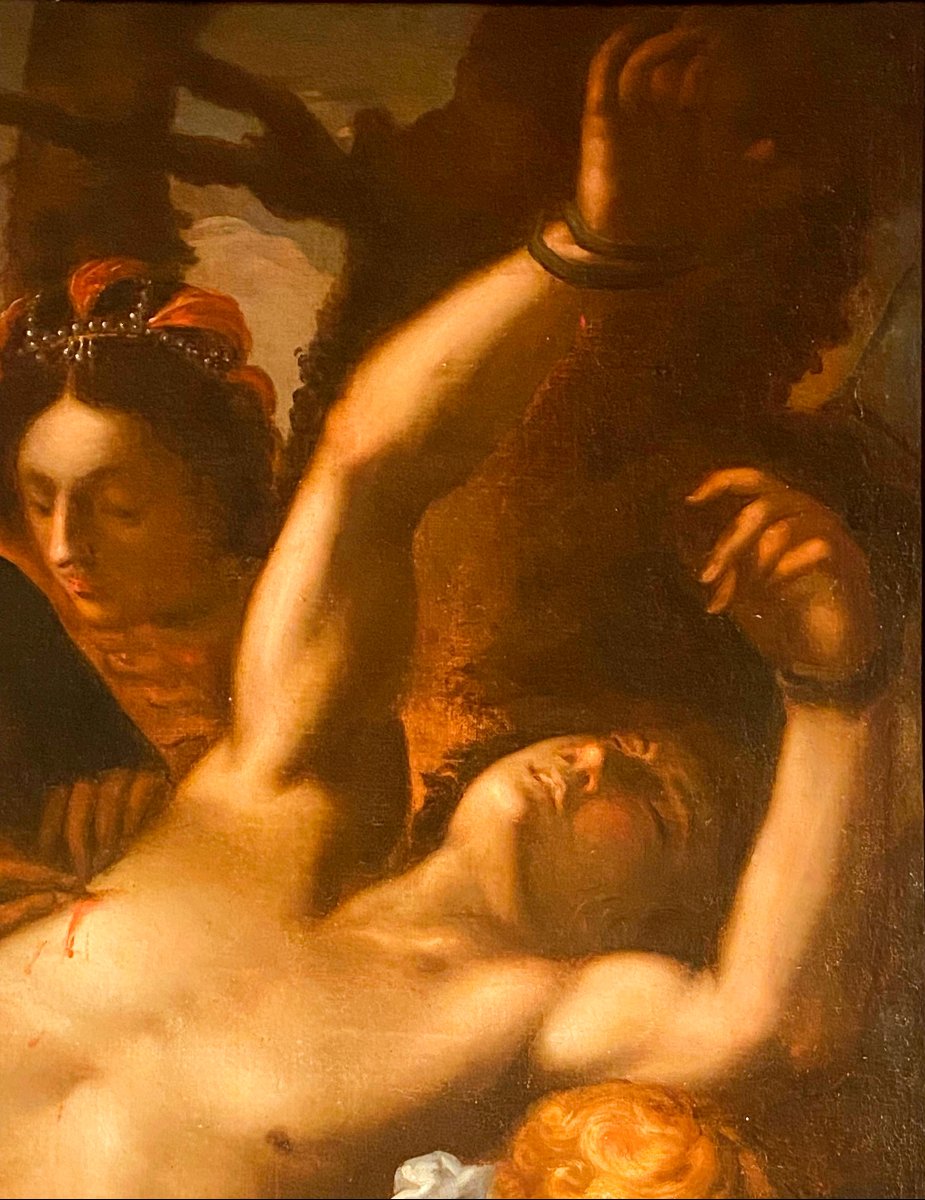
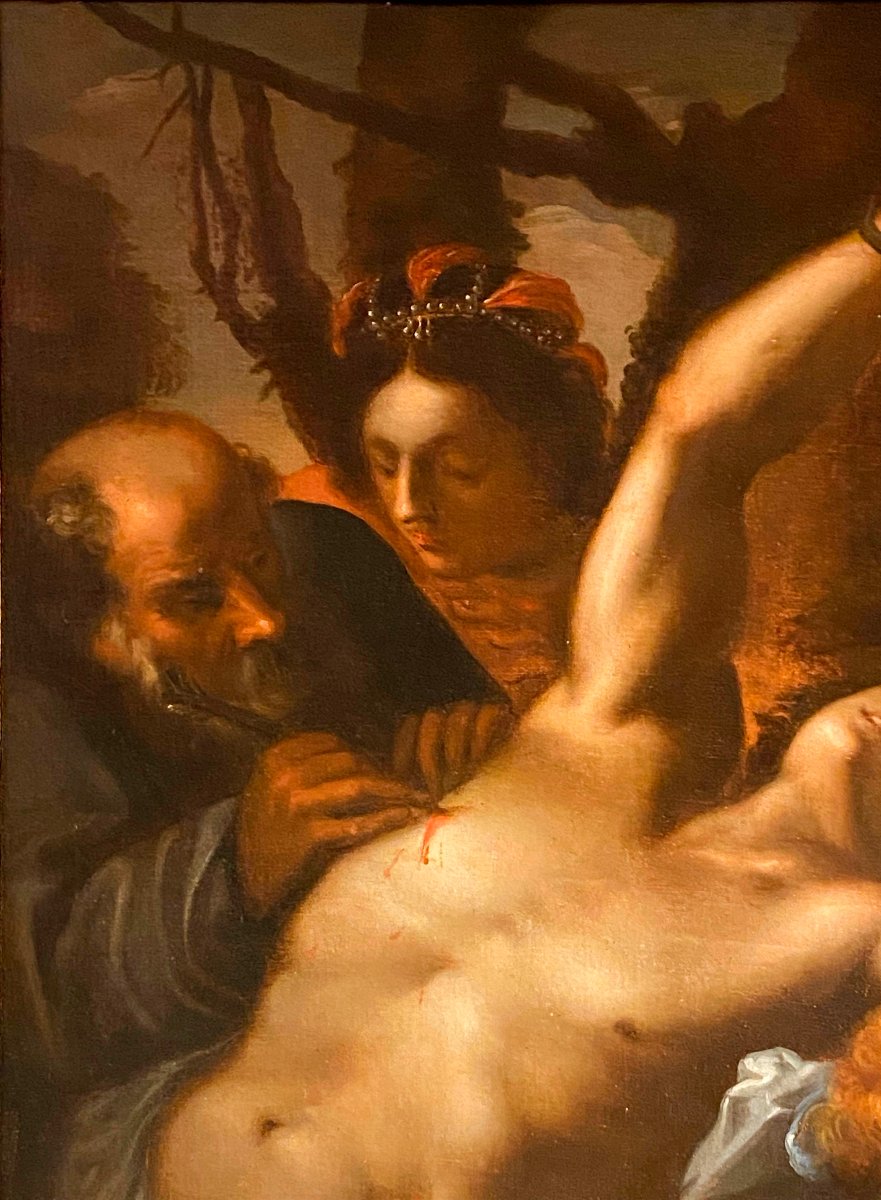
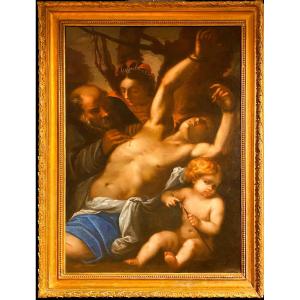


Saint Sebastian. Oil On Canvas. Italian School. Probably Francesco Cairo, 17th Century
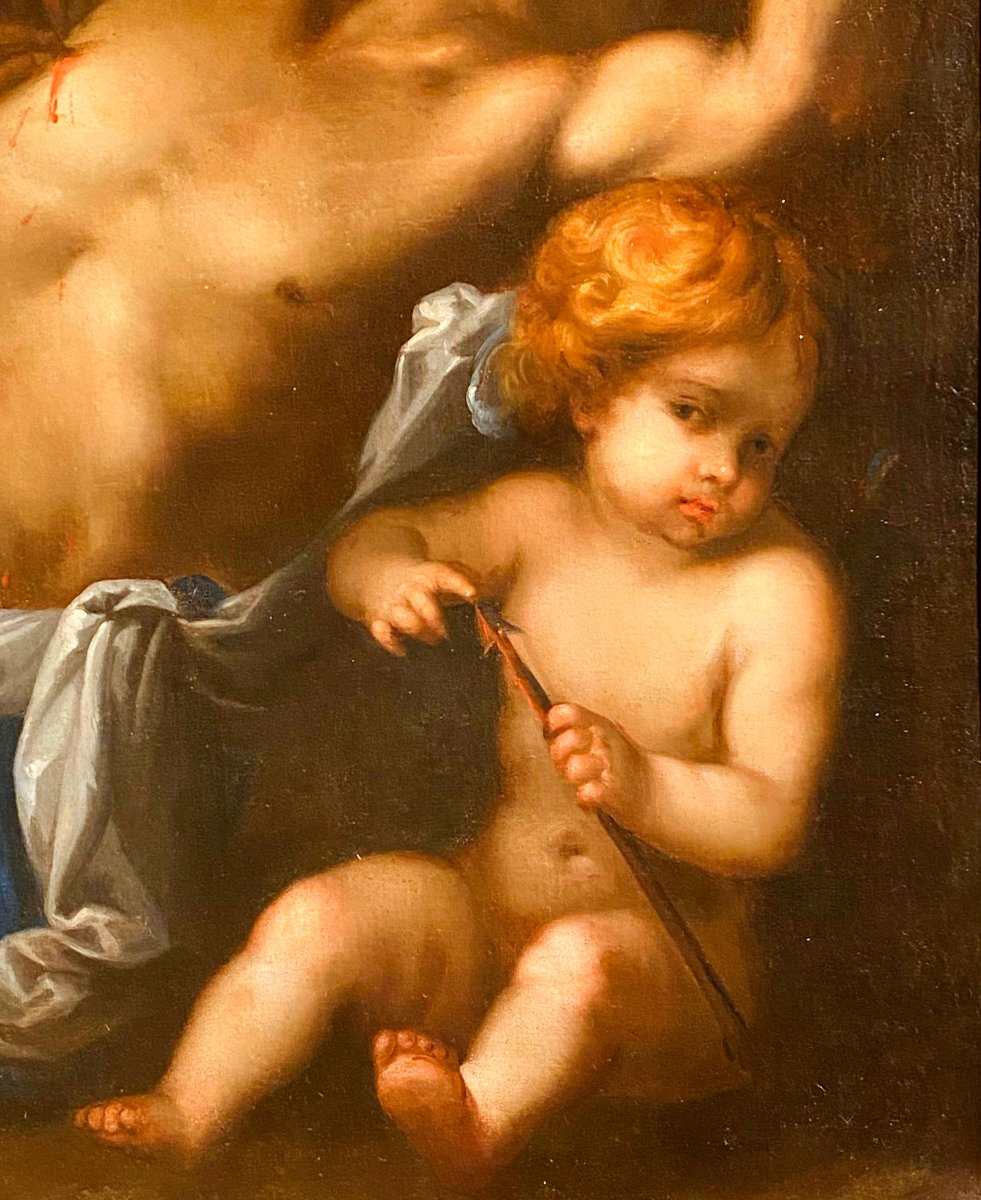
Dimensions: 156 cm high x 116 cm wideAccording to tradition, Saint Sebastian was born in Narbonne in256 to a noble family, although he was raised in Milan. In 269, heenlisted in the Roman army and, thanks to his skills as a soldier, was appointedcommander of the first cohort of the Praetorian Guard by Emperor Diocletian,who was unaware that he was a Christian.Despite his position, Sebastian refused to participate inpagan rituals and devoted part of his time to helping and supportingpersecuted and imprisoned Christians. When his faith was discovered, Diocletianordered his execution by arrows. Believed to be dead, he was rescued andnursed back to health by Irene, a Christian noblewoman, until he recovered.Far from fleeing Rome, Sebastian decided to confrontthe emperor once more and publicly defend his faith. As a result, he was executeda second time, by beating with sticks and garrotte. His body was then recoveredby his disciples and buried on the Via Appia, in the catacombs thatbear his name today. Tradition places his death in the year 288.Certain aspects of Francesco Cairo’s life and training remainpoorly documented. It is believed that he may have trained in the circleof Morazzone, whose influence is evident in his early works. In1633, he was summoned to Turin as court painter to Duke Victor AmadeusI of Savoy, a city where he achieved considerable renown. His works from the1630s are characterized by a distinctive emotional intensity, blendingsensuality, drama, and religious fervor. After a stay in Rome in1638, he returned to his hometown in 1648, where he remained until his death.The sensual and dramatic nature of his pictorial languageis evident in this Saint Sebastian. The saint’s naked body, rendered withmarked stylization and sensuality, forms the central axis of thecomposition. Also noteworthy is the perspective of the face, depicted froma low vantage point, which intensifies its expressiveness and accentuates thetheatrical nature of the scene.The work depicts the moment following the first martyrdom,when Sebastian, still alive, is found and rescued. Two figuresappear alongside the saint, attempting to come to his aid, in reference tothe episode in which Irene and her companions rescued and tended to him after he hadbeen presumed dead. Cairo thus transforms the account of the martyrdom into a scene ofgreat emotional intensity, in which the saint’s suffering blends with thesensuality and idealized beauty of his figure.
12 000 €
Period: 17th century
Style: Other Style
Condition: Condition of use
Material: Oil painting
Width: 116
Height: 156
Reference (ID): 1823861
Availability: In stock
Print