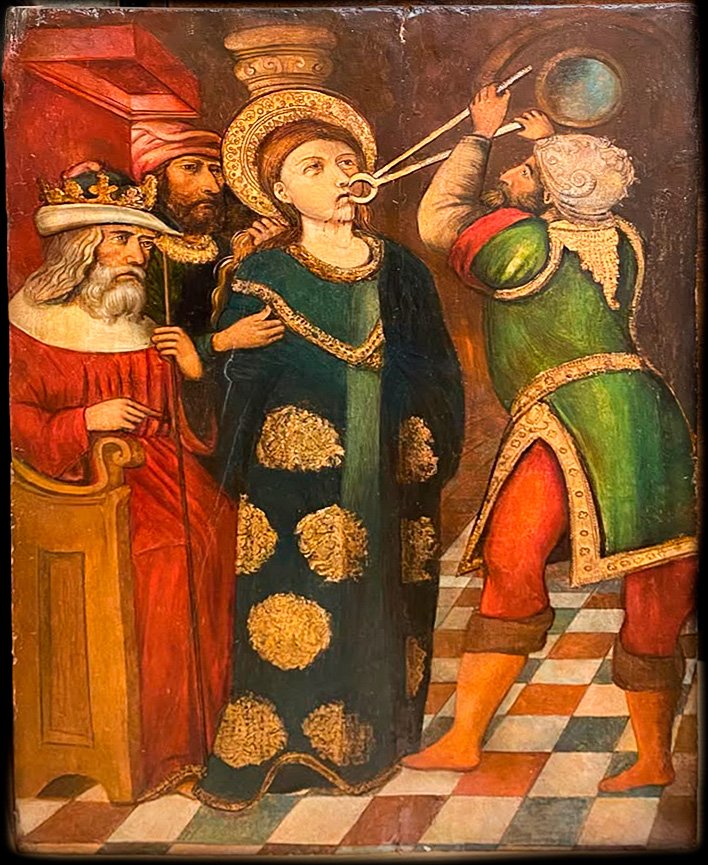


Saint Apollonia. Oil On Panel. Spanish School. 15th Century
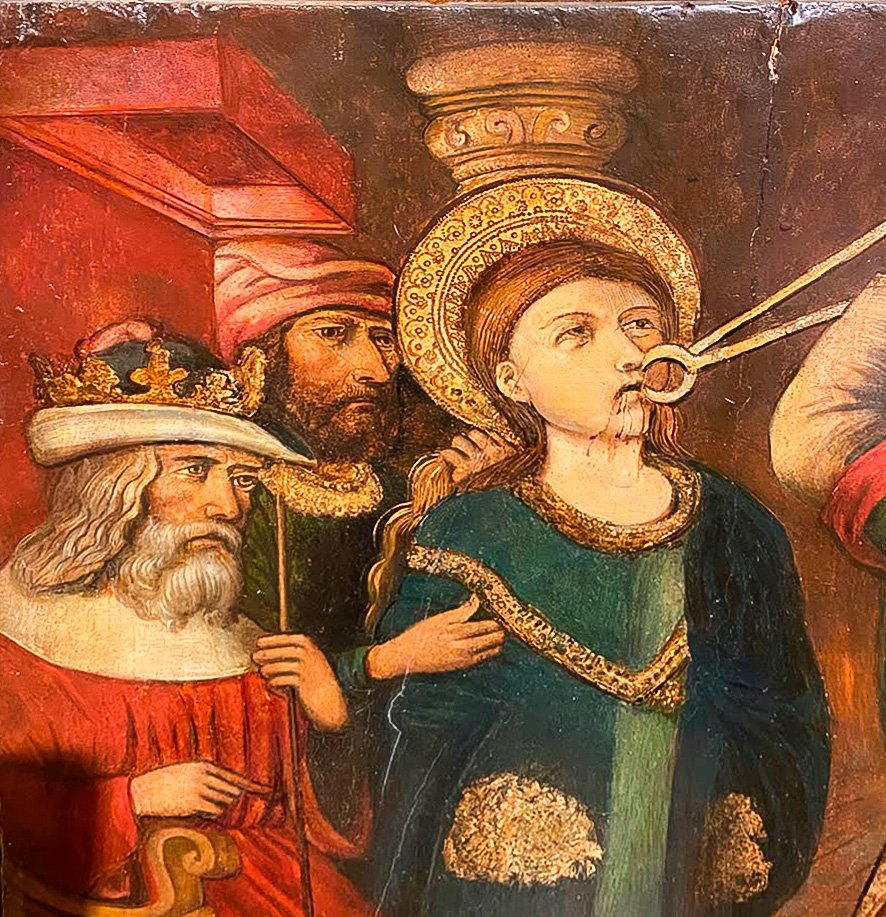
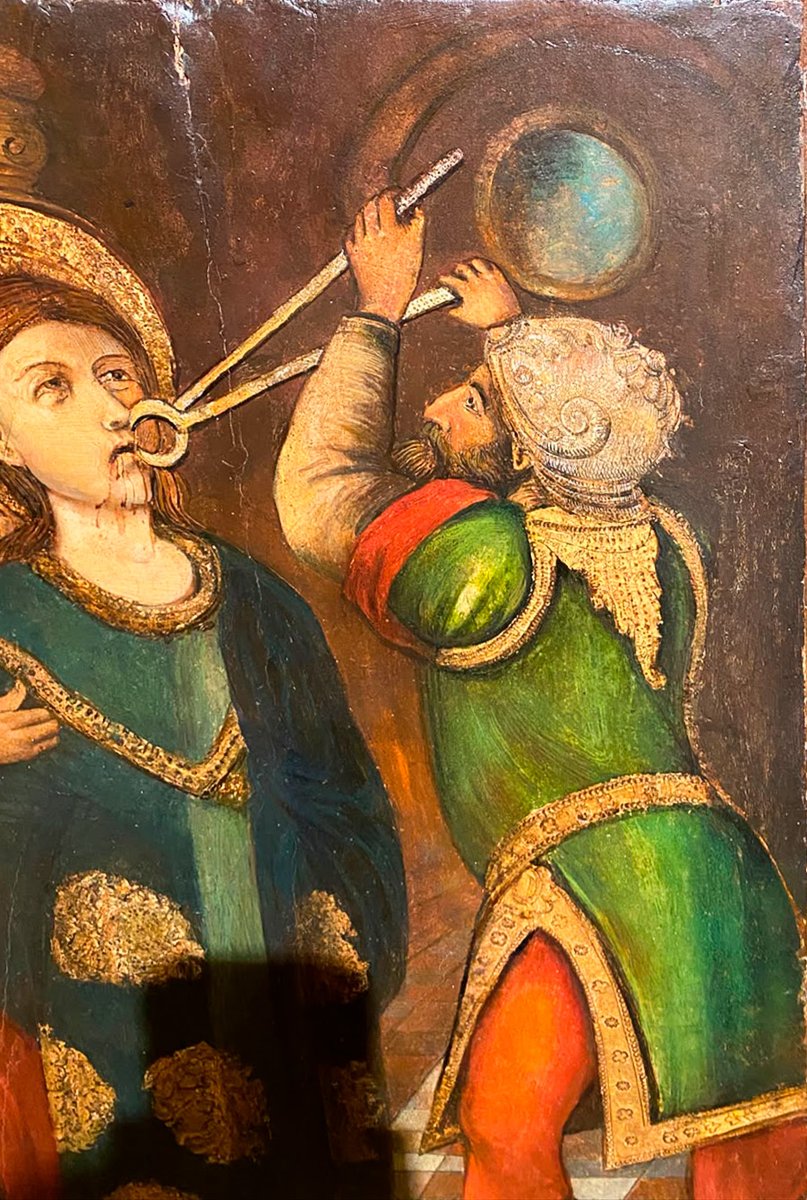
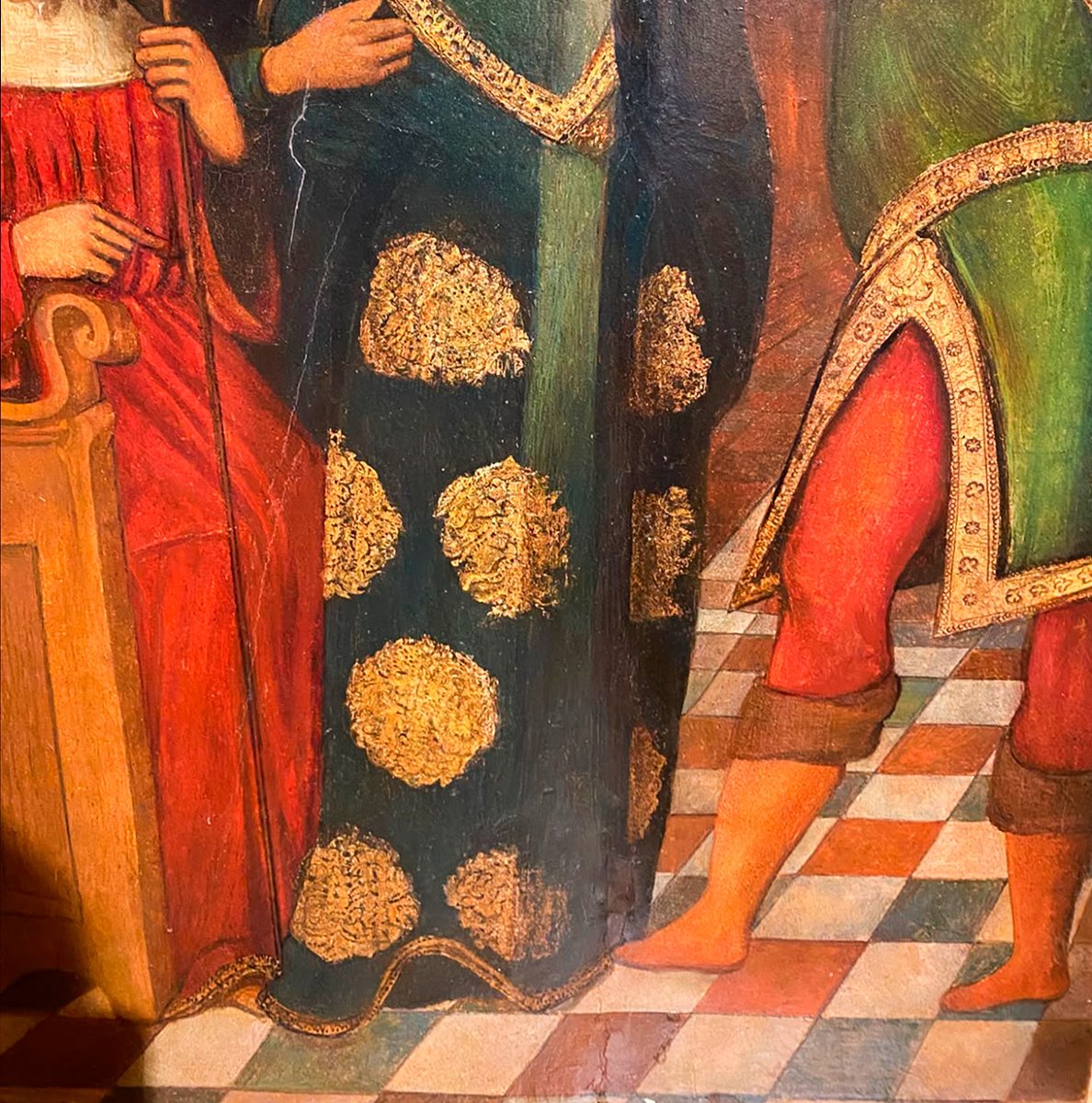
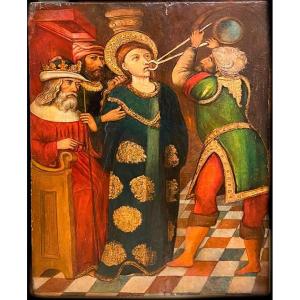
Dimensions: 72.5 cm high x 50.5 cm wideSaint Apollonia is traditionally venerated as thepatron saint of dentists and the protector against pain anddental diseases. Her story dates back to the 3rd century A.D., in Alexandria,Egypt, during the persecutions of Christians under EmperorDecius.According to hagiographic tradition, Apollonia was a youngChristian, a consecrated virgin, known for her deep devotion to Christ andthe steadfastness of her faith. During the persecution, she was arrested andsubjected to various forms of torture in an attempt to make her renounce her beliefs.However, Apollonia remained faithful to her faith until the very end.The best-known episode of her martyrdom was the violentextraction of her teeth. Despite the suffering she endured, the saint refusedto renounce Christianity and died a martyr. It is precisely this episodethat led to her later association with dentistry, becoming, overthe centuries, her principal iconographic attribute. Saint Apollonia wasthus invoked as a protector against toothaches and dental ailments.Although her martyrdom took place in the 3rd century, thedepiction of Saint Apollonia experienced a particular surge in popularity in the 14th and 15thcenturies, coinciding with the heyday of theatrical performances ofhagiographic episodes. These theatrical productions helped establish an iconographyin which, in addition to the saint, other figures associatedwith her martyrdom might appear, such as the executioners or Emperor Decius himself.This oil on panel depicts precisely themost dramatic moment of her martyrdom. Saint Apollonia appears at the center of thecomposition, as one of her executioners—dressedin a velvety green costume—is pulling out her teeth. While he carries out the torture, anotherfigure standing behind the saint holds her back to prevent her from escaping.The scene thus takes on a distinctly narrative and dramatic character, directlydepicting the martyr’s suffering.Witnessing the torture, Emperor Decius appears, seated on thethrone, identified as the authority who ordered her torture. His presence notonly situates the scene within the historical context of the persecutionsbut also introduces a clear contrast between earthly powerand the saint’s spiritual steadfastness. Thus, the work presentsApollonia as an example of strength and fidelity to her beliefs, makingthe episode of her martyrdom the central element of her depiction
5 000 €
Period: Before 16th century
Style: Other Style
Condition: Condition of use
Material: Oil painting on wood
Width: 50,5
Height: 72,5
Reference (ID): 1823756
Availability: In stock
Print