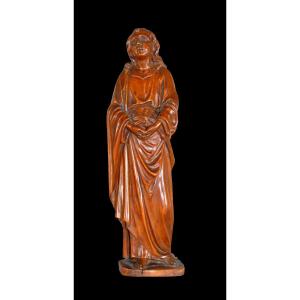





St. John The Baptist, In Polychrome Wood; 16th-century Spanish School
Dimensions:99 cm high
35 cm wide
18 cm deep
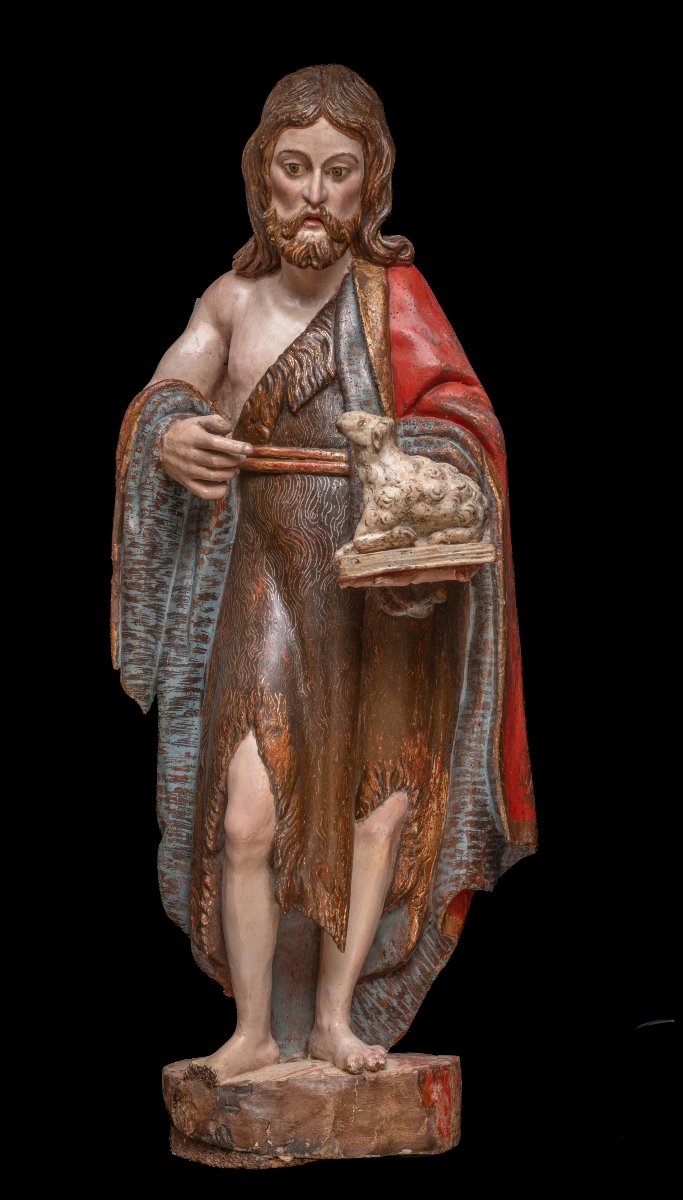
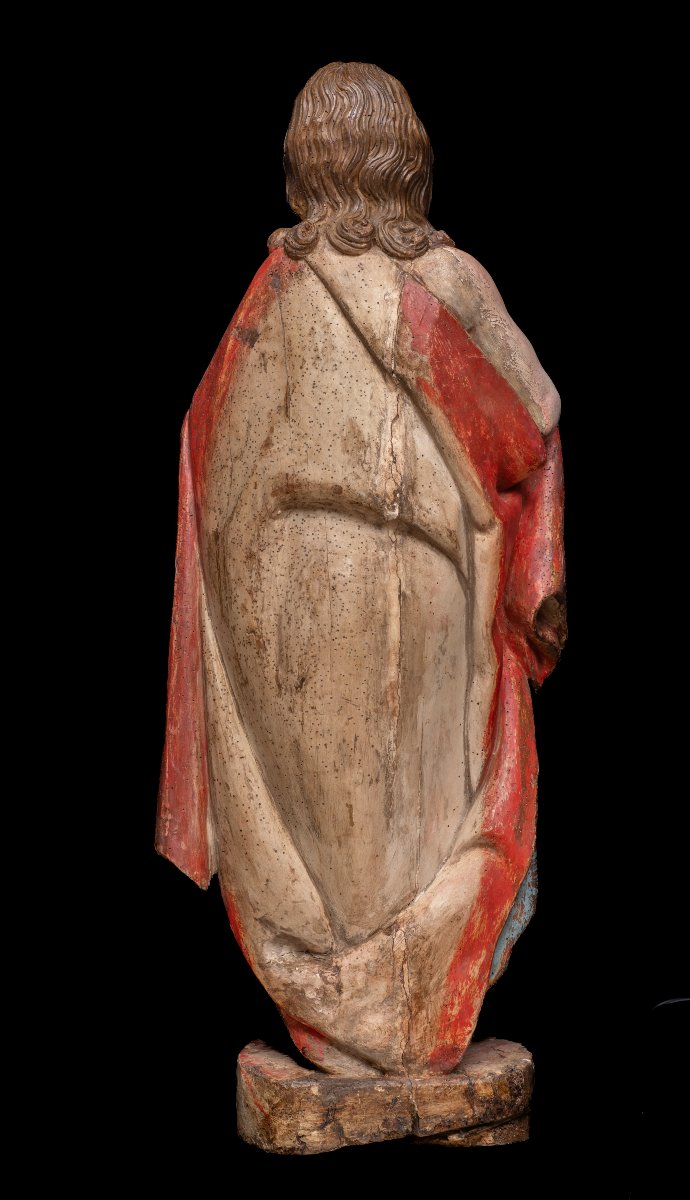
This 16th-century sculpture is a figure inthe round intended to be placed in an altarpiece or to serve as an object ofdevotion in a church, chapel, or monastery.
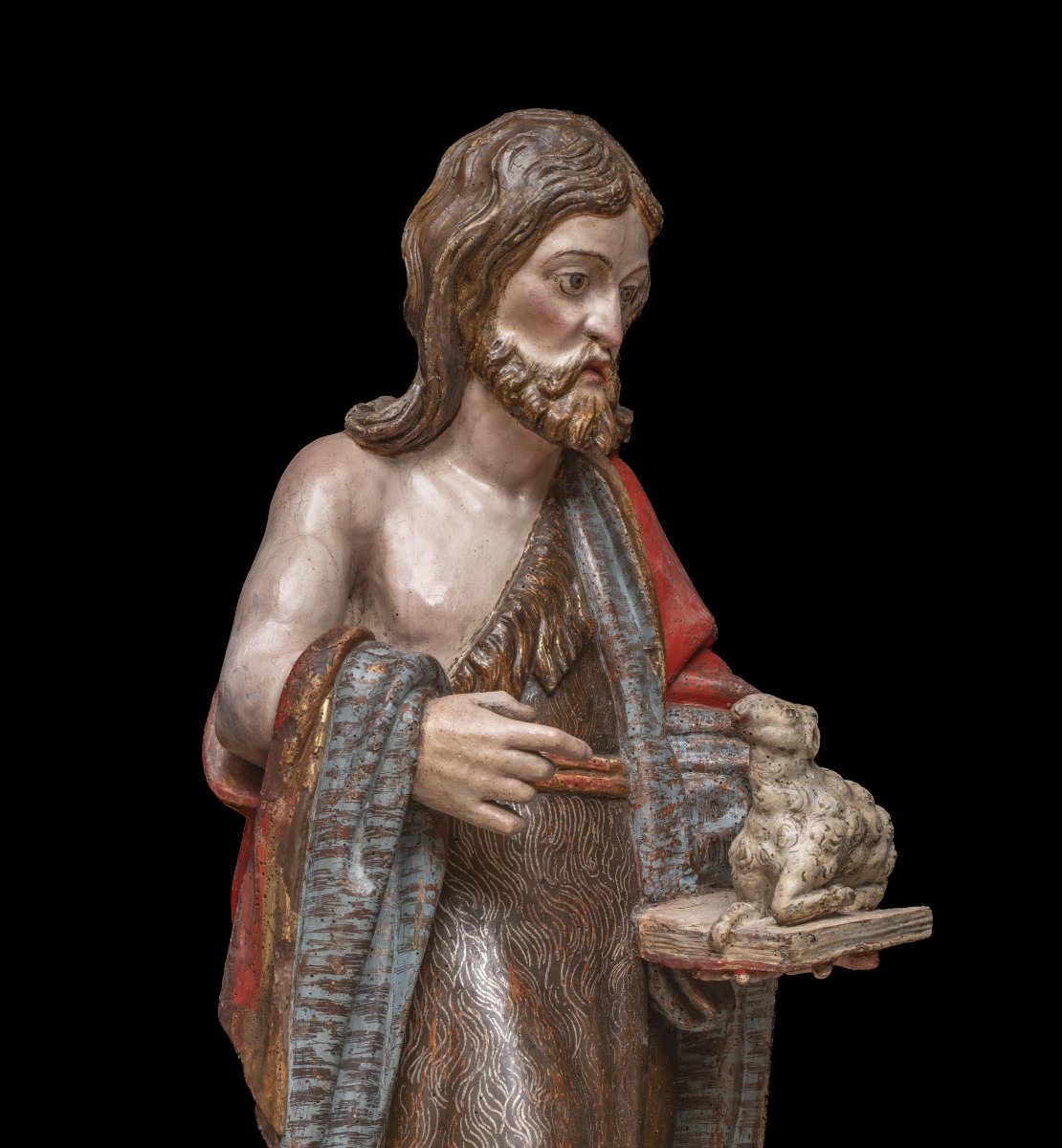
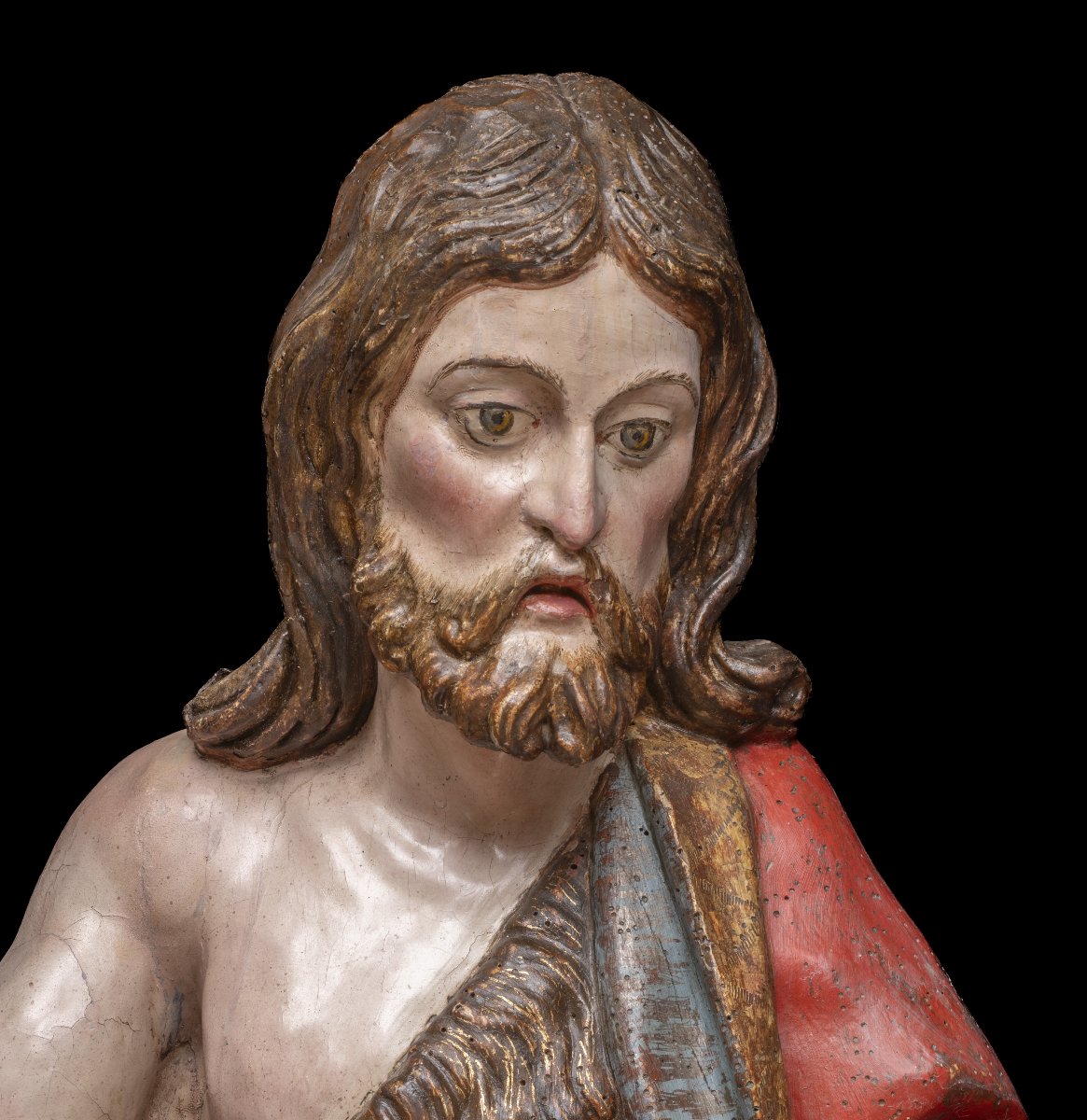
The sculpture depicts Saint John the Baptist with histraditional attributes, so often depicted in the Spanish Renaissance: theupright silhouette of the figure whom Christian tradition considers theforerunner of Christ, with a frail physique, clad in a coarse, roughtunic made of camel skin, held in place by a cord. Over this garment is draped ared cloak alluding to his future martyrdom.
In his left hand, he holds a book, a symbol of thepreaching of the Word of God, upon which rests a small lamb alludingto the sacrifice of Christ, according to the Baptist’s own wordswhen he saw Jesus approaching him: “ Behold the Lamb of God; behold the onewho takes away the sin of the world.” In his right hand, he held a cross or abanner, now lost.
The anonymous artist avoids exaggerated poses,depicting the figure in a somewhat rigid manner. The carving of the cloak, whichstill retains its gilded polychromy along the edge, is harsh and angular, withsharp, broken folds intended to create strong contrasts of light in order togive the sculpture a pictorial chiaroscuro.
The sculpture features meticulous polychromy, particularly inthe coloring of the nude body, with no trace of the austere life of thedesert. The head is rendered in anaturalistic style, covered with tousled hair forming curls,a technique that would reappear in 16th-century sculptures. Also noticeableon the face are a long beard, a slightly parted mouth,open eyes, and a wrinkle-free face.
In the mid-16th century, Spanish sculpture began toreflect the influence of the Renaissance. This manifested itself in the pursuitof naturalism, in keeping with the spirituality of the era, with the aim ofconvey the truths of the faith. In Spain, there was asignificant output of polychrome wooden sculptures, always strivingfor realism and masking the relative poverty of the material, which would lead to thedevelopment of a unique and distinctive style, thanks to renowned artists,during the 17th century.
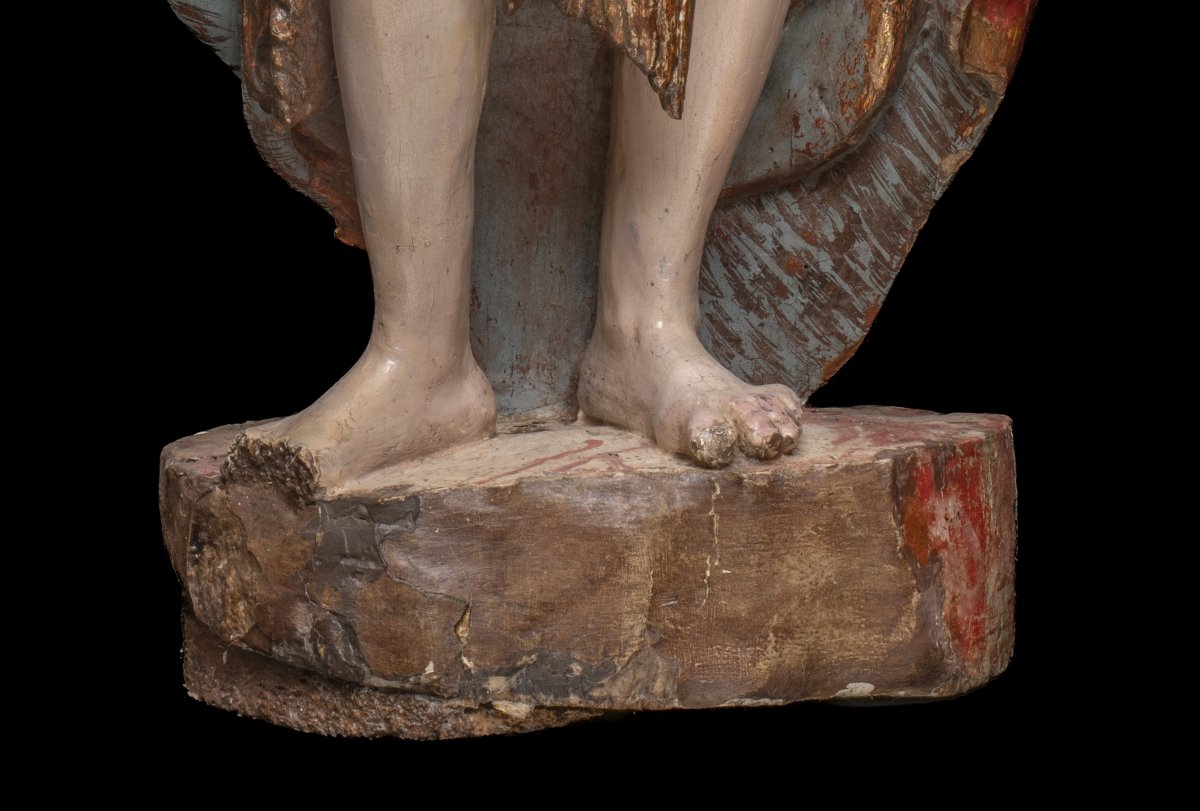
Damage: part of a foot is missing, and the sculptureshows signs of woodworm.
3 000 €
Period: 16th century
Style: Other Style
Condition: Some repairs
Material: Painted wood
Width: 35
Height: 99
Depth: 18
Reference (ID): 1851372
Availability: In stock
Print