

Religious Medallion Decorated With Limoges Enamel, Spain, 17th Century
Religious medallion decorated with Limoges enamel, Spain,17th century
Dimensions:8 cm high x 6 cm wide
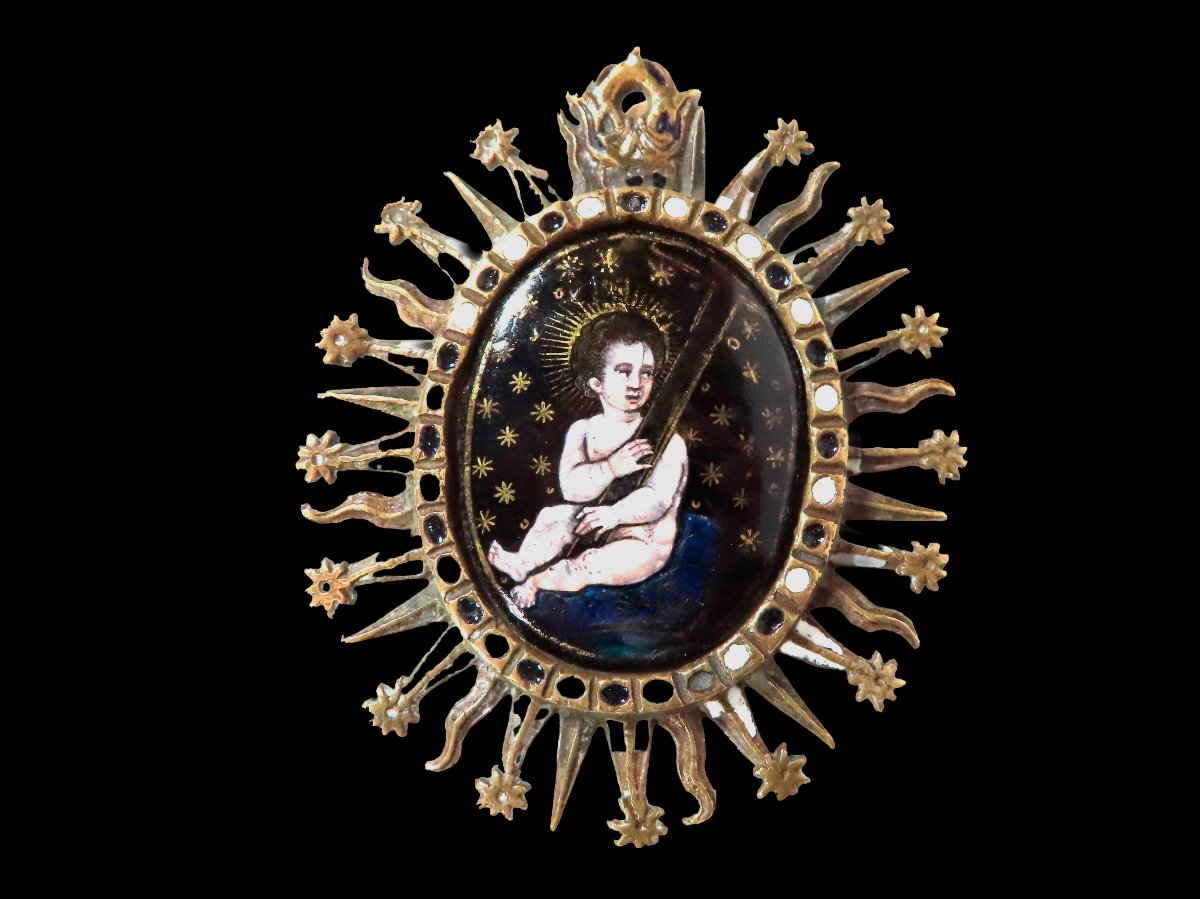
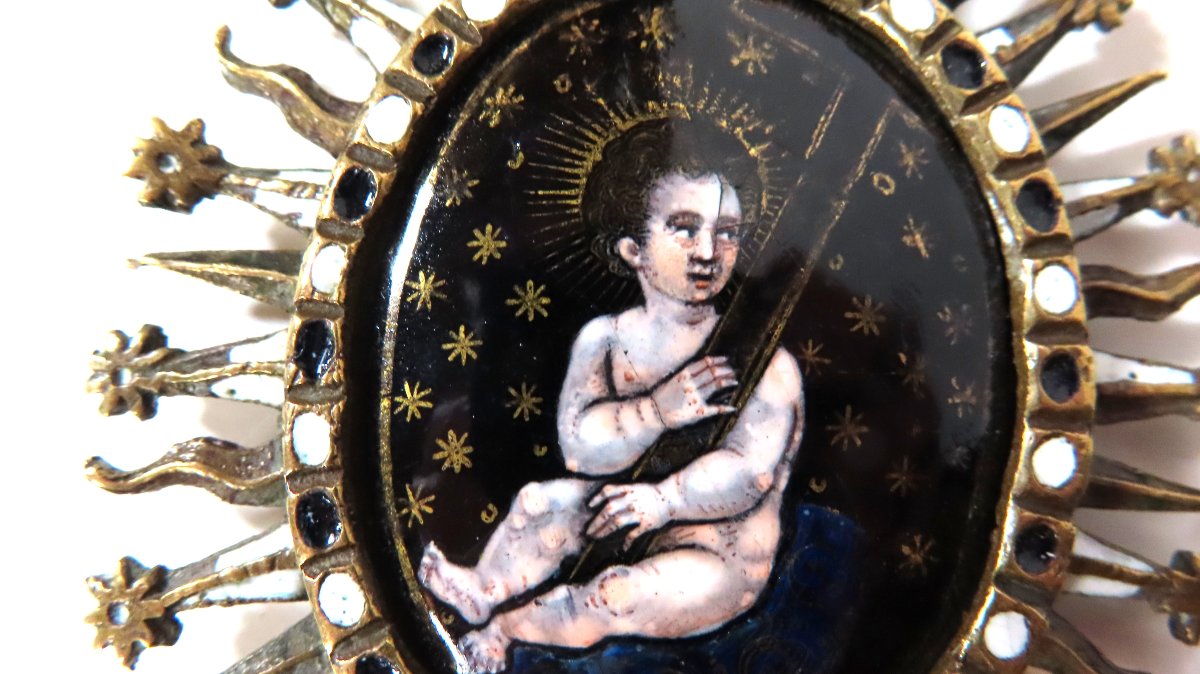
This medallion depicts the Infant Jesus carrying a cross, amotif commonly found in sculptures of the Infant Jesus preserved and keptby monasteries in the 17th and 18th centuries. This iconographic motif alludesto Christ’s mission and his death on the cross.
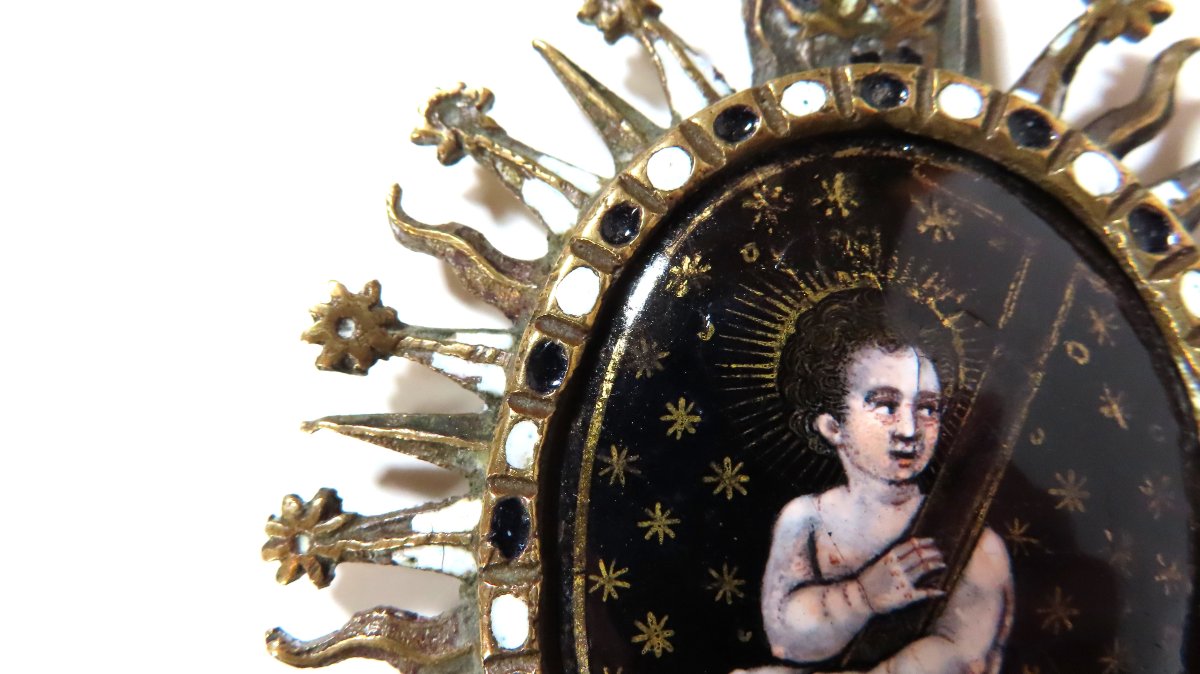
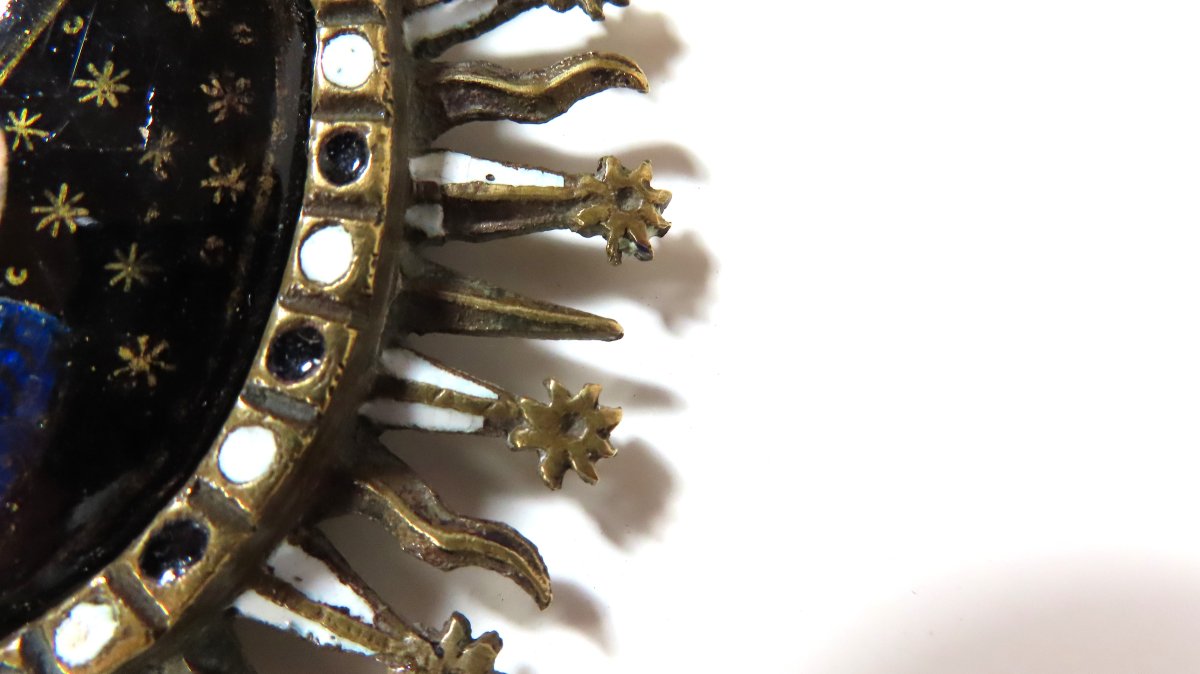
The central oval of the medallion is made of cobalt blueenamel, adorned with gilded star-shaped incisions, as well as the golden halo thatthe Child wears above his head. This highlights the piece and emphasizes the contrast betweenthe body and the skin tones, which—thanks to the carefully rendered anatomy—stand out—like a relief—against the dark background.
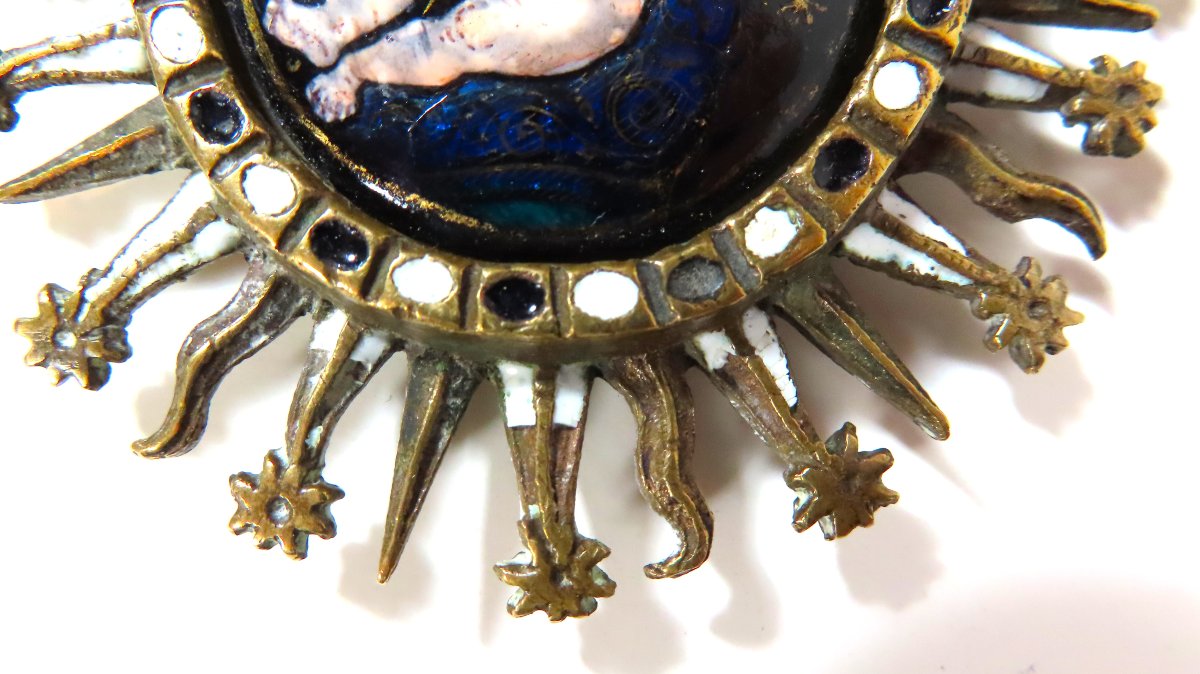
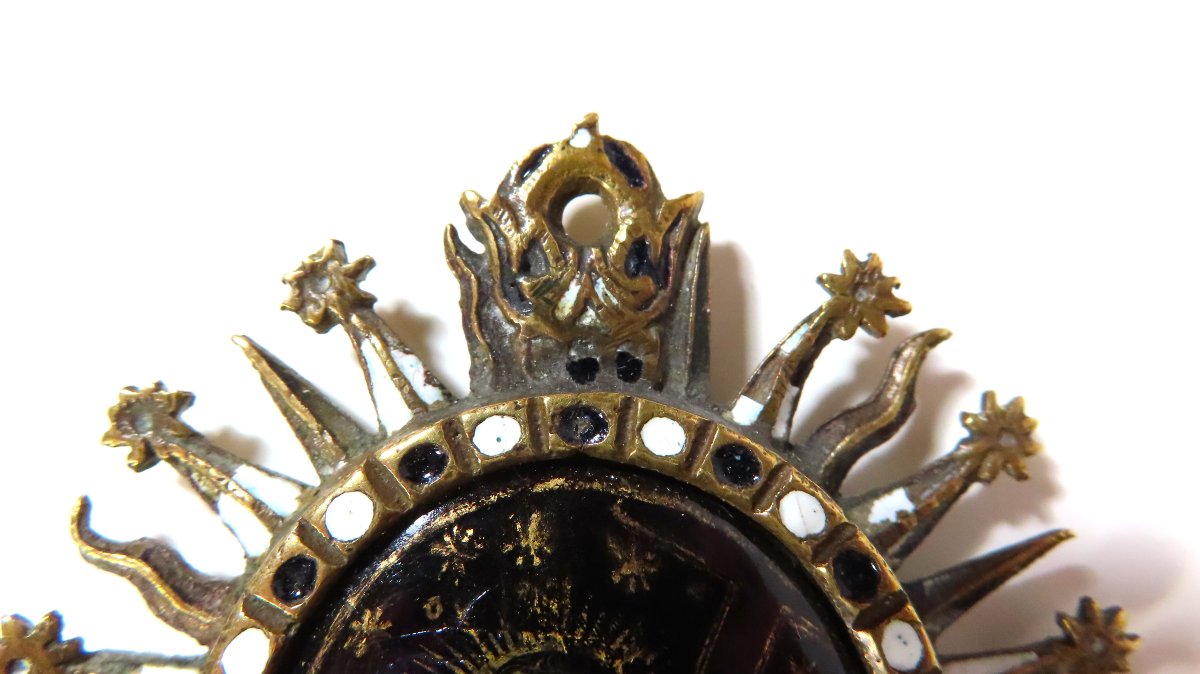
The elliptical medallion, featuring openings in the frame andon the obverse, is a fairly common type in 17th-century jewelry.Solid-colored enamels are inserted into these oval openings. The colors used arewhite and blue, characteristic of Limoges during its second period. Thewhite, known as “blanc de Limoges,” was used in the production ofpieces such as the one presented here, as well as in the creation ofgrisaille.
The rim features a design composed of perforations combiningshades of white and blue. Above it, a circle of star-shaped rays,topped with small flowers, arranged at regular intervals.
On the front, there is a reference to the Eucharist, withthe appearance of the Eucharistic host—in the form of a small temple—inthe upper part, resting on a chalice. The form incorporates the cross ofChrist, in gold, from which white rays emanate.
The entire oval surface on the reverse is decorated with scrolls,using blue and white enamels to add polychromatic color to the piece.
This enamel painting technique, known in France as“painters’ enamel,” was developed by the master craftsmenof Limoges in the 15th century and perfected in the 17th century.
The use of these medallions serves as a reminder that these are, bytheir very nature, items for personal use, while also being objects of adevotional nature. These objects were also made and commissioned formembers of religious brotherhoods, for whom they served as an insignia and asymbol of membership.
Also noticeable, in the upper part, is a holeallowing the piece to be attached and hung using a chain.
There is a small flaw near the clasp onthe back, as well as some loss of white enamel on one of the rays of the halo
1 600 €
Period: 17th century
Style: Other Style
Condition: Condition of use
Material: Porcelain
Width: 6
Height: 8
Reference (ID): 1850981
Availability: In stock
Print