

Glazed Porcelain Centerpiece Bearing The Sèvres Mark, France, 19th Century
Dimensions: 37 cm in diameter
18 cm high (bronze frame)
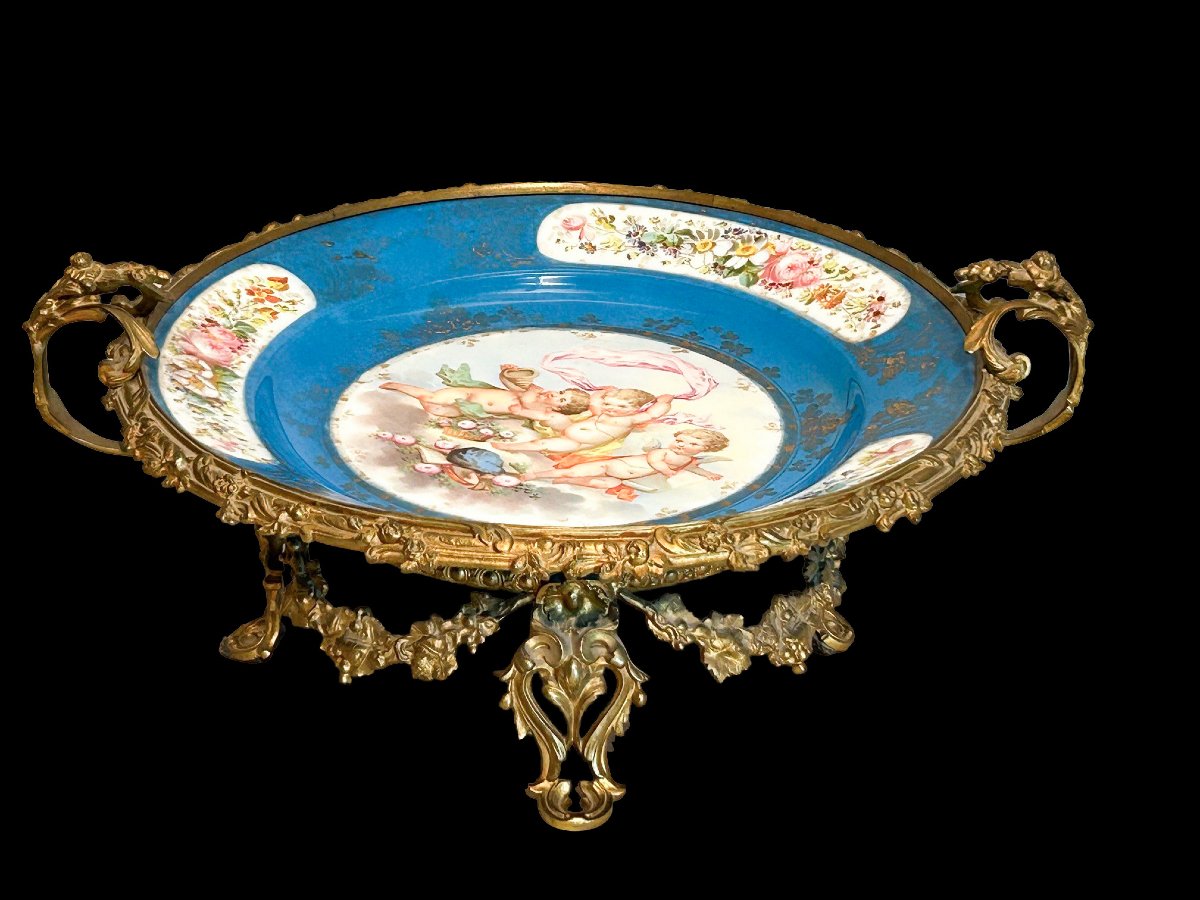
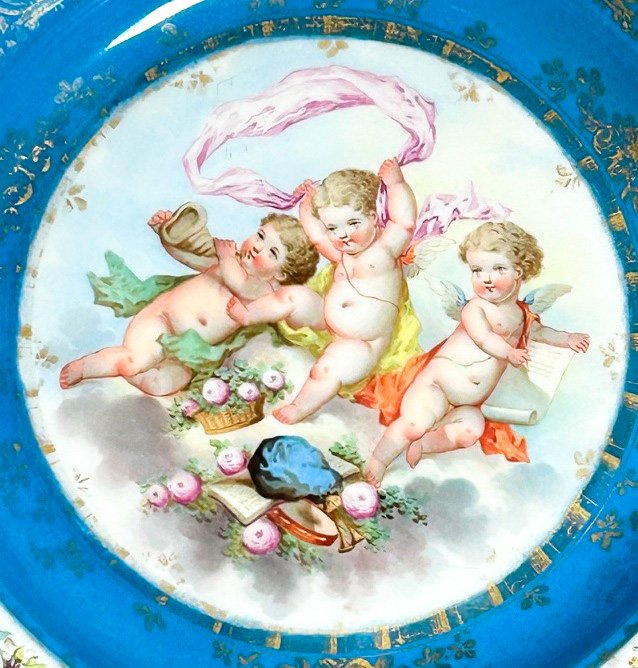
A restored 19th-century porcelain centerpiece bearing the Sèvres mark and featuring gilded bronze trim.
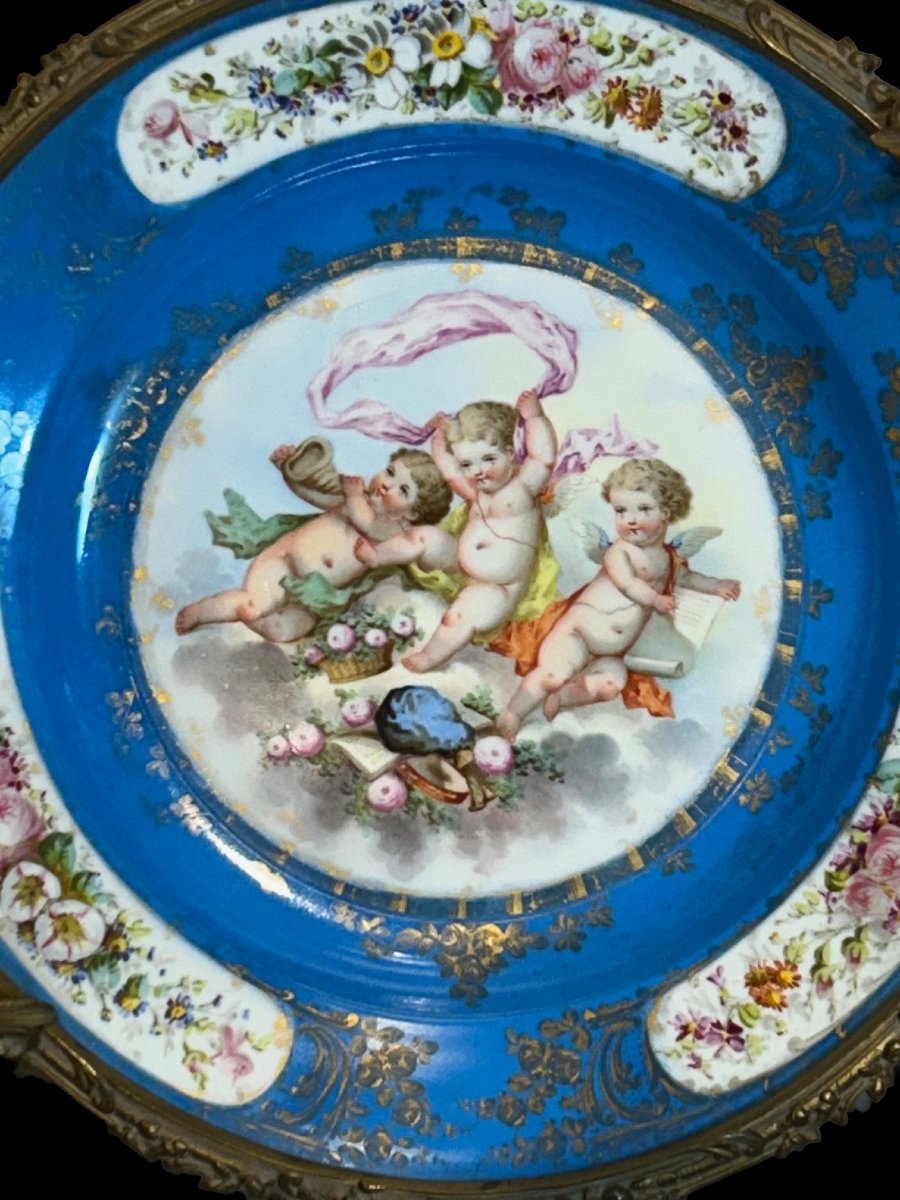
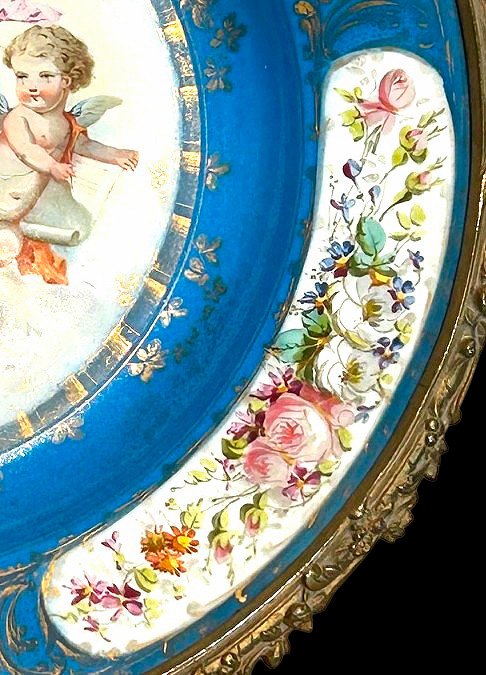
The central panel is hand-painted with a bucolic scene set against a wide blue enamel border, a hallmark of the Sèvres manufactory. Elsewhere on the piece, delicate floral motifs on a white background and gilded foliage motifs punctuate the composition. The Sèvres manufactory was renowned for its use of gold and its characteristic background colors, notably the deep blue visible here. The style is also instantly recognizable by the “Rose Pompadour” shade, named in honor of Madame de Pompadour, the famous lady-in-waiting to Queen Marie Antoinette.
The flat rim is a pure, immaculate white, in keeping with the manufactory’s exclusive production standards.
This piece perfectly exemplifies the Sèvres style as well as the characteristic color known as “Turkish blue.”
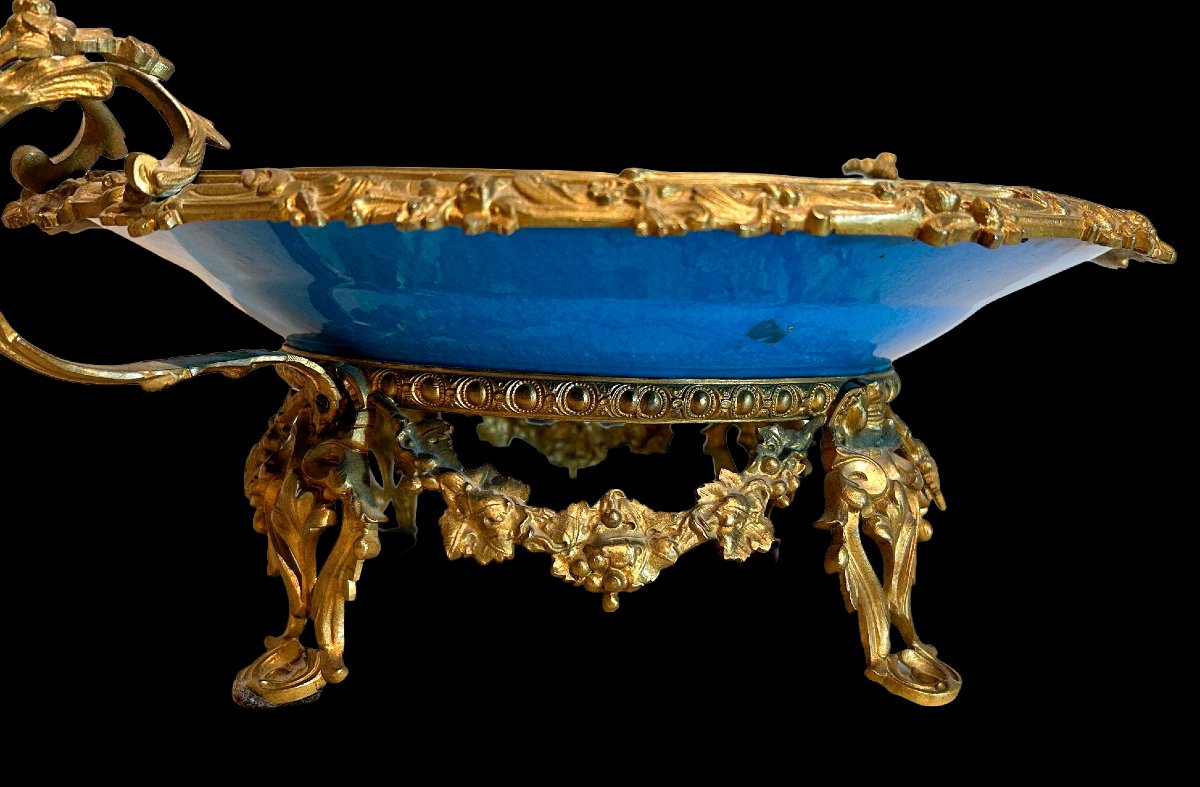
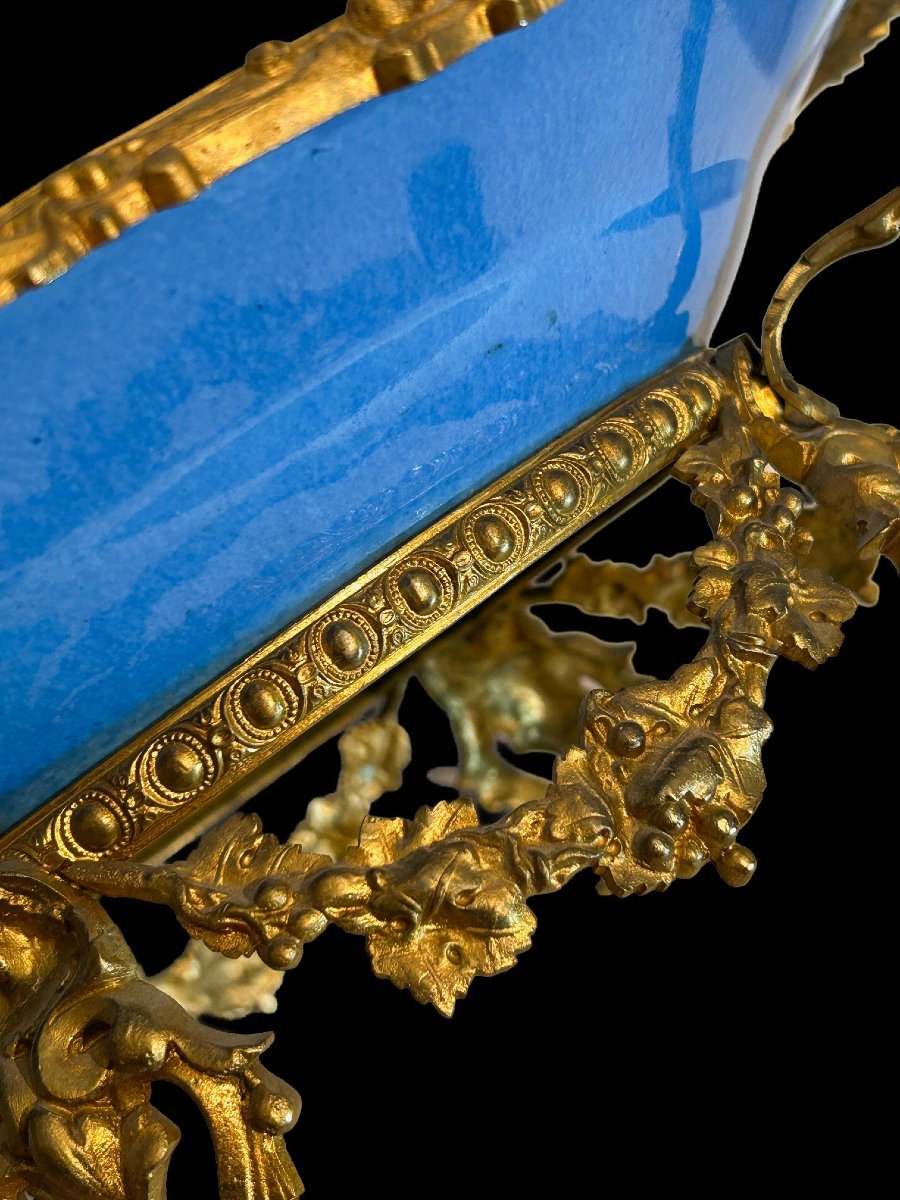
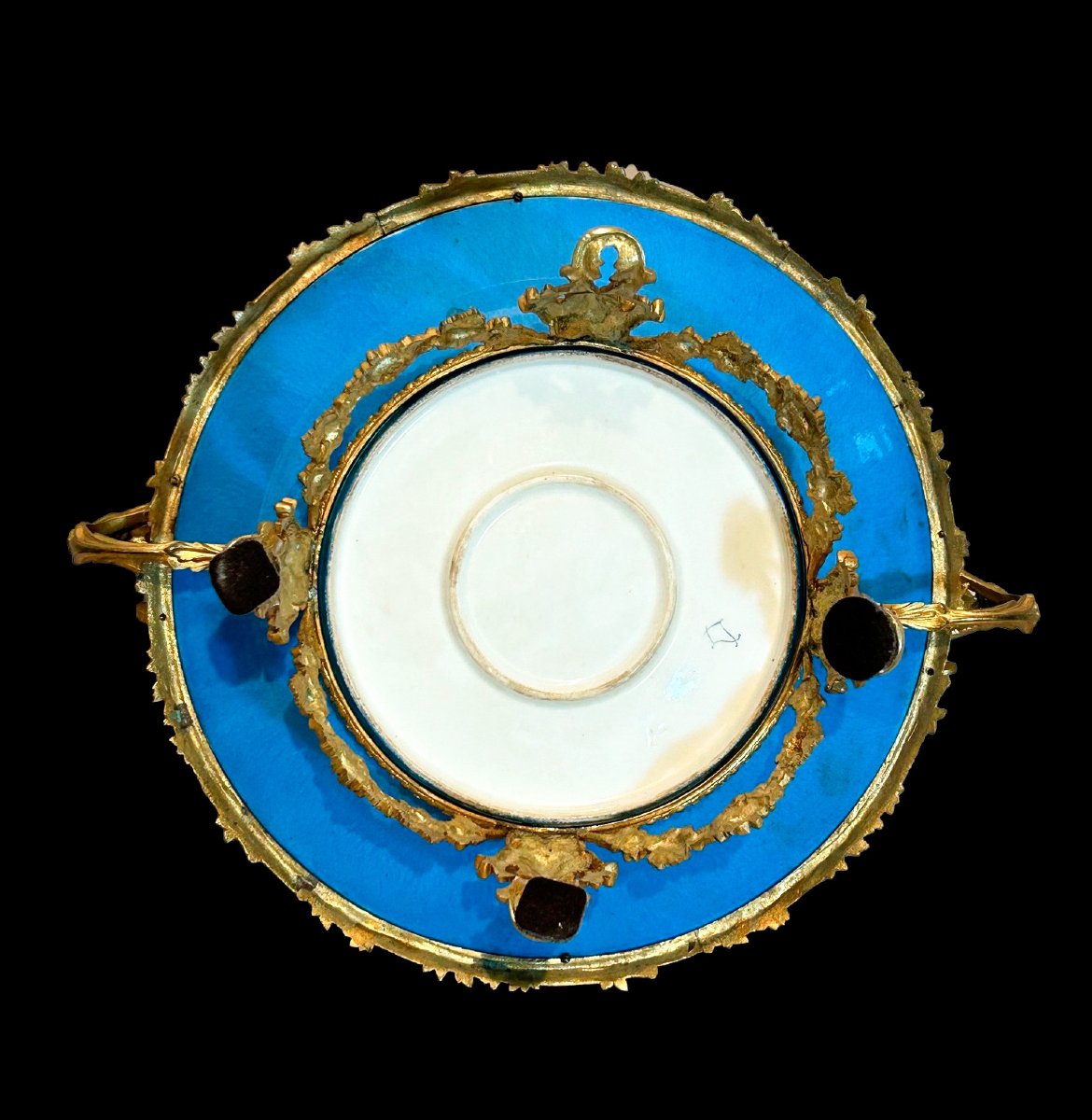
The upper rim is adorned with superb bronze trim featuring intricate ornamentation along the sides. The piece rests on a circular gilded Rococo-style base, decorated with sculpted leaf motifs enhanced by satin finishes and brown tones.
Crafted from hard-paste porcelain—a mixture of kaolin, quartz, and feldspar—this creation was made possible by the discovery of kaolin deposits in Limoges.
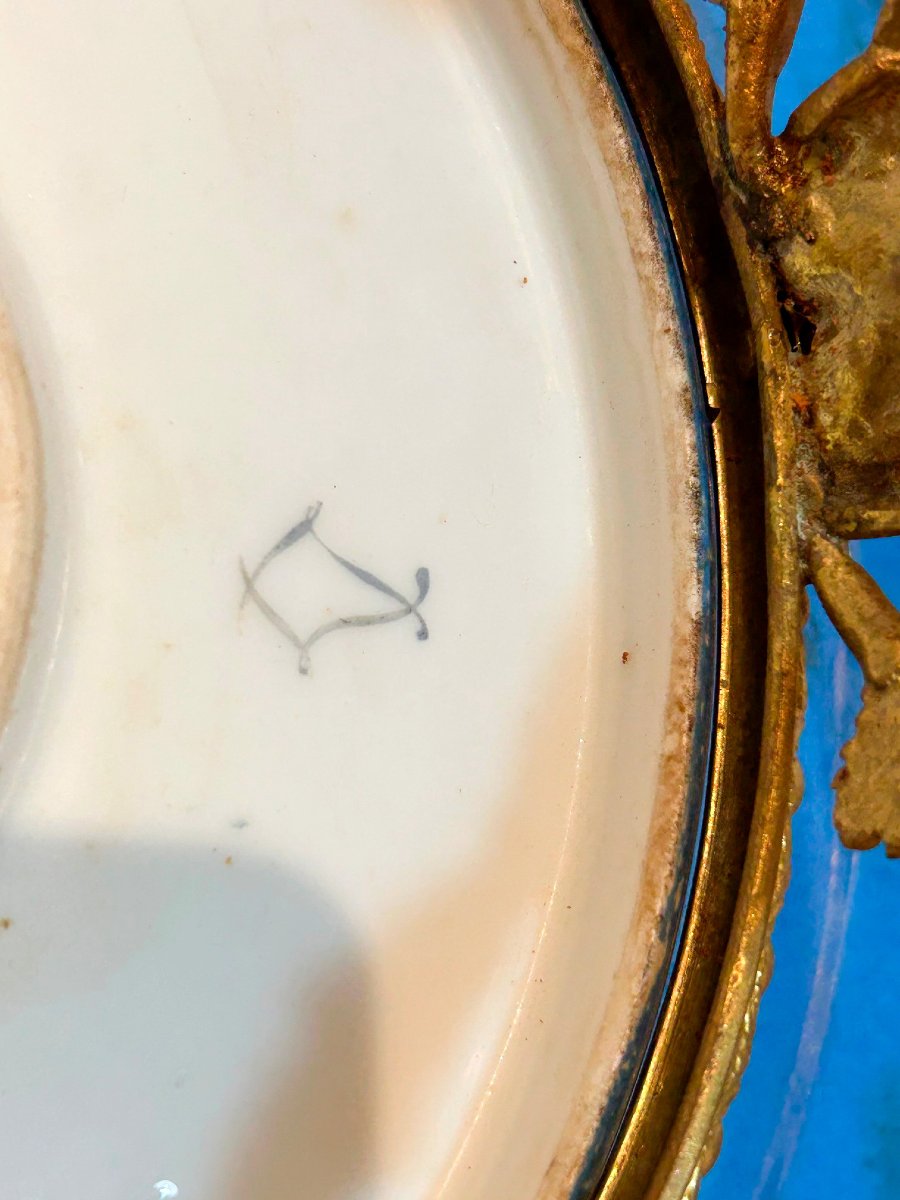
19th-century Sèvres mark: two intertwined “S”s.
The history of the Sèvres porcelain manufactory includes a third phase coinciding with the Second Empire (beginning in 1852). While Rococo forms persisted, a new style emerged, known as “Louis XVI-Impératrice”; it was a unique and highly exuberant blend of the Louis XIV, Louis XV, and Louis XVI aesthetics.
18 cm high (bronze frame)
A restored 19th-century porcelain centerpiece bearing the Sèvres mark and featuring gilded bronze trim.
The central panel is hand-painted with a bucolic scene set against a wide blue enamel border, a hallmark of the Sèvres manufactory. Elsewhere on the piece, delicate floral motifs on a white background and gilded foliage motifs punctuate the composition. The Sèvres manufactory was renowned for its use of gold and its characteristic background colors, notably the deep blue visible here. The style is also instantly recognizable by the “Rose Pompadour” shade, named in honor of Madame de Pompadour, the famous lady-in-waiting to Queen Marie Antoinette.
The flat rim is a pure, immaculate white, in keeping with the manufactory’s exclusive production standards.
This piece perfectly exemplifies the Sèvres style as well as the characteristic color known as “Turkish blue.”
The upper rim is adorned with superb bronze trim featuring intricate ornamentation along the sides. The piece rests on a circular gilded Rococo-style base, decorated with sculpted leaf motifs enhanced by satin finishes and brown tones.
Crafted from hard-paste porcelain—a mixture of kaolin, quartz, and feldspar—this creation was made possible by the discovery of kaolin deposits in Limoges.
19th-century Sèvres mark: two intertwined “S”s.
The history of the Sèvres porcelain manufactory includes a third phase coinciding with the Second Empire (beginning in 1852). While Rococo forms persisted, a new style emerged, known as “Louis XVI-Impératrice”; it was a unique and highly exuberant blend of the Louis XIV, Louis XV, and Louis XVI aesthetics.
1 200 €
Period: 19th century
Style: Napoleon 3rd
Condition: Good condition
Material: Porcelain
Diameter: 37
Reference (ID): 1787669
Availability: In stock
Print