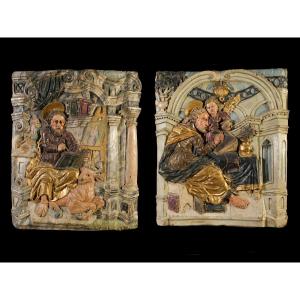


Pair Of Reliefs Depicting Saint Luke And Saint Matthew, Made Of Poplar Wood, Italy
Dimensions of each relief: 42.5 cm high x 33.5 cmwide
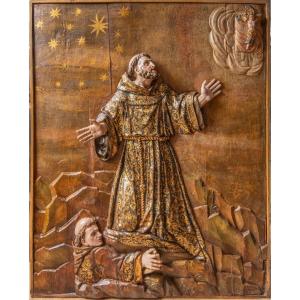
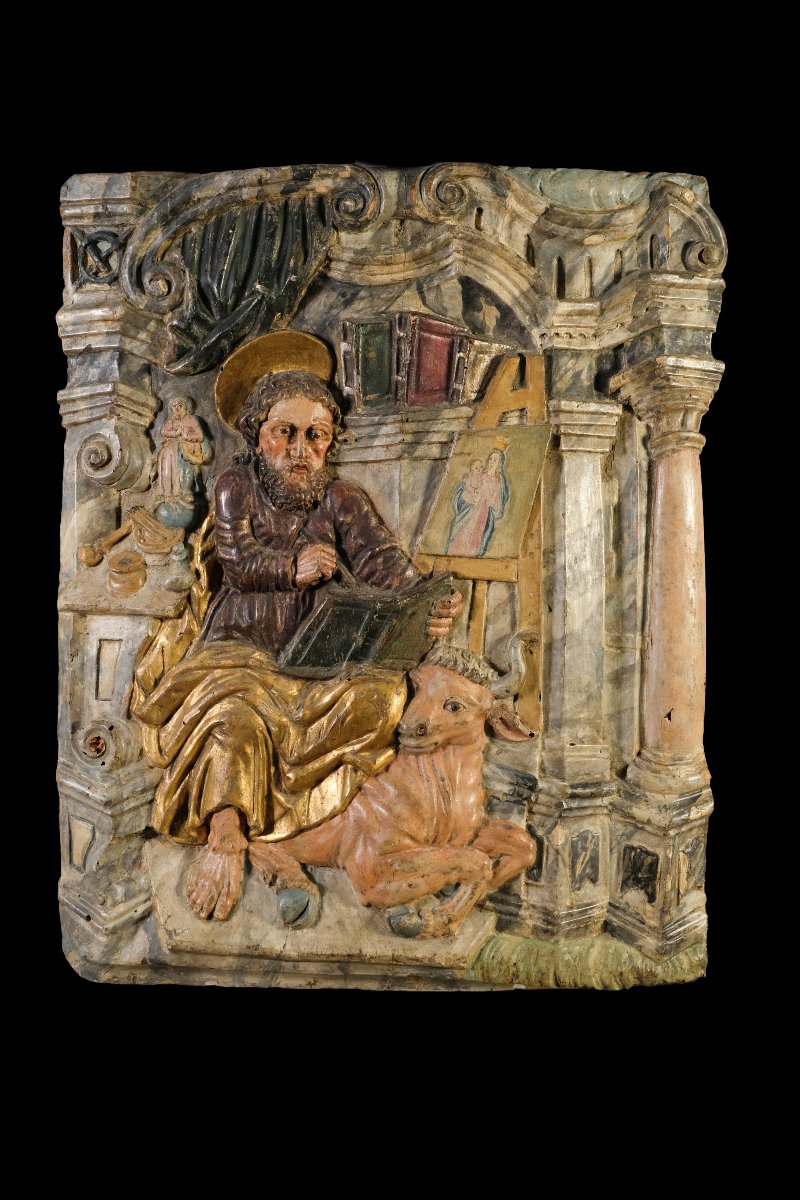
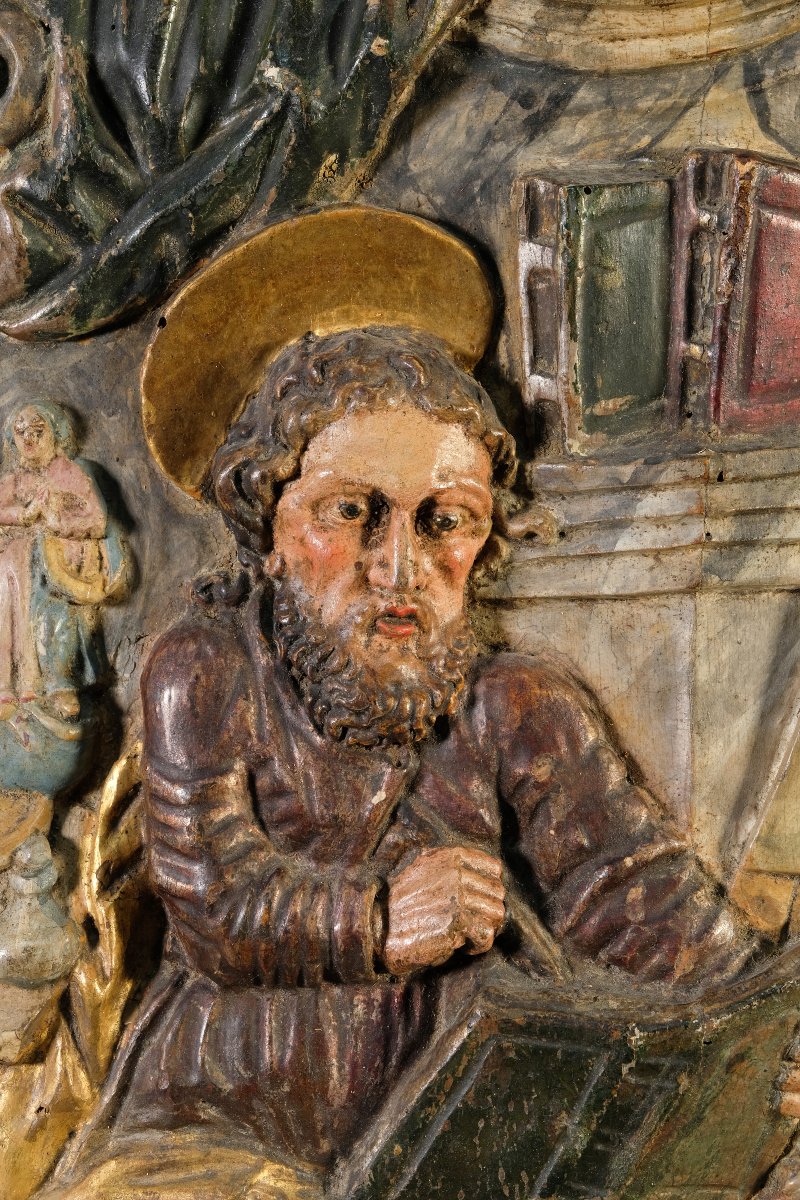
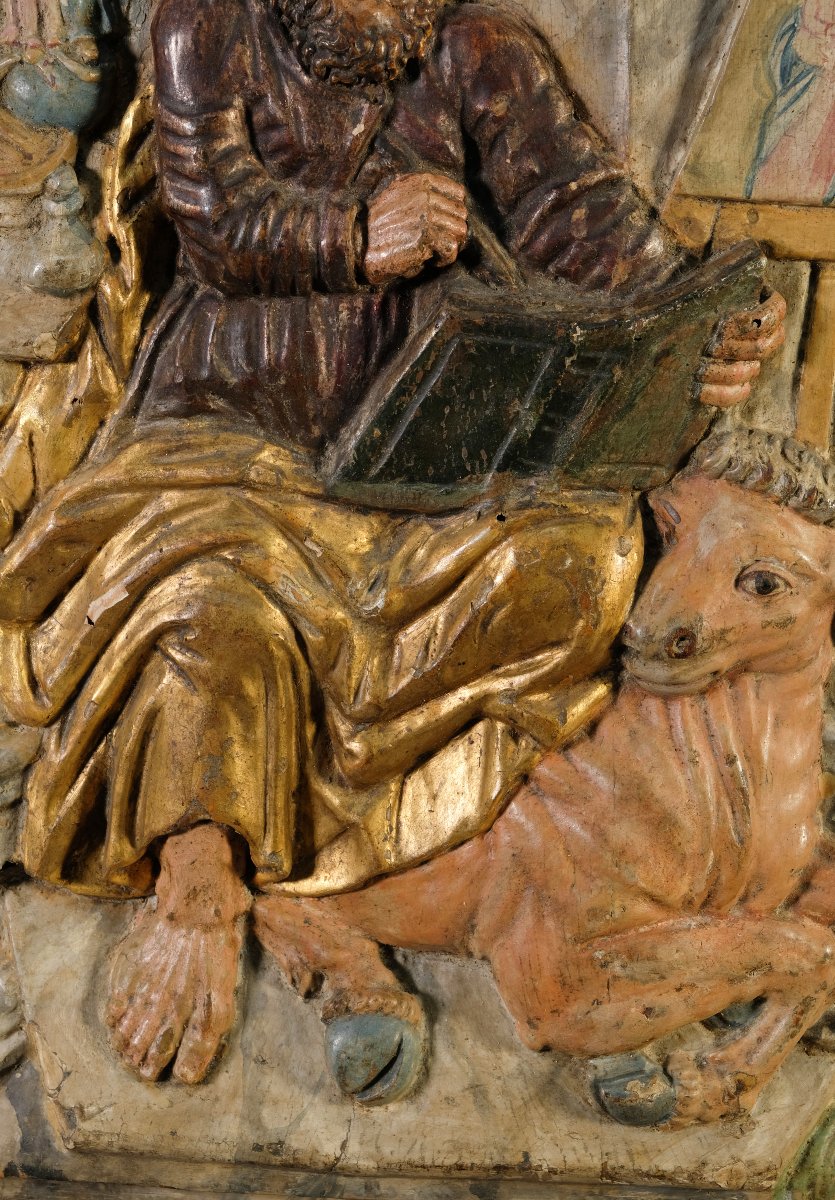
The symbols of the Tetramorph allow us to identify theevangelists depicted. In the case of Saint Luke, his attribute is the ox,an emblem of sacrifice and the priesthood, since his Gospel begins at the Templein Jerusalem with the episode of the priest Zechariah. In the relief, the animalappears docile and lying at the saint’s feet, serving as a pedestal orvisual support for the composition.
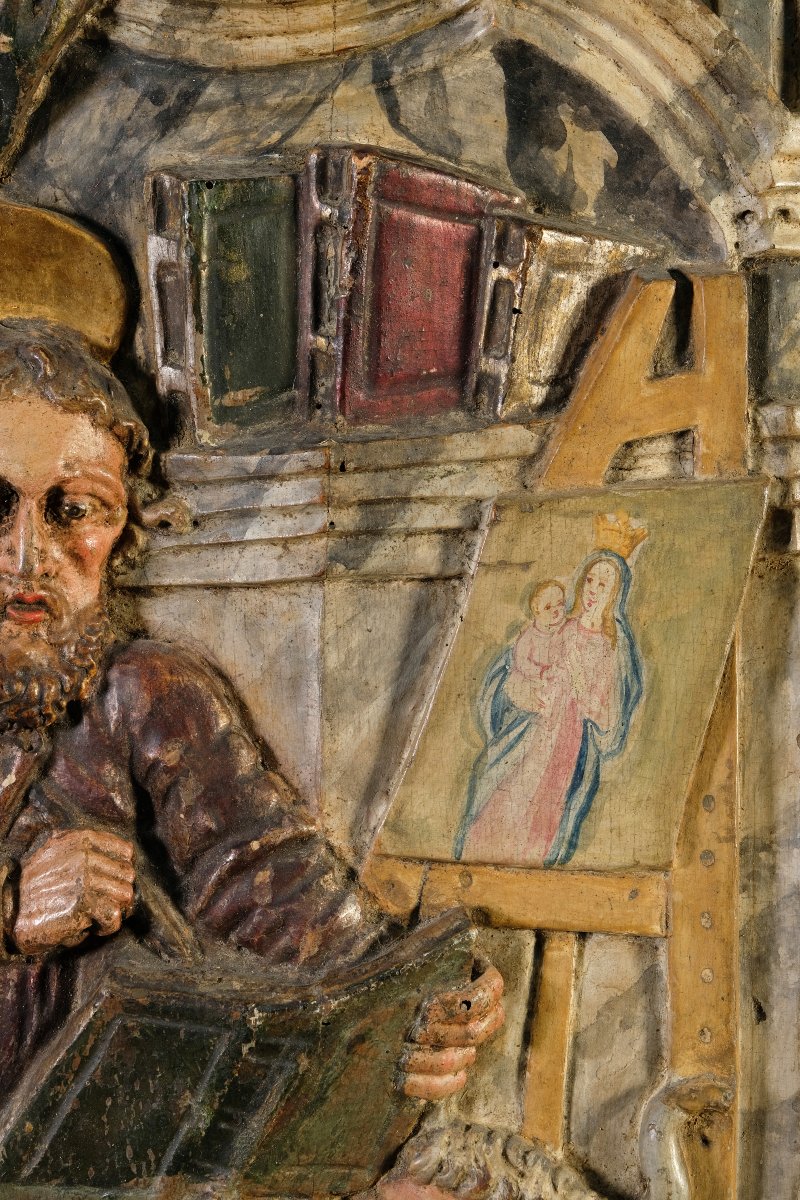
In the upper right corner is an easel onwhich the Virgin and Child is depicted, identifiable by theiconographic models of the Hodegetria or the Sedes Sapientiae. This element refersto the tradition, attested since the 6th century, according to which SaintLuke was not only a physician and evangelist, but also the firstportraitist of the Virgin Mary. It is for this reason that Christiantradition considers him the patron saint of painters and artists.
The scene takes place in a study orstudio, where we see a shelf filled with books and an inkwell resting onthe table—elements that highlight Luke’s dual role asa sacred writer and a man of learning, while reinforcing his connection to thearts.
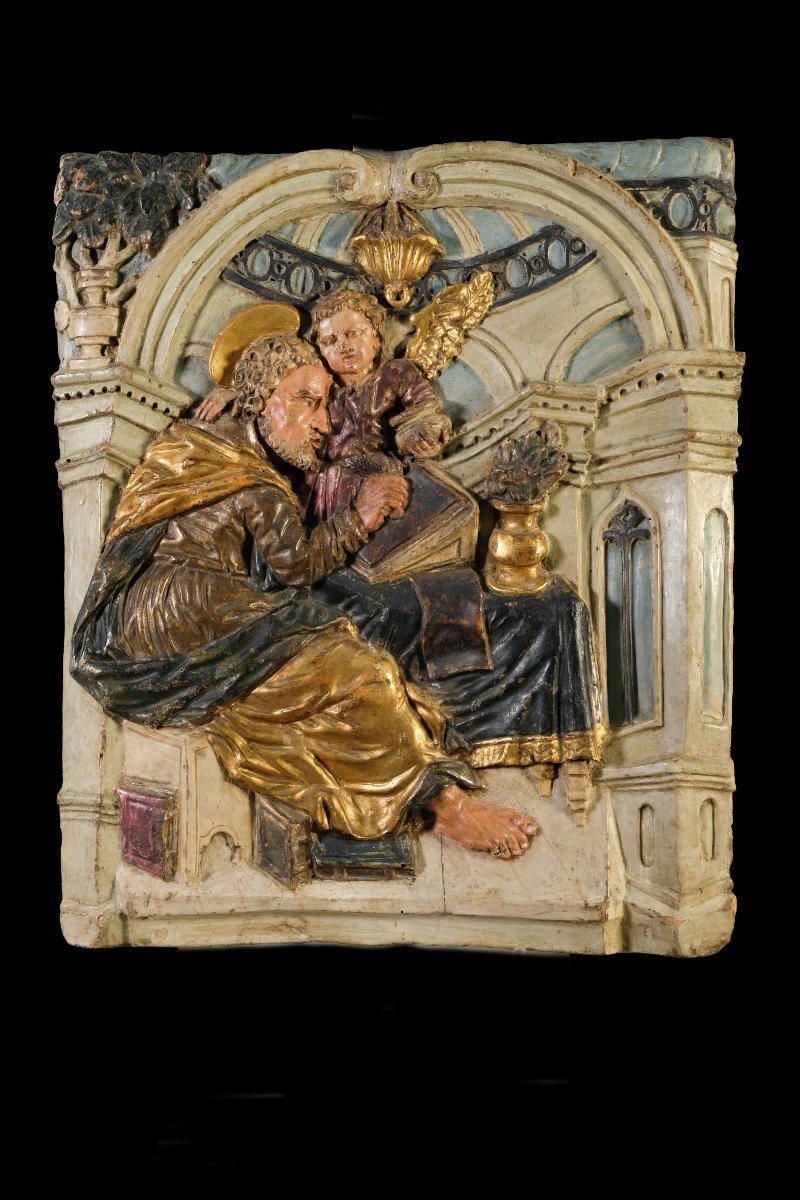
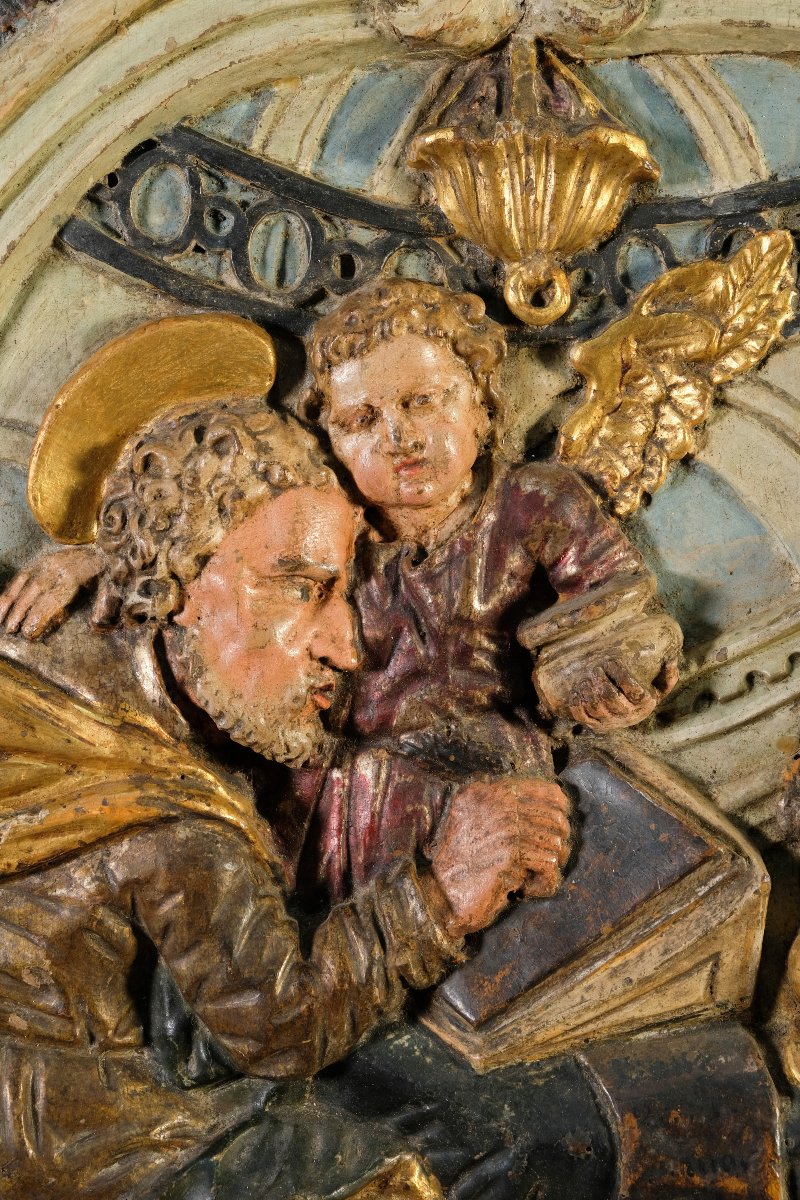
As for Saint Matthew, he is recognized by the presence ofthe angel, a symbol of Christ’s human nature and the Incarnation—a theme withwhich he begins his Gospel through the genealogy of Jesus. The angel does notmerely accompany the evangelist, but acts as a conduit fordivine inspiration, resting on his shoulder and guiding his hand—or,symbolically, his thoughts—as he writes the sacred text.
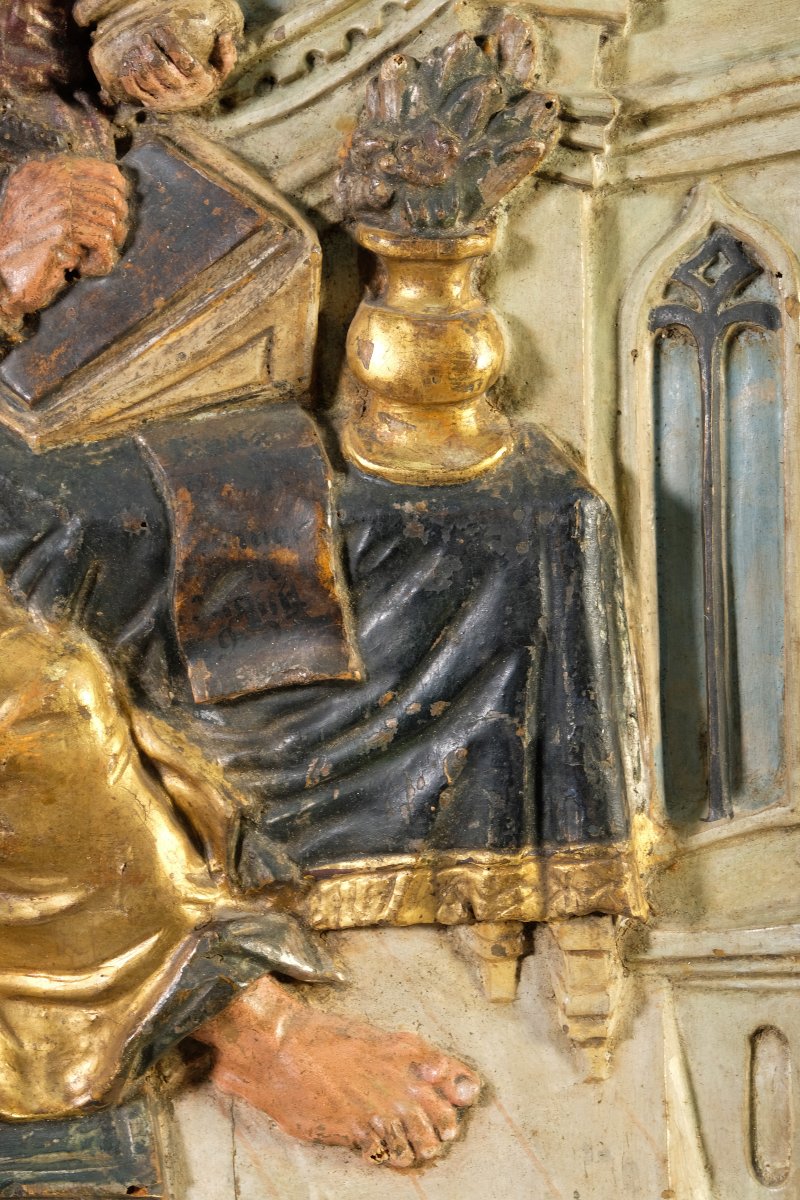
Matthew is depicted as an elderly man of greatwisdom, dressed in loose-fitting garments with heavy, stiff folds, characteristic oflate Renaissance and Baroque sculpture. Resting on his lap isa voluminous handwritten book, identified as his Gospel, while on oneside of the composition stands an ornamental vessel or a vase of flowersthat completes the work’s visual balance.
The symbols of the Tetramorph allow us to identify theevangelists depicted. In the case of Saint Luke, his attribute is the ox,an emblem of sacrifice and the priesthood, since his Gospel begins at the Templein Jerusalem with the episode of the priest Zechariah. In the relief, the animalappears docile and lying at the saint’s feet, serving as a pedestal orvisual support for the composition.
In the upper right corner is an easel onwhich the Virgin and Child is depicted, identifiable by theiconographic models of the Hodegetria or the Sedes Sapientiae. This element refersto the tradition, attested since the 6th century, according to which SaintLuke was not only a physician and evangelist, but also the firstportraitist of the Virgin Mary. It is for this reason that Christiantradition considers him the patron saint of painters and artists.
The scene takes place in a study orstudio, where we see a shelf filled with books and an inkwell resting onthe table—elements that highlight Luke’s dual role asa sacred writer and a man of learning, while reinforcing his connection to thearts.
As for Saint Matthew, he is recognized by the presence ofthe angel, a symbol of Christ’s human nature and the Incarnation—a theme withwhich he begins his Gospel through the genealogy of Jesus. The angel does notmerely accompany the evangelist, but acts as a conduit fordivine inspiration, resting on his shoulder and guiding his hand—or,symbolically, his thoughts—as he writes the sacred text.
Matthew is depicted as an elderly man of greatwisdom, dressed in loose-fitting garments with heavy, stiff folds, characteristic oflate Renaissance and Baroque sculpture. Resting on his lap isa voluminous handwritten book, identified as his Gospel, while on oneside of the composition stands an ornamental vessel or a vase of flowersthat completes the work’s visual balance.
4 200 €
Period: 17th century
Style: Other Style
Condition: En l'etat
Material: Painted wood
Width: 33,5
Height: 42,5
Reference (ID): 1800950
Availability: In stock
Print